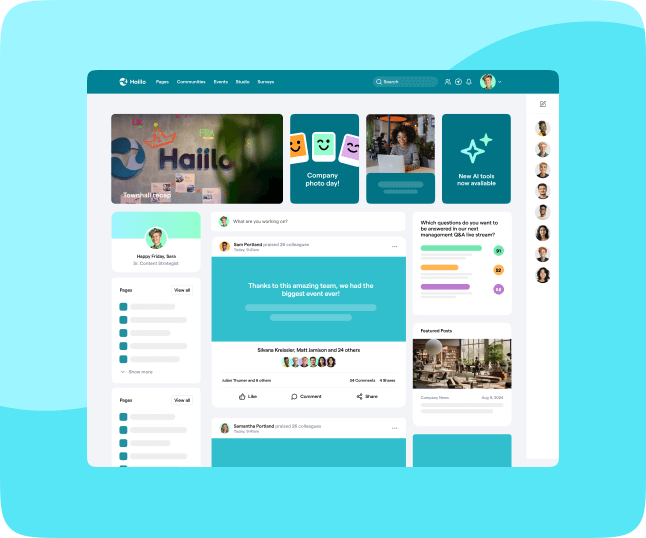

Business communication involves the constant flow of information within and outside a company.
💡Check out Top Communication Channels for Your Business and learn how to communicate with the modern employee in today’s digital age.
Corporations with a large number of people and various levels of hierarchy often struggle to manage business communications effectively. Therefore, there should be effective and continuous communication between superiors and subordinates in an organization, between organizations and society at large.
- What Is Business Communication?
- What Are the Different Types of Business Communication?
- 11 Reasons Why Effective Business Communication is so Powerful
- The Rise of Mobile Business Communications
- 20 Interesting Business Communications Facts
- How Technology Can Help You Improve Business Communication at Your Workplace
- The Future of Business Communication
What Is Business Communication?
Business communication is the process of sharing information between employees within and outside a company.
Effective business communication is how employees and management interact with each other to reach organizational goals and be more aligned with the core company values. Its main purpose is to improve organizational practices, eliminate silos, keep employees informed and reduce errors.
Effective business communication is essential for the success and growth of every organization. Unlike everyday communications, business communication is always goal-oriented. It ensures that teams understand priorities, collaborate effectively, and make informed decisions that move the business forward.
Today, many organizations rely on a dedicated business communication service to centralize updates, streamline collaboration, and ensure employees can easily access the information they need to do their jobs effectively.
Yet, recent research from the Gartner internal communications trends report shows that many organizations still struggle to measure the real impact of internal communications on productivity, engagement, and alignment across teams.
Make business communication EFFECTIVE with Haiilo!
For an enterprise company to operate successfully, all the rules, core company values, regulations and policies have to be communicated to people within and outside the organization.
What Are the Different Types of Business Communication?
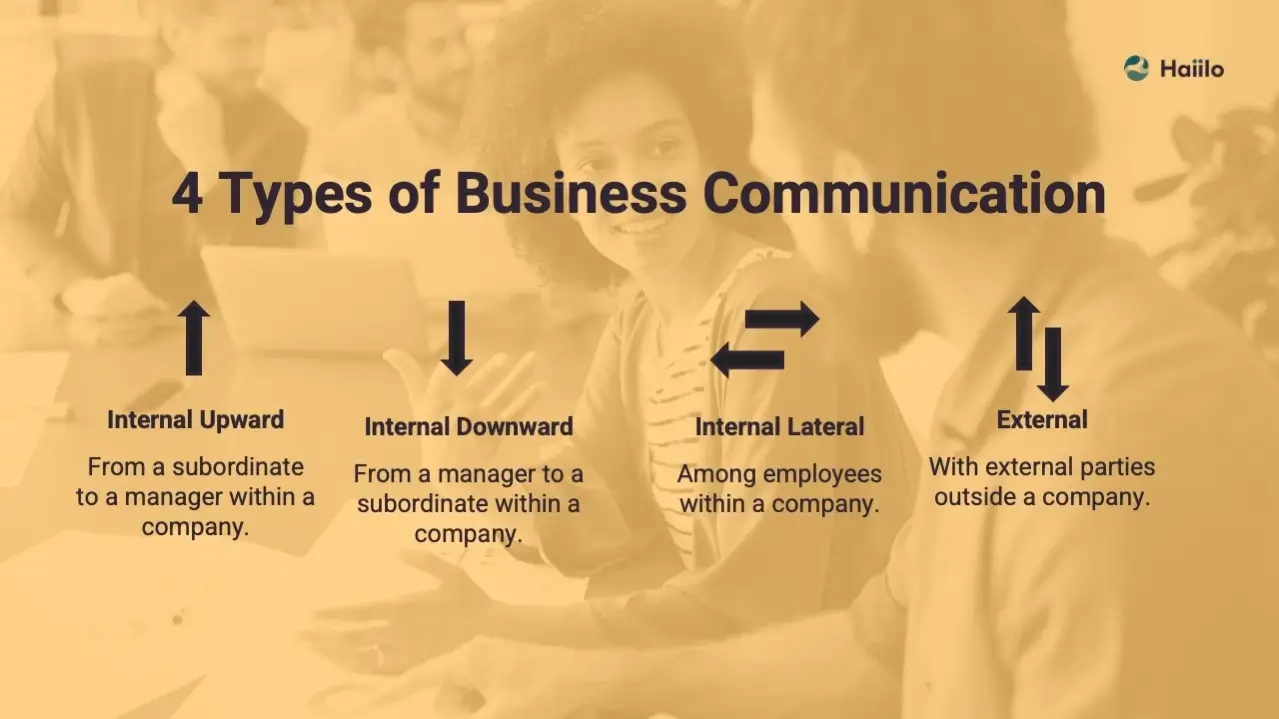
There are 4 main types of business communications.
1. Internal upward communication
Internal upward business communication is communication that comes from a subordinate to a manager or an individual up the organizational hierarchy. Every leader should enable information to flow upwards in order to have a true understanding of the company’s operations and the real challenges employees face on the ground.
Internal upward communications usually include surveys, feedback, forms and reports that employees deliver to their managers or team leaders. Today, many organizations collect this input through a centralized business communication service that makes it easier to capture employee feedback and identify issues early.
For example, a marketing report may include statistics such as total website visitors, social media engagement or total leads generated. These insights help leadership teams make better strategic decisions and improve overall performance.
2. Internal downward communication
Internal downward communication flows from a superior to one or more subordinates. This type of communication might be in the form of a letter, a memo or a verbal directive.
When communicating with employees, leaders should keep communication professional and clear. An example of this type of communication may include a memo regarding a new company operations procedure such as safety requirements and new regulations. In modern organizations, these updates are often distributed through a business communication service to ensure important messages reach employees quickly and consistently.
3. Internal lateral communication
Internal lateral business communication happens among employees in the workplace. Today, there are many different ways employees can communicate: chats, messaging, email, employees communication software solutions.
This type of communication can be within or among departments and it happens more regularly than other types of business communication. Moreover, frequent communication among employees plays a crucial role in employee engagement and productivity. A well-designed business communication service can help teams collaborate more effectively by bringing conversations, documents, and updates into one place.
4. External communication
External business communication is any communication that happens with external parties such as customers, prospects, vendors or partners.
Unlike all the internal business communications types, external communications happen on a less regular basis. However, they are just as important because they shape how customers and partners perceive the organization.
📹 Before we move forward, check out our Masterclass: How to Tackle Communication Barriers In the Workplace
11 Reasons Why Effective Business Communication is so Powerful
Here are the top 11 reasons why business communications are so important for every company’s success:
1. Improves employee engagement
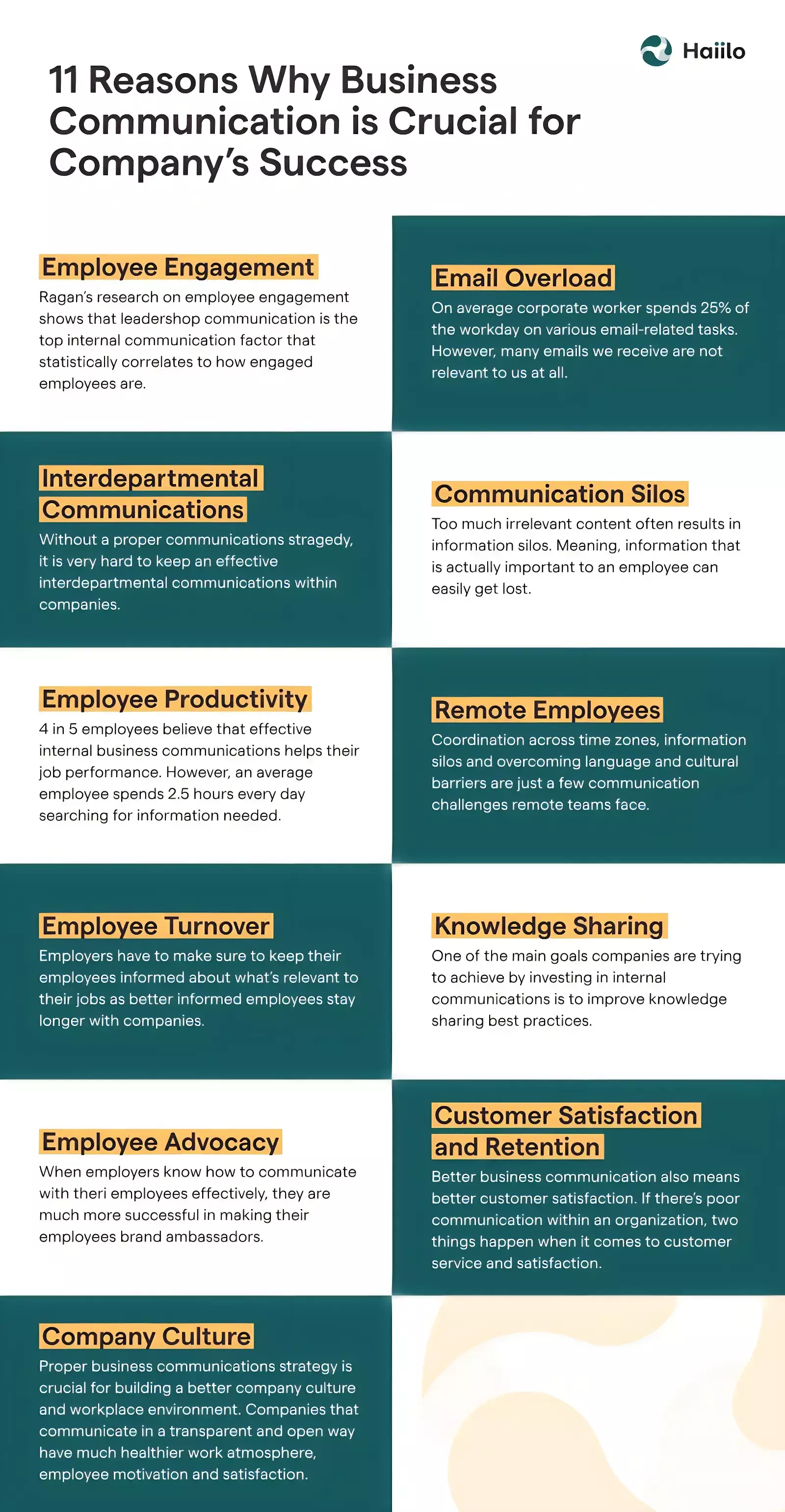
Research consistently shows that strong leadership communication is one of the biggest drivers of employee engagement. According to Gallup workplace research, employees who feel informed and regularly communicated with by leadership are significantly more engaged and more likely to stay with their organizations. Internal communication teams therefore play a crucial role in supporting leaders, coaching managers, and ensuring important updates reach employees clearly and consistently.
Many organizations now rely on a centralized business communication service to make leadership communication more transparent and accessible, helping employees stay aligned with company goals and priorities.
To understand the importance of employee engagement, here are a few useful stats.
2. Eliminates email overload
Within companies, email is used for everything from information requests, employee communications and feedback, status reports, task assignments, communications with customers and suppliers, meeting invites, document distribution, notices from HR on various team activities, benefits and birthday wishes.
As a result, employees often receive dozens—sometimes hundreds—of emails every day, making it easy for important information to get lost in crowded inboxes. A modern business communication service helps reduce this overload by centralizing updates, announcements, and collaboration in one place, allowing employees to find key information quickly without relying solely on email threads.
Radicati research shows that employees still spend a significant portion of their workday managing emails and other digital messages. Studies on workplace productivity suggest that knowledge workers spend a large share of their time handling digital communication and collaboration rather than focusing on high-value tasks.
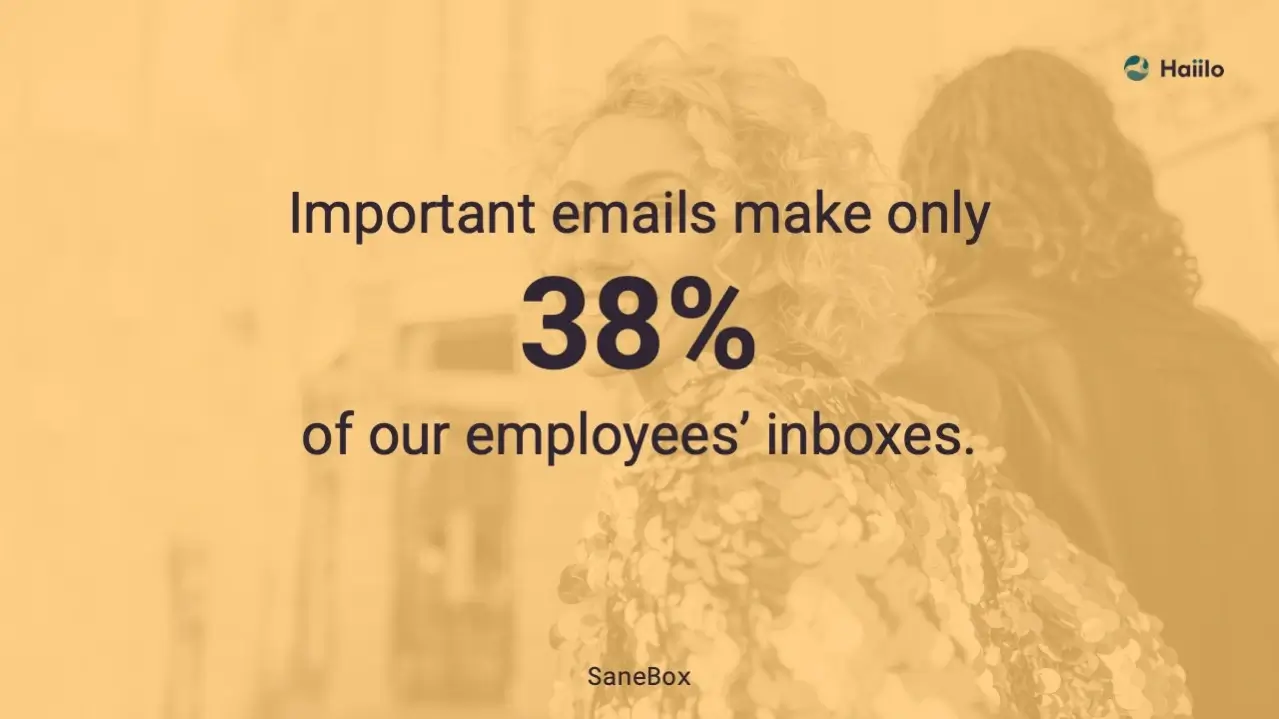
However, only a small fraction of the emails that hit our inbox deserves our immediate attention. We filter out the important emails by sender or subject. Moreover, many emails we receive are not relevant to us at all.
Internal business communications that use modern tools for employee engagement and communications have eliminated much of this email overload by giving employees a single place to find updates, documents, and conversations. Many organizations now rely on a centralized business communication service to streamline collaboration and reduce unnecessary messages.
3. Eliminates communication silos
Too much irrelevant content often results in information silos. Meaning information that is actually important to an employee can easily get lost. Ask yourself why information gets lost in your organization.
Proper internal business communications and the use of the right communications tools are crucial for eliminating this challenge. A well-implemented business communication service helps teams share knowledge openly across departments, ensuring employees have access to the information they need without relying on fragmented tools or isolated conversations.
4. Increases employee productivity
Research consistently shows that clear internal communication improves job performance and efficiency. When employees understand priorities, have easy access to information, and receive timely updates, they can focus more on meaningful work rather than searching for answers.
With the information overload, employees often spend too much time searching for content that they need to do their job.
Moreover, research cited by McKinsey suggests that employees can spend nearly 20% of their workweek searching for internal information. A modern business communication service helps solve this problem by centralizing knowledge, announcements, and resources so employees can quickly find what they need.
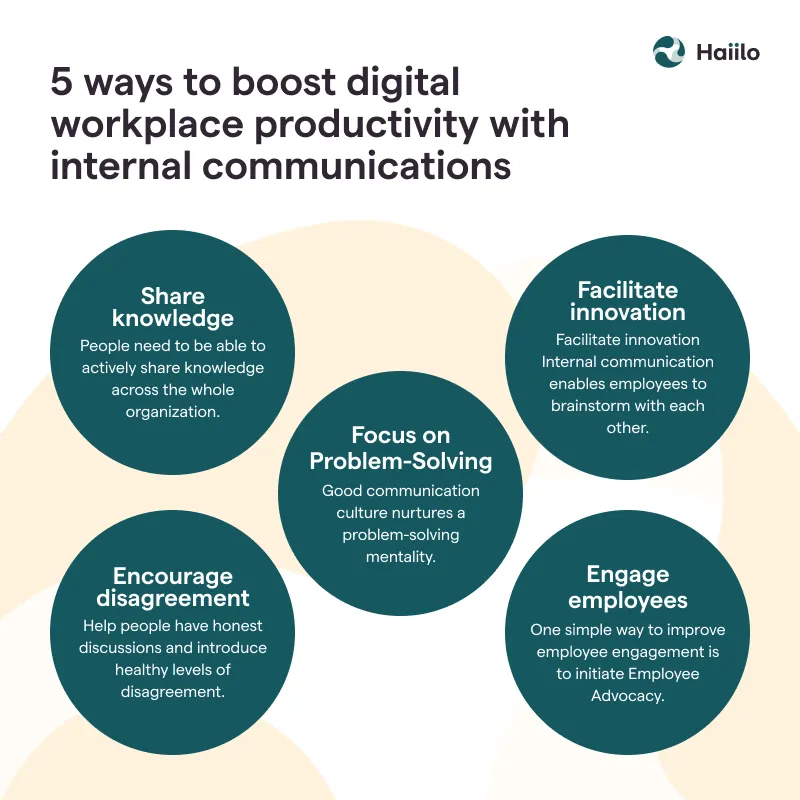
Here are just a few ways how internal business communications improve employee productivity.
5. Improves inter-departmental communications
Without a proper communications strategy, it is very hard to keep effective interdepartmental communications within companies.
For employees to be more productive, they need to communicate and collaborate easily.
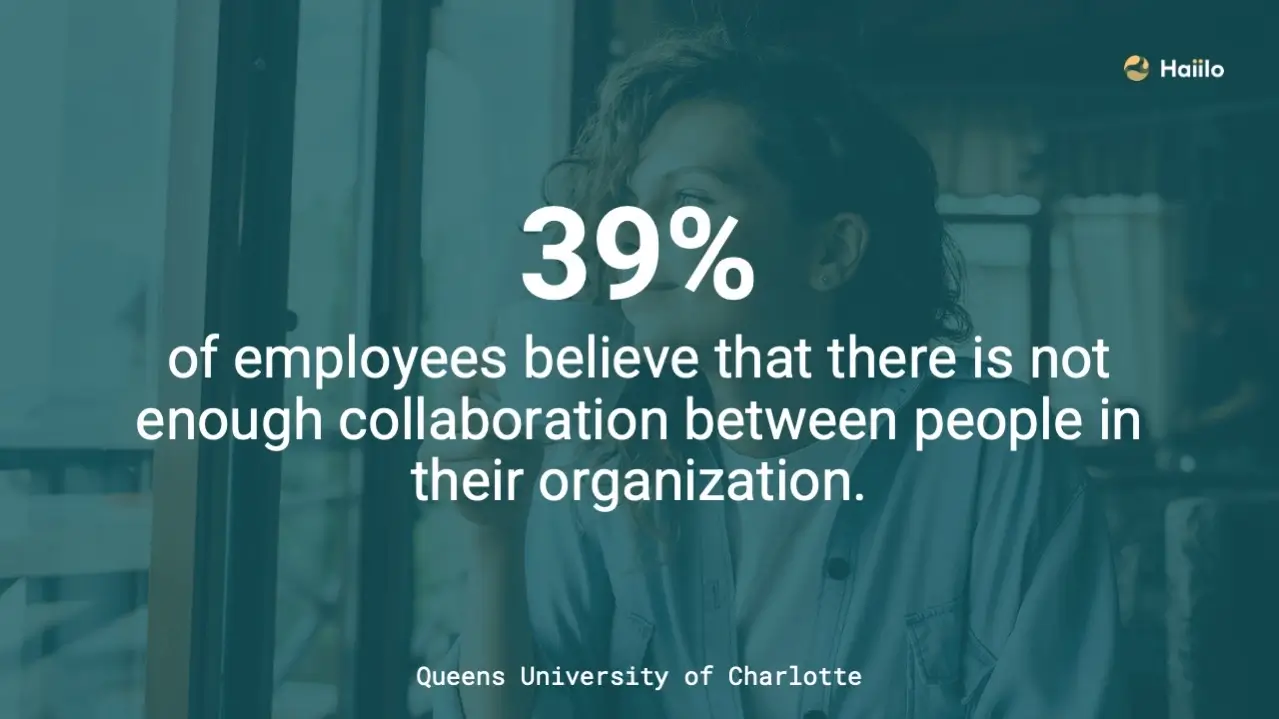
For example, your research department needs to be on the same page as your marketing team, and your business office has to be in sync with the IT department. When teams share updates regularly and have access to the same information, they can coordinate projects faster and avoid duplicated work.
Besides communication itself, here are a few more tips for improving interdepartmental team collaboration.
6. Improves communication with remote workers
Remote teams are the future of work. Research from the Gartner Future of Work trends report shows that hybrid and remote work models are now a permanent part of how many organizations operate.
This means a new kind of communication, leadership and management approach is required. Coordinating across time zones, information silos and overcoming language and cultural barriers are just a few communication challenges remote teams face. In addition, distance often makes it harder for team members to feel like a team.
Better internal business communications can have a significant positive impact on how remote teams collaborate and feel. Many companies now rely on a centralized business communication service to ensure remote employees receive the same updates, knowledge and collaboration opportunities as in-office teams.
7. Reduces employee turnover
Companies with more engaged and satisfied employees enjoy much lower turnover rates. Research from Gallup consistently shows that engaged employees are significantly less likely to leave their organizations.
To attract and keep Millennials and younger generations in the workplace, employers have to make sure to keep their employees informed about what’s relevant to their jobs.
On the other side, too much irrelevant information often leads to stress, disengagement, frustration and, with that, lower employee retention. A clear communication structure supported by a modern business communication service helps employees stay informed without being overwhelmed.
8. Improves knowledge sharing efforts
One of the main goals companies are trying to achieve by investing in internal communications is to improve knowledge sharing best practices.
In a world where employees are constantly growing and learning new things, employers need to enable easy knowledge sharing within their organizations. A well-designed business communication service allows employees to quickly find documents, share insights and collaborate across teams.
Without a well-set internal business communications strategy, knowledge sharing and organizational knowledge suffer.
9. Increases employee advocacy
When employers know how to communicate with their employees effectively, they are much more successful in turning them into brand ambassadors.
Brand ambassadorship is not as hard to achieve as many companies believe. In fact, happy employees often enjoy sharing company achievements, culture and insights with their professional networks.
There are 4 main ways how brand ambassadorship and employee advocacy can help a company’s operations:
- Increase brand awareness
- Improve employer brand and attract high-quality candidates
- Boost marketing efforts
- Increase sales
10. Improves customer satisfaction and retention
Better business communication also means better customer satisfaction. If there’s poor communication within an organization, two things happen when it comes to customer service and satisfaction.
First, employees in customer-facing roles won’t have the information they need. Second, customers will sense the low employee morale and have a negative experience.
Research summarized by Gallup shows that companies with highly engaged employees consistently achieve higher customer loyalty and stronger financial performance.
11. Builds a better company culture
Finally, a proper business communications strategy is crucial for building a better company culture and workplace environment.
Companies that communicate in a transparent and open way have a much healthier work atmosphere, employee motivation and satisfaction. A reliable business communication service helps reinforce this culture by ensuring employees feel informed, connected and aligned with company goals.
On the other side, organizations that neglect business communications as a means for improving the workplace culture suffer from low engagement, high turnover rates and lower employee and customer satisfaction.
The Rise of Mobile Business Communications
Younger generations now make up a large share of the global workforce. According to World Economic Forum workforce insights, Millennials and Gen Z together represent the majority of employees in many organizations and continue to shape how companies communicate internally.
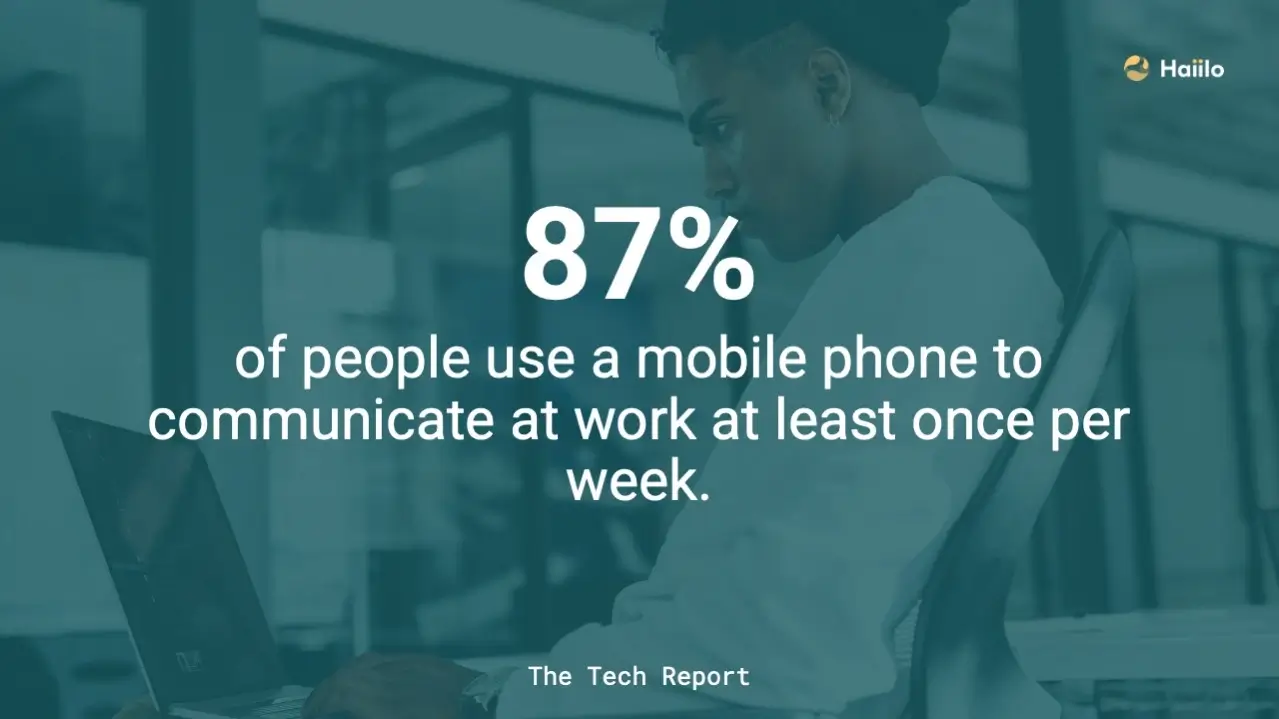
As we all know, millennials, as well as gen Z employees, are tech-savvy and mobile-oriented. They expect quick access to information, intuitive digital tools and the ability to stay connected regardless of location.
Therefore, if you want these generations to engage with your business communications content, you need to adjust your communication efforts to their habits and mobile-first preferences. Many organizations now use a mobile-friendly business communication service to deliver updates, news and collaboration tools directly to employees’ smartphones, ensuring that frontline and remote workers stay informed wherever they are.
Organizations are now becoming aware that sending generic company-wide emails or relying on outdated intranets is no longer enough to capture employees’ attention.
Therefore, many companies are implementing mobile-first communication platforms to improve employee communication, ensure employees always have access to important information, and keep teams aligned regardless of location or role.
In addition, the growing shift toward remote and hybrid work is one of the reasons why organizations are investing in tools that mirror the simplicity and speed of the social and messaging apps employees already use in their personal lives.
As a result, many companies are adopting a modern business communication service that combines news feeds, messaging, collaboration tools and mobile access in one place. This approach helps employees stay informed, respond faster to updates and collaborate more effectively across departments.
20 Interesting Business Communications Facts
If you like statistics, you will also like this section. Let’s take a look at some of the most interesting internal business communications facts.
- Many organizations still lack a clear long-term internal communications strategy
- Only a portion of employees regularly use their company intranet as their primary source of information
- Research summarized by Gallup shows that employees who feel informed about company goals are significantly more engaged
- Many employees say they don’t fully understand how their role contributes to the organization’s strategy
- Most professionals now rely on smartphones for work-related communication
- Employee productivity can increase by 20–25% when employees are connected through effective communication and collaboration tools
- Hybrid and remote work continue to expand across industries
- Only a minority of executives believe their organizations are highly effective at aligning employee goals with company strategy (Deloitte research)
- Poor communication is frequently cited as one of the main causes of project failure
- Employees often say unclear communication from leadership slows down decision-making and execution
- Many organizations struggle to ensure employees fully understand how their work contributes to business objectives
- Knowledge workers spend a significant share of their time managing digital communication and information
- Employees frequently report feeling overwhelmed by workplace messages and notifications
- Reducing unnecessary emails is often cited as a key way to improve workplace productivity
- Employees are more likely to engage with video communication than long written messages
- Many internal communications teams say measuring communication effectiveness remains a major challenge
- Organizations with strong communication and change-management practices are significantly more likely to outperform competitors
- Communication breakdowns are a major factor behind delayed projects
- Most employees keep their smartphones within reach during the workday, reinforcing the importance of mobile-first communications
- Only a small percentage of managers receive formal training in workplace communication skills
How Technology Can Help You Improve Business Communication at Your Workplace
In the world of digital transformation, companies must be ready to adopt new technologies to improve their organizational efforts.
As employee communications and engagement have become extremely important, new tools in this field have evolved.
As mentioned earlier, emails, intranets and other outdated employee communications solutions are not enough anymore.
Today, we see new software solutions that enable companies to improve both internal and external business communications.
With Haiilo, companies across the world have managed to:
- Increase employee engagement
- Boost employee productivity
- Eliminate information silos
- Increase employee advocacy
- Boost marketing and sales efforts
- Keep a finger on the pulse of employee well-being
- Improve employer brand awareness
- Attract more high-quality talent
The Future of Business Communication
The pandemic has drastically changed communication in today’s workplace. To get a better understanding of what business communication may look like in the near future, check out this short video where internal communication experts explain what essential skills employee comms professionals need to develop to adjust to the new normal 👇
Frequently Asked Questions About Business Communication Services
1. What is a business communication service?
A business communication service is a platform that helps organizations share information, collaborate, and keep employees aligned. Instead of relying on scattered tools like email, chat apps, and outdated intranets, many companies now use a centralized solution such as an employee communications platform. These platforms combine news, collaboration tools, analytics, and mobile access in one place so employees can easily stay informed and connected. They also support different types of internal communication, from leadership updates to peer collaboration.
2. Why do companies need a modern business communication service?
As organizations grow and teams become more distributed, communication becomes harder to manage. A modern business communication service helps eliminate silos by centralizing company updates, documents, and conversations. Solutions like a social intranet allow employees to access information quickly and collaborate across departments. This is especially important for hybrid and remote teams who may not share the same workspace. If communication tools are poorly designed, employees often struggle to find information—something explored in this article about the intranet UX problem.
3. How does a business communication service improve productivity?
Clear and accessible communication helps employees focus on meaningful work instead of searching for information. When updates, resources, and conversations are centralized, employees can reach a flow state at work more easily and collaborate more effectively. Platforms that include communication analytics also allow organizations to track engagement and understand which messages resonate with employees. For many companies, combining these features with modern tools like the best employee apps significantly improves workplace efficiency.
4. What should you look for in a business communication service?
When choosing a business communication service, look for a solution that supports mobile access, collaboration, and easy content management. A strong platform should allow teams to publish updates, share resources, and measure engagement through built-in analytics. Platforms such as employee communications solutions often combine intranet capabilities, employee apps, and social features to improve communication across the organization. It’s also worth reviewing practical guidance like intranet content ideas or understanding why Microsoft 365 isn’t always enough as an intranet when planning your communication strategy.