
Communication barriers can have a significant impact on people’s personal and professional lives. This is even more visible today as teams rely heavily on digital communication and distributed ways of working.
When we are limited to communicating using digital tools and technologies, comms barriers can have an even bigger impact. Misunderstandings happen faster, messages get lost, and important context is often missing. However, digital means of communication are here, and they are here to stay—which makes it even more important to address these challenges properly.
💡Check out Top 5 Communication Skills and learn how to improve internal communication in the workplace!
Employers across the world are forced to adjust to this new way of working, and they need to better accommodate their employees. Clear guidelines, better tools, and stronger communication habits are no longer optional—they are essential. Therefore, now when we depend on technology to communicate with our peers and colleagues, we need to find ways to use it effectively and reduce comms barriers instead of reinforcing them.
See how Haiilo can help you eliminate communication barriers with the right internal comms tool.
Communication Barriers Defined
Communication barriers can include anything that prevents or disables communicators to deliver the right message to the right person at the right time, or a receiver to get the right message at the right time. In practice, these comms barriers often lead to confusion, delays, and mistakes that affect both productivity and collaboration.
They can occur at any stage of the communication process—when a message is created, shared, received, or interpreted. Even small issues, like unclear wording or poor timing, can quickly turn into bigger problems if not addressed.
There are 3 main categories of communication barriers that can make effective communication challenging.
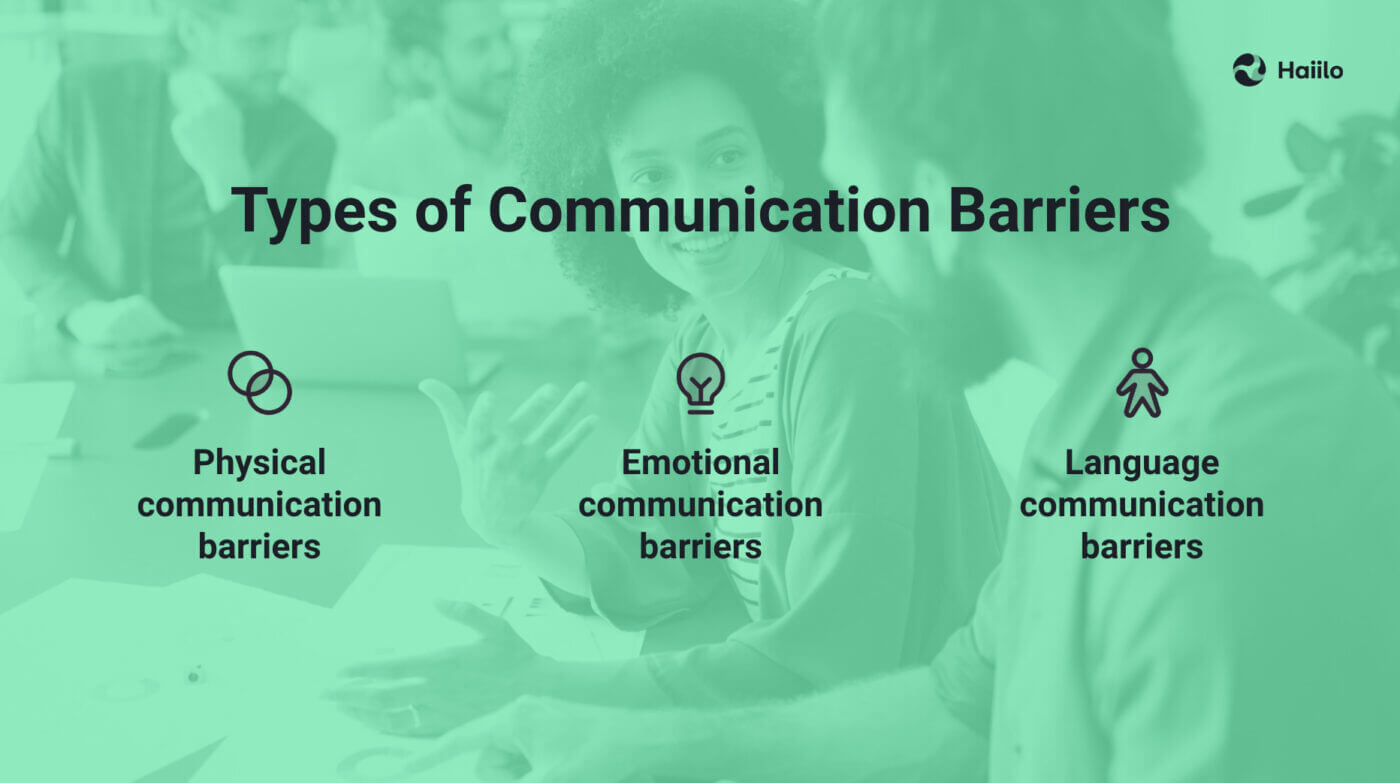
- Physical communication barriers such as social distancing, remote work, deskless nature of work, closed office doors, and limited access to shared spaces or tools that make information harder to reach.
- Emotional communication barriers resulting from emotions such as mistrust, fear, low morale, or lack of engagement, all of which can prevent open and honest communication.
- Language communication barriers that refer to how a person speaks both verbally and nonverbally, including tone, jargon, cultural differences, and varying levels of language proficiency.
However, these communication barriers present just a high-level overview of the causes behind inefficient communication. In reality, most comms barriers are a mix of these factors, which makes them harder to identify and fix. Let’s take a deeper look into some of the most common communication barriers that employers face today.
Top 13 Communication Barriers Organizations Face Today
When talking about communication barriers in the workplace, challenges to effective communication are more obvious than ever before. Multigenerational workplaces, the rise of remote work, dispersed workforce, the introduction of new communication technology and different employee expectations are just a few examples of comms barriers that have emerged in the past few years.
These changes have made communication more complex. Teams now rely on multiple tools, work across time zones, and bring different expectations to how information should be shared. Without clear guidelines, this often leads to confusion, missed messages, and misalignment.
1. Communication skills and styles
People have different communication skills and styles. Oftentimes, these differences in communication skills can create communication barriers between the communicator and the receiver of the message.
For example, while some people may be highly detailed and specific when communicating, others may tend to generalize. Some prefer written updates, while others rely on verbal discussions. These differences can easily lead to misunderstandings if expectations are not aligned.
Even though communication skills are extremely important, many organizations still don’t actively develop or assess them. This makes comms barriers harder to address and allows poor communication habits to persist across teams.
2. Social distance and physical barriers
As mentioned earlier, many companies now depend on virtual communication due to social distancing and remote ways of working. These physical barriers are even more evident within organizations with blue-collar employees without designated working space.
Distance makes it harder to share information quickly, read body language, and build strong connections. Without the right tools and processes, these comms barriers can lead to misalignment, delays, and employees feeling disconnected from the company.
Such barriers can go a long way in causing damage to an organization that doesn’t know how to leverage technology to eliminate communication challenges.
3. Disengagement
Effective communication is about engagement between the parties involved in communication. When there is no engagement from both parties, this ruins the purpose of effective communication.
Unfortunately, organizations across the world are fighting the problem of disengaged workplaces. They are struggling to catch their employees’ attention and drive a culture of open, engaged, and transparent workplace. Disengaged employees are less likely to read messages, respond, or participate, which further reinforces existing comms barriers.
4. Organizational structure
Complex and rigid organizational structures can be the main culprit for inefficient communication, making it one of the most common communication barriers. Such organizations may have inefficient information sharing and communication systems, often resulting in frustrations, lack of engagement, and productivity among employees.
If a company is highly hierarchical, information can easily get siloed, lost or distorted as it travels through each layer of the hierarchy. This slows down decision-making and creates confusion, especially in larger or distributed teams.
5. Information overload
Too little information is not good, but too much information can cause even more damage. Yet, information overload has always been one of the biggest communication barriers. Moreover, information overload has proved to have a very negative impact on employees’ well-being, productivity, and success at work.
When employees are overwhelmed with emails, messages, and notifications, they struggle to prioritize what matters. Important updates get missed, and focus drops—making comms barriers even harder to overcome.
6. Lack of trust
When there is no trust, there is no effective communication. In other words, when employees don’t trust their employers, leaders, or managers, communication suffers.
This is the reason why one of the main goals for organizations across the world has become to build trust in the workplace. Yet, many employers still have a long way to go to become more trustworthy. Without trust, employees may withhold information, avoid speaking up, or question leadership messages—further increasing comms barriers.

7. Clarity, consistency, and frequency
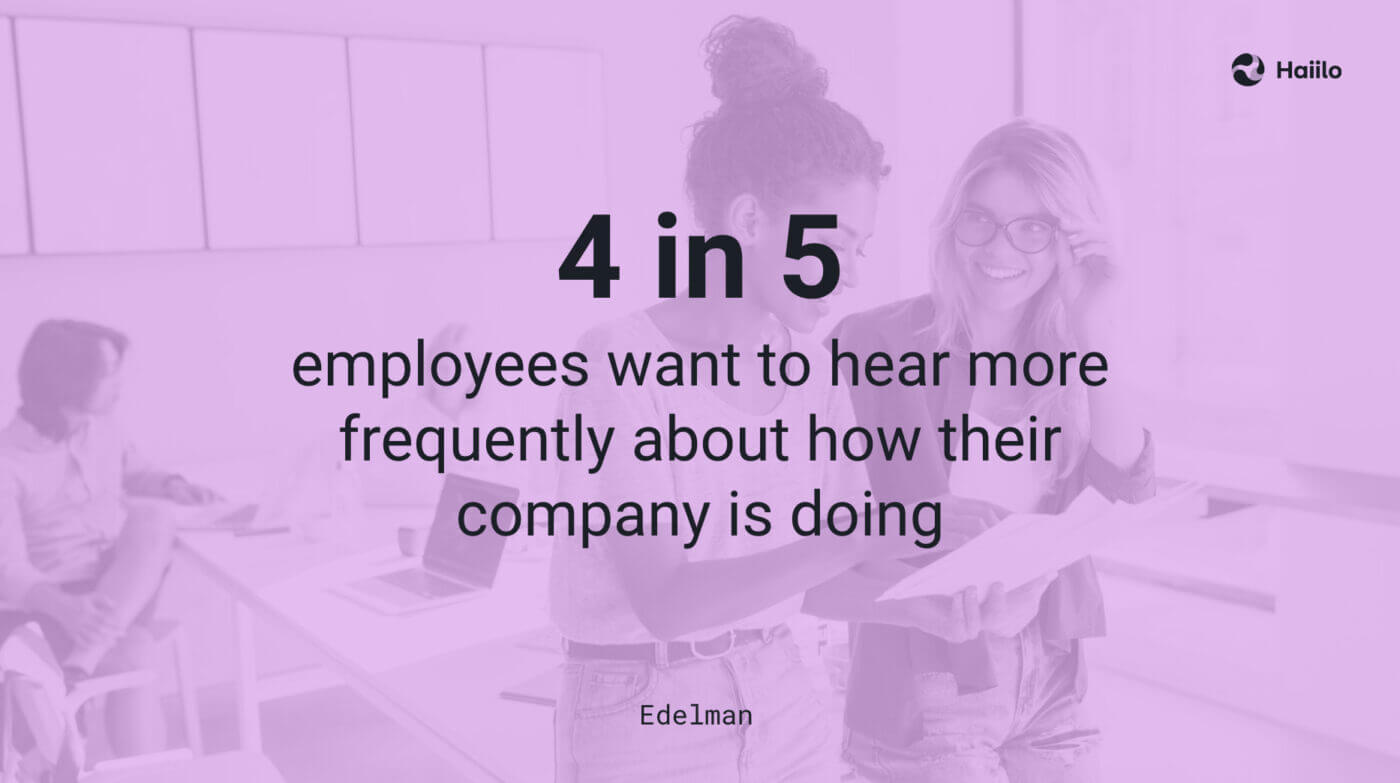
Communications professionals need to understand the importance of clear, consistent, and frequent communication. When messages across different channels are not aligned, confusion increases and trust gets hurt. When messages don’t get delivered frequently or in a timely manner, employees miss out on important information or updates.
Lack of clarity is one of the most common comms barriers. If messages are vague, overly complex, or incomplete, employees are left guessing what actions to take. Over time, this leads to mistakes, frustration, and disengagement.
Research shows that employee engagement improves when managers communicate clearly and consistently. Employees also expect regular updates about what’s happening in the business. When communication is infrequent or inconsistent, people feel disconnected and less informed.
On the other hand, frequent and transparent communication—even when the news isn’t positive—helps build trust and keeps employees aligned. Reducing these types of comms barriers starts with simple, structured, and timely messaging that employees can easily understand and act on.
8. Listening
Communication should always be a two-way street. Moreover, listening is often much more important than speaking. Yet, many companies still don’t understand the importance of encouraging employees’ share of voice and the value of their feedback.
When employees feel unheard, they are less likely to contribute, share ideas, or raise concerns. This creates silent comms barriers that are harder to detect but just as damaging. Active listening—through surveys, feedback tools, and regular conversations—helps organizations identify issues early and build stronger relationships.
Those who drive and nurture the culture of open workplace communication enjoy a happier, healthier, and more engaged workforce.
9. Wrong communications channels
There are many different communication channels people use nowadays. The same is true for companies, especially large enterprises. Such complexity in the communication ecosystem makes it hard for employers to make sure that they use the right channels to inform their people and deliver relevant information in a timely manner.
When the wrong channel is used, messages get ignored, lost, or misunderstood. For example, important updates shared via chat may be missed, while urgent information buried in emails may not get the attention it needs. This mismatch is one of the most common comms barriers in modern workplaces.
As a result, the average employee spends around 20% of their time searching for internal information.
Many communications professionals have started practicing multichannel communications to eliminate this communication barrier. However, the key is not just using more channels—but using the right ones in a structured and consistent way.
10. Demographic and cultural differences
The way people interact with each other can vary depending on demographic and cultural differences. If communicators are not aware of these differences, comms barriers will arise.
Different communication styles, expectations, and cultural norms can easily lead to misunderstandings. What feels clear and direct to one person may come across as unclear or even inappropriate to another. Hence, it is important to find a common ground for effective communication and adapt to the work culture of the organization to communicate effectively.
11. Wrong communication technology
Communication technology can make or break any organization’s communication strategy. In the sea of available tools, employers need to choose solutions that truly fit their workflows and employee needs.
Poorly chosen or outdated tools often create more problems than they solve—fragmenting communication, hiding important information, and increasing frustration. On the other hand, the right platforms are designed to tackle the biggest communication barriers by centralizing information and improving accessibility.
12. Lack of personalization
Lack of personalization is one of the biggest reasons why disengagement happens. When employees receive information that is not relevant to their role, location, or interests, they quickly tune out.
Over time, this becomes a major comms barrier. Employees start ignoring messages altogether because they assume the content won’t apply to them. When receivers get information that is not relevant to their nature of work, or messages that are of no interest to them, they are much more likely to ignore future communications coming their way.
Content localization has, therefore, become one of the main priorities for communication professionals whose goal is to improve employee engagement and experience in the workplace. By tailoring messages to specific roles, locations, or teams, organizations can reduce comms barriers and make communication more relevant and effective.
13. Grapevine communication
American Management Association estimates that 70% of all organizational communication emanates through the grapevine. Moreover, most people deem it trustworthy as well.
This informal type of communication can spread information quickly—but not always accurately. Rumors, assumptions, and incomplete messages can easily circulate, creating confusion and reinforcing comms barriers instead of reducing them.
This informal type of communication may have a significant impact on your people, your business performance, and your ability to build trust with your employees. Therefore, it is crucial for employers to understand the power of grapevine communication in order to be able to guide and manage it effectively, rather than ignore it.
📙 Read more about how to tackle grapevine communication.
6 Ways to Eliminate Communication Barriers in the Workplace
Communication barriers can never be completely eliminated. However, there are ways to reduce their negative consequences and make communication more streamlined and effective.
To tackle comms barriers successfully, organizations need to understand both the root causes of communication breakdowns and how different employees prefer to communicate. Digging deeper into these factors is one of the most important prerequisites for effective communication.
Let’s now take a closer look at the 5 ways to tackle communication barriers in the workplace.
1. Understand your multigenerational workforce
There are 5 working generations right now:
- Traditionalists – born in 1945 and before
- Baby Boomers – born between 1946 and 1964
- Generation X – born between 1965 and 1976
- Millennials – born between 1977 and 1995
- Generation Z – born in 1996 and after
Since these generations have different communication preferences, neglecting to adjust to them forms an inevitable communication barrier. We need to better understand these differences and adapt to them in order to make communication more efficient.
For example, millennials and gen Z employees are used to having personalized news feeds on social media. They like to build online communities, share insights, and look for recommendations on their favorite social channels. This is the communication experience they also expect from their employers.
Failing to meet these expectations can quickly create comms barriers, especially when younger employees feel disconnected from traditional communication methods.
💡 Related: How to Identify if It’s a Communication Problem or Something Else
2. Make communication more agile
Earlier, we saw that highly hierarchical organizations can struggle with communication more than those within which information flows freely. In today’s ever-changing world, it is extremely important to implement more agile means and ways of communication.
Rigid processes slow down communication and make it harder for employees to access timely information. This creates unnecessary delays and increases the risk of miscommunication.
Information should always flow both ways, upward communication should continuously be encouraged, and employers should be able to quickly reach their target audiences. Agile communication helps reduce comms barriers by making information more accessible, responsive, and relevant.
3. Create and share engaging and personalized content
People want to consume authentic, engaging, and fun content. The days when we would just send mass emails to the entire workplace are dead.
Moreover, 26% of employees view email as a serious productivity killer.
In their personal lives, people consume media in increasingly smaller bites. Long-form content is still here, but social media has shown us that organizations need to share messaging in people’s preferred formats, including video, infographics, webinars, podcasts, and memes.
If content is not delivered in a format employees enjoy or expect, it is more likely to be ignored. This creates subtle but impactful comms barriers, where messages are technically delivered but not actually received or understood.
Additionally, content irrelevancy also creates barriers to communication. Yet, many organizations don’t have ways to better segment their internal audiences based on various criteria such as age, location, job function, language, interest, and preferences.
Hence, irrelevant content can be the biggest cause of disengagement and poor workplace experience. The more tailored and targeted your communication is, the more likely employees are to engage with it.
4. Switch to mobile-first communication
Since communication is highly digital today, we need to better understand people’s preferred communication devices in both their personal and professional lives.
Millennials, who are the largest generation in the US labor force, are projected to represent a significant share of the global workforce. Both millennials and generation Z grew up in the technological age, are constantly connected, and rely heavily on their smartphones throughout the day.
Therefore, switching to mobile-first communication can go a long way to eliminating some of the most significant communication barriers. If employees can’t access information easily on their mobile devices, they are more likely to miss updates or disengage altogether.
5. Use the power of data and technology
We need to better understand how to leverage digital means of communication. Yet, many organizations don’t have access to the new and modern communication technology that enables them to do so.
Since the communication ecosystem has become highly complex, employees expect their organizations’ communication tech stack to work in the cloud and be highly integrated. For example, instead of having multiple communication channels such as email, intranet, Slack, Yammer, Microsoft Teams, document sharing tools, and others, we need to look for ways to consolidate them into a more unified experience through platforms like Haiilo or Workplace.
Additionally, having access to communication data and insights is a powerful way to find, assess, manage, and reduce many comms barriers. Data helps you understand what works, what doesn’t, and where improvements are needed.
6. Leverage AI
Artificial intelligence can play a huge role in eliminating many of the communication barriers. While translation tools can help eliminate cultural and language barriers, data and generative AI can help communicators create and distribute more engaging content.
AI can also help personalize messages, automate routine tasks, and ensure the right information reaches the right audience at the right time. More and more professionals in the communications world have started using AI to improve their skills and save time wasted on manual and repetitive tasks. Even though some don’t agree, AI can (and should) be used to allow people to focus on what machines can not do.
How to Create a Successful Communication Plan
In order to eliminate communication challenges, it is important to have a well-crafted communications plan. Without a clear structure, even the best tools and intentions won’t be enough to overcome comms barriers.
When building such internal communications plan and strategy, these are the questions communicators should answer:
- What are the current communication barriers and where do they occur most often?
- What are the ultimate communication goals, and how will we eliminate existing communication barriers?
- Who is your audience and what are their generational and cultural differences?
- What are the key messages you want to communicate and the topics you want to address?
- How will you distribute messages and which communication channels will you use?
- How will you measure the success of your communication plan and strategy?
Answering these questions helps you create a more focused and effective approach, ensuring that your communication efforts are aligned with both employee needs and business goals.
📙 Continue reading about the importance and best practices for building a successful communication plan.
The Role of Technology in Overcoming Communication Barriers
Technology can play a significant role in reducing many of the previously mentioned communication barriers. In fact, modern tools are specifically designed to address common comms barriers such as information silos, poor accessibility, and lack of engagement.
Moreover, such technology is built to help people build better relationships and drive more engagement. When implemented correctly, it enables faster, clearer, and more targeted communication across the entire organization.
With the use of the right communication technology, organizations can:
- Create engaging content that captures attention and is easy to consume.
- Segment audiences to deliver personalized information relevant to each employee.
- Schedule content delivery for optimal timing and better visibility.
- Create personalized news feeds based on the audience’s preferences.
- Connect communication with the ultimate business KPIs.
- Measure the impact and success of the engagement.
- Understand the audience’s favorite forms of communication and preferred communication channels.
- Drive two-way communication and encourage employees’ share of voice.
- Empower leadership to be more approachable and visible.
- Reach the hard-to-reach audience with the right message at the right time.
By centralizing communication and making information easier to access, technology helps eliminate many everyday comms barriers and creates a more connected, informed, and engaged workforce.
FAQs about comms barriers
What are comms barriers in the workplace?
Comms barriers are anything that prevents messages from being clearly shared, understood, or acted on. This can include poor internal communication, too many tools, unclear messaging, or lack of trust. In many cases, the problem isn’t the message itself—it’s how, where, and when it’s delivered.
What causes the most common comms barriers?
The biggest causes are usually a mix of people, processes, and technology. Disengaged employees, information overload, and disconnected systems all play a role. For example, outdated tools—like those described in this guide on intranet UX problems—can make it hard for employees to find what they need. Without a clear strategy for knowledge management, important information often gets lost.
How can you reduce comms barriers quickly?
Start by simplifying your communication setup. Use fewer, more effective channels and make sure employees know where to go for information—this guide on communication channels can help. Tools like a social intranet or better employee communications platforms can centralize updates and improve access. Clear, consistent messaging also makes a big difference.
How do you prevent comms barriers long term?
You need a structured approach. Focus on improving employee engagement, personalizing communication, and using data to understand what works. It also helps to continuously improve your strategy—whether that’s refining your employee communications, learning how to launch an intranet, or even applying lessons from external channels like this LinkedIn marketing strategy. The key is consistency and ongoing optimization.