
Improving engagement on social media is one of the main goals for marketers around the globe, especially as stronger engagement in social media directly impacts visibility, trust, and conversion outcomes.
As more than 5 billion people now use social platforms worldwide—representing over 60% of the global population—social media remains one of the most powerful channels for reaching and engaging customers and prospects, increasing brand awareness, generating new leads, and closing new customers.
In this blog, we will go over the importance, challenges, and best practices for driving more engagement on social media, with a clear focus on what actually moves the needle today.
The Importance of Driving More Engagement on Social Media
Since the start of the COVID-19 pandemic, social media use has grown rapidly—and while the initial surge has stabilised, long-term behaviour has clearly shifted towards higher digital adoption. Recent global data shows continued growth in both usage and time spent on platforms, reinforcing social media’s central role in modern communication and marketing strategies.
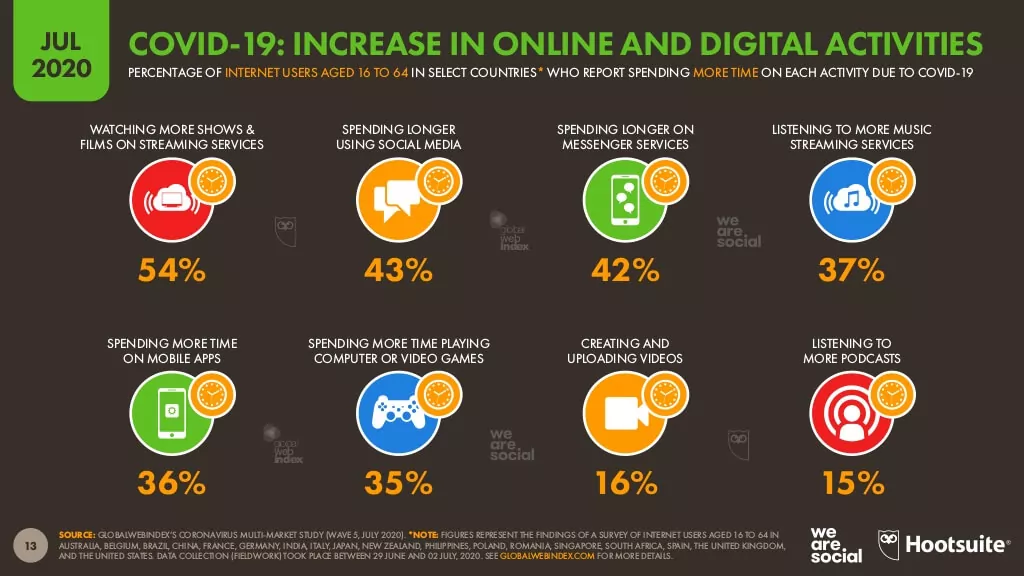
Marketers shouldn’t neglect this fact, and many of them are now rethinking their strategies for increasing engagement in social media across their organization’s social media and other communications channels. This often means moving away from one-way broadcasting and focusing more on consistent interaction, relevance, and audience value.
Let’s now take a closer look at why social media should be an essential part of every modern marketing strategy—and why strong engagement is what makes those efforts effective.
💡 Related: 9 Social Media Marketing Trends to Watch in 2023
Social trust
Social media is at the heart of the consumer-brand relationship. Consumers expect fast, direct, and authentic communication, and they tend to trust brands that show up consistently and engage in real conversations.
Using social media, consumers can form stronger emotional bonds with brands. Regular interaction—such as responding to comments, sharing user-generated content, or addressing feedback—helps build familiarity and credibility over time.
As a result, brands that actively engage with their audiences are more likely to earn trust, strengthen loyalty, and stay top of mind. Being present on social media is no longer enough; meaningful interaction is what drives lasting impact.
Leverage your employees’ voices to build social trust faster
Try our Employee Advocacy platform today and see results in no time
Reach and awareness
Social media is one of the best ways to engage with existing customers and reach new audiences. Even though there are many different channels marketers can leverage to distribute their content, social media remains one of the most effective because it combines scale, speed, and direct interaction.
Organic social media posts are a great way to boost engagement with existing customers, build familiarity, and stay visible in crowded feeds, while paid ads on social media provide a targeted and efficient way to reach new prospects at scale.
Many marketers now rely on paid social to amplify their reach and ensure content visibility. At the same time, users frequently discover new products and brands through these platforms, making social media a key driver of awareness as well as consideration.
Sales
People use social media not just for entertainment, but also to research and evaluate products before buying. Platforms have become key touchpoints where consumers compare options, read reviews, and interact with brands.
Because of this behaviour, strong engagement in social media directly influences purchase decisions. When brands provide useful content, respond to questions, and showcase real customer experiences, they reduce friction in the buying journey.
It is inevitable that social media can be a very powerful channel for lead generation and sales, especially when engagement is consistent and aligned with user intent.
Support
Social media is not only used for sales and brand awareness. It also plays a critical role in customer support and ongoing relationship building. Public interactions on social platforms act as social proof, showing how brands respond and care for their customers.
When users receive fast, helpful responses, they are more likely to recommend the brand and remain loyal over time. This makes support a visible extension of the brand experience rather than a separate function.
Today, many customers expect brands to offer support via their social media channels. Meeting these expectations helps build trust and reinforces the value of active engagement in social media.
💡 Related: 8 Steps to Implement a Killer Social Media Marketing Strategy
Biggest Social Media Challenges Marketers Face Today
Even though social media marketing should be a part of every marketing strategy, it does have its downsides.
Let’s take a look at the biggest challenges social media marketers face today.
Lower organic reach and engagement rates
Organic reach on social media platforms is not as high as it used to be. As platforms such as Facebook and Instagram prioritise paid content and algorithm-driven feeds, it has become harder for brands to gain visibility without promotion.
Besides lower reach, many organizations are also witnessing lower engagement on social media channels. Increased competition, content saturation, and changing user behaviours make it more difficult to capture attention and drive consistent interaction.

As you can see, the number is declining significantly. This highlights a broader trend: organic performance alone is no longer enough to sustain visible engagement in social media. Even with a steady follower base, posts often struggle to reach or resonate with audiences without strong relevance and timing. In simple terms, having an audience does not guarantee interaction—brands need to continuously earn attention.
High competition and increasing ads cost
Marketers are not only facing lower engagement rates on social media. They are also challenged with higher ads costs as competition for user attention keeps increasing. For this reason, many marketers today struggle to find the balance between social media budgets and their goals and KPIs, especially when results are harder to predict.
One of the biggest reasons for higher ads costs is the growth in demand for paid visibility. More brands are investing in social media advertising, which drives up bidding competition and reduces efficiency. At the same time, audiences are exposed to more content than ever before, making it harder to stand out.
With so much ad content across platforms, marketers are finding it difficult to cut through the noise, reach their targets, and increase brand awareness without significantly increasing spend or improving targeting and creative quality.
Choosing the right channels and reaching the right audience
The next hurdle marketers face is understanding and choosing the social media channels that bring the most engagement and value for the business.
Not all platforms deliver the same results, and audiences behave differently depending on the channel. Many organizations still take a broad approach, spreading content across multiple platforms without clear prioritisation or insight into performance.
The graph below shows that there is a gap between where customers vs. businesses are. This suggests that many marketers don’t put enough effort into analysing user behaviour, platform trends, and audience preferences before investing their resources.
As a result, marketers may be wasting time, budget, and effort on platforms that do not align with their audience or goals. Focusing on the right channels—and investing in the ones that drive real engagement in social media—can significantly improve both efficiency and results.

💡 Also learn about How to Create a Brand Ambassador Program.
Measuring the impact
Many marketers still struggle to clearly link their social media efforts to business outcomes. This is especially challenging when engagement in social media does not directly translate into immediate revenue or conversions.
This is especially true for B2B marketers who usually don’t sell their products and services directly on social media. Instead, they rely on longer sales cycles, where social media supports awareness, trust, and relationship-building rather than direct purchases.
If your social media goals are not well-defined, you will find it hard to measure your marketing performance and demonstrate its value to your stakeholders. Without clear KPIs, it becomes difficult to prove which activities are working, justify budget, or optimise future campaigns.
5 Ways to Drive More Engagement on Social Media
Driving more engagement on social media is not an easy job. There is no simple trick or one-size-fits-all technique you can apply to instantly improve results.
Firstly, it is important for marketers to understand that driving more engagement on social media takes time, consistency, and creativity. It requires testing, learning, and continuously adapting your approach based on performance and audience feedback.
Here are a few suggestions that can help you drive more engagement on your organization’s social media profiles.
1. Define clear KPIs
Start with big-picture goals. Ask yourself why your business is on social media and what outcomes you want to achieve. This approach will help you define your social media KPIs and enable your marketing team to stay focused on what matters most.
Clear KPIs also help you prioritise actions, allocate resources more effectively, and measure progress over time.
Remember that defining SMART goals is crucial. They need to be:
- Specific. For example, be specific about which social media platform you want to increase sales on and which audience segment you want to reach.
- Measurable. Put a number behind your KPIs. For example, increase the number of LinkedIn followers or post engagement within a defined period.
- Attainable. Ensure that the goal can realistically be met with your available resources, through a mix of organic and paid campaigns.
- Relevant. Set goals that align with broader business objectives and contribute to real outcomes, not just vanity metrics.
- Time-bound. The time frame should be well-defined to help you prioritise activities and track progress consistently.
2. Know your audience and choose the right channels
Earlier, we saw that many marketers are not doing the best job in analyzing their audience and leveraging social media platforms where their audience is most active.
For example, if you are in B2B, LinkedIn may make much more sense for your business compared to Instagram or TikTok. Choosing the right channel helps you focus your efforts where they will have the most impact.
Furthermore, it is important to understand which of the platforms have a bigger impact on consumer behavior and decision-making, and how your audience interacts with content on each one.
Take a look into how other marketers choose which social media platforms to leverage, and use these insights alongside your own data to guide your decisions.

💡 Related: What People Like to Share on Social Media [INFOGRAPHIC]
3. Choose the right content formats
If you are a marketer, you have probably been hearing about how video is king. Well, it depends.
While video may work best for Facebook and TikTok, this is not the case for some other platforms. On Instagram, people tend to scroll through videos and engage more with different content formats such as carousel posts.
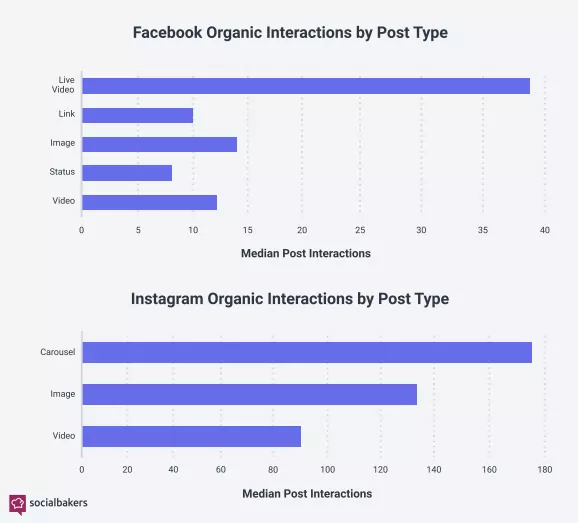
In order to boost engagement in social media on your company’s profiles, it is important that you understand what content formats resonate best with your audience and perform best based on the channel. This means testing different formats—such as videos, carousels, short posts, and long-form content—and analysing what consistently drives interaction rather than relying on assumptions.
💡 Related: 5 Social Media Marketing Tactics to Increase Brand Awareness
4. Get to know the algorithms
Unfortunately, we will never know exactly how social media algorithms work. However, marketers can familiarise themselves with the unique behaviour of each platform in order to improve engagement.
The best way to do that is to be data-driven. Analyse the performance of your posts and identify patterns between your best-performing content. Look at metrics such as reach, clicks, shares, and comments to understand what makes content successful.
Take timing for example. Does it matter when engagement happens?
Again, it depends.
On some platforms, early engagement helps increase reach, as posts that receive interaction quickly are more likely to be shown to a wider audience. On others, consistency and overall interaction over time play a bigger role. This highlights why ongoing testing is essential.
Here are a few more useful insights about different social media algorithms:
- Instagram rewards consistent activity and interaction, which means posting regularly and encouraging conversations can help increase visibility.
- On Facebook, visually engaging formats such as video and carousel posts tend to attract more attention than plain text updates.
- For Twitter, hashtags help categorise content and improve discoverability, making it easier for new audiences to find and engage with your posts.
💡 Related: Social Selling on LinkedIn: Do’s and Don’ts
5. Involve your own employees
One of the most untapped opportunities to drive more engagement on social media is employee advocacy.
Many organizations are not aware of the ROI of employee advocacy and how it can extend reach beyond official brand channels, increase credibility, and bring more authentic voices into your communication.
Because people trust people more than brands, having a structured ambassadorship program for your employees can go a long way in improving visibility and driving engagement. When employees share content, it often feels more personal and relatable, which encourages more interaction.
Encourage employees to participate by making it easy to share content, providing clear guidelines, and recognising their contributions. Over time, this can significantly strengthen your overall engagement in social media and amplify your brand message.
📹 Also, take a look at our online session: The Marketing ROI Battle.
Skyrocket Engagement on Social Media Today
As seen in the previous section employee advocacy inevitably increases engagement on social media. However, implementing and managing a structured and formal employee advocacy program is not easy.
Your employees should be able to share your company’s content on various social media channels in a few seconds. Organizations should be able to gamify advocacy experience and measure the impact of employee advocacy on social media engagement.
Haiilo has a hub for creating and publishing content to your workforce at scale and it provides a central place from which employees can access their company’s content at any time and easily share it on social media.
FAQ: Engagement in social media
1. Why is engagement in social media more important than follower count?
Follower numbers can look impressive, but they don’t guarantee results. What matters is how your audience interacts with your content—likes, comments, shares, and clicks. Strong engagement in social media signals relevance and helps your content reach more people organically. It also builds trust over time, which is critical for driving results like leads and conversions. If you’re focusing only on growth, you risk missing real impact.
2. What types of content drive the most engagement in social media?
It depends on your audience and platform. In general, content that educates, entertains, or sparks conversation performs best. Interactive formats like polls, questions, and short videos often increase engagement. It also helps to align your content with what people already share—this guide on why people share on social media can give you useful direction. Consistency and relevance matter more than volume.
3. How can social media support lead generation?
Social media plays a key role in guiding users from awareness to consideration. By sharing valuable content and engaging with your audience, you build trust before the buying stage. This is especially important in B2B. Learn more in this guide to generating high-quality leads or explore how Haiilo supports this with its lead generation solutions. Engagement makes your audience more likely to convert.
4. How can employee advocacy improve engagement in social media?
Employee advocacy helps extend your reach beyond brand channels. When employees share content, it feels more authentic and gains more attention. This can significantly boost engagement and visibility. If you’re not using it yet, here’s how to build a brand ambassador program or explore Haiilo’s employee advocacy platform to scale the effort.