
During the last decade, employer branding has moved from a “nice to have” to a core priority for HR and talent acquisition teams. The pressure is real: your employees expect more transparency, stronger values, and a workplace that fits their lives. At the same time, the war for talent remains intense. Many organizations still struggle to attract, hire, and retain the right people — not because they lack roles, but because they fail to stand out.
That’s where employer branding marketing comes in. It helps you shape how your organization is seen, experienced, and talked about — long before someone applies. When done right, it reduces hiring friction, builds trust, and keeps your best people engaged.
In this blog, we introduce a clear and practical definition of employer branding, explain why it matters more than ever, and share proven best practices you can use to build and maintain a strong employer brand over time.
Employer Branding Defined
The term “employer brand” was first publicly introduced in 1990 by Simon Barrow, chairman of People in Business. It marked one of the earliest efforts to apply marketing and brand management principles to human resources.
Today, the concept has evolved. Employer branding marketing is no longer just about polished career pages or catchy slogans. It is about the real experience you create for your employees — and how consistently you communicate that experience across every touchpoint, from internal communication to candidate interactions.
Boost your employer brand with the right employee advocacy tools
But what is employer branding really?
There have been many various definitions in the past, but most of them stayed very brief even though employer branding is a discipline no less complex than marketing.
So this is our, more comprehensive, definition:
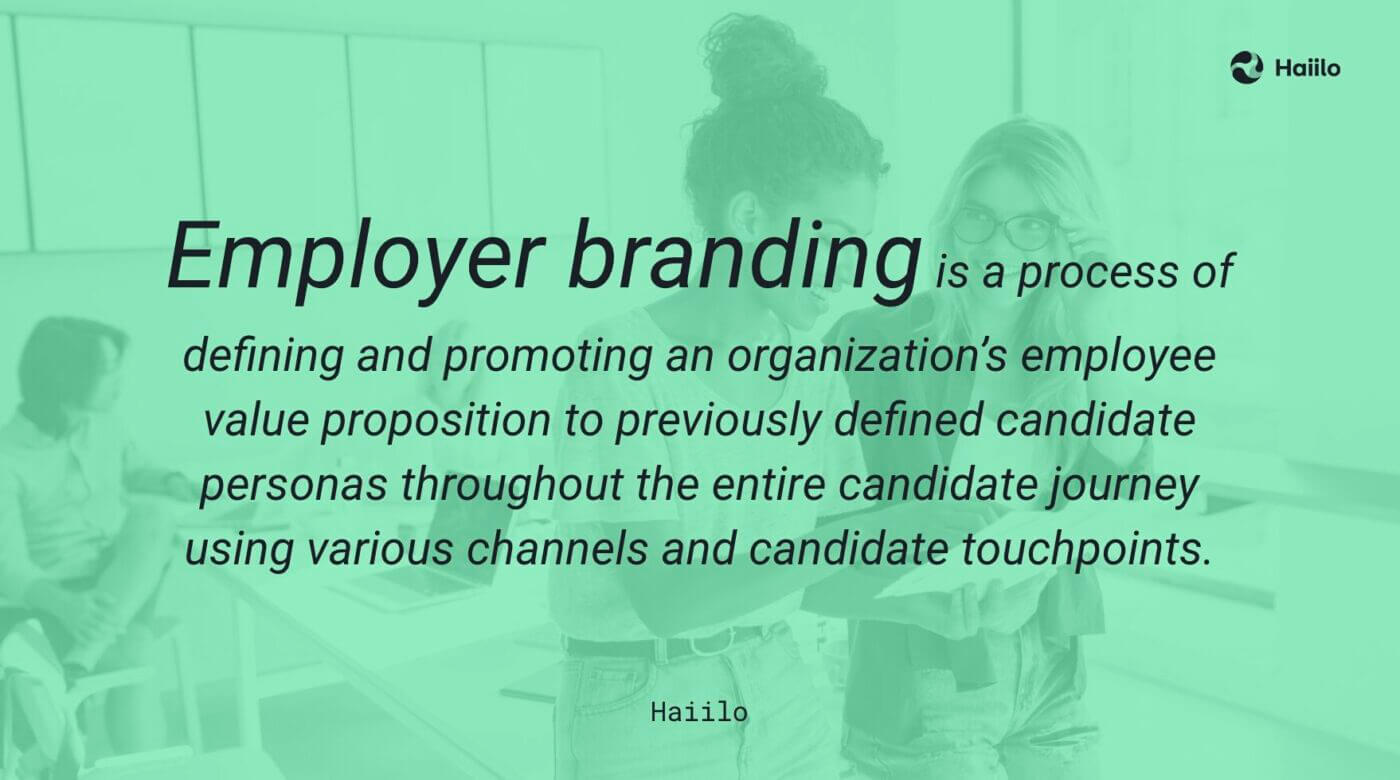
If you are not familiar with all these terms, don’t worry as we will explain them all under the employer brand best practices section. This will help you connect the dots and see how each element supports your overall employer branding marketing efforts.
📚 Check out this comprehensive guide for implementing a successful employer branding strategy.
Why Employer Branding Is So Important
There is plenty of research showing the impact of a strong employer branding and recruitment marketing strategy. Still, many organizations limit employer branding to talent attraction. That is only part of the picture. In reality, employer branding marketing shapes how your employees experience your company every day.
It influences how people discover you, how they feel once they join, and whether they choose to stay. Even though attracting talent is important, employer branding also plays a key role in engaging and retaining the best talent.
1. Talent attraction
Organizations with a strong and credible employer brand attract more relevant candidates. People want to work for companies they trust and relate to. Before applying, candidates research your culture, leadership, and employee experience, much like they would research a major purchase.
Clear and consistent employer branding marketing helps you stand out in that research phase. It gives candidates a reason to choose you over competitors and builds confidence before the first interaction.
Not convinced? Consider these updated insights:
- A large majority of job seekers say an employer’s reputation influences their decision to apply, based on recent global talent surveys. (LinkedIn)
- Talent leaders consistently rank employer brand as a key factor in improving hiring outcomes and attracting qualified candidates. (LinkedIn)
2. Employee engagement and productivity
A strong employer brand sets clear expectations. When those expectations match the real experience, new hires feel more connected from day one. They understand your values, your goals, and their role in it.
This alignment leads to better employee engagement and stronger performance. People who believe in where they work are more likely to contribute, collaborate, and stay focused on what matters.
Employer branding marketing also supports internal communication. It gives your teams a shared story and helps leaders communicate with clarity and consistency across the organization.
3. Talent retention
Organizations with a strong reputation are better at retaining talent. When employees feel proud of where they work and see their experience reflected in your messaging, they are less likely to look elsewhere.
A clear employer brand reduces mismatched expectations. People know what they are signing up for, which leads to better long term fit. It also strengthens trust, especially in hybrid or remote environments where connection can be harder to maintain.
Strong employer branding marketing ensures your internal reality matches your external promise. That consistency is what keeps people engaged over time.
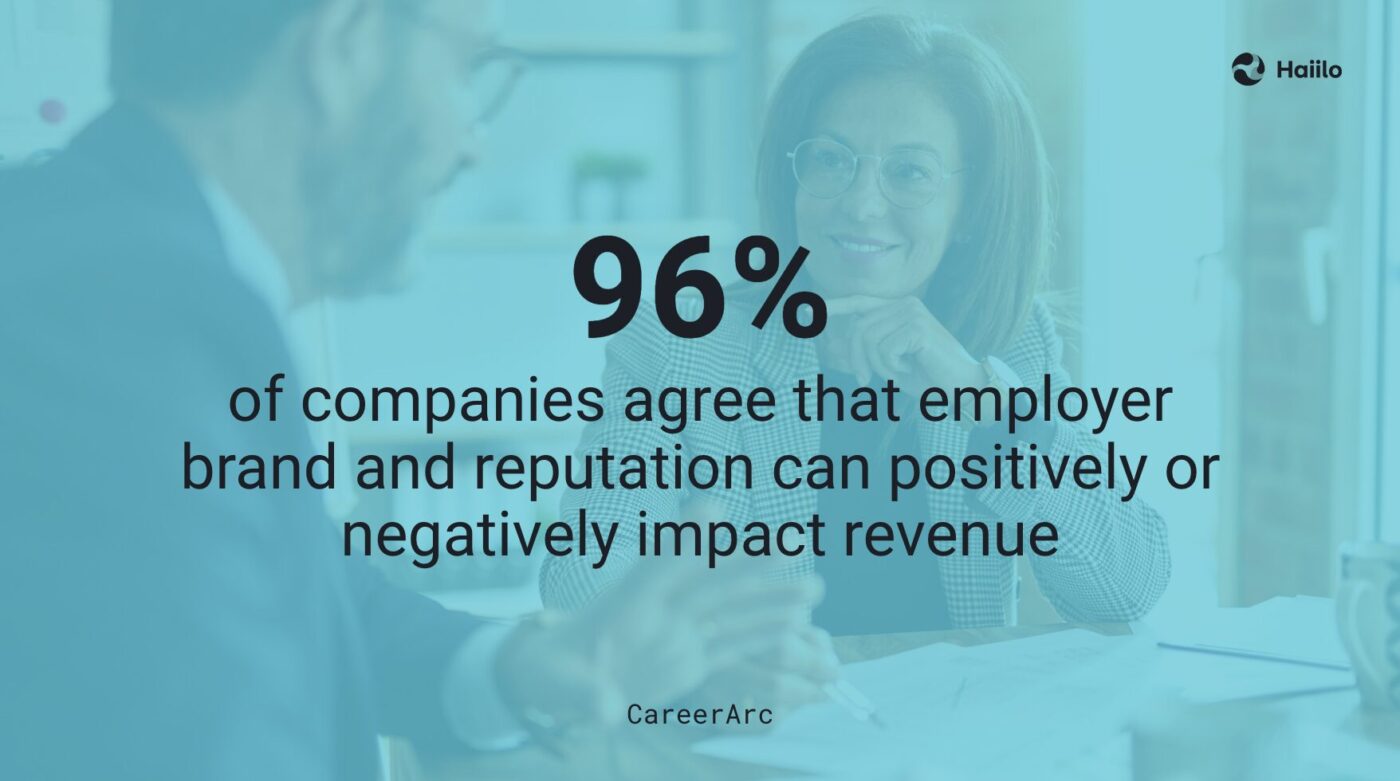
4. Revenue
Replacing employees is expensive and time consuming. Hiring, onboarding, and lost productivity all add up quickly. When experienced employees leave, they also take valuable knowledge with them.
A strong employer brand helps reduce these costs. It shortens hiring cycles, improves quality of hire, and lowers turnover. Over time, this has a direct impact on your bottom line.
Employer branding marketing is not just an HR initiative. It supports business performance by helping you build a stable, engaged, and productive workforce.
5. Workplace culture and morale
When employer branding accurately reflects the company’s values and culture, employees who share those values are more likely to feel comfortable and confident in their role. This creates a stronger sense of belonging from the start.
Over time, this alignment helps create a positive workplace culture where people feel supported, heard, and motivated to contribute. It also reduces friction in day to day collaboration, because expectations are clear and consistent across teams.
Employer branding marketing plays an important role here. It connects what you say externally with what employees experience internally. When both match, morale improves and trust grows.
6. Reputation and external perception
Employees in companies with a strong employer brand often become natural advocates. When people have a positive experience at work, they are more likely to share it with their networks, whether in conversations, reviews, or on social media.
This kind of advocacy strengthens your reputation in a way that paid campaigns cannot. It feels real and credible to potential candidates. At the same time, it reinforces pride and identity among your current employees.
Employer branding marketing helps you guide and amplify these voices. It gives employees the tools and confidence to share their stories while keeping your message consistent across channels.
7. Development and growth
A strong employer brand sets clear expectations around growth and development. It signals that learning, feedback, and career progression are part of the employee experience, not an afterthought.
Employees today look for opportunities to build skills, take on new challenges, and move forward in their careers. When your employer branding marketing highlights these opportunities and your organization delivers on them, it builds long term commitment.
This leads to a more fulfilling experience for employees. They can see a future within the company, which increases motivation and reduces the need to look elsewhere for growth.
6 Best Practices for Creating a Successful Employer Branding Strategy
Even though employer branding has been around for over 3 decades, many organizations still struggle to apply the best practices that lead to measurable results.
One common reason is that employer branding is often treated as a side project rather than a core business priority. Without clear ownership, efforts stay fragmented and inconsistent. Organizations that invest in dedicated roles or cross-functional teams are much better at taking a holistic approach to employer branding marketing and building a strategy that works across the entire employee journey.
Let’s take a deeper look at the steps needed to create and manage a successful employer branding strategy.
1. Start from within
There are no “quick wins” in employer branding!
Many companies try to improve their external image while ignoring internal issues. Candidates quickly spot the gap between promise and reality. That is why your starting point should always be your current employees.
Before you promote your brand, make sure you provide an excellent employee experience. This includes clear communication, supportive leadership, and a work environment where people can do their best work.
Start by assessing how your employees feel today. Use surveys, feedback sessions, or internal data to understand what is working and what is not. If there are gaps, take the time to fix them. This may mean you need to redefine your employee experience strategy before moving forward.
💡 Check out these 13 tips for improving employee experience in the workplace!
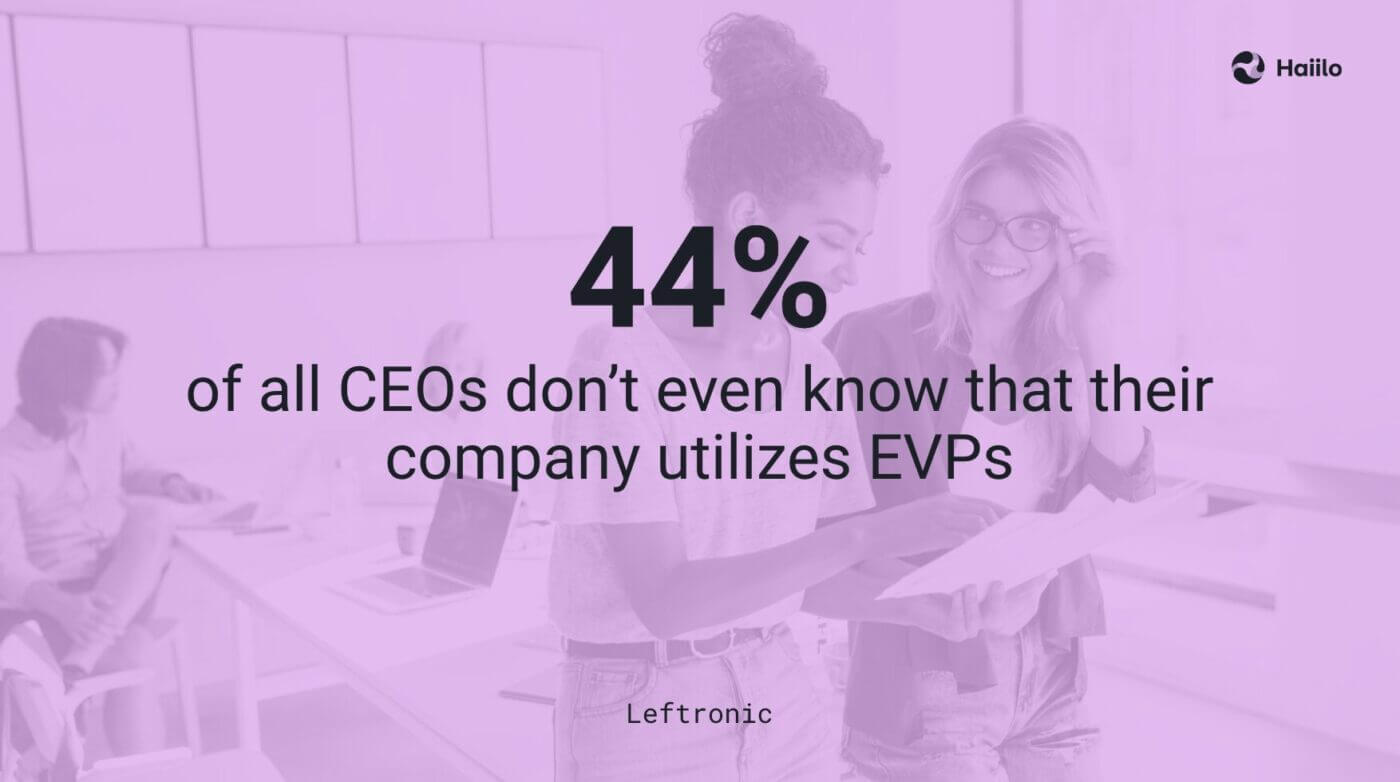
2. Define your EVP
Defining your organization’s employee value proposition is a crucial step that should never be skipped. Defining EVP in employer branding is similar to defining your positioning in marketing. It answers a simple question: why should someone choose to work for you and stay?
Your EVP should reflect what you truly offer, not what you wish to offer. It includes your culture, growth opportunities, leadership style, and everyday work experience. A clear EVP helps you align messaging across HR, communications, and leadership.
Without a strong EVP, employer branding marketing becomes inconsistent. With it, you create a clear and believable story that resonates with both candidates and employees. It also helps your teams communicate with one voice, which is critical in times of change or growth.
Your organization’s EVP should always answer the question:
“What is it that my organization offers as an employer, and how is that different from other employers who are attracting the same type of people?”
The best way to define the EVP is by interviewing your existing employees to find out what they value about your organization and why do they decide to stay.
These 3 simple questions can really help you understand your employees’ state of mind:
- Why is your company a great workplace?
- What do you value the most?
- Why do you choose to work here instead of somewhere else?
3. Define your candidate personas
The same way marketers define their buyer personas, employer branding professionals should create their candidate personas. Defining ideal candidate profiles helps organizations target the right people, create personalized employer branding content, and distribute that content via the right channels.
In most cases, employers define one or more candidate personas per department. When defining candidate personas, these are the main questions to answer:
- What are the candidate’s main skills and interests?
- What is the candidate’s personality?
- What are the candidate’s career goals?
- What is it that frustrates the candidate at work?
- How and where does the candidate look for new job opportunities?
💡 Also check this great candidate persona template!

4. Create candidate journey maps and define candidate touchpoints
Employer branding isn’t only about distributing job openings and other EB content to various channels such as social media. It includes every interaction a candidate has with your organization, from the first impression to the final decision.
In order to deliver an excellent candidate experience, you need a clear view of these touchpoints. This includes career pages, job descriptions, application forms, recruiter communication, interviews, and even rejection messages. Each step shapes how candidates perceive your company.
Mapping the full journey helps you spot gaps and friction. For example, long response times, unclear communication, or inconsistent messaging can quickly turn candidates away. Even if you attract the right people, a poor experience during the hiring process can undo that effort.
That is why it is important to apply best practices throughout the entire candidate journey. Consistency is key. Your tone, messaging, and expectations should align across all touchpoints. This is where employer branding marketing plays a critical role, ensuring a smooth and coherent experience from start to finish.
A well-designed journey also helps hiring teams stay aligned. Everyone involved knows what candidates need at each stage and how to deliver it. This reduces confusion and improves the overall quality of interactions.
Here is a helpful candidate journey mapping template that outlines common touchpoints and can serve as a starting point for your own process.

5. Create and distribute engaging employer branding content
Once you define your EVP, candidate personas, and key touchpoints, it becomes much easier to create the right type of content that attracts the right candidates.
The goal is not to produce more content, but to create content that feels relevant and real. Candidates want to understand what it is actually like to work at your company. Generic messaging will not help you stand out.
Strong employer branding marketing focuses on clarity and authenticity. It shows real experiences, real people, and real moments. This builds trust early and helps candidates decide if your company is the right fit.
Here are some ideas for engaging internal content that candidates find useful:
- Blog posts and webinars about your company events, workplace culture, hiring process, leadership style, career growth, projects, employee stories, and benefits
- Social media posts and stories that highlight day to day work, team moments, corporate responsibility, and open roles
- Video testimonials from employees that give an honest view of their experience and growth
- Local job fair sponsorships and community events to build awareness and connection
Consistency matters. Your message, tone, and visuals should align across all channels. This helps reduce confusion and creates a clear picture of your employer brand.
💡 Also learn about the importance of social recruitment to attract and hire the best talent out there!
6. Engage your employees
The most successful employer branding initiatives involve your employees. Without employee advocacy, employer branding becomes a mission impossible.
People trust employees more than official brand messages. That is why your employees play a key role in shaping how your company is perceived. Their voice adds credibility and reach that no campaign can replace.
You need your employees to create authentic content, share their experiences, and help distribute your message. This is where employer branding marketing and internal communication come together.
To make this work, employees need to feel informed and involved. If they do not know what is happening in the company, they cannot share it. Clear and regular communication is the foundation for strong advocacy.
💡 Learn about how to implement and manage a successful employee advocacy program!
Most Common Employer Branding Challenges
Employer branding is a complex HR discipline that requires multiple teams to work together. HR, internal communications, leadership, and marketing all play a role. Without alignment, efforts can quickly become inconsistent.
Let’s take a look at some of the most common challenges organizations face when planning and implementing an employer branding strategy.
1. Limited resources
Compared to marketing and sales, HR teams often work with limited budgets and capacity. Much of the budget is tied to compensation and benefits, leaving little room for strategic employer branding initiatives.
This lack of resources makes it harder to invest in content, tools, and long term planning. As a result, employer branding marketing efforts often remain reactive instead of proactive.
To move forward, organizations need to treat employer branding as a business priority, not just an HR task. Even small, focused investments can make a difference when applied consistently.
2. Lack of employee engagement
One of the biggest challenges in employer branding is low employee engagement in EB and recruitment marketing initiatives.
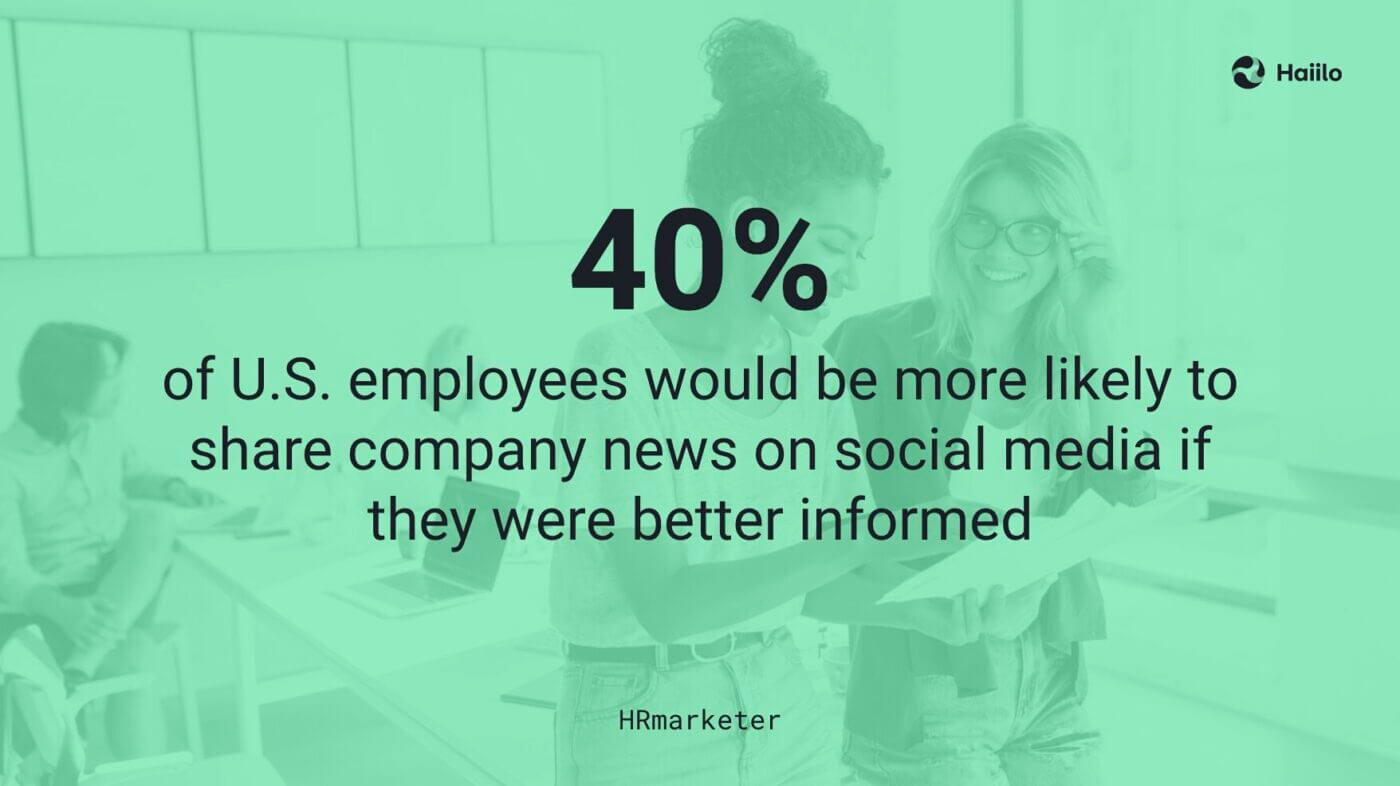
Employees cannot act as advocates if they feel disconnected or uninformed. Many organizations struggle with communication overload or unclear messaging, which makes it harder for employees to stay engaged.
In order to motivate employees to become advocates, they need clear, relevant, and timely information. They also need to understand how their voice contributes to the bigger picture.
This is often a missed opportunity to involve employees as brand ambassadors and extend your reach in an authentic way.
3. Complicated ownership
Who owns employer branding? Marketing, HR, or maybe corporate communications? This question still creates confusion in many organizations. The reality is that employer branding works best when it is shared. It is a discipline that sits between HR and marketing, with clear roles but a common goal.
HR teams understand employees, culture, and the full lifecycle from hiring to retention. They are responsible for shaping workplace culture, core company values, EVP, and candidate personas. Marketing teams bring expertise in storytelling, content creation, and channel strategy. They help turn insights into clear and engaging employer branding content.
Internal communications connects both sides. It ensures employees understand the message and feel confident sharing it. Without this link, even the best employer branding marketing strategy can fall flat.
To avoid confusion, define clear ownership early. Set shared goals, align on messaging, and create simple processes for collaboration. This reduces silos and keeps your employer brand consistent.
4. Remote work and distributed workforce
With the emergence of remote and hybrid work, employer branding has changed significantly. Talent is no longer limited by location. Companies can now hire employees from all over the world, which increases both opportunity and competition.
This shift requires a different approach. Your employer branding marketing needs to reflect a more diverse and distributed workforce. Communication must work across time zones, cultures, and work setups. What resonates in one region may not work in another.
Organizations also need to rethink how they create connection and belonging. Remote employees may not experience your culture in the same way as office based teams. That is why clear communication, strong onboarding, and consistent messaging are critical.
At the same time, your hiring and onboarding processes need to adapt. Fully remote interviews, digital onboarding journeys, and virtual touchpoints are now standard. Each of these moments shapes how candidates and new hires perceive your company.
20 Powerful Employer Branding Statistics
- Strong employer branding can help reduce cost per hire and improve hiring efficiency. (LinkedIn)
- Many HR leaders say attracting talent is becoming more similar to marketing, requiring targeted messaging and clear positioning. (SHRM)
- Employer reputation continues to play a major role in whether candidates apply for a role. (LinkedIn)
- A positive candidate experience increases the likelihood that candidates will accept an offer and recommend the company. (Gartner)
- Online reviews and employee feedback strongly influence candidate decisions during the application process. (Glassdoor)
- Social media remains one of the main channels candidates use to research employers. (LinkedIn)
- Employer branding efforts help improve both quality of hire and long term retention. (Gartner)
- Clear and consistent communication improves trust and engagement among employees. (McKinsey)
- Employees are more likely to trust information shared by peers than by corporate channels. (Edelman)
- Companies investing in employee experience often see stronger engagement and performance. (Gartner)
- Career growth opportunities remain a key factor in employee retention. (McKinsey)
- Hybrid work has become a long term expectation for many employees. (Microsoft)
- Strong onboarding improves new hire retention and productivity. (Gartner)
- Organizations with clear values and culture attract more aligned candidates. (Deloitte)
- Internal communication is a key driver of employee engagement. (McKinsey)
- Employees who feel informed are more likely to act as brand advocates. (Gallup)
- Consistent employer messaging improves candidate trust and application rates. (LinkedIn)
- Employer branding marketing helps organizations stand out in competitive hiring markets. (Gartner)
- Organizations with strong brands are more likely to attract passive candidates. (LinkedIn)
- Employee advocacy can significantly extend the reach of employer branding content. (Edelman)
Getting Started With Employer Branding
As mentioned earlier, employer branding is impossible without your employees’ buy-in. You need employee-generated content to build an authentic and credible employer brand.
When employees become your storytellers, your message feels more real. Candidates trust real experiences more than polished statements. This is where employer branding marketing becomes truly effective.
However, many organizations still struggle to motivate employees to participate. Often, the issue is not willingness but lack of time, clarity, or the right tools.
Modern tools can make advocacy easier. They help employees find, share, and create content without extra effort. They also give teams a clear structure and guidance, which reduces friction and increases participation.
Employer branding marketing FAQs
What is employer branding marketing and why does it matter?
Employer branding marketing is how you shape and share what it is like to work at your company. It combines HR, internal communication, and marketing to create a clear and consistent message. It matters because candidates do their research before applying. If your message is unclear or inconsistent, you lose them early. A strong approach helps you stand out, build trust, and attract people who actually fit your culture. If you want a structured way to get started, this step by step guide is a good place to begin.
How can I improve my employer branding marketing quickly?
Start by looking inward. Your employees already know where things work and where they do not. Use that insight to improve your employee experience and fix gaps before promoting your brand externally. Then focus on clear messaging, real stories, and consistent communication across channels. If you want to scale this faster, tools like employer branding solutions or talent acquisition platforms can help you align teams and content.
What role do employees play in employer branding marketing?
Your employees are your most credible voice. Candidates trust real experiences more than polished campaigns. That is why employee advocacy is key. When employees share content, talk about their work, or refer others, your reach and credibility grow naturally. You can support this with a structured employee referral program or tools like employee advocacy platforms that make sharing easy and consistent.
How do I measure if my employer branding marketing is working?
Focus on a few clear signals. Are you attracting better candidates? Are employees more engaged? Are people staying longer? Metrics like application quality, time to hire, and engagement levels give you a good starting point. You can also track perception through feedback and reviews. If you are unsure where to begin, these employee engagement insights and resources on brand trust can help you define what success looks like.