
Creating more engaging intranet content is one of the main priorities for internal communications and HR professionals today. This is particularly hard for large organizations with different employee personas, distributed and frontline workforce.
In the same way marketers and content creators are expected to create personalized, relevant, and diverse content, employees expect the same in the workplace.
In this blog, we will cover some rules for creating better internal content and share out-of-the-box intranet content ideas you can implement today!
💡 Also, don’t miss our blog about best intranet practices to help you get the most out of your intranet platform.
How To Create Intranet Content That Excites Employees
The main factors holding your intranet back are a lack of personalization, disengaging content formats, poor intranet accessibility for mobile workers, and lack of knowledge about employees’ needs and preferences.
Launching a new intranet won’t automatically fix these issues. Without a clear content strategy, even the most modern platform quickly becomes just another ignored channel. The difference lies in how well content reflects employees’ day-to-day realities—what they need to do their jobs, how they prefer to consume information, and where they access it.
So let’s dig deeper into the rules for creating better intranet content.
1. Relevancy and targeting
The results of a recent study point out that 42% of customers who receive irrelevant content from a brand unsubscribe from that brand. Your employees may not be able to unsubscribe from the company’s intranet content, but they can surely start ignoring it if it’s not relevant to them.
Still, too many organizations deliver the same content to every employee at the same time via the same communication channels. As a result, employees ignore the content, they often miss critical company information, or they don’t engage with the content being delivered to them.
For example, frontline workers may need quick, mobile-friendly updates about shift changes, while managers require deeper insights into performance or strategy. Treating both groups the same undermines the impact of your new intranet from the start.
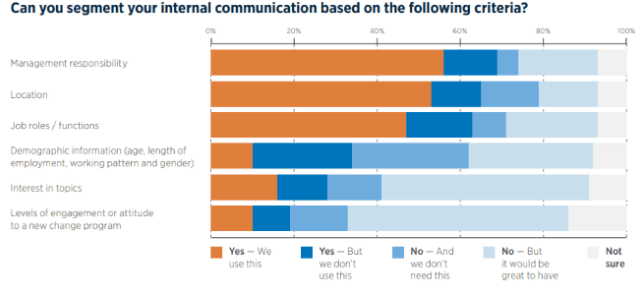
HR and IC professionals need to do a better job segmenting their internal audiences by interest, departments, job functions, locations, languages, channels, and other criteria. This is the only way to deliver relevant content to every employee—and to turn your intranet into a platform people actively rely on rather than passively scroll past.
2. Employee-generated content
Even though company or brand-generated content is sometimes necessary, employee-generated content has much better engagement and readership. When brainstorming for new intranet content ideas, make sure to involve your employees and encourage them to become content creators and ambassadors for your company.
This could mean spotlighting team success stories, sharing peer-to-peer recognition posts, or inviting subject matter experts to publish practical tips from the field. When employees see colleagues featured on the new intranet, content feels more authentic and relatable.
A 2022 State of User-Generated Content revealed that 52% of communications and HR teams already use employee-generated content (EGC).
3. Content types and forms
Try different content types to post on your intranet. Plain text and images are usually not enough to drive higher engagement.
Test with video, internal company podcasts, live webinars, infographics, GIFs, interactive quizzes, surveys, and polls.
For example, short leadership video updates can outperform long written announcements, while quick polls can surface instant feedback on company initiatives. A new intranet should make it easy to experiment with formats and track what actually resonates.
💡 Related: The Ultimate Guide for Internal Company Podcasts
4. Humor and tone of voice
According to academic research, humor in communication creates an open atmosphere by awakening positive emotions that enhance listening, understanding, and acceptance of messages (Greatbatch & Clark 2002).
But when was the last time you used humor in internal company communications? Unfortunately, many IC and HR professionals still stick to serious business topics in internal communications. According to Gallagher, only 26% of companies say their organization is open to using creativity and humor in communication.
That doesn’t mean turning every update into a joke. Even small touches—playful headlines, light-hearted campaign visuals, or employee memes—can humanize your new intranet and make messages more memorable.
So if you want to grab attention from your internal audience, and improve employee engagement and readership, make sure that you add some humor to your workplace communications.
5. Mobile-friendliness
Having an intranet mobile app is one of the biggest prerequisites for higher intranet engagement. Most employees today use their smartphones to access company-related information and apps.
Moreover, frontline workers are dependent on their smartphones to stay up to date with important company information, engage in daily conversations, and connect with their colleagues. A new intranet that isn’t optimized for mobile risks excluding a large portion of your workforce from critical updates and conversations.
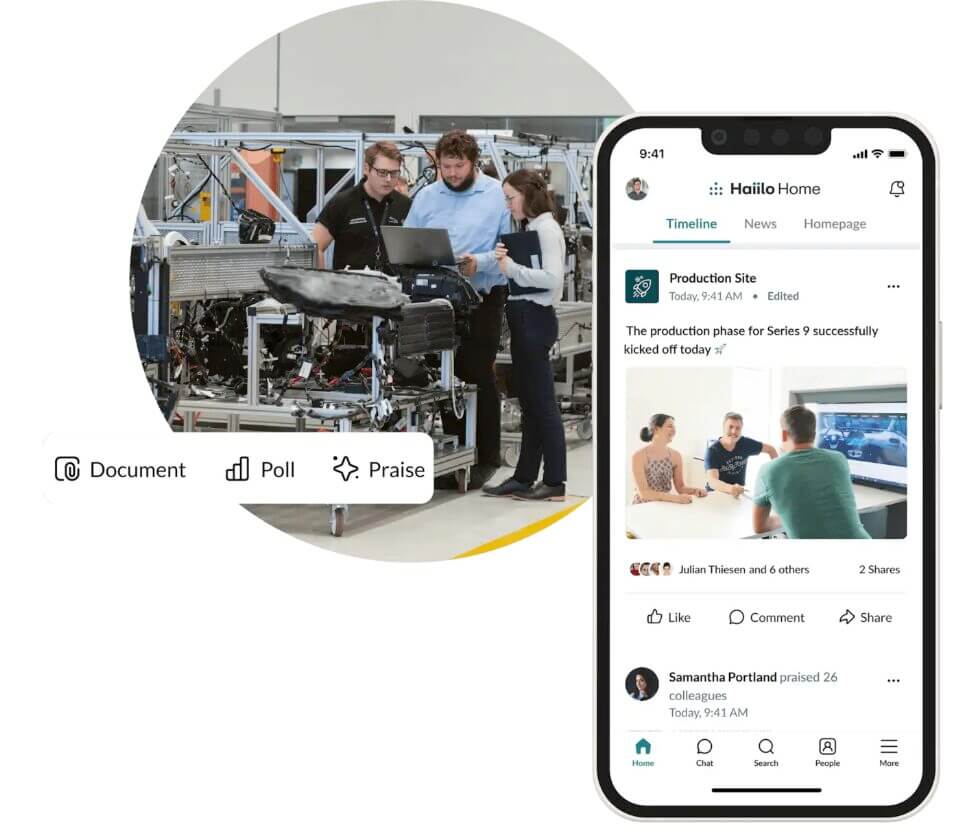
In fact, 87% of businesses rely on their employees to use their personal mobile devices to access company apps, according to Syntonic. That means your new intranet must perform seamlessly across devices, operating systems, and screen sizes—otherwise adoption will stall before it even begins.
6. Data-driven approach, employee suggestions, and feedback
When creating your list of intranet content ideas, make sure to involve employees in the process. You can always send out a simple survey asking employees for intranet content preferences and suggestions. Go further by running quick pulse polls after major announcements or testing new content formats with smaller pilot groups before rolling them out company-wide on your new intranet.
Also, you must track employees’ engagement with the existing content. For example, if your intranet platform tells you that your employees best react to video content, that’s a good insight into what kind of content you should create more of. Look at metrics like click-through rates, comments, shares, and completion rates to understand not just what gets opened, but what truly resonates.
But many organizations are still not there! Even though 72% of employee communication professionals globally report that internal communication is seen as a key driver of employee engagement, only 41% report having dashboards or reports to measure the impact of activities regularly. Without clear data, it’s impossible to prove the value of your new intranet—or improve it strategically over time.
Frequently Asked Questions About Launching a New Intranet
1. What content should we prioritize when launching a new intranet?
When launching a new intranet, start with content that employees genuinely need—not what leadership assumes they need. Focus on CEO updates, key policies, team introductions, product news, and practical resources people use regularly. Then layer in culture-driven content like recognition posts, employee stories, and quick polls. The goal is to make your new intranet immediately useful. If employees can quickly find answers, stay informed, and feel connected, adoption will follow naturally.
2. How do we keep a new intranet from becoming a “ghost town”?
A new intranet becomes irrelevant when content feels one-sided or outdated. Keep it alive by involving employees early—encourage employee-generated content, run interactive formats like AMAs or trivia, and respond visibly to comments and feedback. Consistency matters too. Create an editorial calendar and stick to it. Most importantly, measure engagement. If certain formats or topics underperform, adjust quickly. An intranet should evolve based on real usage, not assumptions.
3. How often should we publish content on a new intranet?
There’s no magic number, but consistency is more important than volume. A steady rhythm—such as weekly leadership updates, biweekly recognition posts, and monthly culture content—works well for many organizations. Too much content can overwhelm employees; too little makes the platform feel abandoned. Your new intranet should support targeted publishing so employees see what’s relevant to them rather than everything at once.
Start creating and distributing more engaging intranet content today!
Content Ideas for Better Intranet Engagement
In this section, we will give you some intranet content ideas to help you improve employee experience in the workplace. Whether you’re refreshing an existing platform or launching a new intranet, the right content mix can turn it from a static information hub into a daily touchpoint employees genuinely value.
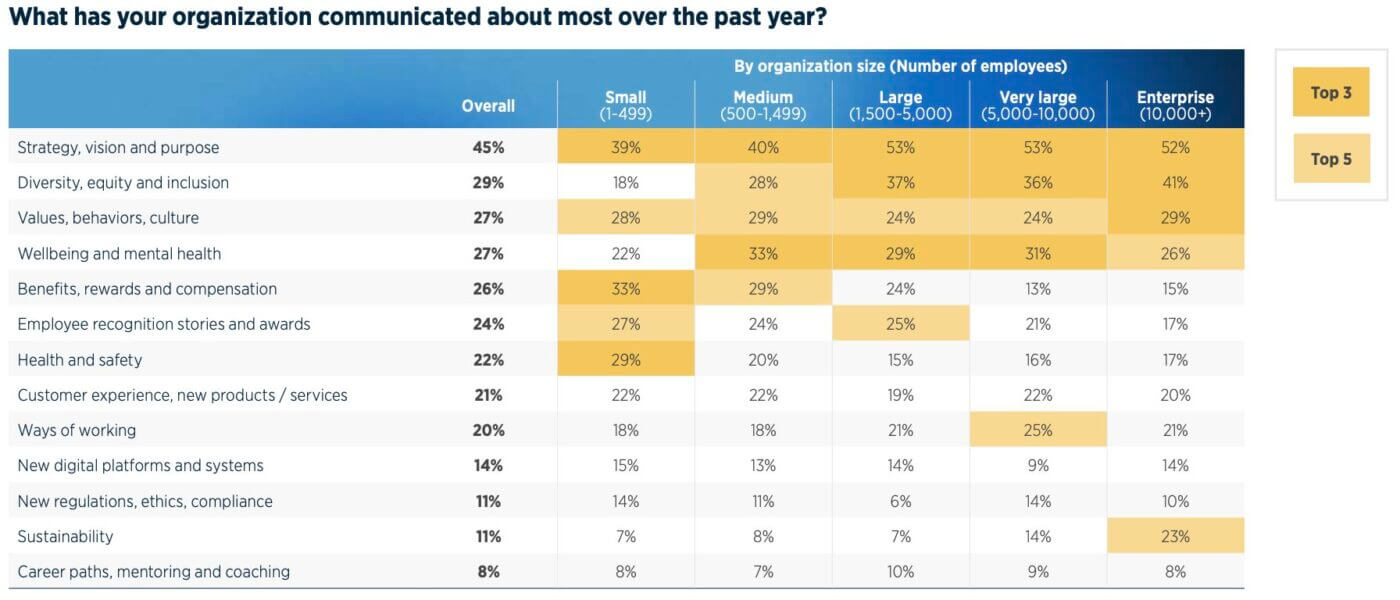
But before we move forward, you may be wondering what’s the current state of intranet content—and whether your priorities align with what employees actually care about.
According to Gallagher, the three most popular topics each contributed to the creation of an inclusive culture and a sense of belonging. Diversity, equity and inclusion came second at 29%, while value, behaviors and culture, and wellbeing and mental health sat side by side at 27%. These insights highlight a clear shift: employees expect their new intranet to reflect real human priorities—not just corporate updates and policy changes.
1. CEO updates
CEO communications are important for building trust and transparency in the workplace. Make sure that your internal editorial calendar includes important company updates directly from your CEO.
But don’t limit these updates to formal quarterly reports. Short video messages reacting to market shifts, honest reflections on challenges, or commentary on company milestones can make leadership feel more accessible. A new intranet should make it easy for employees to comment, react, and ask follow-up questions—turning one-way announcements into real dialogue.
2. Industry news and market drivers
Your intranet is the best place for employees to share their knowledge, learnings, and other important findings.
If you are looking for intranet content ideas to improve employees’ performance and understanding of the business, you can create designated channels to share important industry news and market drivers.
Encourage subject matter experts to add short commentary explaining why a specific trend matters to your company. This context helps employees connect external news to internal priorities—something a new intranet can centralize far better than scattered emails.
3. New employee intros
As a part of your employee onboarding process, you can welcome your new hires with a few interesting facts about them.
This will help them feel more welcomed and will open up conversations with their new colleagues. Consider including a short video introduction or a “how I can help” section so others know when to reach out. On a new intranet, these profiles can remain searchable long after day one.
4. The wall of fame
If you have an employee recognition program, you can use your intranet as a wall of fame to express gratitude to great performers.
Making recognition social and visible to others is a great way of showcasing desired actions and behaviors from employees and it allows others to join the celebrations.
Highlighting the impact behind the achievement—not just the award—adds meaning. Explain what was accomplished, which company value was demonstrated, and how it moved the business forward. This turns your new intranet into a living culture showcase.
5. Open enrollment
Open enrollment is a specific window of time, typically every autumn, during which employees can freely enroll in or update their health insurance plans and other benefits programs.
You should always use your intranet to notify your employees about open enrollment.
Create a dedicated space with FAQs, deadlines, comparison charts, and contact details to reduce repetitive HR queries. A well-structured new intranet can guide employees step by step, minimizing confusion and last-minute stress.
6. Culture podcasts
24% of large organizations use their intranet to communicate their organization’s values, behaviors, and culture.
To make this more fun and consumable on the go, consider organizing monthly podcasts to remind your employees about your company’s core values. You can invite your employees to share real-life stories and tips about practicing those values.
For example, if teamwork is important to your organization, you can have a podcast to showcase an example of a successful cross-functional project. Publishing these episodes on your new intranet creates a central, searchable archive of cultural proof points—not just statements on a wall.
7. Sales wins and customer stories
Boost your sales team’s motivations and morale by sharing new closed-won deals with the entire organization.
Whenever you publish a new customer story, make sure that you showcase it on your company’s intranet.
Go beyond announcing the win—explain the challenge, the solution, and the teams involved. This helps employees understand how their work contributes to customer success and reinforces collaboration across departments on your new intranet.
8. Ask me anything webinars
Once a quarter you can organize a live webinar where employees can ask any questions about the company, business, or their work.
This can be particularly useful for remote, hybrid, and dispersed workplaces where employees don’t have many opportunities to meet in person.
Collect questions in advance via your new intranet to encourage broader participation, and publish recordings with key takeaways afterward so no one misses out.
9. Contests
There are many ways to make work more fun, and contests are one of our favorite ones. You can create contests just about anything, but they are particularly beneficial when they drive better business results.
For example, if you are launching a new marketing campaign, you can ask your employees to share it on their social media profiles. The advocate who drives the most engagement on social media can be rewarded with a small gift, such as custom print-on-demand goods. These could include branded merchandise like t-shirts, mugs, or notebooks, offering a personalized and tangible way to thank them for their support while promoting your brand.
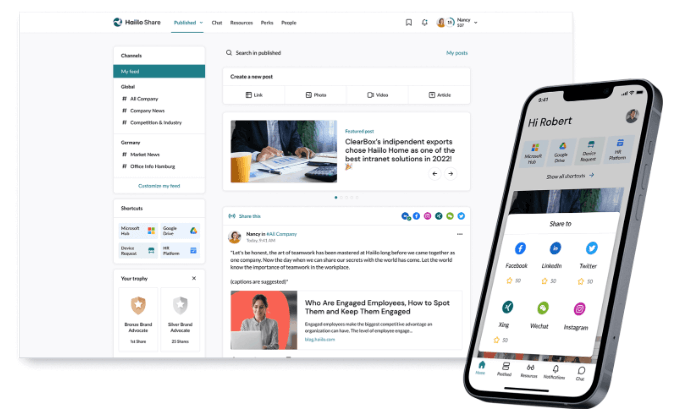
You can also gamify participation by displaying leaderboards or awarding digital badges. Many of the best intranet platforms have embedded employee advocacy features for easier content sharing and gamification features to boost engagement. (Like Haiilo! 😉) A new intranet with built-in gamification makes friendly competition easy to manage and scale.
10. Funny office videos
Ask your employees to record spontaneous, authentic office videos. Share them with the rest of the company on your intranet platform and watch the engagement skyrocket!
These don’t need to be highly produced. Short clips celebrating team milestones, behind-the-scenes moments, or lighthearted bloopers can humanize your workplace. A new intranet with easy mobile uploads lowers the barrier to participation and encourages more employees to contribute.
The great thing is that you can reuse this type of content for your employer branding and recruitment marketing initiatives to attract new talent to your organization. Authentic culture content often resonates far more than polished corporate messaging.
11. Trivia
Who doesn’t like trivia? This initiative takes such a little effort but can go a long way in boosting engagement with your intranet content.
You can simply post one question per week in the form of a simple poll. After a few days, you can release the results and enjoy the comments, reactions, conversations, and discussions about them.
To make it even more impactful, rotate themes—company history one week, industry knowledge the next. A new intranet that supports quick polls and instant results makes this format easy to sustain over time.
12. Work-life balance and WFH tips
Even though 72% of workers believe work-life balance is a critical factor when choosing a job, 66% of full-time employees say they don’t strongly believe they have a work-life balance. Yet, only 23% of companies believe they are promoting work-life balance.
Remote workplaces and those employers who truly care about their employees’ well-being already have internal employee newsletters with tips and best practices for achieving better work-life balance.
You can share these in the form of text, or to drive even more engagement, you can ask your employees to record short videos of their own tips and experiences. A new intranet can centralize these resources—making them searchable and accessible whenever employees need practical advice.
13. Career path stories
Most employees care about their career growth and development within your organization. To keep them in, it is important to remind them of the career paths your company offers.
Again, the best way to do so is by sharing existing employees’ stories and career paths.
For example, if you have an employee who has been with the company for a while, you can have them write a short blog post about their career path. Alternatively, you can create an interesting infographic to showcase their journey within your organization. Adding lessons learned and practical advice makes these stories even more valuable on your new intranet.
14. Product launches
Use your intranet to let the entire organization know about new product launches and other important product updates.
Make sure to attach enablement documents to help your employees understand how to communicate the benefits to the customers.
You can also include FAQs, key messaging points, demo videos, and competitive positioning to ensure consistency. A new intranet should act as the single source of truth for product knowledge across departments.
If new product launches are important for driving new sales or increasing engagement within the existing customer base, you can ask your employees to share the news on their social channels.
15. Job openings
Whether you are looking to improve internal mobility or hire new people, posting new job openings on your intranet is always a good idea.
Internal mobility is the movement of employees to new career and development opportunities within the same organization. If this is something you offer to your employees, encourage them to apply to positions you post on your intranet.
Highlighting required skills, team goals, and growth opportunities helps employees assess fit quickly. A well-structured new intranet can also simplify referrals and internal applications.
If you are looking to attract new talent, you can ask your employees to share the job opening with their networks or make referrals. Remember, referrals are the best source of new hires!
16. Internal and external events
Whether you are holding an internal event such as a company summit or teambuilding, or organizing or sponsoring an external event, your company’s intranet is the best place to let your employees know.
Create dedicated event pages with agendas, speaker highlights, and post-event recaps to extend engagement beyond the event itself. A new intranet can also host recordings and presentation materials for those who couldn’t attend live.
17. LOL GIFs and memes
Earlier in the blog we talked about the importance of humor in the workplace. Why not have a designated place on your intranet with funny GIFs and memes?
When trying times come, every employee can have a place to go to when they need a good laugh.
A new intranet that encourages lighthearted interaction alongside business-critical updates creates balance. When employees associate the platform with positive moments—not just announcements—they are far more likely to return regularly.
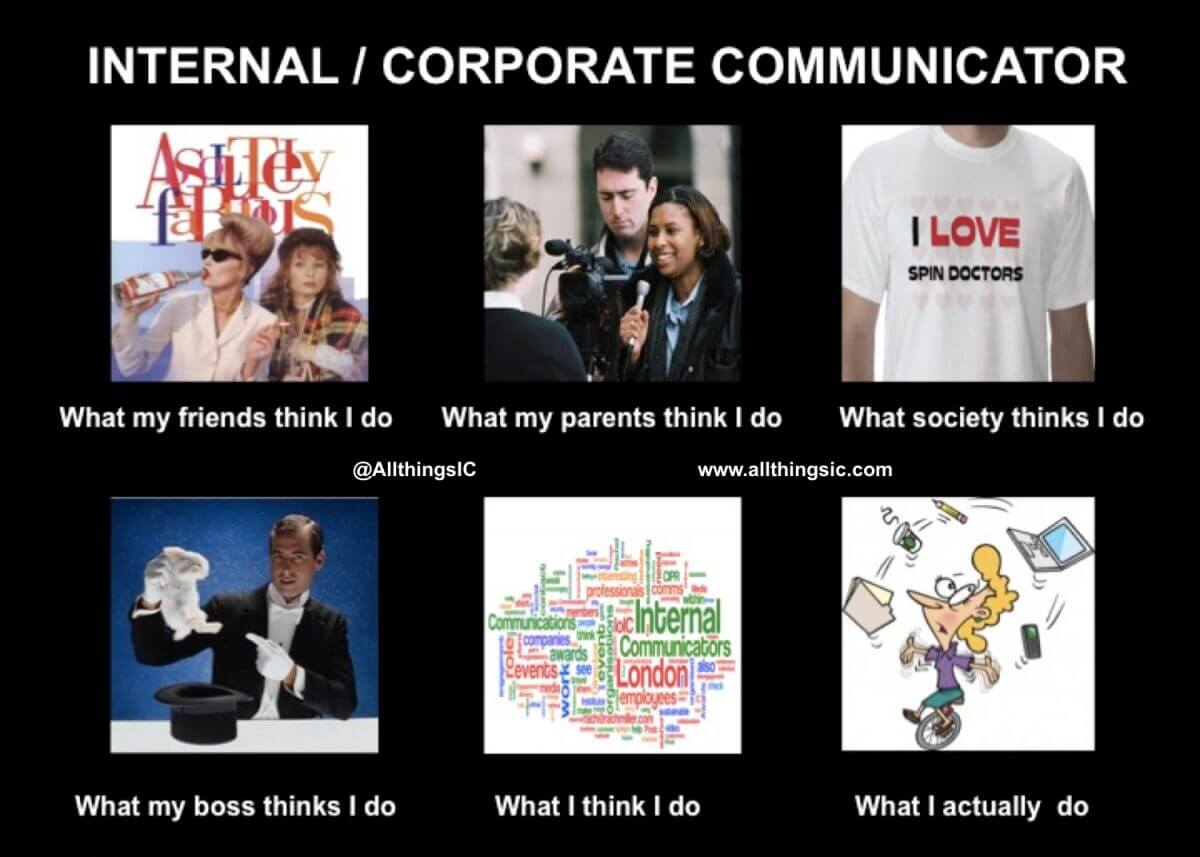
Here’s one to make you laugh today!
18. New policies and procedures
Reaching every employee with new policies and procedures is important for every organization, especially those large ones with a distributed and frontline workforce.
Whether it’s a new safety procedure, social media policy, or any other situation that requires some change management, you need to ensure good readership and engagement.
Summarize key changes in plain language, highlight what’s different, and clearly outline required actions and deadlines. A new intranet should make it easy to acknowledge receipt or confirm understanding.
Such announcements should never go one way. Instead, you should allow your employees to post questions and raise their concerns within the intranet. This not only improves clarity but also surfaces blind spots early.
19. Quick polls
Quick polls are one of our favorite intranet content ideas. They allow you to be creative and also learn more about your employees’ current state of mind.
They’re also a low-effort way to test ideas before rolling out bigger initiatives on your new intranet. For example, gauge interest in a new benefit or preferred event format before committing budget and resources.
Here are a few suggestions:
- React with an emoji that best describes how you are feeling today.
- Which of the following company’s benefits do you value the most?
- Which of our core company values do you find the most important?
- Which questions do you want answered during our next Q&A session?
20. Company-wide surveys
Many HR professionals are struggling to achieve satisfying response rates from their company-wide employee surveys.
Beyond distribution, explain why the survey matters and what will happen with the results. Employees are far more likely to participate when they see previous feedback leading to real change on the new intranet.
To improve visibility and engagement:
- Post the surveys on your intranet’s news feed
- Send out push notifications for better visibility
- Use a multichannel approach to distribute the survey via your employees’ preferred communication channels such as Slack, MS Teams, and SMS
- Set up automated reminders for those who didn’t take the survey
- Automatically translate surveys to employees’ native languages
The Role of Technology In Mastering Your Intranet Content Strategy
Creating more engaging internal content is not easy, but the right technology can help.
Your organization’s intranet capabilities, features, and functionalities are critical for improving the overall intranet adoption and engagement. A new intranet without strong publishing, targeting, and analytics features will struggle to deliver long-term value—no matter how good your content ideas are.
💡 Before we continue, check out our blog about how an intranet can help you improve employee experience.
1. Seamless multimedia content creation
First and foremost, your intranet platform should enable you to easily create content that excites your employees.
That means intuitive editors, drag-and-drop modules, and mobile-friendly publishing workflows. If creating rich content requires IT support every time, momentum quickly fades—especially after launching a new intranet.
With Haiilo, you can:
- Create engaging content in minutes
- Easily embed multimedia content
- Share compelling video and audio stories
- Make your blog articles interactive
2. Sophisticated segmentation and targeting
According to research, around 50% of communication and HR professionals say that their technology doesn’t allow them to serve content based on employees’ interests, and targeting based on engagement is even lower.
On the other hand, personalization is key for intranet user adoption. Employees will keep coming back to your intranet only if the content they see is relevant to their interests, preferences, job titles, locations, departments, and other criteria.
For example, frontline teams may need operational updates, while leadership teams expect strategic insights. A new intranet should make this distinction effortless through dynamic audience rules rather than manual lists.
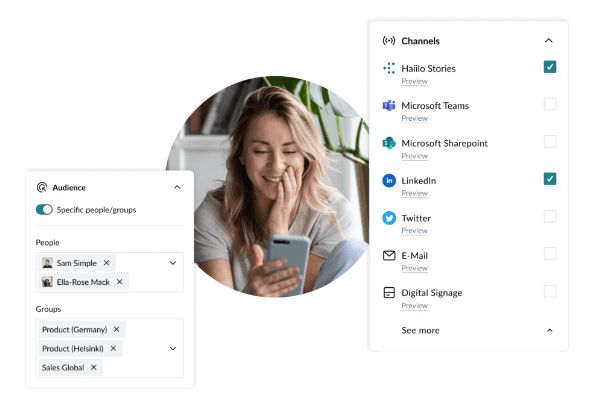
Luckily, modern intranet solutions offer different segmentation criteria which allows comms professionals to curate and publish content in one place and make it highly relevant through dynamic audience targeting.
3. Multichannel distribution
The performance of your intranet content highly depends on your content distribution strategy. Some employees use email, some use Slack and MS Teams, and mobile workers often prefer SMS as the primary means of workplace communication. So how can we always ensure we send information via the right channels?
Multichannel communications aim to enable workplace communicators to use internal channels strategically – not to overwhelm employees but to keep them informed with relevant information.
With our AI-powered intranet, you can publish to all your channels with ease: email, SharePoint, Slack, digital signage, MS Teams, and more. This ensures your new intranet becomes the content hub—while distribution adapts to employees’ daily workflows instead of forcing them to change behavior.
4. Artificial intelligence
According to research, bloggers who use AI spend about 30% less time writing a blog post, and AI trend is also becoming popular among internal comms professionals.
In fact, AI can help you optimize your intranet content strategy in multiple ways.
For example, Haiilo leverages AI to analyze user activity, understand employee interests, and predict future engagement. Based on data, communicators can identify specific employee profiles, create segments, and get recommendations around what type of content employees are likely to engage with.
The platform also uses generative AI to help internal communicators create content much faster. Regardless of your intranet content idea, AI can help you get started so that you don’t ever have to create content from scratch.
📹 Take a look at why the dilemma of the blank page is no longer a thing thanks to Haiilo AVA with which internal communicators create content 10x faster!
Read on! Learn about the key insights on the measurement in internal comms.