
Employee motivation is defined as the level of energy, commitment, persistence, and creativity that workers bring to their jobs. It shapes how people show up each day, how they collaborate, and how willing they are to go the extra mile. It goes without saying that higher employee motivation leads to better engagement and productivity, but it also reduces turnover and improves team morale. When motivation drops, communication breaks down, priorities blur, and performance suffers. Unsurprisingly, employee motivation has become one of the top priorities for most businesses, especially as teams become more distributed and attention is harder to capture. That’s why many organisations invest in employee programs for motivation to create structure, consistency, and measurable impact.
📙 Since employee communication is an important part of employee motivation, check our article on top communication barriers and master the art of communication.
- Employee Motivation Defined
- Why Is Employee Motivation So Important in the Workplace?
- Key Employee Motivation Stats You Need to Know
- 17 Benefits of High Employee Motivation
- How to Motivate Employees: 15 Tips to Improve Employee Motivation
- How to Measure Employee Motivation
- Employee Motivation Hierarchy
- Improve Employee Motivation with Better Internal Communications
Boost employee motivation with a solid employee experience and communication platform.
Employee Motivation Defined
Even though there is no universally accepted definition of employee engagement, we can describe employee motivation as the amount of:
enthusiasm, excitement, commitment, devotion, and creativity that an employee brings to the organization. Employee motivation is all about the level of engagement employees put into their work and how empowered they feel to contribute, share ideas, and influence outcomes.
Employees can be motivated by various extrinsic and intrinsic employee experience factors such as compensation and benefits, recognition, empowerment, career development opportunities, corporate culture, and peer and manager relationships. When these elements are aligned, employees are more likely to stay focused, communicate openly, and take ownership of their work. Many organisations support this through structured employee programs for motivation, helping teams stay engaged even during periods of change or high workload.
 Also, check out our Ultimate Employee Experience Guide!
Why Is Employee Motivation So Important in the Workplace?
Much research has shown that employee motivation is closely linked with employee engagement. When employees feel motivated, they are more focused, communicate more clearly, and contribute more consistently to team goals. Moreover, employee engagement almost always leads to higher productivity, as engaged employees are more likely to take initiative and follow through on their work.
But the impact goes beyond output. Low motivation often shows up as missed messages, low participation, and growing frustration, especially in hybrid or distributed teams. Over time, this can lead to disengagement and higher turnover. On the other hand, motivated employees are more resilient during change and more open to feedback and collaboration.
For that reason, it is not a surprise that organizations put more effort into answering the question: how to continuously motivate employees? Many are turning to structured employee programs for motivation to create consistent experiences, reduce communication gaps, and keep employees aligned with company goals.
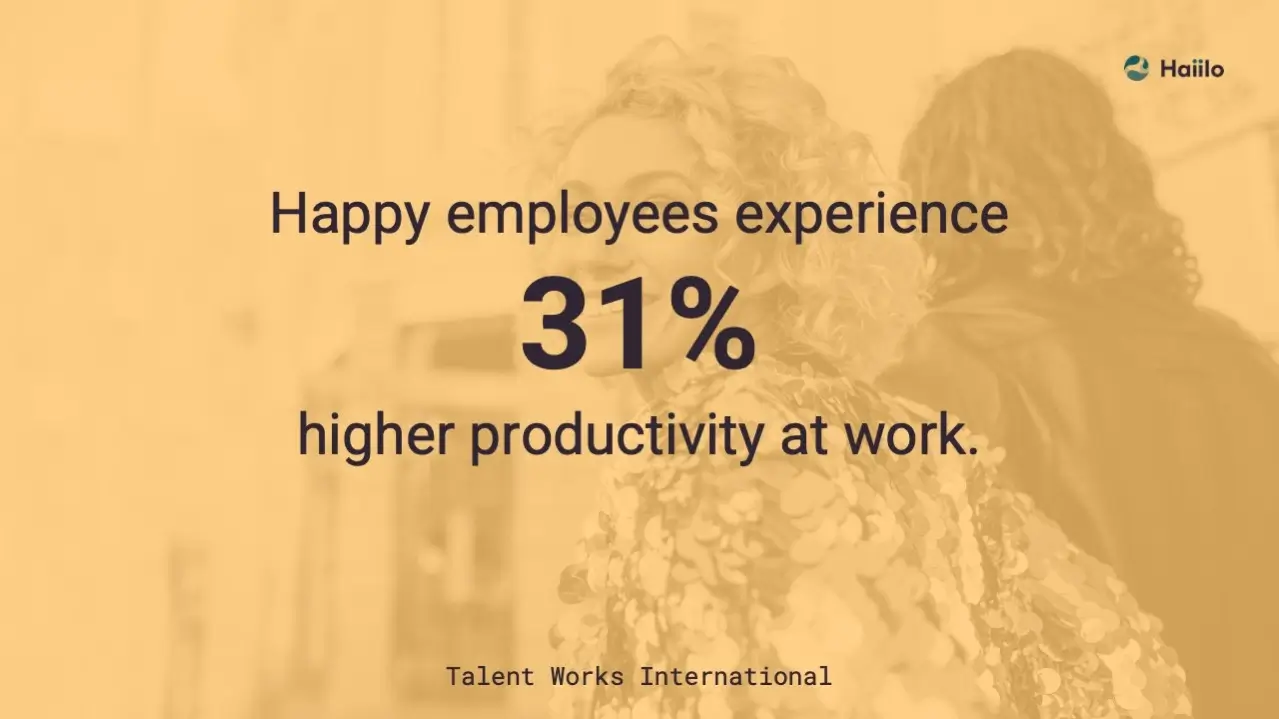
In fact, recent research shows that a large share of employees are not fully engaged at work, which means many are not contributing at their full potential.
Why you may ask?
Here’s the thing: less engaged employees tend to be less emotionally connected to their companies. They don’t feel a strong sense of purpose in their role, and their day to day work can start to feel routine or disconnected from bigger goals. As a result, they are less likely to act as brand ambassadors, speak positively about their workplace, or actively support company initiatives.
📚Read on: 8 Employee Engagement Statistics You Need to Know In 2024 [INFOGRAPHIC]
What’s more, when employees are unhappy at work or feel disengaged, they are less likely to share ideas, take initiative, or go beyond their core responsibilities. This slows down innovation and makes it harder for teams to adapt to change. Over time, it also puts more pressure on managers and engaged team members to carry the load. That’s why many organizations introduce structured employee programs for motivation to rebuild connection, give employees a clear voice, and create a stronger sense of ownership across the business. But you need to get everyone on board to take your business to the next level.
Key Employee Motivation Stats You Need to Know
If you are wondering how to motivate your employees and want to better understand the impact of employee motivation on business success, check out these stats:
- Recent research shows that a significant share of employees report being unhappy or disengaged at work, highlighting a clear gap between expectations and daily experience
- Teams with higher engagement levels consistently perform better and show stronger productivity and focus over time
- Employees in managerial roles often report higher satisfaction, which shows how autonomy and influence can shape motivation
- For many employees, work is closely tied to identity and purpose, making motivation a key driver of long term commitment
- Employees who feel positive about their work environment are less likely to take unplanned absences and more likely to stay consistent in their performance
- Many organizations have introduced recognition or reward initiatives, but not all of them drive real engagement without the right communication and follow up
- Company culture remains a major factor in how employees feel about their jobs and whether they stay long term
- Feeling respected by managers has a direct impact on job satisfaction and day to day motivation
- Only a small portion of employees worldwide are fully engaged at work (Gallup)
- Many companies have an engagement strategy in place, but fewer actively measure whether it works in practice
- Disengagement continues to have a major financial impact on organizations due to lost productivity and higher turnover
- Employees are more engaged when their work aligns with company values and a clear mission
- Employees who feel heard at work are significantly more likely to do their best work (Salesforce)
- Engaged teams tend to build stronger customer relationships and support better business outcomes over time
- Employees are more likely to stay with companies that show responsibility and care beyond profit
- Empathy from leadership plays a key role in retention and overall satisfaction (Businessolver)
- Leaders increasingly recognize that culture directly affects productivity, creativity, and growth
These insights show a clear pattern: motivation is not a “nice to have.” It directly affects how employees think, act, and stay. Without the right structure, even well intentioned initiatives fall flat. That’s why more organizations are investing in employee programs for motivation that are measurable, consistent, and closely tied to everyday work experiences.
17 Benefits of High Employee Motivation
How to motivate employees?
This is one of the biggest concerns among organizations across the world.
No matter how big or small a company is, employee motivation remains one of the most important goals for employers. It affects how people communicate, collaborate, and deliver results every day. Here’s a hint: it all comes down to the company culture (including values) you develop and how consistently you reinforce it.
📚Read on: Company Values: Definition, Importance, and Examples
This is especially true in a workplace shaped by changing expectations, flexible work models, and higher demand for purpose and transparency. Employees today want clarity, recognition, and a sense that their work matters. Employers need to adjust to these expectations, and many are doing so through structured employee programs for motivation that create consistency and visibility.
However, employers need to learn how to adjust because the benefits of high employee motivation are numerous and impact every part of the business.
Before moving to the section about how to motivate employees, it is important to understand the benefits of having highly motivated employees.
Compared to unmotivated employees, motivated employees:
1. Handle uncertainty better
Because motivated employees are more engaged, they are more confident in their work. They stay focused during change and respond faster when priorities shift.
2. Are better problem-solvers
Motivated employees take ownership of challenges. Instead of waiting for direction, they actively look for solutions and improvements.
3. Are more innovative and creative
When employees feel connected to their work, they are more likely to share ideas and suggest better ways of doing things.
4. Are proactive
Motivated employees don’t wait to be told what to do. They act early, spot risks, and take initiative to move work forward.
5. Are more productive
Higher motivation often leads to better focus and fewer delays. Teams get more done without constant follow-ups or reminders.
6. Understand the company’s goals better
Motivated employees want context. They take time to understand how their work supports the company’s direction.
7. Work towards achieving their own goals
Clear alignment helps employees set and reach their own goals more effectively, which builds confidence and momentum.
8. Work towards achieving the company’s goals
They don’t just focus on individual tasks. They contribute to team and company success with a broader mindset.
9. Are more customer-centric
Engaged employees care more about outcomes. This often leads to better customer experiences and stronger relationships.
10. Stay with the company longer
Fluctuation is one of the biggest workforce problems, and lack of employee motivation is one of the biggest reasons for high employee turnover. Motivated employees are more likely to stay because they feel valued and involved.
11. Are more adaptable and open to changes
Motivated employees are more open to new tools, processes, and ways of working. This makes change easier to manage.
12. Are better team players
They collaborate more, share knowledge, and support their peers instead of working in silos.
13. Have a good impact on other employees
Motivation spreads. Positive, engaged employees often influence team morale and create a healthier work environment.
14. Tend to be healthier
A positive work environment reduces stress and supports overall well-being, which can lead to fewer absences and better consistency.
15. Are brand ambassadors
Motivated employees are more likely to speak positively about their company and share their experiences. This helps build trust externally and supports talent attraction.
16. Are more productive
Employees with high morale and motivation tend to go the extra mile. They stay focused and deliver stronger results over time.
📚Read on: 10 Proven Ways to Increase Employee Productivity in 2024
17. Show greater loyalty
Loyal employees are committed to the company’s success. They take pride in their work, stay longer, and continue to grow within their roles.

How to Motivate Employees: 15 Tips to Improve Employee Motivation
As today’s workforce is very different from the one we had ten years ago, so are motivational factors. Expectations around flexibility, communication, and purpose have shifted, and employees now expect more clarity, recognition, and involvement in decision-making.
Every employee is different, and not the same things motivate them. Some value growth opportunities, while others care more about recognition or work-life balance. However, there are a few employee motivation tips every employer should follow. Many organizations bring these together in structured employee programs for motivation to ensure consistency across teams and locations.
1. Choose the right leaders
Assigning the right people to lead employees is crucial for employee motivation. Good leaders have the power to motivate, guide, and support their teams on a daily basis. They set the tone for communication, trust, and accountability.
Strong leaders don’t just manage tasks. They listen, give clear direction, and create an environment where employees feel safe to speak up and contribute. When leadership is weak or inconsistent, even the best motivation efforts can fall flat.
Here is a great overview of what employees are not looking for in their leaders.

2. Coach your managers
Continuous management development and coaching are necessary to keep employee motivation at high levels. As the workforce changes, so do expectations around communication, feedback, and leadership style. Managers need regular support to adapt, improve their people skills, and lead with clarity. Investing in coaching ensures managers don’t fall behind and can actively support employee programs for motivation in a consistent way.
3. Define precise but realistic engagement goals
Managers and leaders should be responsible for assigning specific and measurable engagement goals and objectives. Employees who have clear goals are more motivated to achieve them because they understand what success looks like. Keep goals realistic and relevant to daily work to avoid frustration or confusion.
4. Make someone accountable
After defining goals, leaders should be held accountable. In other words, if the goals are not achieved, managers should take ownership of understanding why engagement levels are low. They should also define clear actions for improvement and communicate progress regularly.
5. Improve internal communications
This is a crucial one! Companies with poor employee communications suffer from low motivation and engagement. Employees who are not informed or feel excluded are much harder to motivate. Clear, timely communication helps employees stay aligned, reduces uncertainty, and builds trust.
Boost your internal comms strategy and watch how your employees get more engaged.
📹 Check out our Masterclass to learn about how to create a successful internal communications strategy.
6. Value employees’ work and contribution
Employees need to know that their work is valued. When they achieve their goals, show them how their contribution impacts the bigger picture. This reinforces purpose and keeps motivation high over time.
7. Give structured feedback
Positive or negative, feedback is necessary. Continuous feedback helps employees stay informed and improve. Make feedback regular, specific, and actionable so employees know what to keep doing and what to adjust.
8. Reward your employees
Don’t forget to reward good work. Recognition and rewards should be part of your everyday culture, not just annual reviews. However, make sure to reward your employees with something that they truly value, whether that is visibility, flexibility, or growth opportunities.
Not sure about how to give recognition? Here is great research on how employees prefer to receive recognition.
9. Connect with your employees
Good leaders are often able to connect with their employees on both personal and professional levels. Simple check-ins and informal conversations can go a long way in building trust and understanding what drives each individual.
10. Build a positive workplace environment
Healthy workplace environments are the ones where people feel safe to speak up, feel valued, trust their leaders, and have strong relationships with colleagues. A positive environment supports motivation without forcing it.
11. Encourage creativity and innovation
Employees want to contribute beyond their core tasks. Give them space to share ideas, test new approaches, and challenge the status quo. This keeps work interesting and meaningful.
12. Empower your employees
Give employees more freedom to make decisions themselves. It is hard to stay motivated when every step is controlled. Therefore, employee empowerment is crucial to improve employee motivation and ownership.
13. Implement learning and development programs
Encouraging employee development and continuous learning helps employees grow and stay engaged. Track progress, offer new challenges, and create clear career paths to maintain long term motivation.
14. Address employees’ quality of life
Care about your employees’ quality of life and work-life balance. Highly motivated employees can burn out quickly if expectations are not managed. Support flexibility and realistic workloads to keep performance sustainable.
15. Make sure to understand what motivates them
Not all employees are the same and not all are motivated by the same things. Some prefer financial rewards, while others value recognition, flexibility, or growth. Take time to understand individual drivers and adjust your approach accordingly.
Check out this great video by TEDX CosmoPark on what motivates employees and how to go about dealing with unmotivated employees.
How to Measure Employee Motivation
How to know if, and to what extent, your employees are motivated?
Employee motivation is not easy to measure because it is influenced by multiple factors such as communication, leadership, and work environment. However, there are 3 common ways companies use to get a clear and actionable picture:
1. Performance reviews
Not only can performance reviews help you motivate employees, but they can also be a strong indicator of motivation levels over time.
Bad performance review results can be a very good indicator of low employee motivation and engagement. But it’s important to go deeper than the score itself. Look for patterns such as missed deadlines, low participation, or lack of initiative. Once the issue is identified, employers should focus on what is causing low motivation levels and address those root causes, not just the symptoms.
2. Employee motivation and engagement surveys
Surveys are one of the most popular ways to measure employee motivation. They help you capture direct feedback and understand how employees feel about their work, leadership, and communication.
However, employers should be very careful when choosing survey questions. It is extremely important for employee engagement surveys to be anonymous so employees feel safe to share honest feedback. In addition, use a mix of question types such as rating scales and open-ended questions to uncover both trends and detailed insights. Regular pulse surveys can also help track changes over time.
3. Customer satisfaction surveys
Customer satisfaction often reflects what is happening internally. When employees feel supported and motivated, they tend to deliver better customer experiences.
Therefore, measuring customer satisfaction can help you identify levels of employee motivation, especially in roles that interact directly with customers. Drops in satisfaction scores may signal internal issues such as poor communication or low morale.
To get the most accurate picture, many organizations combine these methods within structured employee programs for motivation. This allows them to track progress, identify gaps early, and take action before disengagement spreads.
Employee Motivation Hierarchy
In order to successfully motivate your employees, you really need to understand what is it that motivates and drives them. Without that understanding, even well-designed initiatives can miss the mark or feel disconnected from employees’ real needs.
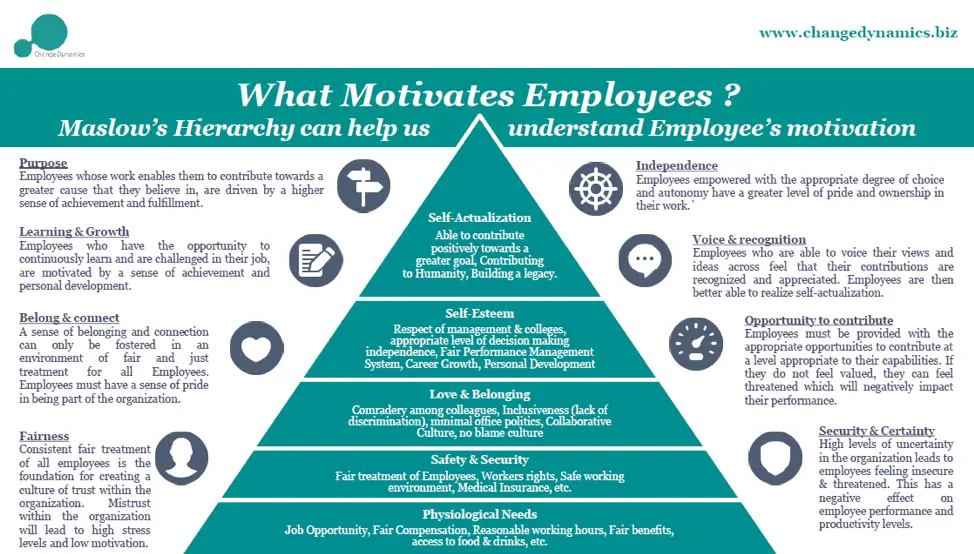
Abraham Maslow’s hierarchy of needs theory is one of the most popular needs theories. In this theory, motivation is the result of a person’s attempt at fulfilling five basic needs: physiological, safety, social, esteem and self-actualization. Each level reflects a different type of need, from basic stability to personal growth.
These needs exist in a hierarchical order. In other words, lower-level needs must be met before higher-level needs can be addressed. For example, employees who feel insecure in their role or unclear about expectations will struggle to focus on growth, creativity, or long-term goals.
This theory can also be applied to help us understand employee motivation in the workplace. It gives leaders a simple way to assess where gaps exist and what employees might be missing. Applying this framework helps companies move beyond guesswork and design more effective employee programs for motivation that address real employee needs at every level.
Check out Change Dynamics’ modified Malsow’s Hierarchy applied to employee motivation.
Improve Employee Motivation with Better Internal Communications
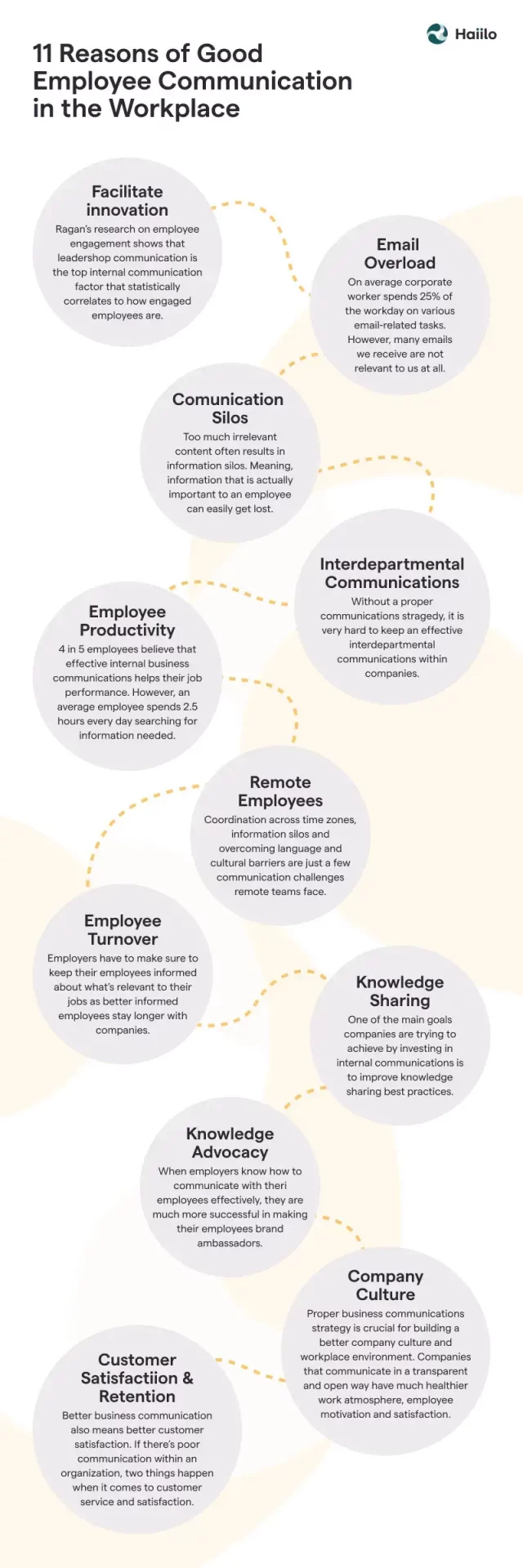
In this blog, we have mentioned several times how important internal communications are for employee motivation. In fact, employees who are not informed about what is going on in the company struggle to stay motivated and engaged. When communication is unclear or inconsistent, employees feel disconnected from decisions, priorities, and outcomes.
Strong internal communication helps employees understand what is expected of them, how their work contributes to company goals, and where the organization is heading. It also reduces confusion, limits information overload, and creates a sense of inclusion, especially in hybrid or remote teams.
However, most companies face internal communication challenges that prevent them from optimizing employee relations. Messages get lost, channels are fragmented, and important updates don’t reach the right people at the right time. This makes it harder to maintain motivation, even when the right initiatives are in place.
For that reason, many employers have invested in tools and software to help them optimize internal comms strategy. These tools support more targeted messaging, better feedback loops, and clearer alignment across teams. When combined with structured employee programs for motivation, they help ensure that communication is not just frequent, but also relevant and actionable.
And here’s why 👇
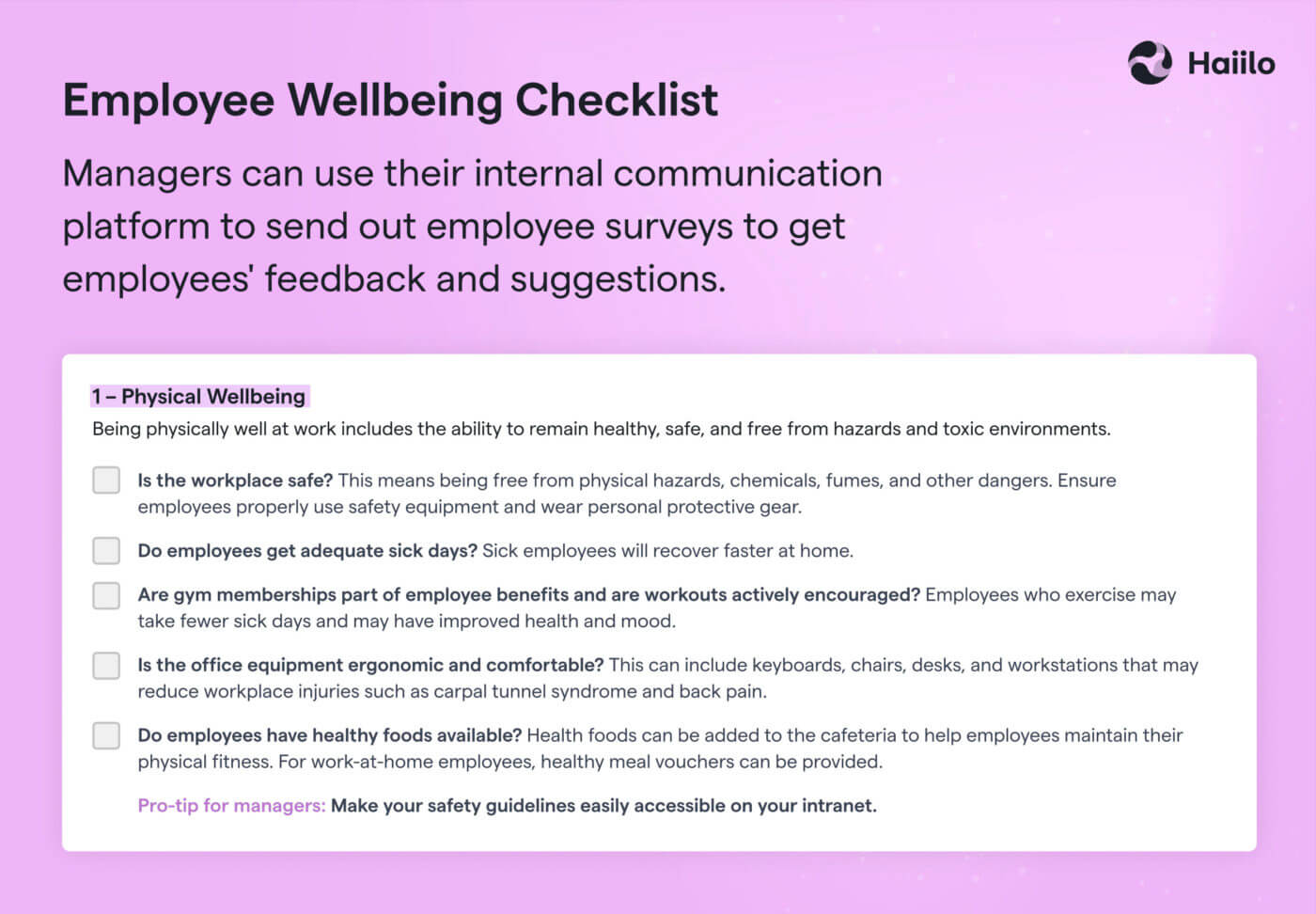
Want to improve productivity in the workplace? Get our free employee wellbeing checklist!
FAQ: employee programs for motivation
1. What are employee programs for motivation and why do they matter?
Employee programs for motivation are structured initiatives that help you keep employees engaged, informed, and connected to your company’s goals. Instead of relying on one-off actions, these programs create consistency across teams. They often include recognition, feedback loops, and clear communication. When done right, they address common challenges like disengagement and low morale. If you want to understand the bigger picture, this overview of employee engagement statistics shows why motivation should be a priority.
2. What should you include in effective employee programs for motivation?
Focus on what employees actually need day to day. That includes clear communication, regular feedback, recognition, and growth opportunities. Strong programs also reflect your company culture and values. If your values are unclear, motivation efforts will feel disconnected. This guide on company values explains how they shape employee behaviour and engagement.
3. How can technology support employee motivation?
Technology helps you scale and manage employee programs for motivation more effectively. For example, a social intranet keeps employees informed and connected, while AI features can personalise communication and reduce overload. Integrations also matter. Tools like integrations and enterprise search ensure employees can easily find what they need without friction.
4. How do you know if your employee programs for motivation are working?
Look at signals like engagement, retention, and feedback. If employees are more active, stay longer, and share input, you are on the right track. If not, something is off. Issues like low satisfaction or high turnover often point to gaps in your approach. You can explore this further in these guides on employee satisfaction and employee turnover. Regular check-ins and small adjustments make a big difference over time.