
Employer branding (EB) is one of the most important fields of talent acquisition (TA). As competition for talent continues to grow, organisations can no longer rely on salary or job titles alone. Candidates expect transparency, purpose, and a clear employee experience. This shift has made employer brands a critical factor in attracting and retaining the right people. Employers are now required to invest in their employer branding strategies more than ever before, and to do so in a more structured, consistent way.
In this blog, we will go over the definition of employer branding, the benefits of building and managing strong employer brands, and best practices for implementing and managing a successful EB strategy. You’ll also learn how to align your messaging with real employee experiences and turn your employer brand into a long-term hiring advantage.
The Definition of Employer Branding
Employer brand is a term used to describe an organization’s reputation as an employer—how current employees, candidates, and the wider market perceive what it’s like to work there. Employer branding, on the other hand, is a set of activities and campaigns employers use to shape, communicate, and strengthen those employer brands over time.
In other words, employer branding is everything an organization does to communicate and promote their organization’s employee value proposition. This includes how you present your culture, values, and employee experience across channels such as careers pages, social media, job ads, and internal communications. Done well, it ensures your external message reflects the reality inside your organisation and helps build trust with the talent you want to attract.
Haiilo might be the perfect app for your comms needs. Get a demo now!

Some of the most common employer branding activities include:
- Planning, defining, and implementing a clearly defined employer branding strategy that aligns with business goals
- Creating an attractive, user-friendly career site that reflects your culture and values
- Using social media to share employees’ testimonials, day-in-the-life content, and success stories
- Managing employer review sites such as Glassdoor and responding to feedback transparently
- Creating and managing advanced profiles on job boards such as Indeed and Monster
- Creating and promoting clear, compelling job descriptions and job ads that reflect your employer brands
- Investing in candidates’ experience during application and selection processes
- Participating in local career fairs, university events, and industry meetups
Strong employer brands are not built through one-off campaigns. They require consistent effort across all touchpoints where candidates and employees interact with your organisation. This includes both external communication and internal alignment, ensuring that what you promise matches what employees actually experience.
It is no surprise that almost every organization today invests in their employer brand. As competition for talent increases, employer brands have become a core part of the overall HR and business strategy, helping companies attract better candidates, reduce hiring costs, and improve retention.

“`html id=”8c4mzn”
Let’s now dig deeper into why employer branding is so important.
Why Implementing an Employer Branding Strategy is Important
Organizations across the world are investing in their employer brand more than ever before. As people remain the most important component of every organization’s success, companies can’t afford to ignore how they are perceived as employers. This is especially true in competitive markets where candidates have more choice and higher expectations.
To stay competitive, employers are doing everything in their power to attract new talent to their workplaces. But attraction alone is not enough. Strong employer brands also help build trust, improve engagement, and retain high-performing employees over time.
An effective employer branding strategy creates consistency across every touchpoint—from job ads to interviews to onboarding. It helps candidates understand what your organisation stands for and whether they belong. At the same time, it reinforces your culture internally, making it easier to align employees with your mission and values.
The following image shows the reasons why companies invest in employer branding activities.

But let’s take a look into some specific statistics that show the power of having a strong employer branding strategy, as well as the ROI of investing in employer branding activities.
1. More high-quality job applicants
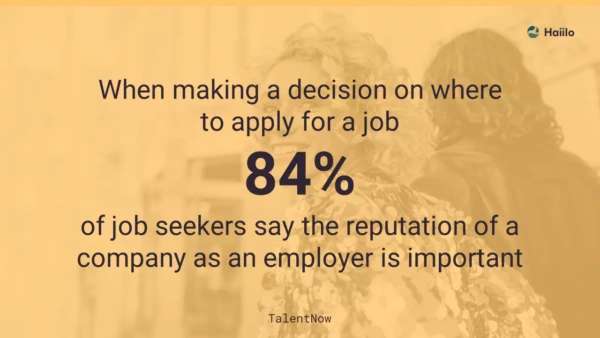
There is a lot of research showing that organizations with strong employer brands attract more relevant and higher-quality candidates. When your reputation is clear and credible, the right people are more likely to apply—and the wrong ones are more likely to opt out.
Here are just a few examples:
- According to LinkedIn, companies with strong employer brands are more likely to attract qualified candidates who align with their values and culture.
- Research by Glassdoor highlights that job seekers consistently research a company’s reputation before applying, making employer brands a key factor in application decisions.
- A strong employer brand helps candidates self-select, which means fewer unqualified applications and a higher overall quality of talent entering the pipeline.
- Clear and consistent employer brands also improve trust, making candidates more confident in their decision to apply and engage throughout the hiring process.

2. Lower turnover rates
As seen earlier, companies that invest in employer branding strategies are better at attracting talent that fits their organization’s core values, mission, and culture. This alignment matters. Employees who feel connected to what a company stands for are more likely to stay and grow within the organisation.
Strong employer brands also set clear expectations from the start. Candidates know what they are signing up for, which reduces mismatches and early exits. Over time, this leads to more stable teams, higher engagement, and lower turnover rates.
💡 Related: Employee Retention: 14 Hacks to Stop Employees From Leaving.
3. Lower expenses
Because strong employer brands attract more relevant job candidates, organizations that invest in their reputation often reduce hiring costs. Recruiters spend less time sourcing, screening, and persuading candidates, which shortens time-to-hire and improves efficiency.
A positive reputation also lowers dependency on paid channels such as job ads and external agencies. Instead, companies benefit more from organic applications, referrals, and inbound interest driven by their employer brands. Over time, this creates a more sustainable and cost-effective hiring strategy.
4. More loyal customers
Employer brand and candidate experience can have a direct impact on customer perception. The way you treat candidates and employees often reflects how you treat customers.
Candidates who have a poor experience during the hiring process may lose trust in your brand altogether. On the other hand, a positive and transparent experience can turn candidates into advocates—even if they don’t get the job. Strong employer brands help build this trust, strengthening both talent attraction and customer loyalty at the same time.

5. Faster growth
People are the greatest asset an organization can have. Companies that attract and retain high-quality talent are better positioned to innovate, adapt, and scale. Strong employer brands make this easier by consistently bringing in candidates who are aligned, motivated, and ready to contribute.
When hiring becomes more efficient and retention improves, teams stay stable and productive. This creates momentum across the business, allowing organizations to grow faster and more sustainably over time.
6. Diversity and inclusion
Organizations that have a clear employer branding strategy are better at attracting diverse talent and creating a more inclusive workplace. Employer brands play a key role in shaping how different audiences perceive your company and whether they feel they belong.
Employer branding channels such as social media give employers a space to showcase their corporate and social responsibility, highlight diverse voices, and share real employee stories. When done authentically, this helps build trust and encourages a wider range of candidates to apply.
How to Build a Successful Employer Branding Strategy
Planning, building, implementing, and managing a successful talent acquisition strategy is not an easy job. It requires alignment across HR, marketing, and leadership, as well as a clear understanding of your audience.
With the growth of digital channels, many organizations now have designated EB teams responsible for managing their employer brands across platforms and touchpoints.
There are no quick wins. Employer branding is an ongoing effort that needs to be measured, refined, and consistently applied across the entire employee lifecycle—from awareness to retention.
Let’s now take a look into the must-follow steps for building the most successful employer branding strategy.
1. Define your EVP
Employee value proposition is what your organization stands for. It represents your company’s core values, mission, vision, and culture. It is what differentiates you from your competitors and shapes how your employer brands are perceived in the market.
A strong EVP should be clear, authentic, and based on real employee experiences—not assumptions. It should answer a simple question: why should someone choose to work for you instead of another company?
Many organisations still struggle to define this clearly. Without a well-articulated EVP, employer branding efforts become inconsistent and less effective. Taking the time to define and validate your EVP is the foundation for everything that follows.

When defining EVP, it is important to stay realistic. Many organizations try to make their value propositions sound overly attractive, while the actual employee experience does not match. This gap creates distrust and leads to poor retention. Candidates may join with high expectations, only to leave quickly when those expectations are not met.
This is why the saying “Employer brand starts from within” is so relevant. Strong employer brands are built on real experiences, not marketing messages. If you want to attract and retain the right talent, the first step is to make your company a genuinely better place to work. That means listening to employees, acting on feedback, and aligning your EVP with reality.
💡 Related: Employee Value Proposition: The Complete Guide to Building a Great EVP
2. Understand your TA challenges and future needs
When building an employer branding strategy, it is important to understand your current recruitment and hiring challenges. Without this clarity, it is easy to invest time and budget in the wrong areas. You also need to understand your current and future hiring needs to make your employer brands more targeted and effective.
For example, if attracting AI talent is your biggest challenge, your messaging, content, and channels should reflect what matters to that audience. The same applies to any hard-to-fill role or strategic function. The more specific your focus, the stronger your results.
💡 Related: Recruitment vs. Talent Acquisition.
3. Define goals and objectives
In order to make the case for employer branding and measure its impact, defining clear goals is essential. Without clear objectives, it is difficult to prove value or improve performance over time.
Some of the most common employer branding goals include:
- Increase the number of high-quality candidates
- Increase traffic to the career site
- Increase engagement on EB-related social media posts
- Reduce time and cost per hire
- Boost employee engagement with employer branding initiatives
- Increase the number of job referrals
- Improve candidate experience and NPS
- Improve the offer acceptance rate
- Reduce application drop-off rate
- Increase Glassdoor ratings
The key is to connect these goals to broader business outcomes such as growth, retention, and productivity. This makes employer branding easier to prioritise and justify internally.
4. Define your candidate personas
In order to make employer branding campaigns more personalized and efficient, it is important to define and understand your candidate personas. A candidate persona represents your ideal hire and helps you tailor your messaging and channels more precisely.
To define candidate personas, start with your current employees and answer questions such as:
- What generation do they belong to?
- What is important to them when it comes to their careers? Is it pay, growth and development, company culture, interesting projects, job flexibility, work environment, or something else?
- Where do they search for job openings?
- What kind of content about employers do they find valuable?
- Do they spend time on social media?
- Are they active or passive job seekers?
Once you have these insights, it becomes much easier to define what kind of EB content should be created and which channels should be used. This ensures your employer brands reach the right people with the right message at the right time.
5. Optimize your employer branding channels
There are multiple channels organizations use to promote their employer brand and connect with their target audiences. However, not all channels deliver the same results. The key is to focus on where your candidate personas already spend their time.
This may include your career site, social media platforms, job boards, and professional networks. Each channel should have a clear purpose and consistent messaging that reflects your employer brands. Regularly reviewing performance and adjusting your approach helps ensure your efforts stay effective as candidate behaviour evolves.

Therefore, it is crucial that organizations define and optimize their employer branding channels based on where their candidate personas actively research potential employers. Being present on the right channels—and using them consistently—helps employer brands stay visible, relevant, and credible throughout the candidate journey.
💡 Learn about what one of the world’s leading EB experts says about How to Build a Great Employer Brand on Social Media.
6. Engage your employees
The most effective employer branding initiatives are the ones that showcase your existing employees. Candidates trust employees more than corporate messaging, which makes employee voices one of the strongest assets behind successful employer brands.
Engaging employees in your EB campaigns is crucial because they have the power to increase trust in the workplace and beyond. When employees share their own experiences, they add authenticity that no branded message can replicate. This helps build credibility and encourages candidates to engage with your company.
Here are a few examples of employee-generated content that candidates value:
- “A day in my organization” type of content featuring stories around employees’ nature of work and the organization’s work environment.
- “Why I applied and why I stay” stories around why employees decided to apply to this organization and why they stay.
- “How working in my company is different” stories around how working in your organization is different from their previous working experience.
These stories can be shared across multiple formats such as social posts, short videos, live sessions, career sites, and events. The more natural and unpolished the content feels, the more effective it tends to be in strengthening employer brands.
💡 Related: What Is Social Recruiting and How to Build a Successful Strategy.
7. Engage the C-Suite
Leadership’s buy-in and visible involvement in employer branding initiatives is essential. When leaders actively communicate company values, strategy, and culture, they reinforce what employer brands stand for and make those messages more credible.
It is important that leaders not only support these initiatives but also participate in them. This can include sharing insights, engaging on social media, or appearing in employer branding content. When leadership is visible and consistent, it builds trust with both employees and candidates.
💡 As employees play a big role in driving better employer branding results, also read about How to Communicate the ROI of Employee Advocacy to Your Executive Team.
8. Ensure positive candidate experience
Employer branding doesn’t stop once a candidate applies. The hiring journey itself is a critical part of employer branding and directly shapes how candidates perceive your company.
Every interaction—application, communication, interviews, and feedback—contributes to that perception. A smooth, respectful, and transparent process strengthens employer brands, while a poor experience can quickly damage trust.
Candidates who feel ignored, misled, or treated unfairly are less likely to reapply or recommend your company. On the other hand, a positive experience can turn even rejected candidates into advocates who speak positively about your organisation.
9. Measure the success and optimize based on insights
Measuring the impact of your EB initiatives is essential for continuous improvement and maximising ROI. Without clear data, it is difficult to understand what works and where to adjust your strategy.
To evaluate performance, you should refer back to your defined goals and compare results over time. Key metrics may include application quality, time-to-hire, engagement rates, and candidate feedback.
Many organisations recognise the importance of employer brands but fail to track their impact consistently. By regularly analysing results and acting on insights, you can refine your approach and ensure your employer branding efforts deliver long-term value.
“`

The Role of Employees in Building a Strong Employer Branding Strategy
HR, recruitment, and talent management departments are usually responsible for developing employer branding strategies. In many organizations, they also collaborate closely with marketing and communications teams to ensure messaging is aligned across both internal and external channels.
However, it is important to recognise that employees play a central role in shaping and strengthening employer brands. Every interaction, review, and shared experience contributes to how the organisation is perceived by potential candidates.
Employees are often seen as the most authentic source of insight into what it’s really like to work at a company. Their stories, whether shared informally or through structured programmes, carry more weight because they reflect real experiences rather than polished messaging.
This is why empowering employees to participate in employer branding efforts is so important. When employees feel engaged and supported, they are more likely to share positive experiences, recommend the company to others, and contribute to a stronger, more credible employer brand.
Moreover, employees remain one of the most trusted and influential sources of company information. Their voices help build transparency and trust, both of which are essential for attracting and retaining the right talent.
As Travis Wright sums it up nicely in an Inc. Magazine article:

As social media plays a major role in employer branding success, your employees’ engagement on these platforms is essential for attracting new talent. When employees actively share their experiences, insights, and achievements, they extend the reach of your employer brands far beyond official company channels.
🎥 As one of the biggest prerequisites for every successful employee advocacy program is proper workplace communications, watch our masterclass on how to build a successful internal comms strategy
How to Drive Employer Brand Ambassadorship in Your Organization
According to LinkedIn research, social professional networks remain one of the most effective channels for building awareness around employer brands and connecting with potential candidates.
This is why many employers are focusing on turning employees into active brand ambassadors on social media. Employees already have established networks, and their content tends to feel more authentic and relatable than corporate messaging.
Research by Gartner shows that employees are increasingly active online and open to sharing workplace experiences when they feel engaged and supported. This creates a strong opportunity for organisations to amplify their employer brands through employee advocacy.
However, simply encouraging employees to post is not enough. Organisations need to create an environment where employees feel confident, informed, and motivated to share. This includes providing clear guidelines, relevant content, and ongoing support.
When done right, employee advocacy can significantly expand the reach of your employer brands, increase trust among candidates, and create a more consistent and authentic presence across social channels.

However, driving employee ambassadorship in large organizations is difficult without the right technology in place. As teams grow and become more distributed, it becomes harder to manage content, maintain consistency, and keep employees engaged. This is why employers across the world are implementing employee advocacy solutions to strengthen their employer brands by encouraging their employees’ share of voice in a structured and scalable way.
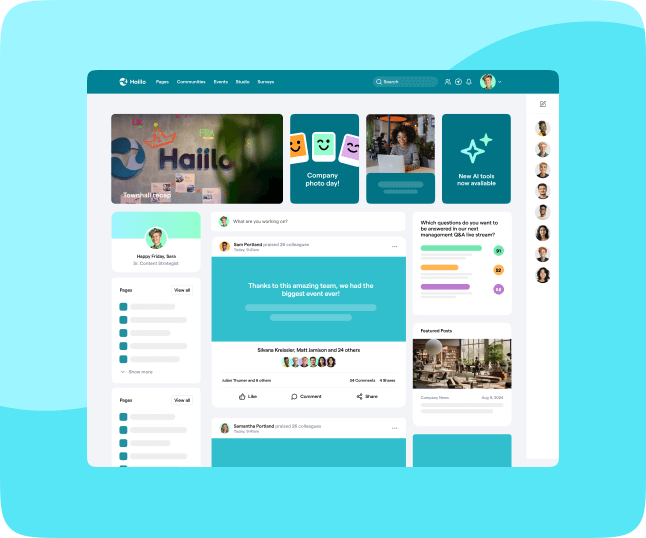
Employee communication and advocacy tools like Haiilo Stories and Haiilo Share empower organizations to strengthen their employer branding strategies by:
- Delivering personalized employer branding content tailored to employees’ job functions, locations, departments, and interests, making it more relevant and easier to share
- Making employer branding content easily accessible to employees by integrating and distributing it across your entire communications stack, such as Slack, Microsoft Teams, Yammer, SharePoint, Workplace by Facebook, Chatter, and others
- Encouraging and driving employee-generated employer branding content while providing visibility into engagement and performance
- Ensuring the distribution of appropriate content through approval workflows and role-based permissions, reducing risk and maintaining brand consistency
- Reaching deskless workers by delivering content directly to employees’ smartphones, increasing participation across the entire workforce
- Enabling employees to share content quickly across multiple social media platforms, removing friction and saving time
- Gamifying and rewarding ambassadorship initiatives to motivate employees and sustain long-term engagement
- Aligning employer branding campaigns with talent acquisition KPIs and measuring the impact on hiring outcomes and overall business performance
Employer brands FAQ
1. What are employer brands and how do they impact hiring?
Employer brands are how your company is perceived as a place to work. They influence whether candidates trust you, apply, and accept offers. A strong employer brand makes your value clear early, helping candidates decide if they’re a good fit. If you want a deeper breakdown, see this guide on employer branding. In short, strong employer brands don’t just attract more applicants—they attract the right ones.
2. What’s the fastest way to improve employer brands?
Start with authenticity and consistency. Make sure your messaging reflects real employee experiences, not just polished marketing. Then optimise key touchpoints like your careers page and social channels. One of the fastest ways to build trust is through employee advocacy. Tools like employee advocacy solutions help scale real employee voices, which makes your employer brands more credible and engaging.
3. Why are employees so important for employer brands?
Employees are your most credible storytellers. Candidates trust employee experiences more than corporate messaging, which makes advocacy a key driver of strong employer brands. If you’re unsure how this works in practice, read more about brand ambassadors and how they influence perception. You can also explore practical tips in how to empower employees to share real experiences.
4. How do you measure the success of employer brands?
To measure employer brands effectively, focus on hiring and engagement outcomes. Track metrics such as application quality, time-to-hire, offer acceptance rates, and retention. You should also analyse content performance and advocacy impact. Insights from employee advocacy analytics can help you understand what drives results. Platforms built for talent acquisition make it easier to connect employer branding efforts directly to business outcomes and continuously optimise your strategy.
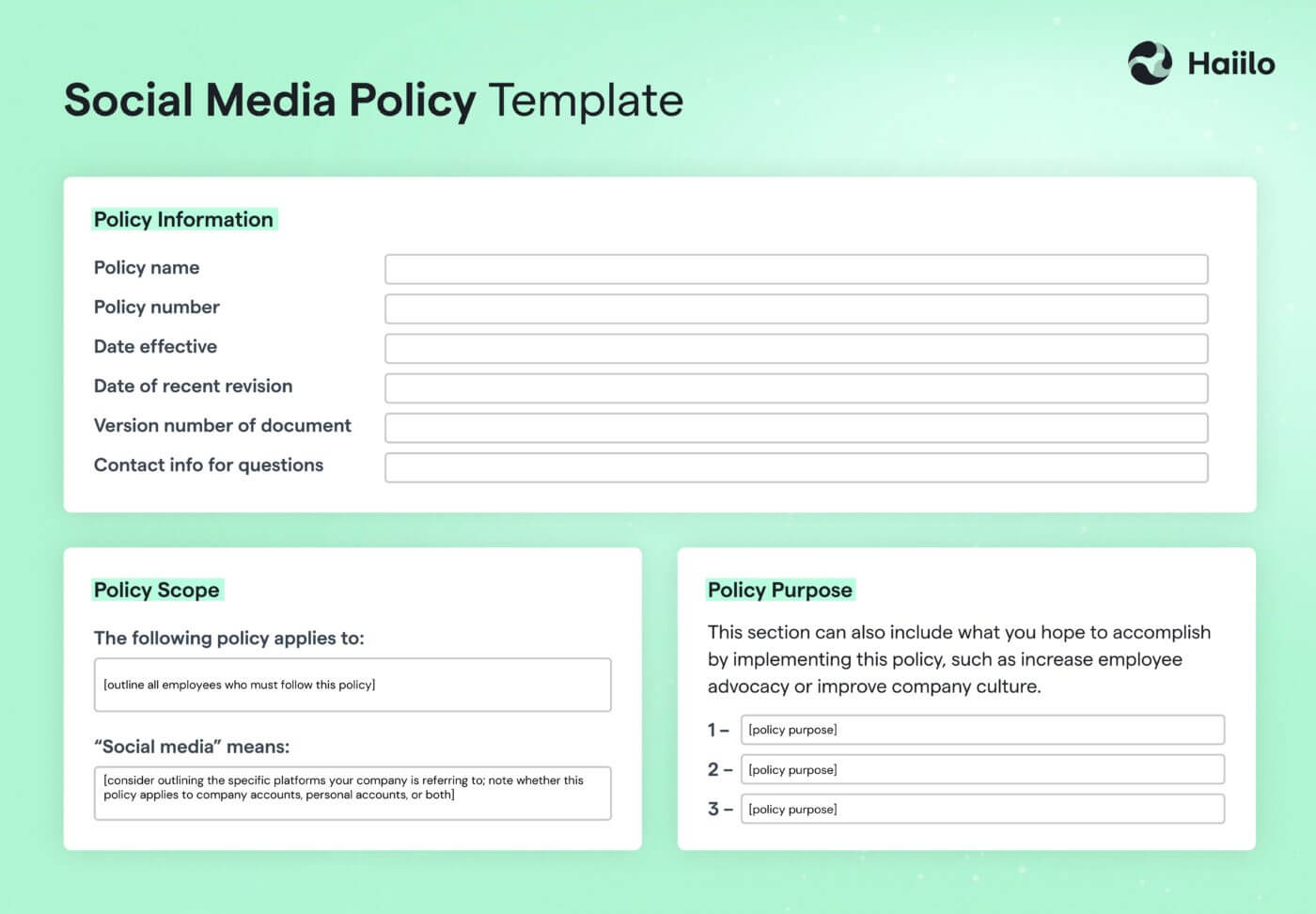
Want to learn more? Check out our social media policy template!