
For many businesses, social media marketing strategy is the most important piece of the overall marketing performance.
Social media is used by people across the world, and it is, therefore, one of the best channels for reaching new customers, generating sales, increasing brand awareness, and building trust among prospects.
Since both B2B and B2C companies are always trying to find new ways to better leverage social media in their overall marketing strategies, in this blog we will cover the best practices for defining, implementing, and managing your social media marketing strategy.
Boost your SoMe strategy with the right employee advocacy tools
Why Should Your Define Your Social Media Marketing Strategy
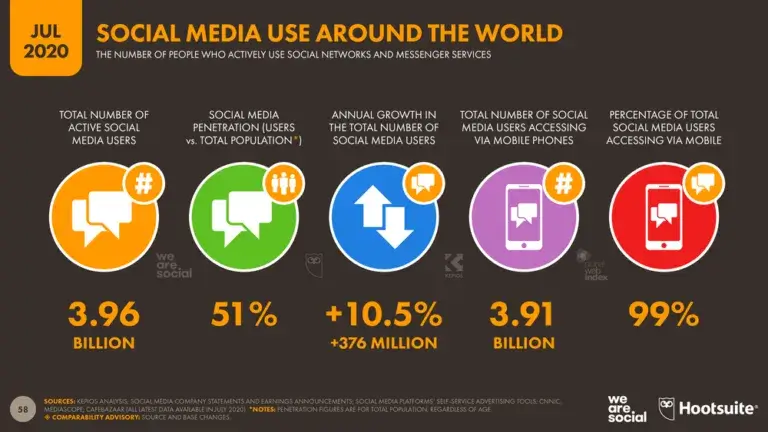
There are many different social media channels today, and their number keeps growing. New platforms can gain traction quickly, which makes it harder to stay relevant without a clear plan. Take TikTok for example – one of the fastest-growing networks, which now reaches over 1 billion users worldwide. This rapid growth shows how quickly audience behaviour can shift and why brands must stay adaptable.
According to recent research, more than 5 billion people around the world use social media, and the number continues to rise steadily each year. This means your audience is already active across multiple platforms, often switching between them daily. Without a defined approach, it becomes easy to waste time, miss opportunities, or send inconsistent messages.
A clear company social media strategy helps you focus on the right channels, understand your audience, and create content that actually performs. It also allows you to measure results, adjust quickly, and stay aligned with your broader business goals. Instead of reacting to trends, you can make informed decisions and build a stronger, more consistent presence over time.
In order to get the most out of these social media networks, it is important that social media professionals understand their differences, benefits, disadvantages, capabilities, features, and functions. Each platform serves a different purpose, attracts a different audience, and rewards different types of content. Knowing these nuances helps teams choose the right channels and avoid wasting time on platforms that do not support their goals.
Moreover, in order to align social media marketing strategy with the ultimate business goals, it is crucial to follow certain steps for building a strong social currency. This means creating content that earns trust, encourages interaction, and builds long-term relationships with your audience. A strong company social media strategy focuses not only on visibility, but also on credibility and consistency over time.
Let’s take a look at these steps.
How to Create a Perfect Social Media Marketing Strategy
Planning and implementing a social media marketing strategy is a never-ending process. Even though every business’ SM strategy may be different, there are certain steps that social media teams should follow. Trends change, algorithms update, and audience behaviour shifts, so your approach should always be reviewed and refined.
Now, we will go over the steps for creating a successful social media strategy that brings business results. These steps will help you stay focused, measure progress, and continuously improve your company social media strategy.
📚 Before we move forward, check out our article about the benefits of brand advocacy and how to leverage it on social media.
1. Define your target audience
When building a social media marketing strategy, the first step should be defining your buyer persona and your target audience. Your buyer persona is a fictional representation of your perfect customer, based on real data and informed assumptions.
In order to be successful in all the following steps, it is crucial that you understand who are you targeting and what are the characteristics of your target audience. This includes demographics, interests, challenges, behaviours, and preferred platforms. The more specific you are, the easier it becomes to create content that resonates and drives engagement.
Even though there are many different templates for creating your personas, this set of questions defined by Buffer is all you need. These questions help you identify key details and turn general assumptions into a clear, actionable audience profile.
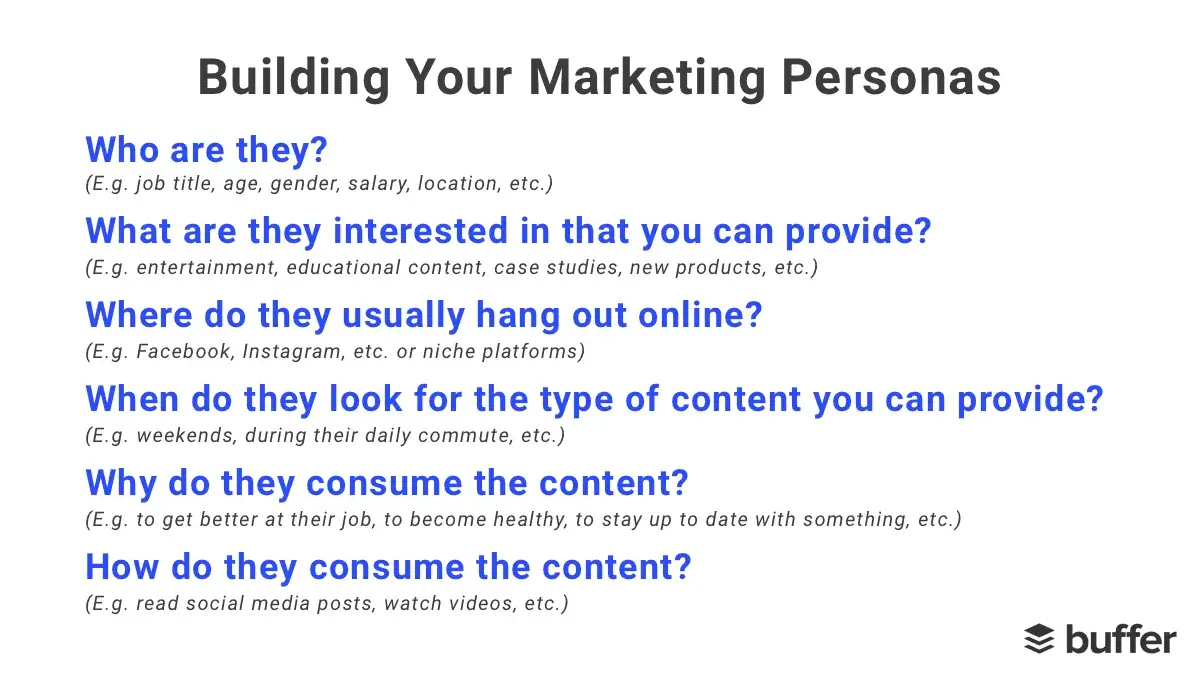
💡 Extra tip: Remember that you may have more than one persona that you want to target on social media. When you use SM to generate more sales, your persona will be much different than if you use it for employer branding. For example, a potential customer will look for product value and proof, while a job candidate will care more about culture, values, and employee experience.
Therefore, every social media department should work closely with other departments such as sales, marketing, product, and HR, and use their insights and knowledge about different target audiences. This collaboration ensures your messaging stays accurate, relevant, and aligned across the entire company social media strategy.
📚 Related: Why Your Target Audience Isn’t Reading Your Content.
2. Set clear goals and KPIs
Every successful marketing strategy has a clear set of goals and objectives. It is important to define SMART goals in order for marketers to track the success of their campaigns and prove the benefits of their investments. Clear goals also help teams stay focused and avoid chasing vanity metrics that do not impact the business.
Social media KPIs may differ significantly based on the industry you are in. Moreover, B2B business may have very different objectives compared to B2C businesses, and this is due to different buyer personas. For instance, B2B strategies often prioritise lead generation and thought leadership, while B2C strategies may focus more on engagement, reach, and direct conversions.
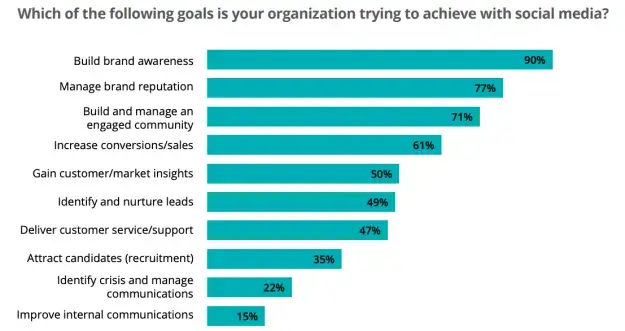
The following image represents the most common social media goals. These typically include brand awareness, website traffic, lead generation, customer engagement, and customer retention, all of which should be mapped back to your overall company social media strategy.
Source: Hootsuite
💡 Extra tip: When defining KPIs, you should be more specific than the above mentioned goals, and your goals should be SMART (specific, measurable, attainable, relevant, and time based). This makes it easier to evaluate performance, identify what is working, and adjust your company social media strategy when needed. Vague goals make it difficult to prove ROI or improve results over time.
Here are just a few examples:
- Increase website traffic from social media by X% in quarter X
- Increase engagement (likes, comments, shares) on social media by X% in year X
- Increase conversion on social media by X% in the next quarter
- Increase the number of sales and marketing qualified leads by X% in the next year
3. Create and curate engaging content
When you know your buyer personas and which social media platforms they use, it is much easier to create and curate content your audience will engage with. Your content should match both the platform format and the expectations of your audience, whether that is short-form video, educational posts, or interactive content.
For example, if you are in B2C industry and targeting Millennials and Gen Z, video content on YouTube may be your best bet. Short-form videos, tutorials, and behind-the-scenes clips often perform well with these audiences, making them a key part of an effective company social media strategy.
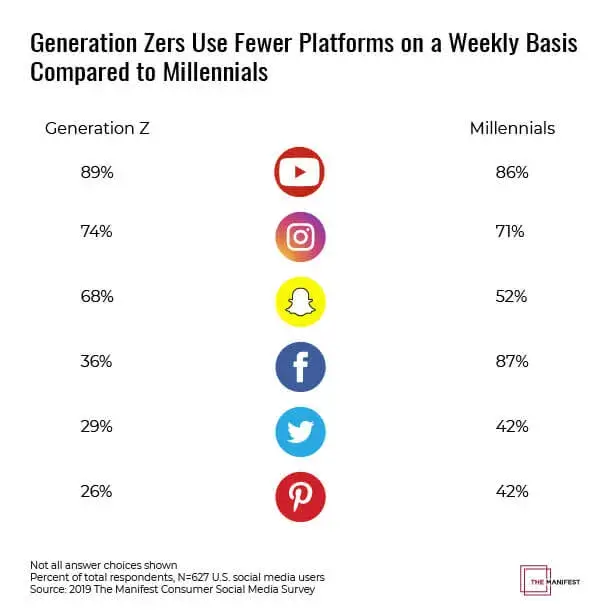
If you are in B2B industry, many of your buyer personas are probably on LinkedIn, and your content should be more like:
- Post about issues that are relevant to your buyer persona.
- Posts about best practices relevant to your buyer persona.
- Post about real problems that people are facing.
- Post about research in your industry.
- Image posts with real people faces.
This type of content positions your brand as a trusted source of insight and helps build credibility over time. It also encourages meaningful engagement, which is often more valuable than high reach alone in a B2B company social media strategy.
💡 Extra tip: In order to better understand what type of content resonates with your audience, make sure that you always measure the performance of your social media posts and campaigns. Track metrics such as engagement rate, click-through rate, and conversions. Hence, consider A/B testing to identify the type of content your buyer personas engage the most with and refine your approach based on real data.
📚 Related: As proper communication is essential for every successful SM strategy, check out our blog about top 5 communication skills.
4. Focus on the social media networks that best fit your strategy
Social media trends change all the time. New features, formats, and platforms can quickly shift how audiences consume content.
This is why social media teams need to identify SM channels that best fit their goals and bring them the most profits. Moreover, different social media channels used by the same company may have completely different KPIs and target completely different personas. Trying to be active on every platform often leads to wasted effort and diluted results.
By using marketing tools such as Google Analytics, it is easy to identify social media platforms that bring the most value for your organization. If you see, for example, that LinkedIn drives much more traffic to your website than Instagram, then invest more of your resources into that channel. Focus on performance data rather than assumptions when shaping your company social media strategy.
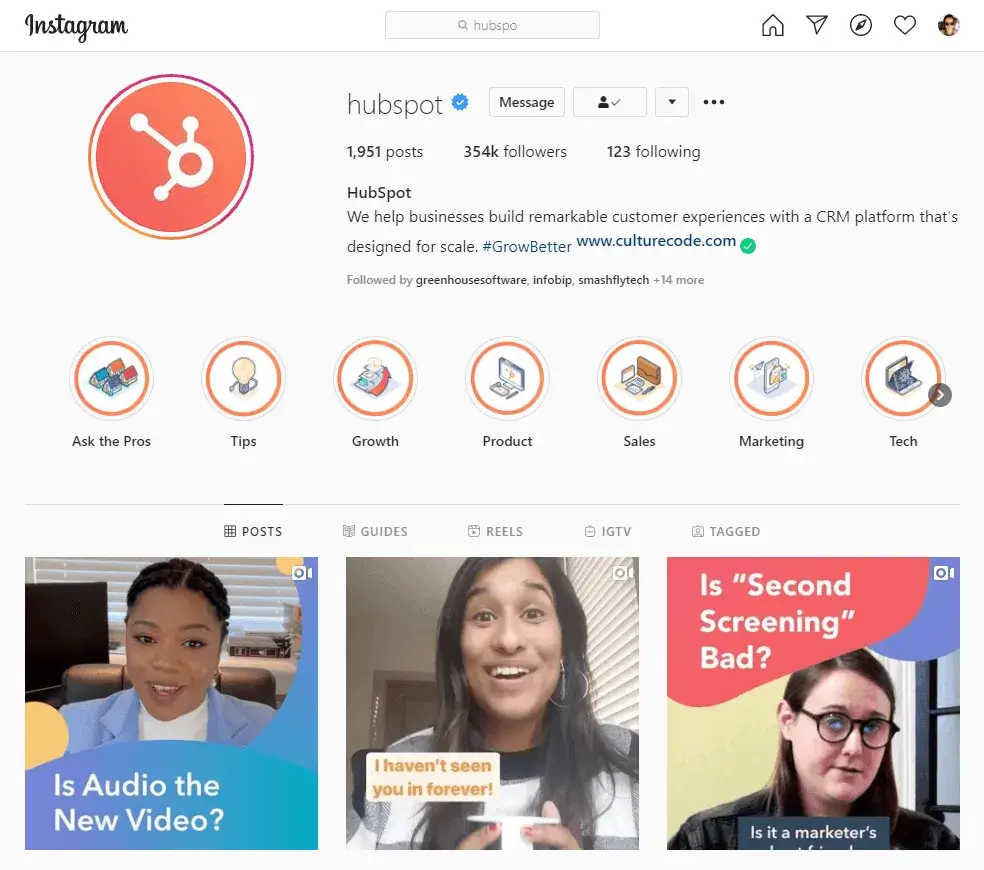
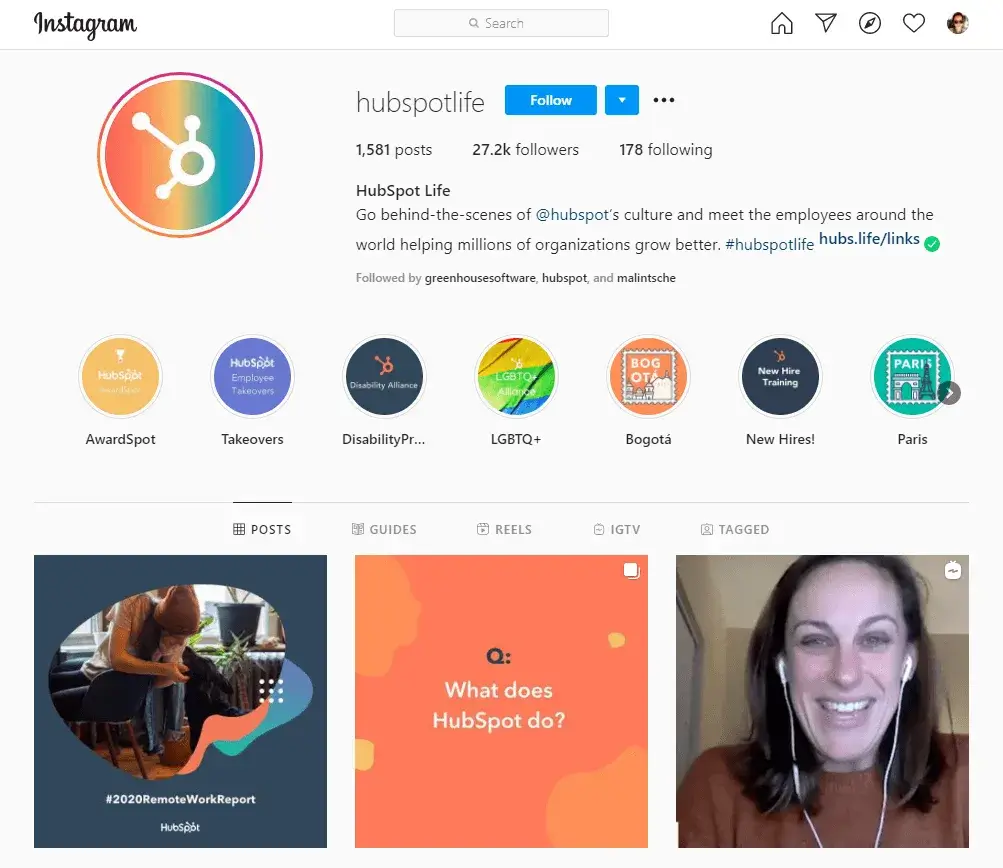
💡 Extra tip: If you are using social media for both marketing and employer branding, consider creating two different profiles. Instagram is the best example of a platform that many organizations use for both marketing and talent attraction initiatives. Separate profiles help you tailor content, tone, and messaging to each audience without confusion.
Here is an example of HubSpot’s profile used for marketing and sales purposes.
And here is an example of HubSpot’s Life profile that focuses on showcasing HubSpot as an employer with posts and stories around HubSpot’s workplace culture, EVP, and core company values.
📚 Related: Guide for Building a Great EVP.
5. Research your competitors
An important part of every social media marketing strategy is researching what your biggest competitors are doing on social media. There are big odds that your competitors are already using social media, and that means you can learn from what they’re doing. Analysing their content, tone, posting frequency, and engagement levels can reveal what works and what does not in your industry.
Luckily, there are great social listening tools that make competitive analysis much easier and faster. They can track your competitors’ activities in real time and offer valuable insights into what kind of posts and which social and communication channels are bringing the best results. This data can help you refine your own company social media strategy and avoid common mistakes.
💡 Extra tip: When your realize that your competitor is more active on one social media than others, this may be an opportunity for you to reach your audience where it’s underserved. Rather than trying to win fans away from a dominant player, consider leveraging those untapped opportunities. A less crowded platform can often deliver better engagement with fewer resources.
6. Engage with your followers
Once you schedule or publish your posts on social media, your job is not done. Moreover, your followers’ engagement with your posts is what drives more visibility. This is why it is crucial that social media teams continuously monitor performance and engage with the followers. Responding to comments, answering questions, and joining conversations helps build stronger relationships and improves reach over time. With many social media platforms, like Facebook, you can leverage auto-reply to comments to ensure timely responses and maintain an active and responsive online presence.
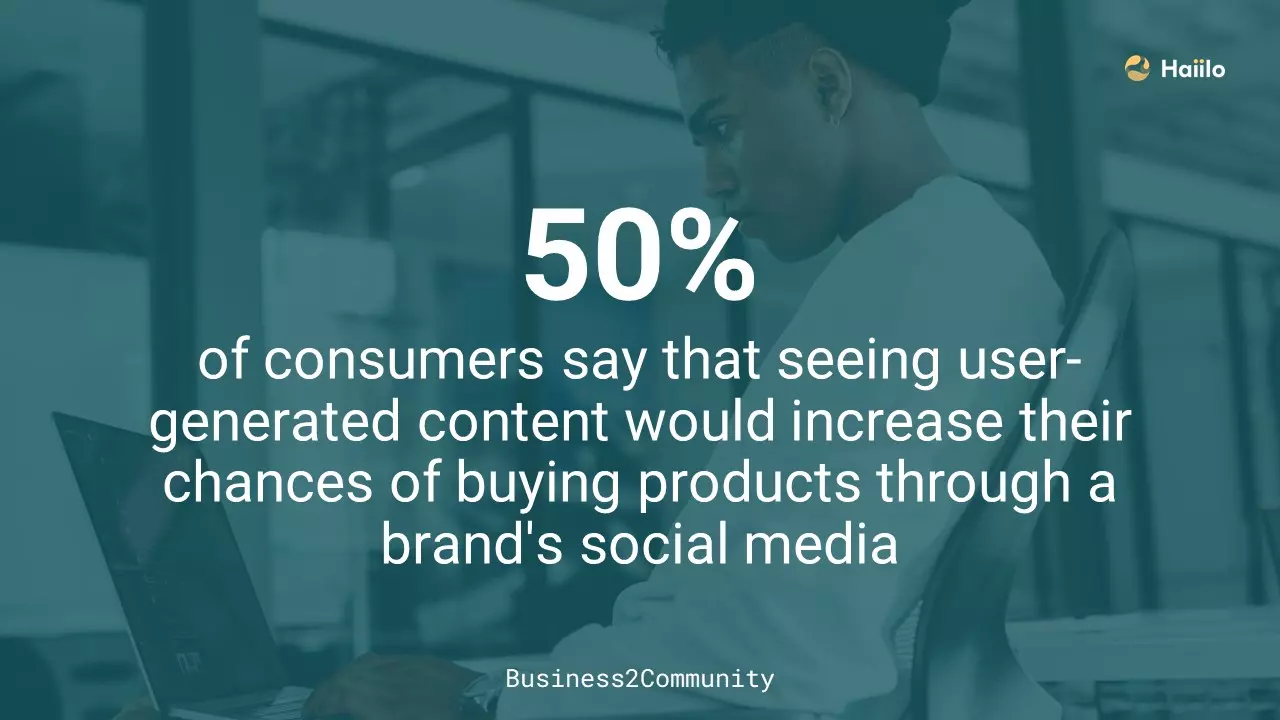
💡 Extra tip: Many organizations are doing a great job leveraging user-generating content and empowering customers to be their brand advocates. Encouraging your audience to share their experiences creates a sense of community and increases trust in your brand.
As your customers’ words are considered as much more trustworthy than your corporate brand’s, user-generated content is the best way to increase your followers’ engagement on your social media channels. Whether it’s using a hashtag or posting a photo, encouraging customer or employee content is a smart move for boosting engagement rate and strengthening your company social media strategy.
7. Make employees your brand advocates
In the previous section, we briefly introduced brand advocacy. Even though your brand advocates can be various influencers, customers, partners, and other stakeholders, your own employees can be your best brand advocates.
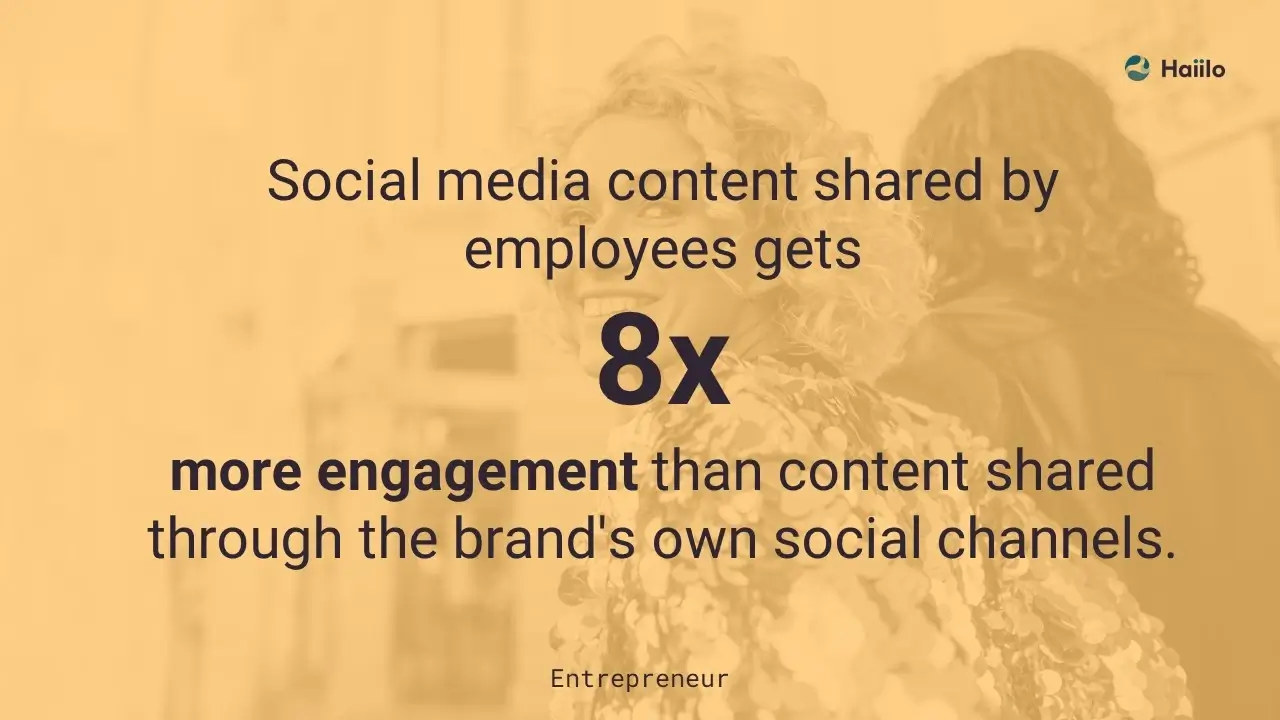
Yet, this type of brand ambassadorship is one the most underused social media marketing tactics. However, the fact that social media content shared by employees gets 8 times more engagement than content shared through the brand’s own social channels is the reason why more and more SM departments have started to leverage employees’ existing networks to boost their marketing performance.
💡 Extra tip: Even though there are many different advocacy solutions out there, not many of them focus on employee advocacy. If you are considering implementing an employee advocacy program in your organization, a modern, intuitive, and mobile-first employee advocacy solution is your best bet! Choosing the right tool makes it easier for employees to participate, share content, and stay engaged over time, which strengthens your overall company social media strategy.
8. Test, measure, and improve
It goes without saying that every social media marketing activity should be measured and assessed. This is the only way for social media professionals to better understand what’s working well and what is not. Without consistent tracking, it is difficult to scale successful campaigns or fix underperforming ones.
Based on such insights, they can adjust their social media strategy and make data-driven decisions for improvement. Regular reporting and analysis help teams stay agile and respond quickly to changes in performance or audience behaviour.
💡 Extra tip: Besides just tracking your own and your competitors’ performance on social media, consider doing a deep hashtag analysis. Growing your audience on social media also means discovering conversations around your industry that matter the most, for which finding specific keywords, phrases, or hashtags is crucial. This helps you join relevant discussions and increase content visibility.
Moreover, if your employees are participating in your advocacy programs, make sure that you can measure the exact ROI of their engagement. Track metrics such as reach, clicks, and conversions driven by employee shares to understand their true impact on your company social media strategy.
7 Benefits of Social Media Marketing
It is undeniable that social media is a must-have marketing strategy across all businesses and industries. Social platforms play a key role in how brands communicate, build trust, and influence buying decisions.
Brands are continuing to include social media in their marketing strategy – and for all the right reasons. When executed well, a company social media strategy can support multiple business goals at once, from awareness to revenue.
Let’s take a look into some of the most common reasons why companies invest in social media.
1. Brand awareness
For many business, social media channels are used to increase brand awareness and build trust among prospects and existing customers. Consistent posting, engaging content, and active interaction help brands stay visible and relevant in a crowded market.
📚 Related: How to Measure Brand Awareness.
2. Website traffic
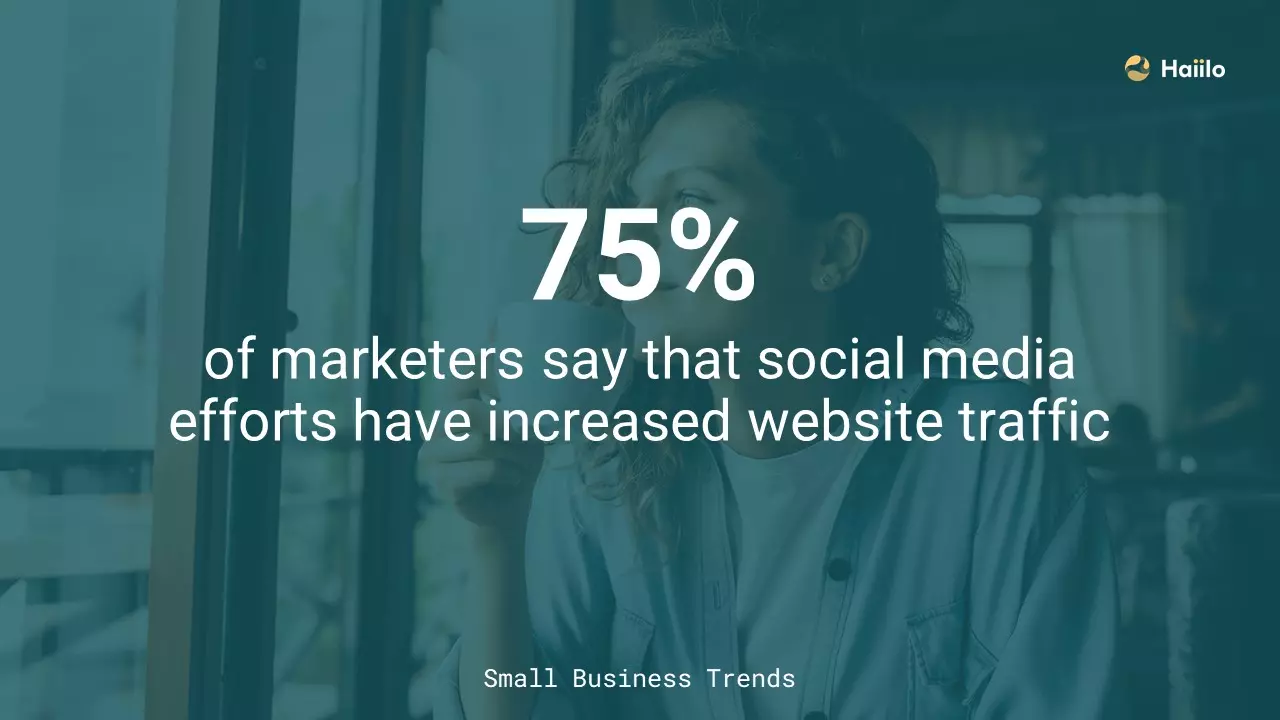
Social media platforms are one of the leading sources of website traffic. By sharing valuable content and clear calls to action, businesses can guide users from social channels to their websites, landing pages, or product pages. This makes social media an important driver of both discovery and conversion within a strong company social media strategy.
3. SEO
Social media engagement is one of the off-site SEO components of the Google’s Ranking Algorithm. In other words, more engagement on your social media profiles can support improving your SEO by increasing content visibility, driving traffic, and earning backlinks. While social signals are not a direct ranking factor, a strong company social media strategy can amplify your content and help it reach audiences who may link to or share it.
4. Sales
For some businesses, social media is the most efficient source of new leads and customers. This is especially true for B2C companies where purchasing decisions are often influenced by content, reviews, and recommendations seen on social platforms. Social media also shortens the buyer journey by allowing users to discover, research, and purchase in one place.
5. Customer loyalty and advocacy
Social media gives brands a direct way to build relationships with their audience. By consistently engaging with followers, responding to feedback, and sharing valuable content, companies can build a base of loyal customers and turn them into brand advocates. A well-executed company social media strategy encourages repeat interaction and strengthens long-term trust.
6. Conversion rates
Some social networks deliver strong conversion rates, which is why they are widely used for lead generation. Platforms like LinkedIn are particularly effective for B2B, as they allow precise targeting based on job roles, industries, and company size. This makes marketing and social selling on LinkedIn some of the most powerful tactics for generating high-quality leads and converting them into customers.
7. Cost effectiveness
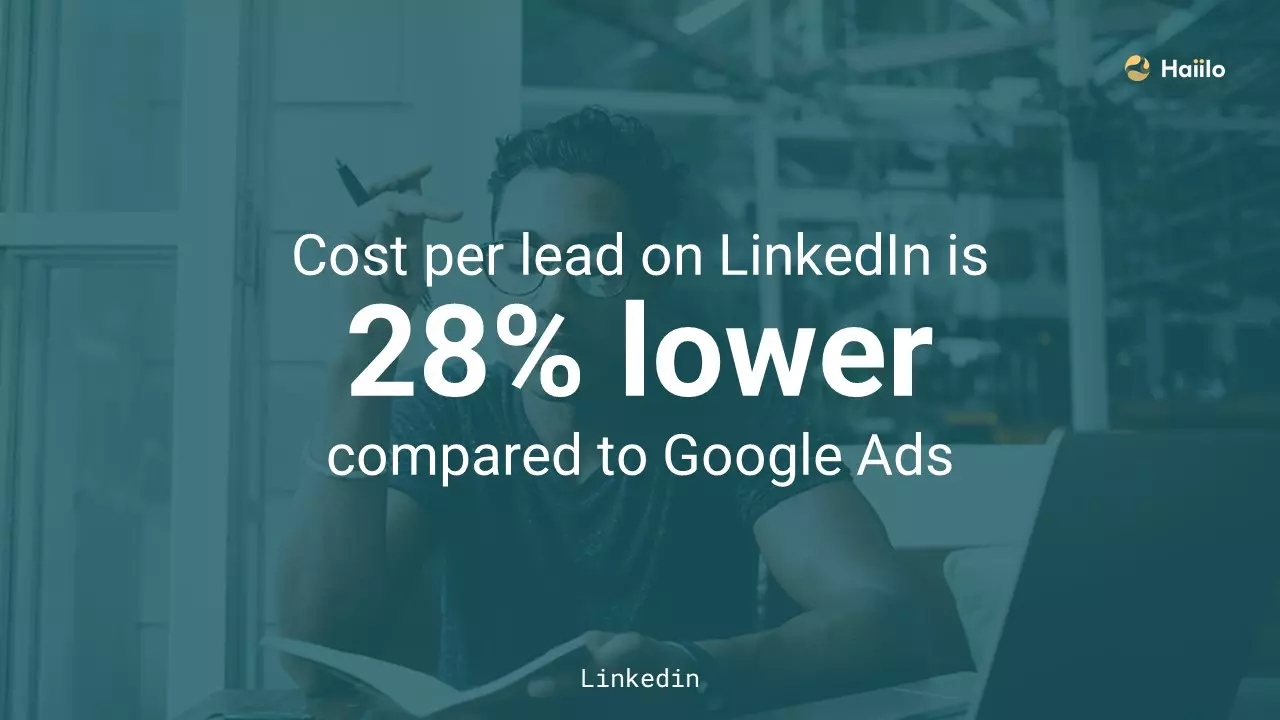
Social media advertising can be much more cost-effective compared to other forms of advertising such as search ads. With flexible budgets, detailed targeting options, and measurable performance, businesses can optimise campaigns based on real results. This allows teams to control spend while maximising ROI, making paid social an essential part of a scalable company social media strategy.
The Role of Employees in Boosting Your Social Media Marketing Strategy
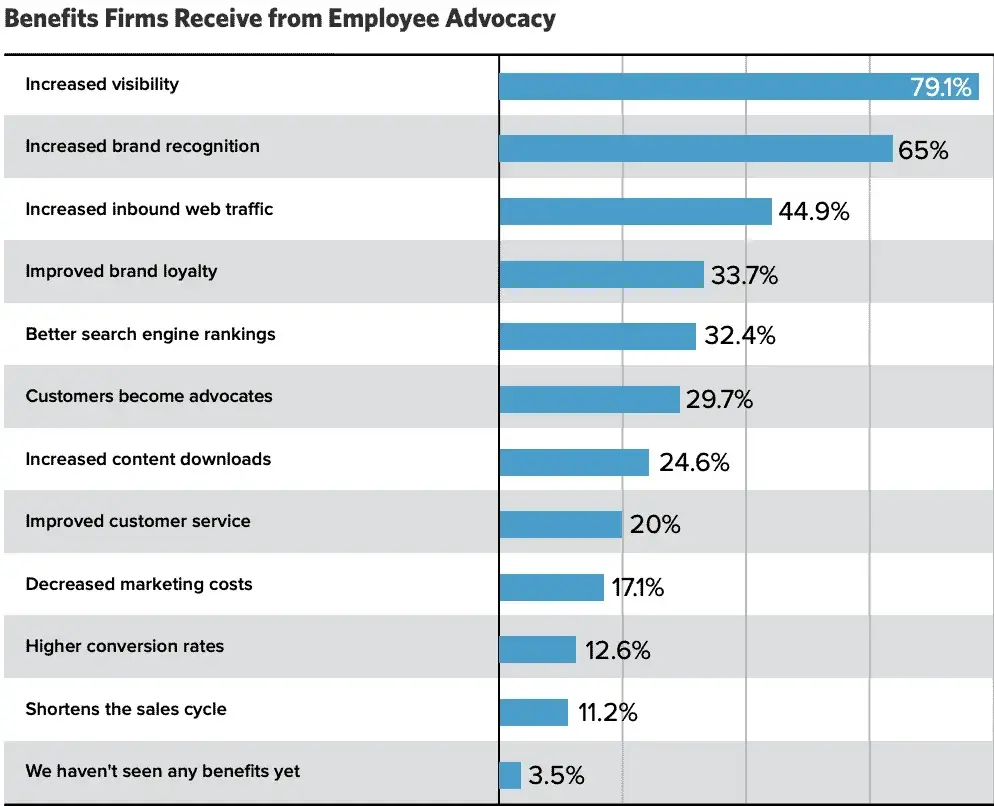
Earlier, we briefly mentioned the importance of including your own employees in your social media strategy. Having employees as brand advocates has many benefits, and here are the most important ones.
Source: Hinge
Large organizations with many employees can significantly improve marketing and sales performance when they know how to leverage their employees’ existing social media networks. Employees often have wider and more trusted personal networks than corporate channels, making them a valuable extension of any company social media strategy.
Here are a few key insights that highlight the power of employee advocacy:
- Content shared by employees often achieves higher reach and engagement compared to the same content shared through brand-owned channels.
- Leads generated through employee networks tend to be more qualified, as they come through trusted relationships rather than direct advertising.
- Employee advocacy can significantly reduce paid media costs by increasing organic visibility and reach.
- Social selling and employee-driven promotion can help shorten sales cycles by building trust earlier in the buyer journey.
- Sales professionals who actively use social media are more likely to build stronger relationships and close deals more efficiently.
- Organizations that support social selling often see improved sales performance and higher quota attainment across teams.
- Many companies recognise that empowering employees on social media can improve both marketing impact and sales effectiveness.
If you are looking to boost your social media marketing strategy by engaging your employees and enabling them to become brand advocates, schedule a Haiilo demo and learn about how other organization use it to reach their sales and marketing KPIs.
Haiilo is an intuitive and mobile-first employee communication, engagement and advocacy platform that empowers social media and marketing teams to enable employees to be the best brand advocates. Its integrations with various social media channels and marketing tools makes employee advocacy easy, scalable, and engaging — resulting in stronger adoption and measurable ROI.
FAQs about Company Social Media Strategy
1. What is a company social media strategy and why is it important?
A company social media strategy is a clear plan that connects your social media activity to business goals like brand awareness, lead generation, or hiring. It defines your audience, content, platforms, and KPIs. Without it, teams often focus on vanity metrics instead of real outcomes like traffic or leads. :contentReference[oaicite:0]{index=0}
If your goal is growth, combining strategy with tools like lead generation or LinkedIn marketing strategy can help turn social engagement into measurable results.
2. How do you choose the right social media platforms?
The best platforms depend on where your audience is and what you want to achieve. For example, LinkedIn works well for B2B and social selling, while visual platforms are better for brand awareness. Trying to be everywhere often leads to poor results—focus on one or two channels and scale from there. :contentReference[oaicite:1]{index=1}
If hiring is a priority, platforms aligned with talent acquisition or social media recruitment should be part of your strategy.
3. What type of content works best for a company social media strategy?
Content should match both your audience and platform. Educational posts, industry insights, and real customer stories tend to perform well, especially when they spark conversation. Strong strategies mix formats like video, images, and thought leadership content.
If your goal is visibility, combining content with brand awareness tracking helps you understand what actually drives reach and engagement.
4. How can companies measure the success of their social media strategy?
Focus on metrics that tie back to business impact: website traffic, leads, and conversions—not just likes or followers. Engagement is useful, but it should support bigger goals. :contentReference[oaicite:2]{index=2}
For long-term success, many companies also invest in employee advocacy and employer branding, which can extend reach and improve trust while supporting overall performance.