
Every organization strives to have brand ambassadors. With the growing focus on authentic communication and trust, many companies now see the value of turning their own people into advocates. As interest in brand advocacy and word‑of‑mouth marketing increases, it’s no surprise that more teams are investing in structured ambassadorship programs to support clear business goals and strengthen their brand from within.
In this blog, we will define who brand ambassadors really are, what they do, and how their work shapes a company’s business performance and success. You will also see why many organizations now view employees as brand ambassadors as a strategic advantage rather than a nice‑to‑have.

Who Are Brand Ambassadors
Many people consider ambassadors as the “face” of a brand. These individuals usually have strong networks and trusted relationships that help them share a brand’s message in a natural way. They often promote products or services through simple word‑of‑mouth actions, such as recommending a brand to family and friends or talking about their experiences on communication channels like social media.
Modern organizations want to reach new customers beyond traditional ad campaigns. As audiences become more selective about what they pay attention to, companies are turning to their advocates to create
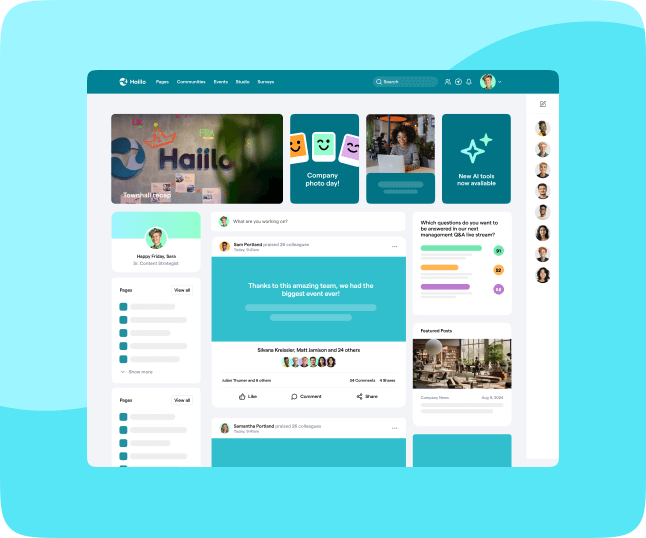
Employees can be the best brand ambassadors. Set them up for success with the right employee advocacy tools
Many people may think of brand ambassadors as influencers hired by an organization. However, an ambassador can be anyone who loves your brand and chooses to support its growth through simple, consistent actions. This includes customers, partners, and especially employees as brand ambassadors who share genuine experiences that feel more trustworthy than paid promotions.
Because of their good communication and interpersonal skills, ambassadors can shape how others see your brand. Their ability to explain ideas clearly, build rapport, and speak from personal experience gives them real influence over people’s opinions and purchasing decisions.

Every successful brand has its advocates. So let’s take a look into why every organization should consider implementing a brand ambassadorship program with the goal to further spread the word about its products or services.
📙 Read on: Benefits of Social Currency for Marketing Purposes.
3 Reasons Why Every Company Needs Brand Ambassadors
Making brand ambassadorship a part of your marketing, social media, and communication strategy can go a long way in driving more brand awareness and generating more revenue.
Growing companies are facing competition on an unprecedented scale. Markets are getting more saturated, and consumers have the power to choose between various products and services. As a result, brands are now turning to their existing customers, partners, contractors, and employees as brand ambassadors to help them stand out in crowded spaces.
Moreover, many organizations have also recognized the value of micro and nano influencers. These ambassadors often have closer relationships with their audiences, which helps them drive high engagement, build stronger connections, and support specific business goals more effectively than broad, impersonal campaigns.
So why should every organization consider launching a brand ambassadorship program?
More trust and brand awareness
One of the most common reasons why organizations engage ambassadors is to increase brand awareness, improve social selling, and build trust among customers and followers. When most communication comes directly from the brand, messages can feel less personal. People tend to respond more positively when they hear from real individuals who share genuine experiences.
Today, people are exposed to information overload every day. They’ve learned to filter out content that feels irrelevant or overly promotional, including many traditional ads.
Because of this shift, organizations now rely more on ambassadors who can communicate in a relatable way. Their personal stories and everyday interactions help brands cut through the noise and reach audiences who prefer recommendations from people they trust rather than direct advertising.

In other words, people trust the opinions and recommendations from others who have used the products and services in real life, and someone’s personal experience is the source of information consumers trust most. Recent research also shows that trust in advertising is rising, especially among younger audiences, who are almost three times more likely to trust the ads they see or hear than older generations.
For brand ambassadors, it is much easier to connect with their audiences in a genuine and authentic way, gain the audience’s attention and enthusiasm about your products and services. Their personal stories feel more relatable than brand‑led messages, which is why many organizations now rely on employees as brand ambassadors to create more meaningful engagement.
📙 Also, read about the 9 social media marketing trends to implement in 2023 and beyond!
Cost-effectiveness
As mentioned earlier, advocacy marketing can be far more cost-effective than traditional ads and other marketing or sales campaigns. While some brand ambassadors may be compensated with cash, free products, or gift cards, the most successful ambassadors tend to be those whose biggest motivation is to see your brand grow.
Oftentimes, those are your own employees!
Even though many organizations also have paid ambassadorship programs, they are still very cost-effective. Compared to costly ads on Google or LinkedIn, ambassadors can do a much better job in driving the audience’s attention, reaching a wider audience, and driving more sales.
New research shows that trust in advertising has increased from 36% to 39% in the past year, with TV and cinema remaining the most trusted channels. Younger audiences also show significantly higher trust in online and influencer content, which makes ambassador-led communication even more effective for brands trying to reach these groups.
📙 Read on: The Secret to Maximizing Content Marketing Impact.
Improved employer brand and more high-quality job candidates
Besides driving more visibility, brand awareness, and sales, brand ambassadorship can be a very efficient way of improving your organization’s employer brand and, therefore,

📙 Also read: How to Succeed in Social Recruiting with Employee Advocacy.
23 Shocking Facts About Brand Ambassadorship and Advocacy
Let’s now take a look into the list of the most important insights about brand ambassadors:
- Customers often perceive staff as more trustworthy than corporate marketing because real experiences feel more relatable and credible.
- Leads that come through employee advocacy or social sharing tend to be more qualified because they originate from trusted personal networks.
- Content shared by employees usually generates much higher engagement than content posted on brand-owned channels, as people respond more to human voices.
- People consistently trust recommendations from those they know, making personal referrals one of the most influential drivers of buying decisions.
- Micro‑ and nano‑influencers often build stronger connections with their audiences than large celebrity accounts, which helps brands reach people in a more authentic way.
- Consumers are generally more open to messages shared by individuals they follow or interact with, rather than direct messaging

- People consistently value recommendations from friends and family more than traditional advertising, as personal experiences feel more trustworthy and relevant.
- Most employees use social media in their daily lives, and many already share updates about their workplace without being prompted.
- When employees share their company’s content, job postings often receive more visibility because the reach comes from real people rather than brand channels.
- Many organizations still have not implemented a structured employee advocacy program, even though interest in these initiatives continues to grow.
- Sales representatives who use social media as part of their workflow often build stronger relationships and perform better than those who rely only on traditional methods.
- Organizations that invest in brand advocacy programs tend to see clearer benefits in visibility, engagement, and trust.
- Employees who use social media for professional purposes often find that it supports their career growth and helps them stay informed about industry trends.
- Recommendations from trusted individuals strongly influence purchasing decisions, making personal referrals one of the most powerful forms of marketing.
- Employees who participate in advocacy programs are more likely to spend time engaging with industry content and sharing insights with their networks.
- Many employees recognize that advocacy helps them expand their professional network and stay connected to what’s happening in their field.
- Influencer content continues to shape buying decisions, especially on platforms like Instagram and Facebook where people follow creators they relate to.
- Content shared by employees often receives significantly higher engagement than content shared directly by brand channels because it feels more authentic.
- Earned media—such as press, peer recommendations, and word‑of‑mouth—typically has a stronger impact on brand perception than paid advertising.
- Peer‑to‑peer recommendations influence a large share of purchasing decisions, highlighting the importance of real voices in the buying journey.
- Employee advocacy programs with active participation can create substantial visibility and value, even without large advertising budgets.
- Teams that embrace social selling often achieve better results than those that rely solely on traditional outreach methods.
📙 Find out about what people like to share on social media.
8 Types of Brand Ambassadors
A brand ambassador can be anyone who participates in brand-promotion actions. Most commonly, they do so by word of mouth, by sharing information about your organization on social media networks such as Instagram, TikTok, Facebook, and Twitter or on professional networks such as LinkedIn.
The 8 most common groups of brand advocates include:
- Employees
- Influencers
- Micro-influencers
- Nano-influencers
- Business partners
- Contractors
- Celebrities
- Customers
When choosing your brand ambassadors, the most important thing to have in mind is your target audience. Ask yourself about who do you want to reach, and how your ambassadors can help you in achieving that goal.
Within large organizations with thousands of employees in different areas, the power of employee ambassadorship can be immense. So let’s take a look into the next section about employees as your brand advocates.
💡 Read on: Why Employee Advocacy Should Be on Every Job Description.
Employees as Brand Ambassadors
You don’t have to look far to find brand ambassadors for your organization. Moreover, a company’s employees are often considered the best brand ambassadors.
To add, employees across different roles and departments often have the potential to become strong advocates because they understand your products, services, and culture better than anyone else. When supported with the right tools and encouragement, employees as brand ambassadors can create meaningful visibility and help shape a more authentic brand presence.

Encouraging your own employees to become brand ambassadors can help your organization drive market awareness, generate high-quality sales leads, and attract new job candidates. When employees share content and speak positively about their workplace, the impact often feels more authentic and relatable than traditional marketing efforts.
Even though this seems like a natural opportunity, it is not always easy to implement successful employee advocacy programs. Clear structure, communication, and support are essential. Here are the must-follow steps for building a successful ambassadorship program in your organization:
- Define the rules of your brand ambassadorship program
- Train your employees on how to be ambassadors (the do’s and don’ts)
- Identify your current internal ambassadors
- Implement a survey to find out who your potential ambassadors are
- Clearly communicate the benefits of brand ambassadorship for both individuals and your organization as a whole
- Create and deliver content relevant to your internal audiences (only then will they want to share it with their networks)
- Make it easy for ambassadors to share the content externally
- Enable employees to share the content from their mobile phones
- Measure the impact of brand ambassadorship
- Recognize and reward your brand advocates
The differences in your multigenerational workforce are also important to understand. Employees from different age groups often have different levels of comfort and motivation when it comes to sharing workplace-related content. Younger generations tend to be more active on social media, while others may prefer more guidance or reassurance before posting. Recognizing these differences helps you tailor your approach and support every group effectively.
📙 Read on: How Employee Advocacy Delivers a Higher ROI than Ad Campaigns.
Brand Ambassadorship Case Study
The power of technology in driving brand ambassadorship within organizations is crucial. Let’s take a look at how an Australian company managed to reach 3 million people on social media with the right advocacy platform.
BDO is one of the leading accountancy and advisory firms in Australia. Even though the company invests in creating great content, not all of its people actively shared this content with their personal networks.
To encourage partners and staff to use social media more actively—especially LinkedIn—the company implemented the Haiilo advocacy platform. Their goal was to help different stakeholders grow their personal brand, strengthen client relationships, and increase the organization’s reach and recognition.
One of the main reasons for low engagement was that employees found it difficult to locate the right content and share it easily with their networks.
With Haiilo Share, the firm’s partners and employees were invited to discover content tailored to their expertise, interests, and existing networks.
Within just nine months, its people generated 13.94K unique clicks, 13.70K reactions, and reached 3.67M people on social media by sharing organization and industry-related content. They also generated strong engagement through their posts, achieving 4.61 clicks per share and 4.54 reactions per share on LinkedIn.
FAQ: Employees as Brand Ambassadors
How can employees become effective brand ambassadors?
Employees become strong ambassadors when they understand the brand and feel confident sharing content. Clear guidance, simple tools, and relevant resources make it easier for them to speak authentically. Many organizations use the Haiilo Employee Advocacy solution to give employees curated content they can share in seconds. For deeper development, see our guide on positioning employees as credible thought leaders.
What types of content should employees share?
The most effective content is practical, interesting, and aligned with what employees already talk about online. Industry insights, company updates, culture stories, and personal perspectives all work well. If you want to understand why authentic posts perform best, explore our article on employee‑generated content (EGC) and how it supports advocacy.
How do we measure the impact of employees as brand ambassadors?
Measuring impact helps you understand what’s working and where to improve. Look at reach, engagement, clicks, and the quality of conversations employees spark. The Haiilo platform overview shows how analytics can support your program, and our guide to employee advocacy analytics breaks down the key metrics to track.
Why are employees more trusted than traditional marketing?
People trust people — especially those who share real experiences. Employees bring authenticity that brand channels can’t replicate. Their posts feel more genuine and relatable, which is especially important today as trust in traditional marketing continues to shift. Learn more in our article on why trust in marketing is declining and how employees can help rebuild it.
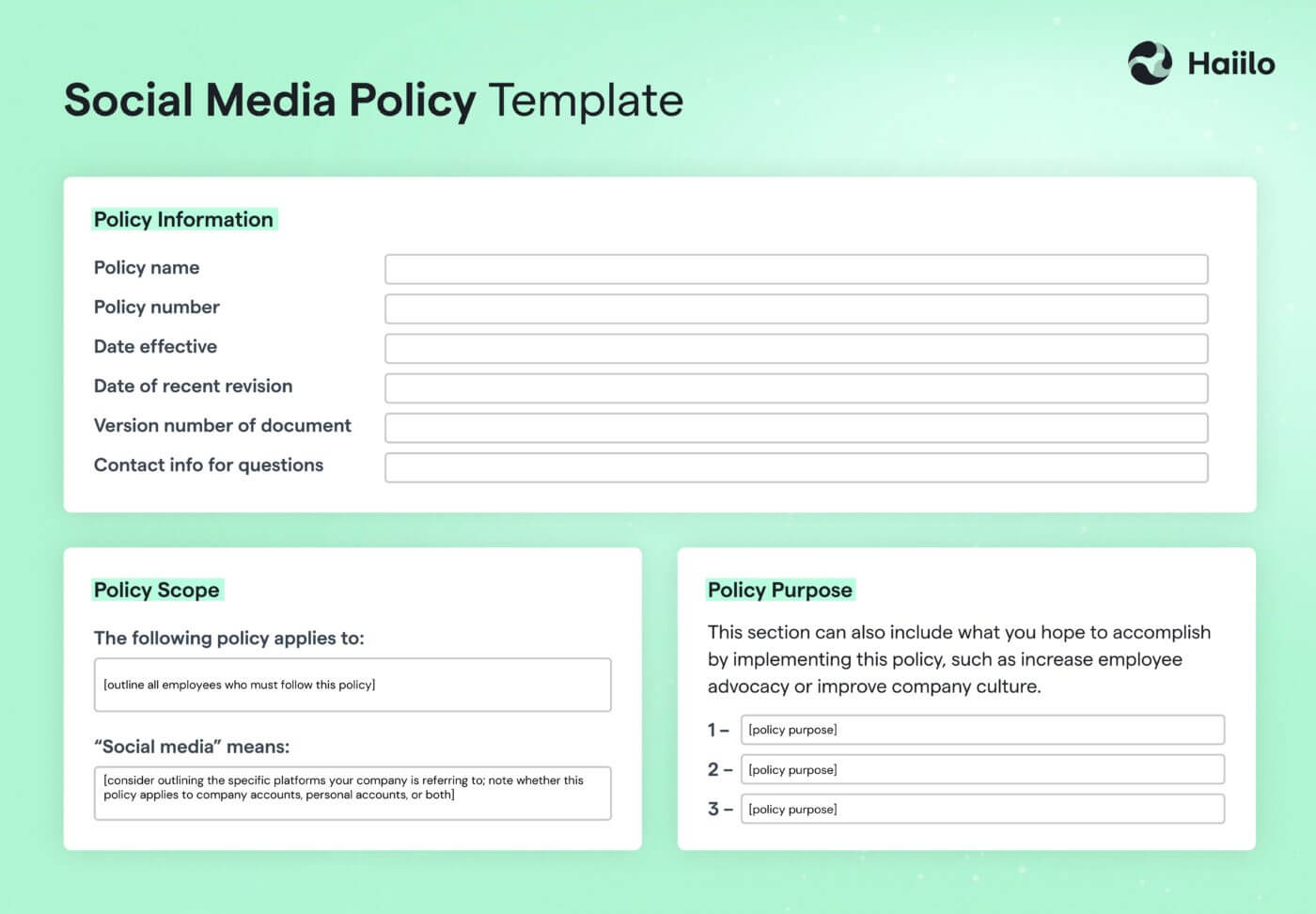
Want to learn more? Check out our social media policy template!