
Knowing why people share in social media gives marketers a real advantage. It helps you create content your audience actually wants to pass on, instead of guessing what might work.
If you use social media regularly, you’ve probably shared an article, video, meme, infographic, or brand post with your network.
We dug out the reasons why people want to share content with their networks, and what kind of content people love to share.
Here’s what we discovered:
See our infographic right below and remember to scroll down to read the complete article!
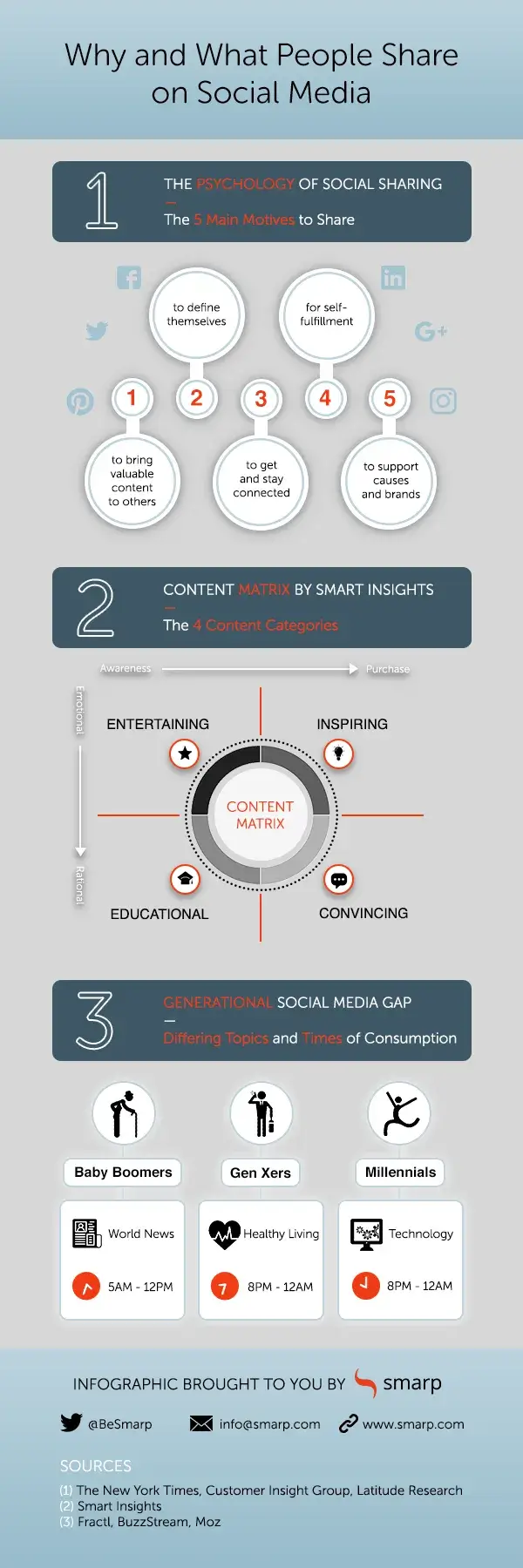
1. The Psychology of Social Sharing
Sharing is caring — this we all know. But can this saying also apply to content sharing on social media? We say yes.
People rarely share content at random. Most of the time, they share content because it helps them connect with others, express who they are, or offer something useful to their network.
There are several common reasons why people share content online:
- To bring useful, entertaining, or inspiring content to others
- To show their interests, values, or personality
- To stay connected with friends, colleagues, and communities
- To take part in conversations that matter to them
- To support causes, people, or brands they care about
These reasons all come down to one thing: building and nurturing relationships with others.
That’s why brands need to think beyond reach and impressions. If you want people to share in social media, your content needs to feel relevant, useful, and easy to pass on.
2. The Content Shared on Social Media
People share many different types of content on social media. Some content entertains. Some educates. Some helps people feel seen, informed, or connected.
These types of content can include, for instance:
- Pictures and stories about friends and family
- Funny videos, memes, and gifs
- Coupons and discounts
- News articles
- Educational videos
- Informative blog posts and infographics
- Music videos
- Sports news
- Highlight videos and other entertaining content
The best-performing content usually gives people a clear reason to share it. It may help them look informed, make someone laugh, start a conversation, or recommend something useful.
For brands, this means shareable content should not only promote a message. It should also give the audience something worth passing on.
Related: Personal Branding on Social Media in 5 Steps
What Is the Content Matrix?
The content matrix helps marketers choose content formats based on audience needs and campaign goals.
In simple terms, it helps you think about whether your content should entertain, inspire, educate, or convince your audience.
The four main content categories are:
- Entertaining
- Inspiring
- Educational
- Convincing
For example, an infographic like the one above belongs strongly to the educational content category. It explains a topic visually and makes the information easier to understand and share.
But one piece of content can also serve more than one purpose. A customer story may inspire and convince. A how-to guide may educate and support decision-making. A short video may entertain while still explaining a useful idea.
The key is to match the content format to the audience’s intent.

3. Generational Social Sharing Differences
It’s difficult to create content that everyone likes and wants to share.
That’s why it is important to know the audience you are creating content for.
Different audiences may prefer different formats, platforms, and tones of voice. Some people prefer short videos. Others prefer practical guides, visual explainers, news updates, or expert commentary.
Age can influence content preferences, but it should not be the only factor you use. Job role, interests, industry, location, and platform habits also matter.
For example, a busy professional may prefer a short summary they can scan quickly. A specialist audience may want deeper insights, examples, and practical takeaways. A younger audience may respond better to visual, fast-moving formats.
What do Millennials, Generation Xers and Baby Boomers Share the Most on Social Media?
There is no single answer that applies to every generation. However, there are useful patterns marketers can consider:
- Timing matters. Different audiences consume content at different moments of the day, depending on work habits, routines, and platform use.
- Short, clear content is often easier to consume and share. Visuals, videos, articles, and comments can all work when they match the audience’s expectations.
- Content topics matter. Entertainment, news, technology, lifestyle, and educational content can all perform well, depending on the audience and context.
If you want your audience to share in social media, avoid treating all users the same. Build content around what your audience values, how they consume information, and what they would feel confident sharing with others.
Related: 9 Social Media Marketing Trends to Watch
What Did We Learn?
People share content on social media because it helps them connect, express themselves, and bring value to others.
We also learned that shareable content usually fits into one or more clear categories: entertaining, inspiring, educational, or convincing.
Most importantly, we learned that audience understanding is essential. If you know what your audience cares about, you can create content that feels more relevant and easier to share.
For brands, this is where employee advocacy can become especially powerful. Employees can help amplify content in a more authentic way, especially when the content is useful, credible, and aligned with their own professional interests.
The better you understand why people share in social media, the easier it becomes to create content that reaches further, builds trust, and starts meaningful conversations.
FAQ: Why People Share in Social Media
Why do people share content in social media?
People usually share content in social media because it reflects their interests, helps others, starts conversations, or makes them look informed and relatable. Useful guides, entertaining videos, industry insights, and authentic stories tend to perform especially well. Employee-generated content can also feel more trustworthy than branded messaging alone. Related: What Is Employee-Generated Content?
What type of content gets shared the most on social media?
Content that is easy to understand, emotionally engaging, or genuinely useful is more likely to be shared. This can include short videos, practical tips, infographics, behind-the-scenes content, and employee stories. Brands that encourage employees to become advocates often increase their reach organically. Learn more about Haiilo’s employee advocacy platform and how advocacy programs support brand visibility and engagement.
How can brands encourage employees to share in social media?
The key is making sharing simple and authentic. Employees are more likely to share content when it feels relevant to their role, industry, or personal brand. Providing ready-to-share content, clear social media guidelines, and advocacy tools can help increase participation. Related: Who Are Brand Ambassadors and Why Are They Important?
How does social sharing support employer branding and lead generation?
When employees share company content, brands can expand their reach far beyond official corporate channels. This can support employer branding, recruitment, thought leadership, and lead generation efforts at the same time. Employee advocacy also helps brands appear more credible because messages come from real people instead of corporate accounts. Learn more about employer branding, lead generation, and brand advocacy best practices.