

Brand trust is one of the most important factors impacting customers’ purchasing decisions. Once the trust is broken, many customers never buy from those brands again.
So what are the main reasons companies care about brand trust, and how to build it? Keep reading to find out in our new blog!
Brand Trust Defined
Even though there is no unique definition of brand trust, Douglas Marketing Solutions nicely describe it as:
“branding effect that describes the relationship between a brand and its customers. Brand trust evolves from many factors, including, for example, prestige or the brand’s reputation, the products or services, and the type of communication plays a decisive role.”
Some brand experts describe brand trust as an emotion people develop toward certain brands based on how consistently they keep their promises and deliver the quality customers expect from their products or services.
In simple terms, brand trust reflects how confident customers feel when choosing a brand. When that confidence is strong, people are more likely to buy, return, and recommend the brand to others. Over time, this directly supports higher sales, stronger loyalty, and long-term growth.
Brand trust is rarely built by a single interaction. Instead, it develops through repeated positive experiences across every touchpoint. It can be influenced by many different factors, including:
- Product and service quality
- Social responsibility
- Customer satisfaction and customer experience
- Competence and reliability in delivery
- Value for money
- Emotional connection and brand perception
- Transparency, communication, and consistency across channels
💡 More resources: If you are in B2B business, LinkedIn marketing is probably important to you. If so, check out our LinkedIn marketing strategy guide!
Why Brand Trust Is Important
In Edelman’s more recent research, customers continue to rank multiple factors when deciding what to buy, and brand trust consistently remains among the most influential. While product quality, value, and convenience often lead, brand trust still plays a critical role in shaping final decisions—often acting as the deciding factor when options are similar.
This shows that brand trust is not a “nice to have.” It directly impacts whether customers choose you or a competitor. Let’s take a closer look at the three main reasons why brand trust is so important.
More sales
One of the biggest reasons organizations invest in building brand trust is its direct impact on revenue. Strong trust increases brand awareness, drives more sales, and supports long-term profitability. When customers trust a brand, they are more confident in their decision and less likely to hesitate or compare alternatives.
This becomes even more important for high-investment or high-risk purchases, where uncertainty is greater. In these moments, brand trust reduces perceived risk and helps customers move forward with confidence. It also shortens the decision-making process and increases the likelihood of repeat purchases over time.
Recent Edelman Trust Barometer findings continue to show that consumers expect brands to be trustworthy before they commit to buying. Without that foundation, even strong products or competitive pricing may not be enough to convert interest into action.
💡 Also, learn about how to master your organization’s social selling strategy!
Better customer retention and loyalty
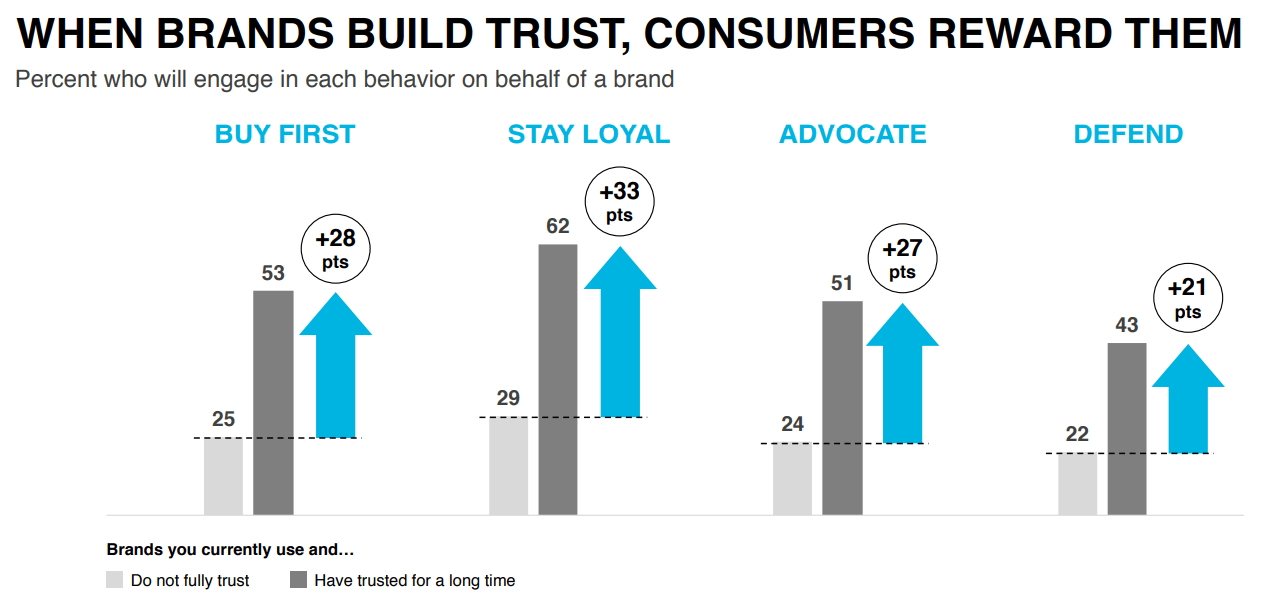
When brand trust is weak, customers don’t stay loyal for long. Even a single poor experience can break confidence and push people toward competitors. Recent research shows that many consumers are willing to switch brands when expectations are not met—especially when there’s a gap between what a brand promises and what it actually delivers.
This gap is particularly important for younger audiences. Gen Z and millennials tend to have higher expectations and are quicker to move on if a brand fails to deliver consistent, positive experiences. For them, brand trust is built through authenticity, transparency, and real interactions—not just marketing messages.
The impact goes beyond churn. When trust drops, customers don’t just leave—they also reduce their spending before they go. Negative experiences lower lifetime value and make it harder (and more expensive) to win those customers back. Building strong brand trust helps prevent this by creating consistent, reliable experiences that keep customers engaged over time.
💡 Customer support on social media is critical for improving CX. Check out what are the biggest social media channels today and learn more about the latest social media trends!
Customer advocacy
The strongest signal of brand trust is when customers actively advocate for you. They recommend your brand, defend it, and share their positive experiences with others—often without being asked. This kind of word-of-mouth is powerful because people trust recommendations from peers far more than traditional advertising.
Advocacy also creates a compounding effect. Trusted brands attract more loyal customers, who then bring in new ones. Over time, this reduces acquisition costs and strengthens your reputation in the market. In other words, brand trust doesn’t just drive individual purchases—it fuels sustainable growth through genuine customer relationships.
How to Build Brand Trust
In a world of constant content and information overload, many people struggle to tell what’s real and what’s not. This makes it harder for brands to earn and keep attention—let alone trust.
As a result, skepticism is growing. Many consumers question what brands say and look for proof before they believe it. This shift means brand trust must be earned through consistent actions, not just messaging.
So what can organizations do to rebuild trust or be perceived as more trustworthy to their customers?
Know your customers
Knowing your customers is the first step toward delivering experiences that actually meet their expectations. Without this understanding, it’s difficult to build meaningful relationships or improve brand trust over time.
That’s why many companies run regular surveys, analyze feedback, and track behavior across channels. These insights reveal what customers care about, where friction exists, and what influences their decisions.
When customers feel understood, they are more likely to stay loyal and engage with your brand. Personalization, relevant communication, and timely support all contribute to stronger connections and higher trust.
Be authentic
Authenticity is a key driver of brand trust. People want to know what your brand stands for—and they expect that to show up consistently in your actions, not just your messaging. When customers see your cool logo, it should reflect real values, not just visual identity.
Brands that try to follow trends or jump on every social issue without clear intent risk losing credibility. Customers can quickly spot when something feels forced or insincere. Instead, focus on clear positioning, honest communication, and values that genuinely guide your decisions.
To build strong brand trust, stay consistent in what you say and what you do. Authenticity grows when your actions match your words over time.
Follow through
If you promise something, you need to deliver on it—every time.
Setting the right expectations is critical for a positive customer experience. When expectations are unclear or unrealistic, customers feel misled, which quickly damages brand trust.
It’s better to underpromise and overdeliver than the other way around. For example, if you offer next-day delivery, you must reliably meet that commitment. Even small gaps between promise and reality can reduce confidence and increase churn.
Consistency in delivery builds reliability—and reliability is at the core of brand trust.
Be consistent and stand up to your values
People trust brands that act consistently across all touchpoints. Your messaging, campaigns, products, and customer interactions should all reflect the same core values. When everything aligns, customers feel more confident in what your brand represents.
Today, many customers also consider whether a brand’s values match their own. This includes social responsibility, transparency, and how companies respond to real-world issues. When brands clearly stand behind their values—and act on them—they strengthen brand trust over time.
The key is consistency. Trust grows when customers know what to expect and see those expectations met again and again.

For example, if your company claims to be environmentally friendly, it is expected to use recyclable packaging and reduce waste where possible. If that is not the case, customers who care about sustainability will quickly notice the gap and may switch to another provider. Consistency between claims and actions is essential for building lasting brand trust.
Care about the first impression
First impressions shape how people perceive your brand from the very beginning. Whether it’s your website, product, or initial interaction, customers form quick judgments that influence their willingness to engage further.
A clear message, intuitive design, and smooth user experience help create a positive first impression. If something feels confusing, slow, or inconsistent, trust can drop before the relationship even begins. Investing in these early touchpoints makes it easier to build brand trust from the start.
Pay special attention to customer experience
Customer experience plays a central role in how people perceive your brand. Every interaction—whether it’s browsing your site, contacting support, or receiving a product—adds to the overall impression.
Fast responses, helpful support, and consistent service quality make customers feel valued and understood. Over time, these positive experiences reinforce brand trust and encourage repeat business. On the other hand, poor experiences can quickly undo trust that took months to build.
Protect your customer’s data
Data privacy has become a major factor in brand trust. Customers want to know how their information is collected, stored, and used—and they expect brands to handle it responsibly.
Clear privacy policies, secure systems, and transparent communication help reduce concerns and build confidence. When customers feel their data is safe, they are more willing to engage and share information. Failing to protect that data, however, can quickly damage trust and reputation.
Because of this, data protection is no longer just a compliance issue—it’s a key part of building and maintaining brand trust over time.
Rethink paid advertising
Do people trust paid ads and other marketing campaigns? Many consumers approach advertising with skepticism, especially when messages feel exaggerated or disconnected from reality.
To build brand trust, focus on honest, value-driven communication instead of overly promotional messaging. Use real customer stories, clear benefits, and transparent claims. The goal is to inform and help—not just to sell.
When marketing aligns with actual customer experience, it reinforces trust. When it doesn’t, it creates doubt and pushes people away. Thoughtful, authentic communication makes your advertising more credible and effective.
So are paid ads worth the investment?
💡 Paid ads are not the only way to distribute your marketing content. Check out some of the more efficient content distribution strategies!
Try word-of-mouth marketing
Many marketers and business leaders agree that word-of-mouth marketing and brand advocacy are much more powerful marketing weapons than paid ads. People are far more likely to trust recommendations from friends, colleagues, or other customers than messages that come directly from brands.
This is because personal recommendations feel more authentic and unbiased. When someone shares a positive experience, it carries more weight and directly influences brand trust. Reviews, testimonials, and user-generated content all play a similar role in reinforcing credibility.
To encourage word-of-mouth, focus on delivering great experiences worth talking about. Make it easy for satisfied customers to share feedback, leave reviews, or recommend your brand. Over time, this creates a strong network of advocates who help grow your reputation organically.
💡 EXTRA TIP: Building Your Brand Trust Through Employee Advocacy
Brand ambassadorship is a powerful way to strengthen brand trust. While traditional influencers still play a role, people increasingly trust voices that feel real, relatable, and close to their everyday experience.
This is where employee advocacy stands out. Employees understand your brand better than anyone else, and when they share content or talk about their work, it feels more authentic than corporate messaging. Their voices help humanize your brand and make it more credible.
Research consistently shows that content shared by individuals is perceived as more trustworthy and engaging than content shared by official brand channels. People are more likely to pay attention, interact, and believe messages when they come from real people rather than company pages.
Relatability is key here. Audiences tend to trust people they see as peers more than high-profile celebrities or influencers. This makes employee advocacy especially effective, as employees can communicate in a more natural and approachable way.
To build brand trust through employee advocacy, encourage your team to share their experiences, insights, and expertise. Provide guidance, but avoid over-controlling the message. The more genuine and personal the content feels, the more impact it will have.
Over time, this approach helps create a network of credible voices that reinforce your brand’s values and build trust at scale.
So what is a better way to leverage the power of brand advocacy?
It’s employee advocacy!
In recent years, more companies have started investing in employee advocacy and employee marketing strategies as a way to build stronger, more authentic brand trust. Instead of relying only on corporate channels, they empower employees to share content, insights, and experiences in their own voice.
This approach works because people trust people more than brands. Content shared by employees often feels more genuine, reaches new audiences, and drives higher engagement compared to traditional brand posts.
Some of the key benefits of employee advocacy include:
- Higher engagement, as employee-shared content tends to generate more interactions than posts from official brand channels
- Wider reach, since employees tap into their own networks and extend visibility beyond corporate audiences
- Stronger credibility, as recommendations from people are generally perceived as more trustworthy than advertising
- Better lead quality, as conversations driven by employees often feel more personal and relevant
- Improved employer branding, helping attract talent while reinforcing brand trust externally
Planning, implementing, and managing a successful employee advocacy program requires the right set of tools and proper internal communications. Employees need clear guidance, relevant content, and an easy way to participate.
Educating your workforce about the value of advocacy and giving them the freedom to share authentic perspectives is key. To make the process more engaging and scalable, many organizations also use dedicated platforms that simplify content sharing, track performance, and encourage ongoing participation.
FAQ
What is brand trust and why does it matter?
Brand trust is the confidence customers have that your business will deliver what it promises consistently and honestly. It matters because it shapes whether people choose you over competitors, stay loyal, and recommend your brand to others. Without brand trust, even great products or competitive pricing may not be enough to win people over. If you are focused on long-term growth, brand trust should support efforts like lead generation, where trust often influences whether interest turns into action.
How can you build brand trust quickly?
There is no instant fix, but you can build brand trust faster by being consistent and transparent. Deliver what you promise, communicate clearly, and resolve problems quickly. It also helps when employees understand your brand and represent it well in public. That is why many organizations invest in employee advocacy, giving their teams a way to share trusted, authentic content that feels more human than standard brand messaging.
What role does employee advocacy play in brand trust?
Employee advocacy helps humanize your brand. People tend to trust people more than company logos or polished campaigns, so employee-shared content often feels more credible and relatable. It can also expand your reach and create stronger engagement. If you want to explore this in more detail, check out what brand advocacy is and why it matters, or learn more about brand ambassadors and how they help strengthen trust.
How does brand trust impact hiring and employer branding?
Brand trust affects more than customer decisions. It also influences how job seekers view your company. Candidates are more likely to apply to and accept offers from brands they trust, which makes trust a key part of both employer branding and talent acquisition. For more practical guidance, read this employer branding strategy guide or explore the basics of employer branding.