
Building a positive workplace culture has become one of the main priorities for organizations across the world. Due to the current pandemic, many employers are switching their focus on building workplace environments in which their employees can feel safe, engaged, inspired, and productive.
Moreover, 94% of executives believe strong company culture is key to business success.

Yet, many organisations still struggle to understand how employees truly experience their company culture. Perceptions vary widely across teams, roles, and locations, which makes culture difficult to measure and even harder to improve in a consistent way.
In this blog, we will go over the importance of building a strong workplace culture and the best ways for achieving that through proper employee communication, defining clear strategies, and aligning the workplace with the company’s mission, vision, and ultimate business goals. The focus is not only on intent, but on practical actions that support creating a positive workplace culture over time.
The Definition of Workplace Culture
Culture is a broad concept, which makes it difficult to define in simple terms. Although extensive research exists relating to the topic of workplace culture, there is no generally accepted definition. Each organisation operates in a different context, with different people, structures, and priorities, so there is no one-size-fits-all culture template that meets the needs of all organisations.
Moreover, workplace culture can manifest itself in a variety of ways, including leadership behaviours, employee relations, manager-employee relationships, communication styles, levels of transparency, and the types of messages shared internally. These elements influence how people collaborate, make decisions, and feel at work on a daily basis.
In general, an organization’s culture defines the proper way to behave within the organisation. It should consist of shared beliefs and core company values that are established by leaders and other internal communicators and then communicated and reinforced through various internal communication channels. When these values are unclear or inconsistently communicated, culture becomes fragmented and hard to sustain.
Building a positive workplace culture is only possible if you have a clear plan for how to communicate it across the entire workplace and align employees with the defined values. Consistency, visibility, and relevance are key to successfully creating a positive workplace culture that employees can understand, trust, and actively support.
Promote and reinforce your workplace culture with the right internal comms tools
Why Creating a Strong Workplace Culture Is Important
Many experts and industry leaders believe that workplace culture is what separates the most successful companies from the average ones. Culture shapes how people work, how decisions are made, and how teams respond to change or pressure.
This matters because a positive culture in the workplace is essential for fostering a sense of pride and ownership among employees. When people feel proud to work for their employer, they are more engaged in their roles and more invested in long-term success. They actively look for ways to improve processes, strengthen relationships, and support shared goals. Over time, this sense of ownership becomes a key driver for creating a positive workplace culture that benefits both employees and the organisation as a whole

While a positive workplace culture brings clear advantages, organisations with weak or inconsistent cultures often face the opposite outcomes. These include disengaged employees, higher turnover, strained customer relationships, and reduced long-term performance. Over time, these issues make it harder to attract talent and sustain growth.
📚 Also check: Top 15 Employee Motivation Tips and Benefits
Let’s take a look into a few most important benefits of creating a good workplace culture:
- Talent attraction – Job candidates increasingly evaluate organisations based on values, leadership behaviour, and everyday employee experience. A strong, positive, and clearly communicated culture helps attract qualified candidates who align with how your organisation works and thinks. When expectations and values are visible, cultural fit improves from the start, which supports creating a positive workplace culture at scale.
- Employee engagement and retention – Culture has a direct impact on how employees feel about their work and their employer. When people feel supported, heard, and aligned with company values, satisfaction and engagement increase. This makes employees more likely to stay, contribute consistently, and remain committed to shared goals over time. proven to keep your employees engaged in their work.
- Business performance – Organisations with stronger cultures tend to perform more consistently because teams collaborate better, communicate more openly, and make decisions faster. A clear and healthy culture supports alignment across departments and helps employees understand how their work connects to broader business objectives.
10 Ways to Build and Manage a Positive Workplace Culture
Now that you know the benefits of building a positive workplace culture, we will go over the best practices for building a motivated, engaged and satisfied workplace. Even though there is no one-size-fits-all strategy for building thriving workplace cultures, some principles apply across most organisations. Let’s take a look at them.
Define and communicate company values
At the heart of organisations’ cultures are commonly shared values. While there are no right or wrong values, organisations need to clearly define which values they prioritise and consistently communicate them across the workforce.
Some of the most common organisational values include:
- Honesty
- Integrity
- Teamwork
- Excellence
- Innovation
- Accountability
- Trustworthiness
- Fairness
- Learning
- Customer experience
These beliefs and values determine which behaviours are expected, supported, and rewarded among employees. However, simply listing core values is not enough. Without a clear plan for how to communicate them to your employees, values remain abstract and disconnected from daily work.
To support creating a positive workplace culture, values need to be visible in leadership actions, internal communication, and everyday decisions. When employees clearly understand what the organisation stands for, they are better equipped to act in ways that support shared goals.

Set clear strategy and align employees with your mission and vision
A clear business strategy gives employees direction and context for their work. When people understand where the organisation is heading and why, it becomes much easier to align daily decisions with long-term goals. This clarity plays a central role in creating a positive workplace culture, where employees feel connected to something bigger than individual tasks.
Organisations that clearly define their strategic priorities are also better at aligning employees with those goals as well as their company’s mission and vision. Alignment reduces confusion, limits conflicting priorities, and helps teams focus their energy on what truly matters.
Such alignment supports a stronger sense of professional purpose. Employees are more motivated when they can see how their work contributes to shared outcomes. Organisations therefore need to<strong> motivate their employees beyond quarterly quotas</strong> and annual performance reviews by clearly linking individual efforts to meaningful objectives.
Many organisations, however, struggle to align their entire workplace to work towards the same goals. Without consistent communication and reinforcement, strategies remain disconnected from daily behaviour, and core values are harder to embed across teams.
Master internal communications
The way different stakeholders communicate within your workplace has a significant impact on the overall workplace culture. Clear, consistent communication builds trust, reduces uncertainty, and helps employees feel included in organisational life.
With the emergence of remote work and more dispersed workplaces, digital employee communication has become a priority for many organisations. Messages now need to cut through physical distance, different time zones, and varying work patterns.
Employees want to be informed, stay in the loop, and understand what is happening across the business. They want to know where the company is headed and how decisions affect them. They also expect to access critical company information wherever they are, at any time, and from any device. Meeting these expectations is essential for creating a positive workplace culture that feels transparent, connected, and aligned.
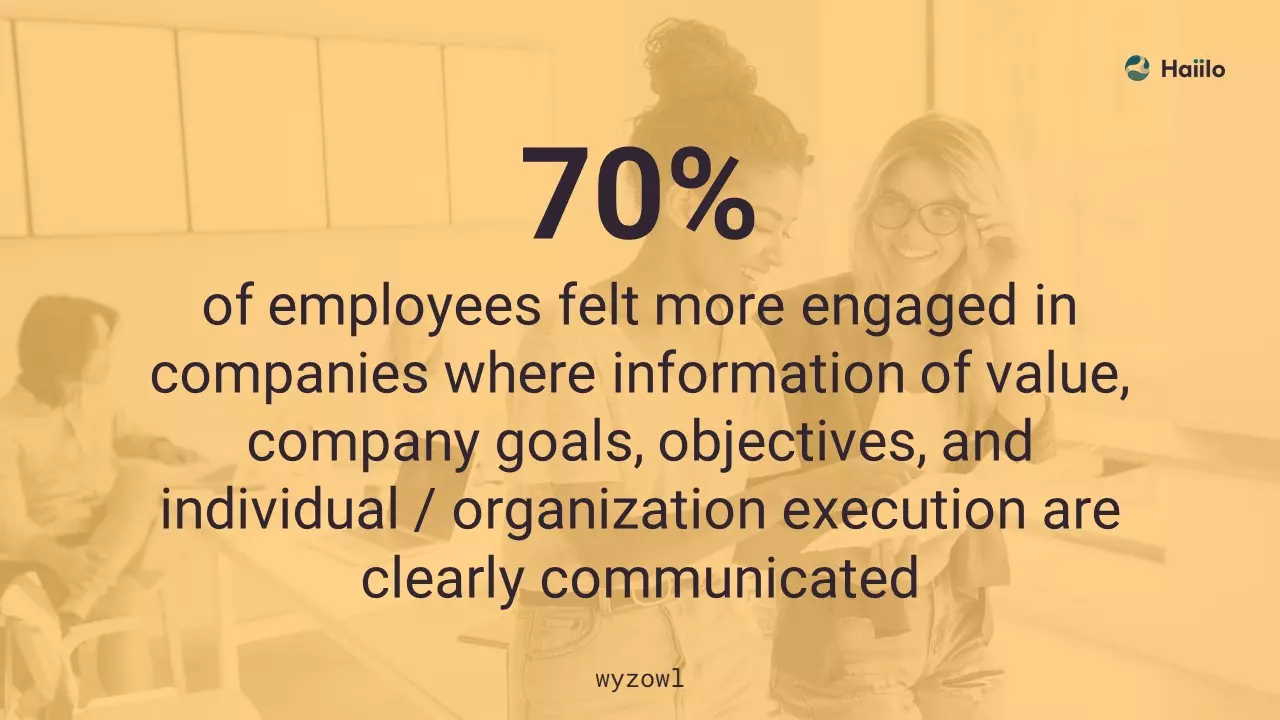
Hence, in the last few months, we have witnessed internal communications departments going through significant transformations as they are becoming important strategic business partners. Their role now extends beyond sharing updates to actively shaping how employees experience work every day.
They are switching from a supportive functional role to one with clear responsibility to continuously improve employee experience in the workplace. This evolution plays a direct role in creating a positive workplace culture by ensuring employees feel informed, involved, and connected to the organisation.
Drive collaboration and strong relationships
Strong relationships in the workplace often lead to clearer and more consistent communication, which is a core prerequisite for building and managing a positive workplace culture. When people trust each other, information flows more freely and misunderstandings are reduced.
Today, departments can’t work in silos anymore. As roles and teams increasingly depend on one another, organisations need to ensure easy collaboration and communication within and among different teams. Shared tools, aligned goals, and clear expectations make collaboration part of daily work rather than an exception.
Workplace cultures that rely on one-way communication limit employee voice. When people can’t ask questions, make recommendations, reach colleagues, or find important information, engagement suffers. These environments still have a long way to go in creating memorable employee experiences. Promoting transparency and open communication between department heads, management, and team members is therefore essential.
Authentic and trusted leadership
Leadership is, without a doubt, the most important aspect of every workplace culture. Leaders influence how values are interpreted and how employees experience the organisation on a daily basis.
Leaders should consistently promote company values and act as role models to the rest of the organisation. Their behaviour sets expectations and signals what is truly valued, beyond written policies.
How leaders communicate also has a direct impact on trust, motivation, and alignment. The way they communicate shapes how employees perceive decisions, change, and long-term direction. Clear, honest, and transparent leadership communication is a key driver of trust and an essential element of creating a positive workplace culture.
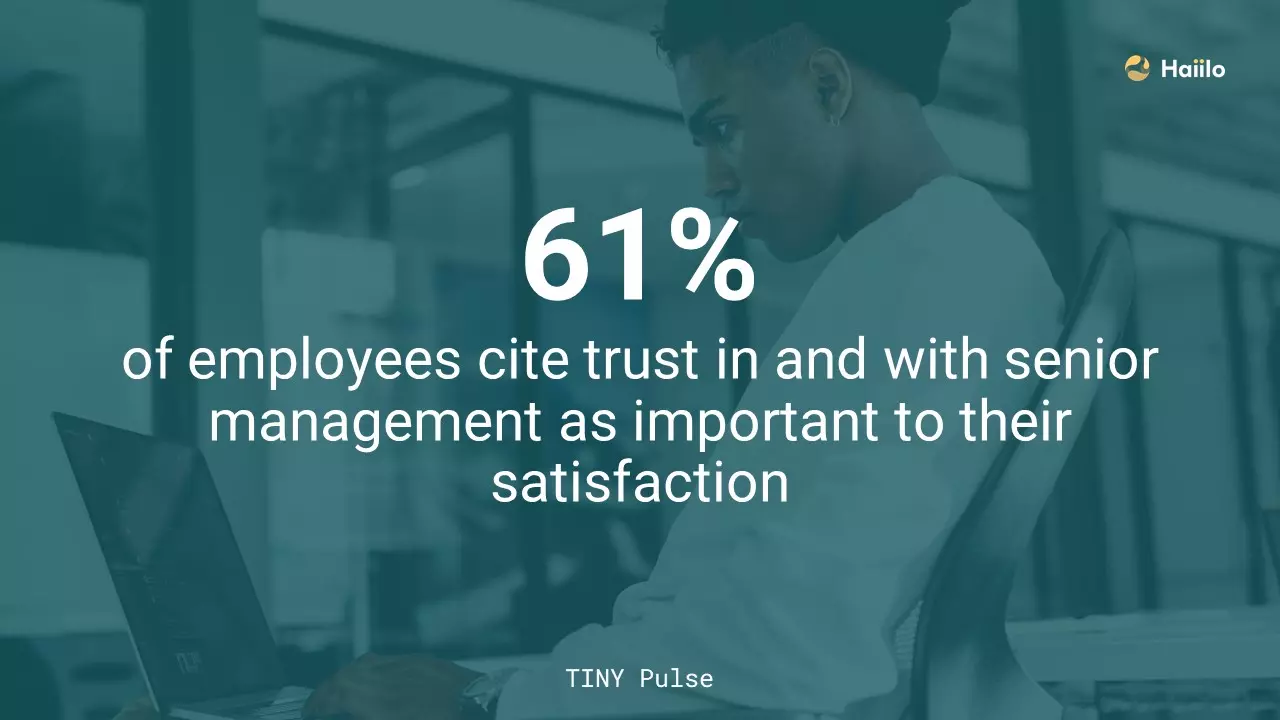
In the current work environment, leaders are trying to find new ways to motivate employees, advocate for them, and drive passion and commitment. Expectations have changed. Employees now look for clarity, empathy, and visible support from leadership, not just direction. While leaders remain an essential ingredient for creating a positive workplace culture, trust and connection are still uneven across many organisations.
Traditionally, the role of leadership wasn’t focused on speaking directly to the workforce or taking part in open, company-wide conversations. Today, employee-centric employers expect leaders to engage their internal audiences with authentic, inspiring, and motivational stories that explain not just what is happening, but why it matters.
Approachable management
As you probably already know, managers are the most accountable for the variance in their employees’ engagement, satisfaction, and motivation. Day-to-day interactions with managers have a far greater impact on the employee experience than most formal initiatives. https://blog.haiilo.com/blog/14-manager-communication-best-practices-you-shouldnt-ignore/The way managers communicate with their teams plays a critical role in shaping trust, clarity, and psychological safety at work.
When managers are approachable, employees are more likely to ask questions, share concerns, and contribute ideas early. This improves collaboration, reduces friction, and supports creating a positive workplace culture in practice, not just in principle.
However, many employees still hesitate to speak openly with their managers. When communication feels distant or transactional, small issues can escalate and engagement drops. Building strong manager-employee relationships requires consistent communication, active listening, and visible follow-through on feedback. These habits make it easier for employees to raise concerns and stay connected to their work and their team.
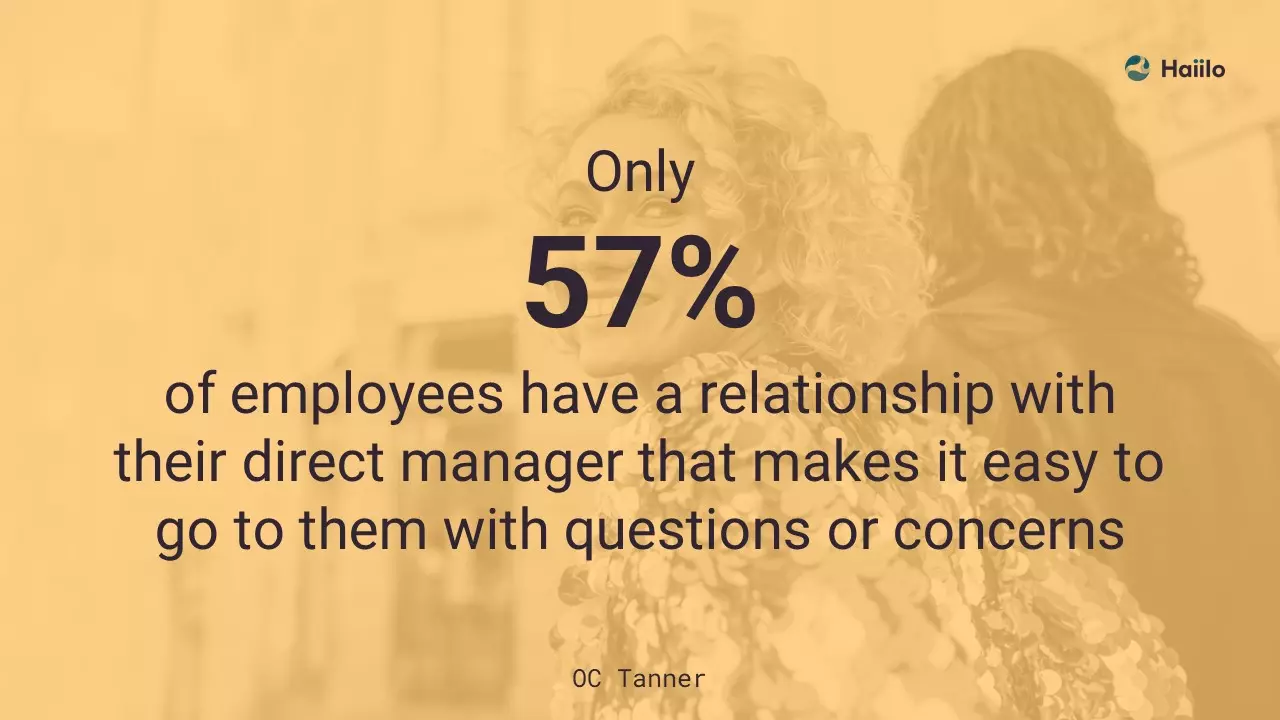
Managers need to be more approachable even today, when they often have much less physical contact with their employees. Distance and hybrid work make intentional communication even more important. Managers need to communicate frequently and clearly to stay present in their teams’ everyday experience. Even though many managers still see communication as a check-the-box activity, employees often need and prefer to hear messages multiple times and through different channels.
Consistent communication helps clarify priorities, reduce uncertainty, and build trust over time. It also supports creating a positive workplace culture by making employees feel seen, informed, and supported in their roles.
Unfortunately, many managers don’t have access to appropriate technology and tools that would help them communicate more effectively, stay connected, and build stronger relationships with their teams. Without the right tools, good intentions around approachability and transparency are hard to turn into daily habits.
Create a sense of purpose
A clear and meaningful sense of purpose plays a central role in shaping how employees feel about their work. When people understand why their organisation exists and how their work contributes to something bigger, engagement and motivation tend to increase. Purpose provides context and meaning beyond tasks and targets.
At the same time, purpose only works if it feels relevant. If organisational purpose feels abstract, generic, or disconnected from employees’ values, it fails to inspire. This gap can weaken trust and make creating a positive workplace culture much harder.
As explained in the research:
“People long to connect to something bigger and more important than themselves. So corporations need to connect the ‘why’ of their organization to the goals, longing for meaning, and desire to have an impact that lives inside every employee.”
The reality is that some organisations lack a clearly defined purpose. Others have a purpose that sounds good on paper but does not resonate in everyday work. In many cases, organisations struggle to communicate their purpose in a way that resonates with their employees and feels real rather than symbolic.
Leaders, managers, and internal communicators play a key role here. They are responsible for creating that sense of purpose by linking strategy to impact, sharing meaningful stories, highlighting corporate responsibility efforts, celebrating contributions to the community, and reinforcing important company milestones.
Encourage upward feedback and share of voice
The healthiest and most productive cultures are those in which employees feel free to share their voice, raise concerns, ask questions, and express their needs. Open dialogue helps organisations spot issues early and adapt more quickly. It also reinforces trust and inclusion when creating a positive workplace culture.
However, many employers still overlook the importance of two-way communication and https://blog.haiilo.com/blog/10-ways-to-foster-upward-communication-in-the-workplace/upward feedback. Instead, they rely on one-way communication formats that inform employees but do not invite participation.
Company-wide newsletters and announcements are useful, but they are not enough on their own. When employees have no way to respond, ask questions, or contribute perspectives, engagement suffers. Communication is not only about informing employees, but also about listening to them and acting on what they share.
Consider implementing a modern employee communications solution that helps keep the entire workplace connected and gives managers and leaders simple ways to open up conversations. The right platform makes it easier to share updates, invite feedback, and ensure everyone has a voice, which is essential for creating a positive workplace culture.
Show recognition and appreciation
Once employees’ basic needs are met, genuine recognition for their efforts, talents, and contributions becomes increasingly important. Recognition reinforces positive behaviour and signals what the organisation truly values. It can be both formal and informal, and it plays a key role in creating healthy team dynamics where peers and leaders praise each other and openly celebrate success.
Recognition is most effective when it is timely, specific, and visible. Employees want to know that their work matters and that their impact is seen. When appreciation is inconsistent or limited to a few individuals, motivation fades and engagement drops.
Organisations that recognise employees who actively contribute to creating a positive workplace culture are far better at encouraging others to do the same. Making recognition public, collaborative, and visible across the organisation helps reinforce shared values and motivate others to give their best.
Consider creating a dedicated communication channel for employee recognition and enable colleagues to join in with congratulations and praise. This approach helps appreciation feel authentic, inclusive, and part of everyday work.
Focus on diversity and inclusion
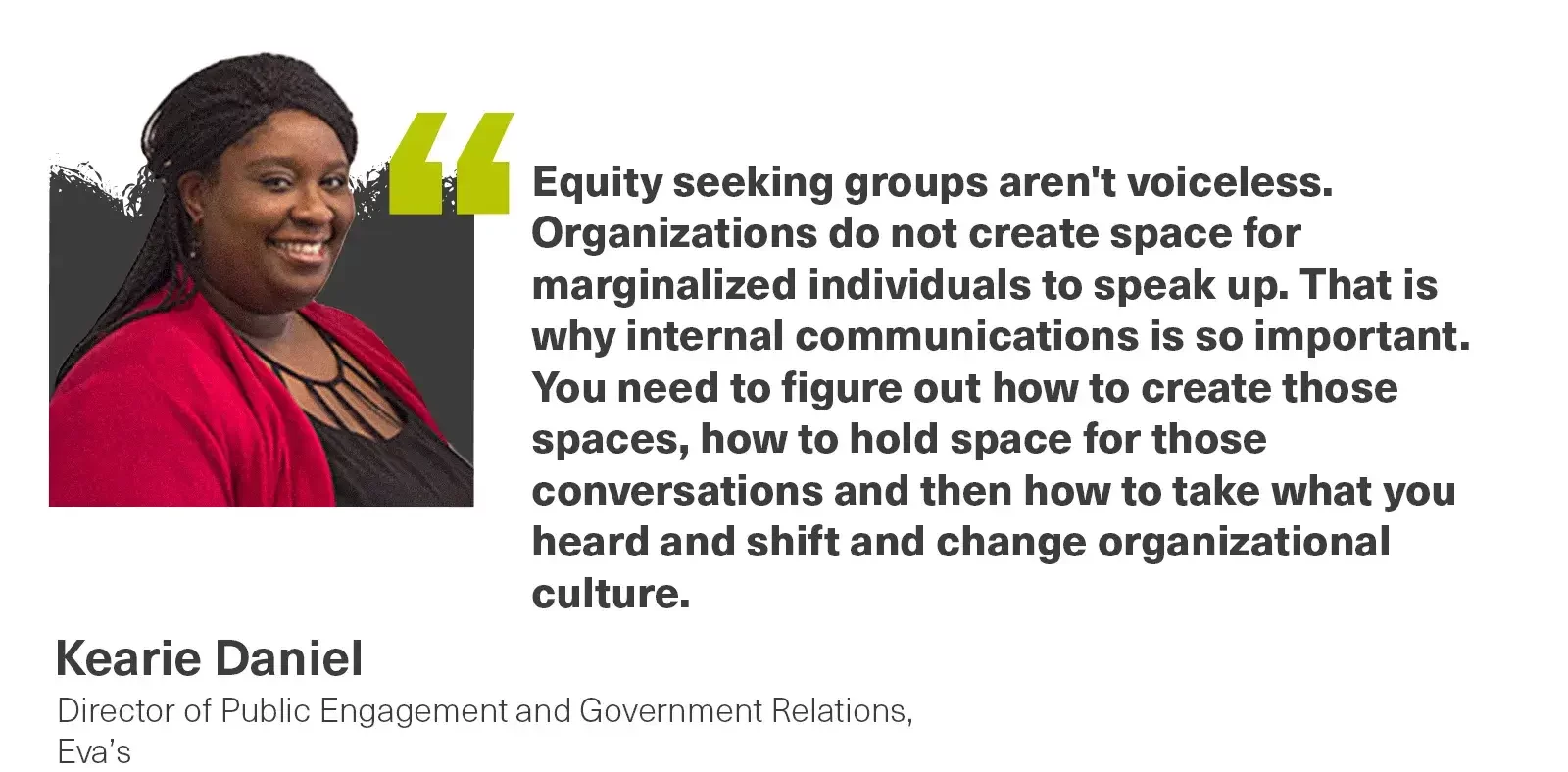
You can create a positive and inclusive workplace culture by welcoming individuals from different backgrounds and actively valuing their perspectives. Diversity and inclusion are not only about representation, but about ensuring people feel respected, heard, and able to contribute fully.
Inclusive cultures support better collaboration, stronger leadership, and more innovative thinking. When employees feel they belong, they are more likely to engage, share ideas, and stay with the organisation.
However, diversity and inclusion efforts only succeed when they are clearly communicated and consistently reinforced. Organisations need a proper employee communication strategy to explain why diversity and inclusion matter, how they connect to company values, and what inclusive behaviour looks like in practice.
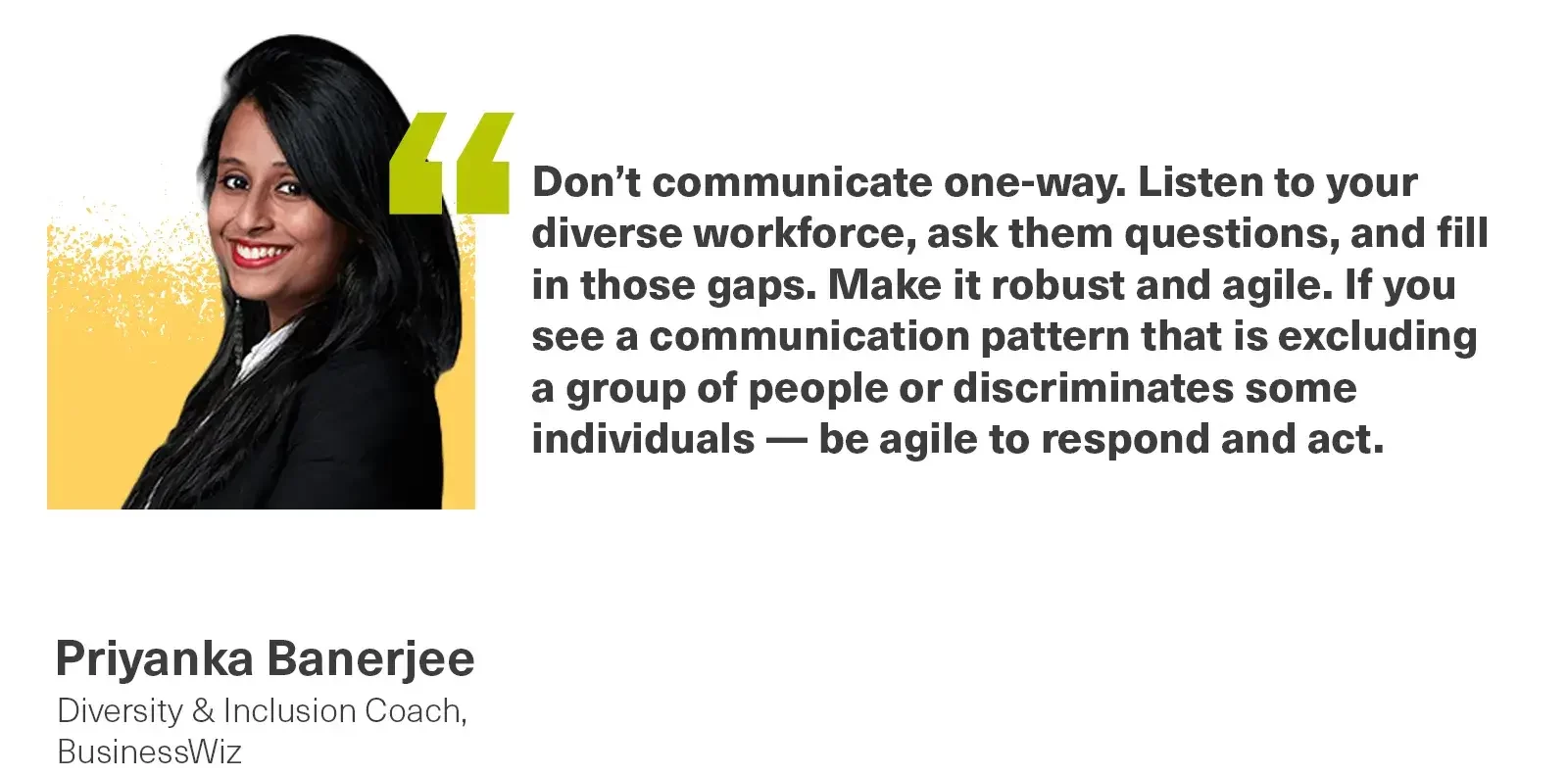
💡 We’ve asked IC experts from different industries to share their best practices for communicating Diversity and Inclusion in the workplace. Check out what they had to say on the topic: How to Communicate Diversity and Inclusion with Authenticity — 10 Experts Explain.
How Can Leaders Contribute to Shaping Positive Workplace Culture
Leaders in successful and thriving companies live their cultures every day. They actively demonstrate what their organisations stand for through actions, decisions, and communication. When leaders are clear about their values and how those values define their organizations, it becomes much easier to align the entire workplace around shared expectations and behaviours.
To support creating a positive workplace culture, leaders need to be open and transparent. This requires frequent, consistent communication across the company’s formal and informal communication channels. Visibility builds trust, especially when employees can clearly see how decisions are made and how priorities are set.
Sharing updates alone is not enough; leaders need to explain why to foster an engaging work culture. Context helps employees understand how their work fits into the bigger picture and reduces uncertainty during change.
This is especially critical today, as many organisations face ongoing transformation. Employees are more likely to embrace the change when they understand the reasons behind it and how it supports long-term goals.
CEOs and senior leaders often carry the responsibility to shape and promote workplace culture through regular conversations and visible interaction with employees. Their presence and messaging set the tone for the entire organisation.
Here are just a few ways leaders can actively contribute to shaping a strong workplace culture:
- Leaders should regularly evaluate how they interact with employees and remain authentic while encouraging people to share their voices.
- Leaders should recognise and congratulate individuals and teams who demonstrate positive behaviours and make a meaningful impact.
- Leaders should start and promote open dialogues across company communication channels so values remain clear and visible.
- Leaders should work closely with internal communications teams to create inspiring messages and visuals that reinforce core company values.
10 Interesting Statistics About Workplace Culture
As mentioned earlier, company culture has a strong influence on an organisation’s ability to attract, engage, and retain talent. Below are several insights that highlight the importance of investing in culture:
-
- Job candidates consistently consider workplace culture an important factor when deciding where to apply and whether to accept an offer.
- A misalignment between personal values and company culture is a common reason candidates decline roles.
- Employees who feel uncomfortable giving upward feedback are less likely to remain with their organisation long term.
- Many employees say they have ways to share feedback about their employee experience, yet fewer feel their input leads to visible action.
- Trust-driven cultures are particularly important for younger generations when choosing an employer.
- Low levels of respect between colleagues increase the risk of employee turnover.
- Executives widely agree that workplace culture has a direct impact on productivity, creativity, and long-term performance.
- Perceptions of leadership empathy often differ between executives and employees.
- Many leaders acknowledge that their current workplace culture still has room for improvement.
- Negative office politics and unclear expectations regularly contribute to employees leaving otherwise good roles.
15 Workplace Culture Survey Questions to Ask Your Employees
One of the most effective ways to start improving and reshaping your workplace culture is by understanding how employees currently experience it. We previously highlighted why employees should be encouraged to share their voice and openly express their thoughts and concerns.
Using employee surveys is one of the fastest and most effective ways to collect this kind of feedback at scale. Surveys help surface patterns, spot risks early, and identify what already works well. When used consistently, they become a practical foundation for creating a positive workplace culture rather than relying on assumptions.
Below are some workplace culture questions you can include in your survey:
- Do you know what our core company values are?
- According to you, how does this organization define “success”?
- How likely are you to recommend our organization to your friends and colleagues due to the culture?
- Do you feel heard and respected?
- Do you feel like your work is recognized and appreciated?
- Do you understand how your work contributes to the success of our company?
- Do you feel like you have a good relationship with your supervisor?
- How would you define leadership in this organization?
- Do you feel like leadership does a good job communicating with employees?
- Does your manager provide you with timely feedback about your work?
- Which aspects of the organization can be improved to make it a better place to work?
- Is your organization dedicated to diversity and inclusiveness?
- Is there a culture of teamwork and collaboration within the organization?
- Does your organization provide a safe working environment for all employees?
- Do you feel like the organization’s work is positively impacting the employees in the organization?
When sending your surveys, make sure they are relevant to your audience. Different roles, locations, and working conditions often require different questions or language. For example, surveys may need to vary based on employees’ locations, languages, or the nature of their work.
It’s also critical to make surveys accessible on your employees’ mobile phones to avoid excluding https://blog.haiilo.com/blog/who-are-frontline-workers-and-how-to-enable-their-success/”>deskless and blue-collar employees. Accessibility directly impacts response rates and ensures feedback reflects the entire workforce.
To support higher engagement and more useful insights, organisations should be able to segment internal audiences and tailor surveys accordingly. This allows for a more personal approach and more actionable results when working on creating a positive workplace culture.
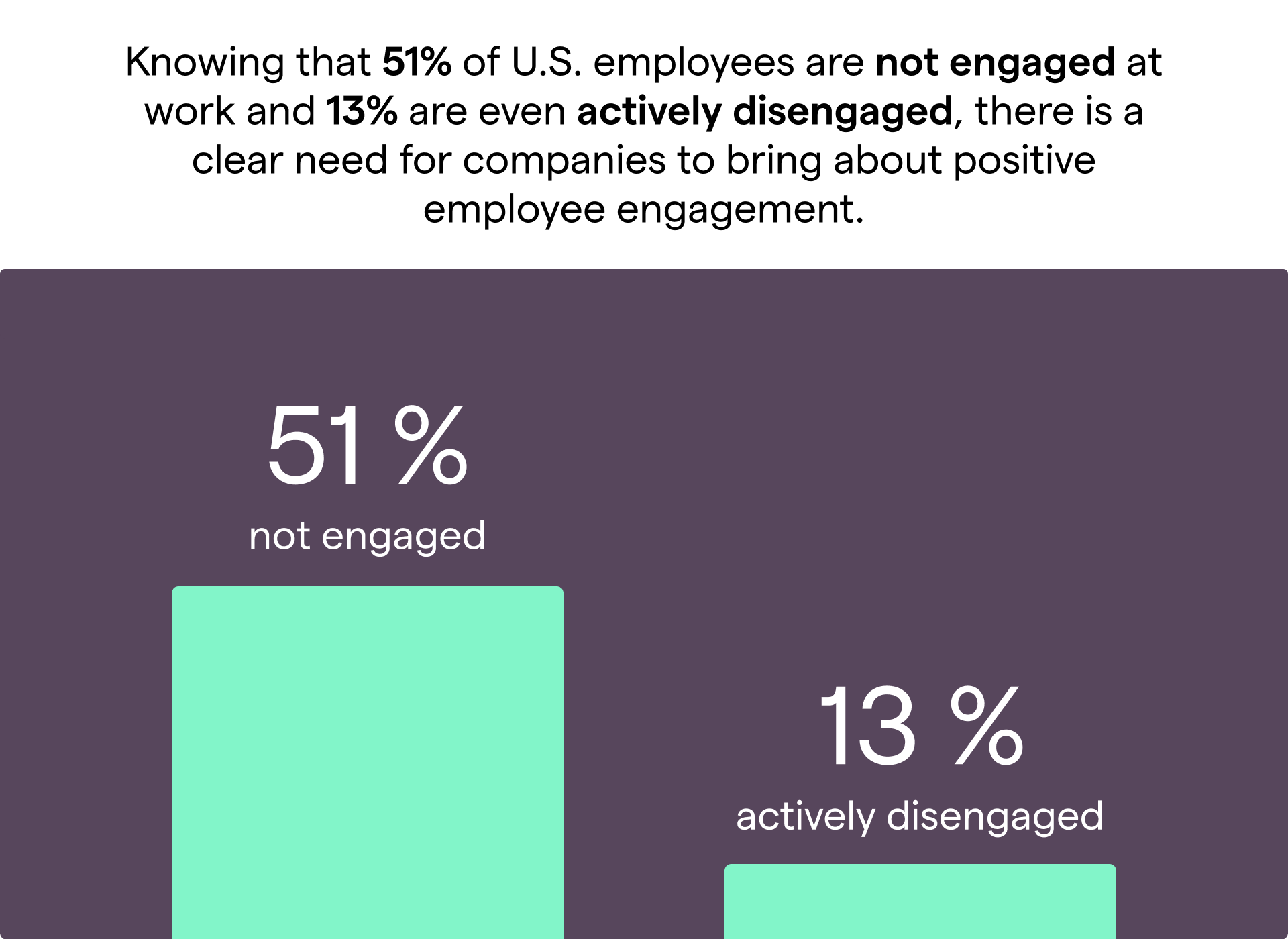
Check out our report on the key drivers of employee engagement
FAQs: creating a positive workplace culture
What does creating a positive workplace culture actually involve?
Creating a positive workplace culture goes beyond perks or one-off initiatives. It’s about how people experience work every day. This includes clear values, strong employee relations, open communication, and leadership behaviours that build trust. When company values are clearly defined and consistently communicated, employees understand what’s expected and how they contribute. Culture is shaped through everyday actions, not internal slogans alone. Leaders, managers, and internal communicators all play a role in reinforcing behaviours that support collaboration, respect, and shared purpose.
How can internal communication support a positive workplace culture?
Internal communication is one of the strongest levers for shaping culture. When employees feel informed, listened to, and involved, engagement improves. Using the right mix of communication channels helps organisations reach everyone, including remote and deskless teams. A strong internal communication approach supports alignment, transparency, and feedback, which are essential for creating a positive workplace culture. Platforms designed for internal communication make it easier to share context, explain decisions, and keep conversations two-way.
What role does employee engagement play in workplace culture?
Employee engagement and workplace culture are closely connected. Engaged employees are more likely to collaborate, stay motivated, and advocate for their organisation. Research consistently shows that engagement improves when employees feel heard, recognised, and connected to company goals. Focusing on employee engagement helps organisations turn cultural values into daily habits. This is especially important in distributed and remote environments, where intentional communication and connection matter more than ever.
How can leaders and managers actively improve workplace culture?
Leaders and managers shape culture through visibility, communication, and consistency. Employees look to leaders to understand priorities, values, and acceptable behaviours. By communicating clearly, recognising contributions, and encouraging feedback, leaders help build trust. Using modern employee communications and insights tools allows leaders to understand what’s working and where support is needed. When leaders act on feedback and share progress openly, they reinforce a culture of accountability and continuous improvement—key elements of creating a positive workplace culture.