
The employee experience (or EX) you deliver has a direct impact on your company’s success.
Most businesses invest heavily in attracting top talent, but many overlook what happens next. Without a clear employee retention strategy, even the best hires won’t stay. This is where employee experience best practices make the difference—helping you turn great candidates into long-term, engaged employees.
Companies that consistently apply strong employee experience best practices are the ones that successfully attract, retain, and engage the best talent. They create environments where people feel valued, supported, and motivated to contribute.
According to Gallup, “employees have become consumers of the workplace”. They expect the same level of care, ease, and personalization they experience as customers—and they won’t hesitate to leave if those expectations aren’t met.
As you would put effort into creating a great customer experience, you need to craft a solid strategy to improve the employee experience you’re delivering. By focusing on practical, people-first employee experience best practices, you can build a workplace that not only attracts talent but keeps them engaged and committed.
Creating a winning employee experience doesn’t mean offering competitive salaries and decent benefits.
You can’t just add a few gifts to your employee compensation package or throw in some perks and consider your EX optimization efforts to be done. These quick fixes may create short-term excitement, but they rarely solve deeper issues like poor communication, lack of growth opportunities, or weak leadership.
Crafting a great employee experience calls for involvement across your entire company. It touches every stage of the employee journey—from hiring and onboarding to development, recognition, and offboarding. This is why applying consistent employee experience best practices across teams and departments is essential, not optional.
Before going through the tactics you can implement to improve the employee experience you’re delivering at your company, let’s get a better understanding of the key elements that shape a great employee experience.
What Is Employee Experience?
There’s some confusion around employee experience: EX is not a synonym for employee motivation, employee satisfaction or employee engagement.
However, all these three elements are connected:
- Employee satisfaction has a direct impact on employee experience
- Employee motivation is often a result of employee experience
- Employee experience has a strong impact on employee engagement
So, What Does Employee Experience Mean?
In a nutshell, employee experience includes all the observations, perceptions and feelings employees have about their role in the company and the company itself: its vision, values and goals.
It’s shaped by everyday interactions—how managers communicate, how feedback is handled, and how supported employees feel in their work. The way employees feel about the company and their role has a great and direct impact on their morale, productivity and engagement.
Employee Experience Through the Employee Lifecycle
The way employees feel about the company, the team and their role throughout their journey in the company will shape the overall employee experience.
These perceptions aren’t fixed—they evolve with every interaction, process, and milestone. From the first impression as a candidate to the final moments of offboarding, each touchpoint either strengthens or weakens how employees feel. This is why applying consistent employee experience best practices across the entire journey is key to building trust and long-term engagement.
If you want to create a winning employee experience, you’ll need to consider the employee life cycle and find ways to improve the employee experience you deliver in each of the six stages of the employee life cycle: talent attraction, recruitment, onboarding, career development, retention and separation/offboarding.
Each stage plays a specific role. Attraction shapes expectations, onboarding sets the tone, development drives growth, and offboarding leaves a lasting impression. When these stages are aligned and thoughtfully designed, they create a seamless and positive experience that supports both employee satisfaction and business outcomes.
Put simply, the employee experience already starts in the talent attraction and recruitment stages.
The way you communicate your company culture, write job descriptions, and interact with candidates shapes their expectations early on. Every touchpoint—from the first job ad to the final interview—affects how people perceive your organisation. These early impressions play a key role in setting the foundation for strong employee experience best practices.
The onboarding process, working conditions, workplace, company culture and career development opportunities will have a direct impact on employees’ satisfaction and their motivation to stay with the company. A structured onboarding helps new hires feel confident and supported, while clear growth paths and a positive environment keep them engaged over time.
When these elements are aligned, employees are more likely to feel valued, perform at their best, and remain committed to your organisation.
Even though many businesses don’t include the offboarding stage into their employee retention strategy, this stage is as important as the other ones when it comes to employee experience.
The conditions in which an employee leaves the company have a tremendous impact on the employee experience. A respectful, well-structured exit process shows professionalism and reinforces trust—even at the end of the journey. It also provides valuable feedback you can use to improve your overall approach and refine your employee experience best practices.
And remember, your employees can still be great brand ambassadors after leaving the company if they are happy with the offboarding process. Positive exits can lead to referrals, rehiring opportunities, and stronger employer branding.
How to Create a Winning Employee Experience at Your Company?
1. Rethink Your Internal Communication
An effective internal communication, which involves making sure that employees have easy access to the right information and resources when they need them, is the cornerstone of employee experience.
Related: Improving Employee Engagement With Internal Communications
Think about it: employees waste a significant amount of time searching for information required to complete tasks. Poor communication slows teams down, creates frustration, and leads to mistakes.
Clear, timely, and transparent communication helps employees stay aligned, confident, and productive. When people know where to find information and feel informed about what’s happening in the company, they’re more engaged and empowered to do their best work.
What’s more, some businesses are still using outdated intranets to manage their internal communication. When information is hard to find or poorly organised, employee frustration rises quickly and productivity suffers.
Modern workplaces need faster, more intuitive ways to share knowledge and updates. Without the right tools, employees waste time switching between platforms, searching for answers, or relying on incomplete information. This is where applying the right employee experience best practices—like centralising communication and improving accessibility—can make a real difference.
Many organisations still struggle with this. In fact, the Content Marketing Institute found that 42% of companies don’t have the right technology to manage content across their organizations. This gap makes it harder to deliver a consistent and efficient employee experience across teams.
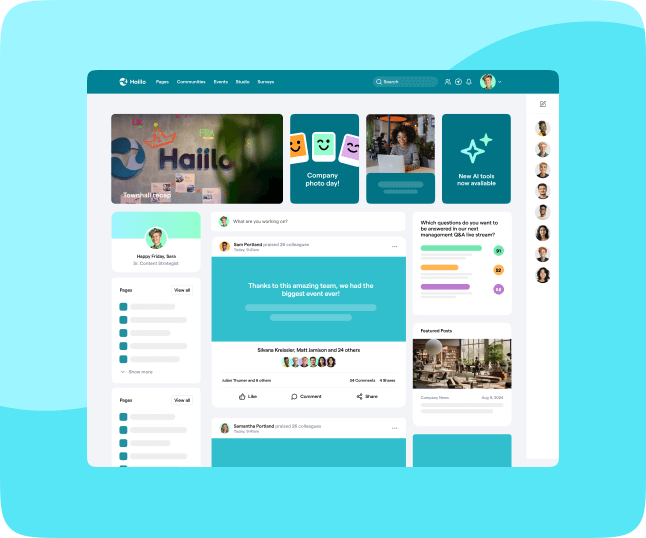
Your aim is to use internal communication technology to improve communication throughout your company. Some workplace communication tools centralise conversations, files, and decisions into a single hub, so teams have access to the same resources without having to switch apps. Others now include AI features that summarize meetings, take notes, and automatically nudge follow-ups. That kind of built-in automation keeps teams, aligned on what’s happening and what needs to be done.
With efficient internal communications, your employees can clearly see how their efforts contribute to the company’s success. This visibility strengthens their sense of purpose and reinforces the feeling that they are involved in meaningful work—one of the core outcomes of strong employee experience best practices.
Related: Andrew Spence on Helping Employees Find Meaning at Work
Establishing good internal communications begins on day one. Your recruitment and onboarding process sets the tone for how information is shared and how open communication is encouraged. Early clarity helps employees build the right habits from the start.
Remember that your communication should be a two-way dialogue: give your employees a voice and encourage them to actively contribute to your internal communication strategy through content creation and content sharing. When employees are heard, they are more engaged and more likely to participate.
Related: 5 Ways to Truly Connect with Your Employees
2. Encourage Professional Development
Employees who don’t feel encouraged to acquire new skills won’t feel engaged.
Research consistently shows that lack of growth is one of the main reasons people leave their jobs. Employees want to learn, progress, and feel that their careers are moving forward.
- 58 percent of workers leave because they don’t see enough growth opportunities.
- 57 percent say they need to change jobs to advance their careers.
- 69 percent would be more satisfied if their skills were better used.
When employees feel that their organization genuinely supports their professional development, they enjoy a much better employee experience which leads to higher employee retention rates.
So, if you want to truly support your employees’ professional growth, you’ll need to make it one of your top priorities. This includes offering clear career paths, regular feedback, and access to learning resources.
One of the best ways to help your employees acquire new skills is to craft a solid employee development program that you integrate into your employee value proposition (or EVP). This ensures development is not a one-off initiative, but a consistent part of your employee experience strategy.
You’ll need to customize the program that you offer for each of your employees based on their expertise and the skills they want to acquire. A one-size-fits-all approach rarely works—personalisation shows employees that their growth truly matters.
Set one-on-one sessions with your employees to get a better understanding of their mid-term and long-term professional goals. These conversations help align individual ambitions with business needs, making development more relevant and impactful.
These one-on-one sessions are also a great way to decide together with the employees on the training programs they’ll attend based on their professional goals. They also create space for regular feedback, which is essential for maintaining strong employee experience best practices.
Keep in mind that investing in your employees’ professional growth is a win-win situation:
- Your employees acquire new skills and take their career to the next level.
- You improve workplace productivity and grow your business as a result of a more capable and motivated workforce.
3. Implement an Employee Wellness Program
Yes, your employees’ wellness matters! Physical, mental, and emotional wellbeing all play a critical role in performance and engagement. Remember what Sir Richard Branson, founder of the Virgin Group declared about the importance of taking care of your employees: “Train people well enough so they can leave, treat them well enough so they don’t want to”.
It’s important to make your employees’ health one of your top priorities. The strategy you’ll craft to improve your employees’ well-being will depend on your company culture and the specific needs of your workforce.
A strong wellness approach goes beyond occasional initiatives—it should be embedded into your daily operations and aligned with your overall employee experience best practices. When employees feel supported both professionally and personally, they are more engaged, resilient, and productive.
You can for example:
- Encourage your employees to practice a sport (and to stick to it!)
- Organize off-site activities where they can have some fun together and build stronger relationships
- Organize weekly yoga or meditation sessions to reduce stress and improve focus
- Allow your employees to work remotely once in a while to support better work-life balance
- Organize a talent show on a monthly basis (it’s a great way to have fun!)
- Celebrate the Employee Appreciation Day to recognize contributions
- Organize brainstorming sessions where employees can share ideas (it’s also one of the best ways to enhance creativity!)
- Encourage your employees regularly through feedback and support
- Acknowledge their efforts and achievements in a timely and meaningful way
- Show empathy: employees who feel understood and supported are more likely to stay and perform at their best
In a nutshell, showing understanding, flexibility and concrete support breeds employee loyalty and helps maintain employee productivity in the long term—something your team will genuinely appreciate. When employees feel cared for, they are more likely to stay committed and perform consistently.
4. Build a Positive Company Culture
Company culture is key to creating a winning employee experience in the workplace.
Your company values will have a strong impact on your work environment and ultimately on how your employees feel about your brand. Clear, authentic values guide behaviour, shape decision-making, and set expectations across the organisation.
Make sure you develop a company culture that inspires your employees and enhances creativity, professional development, and employee wellness as explained earlier. Strong cultures are consistent, inclusive, and aligned with everyday actions—not just statements on a wall.
When supported by clear communication and leadership buy-in, culture becomes a powerful driver of engagement and one of the most effective employee experience best practices you can implement.
Keep in mind that creating a positive working environment also means making sure that employees are and feel safe at work.
A great workplace goes beyond the furniture, office decor, or whether your workplace is an open space or not. Psychological safety, respect, and inclusion are just as important as the physical environment—and they directly influence how employees show up and perform.
Workplace bullying and toxic behaviours still exist in many organisations, and they can severely damage morale, trust, and retention. Make sure you create a safe workplace with zero tolerance for any kind of office bullying. Clear policies, proper reporting channels, and strong leadership accountability are essential parts of effective employee experience best practices.
5. Ask for Feedback
Even though employee feedback is key to building a successful business, many companies still overlook it or treat it as a one-time activity.
How can you improve your workplace if you don’t ask for or listen to your employees’ opinions?
Your employees can provide you with valuable feedback that will help you improve the workplace but also your product. They are closest to the day-to-day operations and often have insights leaders might miss.
Don’t forget that feedback in the workplace goes both ways: ask your employees for suggestions to improve the workplace and provide them with feedback on their work and commitment as well. Regular, constructive feedback helps employees grow, stay aligned, and feel recognised—making it a core part of strong employee experience best practices.
FAQs about employee experience best practices
What are employee experience best practices?
Employee experience best practices are the proven actions companies take to improve how employees feel about their work, team, and workplace. This includes clear communication, strong onboarding, growth opportunities, recognition, and a positive culture. The goal is to create a consistent, people-first experience across every stage of the employee lifecycle—not just isolated initiatives.
Why are employee experience best practices important?
They directly impact retention, engagement, and performance. When employees feel supported and valued, they are more likely to stay, do better work, and contribute to company success. Without strong employee experience best practices, even companies with great salaries and perks struggle to keep top talent.
How can you improve employee experience quickly?
Start with the basics: improve internal communication, ask for regular feedback, and act on it. Make sure employees know what’s expected of them and how their work contributes to bigger goals. Even small changes—like better onboarding or more frequent check-ins—can have a noticeable impact when applied consistently.
What are the most effective employee experience best practices?
The most effective ones focus on the full employee journey. This includes transparent communication, personalised development plans, recognition, flexible work options, and a strong company culture. The key is consistency—employee experience best practices only work when they’re applied across teams and supported by leadership.
FAQs about employee experience best practices
What are employee experience best practices?
Employee experience best practices are the practical steps companies take to improve how employees feel about their work, tools, and workplace. This includes clear communication, easy access to information, and a supportive culture. For example, improving internal communication ensures employees stay informed and aligned, which directly improves their day-to-day experience.
How can internal communication improve employee experience?
Strong communication is one of the most impactful employee experience best practices. When employees can easily find what they need and stay updated, frustration drops and productivity improves. Using tools like a social intranet or strengthening your employee communications helps teams stay connected, collaborate better, and feel more engaged.
What tools support employee experience best practices?
The right tools make it easier to deliver a consistent experience. Platforms focused on employee engagement and knowledge management help employees access information quickly and stay involved. If your current setup feels clunky, this guide on intranet UX problems explains common issues and how to fix them.
How do you improve employee experience long term?
Improving employee experience takes consistency. Start by reviewing your communication channels and making sure they actually work for your teams—this guide on top communication channels can help. You can also explore best practices in employee communications or learn how to successfully launch an intranet. The key is to keep listening, improving, and applying employee experience best practices across the entire employee journey.
Haiilo might be the perfect app for your comms needs. Get a demo now!