
Recruitment marketing has never been more important. Talent acquisition professionals across the world are faced with new talent attraction and talent retention challenges. This is particularly true for tech talent that can now work from anywhere in the world, increasing competition and raising candidate expectations around flexibility, purpose, and employee experience.
In this blog, we will talk about the increasing importance of recruitment marketing since the start of the pandemic, how this situation impacts talent acquisition efforts, and how to make recruitment marketing strategies more successful. You’ll also see how organisations can adapt their approach to stand out in crowded talent markets, build stronger employer brands, and create a more consistent, candidate-centric experience across every touchpoint.
The Increasing Importance of Recruitment Marketing
The “Great Resignation” is no joke.
A global survey of 30,000 workers by Microsoft found that 41% were considering quitting or changing professions in the years following the pandemic. While the peak of this trend has passed, workforce mobility remains high, with employees continuing to prioritise better opportunities, flexibility, and meaningful work. Another study in the UK and Ireland showed 38% planned to quit. In the US, more than four million people quit their jobs in April alone.
These shifts highlight a longer-term change rather than a short-term spike. Candidates are no longer passive—they are actively evaluating employers, comparing experiences, and expecting clear, authentic communication. As a result, recruitment marketing has evolved from a “nice to have” into a core strategic function, helping organisations attract, engage, and nurture talent before a role even becomes

Furthermore, Gallup found that 48% of employees are actively searching for new opportunities, reinforcing how open and fluid today’s talent market has become. And while Persio reported that 38% of those they surveyed planned to make a change in the next six months at the time, the broader pattern still holds: candidates are more willing to move, more selective about where they work, and more influenced by employer reputation than ever before.
Even before this pandemic, the war for talent was intense. Today, however, the situation is even more complex as employers need to learn how to adapt to a permanently changed hiring landscape rather than a temporary disruption.
They need to better understand the new benefits employees expect—such as flexibility, meaningful work, and transparency—and they need to adopt different recruitment marketing and talent acquisition tactics that reflect these priorities in a consistent and credible way.
Since many organizations have started adopting remote working, most of today’s tech talent can work from anywhere in the world for a company of their choice. This shift has also increased competition between employers who may never have previously competed for the same candidates.
Geographical boundaries have just disappeared, making visibility, employer brand strength, and candidate experience key differentiators in any recruitment marketing strategy.
Recruitment marketing plays a crucial role in defining your organization’s EVP, creating a comprehensive talent attraction strategy, and reaching the best talent out there. It also helps ensure your messaging is consistent across channels—from careers pages to social media—so candidates gain a clear and authentic picture of what it’s like to work at your organisation.
Let’s take a look into how to implement and manage a successful recruitment marketing strategy.
How to Implement a Successful Recruitment Marketing Strategy
Recruitment is one of the biggest challenges HR professionals face today. Recruitment marketing is, hence, one of their main priorities, especially as organisations move from reactive hiring to building long-term talent pipelines.
Let’s take a look into some must-follow steps for implementing a recruitment marketing strategy that works.
Appoint the owners of your recruitment marketing initiatives
Even though recruitment marketing is not a new thing anymore, many organizations still don’t have designated recruitment marketing and employer branding owners.
This is particularly true for smaller organizations with fewer employees employed in their HR teams, where responsibilities are often spread thin and recruitment efforts become reactive rather than strategic.
Here, it is important to understand that there is no single stakeholder that should do recruitment marketing. Moreover, HR, marketing, internal communications, CEOs, leaders, and employees all play a very important role in making recruitment marketing work. Each group contributes a different perspective—from shaping messaging and employer brand to delivering the real employee experience candidates are evaluating.
Still, defining the owner is crucial. Knowing who is responsible for the delivery of recruitment marketing initiatives and campaigns can help you streamline your efforts and see better end results. Clear ownership also improves accountability, ensures consistency across channels, and makes it easier to measure what is working and where to optimise.
Rethink your EVP
If you haven’t updated your EVP since 2019, you should probably rethink it now. What talent wants today is very different compared to the pre-pandemic era, and outdated messaging can quickly undermine even well-executed recruitment marketing campaigns.
A July 2021 Fast Company piece declared “The Era of Wacky Office Perks is Dead.” Employees are smart enough to recognize that games, toys, and mini-fridges full of energy drinks are not a substitute for leaders who truly care about them.
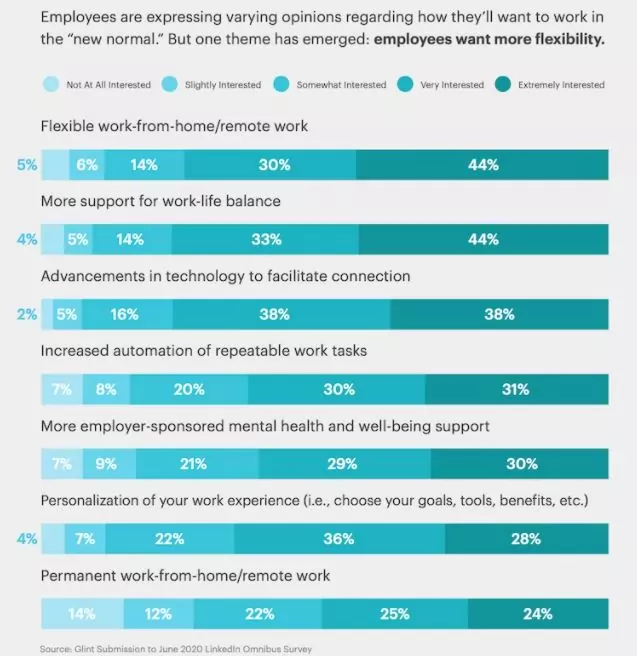
Employees want greater flexibility, autonomy, work-life balance, transparency and they want leaders who can trust them even when they are working from home. They also expect organisations to clearly communicate their values, provide opportunities for growth, and demonstrate how they support employee wellbeing in practice—not just in messaging.
The graph below is a great representation of what employees expect from their employers today.
More than anything, employees want to be recognized. According to Bonusly, 63% of workers who said they are regularly recognized also said they are very unlikely to look for a new job. This shows how strongly everyday employee experience directly influences retention and should be reflected clearly in your recruitment marketing messaging. Furthermore, people want to work for organizations that understand that hybrid work requires management to communicate more, not less.
They want to work on interesting projects, understand how they contribute to the overall success, and they want their employers to invest in employee wellbeing and career development. Increasingly, candidates are looking beyond job descriptions to evaluate long-term growth opportunities and whether organisations deliver on these promises in practice.
EVP is something that your company stands for, but that doesn’t mean that it should never be changed. Remote and hybrid work have changed the nature of work significantly, and so should your employee value proposition if you want to attract talent to your organization. A strong EVP today needs to be both authentic and adaptable to different roles, regions, and ways of working.
The best way to better understand what people want from their jobs today is to ask your own workforce.
To start, you can simply send them a survey asking them to compare their expectations before and after this pandemic. You can also supplement this with employee interviews and feedback loops to uncover what truly differentiates your organisation from competitors.
💡 Related: Who Is Responsible for Defining the Employee Value Proposition (EVP) in the Workplace?
Understand and define your candidate persona
Candidate personas are also not a new thing in recruitment marketing. However, defining them today is not as easy as it may be in the past. Organizations in many countries today can’t compete with salaries that some other countries can offer to remote workers, which changes how they position their value to candidates.
That being said, many employers are now looking for talent that lives in countries where they can offer better benefits and working conditions, rather than competing solely on compensation. This shift requires a deeper understanding of what motivates different segments of the workforce.
International hiring requires understanding different cultures, talent expectations, and differences in the ways candidates search for new job opportunities. Messaging that works in one market may not resonate in another, making localisation an important part of any recruitment marketing strategy.
Even though this shift towards remote work makes building a diverse workforce much easier, it also takes a lot of adjustments in talent attraction and talent retention strategies. Organisations need to ensure they create an inclusive experience not just in hiring, but throughout the entire employee lifecycle.
Choose the right recruitment channels
One of the most important steps of every recruitment marketing strategy is understanding different recruitment channels and defining which channels bring you the best candidates.
In order to achieve this, the previous step is crucial, as your candidate personas will determine where and how you engage with potential hires.
While some recruitment channels work for frontline workers, they may not work for corporate employees. Similarly, different seniority levels and industries often require different outreach approaches.
Furthermore, while in some countries TA channels such as LinkedIn may be the best option, in some countries LinkedIn may not be as popular. Relying on a single channel can limit your reach and reduce the effectiveness of your recruitment marketing efforts.
Traditionally, job boards were the most popular channel for recruiting new talent. Today, however, this channel seems to be one of the least efficient ones. Instead, employers tend to focus more on social media recruitment, niche job portals, headhunting, and employee referrals.
With 79% of job applicants using social media in their job search, it is inevitable that social media is one of the best recruitment channels every organization should leverage. It also enables organisations to showcase authentic employee stories, which can significantly increase trust and engagement with potential candidates.

Provide the best candidate experience
Candidates are well aware of the current world situation. They know that the demand for talent is greater than ever. Because of that, they expect more from the hiring and selection processes, including faster timelines, clearer communication, and a more personalised experience.
The same way HR professionals aim to improve employee experience in the workplace, they should also strive towards ensuring better candidate experience. In fact, the two are closely linked—how candidates are treated during hiring often reflects the reality of working at an organisation.
Providing memorable candidate experience is one of the most important aspects of every recruitment marketing strategy. Ensuring seamless and fast application processes, timely post-interview feedback, clear reasons for rejections, and continuous candidate relationship management all have a big impact on shaping a positive candidate experience. Small improvements in these areas can significantly increase offer acceptance rates and reduce drop-offs.
Unhappy candidates are much louder than those happy ones. They share their negative experiences via online and offline channels, such as review sites and social media, which can significantly hurt your employer brand and ability to attract new talent to your organization.
📚 Related: 11 Ways to Attract and Retain Millennials in the Workplace.
Engage your own employees
Good employer branding and recruitment marketing are impossible without your own employees, and there are many different ways to involve them in your recruitment marketing initiatives.
Firstly, they can be the best source of information you can use to define your candidate personas and EVPs. Just send them occasional surveys to get as much feedback as possible and uncover what truly differentiates your organisation.
Also, employee-generated content is the most trusted type of content in recruitment marketing. Employee testimonials and stories about their working experiences are what candidates care about. They don’t care nearly as much about what corporate offices and CEOs have to say compared to what employees have to say, especially when evaluating culture and day-to-day reality.
Besides contributing to content creation, having your employees share your employer branding and recruitment marketing content is crucial for talent attraction. The more employee advocates you have, the better the reach and the more high-quality job applicants. This also helps you access passive candidates who may not be actively looking but are influenced by trusted recommendations.
Furthermore, employee referrals are still the best source of new hires. For that, you need to have your employees on your side. You need to motivate them to get involved, and you need to make this process as easy for them as possible by removing friction and giving them ready-to-share content.
Boost Your Recruitment Marketing Efforts With Employee Advocacy
From the previous section, you have hopefully realized the benefits of engaging your own employees in your recruitment marketing initiatives. Without employees’ motivation to share your company’s stories and job openings, recruitment marketing can never be as successful.
Your employees are your best storytellers, and they know how to communicate your core company values to the outside world in a way that feels authentic and credible. But you need to enable them to easily advocate and use their networks to bring new people in.
They should never have to spend time searching for employer branding content to share on social media channels. Instead, modern employee advocacy solutions help employees share relevant content easily and consistently, increasing visibility without adding extra workload.
In order to motivate your employees to engage in your employer branding initiatives, you can create an advocacy program. A well-structured programme not only increases reach and brand awareness, but also helps employees feel more connected to your company’s mission and messaging.

Remember that employees who are proud to work for your organization will be happy to share their voice with the external audience. When employees feel connected to your company’s mission and experience a positive workplace culture, they are far more likely to advocate for your brand authentically.
However, many employers not only don’t have a way to make it easy for employees to participate by sharing the company’s content externally, but they also don’t have a way to track and measure their employees’ efforts and initiatives. Without visibility into what is working, it becomes difficult to optimise your recruitment marketing strategy or demonstrate its impact on hiring outcomes.
Ideally, you should implement an employee advocacy solution that serves as a central place for employees to upload and share your recruitment marketing content, and also track your employees’ engagement in the advocacy program. This not only simplifies participation but also ensures consistency in messaging and helps you scale your reach across different channels and audiences.
Schedule a Haiilo demo today to learn about how employee advocacy can help you improve your recruitment marketing efforts.
Frequently asked questions about recruitment marketing
What is recruitment marketing and why does it matter?
Recruitment marketing is the process of promoting your company as an employer to attract, engage, and nurture potential candidates before they apply. [1](https://www.indeed.com/career-advice/career-development/what-is-recruitment-marketing) It matters because candidates now behave more like consumers—researching companies, comparing experiences, and forming opinions long before interacting with a recruiter. A strong recruitment marketing strategy helps you stand out, build trust early, and attract candidates who are already aligned with your culture and values.
What is the difference between recruitment marketing and employer branding?
Employer branding defines what your organisation stands for as a workplace—your culture, values, and employee experience. Recruitment marketing is how you communicate that story across channels like social media, careers pages, and employee content. In simple terms, your employer brand is the message, and recruitment marketing is how you activate and scale it to reach the right talent.
How can you improve your recruitment marketing results quickly?
Start by focusing on fundamentals: a clear and up-to-date EVP, strong employee-generated content, and a better candidate experience. Simplifying application processes and improving communication alone can reduce drop-offs and increase conversions. It also helps to use channels candidates actually trust—such as social media and employee advocacy—as covered in our guide to social media recruitment.
What role do employees play in recruitment marketing?
Employees are one of the most influential factors in recruitment marketing. Candidates trust employee voices far more than corporate messaging, especially when evaluating culture and credibility. When employees share authentic stories, testimonials, and job opportunities, they extend your reach and attract higher-quality candidates. That’s why many organisations invest in structured advocacy programmes using tools like employee advocacy platforms to make sharing easy and measurable.