
Breaking down silos is critical for organizational success and business continuity. Yet many companies still struggle to connect teams, systems, and information. With the growing importance of cross-functional collaboration, organizations need to make it easier for people to share knowledge, align priorities, and move faster together. Without that, even the best strategies stall.
Research from PwC shows that 61% of executives see cross-functional collaboration as essential to achieving strategic goals. Teams that work well across boundaries are better at solving problems, adapting to change, and delivering consistent results.
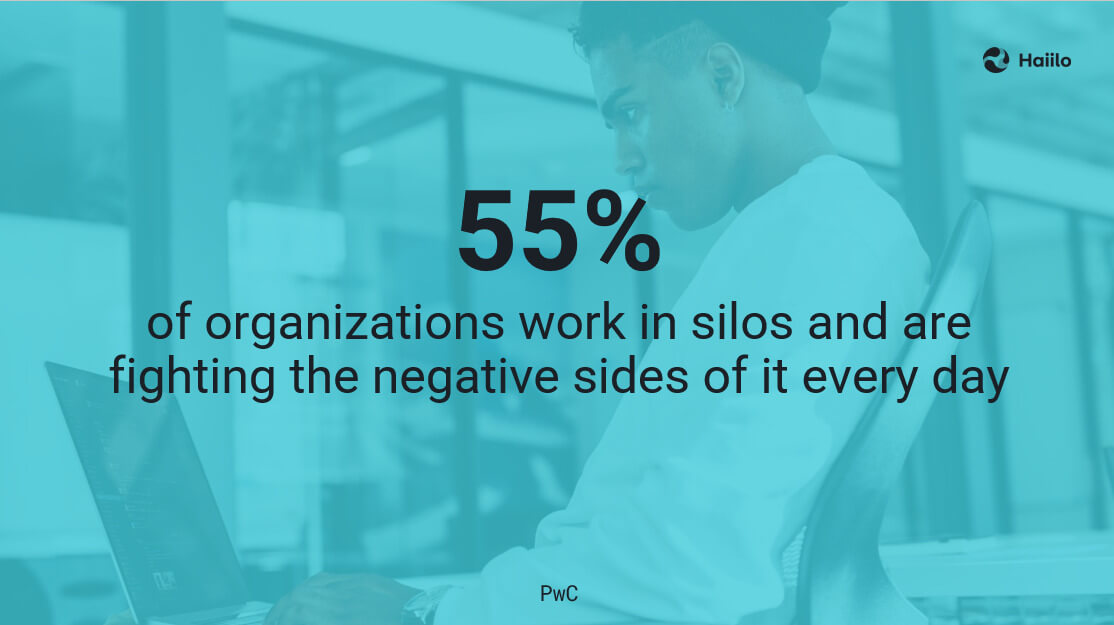
However, the reality looks very different inside many organizations. 55% of companies still operate in silos, creating friction that slows everything down. Information gets stuck, decisions take longer, and teams lose sight of shared goals. Over time, this leads to frustration, lower productivity, and a noticeable drop in employee engagement and well-being.
If you are looking for practical ways to support breaking down the silos in your company, you are in the right place. In this blog, we will walk through 9 best practices to do so—each designed to help your teams communicate better, share knowledge more openly, and work toward the same goals without friction.
- 1. Drive Organizational Alignment by Communicating a Unified Vision
- 2. Set Common Goals and Objectives
- 3. Foster Cross-Functional Collaboration and Build Balanced Interdepartmental Relationships
- 4. Form Cross-Functional Teams
- 5. Open Up Lines of Communication
- 6. Create Engaging Employee Communities
- 7. Eliminate the Biggest Communication Barriers
- 8. Ask Your Employees How to Break Down the SIlos
- 9. Implement the Right Technology
1. Drive Organizational Alignment by Communicating a Unified Vision
Every company invests time in defining its mission and vision. But far fewer succeed in making that vision clear and meaningful for employees in their day-to-day work. When people don’t understand where the company is heading, teams naturally drift apart and focus on their own priorities.
In fact, many employees struggle to connect their work to a bigger purpose. When that connection is missing, collaboration suffers, and silos start to form. Teams make decisions in isolation, duplicate efforts, and lose sight of shared outcomes.
Breaking down the silos becomes nearly impossible if employees are not aligned with the company’s vision and don’t clearly understand what the organization stands for. Without alignment, even strong teams end up pulling in different directions.
That is why internal communications teams and leaders need to go beyond one-off announcements. They should consistently reinforce the company’s vision and mission, connect it to real work, and make it easy for employees to see how they contribute. Frequent, clear communication of the company’s vision and mission helps create shared understanding, builds trust, and gives teams a common goal to work toward.
When everyone understands the bigger picture, collaboration becomes more natural. Teams align faster, decisions improve, and breaking down the silos starts to happen in a more sustainable way.
Break down silos in your company with Haiilo communications platform!
2. Set Common Goals and Objectives
Once you have your mission and vision defined, the next step is to translate them into clear, shared goals that guide how teams work together. Without this step, even the strongest vision stays abstract and disconnected from daily work.
In many organizations, employees still lack clarity on what the company is trying to achieve and how their role fits into it. This creates confusion, slows decision-making, and makes collaboration feel optional rather than essential.
Common, cross-departmental goals and objectives play a key role in breaking down the silos because they give teams a shared direction. When everyone is working toward the same outcomes, it becomes easier to align priorities, coordinate efforts, and encourage more collaboration and teamwork.
On the other hand, when each department focuses only on its own targets, silos naturally grow stronger. Teams may overlook what others are doing, duplicate work, or even compete for resources instead of collaborating. Over time, this limits innovation and reduces overall impact.
To avoid this, organizations should set goals that cut across functions and make dependencies visible. Clearly defined shared objectives help employees understand how their work connects with others, making collaboration more intentional and effective.
3. Foster Cross-Functional Collaboration and Build Balanced Interdepartmental Relationships
Strong collaboration across teams is one of the biggest drivers of project success. When departments work closely together and stay aligned, projects move faster, decisions improve, and outcomes are more consistent.
On the other hand, when collaboration is weak or inconsistent, projects often stall. Miscommunication increases, priorities clash, and teams end up working in isolation instead of building on each other’s strengths.
This is especially important for remote and hybrid workplaces where spontaneous conversations rarely happen. Instead, employees depend on technology to communicate and collaborate, making it even more critical to create intentional ways for teams to connect.
Fostering cross-functional collaboration is a key part of breaking down the silos because it helps teams understand each other’s goals, challenges, and workflows. Over time, this builds trust and reduces friction between departments.
Department leaders play a crucial role here. They need to align on expectations and actively create opportunities for collaboration. This can include regular cross-team meetings, shared communication channels, joint planning sessions, and transparent progress updates.
Simple actions also make a difference. Celebrating shared wins, involving multiple teams in key decisions, and creating space for informal interaction can strengthen relationships. When collaboration becomes part of the culture, teams are far more likely to work together naturally—and silos start to fade.
4. Form Cross-Functional Teams
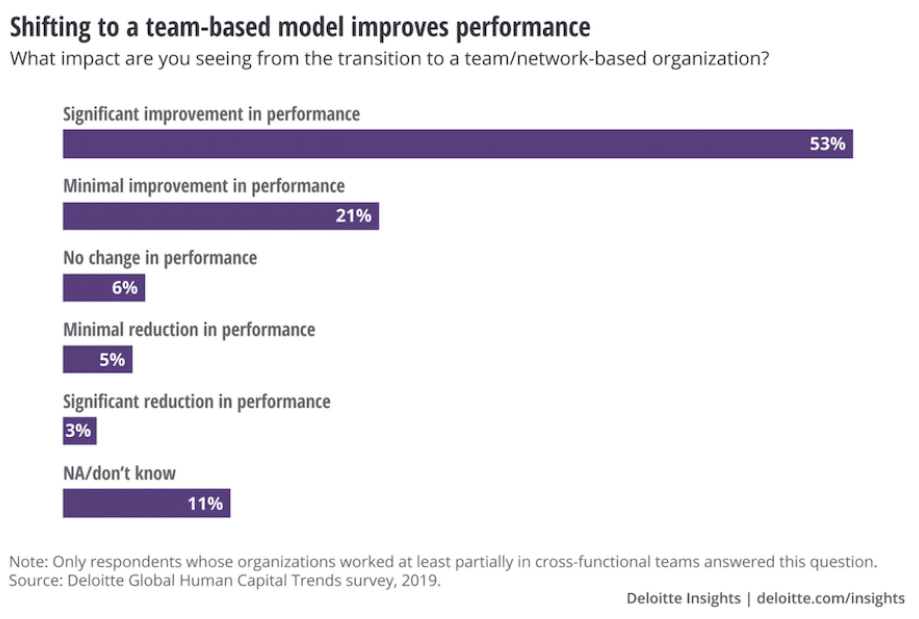
To enable better interdepartmental teamwork even further, you could create designated cross-functional teams. Instead of relying on occasional collaboration, these teams are built to work together consistently on shared goals. A good example would be a cross-functional team of people from the marketing, sales, and customer success departments.
These professionals often need to collaborate closely to deliver meaningful outcomes. In many cases, they need to share and transfer knowledge with each other on a daily basis to ensure a smooth customer journey and consistent messaging. When they operate in silos, gaps quickly appear.
Creating cross-functional teams helps remove those gaps by bringing different perspectives together in one place. It encourages faster problem-solving, reduces handoff delays, and makes it easier to spot issues early.
This approach is a practical way of breaking down the silos because it embeds collaboration directly into how work gets done. Instead of coordinating across departments after the fact, teams are aligned from the start.
To make these teams effective, it is important to define clear roles, shared goals, and open communication channels. Regular check-ins, transparent workflows, and access to the same information help keep everyone aligned.
Over time, cross-functional teams don’t just improve individual projects—they reshape how the organization works. Collaboration becomes the default, not the exception, and teams naturally become more connected.
5. Open Up Lines of Communication
Your internal communication strategy is critical for breaking up silos in your organization. Without clear and consistent communication, information stays locked within teams, and collaboration becomes slow and fragmented.
IC and HR departments play a key role in shaping how information flows across the company. They are responsible for managing and nurturing company-wide communication, as well as building trust in the workplace. When employees feel informed and heard, they are far more likely to share ideas, ask questions, and collaborate across boundaries.
Opening up communication channels is essential for breaking down the silos because it removes barriers between teams. This can include creating transparent company updates, encouraging two-way feedback, and making it easy for employees to connect across departments.
It is also important to centralize communication where possible. When information is scattered across too many tools or channels, employees miss updates and work becomes disconnected. A single, accessible source of truth helps keep everyone aligned and reduces confusion.
Leaders should also set the tone by communicating openly and regularly. Sharing context behind decisions, recognizing team contributions, and inviting feedback all help create a culture where communication flows freely.
📹 Check out our Masterclass about the importance of having an internal communications strategy!
However, many IC departments are stuck in the days where they send monthly or weekly generic employee newsletters to share the biggest company updates. Due to crowded inboxes with irrelevant emails, many employees ignore these emails and never engage with their company’s content.
Instead, employee communications should be more personalized and relevant to the workers. By using targeted employee communications software, communication professionals can segment their audience by language, location, department, level of seniority and much more to make sure employees are engaged with the content they receive.
6. Create Engaging Employee Communities
In their private lives, most people are members of some type of community. In organizations, marketers and customer success professionals also create communities every day.
But what about employee communities?
This is a relatively new term we described in our recent blog as:
“a virtual social-media-like place where employees come together to connect, communicate, and collaborate with each other. It serves as a single hub for employees to access information, share knowledge, ask questions, provide feedback, find documents, and collaborate with peers. It streamlines internal communications, strengthens relationships between employees, and provides quick access to the resources they need.”
40% of people say that they feel isolated at work, resulting in lower organizational commitment, engagement, and silos.
So creating, managing, and nurturing engaged internal communities can go a long way in ensuring workplace transparency and eliminating organizational silos. They help employees stay connected, encourage teamwork, boost interdepartmental communication, and ensure easy access to important information employees need on a daily basis.
7. Eliminate the Biggest Communication Barriers
In most cases, organizational silos happen due to common communication barriers in the workplace. To break down the silos, employers need to understand these barriers and focus on tackling them.
For example, you could evaluate your organizational structure and hierarchy to understand their impact on workplace communications. If this is causing silos between departments, consider simplifying your communication hierarchy so that people feel free to talk to anyone in the organization.
You could also evaluate the main communication channels in your company. Understand which channels work best for synchronous versus asynchronous communication, and make sure that you provide as much visibility and transparency as possible.
Sometimes, organizational silos can also be caused by the lack of communication skills among employees. If this is the case, consider investing in communication courses to help your employees develop their communication skills.
8. Ask Your Employees How to Break Down the SIlos
If you absolutely don’t know how to start tackling silos in your company, ask your employees for help. Not only that encouraging employees’ share of voice builds trust in the workplace, but it can be the best way to find the root cause of silos in your company.
Consider putting together a simple employee survey asking employees to name and describe situations where they felt like their department or team struggled to work on a cross-departmental project. Make sure that you distribute the survey using the right channels so that you reach as many employees as possible and get a better response rate.
Ideally, your survey solution should already give you valuable insights and actionable recommendations for improvement.
9. Implement the Right Technology
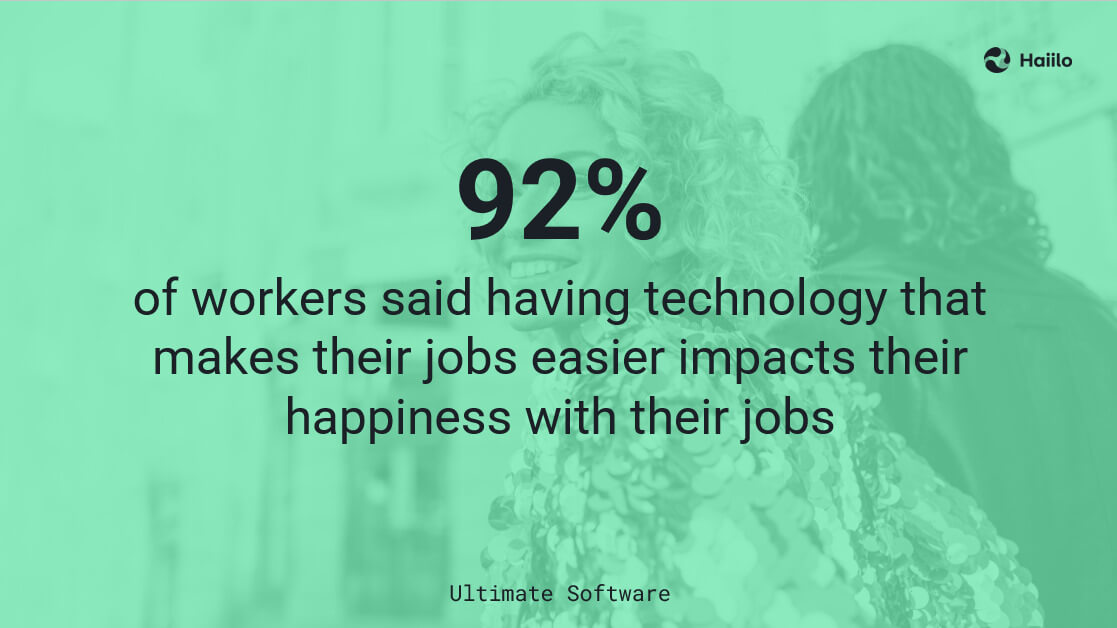
Proper workplace technology has a direct impact on employee experience and job satisfaction. According to a study by Ultimate Software, 92% of workers said having technology that makes their jobs easier impacts their happiness with their jobs.
Although 75% of team leaders and employees rate teamwork and communication as pivoting for the success of projects, not every company has the necessary tools to enable better collaboration and eliminate organizational silos.
Furthermore, the right communication technology plays a critical role in connecting employees and boosting their engagement. For instance, video conferencing solutions help is a good alternative to important water cooler chats in-office employees have. Likewise, dedicated messaging channels help cross-functional teams cut through the noise and collaboratively work on important projects. Most importantly, employee communication platforms are designated tools for enabling internal comms professionals to keep their workforce informed, engaged, and aligned, making it a must-have tool for breaking down silos in organizations.
What are silos?
This blog post was mostly focused on how to break down silos in your organization. If you are, however, still not familiar with this concept or want to understand its business consequences, take a look at the following sections.
Silos represent divisions or communication barriers between people or groups within an organization. For example, departments represent a common example of organizational silos where organizations split employees into groups based on their job titles, responsibilities, and skills.
A silo mentality exists when these departments solely focus on their goals, KPIs, and objectives resulting in members rarely interacting with individuals in other departments. Consequently, information, resources, and skills become trapped in individual departments because they lack communication.
Why breaking down silos is important?
There are multiple reasons why breaking down silos in every organization is critical for business success. Today, projects are rarely handled by just 1 or 2 departments. Instead, cross-functional collaboration and efficient team communication are critical for making projects successful.
When there are silos, there is also a lack of organizational alignment, knowledge sharing, innovation, and the overall employee experience is bad.
Hence, organizational silos and poor workplace communications are one of the big reasons for high employee turnover and lack of employee motivation and morale.
What are some interesting facts about organizational silos?
When people, data, information, or documents live in silos organizations can face significant downsides. Here are some interesting facts about organizational silos.
- Data silos cause employees to lose 12 hours a week chasing data
- Teams are making poor or slow decisions based on the limited information in front of them, unaware of critical insights hiding in different tools. Nearly half of respondents in Airtable and Forrester research (46%) said poor business processes result in decisions taking longer and a higher risk of making wrong decisions
- In the same research, 90% of respondents noted improved collaboration as a top priority to increase cross-functional collaboration and organizational alignment
- Seven out of 10 workers have wasted time at work due to communication problems
- 75% of leaders whose teams use AI say their teams collaborate better
- About 64% of workers report losing at least three hours of productivity per week due to poor collaboration
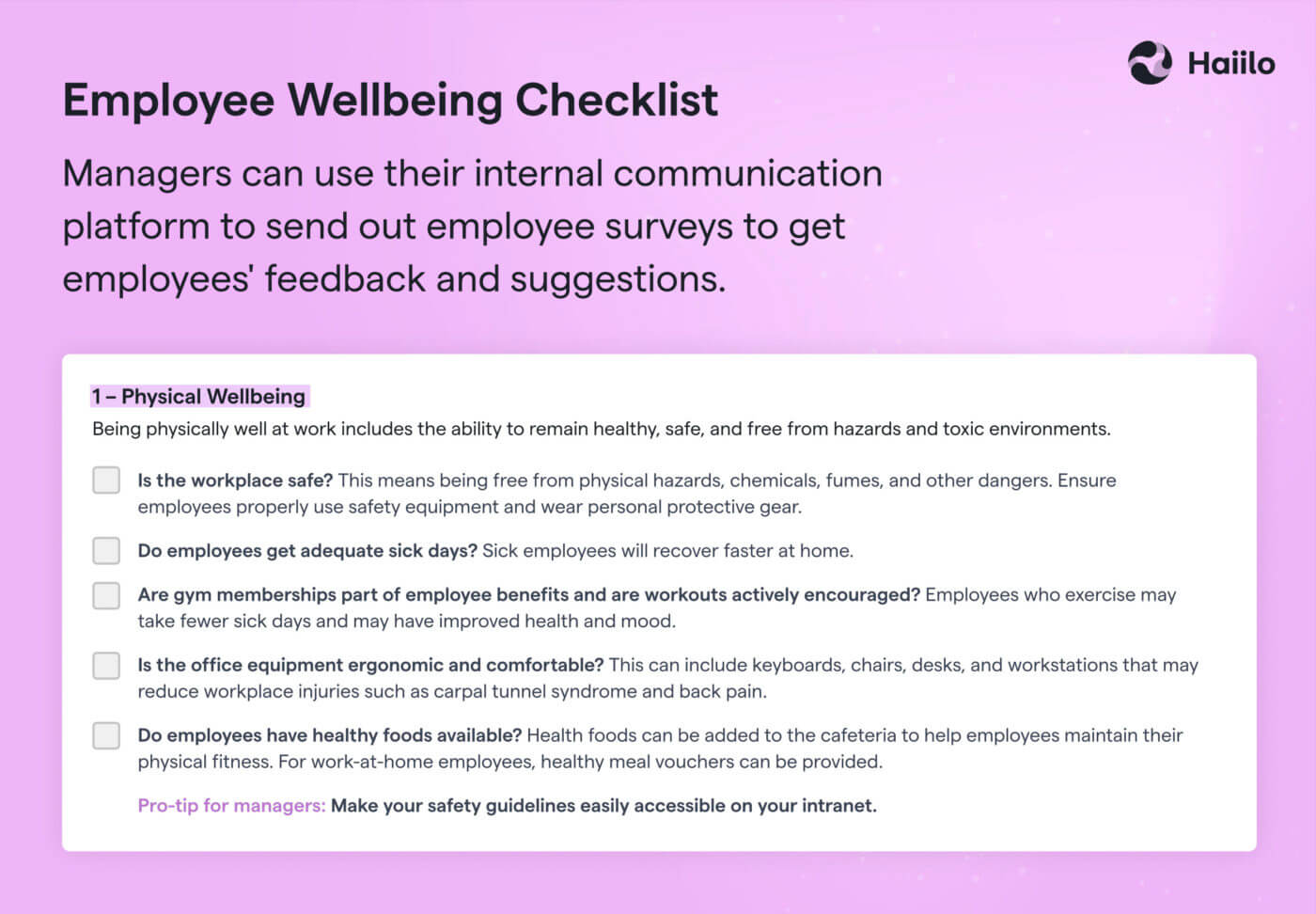
Want to improve productivity in the workplace? Get our free employee wellbeing checklist!

FAQ: Breaking down the silos
1. Why is breaking down the silos so difficult in organizations?
Breaking down the silos is hard because they are often built into how companies work. Teams may use different tools, follow different goals, or communicate in separate channels. Over time, this creates distance and makes it harder for employees to share knowledge or collaborate. A social intranet can help by bringing communication, updates, and knowledge into one shared space.
2. What are the best ways to start breaking down the silos?
Start with alignment. Make sure every team understands the company’s goals, how their work connects to them, and where collaboration is needed. A strong internal communication strategy helps employees stay informed, involved, and focused on shared outcomes.
3. How can technology support breaking down the silos?
The right technology makes it easier for people to find information, connect with colleagues, and work across departments. Platforms for employee communications can reduce scattered messages and improve visibility. AI features can also help employees access relevant content faster and avoid information overload.
4. What role do managers play in breaking down the silos?
Managers set the tone for how teams communicate and collaborate. They can encourage openness, connect people across departments, and make shared goals part of everyday work. These manager communication best practices can help leaders build trust and create stronger cross-team relationships.