
New employee onboarding is typically defined as the process of integrating a new hire into a company’s culture, familiarizing them with policies and procedures, and preparing them to get started in their new role. A genuine onboarding experience goes beyond paperwork and formality. It’s also an opportunity to extend a warm welcome, provide support, and instill confidence in the newest member of your team. When executed effectively, employee onboarding becomes a mutually beneficial process for the new hire and the entire organization. It lightens the load on their team or supervisor, fostering a consistent experience that facilitates rapid integration.
Yet many organizations still underestimate the real impact of onboarding benefits. According to recent research, 69% of employees are more likely to stay with a company for three years if they experience great onboarding (Glint). Meanwhile, companies with a structured onboarding process see up to 50% greater new hire productivity (Gallup). These numbers highlight a clear problem: when onboarding is rushed or inconsistent, businesses risk disengagement, slower ramp-up times, and early attrition. Investing in a thoughtful onboarding experience doesn’t just improve first impressions—it sets the foundation for long-term performance, engagement, and retention.
With the right tools and structure in place—such as a centralized communication hub like Haiilo’s employee communications platform or a connected social intranet—organizations can create seamless onboarding journeys that scale. These platforms help deliver consistent messaging, provide easy access to resources, and create early opportunities for connection, all of which amplify onboarding benefits from day one.
A good onboarding program is a win-win situation. Let’s look at six benefits of getting onboarding right and how you can effectively implement them. For a deeper dive into building a strong foundation, explore our guide on employee onboarding best practices, alongside related insights on employee engagement trends and internal communication strategy.
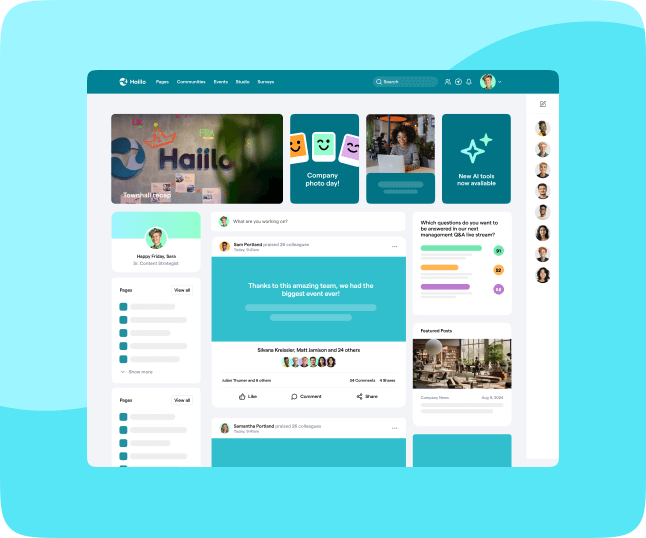
Haiilo makes it easier for new employees to onboard and integrate into your company.
1. Better Employee Experience
Employee onboarding benefits organizations and employees by offering a holistic journey that begins when a candidate connects with your organization. From the initial interviews to pre-boarding and the crucial first three months, each stage contributes to shaping a new hire’s understanding of your company’s culture, team dynamics, and expectations for their role.
Too often, companies focus only on day one logistics—leaving new hires feeling disconnected or overwhelmed. This is where onboarding benefits become tangible. A structured, people-first experience ensures employees feel informed, welcomed, and confident from the start. According to a 2024 study by Gallup, only 12% of employees strongly agree their organization does a great job onboarding—highlighting a major gap and opportunity (Gallup). When that gap is addressed, the impact is immediate: employees who have positive onboarding experiences are significantly more likely to feel engaged and aligned with company goals.
A strong onboarding journey also reduces uncertainty in those critical early weeks. Clear communication, accessible resources, and early relationship-building help new hires quickly find their footing. For example, using a centralized platform like Haiilo’s social intranet allows employees to easily navigate company knowledge, connect with colleagues, and stay informed—creating a smoother, more human experience from day one.
Importantly, onboarding doesn’t stop after the first week. Extending support through the first 90 days reinforces learning and builds confidence over time. Organizations that prioritize this ongoing experience often see stronger engagement and satisfaction levels early on. For more ideas on improving the employee journey, explore employee experience strategy, how to improve employee engagement, and digital workplace experience.
Communication is crucial during each stage of onboarding. Here’s how effective communication can benefit your organization during every stage:
- Interviewing: Provide clarity on expectations and company values.
- Pre-boarding: Lessen first-day jitters by sharing a detailed schedule for their first day or week and include other things they should know before starting.
- Day One: Provide a thorough company orientation and clarity on what to expect, and show them around.
- Week One: Introduce colleagues, outline expectations and critical milestones, and provide a task checklist.
- Month Three: Schedule regular check-ins to offer support and gather feedback.
To enhance the employee onboarding experience, consider how you can:
- Collaborate with their manager on an onboarding plan that includes expectations and milestones.
- Foster open communication with timely responses.
- Extend a warm welcome with a personalized desk setup.
- Facilitate a comprehensive office tour.
- Incorporate different styles and training methods into their learning experience.
- Introduce them to colleagues and establish a buddy system.
- Ensure access to tools and systems with proper training.
- Regularly check in for support and feedback.
- Host events to connect new hires and celebrate achievements.
Employee onboarding is more than a checklist of action items; it’s an individual experience. While that experience is unique to each of us, it is an opportunity to create consistency, leading to a workplace where employees feel valued, connected, and supported from day one. Consider ways to continually assess and optimize your onboarding process through feedback, surveys, and other tools, identifying gaps and opportunities for ongoing improvement.
📚Continue Reading: Employee Experience Management: The Ultimate Guide

2. Higher Employee Engagement
One of the significant benefits of enhancing the employee experience is the resulting boost in employee engagement. While both are pivotal for organizational well-being, engagement centers on the employee’s connection to the meaning of their work and the company. Surveys indicate that only 23% of employees worldwide are engaged, underscoring the importance of intentional efforts.
This is where onboarding benefits become especially clear. Engagement doesn’t start after probation—it starts before day one. When new hires feel connected early, they are far more likely to stay motivated and invested in their work. Yet many organizations still rely on fragmented onboarding processes that fail to build that emotional connection. According to Deloitte’s 2024 Human Capital Trends report, organizations that prioritize employee experience—including onboarding—are 2.6 times more likely to meet or exceed financial targets (Deloitte). That link between engagement and performance is hard to ignore.
Effective onboarding creates early moments of purpose. It helps employees understand not just what they do, but why it matters. This can be reinforced through storytelling, leadership visibility, and consistent communication. Tools like Haiilo’s employee communications platform make it easier to share company goals, celebrate wins, and keep new hires aligned—helping engagement grow organically from the start.
It’s also important to recognize that engagement is built through interaction, not information overload. Giving new hires opportunities to contribute early—whether through team discussions, feedback loops, or collaborative projects—builds a sense of belonging faster. For more practical ways to strengthen engagement from day one, explore employee engagement strategies, employee listening strategy, and employee recognition programs.
Onboarding programs are a prime opportunity to create engagement from the start. Consider the following strategies to weave engagement into your employee onboarding process:
- Focus on Experiences: Create diverse onboarding experiences by integrating various styles of activities and knowledge-sharing methods to engage new hires better.
- Build Trust: Transparency is vital. Keep new hires informed, developing a foundation of trust from the beginning.
- Create Community: Establish social committees to cultivate a supportive environment where employees can connect, creating a sense of community.
- Discuss Growth Opportunities: Studies show that addressing development during employee onboarding increases satisfaction by 3.5x. Motivate employees by discussing potential growth and development opportunities. Provide a clear understanding of avenues for career advancement.
- Celebrate Achievements: Employees should be provided with clear milestones early on. Recognize and celebrate when new hires reach these goals, acknowledging and appreciating their journey.
By incorporating these practices into your onboarding program, you streamline the transition process and lay the groundwork for a connected workforce, leading to long-term success and improved company performance.
🧐 Learn More: Top 10 Employee Communications Platforms in 2024

3. Retain Top Talent
Consider the onboarding process like a first date. New hires show up for their first day eager and fully engaged, seeking an experience that reinforces confidence in their decision to join. If their onboarding is disorganized or confusing, it’s unlikely to set the stage for a long-lasting relationship, just as you’d expect from a lackluster first date.
This is where onboarding benefits directly impact retention. First impressions aren’t just emotional—they’re predictive. Research shows that up to 20% of employee turnover happens within the first 45 days (BambooHR), often due to poor onboarding experiences or mismatched expectations. When those early experiences fall short, even top talent will quickly start looking elsewhere.
Proper onboarding programs go beyond the initial excitement. They also cultivate an environment where employees feel valued, supported, and connected to your company culture. This connection leads to a happier workforce with a genuine desire to stay. More recent data reinforces this: organizations with a strong onboarding process improve new hire retention by 82% and productivity by over 70% (Brandon Hall Group via Glint). These onboarding benefits highlight how structured support early on can significantly reduce costly churn.
Retention is also driven by connection. When employees build relationships early—whether with managers, peers, or leadership—they are far more likely to feel a sense of belonging. Digital tools like Haiilo’s social intranet help facilitate these connections by making it easy for new hires to engage with communities, access relevant content, and stay aligned with company culture from day one.
Ultimately, onboarding should reinforce the promise made during recruitment. When expectations, communication, and culture all align, employees are far more likely to commit long term. For more insights on strengthening retention, explore employee retention strategies, company culture examples, and hybrid work culture.
Retention is about more than just education and training. It’s equally vital to acclimate new employees to the company culture. This integration creates comfort, support, a sense of belonging, and increased loyalty. Implementing buddy or mentor programs, providing diverse learning experiences, and setting clear expectations are impactful ways to integrate new hires into the company culture.
By approaching employee onboarding as the beginning of a meaningful relationship, your organization ensures that each new employee feels welcomed and deeply connected to the values and atmosphere that define your workplace.
🤝 Check out 12 Strategies to Increase Employee Retention

4. Recruit Top Talent
Robust onboarding programs are not just about integrating new hires; they catalyze increased engagement and happiness, transforming employees into invaluable brand ambassadors. The impact is evident—a survey by Monster reveals that 65% of respondents would consider a new job opportunity if recommended by a personal connection in their network.
This is one of the most overlooked onboarding benefits: your hiring strategy doesn’t end when a candidate signs—it compounds after they join. Employees who have a positive onboarding experience are far more likely to recommend your company to others. According to LinkedIn’s 2024 Global Talent Trends report, referrals remain the top source of quality hires, accounting for nearly 30% of all hires but delivering the highest retention rates (LinkedIn). When onboarding builds early trust and alignment, it naturally fuels advocacy.
Employee advocacy programs unlock your organization’s potential by expanding reach and tapping into the vast networks of your workforce. However, achieving success requires more than providing tools—it’s essential to have employees who want to share valuable content, job postings, and company updates on social media.
That willingness is shaped early. If onboarding feels disconnected or transactional, employees are less likely to advocate for your brand. But when onboarding is engaging, transparent, and aligned with company values, employees become natural storytellers. Platforms like Haiilo’s employee communications platform make it easy to distribute shareable content and empower employees to amplify your employer brand—turning onboarding benefits into measurable recruitment impact.
The willingness of employees to share insights and opportunities is fueled by factors such as the ease of sharing, compelling content, and trust in leadership. Organizations can also consider incentive programs or gamification to motivate employees to share, further expanding their reach. When these elements align, employees are more likely to discuss and promote the organization publicly.
To strengthen your employer brand even further, explore strategies in employer branding strategy, learn how to scale advocacy with employee advocacy examples, and stay ahead with insights from future of work trends.
🚀 Learn about how Salesforce turned 25,000 employees into brand ambassadors in 21 months

5. Stronger Company Culture
Recruiters often aim to hire individuals who align with the company culture, but a seamless integration requires intentional efforts and a comprehensive approach. Thorough onboarding programs emerge as the linchpin, building trust and engagement—two cornerstones of a robust company culture.
This is where onboarding benefits go beyond individual performance and start shaping the collective employee experience. Culture isn’t something employees simply absorb—it’s something they experience daily, especially in their first few weeks. According to PwC’s 2024 Workforce Hopes and Fears Survey, 67% of employees say company culture is as important as salary when considering a job (PwC). If onboarding fails to reflect that culture authentically, it creates a disconnect that can be hard to recover from.
Consider making employee onboarding a collaborative effort. For example, the HR team may provide a comprehensive company overview, including its structure, values, and goals, while the new hire’s team takes over role-specific training and support. This dual approach ensures a richer onboarding experience, offering new hires a holistic understanding of the company and the essential training needed for success in their role. It also allows the new hire to meet even more new colleagues who can be a resource to them in different ways.
Technology can further strengthen this cultural alignment. A connected platform like Haiilo’s social intranet enables organizations to consistently communicate values, highlight employee stories, and create shared experiences across teams—especially important in hybrid or distributed workplaces. This ensures culture is not just communicated once during onboarding, but reinforced continuously.
Ultimately, strong onboarding creates cultural clarity. When employees understand how decisions are made, how success is measured, and how teams collaborate, they integrate faster and contribute more confidently. For more ways to build and sustain culture, explore company culture strategy, internal communications examples, and employee experience platform.
Studies highlight the significant impact of onboarding on integration and understanding of company culture. A remarkable 79% of employees affirm that onboarding programs played a pivotal role in helping them integrate seamlessly. These statistics underscore the critical need to immerse new hires in the company culture, setting the stage for long-term engagement.
By infusing collaboration into the onboarding process, your organization ensures a smoother transition for new hires and establishes a culture that resonates with and sustains its workforce.
🔎Read On: Why Your Communications Fall Flat: Connecting Your Internal Audience with Business Objectives

6. Increased Productivity
A Forbes and OnePoll study revealed a concerning statistic: 72% of respondents admitted feeling apprehensive about asking too many questions in their new roles. Knowledge gaps emerge when new hires hesitate to seek guidance and the onboarding program lacks comprehensive training. Teams often prematurely throw new employees into the thick of work, resulting in decreased productivity, lower job satisfaction, and an elevated risk of attrition—a lose-lose scenario for both employees and organizations.
This is where onboarding benefits directly translate into measurable performance gains. When employees are given clarity, structure, and support early on, they ramp up faster and make fewer mistakes. According to a 2024 report by the Society for Human Resource Management (SHRM), organizations with structured onboarding programs see new hires reach full productivity up to 34% faster (SHRM). Without that structure, confusion and hesitation slow everything down—especially in complex or fast-moving roles.
Thorough employee onboarding accelerates new hires’ understanding of their roles, increasing confidence and reducing the risk of errors. Resources such as Standard Operating Procedures (SOPs) and well-documented processes contribute to a deeper understanding, enabling new employees to work efficiently and independently. Just as importantly, onboarding should create a safe environment where questions are encouraged—not avoided.
Centralizing knowledge is key here. With tools like Haiilo’s social intranet, employees can quickly access documentation, revisit training materials, and find answers without friction. This reduces dependency on managers and helps teams maintain momentum. Combined with clear communication via employee communications tools, organizations can ensure consistent messaging and alignment across departments.
Ultimately, productivity isn’t just about speed—it’s about confidence and clarity. When onboarding removes uncertainty, employees can focus on meaningful work sooner. For more insights on improving performance, explore internal communication tools, knowledge management system, and employee productivity tips.
The Digital Experience
The rise of remote and hybrid work models has further heightened the need for these solutions and keeping teams connected. Operating in these work environments comes with challenges, and integrating communication technology is a powerful tool for overcoming those barriers.
In the ever-changing landscape of the modern workplace, the digital experience is pivotal in transforming traditional employee onboarding approaches. Harnessing technology to enhance training and communication can effectively bridge these knowledge gaps.
Moreover, digital tools enable continuous learning and skill development, allowing employees to access resources conveniently. Digital tools foster a culture of knowledge sharing and empower new hires to proactively seek guidance without feeling apprehensive.
🔥 Hot Tips: 8 Tips to Boost Employee Communications At Your Company

Leverage Technology to Enhance Employee Onboarding
To further boost productivity, companies should utilize technology to make onboarding more effective. Employee communication platforms enhance employee engagement, aligning the workforce with business goals and improving team collaboration. How so?
Technology plays a critical role in unlocking onboarding benefits at scale. Without the right systems in place, onboarding can quickly become fragmented—emails get lost, information is inconsistent, and new hires struggle to find what they need. According to Gartner (2024), 47% of HR leaders say their onboarding processes are not effectively integrated across systems (Gartner). This lack of cohesion directly impacts both employee experience and time-to-productivity.
Simplified Communication that Empowers Employees
Solutions like Haiilo play an essential role in the onboarding journey. They simplify the delivery of tailored updates through multichannel communications, which builds trust and creates a more connected workforce. By delivering the right information at the right time—across channels employees already use—organizations can reduce noise while improving clarity. This ensures new hires never feel out of the loop, a key factor in maximizing onboarding benefits.
Platforms like Haiilo’s employee communications solution enable organizations to centralize messaging, personalize content, and track engagement from day one. This creates a more responsive onboarding experience where employees feel heard, informed, and supported throughout their journey.
Modern intranets foster collaboration and knowledge sharing, improving confidence and creating alignment. When employees are connected to the organization, its goals, and their peers, they are more likely to become powerful brand advocates. A solution like Haiilo’s social intranet supports this by giving employees a single place to access resources, engage with communities, and stay aligned with company priorities.
To explore how technology is reshaping onboarding and communication, take a look at digital workplace trends, internal communication channels, and change management communication. These insights highlight how connected tools drive stronger engagement, faster onboarding, and better long-term outcomes.
Easier Access to Data and Insights
To continuously improve the onboarding experience, you need data and insights from different sources. With technology, organizations can implement various methods for feedback, such as surveys, assessments, and analytics. These tools offer unique insights into organizational health and the drivers that motivate the workforce. This knowledge creates an opportunity for more robust alignment with employees, leading to improved key performance indicators (KPIs).
This is another area where onboarding benefits become measurable. Without data, onboarding remains a one-size-fits-all process—but with the right insights, it becomes adaptive and continuously improving. According to McKinsey (2024), organizations that actively use employee feedback are 1.4 times more likely to report improved engagement and performance outcomes (McKinsey). By capturing feedback early and often, companies can quickly identify friction points, refine onboarding journeys, and better support new hires in real time.
Technology also enables more than just feedback collection—it provides visibility. With platforms like Haiilo’s employee communications solution, organizations can track engagement with onboarding content, measure reach, and understand which messages resonate most. This allows HR and internal communications teams to move from guesswork to data-driven decision-making.
In addition, combining onboarding data with broader workplace insights—such as engagement trends or communication effectiveness—creates a more complete picture of the employee experience. This holistic view helps organizations proactively address issues before they impact retention or productivity. For deeper insights, explore employee feedback tools, internal communications metrics, and employee engagement metrics.
A well-organized onboarding process addresses the initial challenges of knowledge gaps and becomes a strategic lever for ongoing productivity, job satisfaction, and organizational success. When supported by the right data and tools, onboarding evolves from a checklist into a continuous improvement cycle—one that consistently delivers stronger outcomes.
💡Want more insights? Check out Workplace Technology: Why It Matters and How to Choose It

Conclusion
Ideally, a new hire joining your company should be the beginning of a meaningful journey and long-lasting relationship that benefits the employee and the organization. Modern onboarding goes beyond the conventional and establishes a cohesive process that streamlines the new hire’s integration and enhances the organization’s overall health.
The real challenge many organizations face is inconsistency—disconnected tools, unclear communication, and a lack of follow-through after the first few weeks. This is where onboarding benefits make a measurable difference. According to LinkedIn’s 2024 Workplace Learning Report, companies with strong onboarding and development programs see 50% higher retention and significantly stronger internal mobility (LinkedIn). When onboarding is treated as an ongoing experience rather than a one-time event, it becomes a strategic advantage.
In today’s dynamic professional landscape, ongoing feedback is crucial for organizations to navigate change and continuously improve. It lets new employees know they are heard and builds trust within the organization. Creating structured feedback loops—especially within the first 90 days—helps identify gaps early and reinforces a culture of openness and improvement.
Technology plays a key role in sustaining this momentum. With solutions like Haiilo’s employee communications platform and a connected social intranet, organizations can deliver consistent messaging, gather insights, and create a unified onboarding experience that evolves with employee needs.
Ultimately, employee onboarding is a holistic journey and a distinctive experience. It serves as an opportunity to instill consistency and construct a workplace where employees feel welcomed, valued, connected, and supported from day one. When done right, employee onboarding becomes a pivotal driver of success—fueling engagement, strengthening culture, and unlocking long-term onboarding benefits across the organization.
FAQs about onboarding benefits
What are the key onboarding benefits for organizations?
The most important onboarding benefits include faster time to productivity, higher employee engagement, and improved retention. When onboarding is structured and consistent, new hires understand their role, feel connected to the company, and contribute sooner. It also reduces early turnover, which can be costly and disruptive for teams.
How long should an effective onboarding process last?
While many companies focus on the first week, the most impactful onboarding benefits come from extending the process over the first 90 days—or even longer. This allows time for learning, feedback, and relationship-building. Ongoing check-ins, training, and support help reinforce confidence and ensure employees are set up for long-term success.
How can technology improve onboarding benefits?
Technology helps create a more consistent and scalable onboarding experience. With the right tools, companies can centralize information, streamline communication, and track engagement. This reduces confusion and makes it easier for new hires to find what they need. As a result, onboarding benefits like faster ramp-up and better alignment become much easier to achieve.
What are common onboarding mistakes to avoid?
A common mistake is treating onboarding as a one-time event instead of an ongoing experience. Other issues include information overload, lack of clear communication, and limited manager involvement. These gaps can quickly undermine onboarding benefits. The most effective programs focus on clarity, consistency, and continuous support—helping employees feel confident, connected, and ready to contribute.
Check out our report on the synergy of multichannel communication and employee listening, featuring Forrester!