
Intranet implementation can be demanding. But to get the most out of your intranet platform, it is critical that you follow certain best practices.
Historically, intranets have had a reputation of unintuitive workplace technologies. Today, however, social intranets are social-media-like platforms, and they are a must-have tool in any organization’s tech stack. The difference is not just design. Modern employee intranet platforms connect dispersed teams, surface relevant updates, and give employees one place to find answers instead of digging through emails and chats.
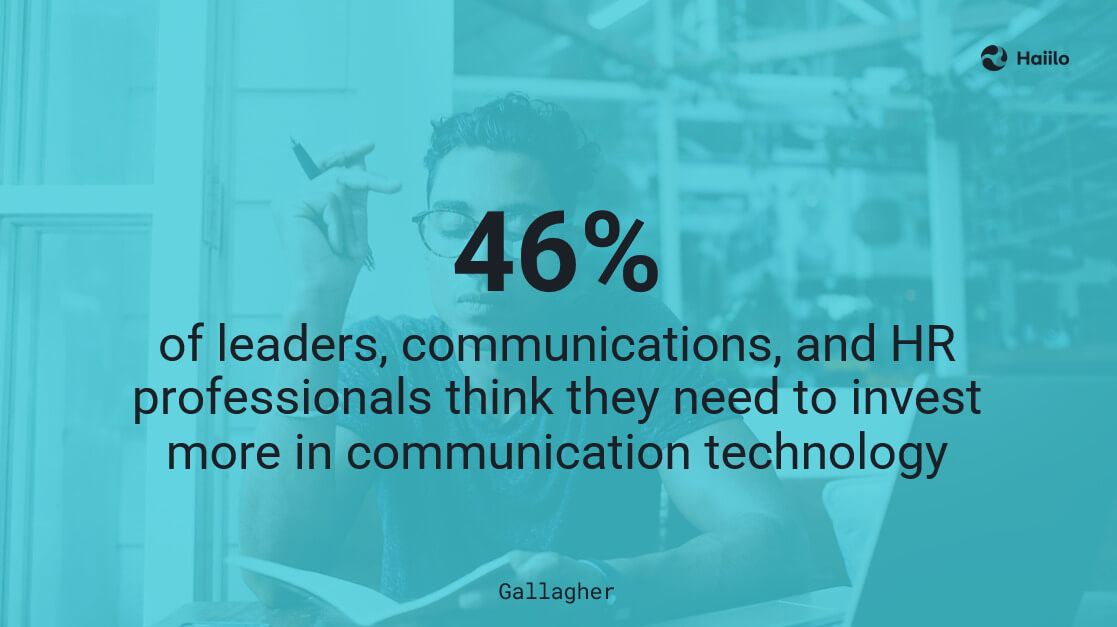
According to research by Gallagher, 46% of leaders, communications, and HR professionals think they need to invest more in communication technology. Consequently, the demand for social intranets has skyrocketed with the emergence of remote work, and intranets are now on the top of the list of workplace technologies employers want to implement. As hybrid work becomes the norm, companies rely on employee intranet platforms to reach deskless staff, align managers, and measure what actually gets read. The real challenge is no longer whether to invest, but how to implement in a way that drives daily use and lasting engagement.
Features such as file sharing, workgroups, communication channels, newsfeeds, and employee directories can go a long way in enabling asynchronous communication, knowledge sharing, and remote collaboration. When used well, these tools reduce inbox overload, give frontline employees access to the same updates as office staff, and create a single source of truth instead of scattered information.
Still, Gartner research shows that 90% of intranets fail to meet their initial objectives. The biggest reason for that is low user adoption. Because an intranet is only as successful as the amount of energy and engagement employees put into it. Many employee intranet platforms launch with high expectations but without clear ownership, relevant content, or leadership buy in, they quickly become digital ghost towns.
So in this blog, we will go over some of the best intranet practices that will help you get the most out of this powerful technology, improve user adoption, and boost employee engagement. You will learn how to align your platform with real employee needs, cut through communication noise, and turn your intranet into a channel people actively choose to use.
💡 Before we move forward, learn about the importance of employee engagement apps in the workplace!
Schedule a personalized demo to see Haiilo social intranet in action
- 1. Choose an Intranet That Meets Your Business Objectives
- 2. Look Beyond Standard Features
- 3. Define Ownership and Content Governance Processes
- 4. Pay Close Attention to User Experience
- 5. Ensure Personalized Employee Experience
- 6. Provide Seamless Access to Information with a Powerful Search Engine
- 7. Use It to Strengthen Your Internal Brand
- 8. Make It Accessible to Every Employee, Anytime
- 9. Integrate with Other Tools to Build a True Digital Workplace
- 10. Encourage Employee Advocacy
- 11. Prioritize Security
- 12. Use the Intranet to Understand Your Employees’ State of Mind
- 13. Measure the Impact of Your Intranet On the Business's Bottom Line
1. Choose an Intranet That Meets Your Business Objectives
Choosing the best intranet solution for your organization is not easy. With so many employee intranet platforms on the market, it is tempting to focus on feature lists instead of outcomes. But features do not drive results. Clear goals do.
To get the most out of your intranet platform, you first need to define the business objectives you are looking to achieve with this internal communication tool. When identifying goals, try to be as specific as possible so that you can measure the impact later on. Instead of saying “improve communication,” define what that means in practice. For example, fewer repetitive employee questions, higher news readership, or faster onboarding for new hires.
Some of the examples of your objectives may include:
- Increase employee engagement by 10%
- Reach all employees across various communication channels
- Improve access and readership of company news and updates by 40%
- Improve strategy comprehension and increase alignment
- Improve employee productivity by reducing information overload
- Improve employee advocacy by 35%
When evaluating different intranet platforms, make sure that you communicate your goals with the vendor. The vendor should be able to present different ways their solution can help you reach desired outcomes, backed by real examples and data. The right employee intranet platforms will not just demonstrate what the tool can do, but how you can use it to solve your specific communication challenges.
💡Related: Top 5 Internal Communications Apps: How To Choose the Best One
2. Look Beyond Standard Features
The next intranet best practice includes evaluating different features and functionalities. Most employee intranet platforms offer similar functionalities around:
- Content studio to make it easy for creators to create and share engaging intranet content.
- Social collaboration so that employees can connect on a social level, like, comment, and react to the company’s and peers’ posts.
- Search function with which employees can search for files, documents, and other content across multiple apps and locations, making it easy to find the information they need.
- Employee directory allows employees to easily look up their colleagues, learn more about them, and find their contact information.
But features alone do not guarantee adoption. The real question is how well these tools solve your everyday communication challenges. Does the search actually reduce repetitive questions? Can frontline employees access content from their mobile devices in seconds? Can managers target updates to the right teams instead of blasting everyone?
When comparing employee intranet platforms, look beyond checklists. Ask how intuitive the experience is, how content is personalized, and how analytics help you understand what works. The goal is not to have more features. The goal is to choose a platform your employees will actually use.

But if you want to achieve more with your intranet and turn it into a true engagement and productivity tool, you should look for more than just standard features. The best employee intranet platforms do not stop at publishing news. They help you listen, measure, and act.
Some intranet platforms, for example, offer advanced integration options that connect your HR systems, collaboration tools, and document management software into one central hub. Others include built in pulse surveys and more advanced workplace analytics so you can track readership, engagement, and sentiment instead of guessing what resonates. Finally, some solutions offer added value such as employee advocacy to enable your employees to become true brand ambassadors and extend your reach beyond internal channels.
Think about what will make the biggest difference for your organization. Do you need better insights to prove impact? Stronger manager communication? More visibility for frontline teams? Choose the employee intranet platform that supports your priorities, not just your wish list.
💡 Related: 11 things to consider when building an intranet.
3. Define Ownership and Content Governance Processes
It is easier to follow certain intranet best practices when you have a designated group of people who manage it. Without clear ownership, even the best employee intranet platforms lose direction and quickly fill up with outdated or duplicated content. Your intranet team could include roles such as content owners, content creators, technical teams, internal communications professionals, human resources professionals, product owners involved with integrations, and advocates who promote the use of the intranet internally. Clear responsibilities prevent bottlenecks and ensure someone is accountable for keeping information accurate and relevant.
Next, you should implement some processes and procedures around content governance which may include:
- Publishing standards
- Branding, page layouts, and templates
- Content revision and approval workflows
In large organizations, these processes can get very complex. So it is critical that content governance is not a manual process. With your intranet platform, you should be able to define role based permissions on multiple levels and build workflows to make governance as automated as possible. The right employee intranet platforms help you maintain quality at scale, reduce compliance risks, and give employees confidence that the information they find is up to date.
4. Pay Close Attention to User Experience
Your organization’s intranet plays an important role in shaping the overall employee experience in the workplace. UX and UI can make or break your intranet implementation project. Yet only 38% of communication and HR professionals are happy with their intranet’s design and navigation.

Your intranet should serve as a digital home from which employees start their day and access the information and tools they need to finish it. But that does not mean it should be complex. In fact, with employee intranet platforms, simplicity often drives adoption. The clearer the structure and navigation, the more likely you are to see higher usage rates.
On the other hand, if it is difficult to use and too hard to find relevant information, your intranet will quickly become another ignored channel.
Every employee app should be designed around how your employees actually work. For example, frontline employees may need instant access to shift plans or safety updates, while managers look for performance dashboards and team announcements. The most important tools and links should be visible immediately, not buried in subpages.
Your intranet homepage should not be cluttered with irrelevant information because information overload is one of the main causes of poor employee experience in the workplace. The best employee intranet platforms prioritize relevance and clarity so employees see what matters to them first.
More about content relevancy and personalized employee experience in the next section.
5. Ensure Personalized Employee Experience
Personalized employee experience can make a huge difference when it comes to early adoption and usage of your intranet. The content employees see should be relevant to their roles, locations, divisions, languages, interests, and other criteria.
Unfortunately, around 50% of communication and HR professionals say that their technology doesn’t allow them to serve content based on employees’ interests, and targeting based on the level of engagement is even lower.
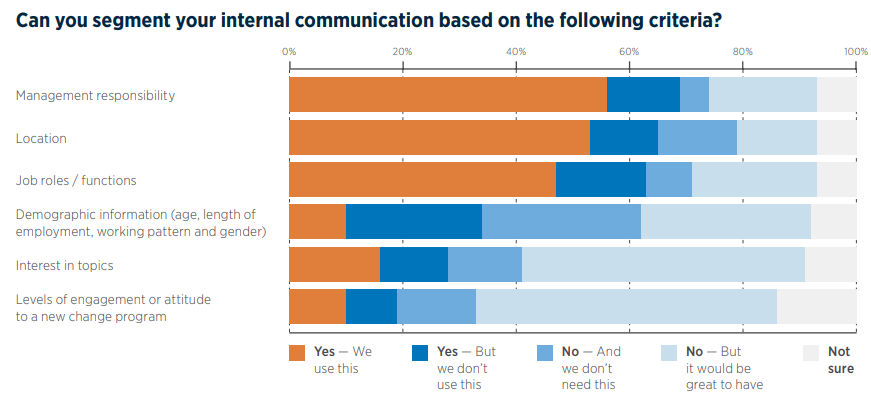
Employee intranet admins should be able to segment audiences and always deliver content relevant to the end user. Only when employees find information relevant will they engage with it and return to the intranet daily.
However, the use of audience segmentation and personalization remains extremely limited, which is often due to technology limitations.
The easiest way to think about this intranet best practice is if you compare the intranet with social media platforms employees use in their private lives. They keep coming back to them because smart algorithms serve them the information they are most likely to like and engage with.
If you want the same effect, make your intranet a social, digital home personalized to every employee!
💡 Related: What is an Employee Experience Platform and Why Your Company Needs One
6. Provide Fast, Reliable Access to Information with a Powerful Search Engine
Your intranet should be the first place employees go when they need answers. Not the last resort after asking around in chat. The best employee intranet platforms make finding information simple, whether someone is at a desk or on a mobile device on the shop floor.
So when evaluating vendors, make sure that you test the product’s search function yourself. Use real life keywords from your organization. Can employees quickly find policies, presentations, or past announcements? Can they filter by content type, date, or team? Strong search reduces frustration, saves time, and limits duplicate questions.
Whether the file is stored within the intranet, attached to an email, or saved in a shared Google Drive, employees should be able to find and access it without switching between tools. Employee intranet platforms that connect multiple systems into one searchable experience help you cut through information overload and improve productivity.
📹 Your intranet can go a long way in improving your internal communications strategy. Check out our Masterclass about how to create a successful internal comms strategy!
7. Use It to Strengthen Your Internal Brand
Your intranet should feel like your employees’ digital home. Ideally, it is the first thing they see when they open their browser. That daily touchpoint is powerful. Beyond improving your employees’ productivity at work, modern employee intranet platforms help you reinforce what your company stands for, how you communicate, and how connected people feel to the organization.
To follow this intranet best practice, make sure the vendor you choose offers white labeling services. This enables you to match the look and feel of the platform to your company’s branding guidelines, from colors and logos to tone of voice. When the experience reflects your identity, the platform feels intentional rather than just another tool employees are asked to use.
Companies that invest in branding their intranet often see higher adoption and engagement. A well branded employee intranet platform signals that internal communication matters. It shows employees that their experience is not an afterthought, but a priority.
8. Make It Accessible to Every Employee, Anytime
If your intranet is only easy to access for office based staff, it will never become your true communication hub. Employee intranet platforms should level the playing field. Your frontline workers without a designated workspace or corporate email should have the same access as office employees. And your remote and hybrid workers should have the same level of access as on site teams. Equal access builds alignment and reduces communication gaps.
There are two major characteristics that make some employee intranet platforms more accessible than others:
- Cloud based solution Make sure the intranet software is easy to access without a corporate device. Cloud based software enables employees to log in securely from anywhere, whether they are at home, on the road, or on the shop floor.
- Mobile app Mobile access is key to intranet adoption. According to research, 72% of employees access internal digital channels through business owned mobile devices and 43% from personal devices. If you want Millennials and Gen Zers to use your intranet daily, choose a provider that offers a branded mobile app with a simple, intuitive experience.
When employee intranet platforms are accessible anytime and from any device, you reduce reliance on notice boards, email chains, and word of mouth. You create one consistent source of truth for everyone.
💡 Related: Check out our ultimate guide for launching an intranet platform!
9. Integrate with Other Tools to Build a True Digital Workplace
Integrating your intranet with other tech stack in your organization is critical for making the platform a true productivity booster and eliminating communication barriers in the workplace.
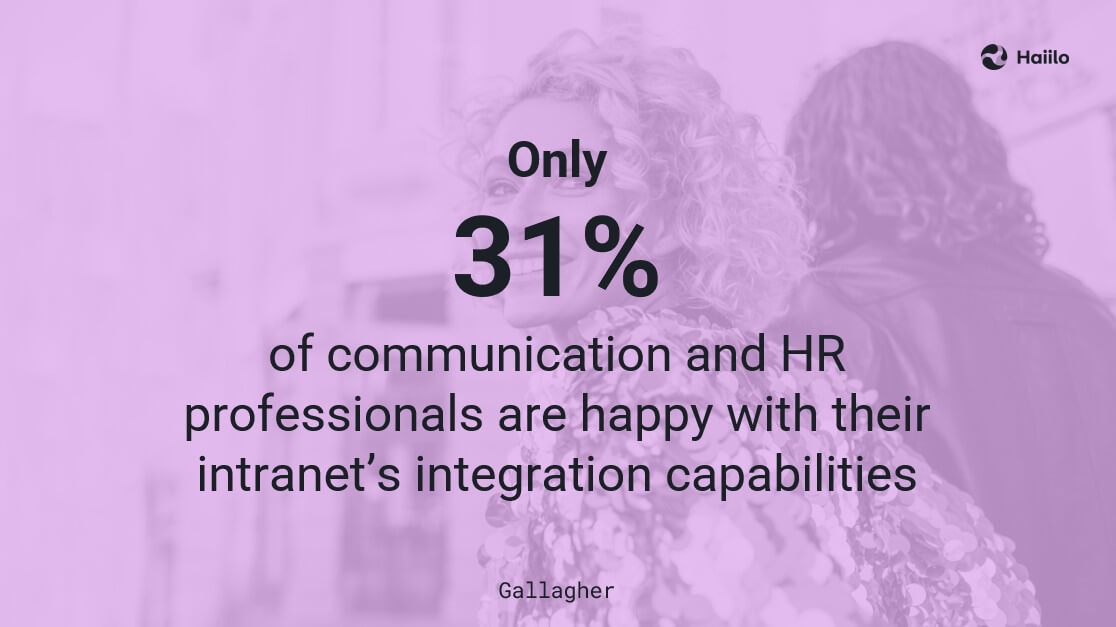
Unfortunately, only 31% of comms and HR professionals are happy with their intranet’s integration capabilities.
To make your intranet a true digital workplace, it needs to become the single entry point to the tools your workforce already uses every day. If employees still have to jump between multiple apps to complete simple tasks, adoption will suffer. The strongest employee intranet platforms reduce friction by bringing everything together in one place.
Look for a platform that offers deep integrations with critical solutions such as Google Workspace and Microsoft 365. Your intranet should also integrate with your Active Directory so organizational data such as teams, roles, and reporting lines are mapped and updated automatically. This saves time for your IT team and keeps information accurate.
Next, ensure the provider integrates with communication channels such as Slack and MS Teams. This allows you to distribute content across multiple touchpoints and make sure that important information reaches every employee, including those who rarely log into the intranet directly. Some employee intranet platforms also connect with social media channels, turning your intranet into a powerful employee advocacy tool that extends your reach beyond internal audiences.
Finally, choose software that offers a flexible API so you can build custom integrations as your needs evolve. Your intranet should adapt to your ecosystem, not the other way around.
10. Encourage Employee Advocacy
Not many organizations think of employee advocacy when implementing an intranet. But there are vendors who offer advocacy features built into their intranet platforms.
If you decide to go with such a solution, make sure that you encourage employee advocacy, as it can be the most powerful way to boost your brand’s awareness, sales, and talent acquisition efforts.
Social intranets with employee advocacy features make employee brand ambassadorship easy and rewarding. Employees can share their company’s content with their personal networks in seconds, and companies can track and reward those who are most engaged.
11. Prioritize Security
The need for highly secure workplace tools has skyrocketed in the previous couple of years.
At the very minimum, your intranet should offer SSL encryption, single-sign-on (SSO authentication), secure storage, and security certificates such as ISO 27001.
Additionally, make sure that the platform does not link or store personal data to file accesses and that the vendor can make your data available to you as an export at the end of the term.
12. Use the Intranet to Understand Your Employees’ State of Mind
Many employee intranet platforms focus on publishing content. Fewer help you listen. If you are considering a new solution, look for software that enables you to send regular surveys to your employees directly through the intranet. Listening should not be a separate process. It should be part of your daily communication flow.
Regular pulse surveys are one of the most effective ways to understand the employee experience factors that influence engagement, retention, and performance. They help you spot early signs of frustration, change fatigue, or leadership misalignment. They also support efforts to improve employee wellbeing and strengthen your internal communication based on real feedback, not assumptions.
Ideally, the solution should be simple to use and provide actionable insights about how your workforce is feeling. The best employee intranet platforms integrate surveys with core communication channels, including email, push notifications, and even SMS, so you can reach deskless employees and increase response rates. When listening becomes easy, acting on feedback becomes faster.
13. Measure the Impact of Your Intranet On the Business’s Bottom Line
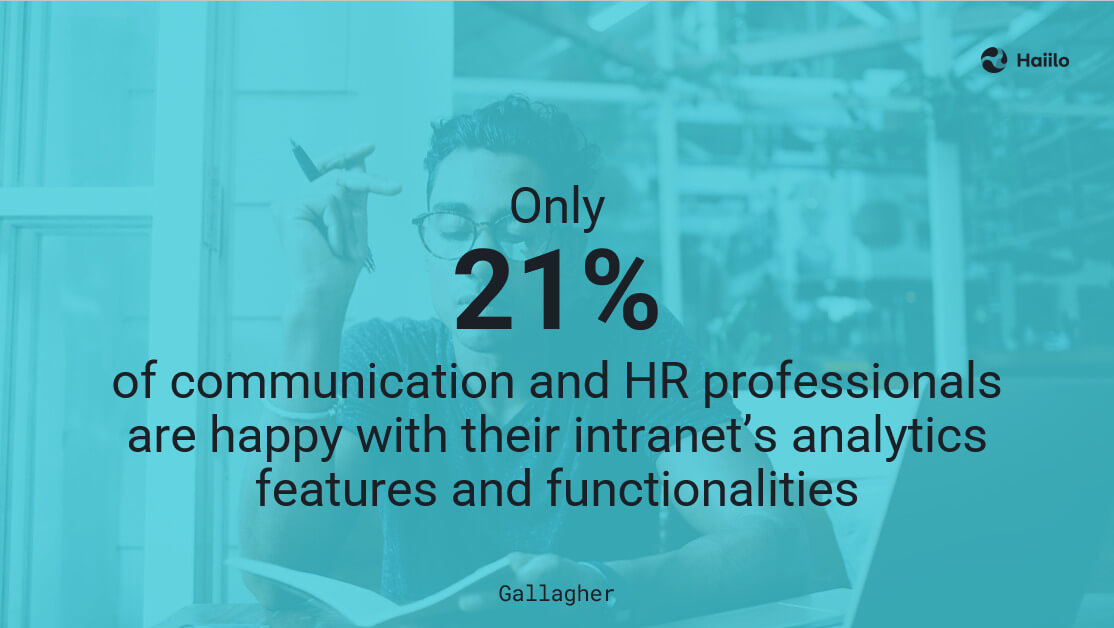
Intranet analytics is one of the biggest pain points in this software category. Only 21% of IC and HR professionals are happy with their intranet’s analytics features and functionalities.
Measuring the impact of your intranet helps you move from guesswork to informed decisions. The most effective employee intranet platforms give you clear insights into what employees read, click, search for, and ignore. With regular analysis, you can identify patterns and define best practices that actually fit your organization.
Tracking usage shows you which content formats resonate most and helps you improve your internal communications efforts. For example, you may discover that short leadership videos outperform long text updates, or that frontline teams engage more through mobile notifications. You should also analyze which communication channels best work for your audience and adjust your distribution strategy based on data, not assumptions.
The most advanced employee intranet platforms allow you to connect communication campaigns to business goals such as safety compliance, engagement scores, or advocacy participation. According to research by Gallagher, 24% of communications and HR professionals’ main goal is to measure the ROI of workplace communications, while 22% cite lack of analytics as their biggest challenge.
Yet many intranets still provide only raw data exports that require hours of spreadsheet work. Look for a solution that delivers easy to read dashboards and actionable insights so you can quickly understand what to improve and prove the value of your efforts.
So make sure that you closely evaluate your next intranet’s reporting and analytics functionalities!
Curious to learn more? Check out our report on IC trends in 2023