
Employee engagement has been one of the most talked about topics among HR and business leaders for years. Yet many teams still struggle to achieve engagement in a consistent way. Today’s workplace has made this even more complex. With hybrid work, constant change, and rising expectations, engagement is no longer owned by one function. It depends on how the entire organization works together to create a positive employee experience.
Leaders, managers, crisis management, HR, internal communications, digital transformation, and other teams are all responsible for ensuring employee success in the workplace. When these groups are aligned, employees receive clearer communication, better support, and a stronger sense of direction. When they are not, confusion grows and engagement drops quickly.
📚Download our eBook “How to Boost Internal Communication” and learn how to communicate with the modern employee in today’s digital age.
In this blog, we will go over the best practices for ensuring high employee engagement and motivation in the workplace, with a focus on practical steps you can take to achieve engagement across different teams and roles.
Is Employee Engagement Disrupted?
In recent years, many experts have pointed out that major disruptions have reshaped how employees connect with their work and organizations. Periods of uncertainty have pushed companies to rethink how they communicate, support, and engage their people. For some organizations, this created an opportunity to improve transparency, flexibility, and trust. For others, it exposed gaps in communication and leadership that made it harder to maintain engagement over time.
Research done in the middle of this pandemic shows that companies are treating their employees better than ever. Additional data from a new study done by Willis Towers Watson clearly shows that businesses are bending over backward to take care of their employees.
The main reason why we are seeing this shift towards increased employee engagement is that COVID-19 has created a level of transparency and trust we haven’t seen in decades.
The Willis research found that 90% of companies believe their culture has improved, 83% believe their employee experience is better, and 84% believe employee engagement has gone up.

Therefore, it seems like remote and hybrid work were a wake-up call. They showed that when people don’t feel safe, supported, or emotionally secure, they simply cannot do their jobs at their highest potential. Lack of clarity, isolation, and poor communication quickly reduce focus and motivation. On the other hand, when employees feel supported and informed, they are more likely to stay engaged and contribute consistently. This is a key foundation if you want to achieve engagement in today’s workplace.
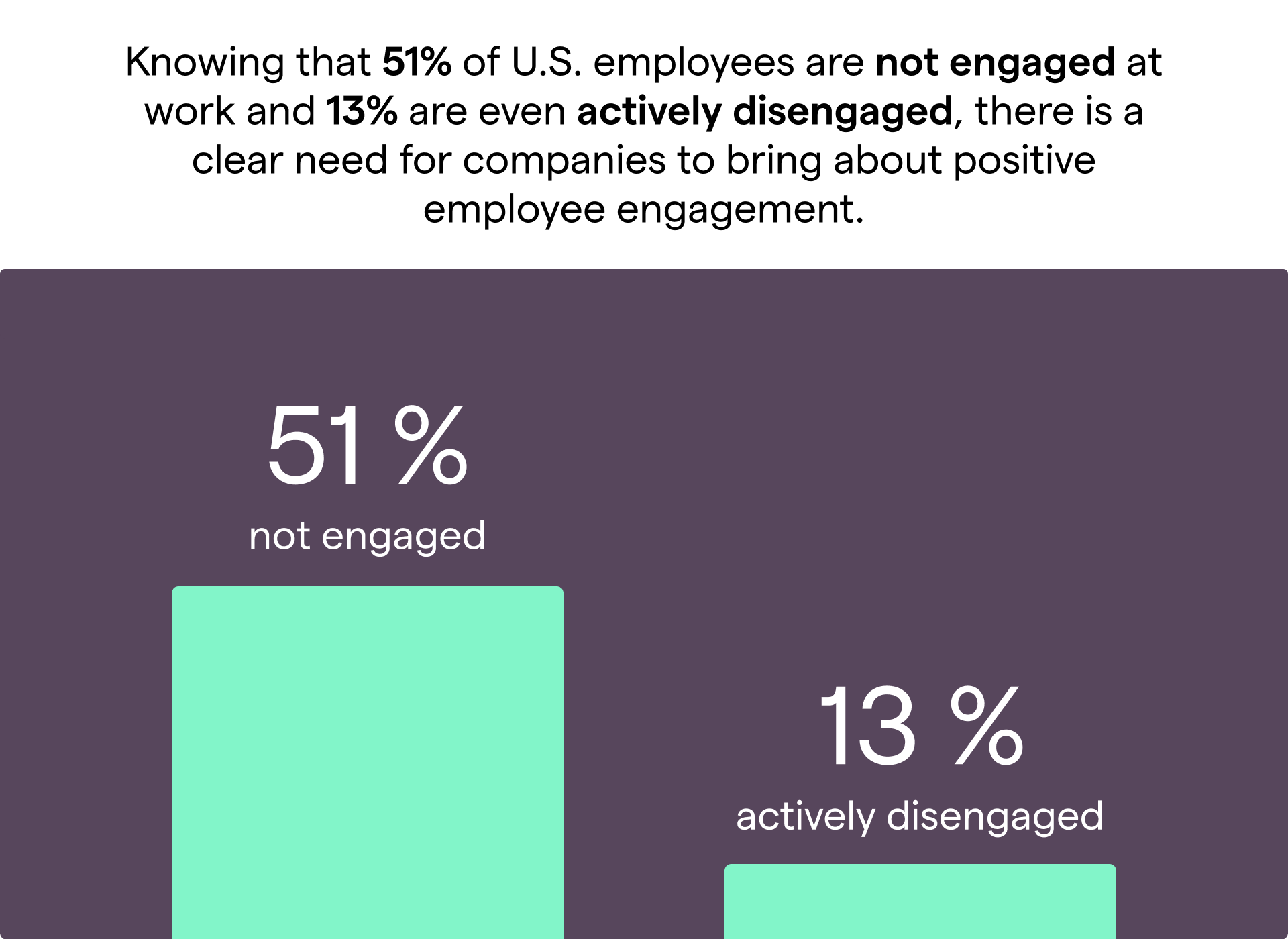
💡 Before we move forward, check out these powerful employee engagement stats!
Employee Engagement vs. Employee Experience
Employee experience is the sum of perceptions employees have about the organization they work for. It includes every interaction employees have with leadership, tools, communication, and culture. It sits at the heart of delivering a strong customer experience and sustainable business performance.
Many people compare employee engagement and employee experience and use the terms interchangeably. This is misleading. Employee engagement is the outcome of a positive employee experience. In simple terms, engagement reflects how employees feel and act, while experience explains why they feel that way.
Meaning, organizations need to take a step back to understand what shapes a positive employee experience in the workplace. This includes communication quality, leadership behaviour, access to information, and opportunities for growth.
During periods of disruption, we saw that the importance of different EX components can shift quickly. What mattered most before may no longer be enough. New expectations around flexibility, transparency, and purpose continue to emerge, and companies need to adapt if they want to achieve engagement consistently.
Let’s take a closer look at what is driving a positive employee experience and, therefore, higher employee engagement.
10 Ways to Drive Employee Engagement
Even though the times have changed, most organizations are still looking for the same thing: excellence. To reach that level, they need to put their people first. Employee-centric organizations that focus on their people build stronger alignment, better communication, and higher performance over time.
Take a look at the following image to better understand what it takes to drive higher employee engagement by providing a strong and consistent employee experience. These elements work together to help organizations achieve engagement in a way that is measurable and sustainable:
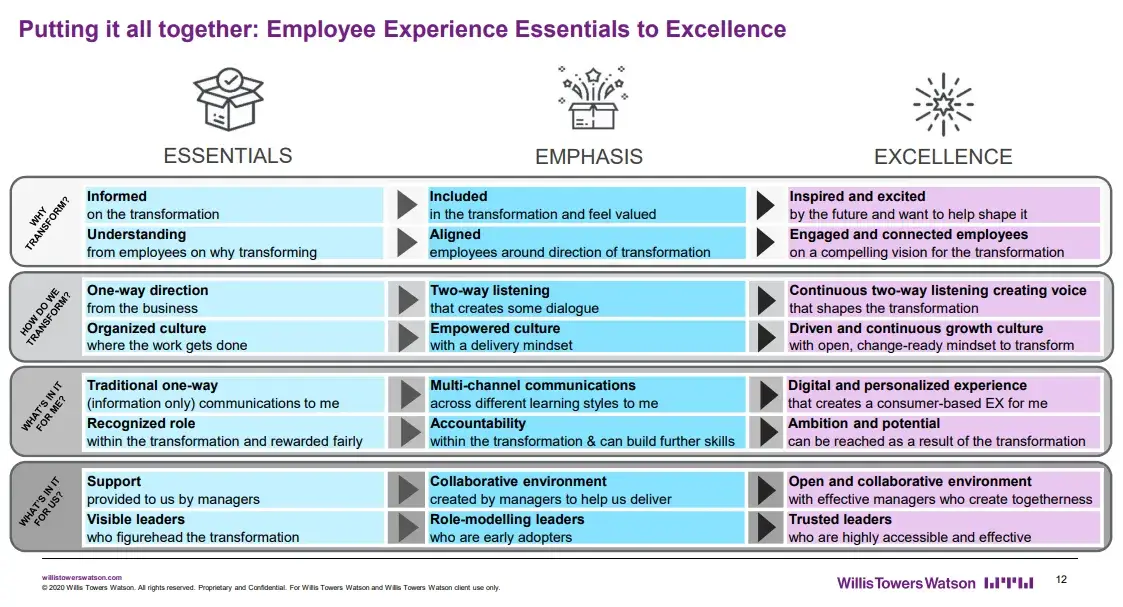
Note the “Excellence” column.
In short, to drive high employee engagement and experience levels, organizations need to:
- Inspire their employees and boost employee morale through regular recognition and clear communication
- Empower employees to be a part of the big change by involving them in decisions that affect their work
- Help employees understand the vision and how they contribute in achieving it with simple, consistent messaging
- Listen and encourage employees’ share of voice to build trust and uncover real challenges early
- Implement digital tools that provide personalized experiences and make information easy to access
- Create open and collaborative working environments where employees feel safe to speak up
- Have approachable and trusted leaders who communicate clearly and act with consistency
When these elements are in place, organizations are much better positioned to achieve engagement across teams, even in fast-changing environments.
Let’s now take a deeper dive into the best practices for driving better employee engagement, reducing employee turnover, and creating a positive employee experience.
💡 Related: What Is Employee Journey and How to Map it Out.
1. Drive organizational alignment
Organizational alignment is a process of ensuring that the entire workforce understands, shares, and supports the company’s vision, goals, and core company values. It creates clarity and helps employees focus on what truly matters.
When employees are aligned with the company’s strategic goals, it’s easier to drive their engagement because they understand priorities and can see how their work contributes to results. This shared direction helps teams collaborate better and achieve engagement more consistently.
Even though this has always been the goal for many employers, today we can see a higher focus on driving organization alignment so that all employees can work towards the same goals without confusion or duplication of work.
With the emergence of remote work, it may be harder to achieve such alignment. Teams are more distributed, and informal updates are limited. This is why employee communications plays the most important role here, ensuring that everyone stays informed, aligned, and connected.

Therefore, internal communicators, HR professionals, and leaders need to continuously ensure that the entire workplace is aligned and connected. This means not only sharing information, but also making sure it is understood, relevant, and easy to act on. Without this alignment, even strong initiatives can fail to achieve engagement.
2. Continuously build trust in the workplace
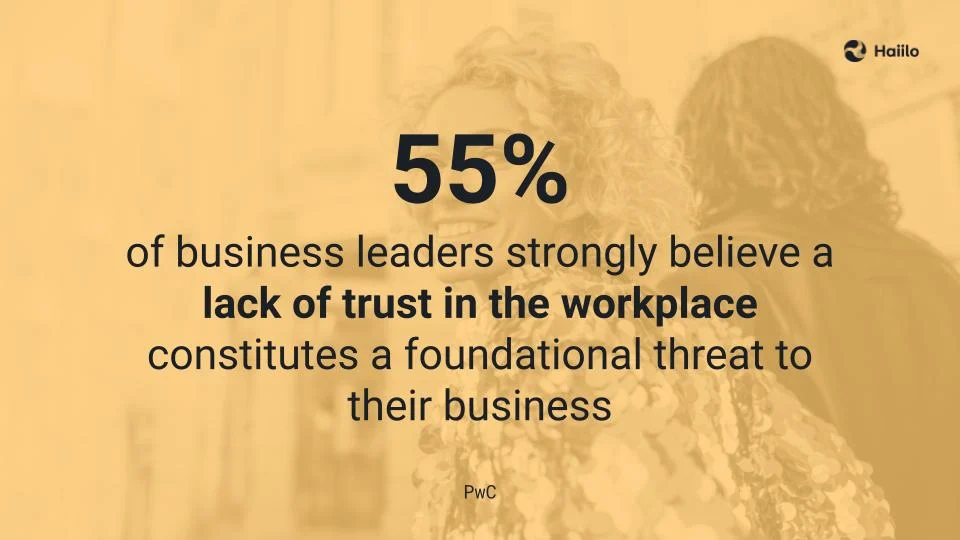
Building trust in the workplace is more important than ever. In fast-changing environments, employees look for consistency, honesty, and clear direction from leadership. When trust is missing, communication breaks down, and engagement quickly follows.
We have learned that trust in the workplace significantly impacts employee engagement and productivity. Employees who trust their leaders are more likely to share feedback, stay committed, and support company goals. On the other hand, low trust leads to hesitation, silence, and disengagement.
Trust is built through everyday actions. Leaders need to communicate openly, follow through on commitments, and involve employees in decisions when possible. Small actions, such as regular updates or transparent reasoning behind changes, can have a strong impact over time.
To achieve engagement consistently, organizations need to treat trust as an ongoing effort, not a one-time initiative. It should be embedded in communication, leadership behavior, and company culture.
Another study found that, compared with employees working at low-trust companies, employees working at companies that cultivate trust tend to experience better well-being, stronger focus, and more consistent performance in their daily work. In practice, this often shows up as:
- Lower stress levels and fewer distractions during the workday
- Higher energy and motivation to complete tasks
- Better productivity and more consistent output
- Reduced absenteeism and fewer unplanned sick days
- Stronger engagement and connection to the organization
- Higher overall job and life satisfaction
- Lower risk of burnout over time
Similarly to driving organizational alignment, IC, HR, and leadership need to work together to ensure that employees feel supported by their employers. When trust is reinforced through clear communication and consistent actions, it becomes much easier to achieve engagement across teams.
3. Create a working environment that supports remote work
A shift toward flexible and remote work has changed how employees collaborate and stay connected. Many employees now expect the right tools and support to do their jobs effectively from anywhere.
Even though this shift has accelerated digital transformation in the workplace, some employers are still struggling to find solutions that truly support remote work. Without the right setup, employees can feel disconnected, miss important updates, and lose focus.
To avoid this, organizations need to provide tools that make communication simple and accessible. They also need to create routines that keep teams aligned and informed. This is especially important for enabling employees to stay connected and engaged across locations.
When remote work is supported properly, employees collaborate more easily, share information faster, and stay aligned with company goals. This creates a stronger foundation to achieve engagement, even when teams are fully distributed.
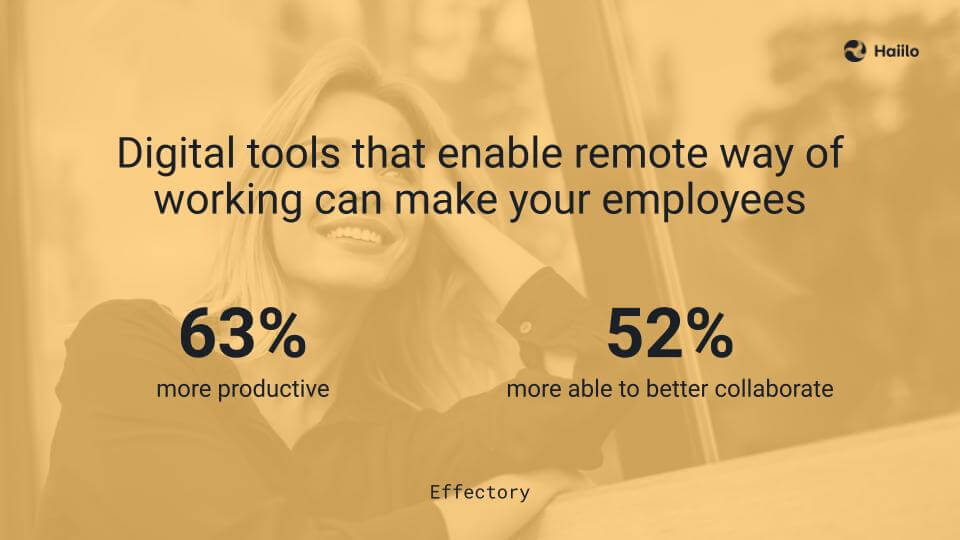
With large numbers of employees working from home, and this trend becoming a long-term reality, it is important to ensure that all employees retain a strong sense of connection. Without regular interaction and visibility, employees can quickly feel isolated or disconnected from their teams and the company. This directly impacts motivation and makes it harder to achieve engagement across distributed teams.
Employers need to consider implementing new employee communications solutions that act as a central place for employees to start their day. A single source of truth helps reduce confusion, keeps everyone aligned, and ensures that important updates are not missed.
Currently, your workforce is probably using various communication channels such as email, intranets, tools such as Slack and Microsoft Teams, as well as document sharing platforms. While these tools are useful, they often operate in silos. As a result, the employee communications ecosystem has become extremely complex, making it harder for employees to find information, stay informed, and remain engaged.
To solve this, organizations need to simplify communication flows and create more structured, accessible experiences that help employees stay connected and focused throughout the day.
Take the complexity out of your internal communication
How? By unifying all communication channels into one platform
4. Change the culture of leadership
Leaders and managers play an important role in driving employee engagement. Their behavior shapes how employees feel, communicate, and perform every day. Today, their role is even bigger as teams become more distributed and expectations continue to rise.
As Josh Bersin puts it: “the CEO is now the Chief Empathy Officer. And this is really happening.” Employees expect their leaders to set clear direction, build strong relationships, stay visible, and communicate regularly. Without this, it becomes difficult to build trust or maintain motivation.
Leadership today is less about control and more about connection. Employees want transparency, honesty, and a clear understanding of what is happening around them. When leaders communicate openly and show empathy, employees feel more secure and are more willing to contribute.
While these might not have been the main priorities in the past, recent changes are reshaping Human Capital Management. As a result, the way managers motivate and engage their employees has shifted. Soft skills such as communication, listening, and adaptability are now essential.
Today’s leaders need to be excellent communicators. They need to speak with an authentic voice, provide clarity, and inspire action. When leaders get this right, it becomes much easier to achieve engagement across the organization.

Moreover, recent research shows that communication teams play a central role during times of change, often working closely with leadership to guide employees through uncertainty. When communication is clear and consistent, employees are more likely to trust decisions and stay focused on their work.
5. Encourage “social” collaboration
As seen on the employee excellence image, collaboration in the workplace is an important factor in shaping a positive employee experience and driving engagement.
Even though we have experienced periods of social distancing, it is still essential to make sure that our workplaces stay “social” and that employees remain connected. Without regular interaction, collaboration becomes slower, and employees may feel isolated or disconnected from their teams.
Encouraging “social” collaboration means creating opportunities for employees to interact beyond task-based communication. This can include informal chats, team discussions, and shared spaces where ideas can flow freely. These interactions help build relationships, strengthen trust, and improve teamwork.
When employees feel connected to their peers, they are more likely to share knowledge, support each other, and contribute actively. This makes collaboration more natural and helps organizations achieve engagement in a more sustainable way.
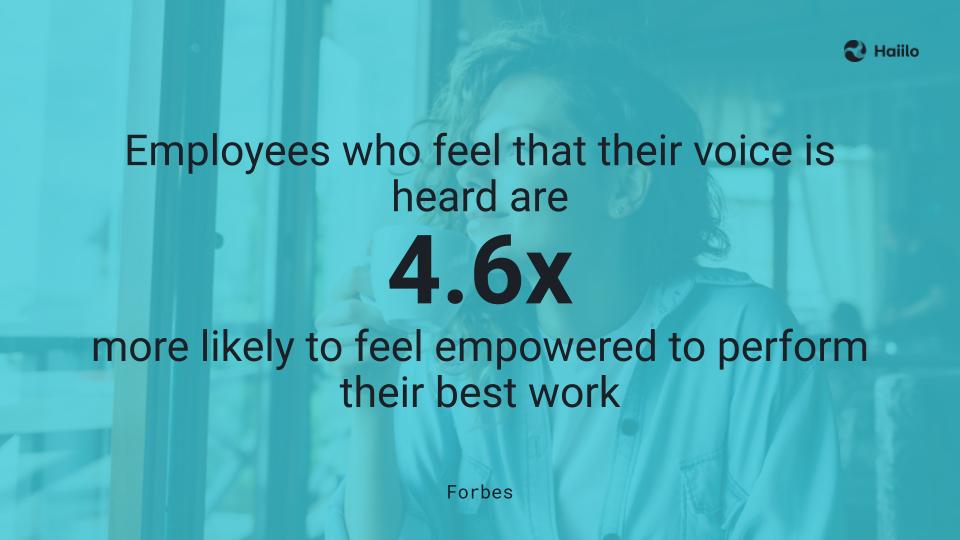
boost in the implementation of social employee communications technologies within organizations across the world. Such tools mimic the experience of the social platforms employees already use in their private lives, making them intuitive and easy to adopt.
Using them, employees have a simple way to join company conversations, share updates, and connect with colleagues across teams. This lowers barriers to communication and encourages more participation. Remember, internal communication drives collaboration. When communication and information flow freely and openly among peers from different departments, it inspires efforts to collaborate. This kind of environment makes it easier for organizations to achieve engagement because employees feel included and informed.
6. Enable easy peer-to-peer, to-down, and bottom-up feedback
One of the biggest drivers of employee engagement is employee feedback from both managers and peers. However, instead of relying only on annual performance reviews, you need to ensure on-the-spot, frequent employee feedback that reflects day-to-day work.
Employees want timely feedback because it helps them adjust quickly and understand their impact. It also creates a sense of progress and recognition. Therefore, organizations need to find ways to restructure employee feedback and make it part of daily conversations. Simple actions like quick check-ins or real-time recognition can have a strong effect on motivation and help achieve engagement more consistently.
7. Ensure seamless access to important information and stop the information overload
As workplaces evolve, organizations are constantly updating policies, processes, and priorities. This creates a growing volume of information that employees need to navigate.
At the same time, too much information can overwhelm employees and reduce focus. That’s why it is important to ensure seamless access to relevant information while filtering out what is not needed. When employees can quickly find what matters, they stay more productive and confident in their work.
Companies that manage information well are better positioned to respond to change and support their employees effectively. Clear, accessible communication helps teams stay aligned and makes it easier to achieve engagement, even in complex environments.
Additionally, employers have started communicating more types of information than before, from operational updates to well-being initiatives. When done right, this transparency builds trust and keeps employees connected to the bigger picture.
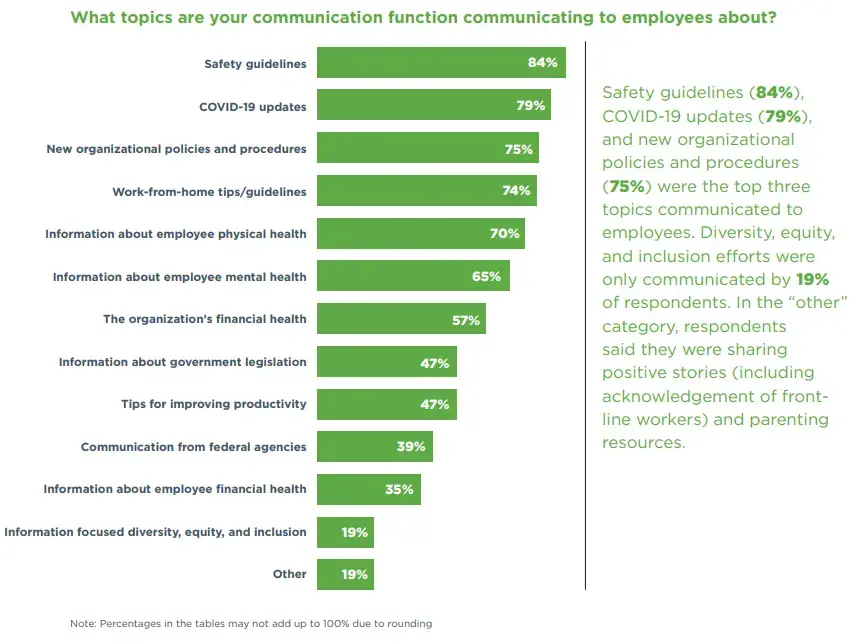
📚 Check out our guide for communicating safety tips to your employees.
Therefore, ensuring that the right information finds the right employees at the right time has become critical. Employees need clarity to do their jobs well. If they miss key updates, they make slower decisions or rely on outdated information.
However, many organizations still struggle to ensure that important updates are actually delivered to, and consumed by, their employees. Messages get buried in emails, scattered across tools, or simply ignored due to overload.
Employers need to understand that not being able to find critical company information not only frustrates employees, but also reduces focus and motivation. When employees spend too much time searching for answers, productivity drops. Fixing this is essential if you want to achieve engagement and create a smoother employee experience.
8. Listen, listen, listen
Lately, we can see more organizations use employee surveys to better understand their employees. This trend has grown as expectations around transparency and inclusion increase. People want to be heard, and they expect their input to matter.
Yet, many employees still feel like their voice is not heard, which has a direct impact on engagement. Collecting feedback is only the first step. What matters is what you do next.
In order to show empathy and care for your employees’ wellbeing, you need to actively listen and respond. That means acting on feedback, sharing results, and explaining decisions. This builds trust and helps achieve engagement over time.
However, just sending a survey will not fix issues like silos, misinformation, or disengagement. The conversation must go two-way. Employees should be able to join company-wide conversations, ask questions, and share ideas daily. This keeps them involved and motivated.
9. Frequently communicate what your organization stands for
Employees who live by your core company values and feel proud of where they work are more likely to stay engaged and committed. But this does not happen automatically. Employers need to consistently communicate what the organization stands for and how those values show up in daily work.
This means going beyond posters or one-time announcements. Values should be part of everyday communication, leadership behavior, and decision-making. When employees see this consistency, they are more likely to trust the organization and stay aligned.
A clear sense of purpose helps employees understand why their work matters. It gives direction and builds confidence in the future. When people feel connected to that purpose, it becomes much easier to achieve engagement and maintain it over time.
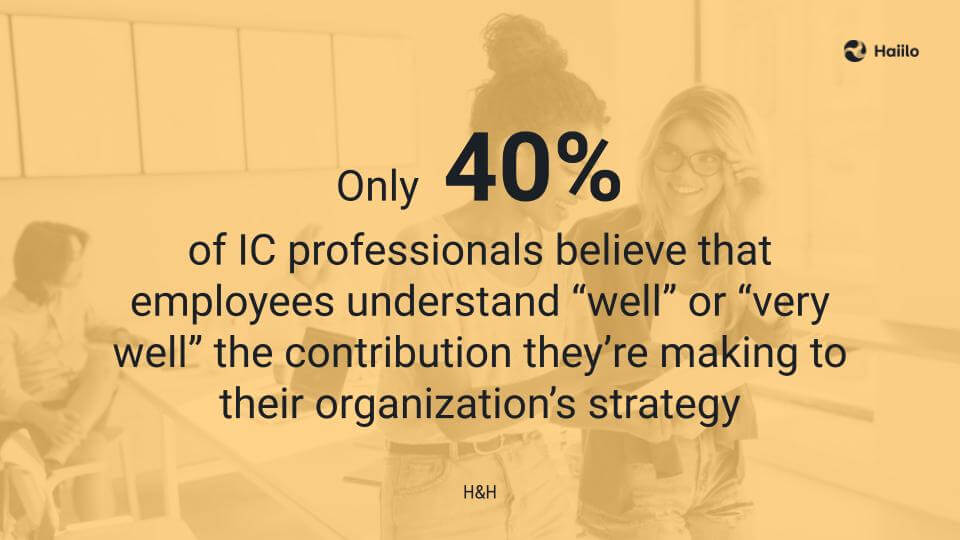
In the past few years, many organizations have shown how they take social and corporate responsibility seriously. From supporting communities to helping employees through difficult times, these actions shape how people perceive the company. Your employees should be aware of these initiatives, and they should be encouraged to share those news within and outside your organization.
When employees understand and believe in what your company stands for, they are more likely to speak about it with confidence. This not only strengthens your external reputation, but also builds internal pride. Employees who feel proud of their workplace are more engaged, more motivated, and more likely to contribute. This is another important step to achieve engagement in a sustainable way.
Not only does having brand ambassadors support talent attraction and retention, but it also creates a sense of purpose, inspiration, and shared achievement among your employees.
10. Support your employees’ growth and development
Even though job security has become an important factor for workers across the world, career growth and development still play a key role in driving employee engagement.
Many organizations are struggling to close skill gaps, and this challenge is only increasing. Instead of relying only on external hiring, employers should invest in developing their existing workforce. This includes training, mentoring, and clear career paths.
Such an approach helps organizations stay competitive while also motivating employees. When people see opportunities to grow, they are more likely to stay engaged and committed. Supporting development is one of the most effective ways to achieve engagement over the long term.
💡 Also, learn about what are employee engagement apps and how they can help you drive employee engagement in the workplace.
The Benefits of Driving More Employee Engagement in the Workplace
As mentioned earlier, employee engagement has a strong impact on productivity, business performance, employee morale, retention, and even talent attraction.
Organizations that focus on engagement often see better collaboration, stronger communication, and more consistent results. Employees are more likely to take initiative, support each other, and stay aligned with company goals. All of this contributes to better outcomes and helps organizations achieve engagement at scale.
The Importance of Communications in Driving Employee Engagement
As mentioned earlier, internal communications teams are now considered one of the most important strategic business partners. Their role has expanded beyond sharing updates. Today, they help shape employee experience, support leadership communication, and keep teams aligned.
Transparency, trust, collaboration, empathy, alignment, and strong relationships are impossible to achieve without the proper employee communications strategy in place.
In order to better understand the role of IC in employee engagement and productivity, take a look at our infographic below 👇

Check out our report on the key drivers of employee engagement
FAQ: how to achieve engagement
1. Why is it so hard to achieve engagement today?
Many teams struggle to achieve engagement because the workplace has become more complex. Employees are spread across locations, communication is fragmented, and priorities change quickly. Without clear direction and consistent updates, people lose focus. Hybrid work adds another layer of challenge. If you’re navigating this shift, this guide on hybrid work shows what to watch out for and how to keep teams aligned.
2. What are the most effective ways to achieve engagement?
Start with the basics: clear communication, strong leadership, and regular feedback. Employees need to understand goals, feel heard, and see how their work matters. Collaboration also plays a big role. When teams share information and work across silos, engagement improves. This article on cross functional collaboration explains how to make that happen in practice.
3. How can technology help you achieve engagement?
Technology helps you bring everything into one place. A social intranet gives employees a central hub for updates, conversations, and resources. Tools like employee communications platforms make messaging more targeted and relevant. You can also use insights and analytics to understand what works and where engagement drops.
4. How do you measure if you actually achieve engagement?
Look beyond surveys. Track participation, feedback, and how employees interact with content and tools. If people read updates, join conversations, and share input, you’re moving in the right direction. Data helps you spot gaps early. These employee engagement statistics give useful benchmarks to compare your progress and adjust your approach.