
Today’s workforce is highly multigenerational. Employees of different ages bring different expectations, communication styles, and motivations to the workplace. As a result, managing a multigenerational workforce requires a more thoughtful and flexible approach. However, it is not enough to consider only age when planning your talent strategies.
Highly complex workforce environments require employers to adjust their talent strategies around employee engagement, communication, collaboration and performance. This means creating systems and processes that work for a wide range of needs, rather than applying a one-size-fits-all approach. Leaders need to balance structure with flexibility to keep teams aligned and productive.
In this blog, we will go over the importance of understanding your multigenerational workforce and best practices for engaging them while providing an exceptional employee experience. You’ll also learn how managing a multigenerational workforce effectively can help improve collaboration, boost retention, and drive better overall performance across teams.
Engage your multigenerational workforce by adjusting your comms to the needs of your employees via the right IC tools
What Is a Multigenerational Workforce?
Multigenerational workforce is a term used to describe a situation in which multiple generations are active and present in today’s labour market. In practice, this means that employees from different age groups work side by side, often bringing very different experiences, expectations, and working styles. As a result, managing a multigenerational workforce requires a deeper understanding of how these differences shape behaviour, communication, and performance.
Such a phenomenon is being investigated and analysed by many employers as they understand that these generations have different needs, wants and expectations from their employers. However, it is important to recognise that generational differences are only one part of the picture. Factors such as role, culture, and individual preferences also influence how employees think and work.
Before we begin with the best practices for managing and engaging a multigenerational workforce, let’s go over the 5 working generations right now:
- Traditionalists – born in 1945 and before
- Baby Boomers – born between 1946 and 1964
- Generation X – born between 1965 and 1976
- Millennials – born between 1977 and 1995
- Generation Z – born in 1996 and after

10 Factors Impacting Your Multigenerational Workforce’s Engagement
Many employers who are trying to understand their multigenerational workforce are not sure about which aspect of the business they need to assess to satisfy their employees’ needs and preferences. This uncertainty often leads to scattered efforts and inconsistent results, especially when different groups have different expectations.
Before trying to adjust every aspect of the business based on those differences, it is also important to understand what your organization can realistically do to meet those expectations. Setting clear priorities helps avoid overcomplicating your strategy and ensures that improvements are both sustainable and measurable.
Let’s go over some of the most important factors employers should consider addressing in order to provide exceptional employee experience for their multigenerational workforce.
1. Leaders and Managers
One of the biggest challenges in managing a multigenerational workforce is ensuring that leaders and managers are equipped to support employees with different expectations, communication styles, and motivations.
Many organizations still struggle to prepare leaders for this level of complexity. Managers are expected to adapt their leadership style, provide personalised feedback, and create inclusive environments where all generations feel valued and heard.
Without the right skills and mindset, leaders may unintentionally create friction between teams or fail to engage certain groups effectively. This can lead to lower morale, reduced collaboration, and missed opportunities for knowledge sharing.
To overcome this, organizations should invest in leadership development programs that focus on communication, empathy, and adaptability. When leaders are confident in managing a multigenerational workforce, they are better positioned to align teams, improve engagement, and drive stronger performance.
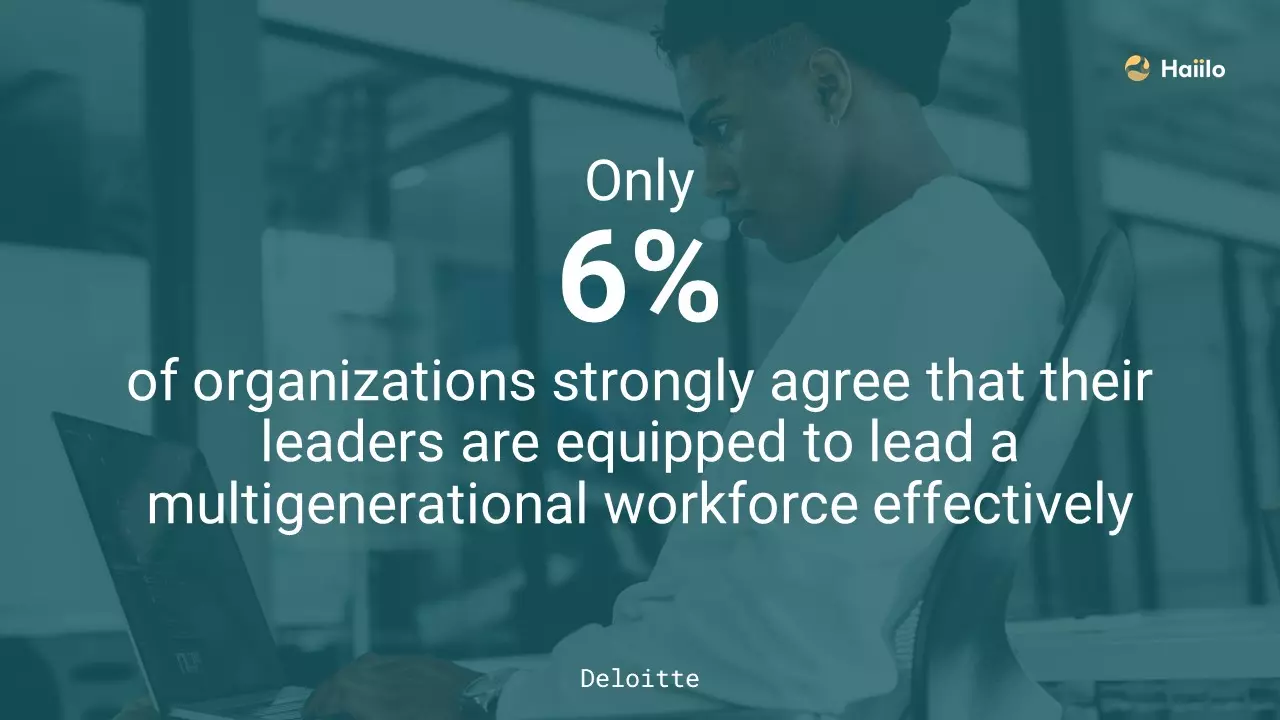
As good leadership is one of the most important prerequisites for creating a positive workplace culture, the way leaders communicate across generations in their organizations is crucial. When managing a multigenerational workforce, leaders must adapt their communication style to meet different preferences while still keeping messaging clear and consistent. A great leader strives to understand their workforce, not just as generations, but as individuals. By making an effort to better understand each group and support them, leaders can empower everyone to do their best work.
Moreover, leaders and managers play a central role in shaping employee motivation and overall experience. When communication is unclear or inconsistent, it can quickly lead to disengagement, especially in diverse teams where expectations differ. On the other hand, when leaders communicate transparently and frequently, they build trust and alignment across the organization.
In order to engage your multigenerational workforce, your leaders and managers have to be authentic, consistent and approachable to everyone. This includes actively listening, encouraging feedback, and creating space for open dialogue between teams.
💡 Also learn about how leaders can build trust in the workplace.
2. Workplace visibility and transparency
Even though visibility and transparency may not be such a popular topic among older generations, millennials and generation Z employees want and expect full transparency from their employers. They value access to information, clarity around decisions, and open communication about company direction.
As these two generations make up a large part of today’s workforce, it is not surprising that many companies are now investing in becoming more employee-centric by improving how information is shared. This includes clearer internal communication, better access to updates, and more opportunities for employees to stay informed and involved.
To get the best out of your employees, encourage positive behaviours and make their professional experience a rewarding one, clear and usable information is key. When employees understand what is happening and why, they are more likely to feel engaged and aligned with business goals.
On the other side, employers are often still struggling to achieve better workforce visibility themselves. Without the right tools or processes, it can be difficult to understand what employees need, how they feel, and where improvements are required. This creates gaps in communication and makes managing a multigenerational workforce more challenging.
Improving transparency and visibility on both sides helps create stronger alignment, better collaboration, and a more connected workplace overall.

Hence, many organizations still don’t have a way to better understand their multigenerational workforce, including their needs, preferences, and the way employees communicate and collaborate with each other. This lack of visibility makes managing a multigenerational workforce more complex and often leads to misalignment between teams and leadership.
💡 Learn about how our technology enables employers to gain valuable workforce insights.
3. Internal communications
Each different generation speaks its own ‘language’, responds differently to tone, type of content, medium and communication style. For example, some employees prefer structured messages and formal updates, while others expect shorter, more interactive communication. Getting your message across, reaching every employee, and gaining their attention requires a deep understanding of your workforce and their preferences.
Internal communicators may be the most affected departments when it comes to managing a multigenerational workforce and driving employees’ engagement and productivity. They need to balance multiple expectations while ensuring that communication remains clear, relevant, and consistent across the organisation.
The way different generations prefer to communicate varies highly, from baby boomers being used to email and plain text, to millennials and gen Z preferring different communications channels and more engaging internal content such as videos, webinars and podcasts. This makes it essential to diversify communication formats and avoid relying on just one channel.
📹 Watch on demand. How To Use Video To Communicate With Employees.
Unfortunately, many IC professionals still don’t have a way to easily segment their internal audiences, not just by their age, but also by their interests, job functions, locations and preferences. Without this level of segmentation, messages often remain too generic and fail to resonate.
Yet, this is the only way to deliver content that is localized and that best resonates with employees. When communication is tailored to the right audience, it becomes more relevant, engaging, and effective in supporting business goals.
4. Access to information
Check out this fact… Improving access to information is essential when managing a multigenerational workforce, as employees expect to find what they need quickly and easily, regardless of their role or location.
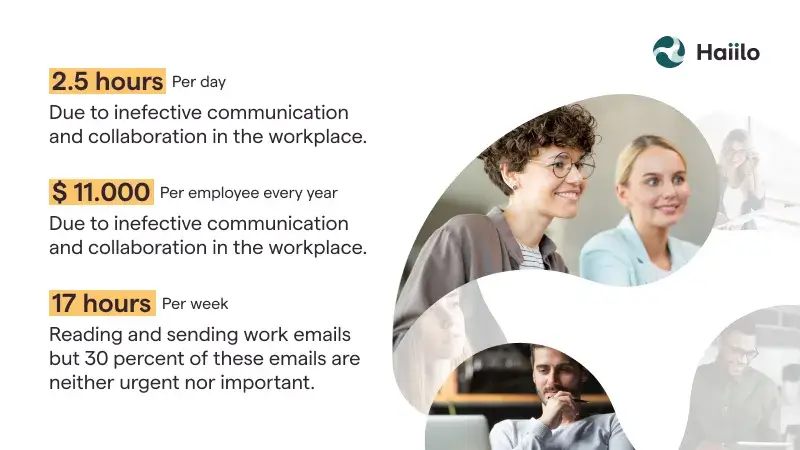
Shocking isn’t it?
Many organizations are not even aware of how much time their employees spend searching for information. This challenge becomes even more visible in remote or hybrid environments, where employees don’t have quick access to colleagues for answers and must rely on digital tools to find what they need.
📚 Also read: 14 IC Experts Share Their #1 Tip to Engage a Distributed Workforce.
Companies are trying to find ways to keep all generations in the workplace well informed about important company updates, safety guidelines, policies, and procedures. However, many still struggle to implement platforms that provide easy and universal access to this information. As a result, employees often feel frustrated, disconnected, and less engaged.
When managing a multigenerational workforce, access to information becomes even more critical. Different generations have different expectations around how quickly they can find information and how it should be presented.
While older generations may be more used to structured searches and navigating multiple systems, younger generations are highly digital. Therefore, they expect instant access to information, ideally within a few clicks or taps. On the other hand, employers want to make sure that they can easily reach the right employees at the right time with the right content, without overwhelming them.
5. Mobile access
The way employees access information in the workplace and perform their tasks has changed significantly in recent years. Organizations with a multigenerational workforce have started to recognise the importance of implementing mobile-friendly tools and technologies to drive productivity and enable interpersonal communication in the workplace.
Remote and in-office employees, non-wired deskless workers, and employees on the store, factory or hospital floors all rely on tools that allow them to access critical information and stay connected with their co-workers. Without mobile access, it becomes difficult to deliver consistent communication and maintain alignment across teams.
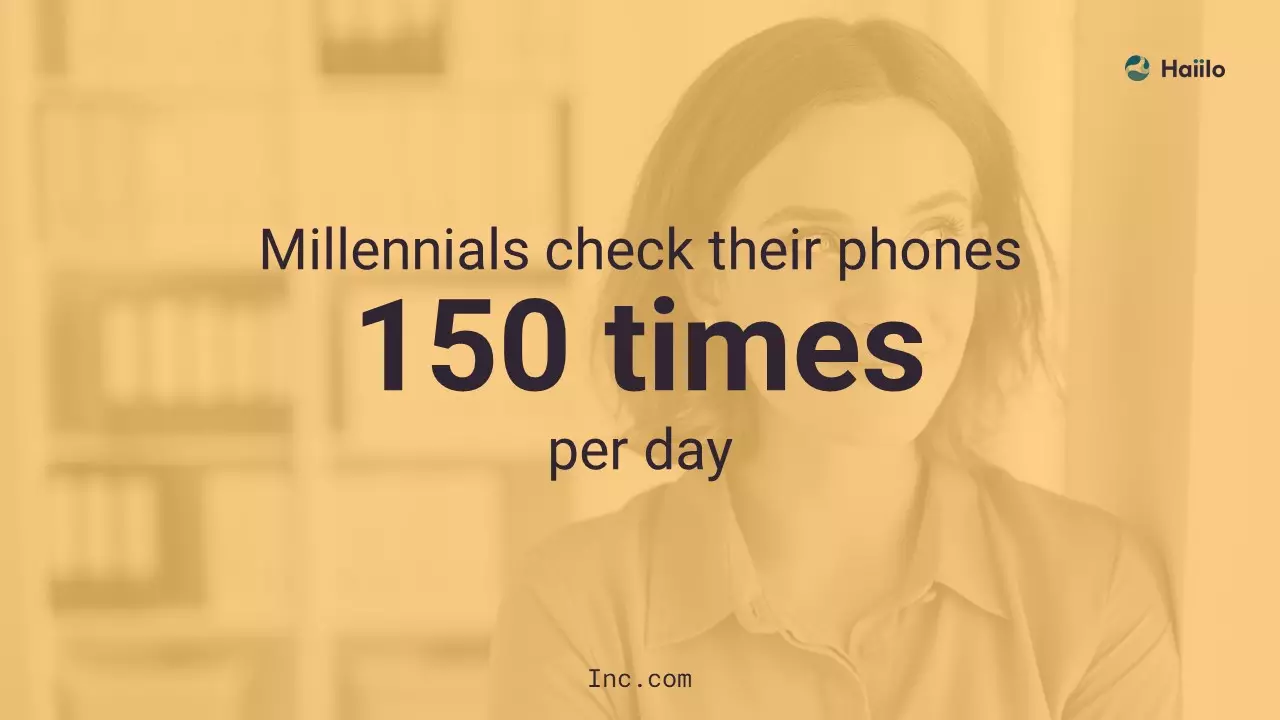
For many employees—especially younger, digitally native generations—mobile devices are their primary way of accessing information and staying connected. This means that communication and knowledge-sharing tools must be designed with mobile-first experiences in mind.
If employees cannot easily access updates, resources, or conversations on their phones, engagement will suffer. Providing simple, fast, and reliable mobile access is therefore essential when managing a multigenerational workforce and ensuring that everyone stays informed and connected.
6. Technology (Digital Employee Experience)
While providing technology solutions that enable employees to do their jobs was enough in the past, this is not the case any more. When managing a multigenerational workforce, expectations around technology are much higher, especially as younger employees enter the workplace with strong digital habits and expectations.
They want their organization’s tech stack to work in the cloud and be highly integrated. Disconnected tools slow people down and create frustration, particularly when employees need to switch between platforms to complete simple tasks. For example, instead of having multiple communication channels such as email, Slack, Yammer, Microsoft Teams, document sharing tools and others, companies are looking for ways to consolidate them into a single, seamless experience.
This shift is not only about convenience. It directly impacts productivity, communication quality, and overall employee satisfaction. The organizations that successfully simplify their digital ecosystems are much more likely to shape positive digital employee experience across all generations in the workplace.
7. Company goals and strategy
No matter their age, all employees want to have a clear understanding of your business strategy and ultimate business goals. Clarity around direction helps employees prioritise their work and understand how they contribute to something bigger.
On the other hand, every employer wants to have their entire workforce aligned with their mission, vision and core company values. This alignment becomes especially important when managing a multigenerational workforce, as different groups may interpret priorities and expectations differently.
When analyzing your multigenerational workforce, the scope and nature of employees’ work may be more important to understand than their age. Therefore, together with internal communications professionals, managers should work to create inspiring and motivating narratives that connect business strategy to everyday tasks.
Managers should also create designated communication channels where goals and strategy can be openly discussed. This encourages transparency, improves understanding, and helps employees feel more connected to the organisation’s direction.
8. Sense of purpose and share of voice
While older generations may not have a strong desire to continuously share their ideas, concerns and feedback, younger generations often expect to be heard and involved in decision-making processes.
This creates a new expectation for employers to support their share of voice and provide opportunities for employees to contribute. When people feel that their opinions matter, they are more likely to stay engaged and motivated.
Encouraging open dialogue, feedback, and collaboration helps organisations build a stronger sense of purpose across teams. It also creates an environment where knowledge flows more freely between generations.
When managing a multigenerational workforce, giving employees a voice is not just a cultural benefit. It is a practical way to improve engagement, strengthen collaboration, and make better decisions based on diverse perspectives.
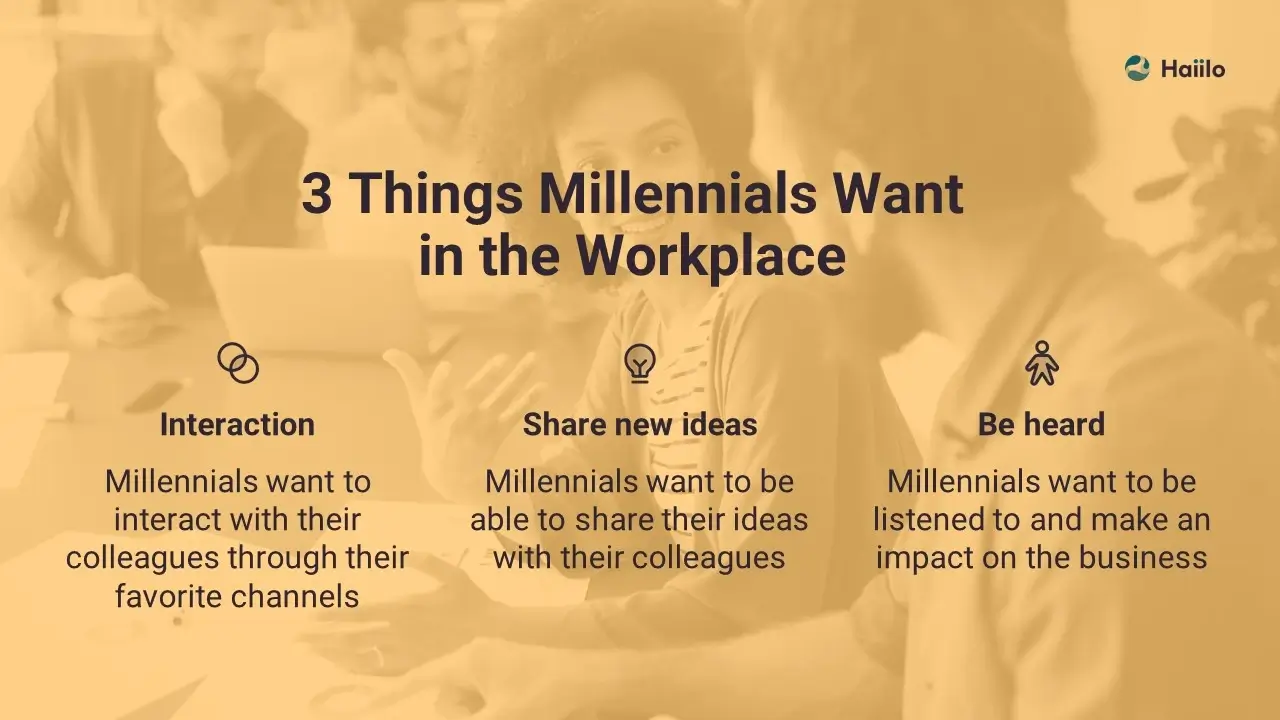
This is why we are seeing many organizations switching from traditional, one-way workplace communications to a more open, two-way communication approach. Instead of simply distributing information, companies are encouraging dialogue, feedback, and participation. The ability to join important company conversations and take part in decision making creates a much stronger sense of purpose among employees and leads to higher employee engagement.
When managing a multigenerational workforce, this shift becomes even more important. Different generations have different expectations around involvement and transparency. Creating opportunities for employees to contribute helps bridge those gaps and builds a more inclusive culture.
While older generations tend to stay with a company longer, younger generations often have higher expectations from their employer and are more likely to leave if their work isn’t personally fulfilling. This makes purpose, voice, and inclusion key factors in long-term retention.
9. Knowledge sharing
Unlike older generations, young people often expect knowledge to be shared openly and allowed to flow freely across teams. At the same time, experienced employees hold valuable institutional knowledge that is critical for long-term success.
With the rise of skill gaps in many organisations, knowledge workers are becoming valuable assets who can transfer expertise, insights, and best practices to others. Encouraging this exchange helps organisations preserve knowledge while also enabling continuous learning.
Those organisations that successfully combine specialist and general knowledge across teams gain a clear competitive advantage. This is why employers are actively looking for new ways to motivate employees from different generations to collaborate and share knowledge more effectively.
Creating the right environment—where sharing is encouraged, recognised, and supported with the right tools—is essential for managing a multigenerational workforce successfully.
📚 Read on Organizational Knowledge: Challenges and Best Practices.
10. Brand ambassadorship
Having brand ambassadors in the workplace creates a strong advantage and opportunity for employers. Employees who share company content and stories can help extend reach, build credibility, and strengthen the employer brand.
However, not all generations are equally comfortable with engaging in advocacy programs in their organizations. While older generations may be less familiar with this approach, many millennials and gen Z employees are more open to representing their employer on social media and other channels.
Despite this, there are still organizations that don’t understand how to enable their employees to become advocates or fail to provide clear guidance and support. Without structure, participation often remains low.
When managing a multigenerational workforce, it is important to create flexible advocacy programs that allow employees to participate in ways that suit their preferences. Providing clear guidelines, easy-to-use tools, and relevant content can help increase adoption across all generations.
Done right, employee ambassadorship not only boosts external visibility but also strengthens internal engagement, as employees feel more connected to the brand and its mission.
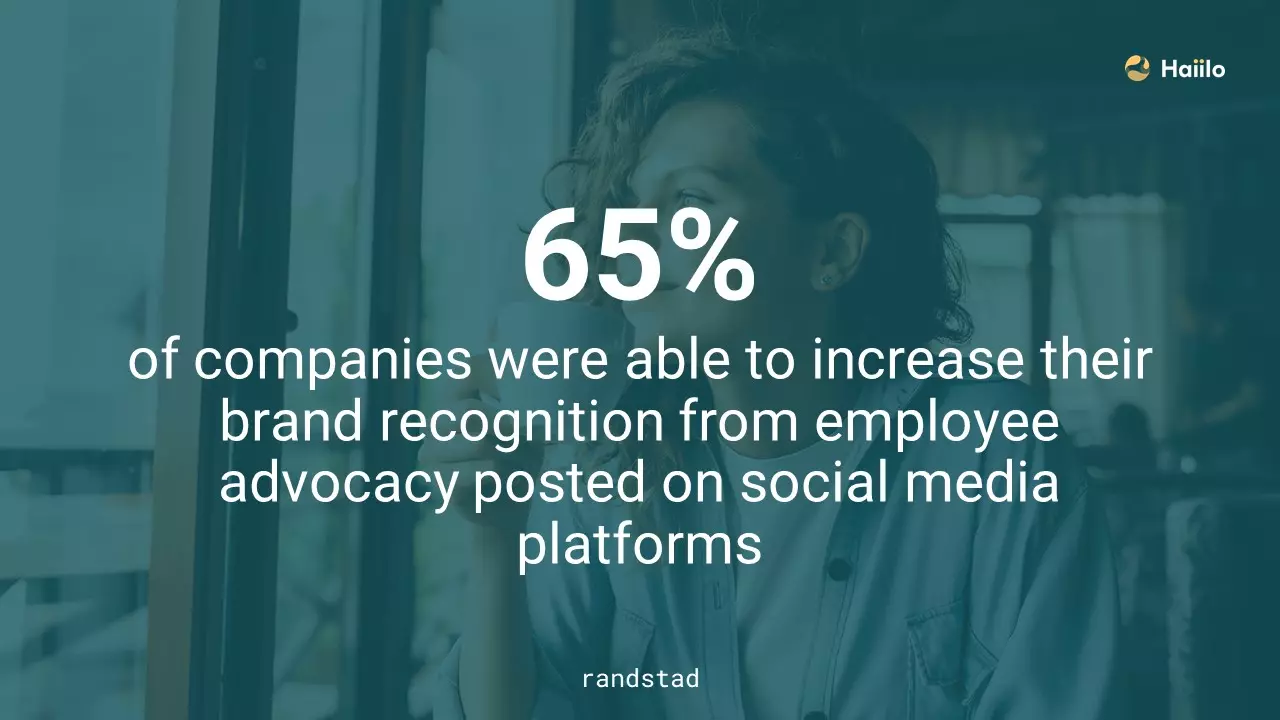
Besides just sharing inspirational stories and engaging content to employees internally, companies need to provide easy and intuitive ways for employees to share such information externally.
💡 Also check our Definitive Guide to Employee Advocacy.
Generational Differences Beyond Age
According to Deloitte, today’s workforce spans five generational categories, with generation Z, the United States’ largest demographic cohort at more than 90 million strong, about to join in.
The same research did a deep dive into the real differences between generations. Even though many companies are still focusing on age when trying to better understand their employees, there are many other workforce characteristics they need to consider.

Deloitte’s research suggests that the gap among different generations in terms of career expectations is getting smaller. Many traits once associated mainly with millennials—such as the desire to work for value-driven organisations, expectations around transparency, and the need for flexibility—are now shared across all generations.
“Despite the fact that many employees believe generational differences are growing, a closer look at attitudes toward work often shows more similarities than differences—especially around flexibility, career progression, and expectations from employers.” –Deloitte
Communication Differences Among Multigenerational Workforce
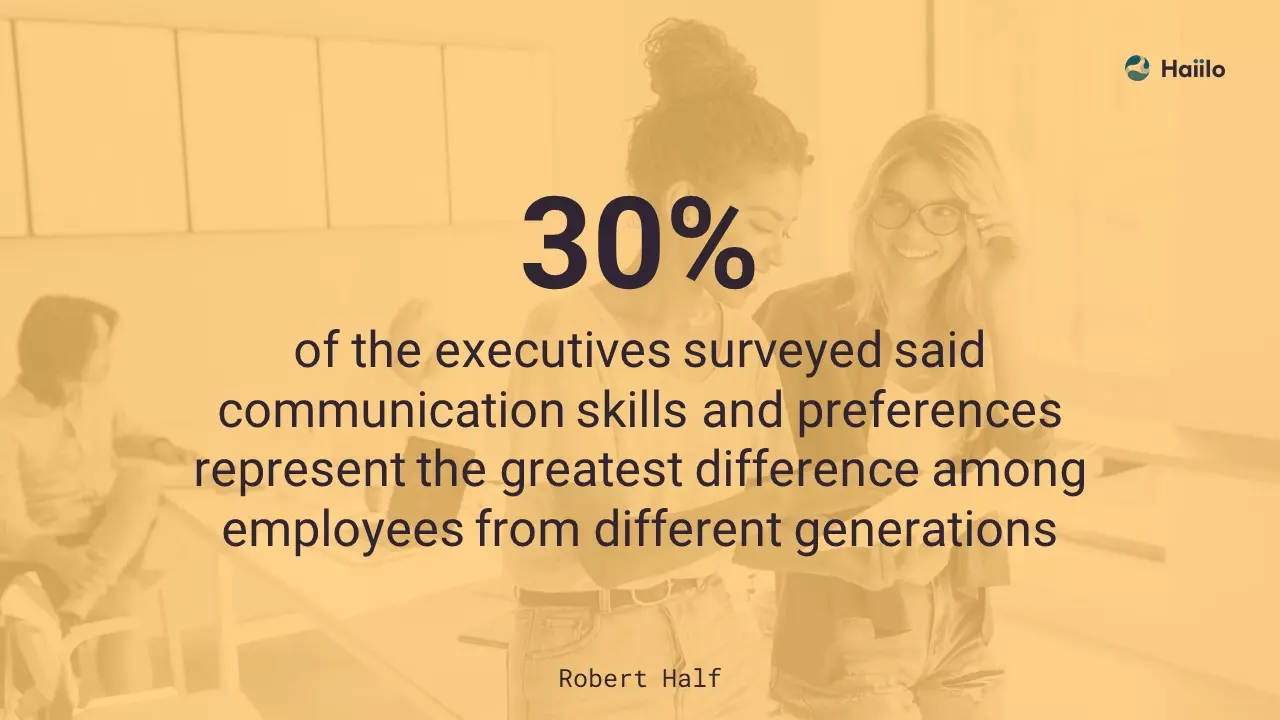
A study from Robert Half Management Resources revealed that communication is one of the most challenging aspects of managing a workplace.
When managing a multigenerational workforce, communication differences are often the most visible source of friction. Employees may interpret tone, channels, and response expectations in very different ways, which can lead to misunderstandings if not managed carefully.
Many executives highlight that communication styles and preferences vary significantly across generations. Some employees prefer structured, formal communication, while others expect more casual, fast-paced interactions. These differences affect everything from how feedback is given to how decisions are communicated.
To address this, organisations need to create communication strategies that balance clarity and flexibility. This means offering multiple channels, setting clear expectations, and encouraging open dialogue across teams.
Ultimately, improving communication is one of the most effective ways of managing a multigenerational workforce. When employees understand each other better, collaboration improves and workplace friction is reduced.
Here are a few interesting findings from the research:
- Baby Boomers prefer face-to-face or phone conversations in the workplace, as these formats allow for more direct and structured communication.
- Members of generation X typically rely on email or texting to communicate with their co-workers, valuing efficiency and clarity in written communication.
- Millennials who now make up a large part of the workforce prefer online means of communication. These mostly include modern employee communications solutions that mimic popular social media platforms, making interactions more intuitive and engaging.
- Similarly to millennials, generation Z employees prefer online communication and expect employers to share more engaging and easy-to-consume types of content such as video, short updates, and interactive formats.
- Millennials and gen Z employees are used to having personalized news feeds on social media. They build online communities, share insights on forums, and actively look for recommendations within their networks.
- Millennials appreciate authentic and fast communications; they value efficiency, transparency, and a digital-first approach.
- Generation Z appreciates transparent and visual communications; they value video content and mobile-first experiences that are quick to access and easy to consume.
Understanding these different audiences and having an effective internal communications strategy in place to communicate with different generations is essential in the modern workplace.
Your internal communications strategy should take into account multigenerational workforce communication styles. Different generations have different preferences around how they like to receive and consume information, but they also share common expectations such as clarity, relevance, and accessibility.
Today, employers need to recognise that, when it comes to workplace communications, there is no ‘one-size-fits-all’ approach. When managing a multigenerational workforce, tailoring communication becomes a key success factor. Corporate communications professionals need to clearly define employee personas to better understand behaviours, preferences, and needs.
This allows them to reach the right employees at the right time, via the right channels, with the right message that is relevant to their role and day-to-day work.
Here, emerging employee communications technology plays a big role. Rapid advancements in recent years are reshaping the way employees expect to be informed in the workplace. Employees now expect personalised, timely, and engaging communication experiences similar to what they are used to outside of work.
Therefore, if you rely only on untailored email newsletters to communicate with your employees, you risk creating a disconnect between employee expectations and your communication approach. This gap can lead to lower engagement, missed information, and reduced alignment across teams.
Empower Your Multigenerational Workforce with the Right Technology
If your workforce is multigenerational, and if you are looking for an intuitive, engaging and modern employee communications solution, schedule a Haiilo demo today.
Haiilo enables organizations across the world to gain a better visibility of how different generations communicate and collaborate with each other, helping organisations overcome common challenges associated with managing a multigenerational workforce.
Advanced, AI-powered technology empowers workplace communicators to better connect with employees and understand their engagement levels. It supports smarter communication decisions, improves content targeting, and helps organisations align employees with business goals.
By using the right technology, companies can ensure that the right information always reaches the right employees at the right time, improve internal alignment, and create a more connected and engaged workplace.
Curious to learn more? Check out our report on IC trends in 2023