
Internal marketing is just as important as external marketing when it comes to motivating and engaging employees in the company and their work. It shapes how people feel about the organisation and the role they play in it.
Don’t forget to market your company’s mission and vision to your most important allies – your employees. If they do not understand or believe in the story, they cannot represent it with confidence.
Internal marketing, when done right, ensures that your employees are providing high-quality service to your customers and actively supporting long-term growth. It helps people see how their daily work connects to wider business goals. One of the key components of internal marketing is having an effective internal communication framework in place that is clear, consistent, and two-way.
In internal marketing, employees are treated as “internal customers” who need to understand the company’s vision, values, and priorities inside out. This shared understanding helps them communicate the brand clearly and credibly to the outside world.
Not only should you embrace internal marketing to create a better communication flow and align employees with the company’s mission, you should invest in it to ensure your people can confidently and accurately share your company message with their own networks.
What Is Internal Marketing?
In a nutshell, internal marketing is the promotion of a company’s vision, goals, culture, and mission statement within the organization. It focuses on clarity, relevance, and consistency rather than one-off announcements.
The idea behind internal marketing is to earn employees’ enthusiasm by creating an emotional connection to the brand. This connection builds trust, commitment, and a stronger sense of ownership.
Internal marketing involves marketing tactics such as storytelling, leadership communication, and internal campaigns to help employees understand, believe in, and support the brand from the inside.

Employees that believe in the brand are more likely to feel motivated, perform better in their roles, and communicate their enthusiasm to clients. They are also more likely to become brand ambassadors on social media, sharing authentic experiences that strengthen credibility and reach.
Internal marketing has a tremendous impact on employee engagement and retention. When people feel informed, valued, and aligned with the company’s direction, they are more likely to stay committed over time.
The Key Components of Internal Marketing
Internal marketing includes key components such as:
- A clear strategy with specific, measurable goals that guide priorities and actions
- Effective internal communication that is consistent, accessible, and relevant
- A great onboarding experience that sets expectations and builds confidence early on
- Education on the company’s products and services so employees can speak about them with clarity
- Trust and transparent communication from leadership at all levels
- A great employee experience that supports people throughout their entire lifecycle
- A positive workplace culture that reinforces shared values and behaviours
- Professional development opportunities that support growth and progression
- Effective cross-departmental collaboration and teamwork to reduce silos
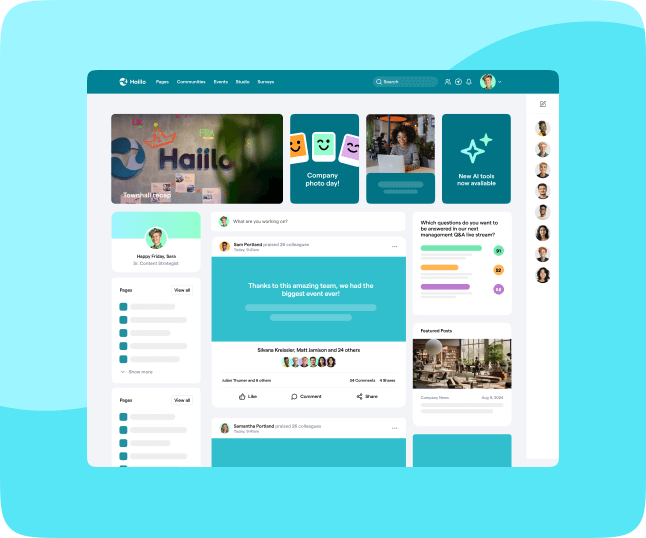
Leverage technology to efficiently do internal marketing
Haiilo helps you get your internal messages out faster
The Role of Internal Communication in Internal Marketing
When it comes to internal marketing, internal communication is the key. It is the foundation that connects strategy, culture, and everyday employee experience.
The way you communicate with your employees directly affects how they feel about the brand and how clearly they understand their role in it. This has a strong influence on their enthusiasm, trust, and employee engagement overall.
Before you get started with your internal marketing strategy, you may want to rethink your internal communication. Outdated, one-way messaging can quickly undermine even the best internal marketing efforts.
Keep in mind that the main internal communication challenges that most businesses face include:
- Changing top-down communication to open, inter-departmental communication that encourages dialogue
- Adapting the strategy in place based on employees’ feedback and real needs
- Reaching and engaging with all employees, including remote, frontline, and deskless workers
- Measuring the performance and impact of internal communication efforts over time

5 Ways Internal Marketing Boosts Employee Engagement
1. Internal Marketing Boosts Alignment with Company Goals
Internal marketing helps close the gap between brand promises and everyday employee actions.
When employees are well informed and engaged with brand guidelines and company goals, they are more likely to support the brand consistently in their daily work.
This can take place through access to relevant content, clear priorities, or structured ways of knowledge sharing in the company. Shared context reduces confusion and strengthens decision-making.
Internal marketing is about building a consistent company story and aligning HR, leadership, management, and corporate communications around the same narrative. When employees understand and believe in the story, they reinforce it in every interaction.
💡 Learn about how to align employees with your business strategic goals.
2. Internal Marketing Builds a Connection Between the People and What They Sell
As explained earlier, internal marketing helps build an emotional connection with the products and services employees work on. This connection plays a major role in how engaged they feel with their work.
When people understand why a product exists and who it helps, their work feels more meaningful. This motivation influences how they sell, market, support, or develop what they are responsible for.
One effective approach is telling stories about how your business started, why certain decisions were made, and what the company has learned along the way. Stories give context and make the brand more human.
Related: Sara McGuire on Why Visual Storytelling Drives Higher Engagement
3. Internal Marketing Builds Trust In the Workplace
Marketing a shared vision and breaking down silos helps employees feel trusted and included. Clear messaging and transparency reduce uncertainty and support confident decision-making.
According to the Edelman Trust Barometer, trust in employers depends heavily on open communication and credible leadership. Internal marketing supports this by making priorities clear and reinforcing consistent values across the organisation.

In the same Edelman research, it was also found that trust tends to decline from senior leadership to frontline roles. Executives consistently report higher levels of trust than managers and other employees, highlighting a clear trust gap inside many organisations.
Internal marketing helps close this gap by creating shared context, clarity, and consistency across all levels. It also allows you to boost knowledge sharing and avoid information silos</a>, which are harmful to prioritisation, motivation, and the ability to see the bigger picture.
When information is not shared, it can signal to employees that their input is not valued or welcome. Start by outlining or revisiting your internal communication strategy, then consider how technology can help you connect internal marketing more effectively with your employees.
📚Check out our article on Top Communication Barriers and learn how to master the art of communication.
4. Internal Marketing Boosts Employee Advocacy
Internal marketing can also turn your employees into active brand advocates. As customers increasingly look to social media to understand what brands stand for, the voice of the employee has real value.
When employees clearly understand the brand, trust the organisation, and feel confident sharing content, advocacy happens naturally. Internal marketing provides the structure, messaging, and support employees need to represent the company in a way that feels authentic and aligned.

Internal marketing can use stories to connect your workforce with your corporate vision and values. Stories add meaning and context, helping employees understand not just what the company does, but why it matters. This approach produces shareable content that feels authentic and relevant, expanding and nurturing employees’ own networks and online communication channels while maximising overall company outreach.
Internal Marketing in a Nutshell
Keep in mind the overall mission that you want to communicate and the role employees play in making it real. Clear priorities help people see how their work contributes to the bigger picture.
Approach internal marketing as a way to inform employees, bring them closer to the company, and ensure they can confidently represent the company vision to customers and partners.
Make sure to socialise and spread the effort across the organisation. Internal marketing works best when it is shared and reinforced by all departments, not owned by a single team. Everyone has a stake in making the message consistent and credible.
Frequently asked questions about internal marketing
What is internal marketing and how is it different from internal communication?
Internal marketing focuses on aligning employees with the company’s brand, goals, and values so they can live and promote them naturally. Internal communication plays a critical role, but internal marketing goes further. It uses campaigns, storytelling, and consistent messaging to build real buy-in, not just awareness. A social intranet helps turn everyday updates into a shared brand experience rather than one-way information.
How does internal marketing improve employee engagement?
Internal marketing helps employees understand why their work matters and how it connects to the bigger picture. When people feel informed and included, engagement increases. This is especially important as engagement levels remain a challenge globally, as highlighted in the 2026 Gallup State of the Global Workplace Report. Strong employee communications ensure messages are clear, relevant, and consistent across the organisation.
Can internal marketing support employee advocacy?
Yes. Internal marketing lays the foundation for employee advocacy by building trust, clarity, and confidence. Employees who understand the brand are more likely to share it authentically. This is how organisations turn employees into brand ambassadors and activate employee advocacy. It also aligns with trends such as the rise of micro-influencers inside organisations.
How do you measure the impact of internal marketing?
Measuring internal marketing means looking beyond reach to understand behaviour and outcomes. Engagement with content, participation in campaigns, and advocacy activity all matter. Using insights and analytics helps teams understand what resonates and where to improve. Over time, this supports broader goals such as improving company culture and strengthening long-term engagement, as explored in how internal communications boost employee engagement.