
LinkedIn marketing is a must-have for most marketers today. If you are in a B2B business, LinkedIn may be the most powerful marketing channel for you to leverage.
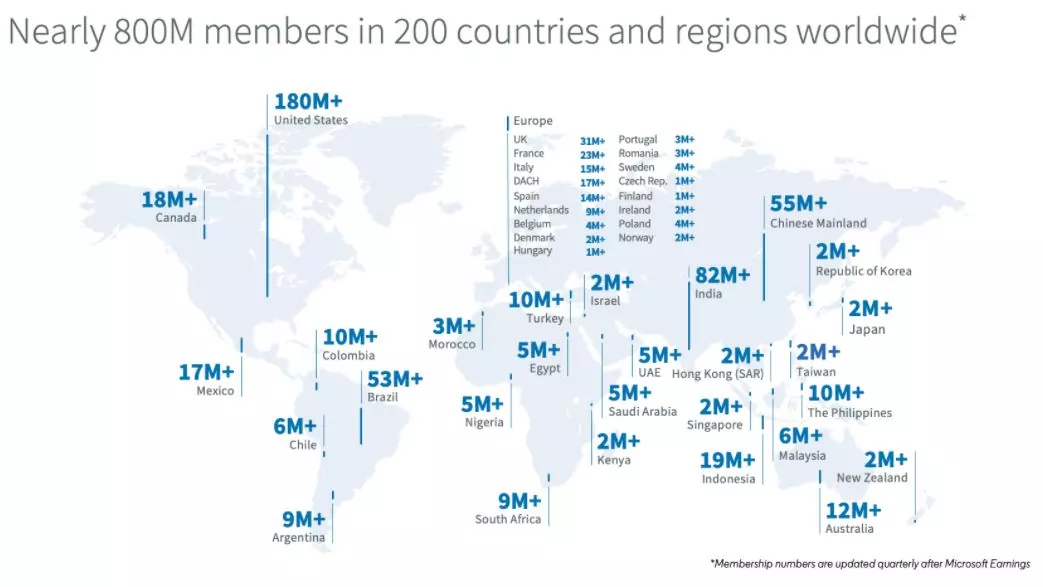
LinkedIn keeps growing in popularity year over year. Today, even though this is a strictly professional network, LinkedIn has over 800 million members in over 200 countries across the world.
What makes LinkedIn marketing for business especially powerful is not just the size of the network, but the intent behind it. People don’t log in to LinkedIn to scroll aimlessly. They log in to learn, connect, evaluate vendors, explore partnerships, and make career decisions. That professional mindset creates a completely different environment for marketers. The attention is more focused. The conversations are more relevant. And the outcomes are often more tangible.
💡 Before we move forward, check out what are the world’s leading social media channels!
Expand your LinkedIn marketing reach and credibility (while reducing your spend) with employee advocacy
The Power of LinkedIn Marketing
LinkedIn is, by far, the biggest professional network in the world. There is no other network that gathers so many professionals from various career fields, backgrounds, industries, geographic locations, and more.
But on top of its size, LinkedIn has other benefits that no other social network provides. This is why most marketers today use LinkedIn to boost their content and lead generation strategies.
💡 Before we dig deeper into the advantages of using LinkedIn for marketing, check out our guide for mastering content curation!
Diverse user base
One of the biggest benefits of LinkedIn is its diverse user base. Students are on LinkedIn, as well as senior executives. Men are on LinkedIn, as well as women.
According to research, 57% of LinkedIn users are men, and 43% are women. Furthermore, LinkedIn is used across the world, with 76% of LinkedIn’s users being outside the U.S.
While the U.S. is LinkedIn’s biggest market with 174M users, the network has gained traction around the world.
That being said, when using LinkedIn for marketing, you are not limited to a certain geo location or other parameters.
More importantly, LinkedIn marketing for business allows you to reach multiple stakeholders within the same organization. In B2B sales cycles, decisions are rarely made by one person. On LinkedIn, you can engage practitioners, managers, and executives simultaneously — each with tailored messaging that speaks to their priorities.
Credibility and trust
Compared to other social networks, LinkedIn is the most trusted social network in the world. Today, when we are bombarded with lots of information from various sources, people are struggling with information overload and information filtering.
LinkedIn, being a professional network, gains much more brand trust from its users.
To add, 73% of social media users at least somewhat agree that LinkedIn protects their privacy and data. Compare that with just 53% for Facebook.
For businesses, trust translates into action. When a company consistently shares insightful, relevant content, it positions itself as a credible voice in its industry. That credibility influences purchasing decisions long before a prospect fills out a form or books a demo. In that sense, LinkedIn marketing for business is not just about visibility — it’s about shaping perception.
Focused targeting
The biggest benefit of LinkedIn for marketers is the fact that LinkedIn ads offer more than 200 targeting characteristics. This is much more than any other social network can provide. If you know your buyer persona, you are likely to reach your audience on LinkedIn.
Furthermore, decision-makers in the B2B industry use LinkedIn. According to research, 4 out of 5 people on LinkedIn “drive business decisions”, and 33% of B2B decision makers use LinkedIn for research purchases.

💡 Related: 9 Social Media Marketing Trends to Watch in 2023
Increasing reach
LinkedIn marketing is growing in popularity because LinkedIn’s ads reach is also expanding every year. Research shows that LinkedIn’s ad reach grew by 25 million people in Q4 2020.
That’s a 3.5% increase from Q3.
But reach on LinkedIn is not just about numbers — it’s about relevance. Unlike many other platforms, LinkedIn allows businesses to put their message directly in front of professionals who are actively engaged in industry conversations. When you combine this with precise targeting, the result is not just broader reach, but smarter reach.
For example, a SaaS company launching a new HR solution can promote content specifically to HR Directors in companies with 500+ employees across selected regions. Instead of generating general awareness, LinkedIn marketing for business helps generate meaningful visibility among the people who are most likely to take action.
Organic reach is also worth mentioning. LinkedIn’s algorithm rewards content that drives conversation. Insightful posts, strong opinions backed by experience, short native videos, and document posts often perform particularly well. Businesses that invest in consistent, high-quality content can see steady audience growth without relying solely on paid campaigns.
Personal branding and social selling
LinkedIn is the most widely used network for social selling. Most B2B sales professionals use LinkedIn on a daily basis to prospect, generate high-quality leads, share content, build trust in their networks, and act as thought leaders in their field.
Building a personal brand on LinkedIn helps close more deals, and it helps organizations reach a wider audience while boosting trust with potential buyers.
In practice, this often starts with something simple: consistent presence. Sales teams who regularly comment on industry discussions, share relevant insights, or publish short posts about customer challenges position themselves as knowledgeable partners — not just sellers.
Over time, this builds familiarity. Prospects begin to recognize names, associate them with expertise, and engage more naturally. When a sales conversation eventually happens, it feels less like cold outreach and more like a continuation of an existing dialogue.
This is where LinkedIn marketing for business becomes particularly powerful. When employees actively participate in conversations, the company’s visibility expands beyond its corporate page. Every employee becomes a distribution channel, and every thoughtful interaction contributes to brand credibility.
💡 Related: Social Selling on LinkedIn: Do’s and Don’ts
Talent acquisition and employer branding
Besides sales and marketing, LinkedIn is also widely used for employer branding and talent acquisition. Building your employer brand on LinkedIn is crucial for attracting and recruiting talent.
Why?
Because 40 million people use LinkedIn to search for jobs each week, and 3 people are hired through LinkedIn every minute.
Candidates do their research. They look at company pages, employee profiles, recent posts, and leadership activity. They read comments. They evaluate tone. They form opinions long before they apply.
A well-maintained LinkedIn presence signals professionalism, transparency, and growth. Sharing company updates, employee stories, behind-the-scenes content, and thought leadership demonstrates what it is like to work with — and within — your organization.
In this sense, LinkedIn marketing for business supports not only customer acquisition but also talent attraction. The same credibility that influences buyers influences potential hires.
Let’s take a look into 10 ways to optimize your LinkedIn marketing strategy!
10 LinkedIn Marketing Hacks to Implement
It is inevitable that your LinkedIn marketing strategy can become one of the most powerful tactics in your marketing mix. There is no other platform — aside from costly content syndication providers — that enables you to precisely target specific job titles and departments within defined organizations, located in specific countries. And you can refine it even further.
However, success requires balance. It is important to grow your LinkedIn audience both organically and with paid ads. Organic content builds credibility and trust. Paid campaigns amplify reach and accelerate results. Together, they create a sustainable LinkedIn marketing for business strategy.
So let’s take a look at some best LinkedIn marketing practices.
💡 Related: 8 Steps to Implement a Killer Social Media Marketing Strategy
1. Optimize your profile
Before everything else, it is important to optimize your company’s LinkedIn Page with the right content. Use relevant images, clear messaging, links, highlights, and your organization’s value proposition in the main description.
According to research, companies with a complete, active LinkedIn Page see 5x more page views. They also get 7x more impressions per follower and 11x more clicks per follower.
First impressions matter. When someone clicks on your page after seeing an ad or a post, they expect clarity. What do you do? Who do you serve? Why should they care? A well-structured page answers those questions immediately.
Furthermore, many organizations take a strategic approach to optimizing their employees’ LinkedIn profiles. This is particularly true for sales and marketing professionals who are often the mirror of their company’s brand and reputation. Consistent messaging across employee profiles reinforces positioning and strengthens overall LinkedIn marketing for business efforts.
📹 Also, take a look at our online session: The Marketing ROI Battle.
2. Post regularly and at the right times
While some social networks, such as Twitter, prefer constant engagement, this is not the case for LinkedIn.
LinkedIn marketing requires consistency, creativity, and originality.
You don’t need to post every day to succeed with LinkedIn marketing for business. In fact, quality matters far more than quantity. A thoughtful, well-structured post once a week will often outperform daily posts that add little value.
However, you can’t let your LinkedIn Company Page sit idle and expect results. Consistency signals credibility. When prospects visit your page and see recent activity — insights, customer stories, product updates, event announcements — it reinforces that your business is active and relevant.
Research shows that the best day to post is Wednesday for B2B brands, or Monday and Wednesday for B2C brands. That said, timing should always be tested against your own audience behavior. Review your analytics regularly and identify patterns in engagement. LinkedIn marketing for business works best when it’s data-informed, not based solely on general benchmarks.
3. Create a product page
If you are in the B2B software industry, you may have heard of LinkedIn Product Pages. Today, LinkedIn has more than 10,000 B2B software Product Pages. More and more decision-makers use them to find, compare, and evaluate relevant software solutions.
Product Pages are a relatively new LinkedIn feature that launched in 2020. You can use them to highlight specific products with ratings and reviews, generate leads, and incorporate custom call-to-action buttons.
For LinkedIn marketing for business, Product Pages add another layer of credibility. They allow prospects to see customer feedback, explore key features, and understand use cases — all without leaving the platform. If your target audience is actively researching solutions, having a strong Product Page can influence their shortlist early in the buying process.
4. Use it to promote your events
One of the best things about LinkedIn marketing for business is the platform’s built-in event functionality. If you regularly organize in-person events, webinars, or online sessions, you can leverage LinkedIn Events to invite your followers and expand your reach organically.
Setting up an event is straightforward. Once created, attendees can engage, share the event with their networks, and receive reminders. This built-in amplification increases visibility without requiring additional tools.
LinkedIn went even further by offering a complete event experience with LinkedIn Live for streaming. This allows businesses to host, promote, and stream directly within the same ecosystem — creating a seamless experience for attendees.
💡 Related: 5 Social Media Marketing Tactics to Increase Brand Awareness
5. Try live streaming
LinkedIn Live launched in February 2019 and has grown rapidly since then. LinkedIn Live streams’ popularity increased by 437% in 2020. Furthermore, the number of LinkedIn Live streams increased 89% from March to June alone.
Some organizations have even replaced existing streaming, video conferencing, and webinar solutions with LinkedIn Live. If you are already using LinkedIn marketing for business to promote events, live streaming directly to your LinkedIn audience can significantly increase engagement.
Live sessions feel more immediate and interactive than traditional webinars. Viewers can comment in real time, ask questions, and engage directly with hosts. That level of interaction builds stronger connections with your audience.
One limitation is that LinkedIn Live is not open to everyone. You must apply for access before using the feature.
6. Engage further with the newsletter
LinkedIn Newsletters are another effective tool for LinkedIn marketing for business. They allow you to build a recurring content stream that followers can subscribe to directly on the platform.
Once someone subscribes, they receive notifications every time you publish a new edition. This creates a reliable distribution channel without relying solely on the algorithm.
LinkedIn also offers an intuitive newsletter builder, making it easy to create professional-looking editions. For businesses that invest in thought leadership, newsletters are a strong way to nurture audiences over time and stay top of mind.
7. Invite people to follow your page
Your LinkedIn Page admins can invite their networks to follow your page to increase visibility and brand awareness.
For LinkedIn marketing for business, this is one of the simplest growth tactics — yet often overlooked. Encourage social media managers, sales professionals, and leadership team members to invite relevant connections who are likely to be genuinely interested in your content.
The higher your invitation acceptance rate, the more invitations LinkedIn allows you to send. A targeted approach works better than sending mass invites without context.
8. Use images and videos in your posts
LinkedIn posts with images get 2x higher engagement than posts without images. Larger images perform even better, with 38% higher click-through rates than smaller visuals.
Video is the most re-shared form of content on LinkedIn — users are 20x more likely to re-share a video post.
For LinkedIn marketing for business, this means your content strategy should go beyond text-only updates. Short explainer videos, behind-the-scenes clips, customer testimonials, or expert insights often drive stronger engagement and broader distribution.
Visual content captures attention quickly in busy feeds. When done well, it increases both reach and recall.
💡 Related: What People Like to Share on Social Media [INFOGRAPHIC]
9. Test different ad types and targeting options
LinkedIn offers a wide range of ad types and targeting options. It is important to test them and understand which combinations work best based on your goals and audience.
For example, image ads may be effective for boosting brand awareness, while lead generation ads may perform better when promoting downloadable content or event registrations.
On the targeting side, LinkedIn marketing for business allows you to target specific companies, job titles, industries, or even upload account lists. Testing different audience segments and creative formats helps you optimize performance over time.
Data should guide decisions. Monitor click-through rates, cost per lead, and conversion rates regularly. Small adjustments can significantly improve campaign outcomes.
10. Engage your employees
One of the most untapped LinkedIn marketing tactics is employee advocacy. Employees are 14x more likely to share content from their employers than other types of content on LinkedIn.
This is not surprising — employees care about the success of their organization.
💡 Read: How Otis built a global employee advocacy culture
For LinkedIn marketing for business, employee advocacy extends reach far beyond your corporate page. Every employee has their own network, often filled with peers, clients, and industry professionals. When they share company content, it feels more authentic and personal than branded posts.
However, successful advocacy requires structure. Organizations need clear guidelines, relevant content, and tools that make sharing simple. A comprehensive ambassadorship program ensures consistency while empowering employees to add their own voice.
💡 Also learn How to Create a Brand Ambassador Program
Top 12 Reasons To Improve Your LinkedIn Marketing Strategy
- LinkedIn is home to over 58 million companies
- Brands have seen a 33% increase in purchase intent resulting from ad exposure on LinkedIn
- An ad on LinkedIn can reach 14.6% of the world’s population
- More than half (55%) of decision makers use thought leadership to determine which organization to work with
- Of all B2B leads coming from social media, LinkedIn is responsible for 80%
- 40% of B2B marketers surveyed indicated LinkedIn as the most effective channel for driving high-quality leads
- 30% of a company’s engagement on LinkedIn comes from employees
- Employees are 14x more likely to share content from their employers than other types of content
- Marketers see up to 2x higher conversion rates on LinkedIn
- LinkedIn drives more than half of all social traffic to B2B sites and blogs
- 4 out of 5 people on LinkedIn “drive business decisions”
- 77% of content marketers say LinkedIn produces the best organic results
Boost Your LinkedIn Marketing Strategy Today
As discussed, employee advocacy plays a powerful role in LinkedIn marketing for business. Research consistently shows that employees can reach significantly wider audiences than corporate pages alone.
Employees are trusted more than brands and CEOs. Involving them strategically strengthens your visibility and credibility.
Beyond allowing social media in the workplace and creating a formal advocacy program, organizations need the right technology to support employees. Clear guidelines and a defined social media policy are essential.
Employees should be able to distribute company content on LinkedIn in seconds. At the same time, organizations should measure performance and connect advocacy efforts to business outcomes such as lead generation, revenue, and retention.
Haiilo’s Publishing Studio provides a central hub for creating and distributing content at scale. Employees can access approved posts and share them quickly.
Our Content Booster integrates with tools such as Yammer, Slack, Teams, and more — making content distribution seamless. With Workforce Insights, you gain analytics that connect engagement data to measurable impact.
Schedule a Haiilo demo to see how organizations strengthen their LinkedIn marketing for business with employee advocacy.
Frequently Asked Questions about LinkedIn Marketing for Business
1. Why is LinkedIn marketing for business especially effective for B2B companies?
LinkedIn is built for professionals, which makes it naturally suited for B2B marketing. Decision-makers actively use the platform to research vendors, follow industry trends, and evaluate potential partners. Unlike other social networks, users are in a business mindset when they log in. That means your content reaches people who are more likely to engage with it from a professional perspective — not just scroll past it. If your target audience includes managers, directors, or executives, LinkedIn gives you direct access to them.
2. How often should a business post on LinkedIn?
Consistency matters more than volume. For most companies, posting once or twice a week is enough to maintain visibility and engagement. The key is to share content that’s relevant and useful — industry insights, customer stories, expert opinions, or practical advice. Monitor your analytics to see what resonates with your audience and adjust from there. LinkedIn marketing for business works best when it’s steady and intentional, not random or overly frequent.
3. Is LinkedIn marketing only about paid ads?
Not at all. While LinkedIn Ads offer powerful targeting options, organic content plays an equally important role. Company updates, thought leadership posts, employee advocacy, and LinkedIn Newsletters can all drive strong results without paid promotion. A balanced approach — combining organic content with strategic ad campaigns — usually delivers the best outcomes.
4. How can small businesses succeed with LinkedIn marketing?
Small businesses can compete effectively by focusing on niche expertise. Share insights that highlight your experience, engage in conversations within your industry, and encourage employees to participate. Even with a limited budget, LinkedIn marketing for business can generate meaningful visibility if your messaging is clear and your audience targeting is precise.