
What makes a good communication strategy? What are some of the biggest communication barriers, and how can you overcome them? These are just a few questions we will be covering in this blog. We will also look at why a clear customer communication strategy matters when teams need to share the right message, at the right time, with the right audience.
The impact of communication on the overall business success is bigger than ever before. It impacts the organization’s reputation, employees’ engagement, and overall business continuity. When communication is unclear, people waste time, messages get missed, and teams lose alignment. When it is planned well, employees understand priorities, leaders build trust, and customers get a more consistent experience.
What is a Communication Strategy
Simply put, a communication strategy is a plan for delivering a message to your previously identified target audience. Every proper communication plan should clearly identify three crucial factors that directly impact the success of the strategy. These include the audience, the message, and the channels via which the message should be delivered. A strong customer communication strategy also defines why the message matters, who owns it, and how success will be measured.
However, building and maintaining a successful communication strategy takes much more than that. It should help teams stay aligned, avoid mixed messages, and communicate in a way people can understand and act on. Later in this blog, we will dig deeper into the set of questions every good communication strategy should answer.
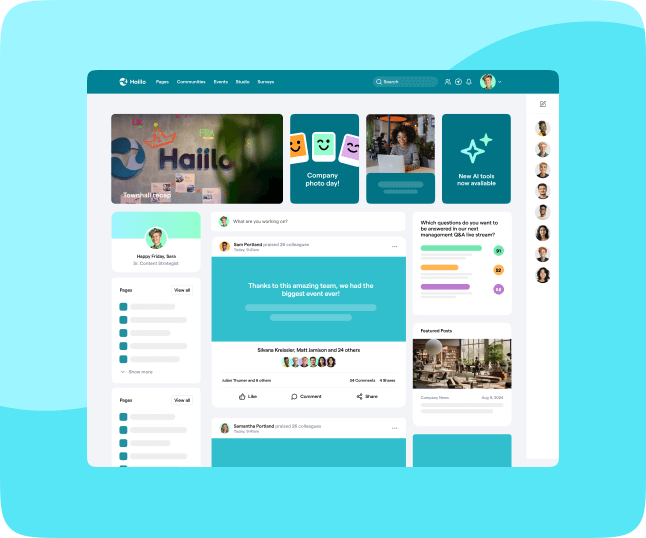
Build a successful communication strategy using our employee communications platform
The Difference Between Internal and External Communication Strategy
There are many different types of communication strategies. However, the most common categorization is by internal communication strategy and external communication strategy. Both are important, but they serve different audiences and business goals. A strong customer communication strategy often depends on both working together. Employees need clear internal messages before they can deliver a consistent experience to customers, partners, candidates, and the wider market.
- Internal communication – information and ideas exchanged within the organization itself. In internal communication messages can be exchanged via personal contact, telephone, e-mail, intranet, or modern employee communication platforms. Its purpose is to keep employees informed, aligned, and able to act on shared priorities.
- External communication – exchange of information both within the organization and outside the organization. The main goal of external comms is to inform the outside world of an important message about the work and quality of the organization. This can include customers, prospects, investors, media, partners, and future employees.
📚Related: 12 reasons why internal and external communication go hand in hand.
Why Every Organization Should Have a Clear Communication Strategy?
Organizational communication directly impacts business success. This is particularly true today when people may not be as physically connected as they used to be. Remote work is forcing organizations to adapt to digital means of communication, better leverage asynchronous communication, and make communications departments their most important strategic business partners. A clear strategy helps teams know what to say, when to say it, and which channels to use. It also reduces confusion when priorities change quickly.
When it comes to external communication, its main goal is to position an organization in a way that’s attractive to the buyer and other stakeholders. A strong customer communication strategy supports this by keeping messages consistent across sales, marketing, support, leadership, and employer branding. Without it, customers may hear different answers from different teams. With it, every touchpoint feels more connected, useful, and trustworthy.
When it comes to external communication, its main goal is to position an organization in a way that’s attractive to the buyer and other stakeholders. A clear customer communication strategy also helps every team share the same message across sales, marketing, customer support, leadership, and public-facing channels. This makes the customer experience more consistent and easier to trust.
Internal communication, however, can be much more complex and have many different goals such as:
- Improve employee engagement
- Align team members with strategic business goals
- Drive successful change management and digital transformation projects
- Keep employees safe, informed, and secure
- Facilitate knowledge sharing
- Reduce employee turnover and much more
To stress the importance of workplace communication, we have prepared for you a few powerful statistics:
- 70% of people say they have personally wasted time because of communication issues in their business
- 55% of people have missed messages because of communication issues at work
- 53% of people have experienced burnout, stress, and fatigue because of communication issues
- Only 14% of workers feel entirely aligned with their organization’s goals
- Employee productivity depends on clarity, and 55% of workers lose between 30 minutes and two hours each day dealing with ineffective communication
- 28% of people have had a poor customer experience because of communication issues in a business
- Only 29% of employees are very satisfied with the quality and amount of internal communication they receive
- 66% of people say they have stopped dealing with a company and moved to a competitor because of poor internal business communication and customer communication
Furthermore, another recent study of employees and Chief Communications Officers found that communication gaps can affect engagement, loyalty, and alignment. When communication is not clear enough:
- 71% of employees are not very satisfied with the quality of internal communications
- 54% of employees do not feel very familiar with their organization’s goals and vision
- 68% of employees are not well-informed about their company’s financial performance
- 61% of employees considering a job change cite poor internal communication as a key factor
- Employees who receive enough information from their employer are 35% more likely to stay in their jobs for the next year
📚Read on: Top 5 Communication Skills and How to Improve Them
6 Steps to Create and Manage a Successful Internal Communication Strategy
What are the recommended steps for a successful communication strategy in your organization? The process starts with understanding who you are trying to reach, what they need to know, and how your messages support wider business goals. The same thinking also applies to a customer communication strategy, where clarity and relevance shape every interaction.
1. Understand your audience
One of the most important prerequisites for every successful communication strategy is identifying and understanding your audience. Only then you can decide about the message, the tone of voice, and the communication channels to be used.
Most workplaces today are dealing with multigenerational workforces. Because of remote and hybrid work, many companies are also multicultural – employees can work from anywhere in the world. This means people may have different expectations, time zones, languages, and preferred ways of receiving information.
Also, the nature of your employees’ work may significantly impact the way you communicate with them. While corporate workers may be easier to reach, most frontline workers depend on mobile means of communication.
Hence, understanding various audiences is the first and most important step when creating a communication strategy. Start by mapping your main employee groups, their needs, and the channels they actually use. This will make your messages easier to find, understand, and act on.
📚Read on: Crisis Communication — How to Communicate Effectively with Your Employees
2. Make communication relevant to everyone
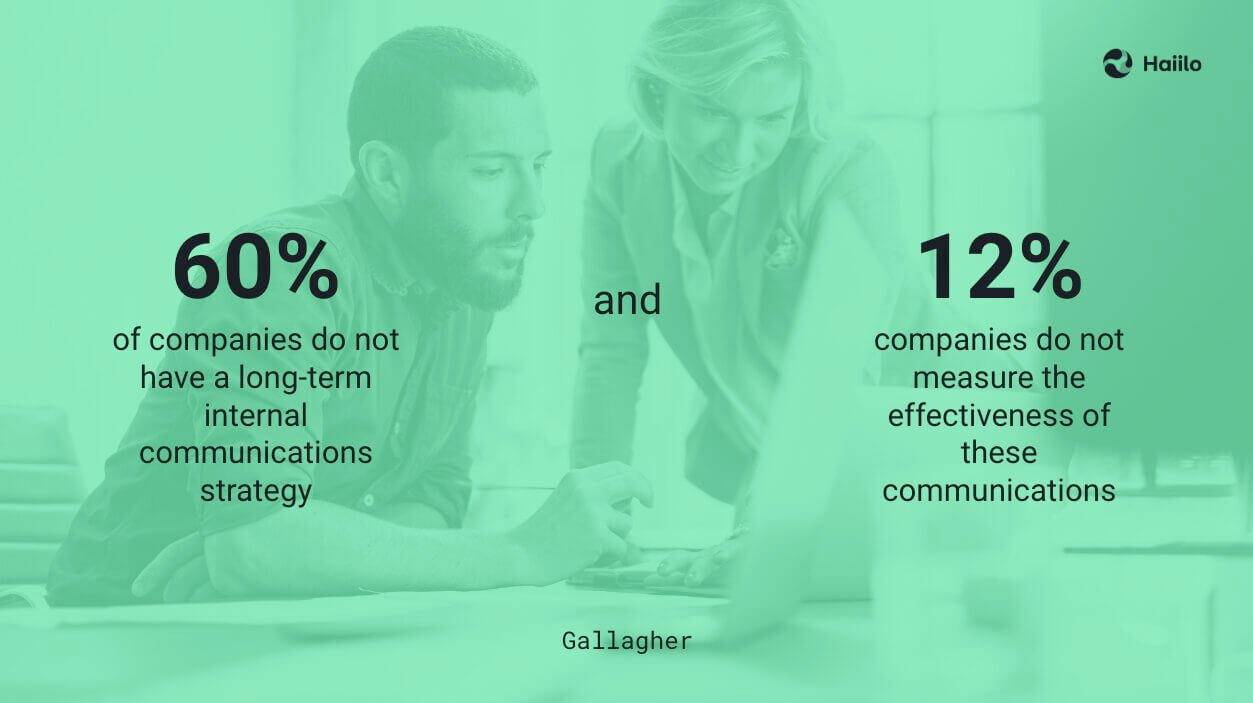
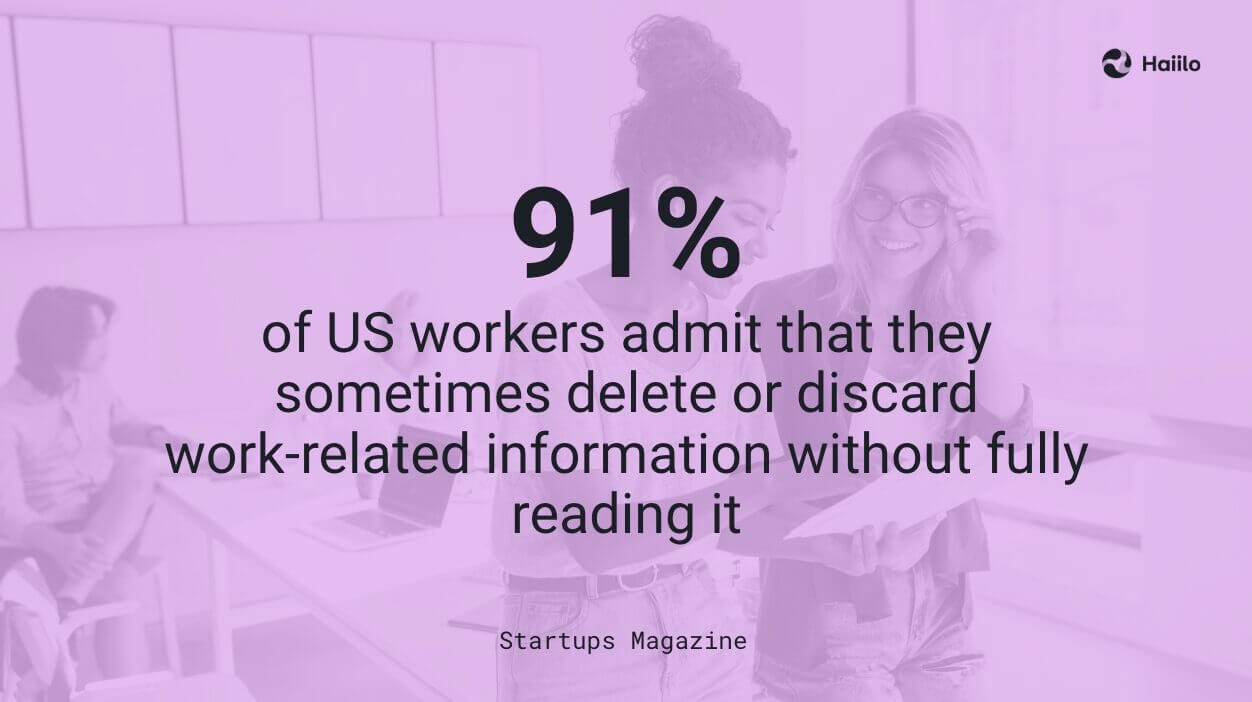
Earlier, we saw that many employees have a feeling that they are missing important company information. This is happening because of the extensive information overload employees are facing today.
It is the organization’s responsibility to make information relevant to the audience. They need to be able to reach the right employees at the right time with the right message. Relevance is what turns communication from noise into something people want to read.
Unfortunately, many organizations still don’t have a way to properly segment their audiences and target the right people with the right message. As a consequence, employees ignore these messages and often miss critical information. This can lead to confusion, slower decisions, and lower trust in company updates.
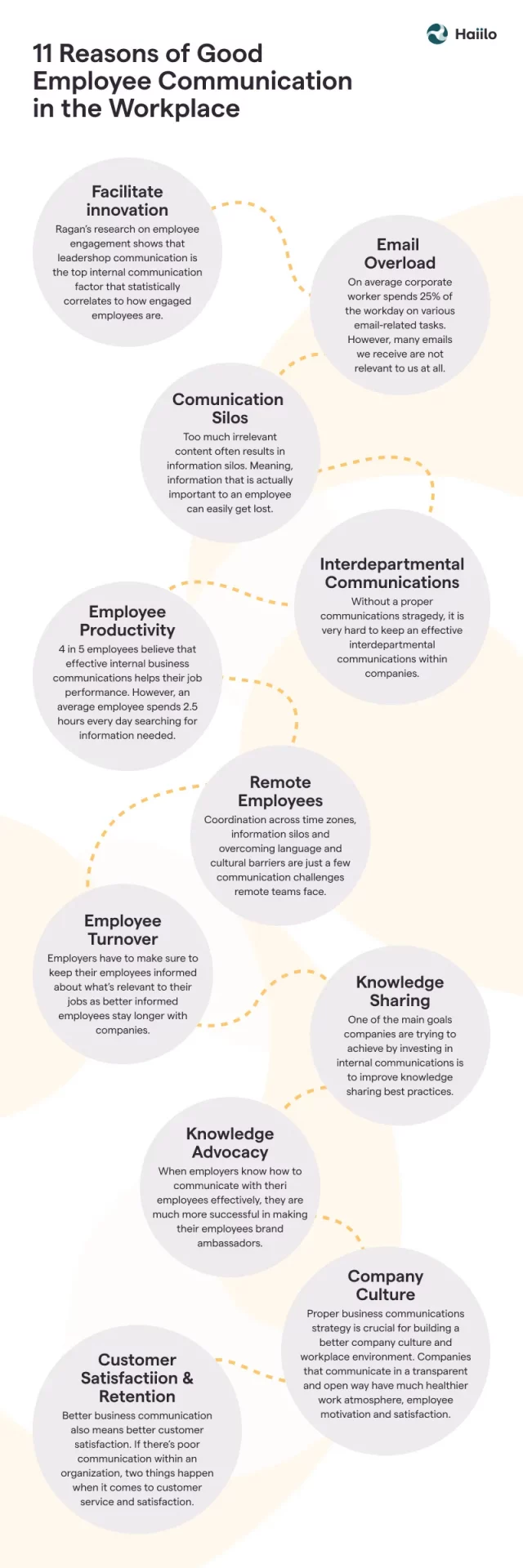
📚Read on: 11 Reasons Why Business Communication is Critical to Your Company’s Success
3. Make information easily accessible while avoiding information overload
The times when people were spending hours finding information are dead. Today, people expect information to find them – in both their private and professional lives.
70% of people say they have personally wasted time because of communication issues in their business.
Furthermore, 55% of people have missed messages because of communication issues at work, and 53% of people have experienced burnout, stress, and fatigue because of communication issues.
Having a central place with all the company information is not enough. Organizations are now required to deliver the right information at the right time! This means making updates easy to search, easy to understand, and easy to act on without adding more noise.
4. Ask for frequent feedback
To make your communication strategy work, you need to involve your employees and encourage their share of voice. Their feedback is the best tool for delivering continuous advancements and keeping high engagement levels. It also helps you understand whether messages are clear, useful, and reaching the right people.
More than ever before, HR professionals, leaders, and managers are distributing frequent surveys and collecting their people’s thoughts, opinions, concerns, and recommendations for improvement. These insights can show where communication is working and where employees still feel left out.
It is crucial, however, to act on feedback. The worst thing you can do is ask for feedback and never act on it. This way, you will never be able to build trust in the workplace. Close the loop by sharing what you heard, what will change, and what cannot change yet.
Luckily, there are employee engagement solutions that offer powerful employee insights and provide actionable recommendations for improvements. This makes it easier to adjust your internal communication plan and support a stronger customer communication strategy from the inside out.
📚 Learn about Top Communication Barriers and master the art of communication in today’s digital age.
5. Be data-driven
We have already learned that the business impact of a proper communication strategy can be significant. Yet, many communications professionals still can’t measure and track the success of their campaigns and initiatives. Without data, it is hard to know which messages employees read, which channels perform best, and where important updates get lost.
Every advancement in your organization’s communication strategy should have its goal and purpose. Whether it is to improve employee engagement, increase employee safety, improve productivity, boost employee experience, or reduce turnover, you should tie those initiatives to the ultimate KPIs you are trying to achieve! Start with simple measures such as reach, clicks, reactions, comments, survey results, and channel performance.
📚 Also, check out our recent guide and best practices for team communication!
6. Leverage AI
Artificial intelligence is becoming more and more popular among communications professionals.
In internal communications, AI and machine learning can be leveraged to deliver the right content in front of the right people at the right time, and through the right channel, resulting in a much bigger readership and engagement with future communications. AI can also help communicators reduce manual work, improve search, and make content easier to personalize for different employee groups.
For example, Haiilo’s social intranet leverages AI to make information search seamless for employees. When employees have a specific work-related question, they get an answer instead of a list of different links and resources to work with. This saves time and helps employees find the information they need without asking the same questions again.
Next, AI can identify patterns and provide insights from data collected from employee feedback, employee surveys, and other interactions within internal social platforms. This information is valuable for understanding employee sentiment, preferences, and concerns, and can enable employers to better tailor their communications and come up with new employee experience initiatives.
Last but not least, generative AI can help communicators create content faster. It can support first drafts, summaries, headlines, translations, and message variations. Still, it should not replace human judgement. The best results come when communicators use AI to save time, then refine the message so it feels clear, accurate, and human.
Communication Strategy Template
Who is your audience, and what are their characteristics?
Think about who you want to target with your message to achieve the biggest possible impact. Be specific about what each group needs, where they work, and how they prefer to receive information. This is especially useful when building a customer communication strategy that needs to serve different audiences without creating mixed messages.
- [Persona 1]
- Characteristics such as age, gender, culture, nature of work, information needs, and favorite communications channels.
- [Persona 2]
- Characteristics such as age, gender, culture, nature of work, information needs, and favorite communications channels.
- [Persona 3]
- Characteristics such as age, gender, culture, nature of work, information needs, and favorite communications channels.
What are the purpose and the desired outcomes?
What are you trying to achieve? What is the ultimate goal of this communications campaign/initiative? Define the business reason behind the message, the action you want people to take, and the result that would make the campaign successful.
- [Objective 1]
- Description objective 1, including the desired action or behavior change
- [Objective 2]
- Description objective 2, including the audience it supports
- [Objective 3]
- Description objective 3, including how it connects to wider business goals
How should the message be delivered?
What channels will you be using? Is it social media, is it your company’s intranet, email, newsletter, or some other communications channels? Choose channels based on audience behavior, message urgency, and the level of interaction you need.
- [Channel 1]
- Description channel 1, including why it fits this audience
- [Channel 2]
- Description channel 2, including when and how often it will be used
- [Channel 3]
- Description channel 3, including how it supports or reinforces the message
How will you measure results?
Which metric will you use to measure the results? Is it reach, open rate, response rate, readership, engagement, or something else? Pick metrics that match your objective, not just the easiest numbers to collect. For example, awareness may need reach, while behavior change may need survey responses, feedback, or action taken.
- [KPI 1]
- Description KPI 1, including how it will be tracked
- [KPI 2]
- Description KPI 2, including what success looks like
- [KPI 3]
- Description KPI 3, including how the results will improve future communication
FAQ
What is a customer communication strategy?
A customer communication strategy is a clear plan for how your organization shares information with customers across different channels. It defines who you are speaking to, what they need to know, when they need to hear it, and which channel is best. The goal is to make every message useful, consistent, and easy to understand.
Why does a communication strategy matter for customer experience?
Without a clear strategy, customers may get mixed messages from sales, marketing, support, or leadership. That creates confusion and can damage trust. A strong customer communication strategy helps every team stay aligned, so customers receive the same clear message at every touchpoint. This is closely connected to strong internal communication, because employees need the right information before they can communicate well externally.
What should a communication strategy include?
A good strategy should include your audience, key messages, communication goals, channels, timing, owners, and success metrics. It should also explain how feedback will be collected and used. For example, if your goal is better employee engagement, you may track reach, reactions, comments, survey responses, and participation. If your goal is better customer communication, you may look at response times, satisfaction scores, and message consistency.
How can companies improve communication across different teams?
Start by creating one source of truth for important updates, documents, and key messages. This helps employees find accurate information instead of relying on outdated files or scattered conversations. It is especially useful for frontline workers and distributed teams who may not sit behind a desk all day. Strong knowledge management also supports better customer communication, because teams can answer questions faster and with more confidence. For more context, read this guide on business communication best practices.