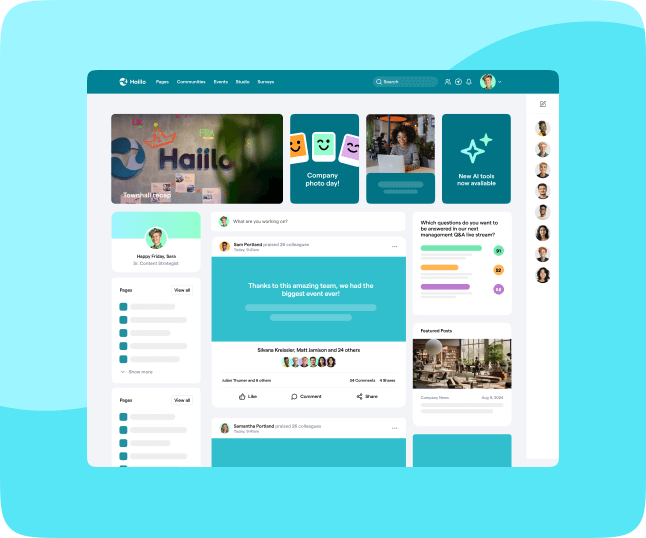

If you are looking for inspiring newsletter examples to improve your email marketing efforts, you have come to the right place!
Even though some professionals say that emails are dying, most marketers don’t agree. In fact, email marketing revenue continues to grow steadily, with billions generated each year, and brands consistently increasing their investment in the channel. Email remains a core driver not only for customer engagement but also for employee alignment through the internal communication newsletter, where clarity and consistency are critical.
But how do you make newsletters more engaging—especially when your internal communication newsletter has to compete with crowded inboxes, limited attention spans, and rising expectations for relevance?
Create and distribute personalized newsletters with Haiilo Platform
💡 Before we move forward, check out our ultimate guide to boost your company’s brand awareness!
Catchy subject line
Your newsletter’s subject line is a critical component of every newsletter. It is what determines the newsletter’s open rate, one of the most important email marketing metrics. In many cases, it’s also the deciding factor between being opened or ignored—especially for an internal communication newsletter competing with dozens of daily emails.
According to research, the most effective email subject lines engage curiosity, include promotional offers, and are personalized to each recipient’s interests. For internal audiences, this could mean referencing a team, department, or timely company update to make the message feel immediately relevant.
However, the best way to determine what kind of subject lines best work for your audience is by A/B testing. Over time, this helps you understand whether your readers respond better to direct, informative lines or more curiosity-driven ones.
Company logo
This one is a no-brainer. Most newsletter examples have their company logo design at the very top of the email. This is the best way to let the readers know who is sending the newsletter. For an internal communication newsletter, it also reinforces familiarity and trust, especially in larger organizations where multiple teams send updates.
Main piece of content
Weekly and monthly newsletters usually contain multiple pieces of content. However, it is good to highlight a single piece of content that you wish to get special attention for. Include an image, a short and catchy description, and an inviting CTA that best fits the offer. For example, this could be a major company announcement, a new product launch, or a leadership message that sets the tone for the rest of the internal communication newsletter.
2-4 educational pieces of content
Be careful not to overcrowd your newsletter. Moreover, there may be times when you want to send a single ebook, event invitation, or promo code to your audience.
In other cases, 2-4 content pieces, in addition to the main one are your best bet! This could include quick reads like tips, internal updates, or curated industry news—especially useful in an internal communication newsletter where employees often scan rather than read in depth.
Main CTA
This section is optional, depending on the business. Some organizations, mostly in B2B software indlustry, tend to include a bottom-of-the-funnel CTA such as demo request or a free trial.
Even though newsletters should never be too salesy, it doesn’t hurt to include such an option at the bottom of your newsletters. In an internal communication newsletter, the CTA might instead guide employees to read more, register for an event, or complete a quick action like a survey or training.
Option to unsubscribe
According to GDPR rules, all your subscribers should be able to unsubscribe from marketing emails at any point. To stay compliant with the GDPR rules and regulations, make sure that your newsletters always have an unsubscribe button in the footer. Doing this will also positively impact your email sender reputation. Additionally, giving readers control over their preferences helps maintain a healthier, more engaged audience over time.
Social links
Your newsletter’s footer should also include social links. This is just another way to promote your social profiles and encourage people to follow you.

Here are a few examples you can include in your company newsletter.
- Important company updates
- “From our CEO” announcements
- Internal open positions and career advancement opportunities
- Company policy updates
- Ambassadorship opportunities (as a part of your employee advocacy program)
- Tips and tricks (ex. “How to organize your work when working remotely” or “Top 10 productivity tips”)
- Invitations to company events
- Internal company podcasts
- Referral opportunities
- Public kudos and shout outs
To make these more effective, think beyond simply sharing information. The best internal communication newsletter examples turn updates into stories—adding context, highlighting impact, or including a quick quote from employees. This makes content more relatable and increases the chances that people will actually read and remember it.
💡 If you are into internal marketing, check out our guide for enhancing employee marketing in your organization!
Candidate newsletter
As a part of your talent acquisition and recruitment marketing strategy, you should consider implementing a newsletter for the applicants in your talent pool. This type of newsletter helps you stay top of mind with candidates who may not be ready to apply yet but are interested in your company.
Here is what you can include in the newsletter:
- Company updates
- New job opportunities
- Industry updates (ex. Outlooks and projections about certain careers)
- Career fair invitations
- Employee testimonials and interviews
- Tips and tricks (ex. “How to prepare for a job interview” or “How to find your dream job”)
In many ways, this approach mirrors an internal communication newsletter—both aim to inform, engage, and build a long-term relationship with their audience, just at different stages of the journey.
Meet your new colleagues
Every time you hire a new employee, you can send out a newsletter introducing them to the rest of the workforce. Tell them about their background and a fun fact about their lives. This is a great way to start conversations, particularly in remote and hybrid workplaces where people don’t see each other in person. In an internal communication newsletter, this kind of content helps humanize the organization and makes onboarding feel more personal, not just procedural.
Tips and tricks
There are many examples of newsletters in which you can send out some tips and tricks to your employees. With the emergence of remote and hybrid work, many employees have been struggling with productivity. On the other hand, some are struggling to unplug after work which can have a negative impact on their wellbeing.
So save up some space in your internal newsletter for productivity-related tips and tricks. You can also tailor these to current challenges—like managing meetings more effectively, improving focus, or maintaining work-life balance—so the content feels timely and practical rather than generic.
Company updates
To keep your workplace informed at all times, consider implementing a weekly newsletter with important company updates. These can contain all the information relevant to your business such as product updates, leadership changes, industry and market opportunities, and other. The key is to keep updates concise and clearly structured so employees can quickly understand what matters to them.
From our CEO
Leadership communication is important for building trust in the workplace. Employees expect leaders and C-level executives to be honest and transparent. Hence, consider sending out a quarterly internal newsletter with a few words from your CEO.
Some companies take a step further and record videos or hold live Q&A webinars or podcasts. Including these formats in your internal communication newsletter can increase engagement and make leadership messages feel more authentic and accessible.
Monthly experience checks
Use your internal communication newsletter to gather feedback through short pulse surveys or quick check-ins. This gives employees a voice and helps you spot trends early—whether it’s engagement, workload, or morale—so you can act on them in time.
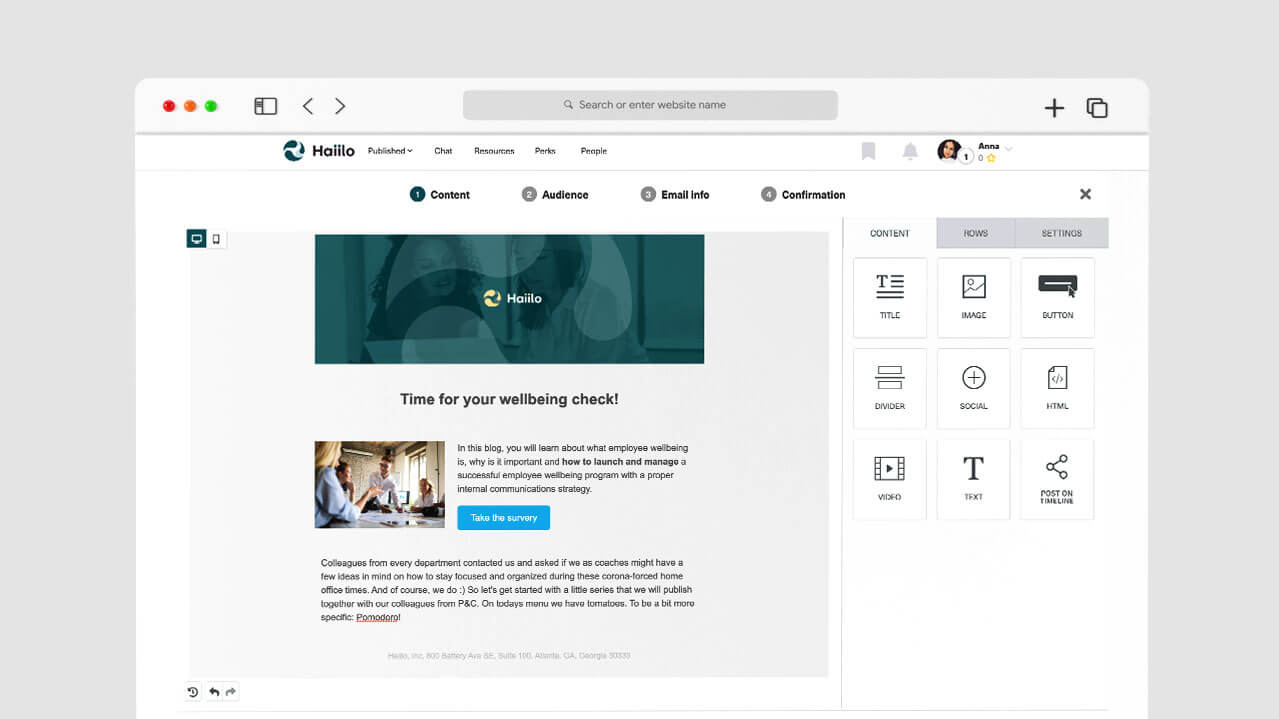
The best way to measure your employees’ experience and happiness at work is by sending regular pulse surveys. So save a spot in your internal newsletter to send out a short survey and collect responses from your workers. Keeping these surveys brief and easy to complete increases participation and gives you more reliable insights over time.
Ambassadorship opportunities
If you have an employee advocacy program, a great newsletter example would be a call out for employees to share the company’s content on their personal social profiles.
To gamify the experience and motivate the ambassadors, include some rewards for those who are most engaged! You can also highlight top contributors in your internal communication newsletter to recognize their efforts and encourage others to participate.
💡 Check out why brand advocacy is the best marketing tactic out there!
5 External (Customer) Newsletter Examples
In some industries, email marketing can be much more profitable than paid ads, social media, or any other marketing channel. But how to make your emails stand out and catch the reader’s attention? The same principles that make an internal communication newsletter effective—relevance, clarity, and consistency—apply here as well, just tailored to a different audience.
Let’s look at a few examples.
💡 Also, check out these biggest social media trends to watch in 2022 and beyond!
E-commerce newsletter example

This newsletter by Sephora is a great example of a well-thought email marketing strategy in the e-commerce industry. It contains four sections with clear call-to-actions. It starts with a featured weekly offering, followed by a personalized selection of products from their webshop. The third section contains some additional offerings for loyalty members, and it finishes with CTAs to download the company’s mobile app. This structured approach makes it easy for readers to scan and act, without feeling overwhelmed by too many choices.
What makes this especially effective is the balance between promotion and personalization. By tailoring product recommendations and clearly segmenting offers, Sephora keeps the content relevant to each recipient—something that’s just as important in an internal communication newsletter, where different teams may need different types of information.
💡Extra tip: Do you know that the overall average open rate for basket abandonment emails is 40%, with a click-through rate of almost 29%? Make sure that your use email marketing for retargeting! You can apply a similar principle by following up on key messages in your internal communication newsletter to reinforce important updates or actions.
B2B software newsletter example

Zapier is a well-known brand in the SaaS business. Even though Zapier sends different types of newsletters based on subscription type, they like to feature their product’s new features and functionalities. This ensures that users always stay informed about updates that are relevant to how they actually use the product.
In this example, they feature two of their new features with descriptive CTAs. Since Zapier puts a lot of effort into employer branding and talent acquisition strategies, they often include new job opportunities in their monthly newsletters. This mix of product updates and employer content keeps the newsletter both useful and engaging, rather than purely promotional.
It’s a strong reminder that segmentation and relevance are key—principles that apply just as much to an internal communication newsletter. Whether you’re sharing product updates with customers or company news with employees, tailoring content to specific audiences makes it far more likely to resonate.
Hospitality and tourism newsletter example
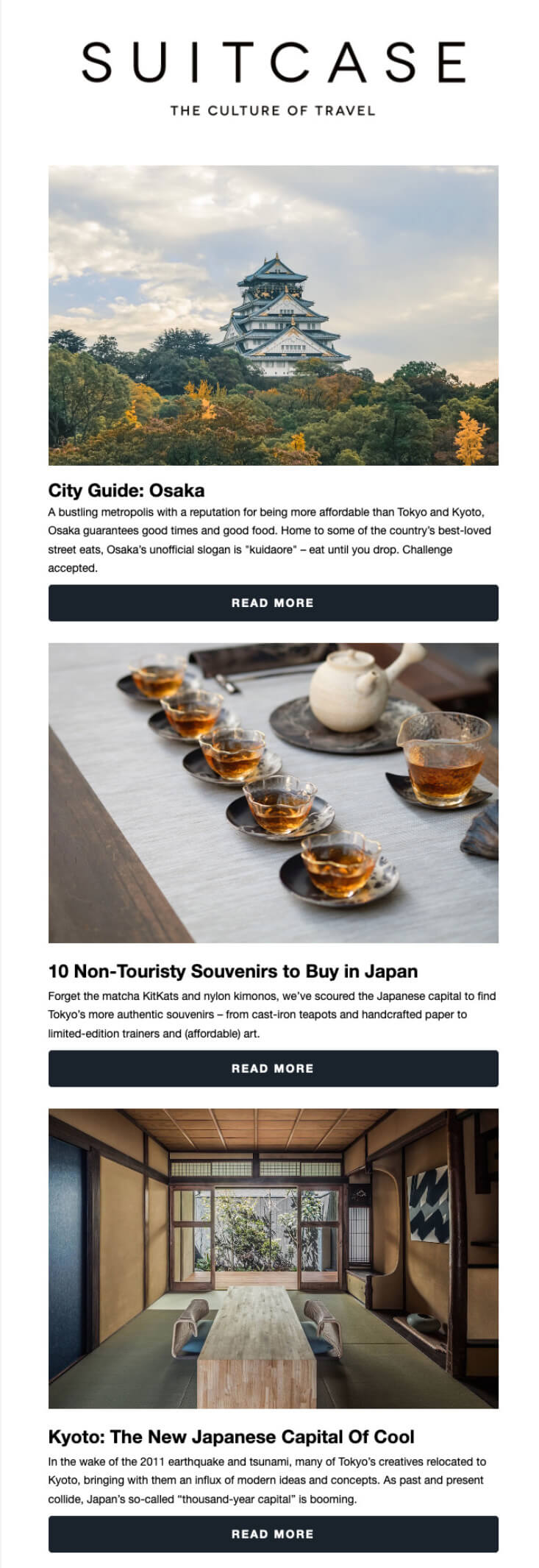
When we talk about travel and tourism, images are everything! People choose based on what they see. So adding inviting images to your travel newsletter is critical for user engagement.
Emails that include some sort of graphic have a higher open rate and CTR than their text-oriented emails.
This newsletter example represents a fun, simple, and efficient newsletter in the tourism industry.
Food and lifestyle newsletter example

We chose this newsletter example because of its timeliness. Adjusting your food newsletter content based on the holiday season can greatly increase readership and email open rates.
Nonprofit newsletter example

This newsletter example is special because it has no call-to-actions, and it doesn’t use a beautiful design like the examples above. It begins with a powerful photo and goes on to tell the story of how the organization was able to help her and thousands of children in Sudan.
Including personal stories in nonprofit (and other) newsletters make them more authentic and interesting to the readers.
FAQs about Internal Communication Newsletters
What makes an effective internal communication newsletter?
An effective internal communication newsletter is relevant, easy to scan, and consistent. It should focus on what employees actually need to know—key updates, priorities, and opportunities to take action. Structure matters: clear sections, short paragraphs, and strong subject lines all improve engagement. Most importantly, it shouldn’t try to include everything. The best newsletters prioritize clarity over volume and deliver value in just a few minutes of reading.
How often should you send an internal communication newsletter?
There’s no one-size-fits-all answer, but most organizations find a weekly or biweekly internal communication newsletter works well. The key is consistency. If you send too frequently, people tune out. Too rarely, and they lose the habit of reading it. Align your cadence with how often meaningful updates happen—and make sure each send justifies the space it takes in employees’ inboxes.
What content should you include in an internal communication newsletter?
A strong internal communication newsletter typically includes company updates, leadership messages, employee recognition, and practical resources. You can also link out to deeper content hosted on your intranet or knowledge hub. For example, guides like building an intranet or solving common UX issues such as intranet UX problems can complement your newsletter without overloading it. The goal is to give a clear overview and point readers to where they can learn more.
How can you improve engagement with your internal communication newsletter?
Start by making content more relevant—segment audiences where possible and tailor messages to their roles. Add human elements like shout-outs or stories, supported by initiatives such as an employee recognition program. You can also experiment with new formats, including insights on workplace AI, or integrate your newsletter with a broader platform like Haiilo newsletters. Small changes—like clearer CTAs or better timing—can make a big difference over time.