
Achieving greater employee loyalty is one of the biggest goals for every organization. The advantages of having loyal employees are priceless because these employees are more engaged in their work, they are more motivated to do a great job, and they tend to stay longer with their employers.
Loyal employees do more than simply show up and complete their tasks. They care about the success of the business and want to play an active role in helping it grow. These employees stay motivated, look for ways to improve, and often go beyond what is expected in their roles. Strong workers loyalty also creates more stability across teams, which helps companies build a healthier and more productive workplace culture.
Employees who feel valued and connected to their organization are also more likely to stay engaged over time. That matters because engaged employees contribute directly to business performance. Recent Gallup research found that highly engaged teams can deliver higher profitability and productivity than disengaged teams. Forbes highlights these findings, showing how employee engagement can positively impact business results.
Building workers loyalty does not happen overnight. It takes trust, clear communication, recognition, and a workplace where employees feel supported and heard. Companies that invest in these areas are far more likely to retain top talent and create teams that stay committed for the long term.
Let’s take a look at 10 practical ways to make your employees more loyal to your organization.
- 1. Understand Your Employees’ Expectations
- 2. Build and Nurture a Transparent Company Culture
- 3. Provide Personalized Employee Experience
- 4. Invest More In People Analytics
- 5. Improve Onboarding
- 6. Look for Quiet Quitting Behaviors
- 7. Re-asses Your DEI Initiatives
- 8. Re-train Your Leaders
- 9. Recognize Those Who Show Loyalty
- 10. Make Compromises and Provide Greater Flexibility
1. Understand Your Employees’ Expectations
The most important step in improving workers loyalty in any organization is understanding the factors that shape positive employee experience. Employees are more likely to stay loyal when they feel their needs, goals, and concerns are understood and taken seriously.
These factors can vary widely across organizations, cultures, locations, generations, and job roles. Some employees care most about flexibility and work-life balance, while others value higher compensation, stronger benefits, or better recognition. Younger generations often prioritize learning and career growth opportunities, while older employees may place more importance on stability, job security, and long-term support.
To shape a positive workplace experience and boost employee loyalty, employers need to understand the biggest motivators and engagement drivers for their people. Assumptions are rarely enough. What motivates one team may not work for another, which is why listening consistently is so important.
The simplest and most effective way to gather employee insights is by creating and distributing employee surveys. These surveys do not need to be overly complex. Employers can ask employees to rank workplace factors by importance, share feedback on communication and leadership, or identify what would improve their day-to-day experience most.
Organizations should also collect feedback regularly instead of relying only on annual surveys. Short pulse surveys, manager check-ins, and anonymous feedback channels can help employers identify issues early and respond faster to changing employee expectations.
Luckily, modern employee experience platforms can structure and analyze the collected data so it delivers valuable insights and actionable recommendations. This helps employers spot trends, understand engagement gaps, and prioritize improvements that matter most to employees. As a result, organizations can make smarter decisions that strengthen engagement, improve retention, and build stronger workers loyalty over time.
Learn how Haiilo can help you make your employees more loyal!
2. Build and Nurture a Transparent Company Culture
A strong company culture has a direct impact on employee engagement, performance, and retention. Today’s employees expect leaders to communicate openly, share company direction clearly, and create an environment built on trust. When employees feel informed and included, workers loyalty becomes much stronger.
Internal communications teams play a critical role in building and nurturing that culture. They help create alignment across the organization, keep employees connected to business goals, and encourage honest communication at every level. A transparent culture also makes employees feel more confident about where the company is heading and how their work contributes to broader success.
That is why organizations should actively promote transparency in the workplace through regular updates, accessible leadership communication, and open feedback channels. Employees are far more likely to stay engaged when they trust leadership and understand business decisions, especially during periods of change or uncertainty.
Frequent feedback also matters. Employees want opportunities to share ideas, raise concerns, and receive meaningful input from managers. Two-way communication creates stronger relationships between leaders and teams while encouraging openness throughout the organization. However, collecting feedback alone is not enough. Employers also need to act on it. When employees feel ignored, trust quickly declines and disengagement grows.
An open company culture naturally supports collaboration, innovation, and continuous learning. Employees are more willing to share ideas, ask questions, and support one another when communication feels safe and transparent. This also encourages stronger knowledge sharing across teams, which helps organizations work more efficiently and avoid information silos.
Companies that invest in transparent communication and positive workplace culture are also more likely to retain top talent. Recent workplace research continues to show that employees value trust, recognition, development opportunities, and open communication as key drivers of long-term engagement and retention.
3. Provide Personalized Employee Experience
Employees are much more likely to be loyal, engaged, and productive when their workplace experiences are personalized to their needs, wants, expectations, and their jobs.
Unfortunately, too many employers are still not able to provide the level of personalization to their employees as much as they do to their customers.
For example, most employers deliver the same type of content to every employee, they send the same surveys to all employees, and they don’t have a way to make their workplace tech stack more personalized and relevant to each end user.
Moreover, some of the biggest experts in the field believe that employees should be able to create their own workplace experiences based on their needs and interests. According to Josh Bersin:
“Companies are no longer happy with end-to-end talent management systems designed for HR – we now need platforms that help employees (and contingents) manage their own talent experience at work.”
Lack of personalization in the workplace results in low employee motivation, and companies with a highly motivated workforce are 21% more profitable.
4. Invest More In People Analytics
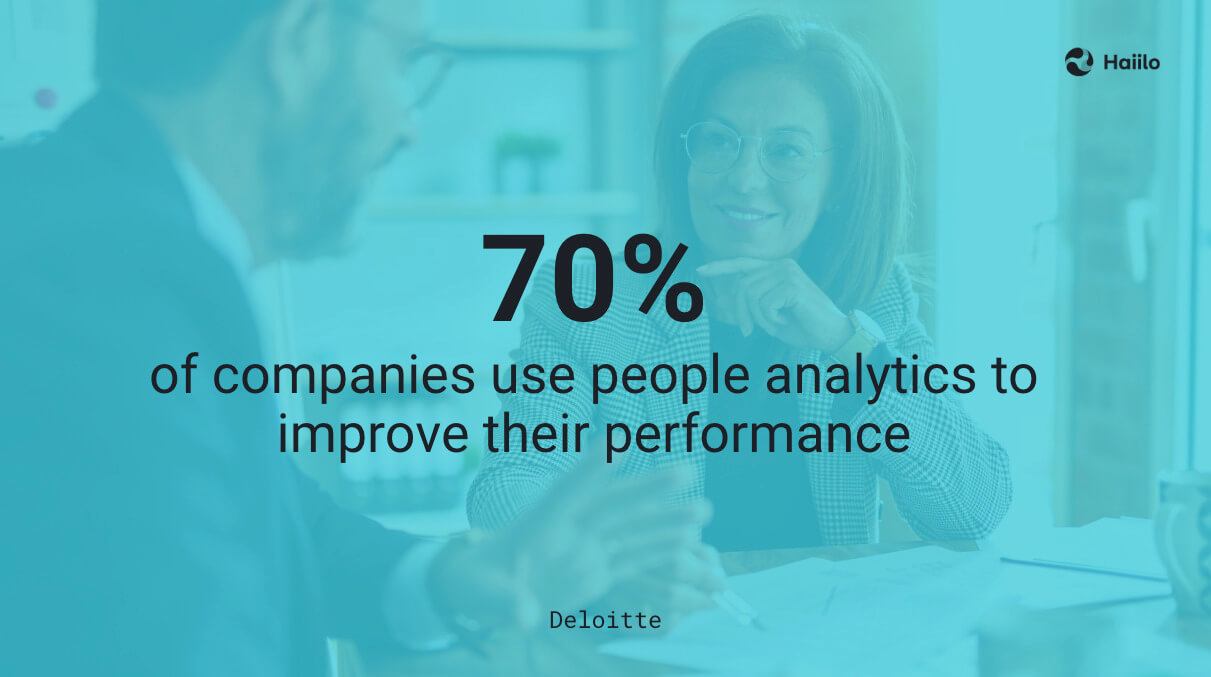
Being data-driven is essential for improving workers loyalty and creating a better employee experience. Organizations can no longer rely on assumptions alone when it comes to engagement and retention. Regularly measuring employee sentiment helps employers understand what is working, where problems exist, and which areas need immediate attention.
People analytics gives organizations a clearer view of employee behavior, engagement levels, communication gaps, and workplace trends. This makes it much easier to identify opportunities for improvement, retention risks, and engagement challenges before they become larger problems.
Recent research continues to show that organizations are investing heavily in people analytics to improve workforce planning, employee experience, and business performance. Deloitte’s 2023 High-Impact People Analytics research highlights how companies are increasingly using workforce data to make faster and more informed people decisions.
The biggest advantage of people analytics is the ability to move from reactive to proactive decision-making. Instead of waiting for employees to disengage or leave, employers can identify warning signs early through pulse surveys, feedback trends, turnover patterns, and communication insights.
Modern employee experience and analytics platforms also make this process much easier. They help organizations collect, organize, and analyze employee data in real time so leaders can act quickly and confidently. With the right insights, employers can improve communication, strengthen engagement strategies, support managers more effectively, and build stronger long-term loyalty across the workforce.
Make sure that you perform frequent pulse surveys to identify early signs of turnover risk, burnout, disengagement, and declining workers loyalty. Regular feedback helps organizations stay connected to employee sentiment and respond faster when challenges arise. Instead of waiting for annual reviews, employers can continuously monitor how employees feel and what support they need most.
Thankfully, modern workplace technologies make this process far more streamlined, automated, and effective. Many employee experience platforms now use AI-powered analytics and intelligent surveys to uncover trends, highlight problem areas, and surface actionable recommendations for managers and HR teams.
With automated surveys and analytics, leaders can better understand engagement levels across departments, identify communication gaps, and take proactive steps to improve the employee experience. These insights also help organizations personalize support, strengthen manager effectiveness, and create workplace strategies that improve long-term engagement and retention.
5. Improve Onboarding
A previously mentioned study showed that 9% of employees left their jobs because of bad onboarding, and almost 40% said that their manager was not part of their onboarding. A good onboarding experience, on the other hand, is responsible for 69% of employees staying with a company for at least three years.
Even though these statistics prove the importance of good employee onboarding, many employers still don’t invest enough effort into improving it.
Employee onboarding should be a structured process in which new hires get access to important company information, documents, tools, and people. Your company’s intranet is the best place to deliver a great onboarding experience but it needs to be structured and organized in a way that makes onboarding seamless, efficient, and personalized to every new hire.
6. Look for Quiet Quitting Behaviors
Quiet quitting is a term used to describe a workplace behavior in which employees perform just enough work to fulfill their main duties and responsibilities.
As simply explained in the Harvard Business Review article:
“Quiet quitters continue to fulfill their primary responsibilities, but they’re less willing to engage in activities known as citizenship behaviors: no more staying late, showing up early, or attending non-mandatory meetings.”
Naturally, employees who demonstrate quiet quitting behaviors are much less likely to be loyal to their employers.
Furthermore, they can have a negative impact on other employees who are otherwise engaged and motivated to do their best at work.
7. Re-asses Your DEI Initiatives
A company’s diversity and inclusion initiatives can have a significant impact on employee loyalty and engagement in the workplace.
According to research by Deloitte,
“employee perceptions of their organization’s diversity practices were directly related to their levels of engagement. Importantly, perceptions in this case are not of the diversity ideology or values, but more importantly perceptions of actual ‘policies and practices that make up an organization’s diversity practices.”
Another research shows that companies in the top quartile for gender diversity on executive teams were 25% more likely to have above-average profitability than companies in the fourth quartile.
So make sure that you hire a diverse workforce, that you encourage equity and fairness in the workplace, and that you make your company inclusive and accessible to everyone.
8. Re-train Your Leaders
According to research by Gallup, 70% of employees’ motivation is influenced by their manager. Both experts and employees agree that one of the most influential factors in employee engagement and performance is the employee-supervisor relationship.
So investing in your organization’s leaders can go a long way in making employees more loyal. It is particularly important to help your managers become transformational leaders who practice empathy, are great communicators, and care about their people’s well-being.
Why?
Employees are especially repulsed by callous bosses, as not only do 93% find empathy crucial for retention, but 82% directly state that they would leave a position to work for a more empathetic organization.
💡 Related: What Are The Top 24 Leadership Skills That Make a Great Leader?
9. Recognize Those Who Show Loyalty
According to research, 79% of employees quit their jobs because of a lack of appreciation. So building a culture of appreciation in your company is a great way to boost loyalty among workers and embed desirable behaviors and attitudes.
Employee recognition programs don’t have to be expensive. Many employees prefer non-monetary rewards over monetary ones. What is important, however, is to make recognition programs easy, fun, and inclusive. Also, make sure that you practice social recognition. Meaning, acts of appreciation should be visible to everyone so that others can celebrate their peers’ success and achievements.
📹 Looking for other ways to engage your workforce? Check out our Masterclass!
10. Make Compromises and Provide Greater Flexibility
Currently, 55% of knowledge workers can choose between working from home or working from the office on a given day, and 51% can choose to live in an area other than where their office is located, according to a new study by Atlassian.
Greater flexibility at work has become a priority for many people, regardless of generation. According to a study by LiveCareer, 76% of Millennials, 69% of Gen Z, and 64% of Gen X say that they expect their employers to provide flexible work arrangements.
Those organizations that are not ready to make such compromises are already lagging behind. They are struggling with lower engagement and loyalty from their employees. Consequently, they are more likely to face higher turnover rates.
Conclusion
Workers loyalty is complex and, like any long-term commitment, it depends on trust, consistency, and mutual respect. Employees want to feel valued, supported, and connected to the organizations they work for. That is why employers need to consistently show that employee experience is a genuine business priority rather than just a talking point.
Building loyalty requires investment across many areas of the workplace experience. Flexibility, fair compensation, transparent communication, career development, recognition, and supportive leadership all play an important role in how employees feel about their organization. Even small improvements in these areas can have a meaningful impact on engagement and retention over time.
While creating a more employee-focused workplace can require significant effort and resources, the long-term benefits are substantial. Loyal employees are more engaged, productive, collaborative, and motivated to contribute to business success. They are also more likely to stay with the company, support workplace culture, and advocate for the organization externally.
Ultimately, stronger workers loyalty benefits everyone. Employees enjoy a better workplace experience, customers receive better service, and organizations build more resilient, high-performing teams that support long-term business growth.
Check out our report on the synergy of multichannel communication and employee listening, featuring Forrester!


Frequently asked questions about workers loyalty
What is workers loyalty and why does it matter?
Workers loyalty refers to how committed employees feel toward their organization and its long-term success. Loyal employees are more engaged, productive, and likely to stay with the company longer. Strong loyalty also improves collaboration, workplace culture, and customer experience. Businesses that invest in communication, recognition, and employee experience often see better retention and stronger team performance over time.
How can companies improve workers loyalty?
The best way to improve workers loyalty is by creating a workplace where employees feel heard, supported, and connected. That includes transparent leadership communication, regular feedback, career development opportunities, and flexible ways of working. Many organizations use tools like a social intranet or modern employee communications platforms to keep teams informed and engaged across locations.
What causes employees to lose loyalty at work?
Employees often become disengaged when communication is unclear, feedback is ignored, or they feel disconnected from company goals. Poor leadership visibility, lack of recognition, and workplace silos can also damage trust over time. Improving virtual communication and breaking down silos across teams can help employees feel more connected and aligned.
How does internal communication affect workers loyalty?
Internal communication plays a major role in building trust and engagement. Employees want clear updates, open leadership communication, and easy access to information. Companies that improve communication across channels often create stronger workplace connections and higher loyalty levels. Using a centralized employee experience platform can make it easier to deliver consistent communication, support collaboration, and improve the overall employee experience.