
Creating an employee experience strategy is a tall order for many organizations. It requires a real shift in mindset — changing how you attract, engage, develop, and retain your people at every stage of their journey.
📙 Since employee communication is a key driver of any successful employee experience program, check our guide Building a Better Company with Internal Communications.
Building a great employee experience strategy is up to you. However, some tools can make it easier. Let us show you how
What is Employee Experience Strategy?
Employee experience is the sum of every interaction an employee has with your company. It starts when someone first applies for a role and continues through onboarding, day to day work, development, and even their exit interview.
An employee experience strategy, or employee experience program, means evaluating every stage of that journey and identifying the moments that matter most. These include key interactions with managers, tools, communication, and company culture. Each of these moments should be intentionally designed to align with employees’ beliefs, preferences, needs, and motivations, so they feel supported and able to do their best work.
Today, building a strong employee experience program is a top priority for HR and internal communications teams. Many organizations have seen the impact of a positive experience — from higher engagement to better retention — and are shifting toward a more deliberate, structured approach to shaping the work experience employees have every day.
However, investing in employee experience does not automatically lead to better outcomes. Many initiatives fall short because they are too generic or disconnected from what employees actually need. That is why a clear, focused strategy is essential.

Let’s now take a look at how you can design and manage an effective employee experience program in practice.
7 Steps to Implement and Manage a Successful EX Strategy
The fact that only 13% of employees report being fully satisfied with their experience shows just how difficult it is to build a successful employee experience program. Many organizations invest time and budget, yet still struggle to create meaningful change employees can feel day to day.
The challenge is not a lack of intent. It is knowing where to focus and how to stay consistent over time. Building a strong approach requires clarity, prioritization, and a willingness to adapt as employee needs evolve. While this work takes time, there are clear steps you can follow to move forward with confidence.
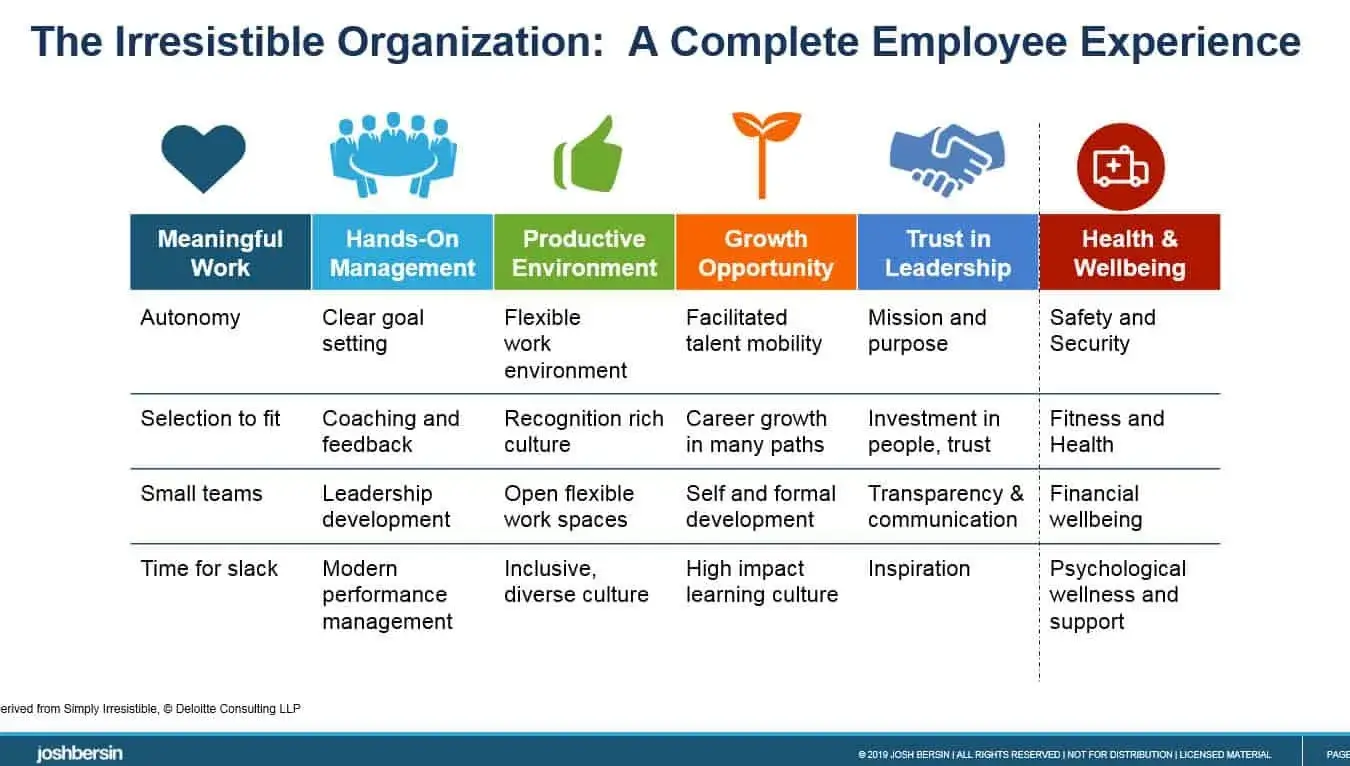
Before diving into how to design a better experience, it is important to understand what actually makes an employee experience effective. Without that foundation, even well planned initiatives can miss the mark.
Here is a helpful overview by Josh Bersin:
1. Make EX an important part of your company culture
As mentioned earlier, building an employee experience program starts with mindset. If experience is treated as a side project, it will not stick. A human centric approach needs to be embedded into your organization’s culture and core company values, so it shapes everyday decisions, not just HR initiatives.
This means putting your people at the center of how work gets done. Think about how leaders communicate, how managers support their teams, and how decisions are made. When employees feel valued and heard in these moments, engagement follows naturally. Without this cultural foundation, even the best designed initiatives will struggle to gain traction.
2. Assess your current people management strategy
The next step is to take a close look at your current talent management strategy. Before adding new initiatives, you need a clear picture of what is already in place and where the gaps are.
As part of your employee experience program, review how you support employees across their full journey — from hiring and onboarding to development and retention. Pay attention to common friction points such as unclear communication, lack of feedback, or limited growth opportunities.
In this step, it is important to consider the three most important EX areas defined by Jacob Morgan:
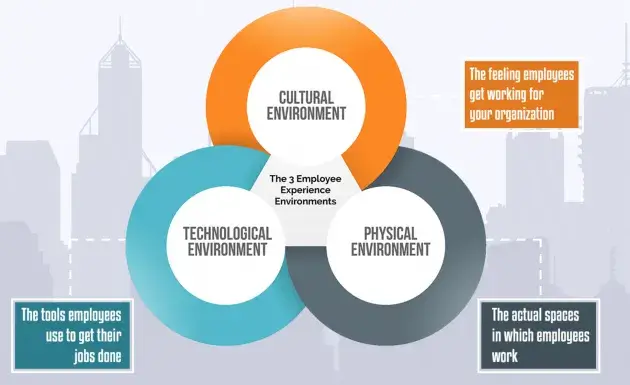
- The cultural: how employees feel when they are part of your organization. This is shaped by leadership style, communication, recognition, compensation, and how clearly your values show up in daily work.
- The physical: everything employees can see and interact with. This includes office spaces, remote setups, equipment, and even small details that influence comfort and focus.
- The technological: the experience employees have with the tools they rely on every day. This covers usability, accessibility, and whether technology helps or hinders their work.
The most reliable way to understand your current employee experience program is simple: listen to your employees. That means moving beyond one way communication and driving two-way communications that make it easy for people to share honest feedback.
Use a mix of focus groups and employee surveys to gather insights across different teams and roles. This is especially important if you have deskless or hard to reach employees who are often left out of feedback loops.
Ask questions such as:
- Does our company culture reflect your values and expectations?
- Do you get clear direction and support from your manager?
- How would you describe your relationship with your manager?
- Are you satisfied with your growth and development opportunities?
- Do you have the tools and equipment you need to do your job well, wherever you work?
- Are the technologies you use intuitive and easy to navigate?
- What would improve your day to day work experience the most?
Collecting feedback, especially from distributed teams, can be challenging. This is where the right tools make a difference. Modern employee communications solutions with mobile friendly surveys help you reach more employees, gather insights faster, and act on them with confidence.
3. Identify the bottlenecks and define objectives
Once you have gathered feedback, the next step is to spot patterns and identify the main drivers of a poor employee experience. These could be anything from unclear communication and slow processes to missing tools or lack of manager support.
A strong employee experience program turns these insights into clear, actionable goals. Focus on a few priorities that will have the biggest impact instead of trying to fix everything at once.
Here are some examples of objectives you can set for your EX strategy:
- Communicate the company mission, vision, and values in a clear and consistent way
- Break down silos between teams and improve collaboration
- Train managers to give regular employee feedback and recognition
- Make it easy for employees to share and receive feedback in real time
- Introduce tools that improve communication with deskless employees
- Strengthen leadership and career development programs
- Support employee wellbeing across physical, mental, and financial health
- Offer more personalized learning and development opportunities
4. Define employee personas
Just like marketers define buyer personas, you need to understand who your employees are to build an effective employee experience program.
Today’s workforce is highly multigenerational, with different expectations, motivations, and communication preferences. A one size fits all approach no longer works.
To define employee personas, involve people from different roles, locations, and seniority levels. Ask what motivates them, what frustrates them, and what helps them succeed. For example, some employees may value flexibility and growth, while others prioritize stability and work life balance.
These insights help you design experiences that feel relevant instead of generic. They also make it easier to tailor communication, benefits, and development opportunities to different groups.
If you are looking for help designing employee personas, here is a great guide by SHRM!
5. Create employee journey maps
To improve your employee experience program, you need to see the workplace through your employees’ eyes. This is where journey mapping comes in.
Many organizations use design thinking to do this. The idea is simple: observe how employees work, listen to their challenges, and look for ways to remove friction and make their day easier. This often leads to better engagement, productivity, and overall experience.
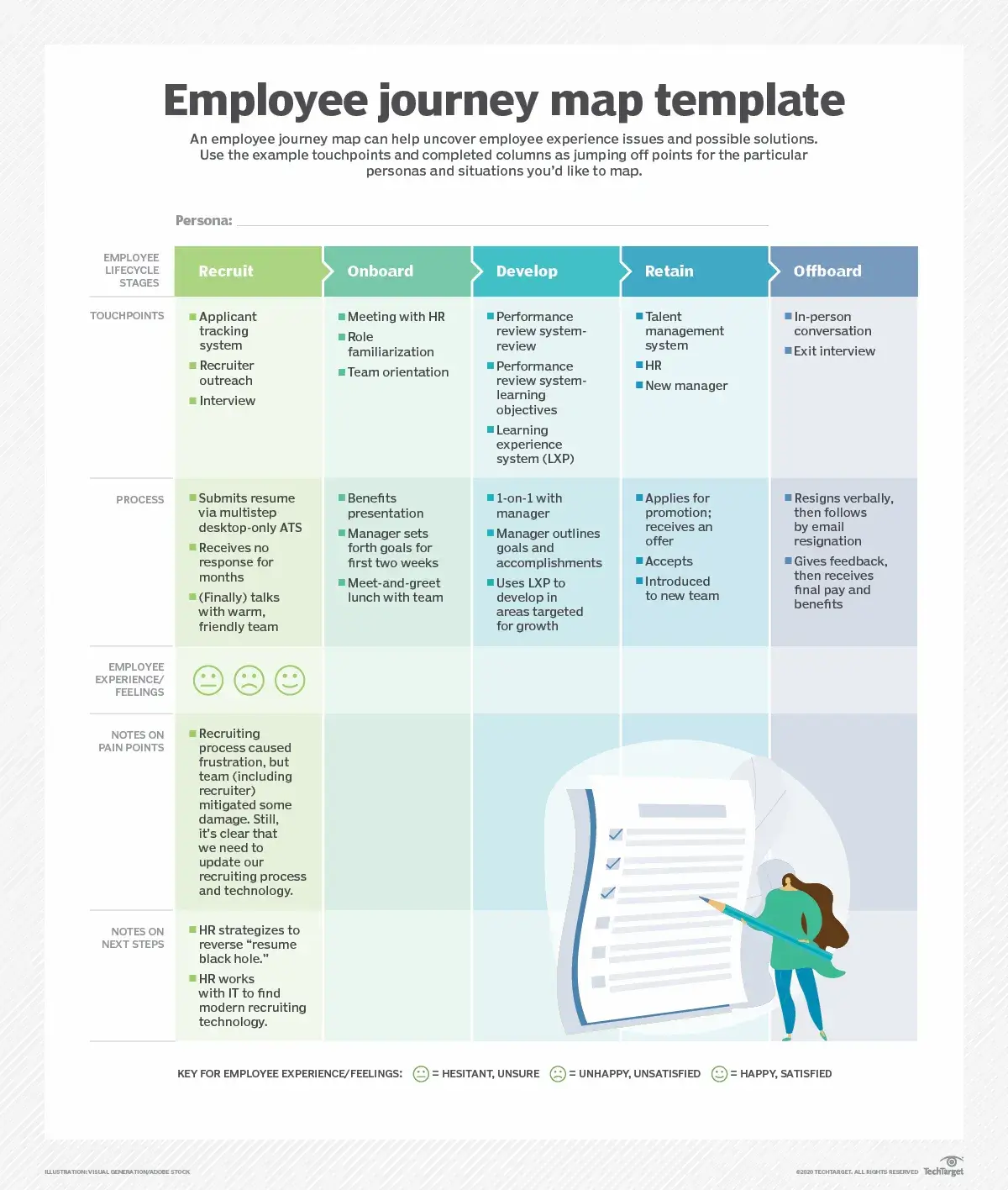
Journey mapping helps you visualize key moments across the employee lifecycle, from hiring to exit. It highlights where employees feel supported and where they struggle, so you know where to focus your efforts.
There are different ways to build these maps. Here is one example created by Tech Target.
6. Identify moments that matters (by actively listening to your employees)
Throughout the employee journey, it is critical to identify the moments that matter most to your defined personas. These are the situations that shape how employees feel about your organization — such as onboarding, feedback conversations, promotions, or even day to day communication.
Not every moment carries the same weight. For some employees, compensation and stability are key. Others are more driven by career development, learning opportunities, or recognition. A strong employee experience program helps you understand these differences and respond to them in a meaningful way.
The most effective organizations do not guess what matters. They ask. By actively listening and involving employees in shaping solutions, you create experiences that feel relevant and authentic.
Some companies take this a step further through co creation. Organizations like Cisco, IBM, GE, and Airbnb have used hackathons and internal idea campaigns to gather employee input on topics like performance management, workplace design, and benefits. This approach gives employees a real voice and helps you design an employee experience that reflects their needs, not assumptions.
7. Focus on personalization
At its core, a successful employee experience program is not one size fits all. It is about creating experiences that feel relevant to each employee based on their role, preferences, and stage in their journey.
Personalization goes beyond personas and journey maps. It shows up in how you communicate, how you support development, and how employees access information. For example, a deskless worker needs quick, mobile access to updates, while a manager may need deeper insights and tools to support their team.
Technology plays a key role here. The right tools help you deliver targeted communication, tailored content, and timely support without adding complexity for your team. This is especially important when dealing with hybrid or distributed workforces, where a generic approach often leads to disengagement.
When done right, personalization makes employees feel understood and supported — and that is what turns a standard initiative into an employee experience program that truly works.

Advanced workplace engagement apps, communication platforms, and productivity tools that support personalization can make a clear difference in how employees experience their day to day work.
However, many organizations still fall short. HR technology often lags behind the intuitive, easy to use tools employees are used to in their personal lives. When tools feel clunky or generic, adoption drops and even the best designed employee experience program struggles to deliver impact.
This is why the digital workplace plays such an important role. The right setup helps you tailor communication, simplify access to information, and meet employees where they are — whether they are in the office, remote, or on the frontline. Personalization at this level is no longer a nice to have. It is a key driver of engagement.
📙 Download our guide How to Boost Employee Engagement with Communication Tools.
5 Challenges Organizations Face When Building an Employee Experience Strategy
Most organizations run into similar roadblocks when building an employee experience program. These challenges often explain why initiatives lose momentum or fail to deliver measurable results.
Here are five of the most common reasons employee experience efforts fall short.
Not enough employee feedback
As mentioned earlier, employee feedback is the foundation of any effective employee experience program. Without it, you are making decisions based on assumptions instead of real needs.
Yet many organizations still struggle to collect meaningful input. Feedback is often limited to annual surveys, reaches only part of the workforce, or never leads to visible action. This creates frustration and lowers trust over time.
Employees expect the same level of understanding they see in customer experiences. If they feel unheard, engagement drops quickly. That is why continuous listening — through short surveys, open feedback channels, and manager conversations — is essential to keep your strategy relevant and effective.
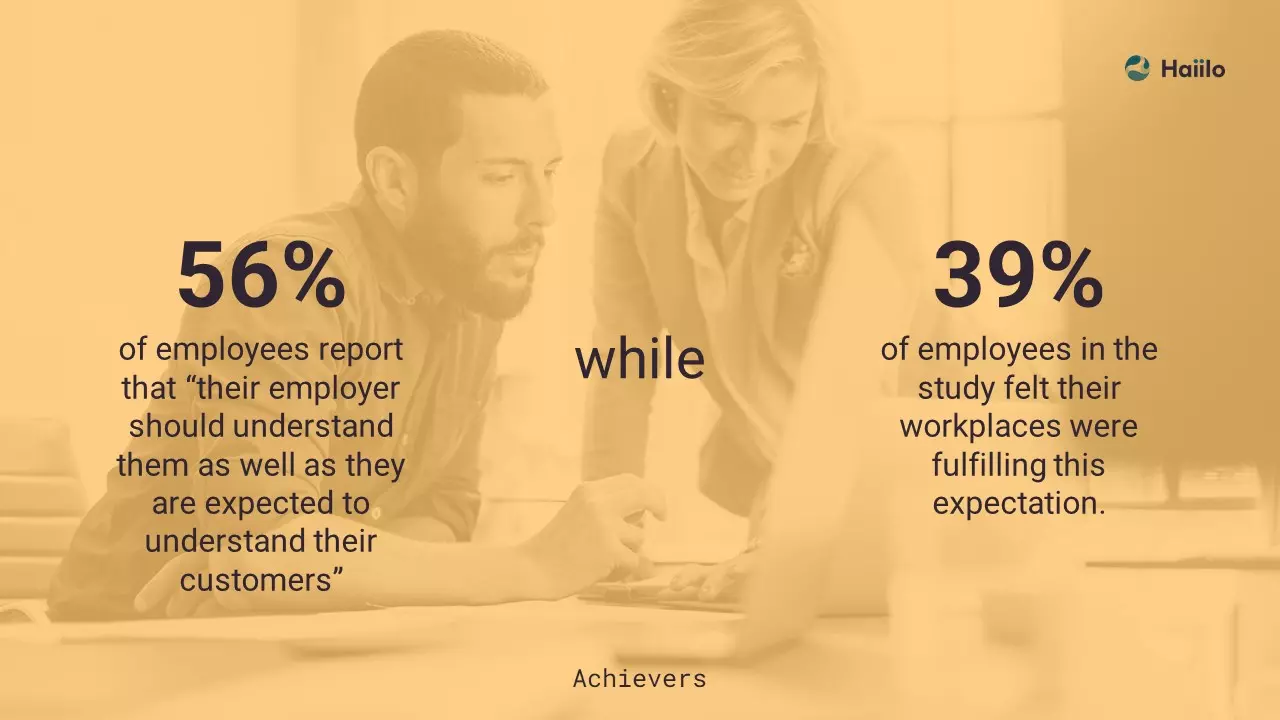
Without a clear understanding of your employees’ thoughts, preferences, and challenges, building an effective employee experience program becomes guesswork. And guesswork rarely leads to meaningful change.
Lack of C-level support
Strong leadership support is essential if you want your employee experience program to succeed. Without it, initiatives often lose priority, funding, and visibility.
If leaders do not fully understand the impact of employee experience on engagement, retention, and performance, efforts will stall before they create real value. On the other hand, organizations that take this seriously are making employee experience a leadership topic. Some have even introduced dedicated roles at the executive level to own and drive these efforts forward.
💡 Also learn about the role of employee experience in retaining top talent.
Siloed HR teams
Another common barrier is working in silos. When HR teams operate separately from other departments, it becomes difficult to deliver a consistent and effective employee experience program.
Employee experience touches every part of the organization — from communication and technology to workplace setup and leadership. If teams are not aligned, employees will feel the gaps.
As Josh Bersin explains:
While the EX agenda may have started in HR, it now spans everything from HR to IT, facilities, health and safety, facilities, and even finance and legal. All these functional areas are part of the employee experience, so they all have to be part of the company-wide EX initiative. And EX is now an initiative: a company-wide set of programs and strategies that keep employees productive, safe, well, and aligned.
This means collaboration is not optional. To make your employee experience program work, you need shared ownership, clear responsibilities, and regular alignment across teams.

Outdated HR technology and programs
Proper workplace technology is a foundation for any successful employee experience program. Without the right tools in place, even well designed initiatives are hard to deliver consistently.
Many organizations still rely on outdated systems that are difficult to use, disconnected, or not built for today’s ways of working. This makes it harder to engage and motivate employees on an ongoing basis and limits your ability to understand what employees actually need.
As the workplace becomes more complex, your technology stack needs to work together, not against you. Employees should be able to easily access the tools, information, and updates they need without switching between multiple platforms or searching for answers. When systems are fragmented, frustration grows and adoption drops.
A strong employee experience program relies on connected, easy to use tools that support communication, feedback, and daily work. The goal is simple: remove friction so employees can focus on what matters.
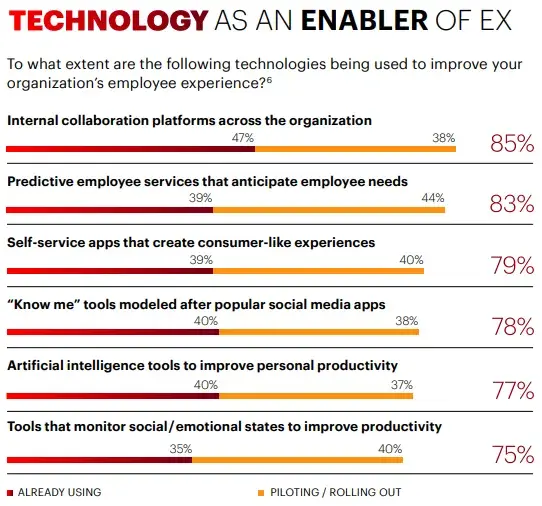
Take a look at this example of how organizations use technology to enhance employee experience.
Difficulties getting managers on board
While C-level executives are responsible for approving and supporting company-wide initiatives, managers take responsibility for implementing these initiatives within their teams or departments.
Manager’s buy-in about the benefits of providing positive employee experience is, therefore, crucial for the success of every employee experience strategy.
Yet, many organizations have a lot of work to do when it comes to embedding the employee-centric mindset among their managers.
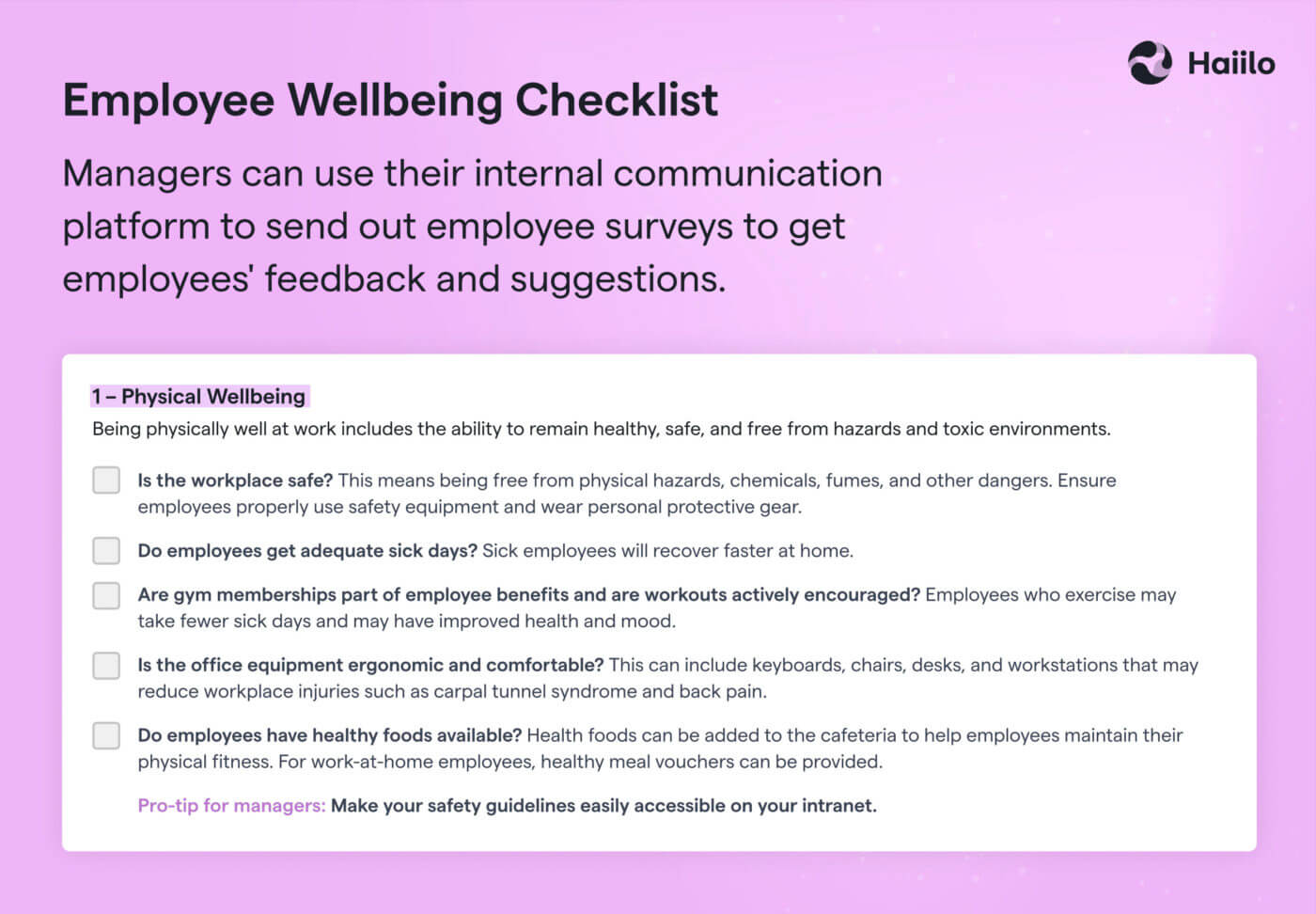
Want to improve productivity in the workplace? Get our free employee wellbeing checklist!
FAQ: employee experience program
What is an employee experience program?
An employee experience program is a structured approach to improving how employees experience their work across the entire journey. It covers everything from hiring and onboarding to daily communication, development, and retention. The goal is simple: remove friction, support employees in their roles, and create an environment where they can do their best work. Instead of isolated initiatives, it brings everything together into one clear, intentional strategy.
Why does an employee experience program matter?
When your employee experience program works, employees feel more engaged, informed, and motivated. This directly impacts retention, productivity, and overall performance. On the flip side, poor experiences lead to frustration, low engagement, and higher turnover. Especially in hybrid or distributed workplaces, a strong program helps you stay connected with employees and ensures no one is left out.
How do you measure the success of an employee experience program?
Start with regular feedback. Use short surveys, pulse checks, and manager conversations to understand how employees feel over time. Combine this with data like engagement levels, retention rates, and internal mobility. The key is consistency. A good employee experience program is not measured once a year but continuously improved based on real insights.
What are the first steps to improve an employee experience program?
Begin by listening. Identify where employees struggle and what matters most to them. Then focus on a few high impact areas, such as communication, manager support, or access to tools. Avoid trying to fix everything at once. Small, visible improvements build trust and momentum, making it easier to expand your employee experience program over time.