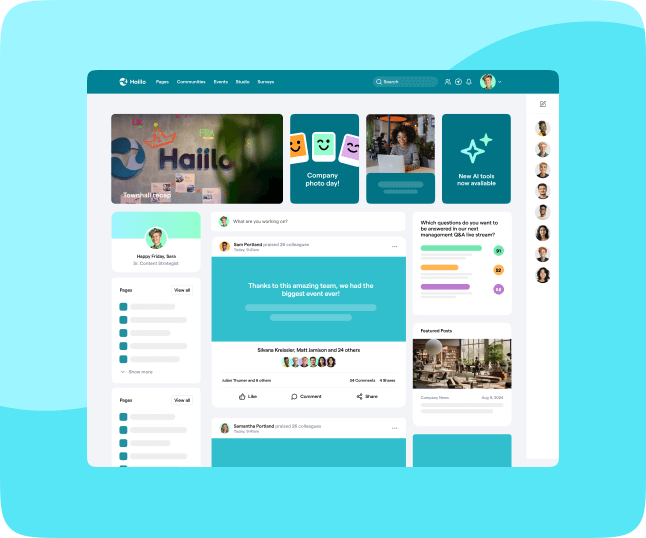
In today’s rapidly evolving digital workplace, choosing the right intranet platform is pivotal to driving employee engagement, collaboration, and overall productivity. As organisations adapt to hybrid and remote work, the intranet plays a central role in how employees communicate, share knowledge, and stay aligned. That is why the right mix of intranet features can make a measurable difference to day‑to‑day work.
💡 Related: Check out our step-by-step guide for launching an intranet platform!
- 1. User-friendly interface (UX/UI)
- 2. Mobile accessibility and mutichannel communications
- 3. Social collaboration functionalities
- 4. Advanced, AI-powered search
- 5. Seamless (also AI-powered) content creation
- 6. Content personalization and targeting
- 7. Employee recognition and engagement tools
- 8. Analytics, reporting, and employee listening
- 9. Integrations with existing workplace tech
- 10. Security and compliance
- Conclusion
1. User-friendly interface (UX/UI)
When choosing the right employee intranet, one of the most critical features to look for is its ease of use.
When evaluating an intranet solution, look for an interface that feels familiar and straightforward from day one. The best intranet features prioritise clear navigation, logical content structure, and simple interactions, ensuring the platform is easy to use for everyone, including non‑tech‑savvy employees.
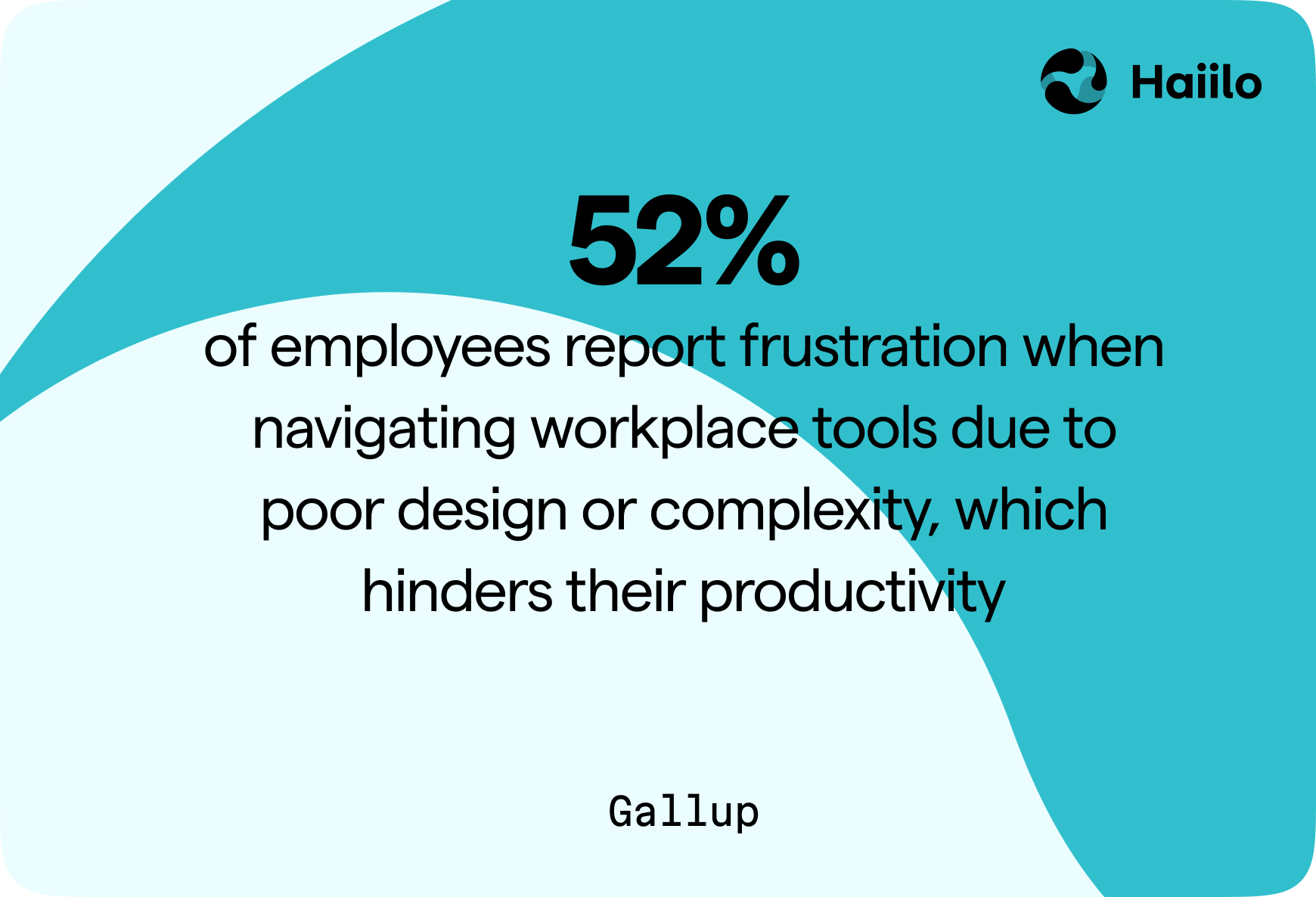
A seamless user experience encourages daily use and helps employees access the information they need quickly and effortlessly, without unnecessary clicks or confusion. When usability is prioritised as a core intranet feature, employees are far more likely to return to the platform as their go‑to digital workplace hub.
2. Mobile accessibility and multichannel communications
As the workplace continues to evolve with hybrid and remote work models, having a mobile-friendly intranet is more critical than ever. A modern intranet must support employees wherever they work, not just at a desk, making a mobile-friendly experience critical to ongoing engagement and adoption.
💡 Related: How IT leaders can boost digital adoption
According to studies, up to 70% of employees work remotely at least once a week. As a result, intranet users need reliable access to the platform on the go, allowing them to stay connected, informed, and engaged from any device. Mobile intranet features such as responsive design, push notifications, and easy content access help ensure important updates are never missed.
This is particularly important to organizations with a lot of frontline employees and mixed-collar companies in industries such as healthcare, retail, and similar.
Historically, it has been challenging for organizations to provide the same access to workplace tech solutions to office and frontline workers, resulting in a lack of engagement, alignment, and productivity among blue-collar employees.
Furthermore, it is critical to look for a solution that can reach every employee regardless of their preferred communications channel. With Haiilo, organizations can finally make their multichannel communications strategies more efficient and seamlessly publish content on channels such as email, SharePoint, Slack, digital signage, and more.
Learn why 1,000s of organizations choose Haiilo!
3. Social collaboration functionalities
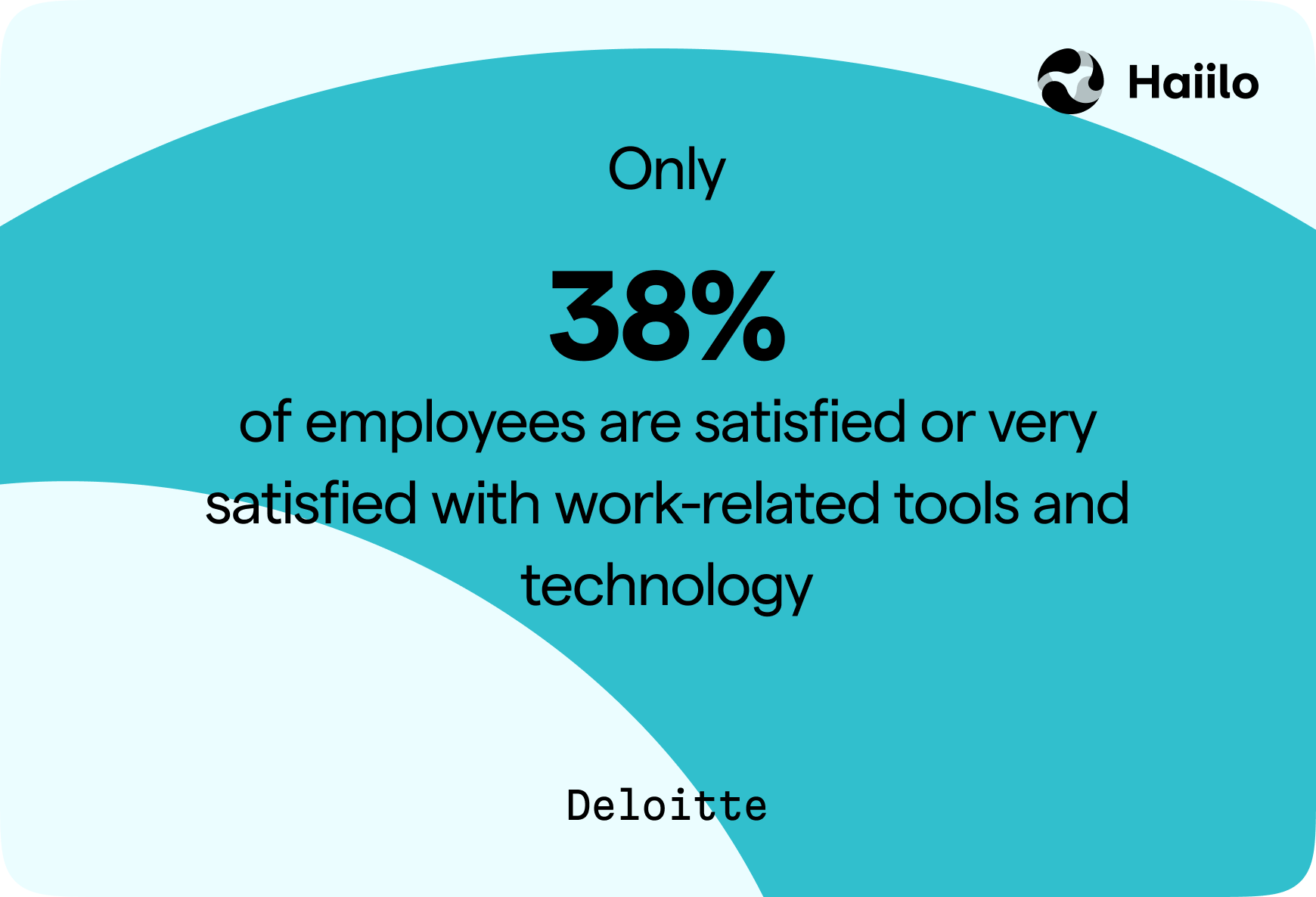
Collaboration is at the heart of any modern intranet, especially in today’s era where teamwork is crucial to achieving business goals. According to McKinsey, companies that implement social collaboration tools can see a 20-25% increase in productivity. On the other hand, only 38% of employees are satisfied or very satisfied with work-related tools and technology.
Your intranet’s homepage should be the first place employees go when they start their day. It should act as a central hub for critical, relevant information, while also giving people a space to interact, comment, and provide feedback. As one of the most visible intranet features, the homepage plays a key role in driving daily engagement and repeat usage.
At a minimum, a modern intranet should allow you to create channels based on discussion topics, departments, and other criteria such as employee interests. These content and community intranet features help structure information in a way that feels relevant rather than overwhelming.
Employees should also be able to subscribe to topics that matter to them, making it easier to connect with peers, follow conversations, and take part in discussions that align with their role or interests. Personalisation like this ensures the intranet delivers value instead of noise.
On a high level, intranet features should include:
- Team workspace features to facilitate project management and team collaboration.
- File sharing and document management features to simplify file access, sharing, and co-editing in real-time.
- Discussion forums to enable idea-sharing and cross-departmental communication.
By fostering a collaborative digital environment, your intranet helps break down silos, strengthens internal communication, and creates a sense of belonging in the workplace.
💡Related: Top 13 Intranet Best Practices to Follow
4. Advanced, AI-powered search
One of the primary purposes of an intranet is to provide quick and easy access to company information. However, without an effective search engine, finding relevant information can be cumbersome.
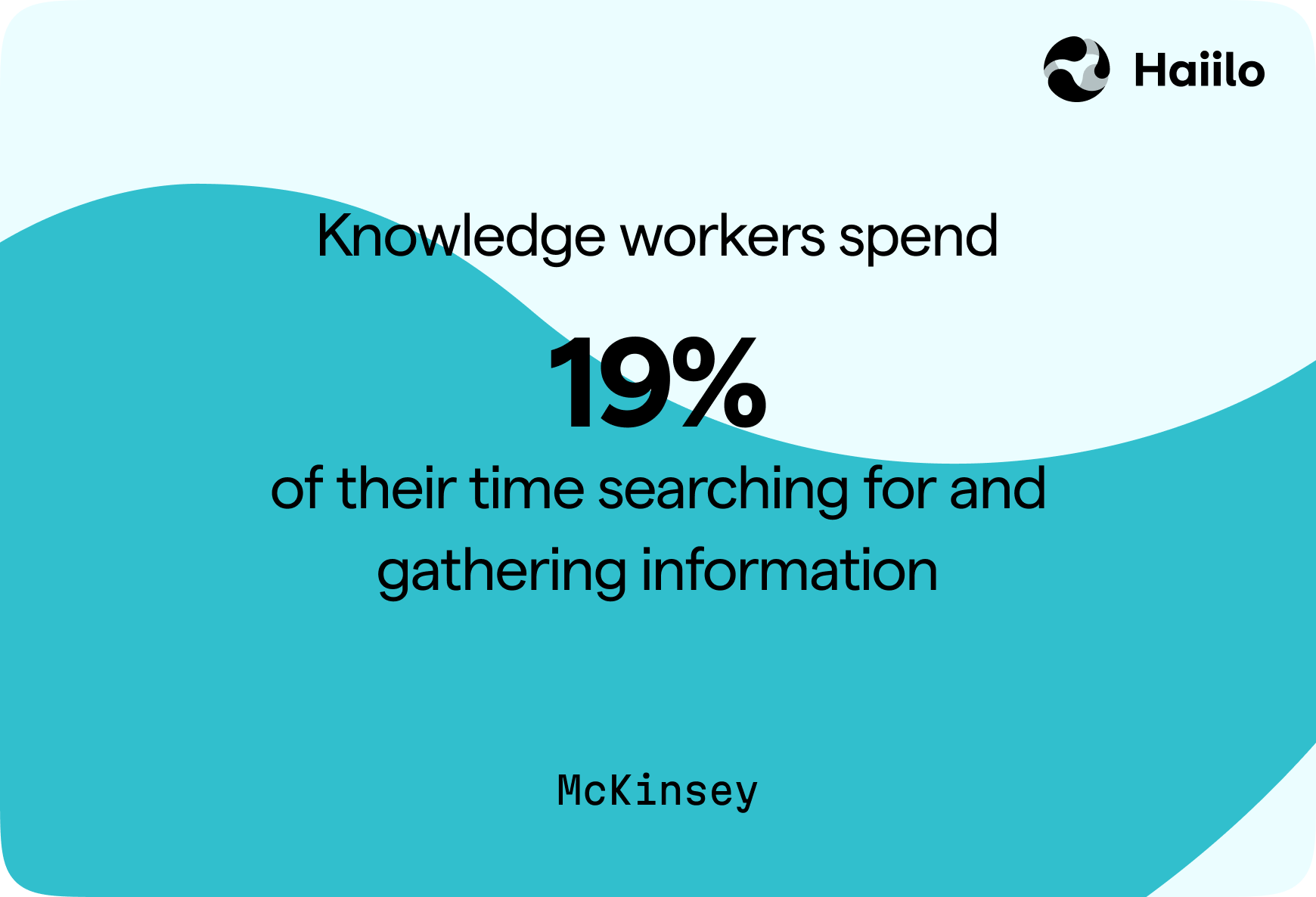
A study conducted by McKinsey found that knowledge workers still spend 19% of their time searching for and gathering information.
Data professionals are losing 50% of their time every week — 30% searching for, governing, and preparing data, plus another 20% duplicating work that already exists. This inefficiency highlights why strong search functionality is one of the most valuable intranet features for any organisation.
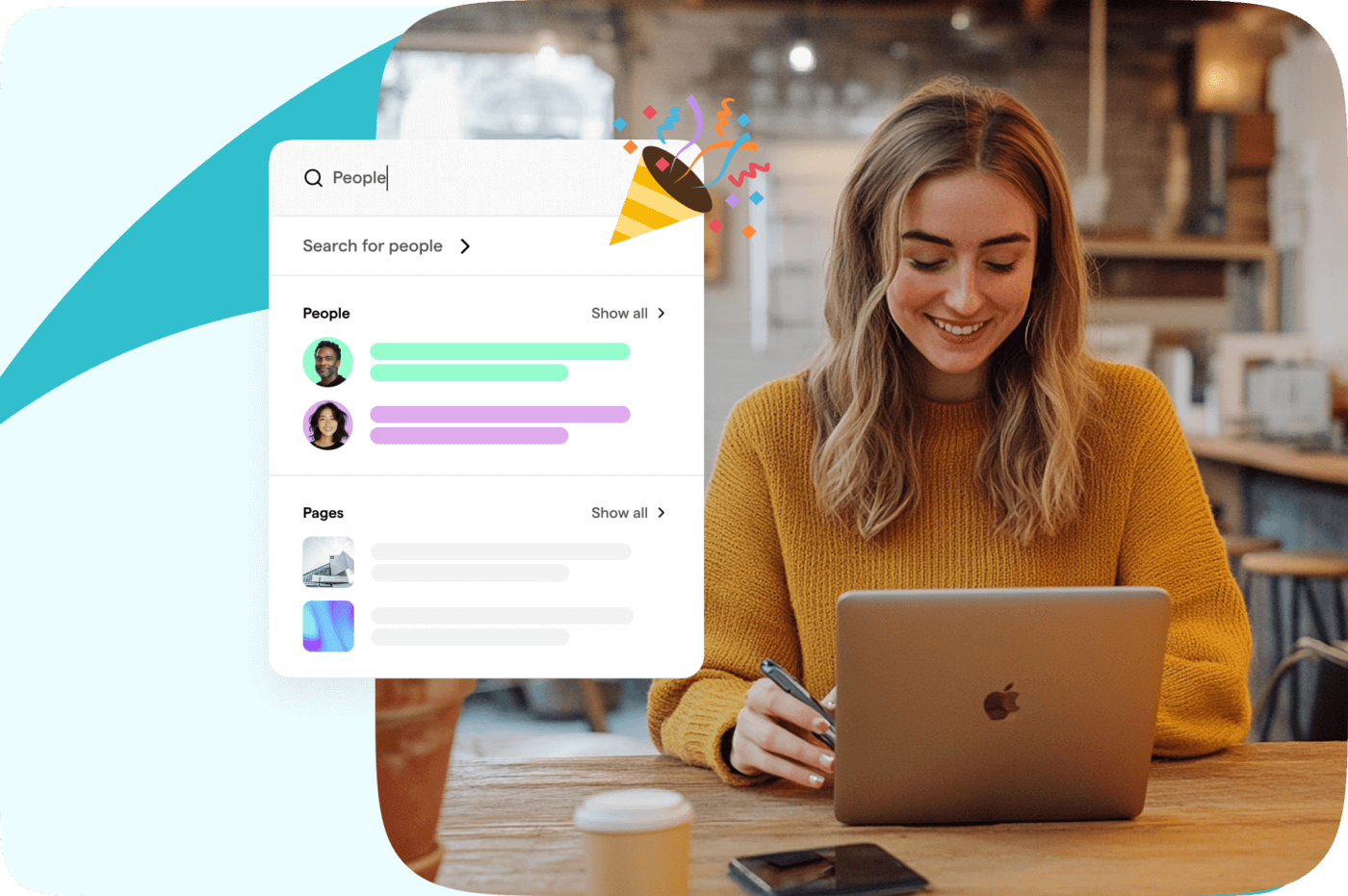
Intranet buyers should prioritise solutions that come equipped with robust search capabilities, including smart search, advanced filters, and clear content categorisation. These search‑focused intranet features ensure employees can quickly find documents, colleagues, updates, or policies without wasting valuable time or switching between tools.
The most advanced solutions such as Haiilo leverage AI to make the search functionality even more powerful and efficient, boosting employees’ productivity.
When employees search for specific internal information, they get answers and direct links to the relevant company resources and files. The system scrapes all the sources of internal information and provides instant access to employees’ questions which significantly improves the digital employee experience.
5. Seamless (also AI-powered) content creation
Yes, there are many ways you can use AI in internal communications!
Content creation is one of the main ones. Besides just having an intuitive content builder, it’s important to look for an intranet solution that leverages AI to make internal comms professionals more productive and make internal content more engaging.
With Haiilo, internal communicators don’t ever have to write content from scratch.
Take a look at how you can create content 10 times faster!
💡Related: The 2026 guide to AI in internal comms
6. Content personalization and targeting
Digital employee experience is key to boosting engagement on your intranet and your workplace overall. Employees are more likely to engage with content that is relevant to their roles, departments, or interests.
So creating and distributing engaging internal content is one of the main priorities for many internal communication and HR professionals.
Today, digital personalization is a must, and employees expect the same experience in the workplace as they are experiencing in their private lives on their favorite social media networks. They want to be served the content of their interest and their preferences.
A cutting-edge intranet offers content personalization and targeting features, allowing you to:
- Segment and target specific groups with tailored messages.
- Display content based on user roles, locations, departments, interests, and other criteria.
- Ensure the right information reaches the right people at the right time.
Remember, personalized content delivery has been proven to increase employee engagement by 22%.
When employees receive personalized content, they are more likely to interact with it, making your intranet a more effective communication tool.
💡 Learn about how you can segment your internal audience to deliver more personalized internal content.
7. Employee recognition and engagement tools
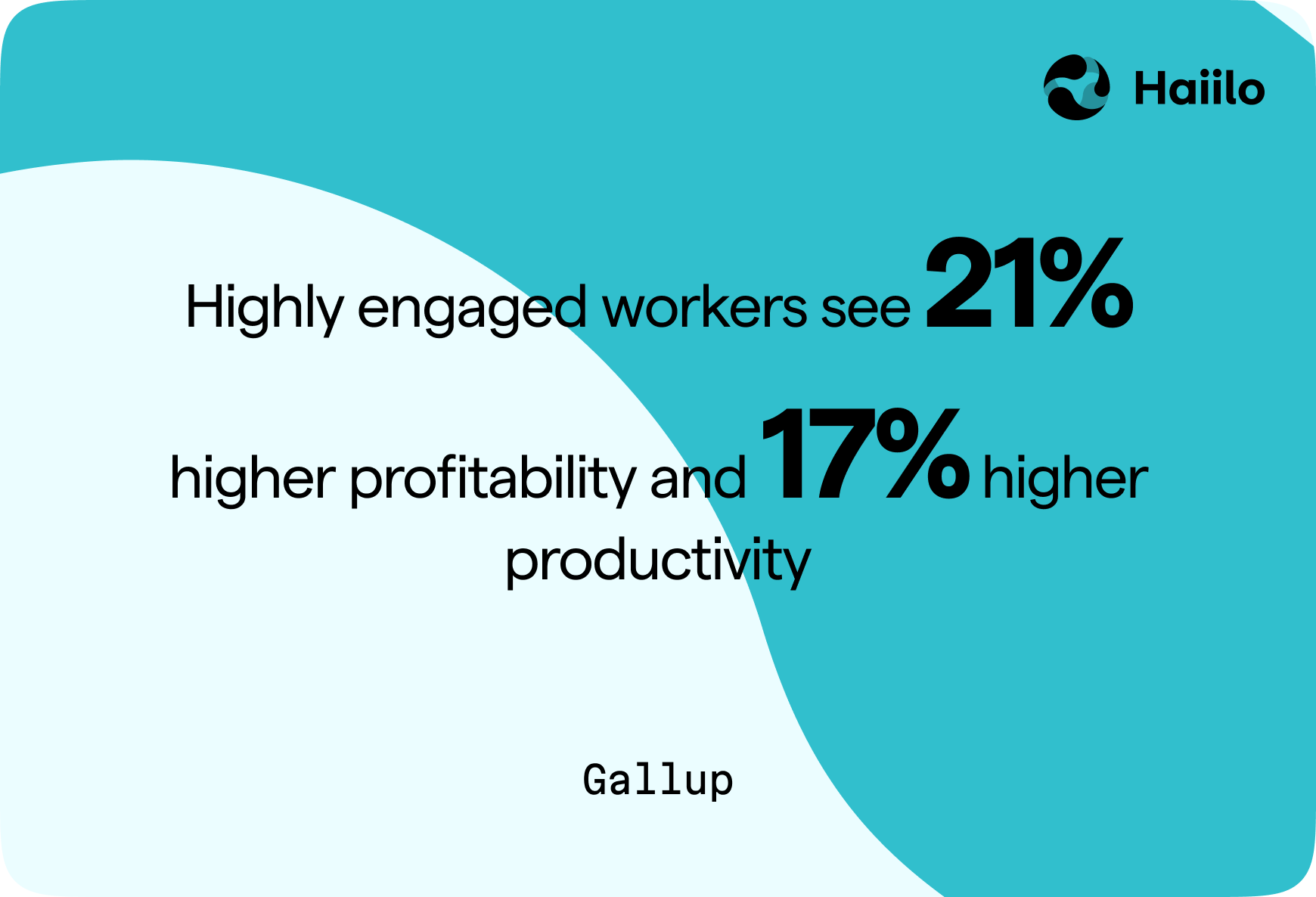
Intranets today aren’t just about information and communication, they are also powerful platforms for employee recognition and other engagement programs. A report by Gallup found that highly engaged workplaces see 21% higher profitability and 17% higher productivity.
Intranet features like employee shout-outs, peer recognition, and celebration of milestones (such as work anniversaries) foster a positive culture and strengthen morale. These features encourage employees to actively engage with the platform, making it more than just a digital workspace but a hub for fostering a positive workplace culture.
8. Analytics, reporting, and employee listening
Understanding how your employees are engaging with your intranet is crucial for its continuous improvement. With analytics and reporting features, you can track key metrics such as:
- Page views
- User engagement levels
- Content performance
- User behavior patterns
These insights can help you make data-driven decisions to improve content strategy, increase adoption rates, and optimize the platform based on user feedback. Companies that make data-informed decisions are 19 times more likely to be profitable.
Yet, many IC professionals don’t have a way of measuring the impact and results of their initiatives.
Also, the above-mentioned metrics are not enough because such data often doesn’t provide the context or valuable insights into what exactly can be improved.
Today, internal communicators want to know what type of content resonates best with their audience and what type of internal content makes the biggest impact on the ultimate business results.
With Haiilo’s employee listening intranet features, IC and HR professionals can now attach a simple survey question to every campaign or content piece they distribute. This allows them to understand how their efforts reflect on the overall business success.
💡 Related: Not listening to your employees? These are the consequences!
9. Integrations with existing workplace tech
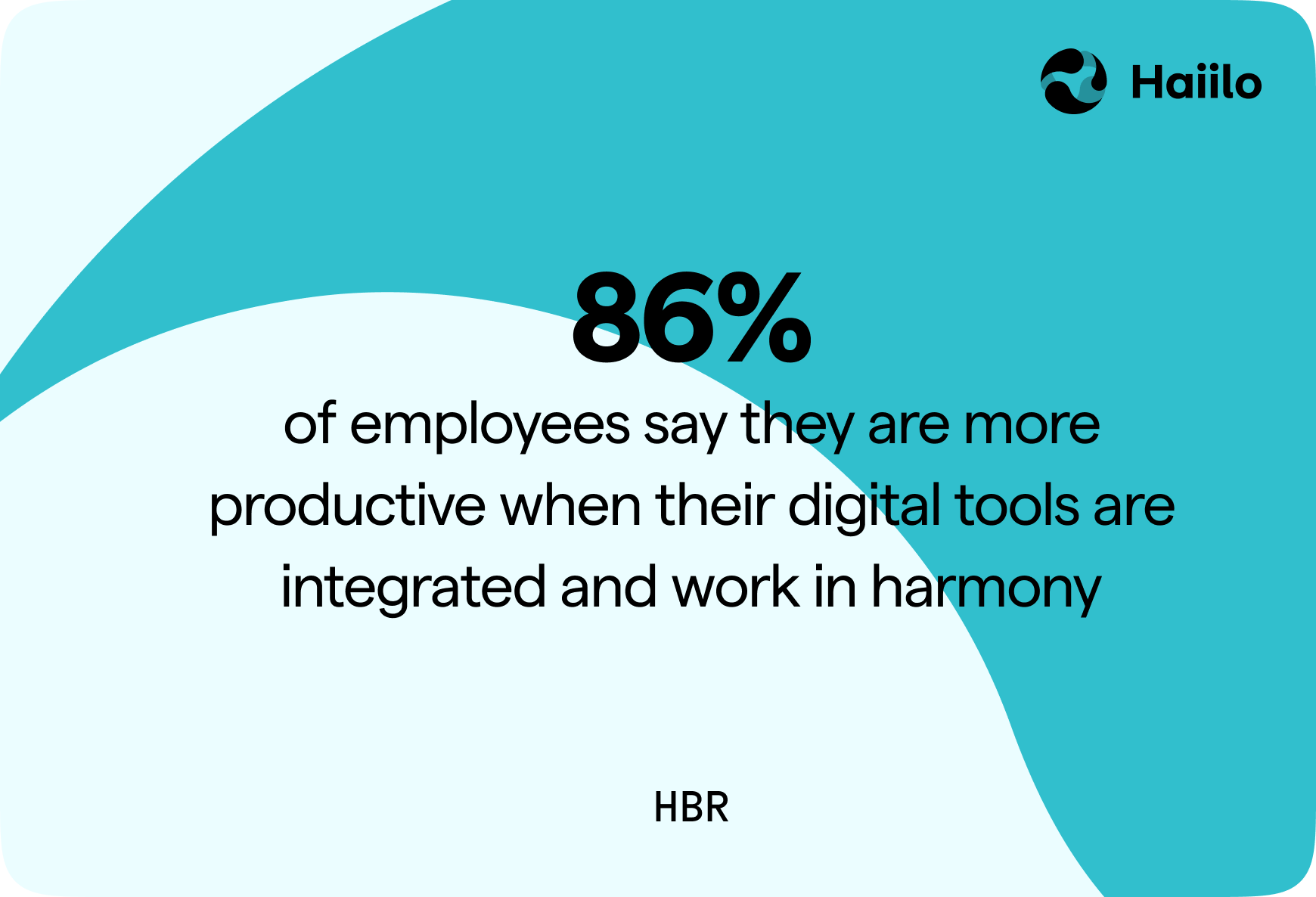
One of the most powerful benefits of a modern intranet is the ability to integrate with your existing business applications. This includes tools like Microsoft 365, Google Workspace, Slack, and more. 86% of employees say they are more productive when their digital tools are integrated and work in harmony.
With seamless integrations, employees can access everything they need from one central location, making it easier to collaborate, communicate, and complete tasks without switching between different platforms.
10. Security and compliance
Last but certainly not least, intranet security is non-negotiable. With sensitive data, internal communications, and business-critical information being shared across your intranet, it’s essential to have top-notch security features. According to IBM, the average cost of a data breach in 2023 was $4.45 million, emphasizing the importance of a secure digital workplace.
Yet, according to research, 49% of businesses have at least some employee with access rights that go beyond what is required for their job responsibilities.
Look for features such as:
- Role-based access control (RBAC)
- Secure authentication protocols
- Data encryption
- Compliance with industry standards such as GDPR
These features help protect your organization from unauthorized access and ensure that your platform remains compliant with relevant regulations.
Conclusion
Haiilo might be the perfect app for your comms needs. Get a demo now!