
How to improve company culture? It’s a question most employers struggle to answer clearly. Culture isn’t a simple, fixed concept — and it can’t be captured in a single definition. It’s shaped by everyday behaviours, communication norms, leadership decisions, and how employees experience their work environment. That complexity often makes company culture improvement ideas feel abstract or difficult to act on. But once you understand the core factors and building blocks behind culture, it becomes far easier to assess what’s working, spot gaps, and take practical steps to improve it.
In this blog, we break down the company culture framework to help you understand what truly defines a culture in today’s workplace. From there, we explore actionable company culture improvement ideas that go beyond theory — focusing on how to strengthen communication, boost engagement, and improve the overall employee experience in a measurable way.
Company Culture Defined
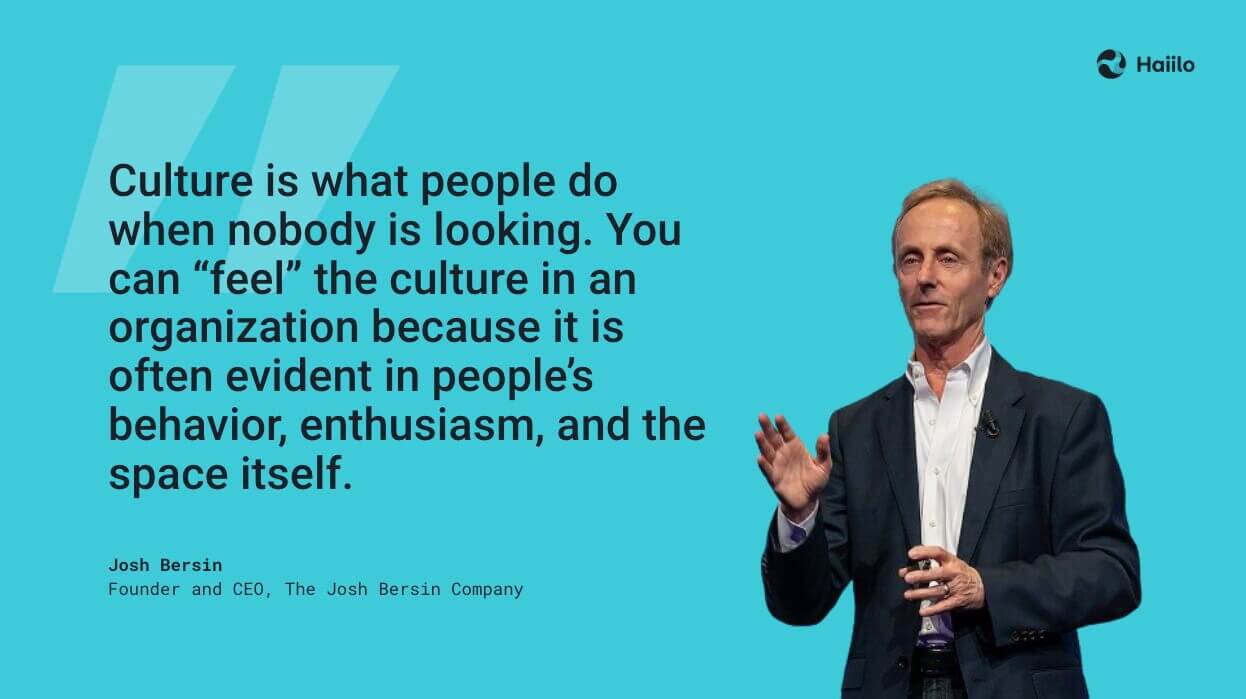
There is no single perfect definition of company culture. Leaders and culture professionals often approach it from different angles — some focus on values and behaviours, while others prioritise employee experience or organisational systems. In practice, culture is a combination of all of these elements, shaped daily by how people communicate, collaborate, and make decisions. That’s why identifying meaningful company culture improvement ideas can be challenging without a clear, shared understanding of what culture actually includes.
We particularly like a definition by one of the biggest people experts and employee experience thought leaders, Josh Bersin. His perspective stands out because it connects culture directly to the employee experience — not just as a concept, but as something employees actively feel and interact with every day.
As explained by Josh:
Remember that culture is important because it drives alignment and teamwork. Culture is not a nice to have, it is a survival strategy for every company.
Understanding Company Culture Framework
Many different elements of company culture have a significant impact on the overall employee experience and the ultimate business goals. These elements don’t operate in isolation — they interact across communication, leadership, ways of working, and employee perception. That’s why identifying effective company culture improvement ideas requires a holistic view rather than focusing on one initiative at a time.
However, certain elements have consistently shown the biggest influence on employee engagement, motivation, morale, performance, and retention. These typically include clear communication, trust in leadership, opportunities for growth, and a sense of belonging. When these areas are weak, culture challenges often surface quickly — making it harder to sustain performance or retain talent.
Based on extensive research across a wide range of organisations, alongside deep-dive analysis in areas such as employee experience, organisational design, diversity, equity, and inclusion, well-being, learning and development, and talent acquisition, The Josh Bersin Company has developed its Culture Framework. This framework helps organisations break culture down into practical, measurable components — making it easier to diagnose issues, prioritise improvements, and apply targeted company culture improvement ideas with greater impact.

To summarize the image, a strong organizational culture is an environment in which employees are encouraged and enabled to grow and do their best. It creates the conditions for people to feel supported, trusted, and motivated in their day-to-day work. In cultures like this, employees have a strong sense of belonging, collaborate efficiently with their peers and managers, and clearly understand how their work contributes to wider business outcomes.
Just as importantly, employees feel appreciated for their contributions and are consistently connected to the core company values, mission, and vision. This alignment turns abstract values into lived behaviours — something that many organisations struggle to achieve in practice. When this connection is missing, even well-defined values can feel disconnected from reality, making company culture improvement ideas harder to implement effectively.
Let’s now dig deeper into the specific actions you can take to improve the company culture in your organization — with a focus on practical, proven company culture improvement ideas you can apply to drive measurable change.
Strengthen your company’s culture with Haiilo!
How to Improve Company Culture In Your Organization
Looking to improve your company’s culture and create a happier, more productive workplace? Keep reading the following section, where we go beyond theory and explore practical steps that help turn culture into something you can actively shape. From leadership behaviours to communication habits, this section digs deeper into what it takes to create an irresistible organizational culture — one that employees genuinely want to be part of and contribute to.
1. Ensure better organizational alignment
As explained by Josh Bersin:
Purpose is that rare alignment between the walk and the talk: the why a company is in business and the actions it takes to accommodate that.
This sense of unity and purpose comes from something deeper than just strategy or skills; it comes from cultural alignment. It involves aligning the individual values of your employees with the core values and objectives of your company, and ensuring those values are consistently reflected in everyday decisions, communications, and leadership behaviours.
When alignment is strong, employees understand not just what they are doing, but why it matters. This clarity reduces friction, improves decision-making, and builds trust across teams. As a result, company culture improvement ideas tied to alignment tend to deliver long-term impact rather than short-term engagement spikes.
When this is achieved, the overall company culture thrives because employees don’t just work for a paycheck — they believe in what they do and feel connected to the organisation’s broader purpose.
2. Enable proper communication and collaboration
Today, employees expect to always be connected and have quick access to their peers, information, tools, and conversations. Delays, silos, or fragmented communication channels can quickly create frustration and disengagement, especially in hybrid or distributed teams.
Connected workplaces, naturally, have healthier workplace cultures because information flows more freely, collaboration happens more naturally, and employees feel informed and included rather than isolated.
So employers need to focus on and develop more sophisticated multichannel communication strategies in order to reach the right people at the right time with the right content. This includes combining channels such as intranets, messaging tools, email, and mobile apps to reduce noise while increasing clarity.
Done well, better communication not only improves productivity but also strengthens transparency and trust — two critical foundations for successful company culture improvement ideas that aim to improve engagement and collaboration at scale.
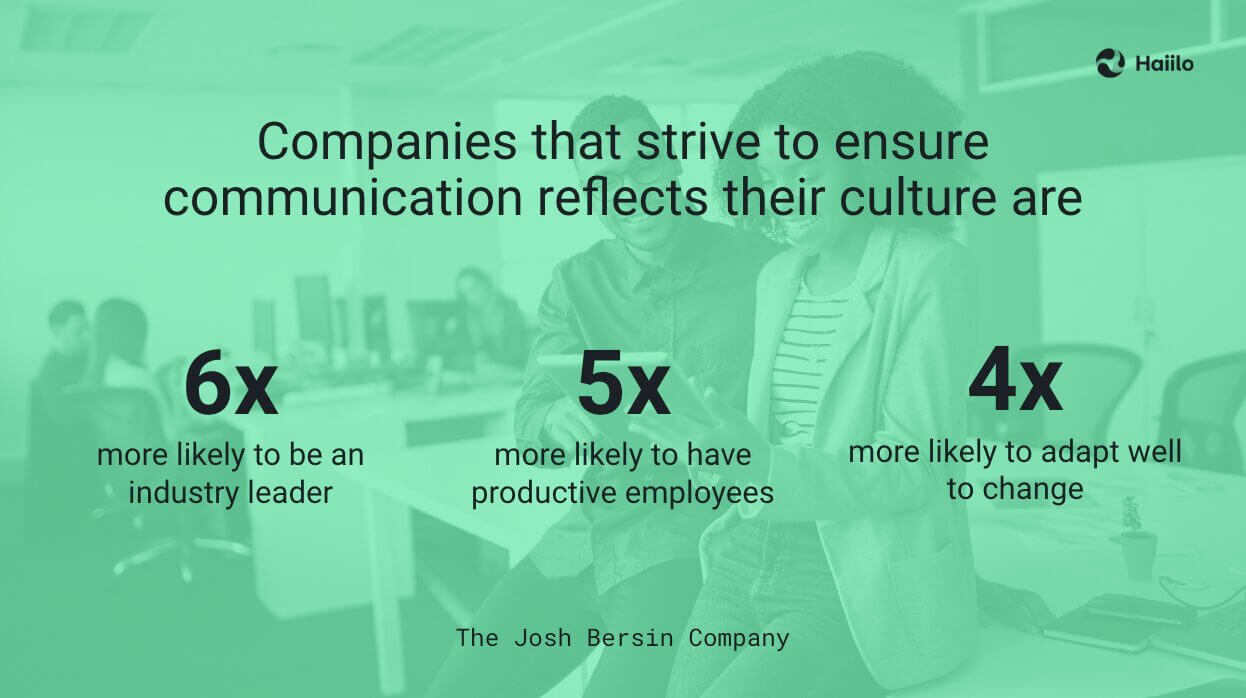
Furthermore, leadership teams and internal communications professionals should always strive towards greater workplace transparency to build more trust in the workplace. Transparency signals openness and consistency, helping employees understand decisions, priorities, and expectations. Over time, this reduces uncertainty and strengthens relationships across the organisation. And trust is one of the most important drivers of a strong company culture — without it, even well-designed company culture improvement ideas struggle to gain traction.
3. Create a psychologically safe environment
A psychologically safe workplace is a place where employees feel safe and encouraged to share their ideas, express concerns, ask questions, suggest improvements, and learn from mistakes. It removes the fear of negative consequences for speaking up, which is essential for innovation and continuous improvement.
Such workplaces enjoy a positive workplace culture which enables every person to thrive and achieve their best. When employees feel heard and respected, they are more likely to contribute actively, challenge assumptions, and collaborate effectively with others.
When managers consistently create a safe environment for open dialogue, employees are more willing to experiment, share honest feedback, and contribute new ideas. This kind of environment not only supports innovation but also strengthens engagement and long-term performance — making it a key focus area for company culture improvement ideas.
Additionally, there are clear downsides of not having psychological safety, including negative impacts on employee well-being such as increased stress, burnout, and higher turnover, as well as reduced collaboration and poorer overall business outcomes.
4. Go beyond diversity, equity, and inclusion
Popular HR influencer, Brene Brown, says,
We need to do more than diversity and equity and inclusion. We need to create real belonging in our culture.
In her work, Brown reframes diversity, equity, and inclusion (DEI) efforts as DEIB, which stands for Diversity, Equity, Inclusion, and Belonging. This shift highlights that representation alone is not enough — organisations also need to ensure that people feel accepted, valued, and able to contribute fully.
Belonging goes beyond policies or initiatives. It’s about creating an environment where employees feel connected, respected, and confident being themselves at work. Without this, DEI efforts can feel surface-level and fail to influence everyday employee experiences.
According to APA’s 2023 Work in America workforce survey, 94% of respondents reported that it’s somewhat or very important to them that their workplace be somewhere they feel they belong. Consequently, the sense of belonging is one of the most important factors shaping positive workplace culture, influencing engagement, retention, and overall satisfaction.
The results are clear: when employees feel they belong, they are more likely to stay, contribute, and build stronger relationships with their teams — making belonging a critical pillar in any set of company culture improvement ideas.
5. Recognize hard work and achievements
Employee recognition and appreciation help employees feel valued and understand how their work contributes to the overall business success. It helps them have a sense of accomplishment and drives employee morale and motivation.
Recognition has the strongest impact when it is consistent, timely, and embedded into everyday workflows rather than treated as a one-off initiative. Simple actions such as peer recognition, public praise, or highlighting achievements in internal communications can have a lasting effect on engagement.
The good news is that employee recognition programs don’t have to be expensive or complex. In many cases, employees value visibility, appreciation, and feedback more than financial rewards. This makes recognition one of the most accessible company culture improvement ideas to implement quickly and effectively.
💡 Not sure how to get started? Check out our guide for launching an employee recognition program!
6. Coach your leaders to adopt the right leadership styles
Employees at organisations with strong cultures typically view their leaders as credible, consistent, and aligned with company values. Leadership behaviours shape how culture is experienced day-to-day, making leadership development a critical driver of long-term cultural success.
There are specific leadership styles every leader should aim to develop, and organisations should support them through training, feedback, and coaching. Without this support, even well-defined values can fail to translate into real behaviours.
These 2 leadership styles can help you improve the overall culture in your organization:
- Empathetic leadership focuses on identifying with others and understanding their point of view, their needs, and their challenges. Empathetic leaders take a genuine interest in their people — they create stronger relationships, build trust, and foster a more inclusive and supportive culture.
- Servant leadership occurs when the leader’s main goal and responsibility is to support their people. These leaders prioritise growth, remove blockers, and focus on enabling others to succeed — which naturally strengthens engagement, performance, and workplace culture.
📹 Check out our Masterclass Best Practices for Managers to Improve Internal Communications.
7. Adopt the right workplace technology
Proper workplace technology is critical for enabling organizations to improve many different segments of the previously mentioned culture framework. Technology acts as the infrastructure behind communication, collaboration, and employee experience — making it a key enabler for scaling effective company culture improvement ideas across teams and locations.
For example, social intranets and internal communications tools play a central role in ensuring greater organizational alignment, improving employee communications, and connecting employees regardless of where they are based. They also help amplify employees’ share of voice by giving them structured ways to contribute, share feedback, and participate in conversations — which strengthens engagement and collaboration.
Survey and feedback solutions are equally important for understanding employee sentiment in real time. They allow employers to collect meaningful data, identify emerging issues early, and act before disengagement or turnover becomes a risk. When used effectively, these tools turn feedback into action — a crucial step in making company culture improvement ideas measurable and sustainable.
Ultimately, the right technology doesn’t just digitise existing processes — it helps organisations build more connected, transparent, and responsive workplaces where culture can actively evolve and improve.
How To Measure Company Culture
You need to be able to measure your company culture to improve it. If you don’t clearly understand the current state of your organizational culture, it becomes difficult to identify gaps, prioritise areas for improvement, and track progress over time. Measurement gives you a baseline and helps ensure that your company culture improvement ideas are rooted in real data rather than assumptions.
So employers should regularly send employee surveys that assess different aspects of company culture. Consistency is key here — running surveys at regular intervals allows you to monitor trends, spot emerging issues early, and evaluate whether your initiatives are making a meaningful impact.
Here are 10 questions you can include in your culture surveys to better understand employee sentiment and experience:
- Do you feel connected to the work you do?
- Do you feel connected with your peers and your manager?
- Are you motivated by the mission of the company?
- Do you feel like you belong to your organization?
- Do you feel like leadership is transparent enough?
- Do you feel recognized and appreciated for your contributions?
- Do you trust your employer?
- Do you feel a sense of psychological safety while at work?
- Do you feel the perspectives of people from all cultures and backgrounds are respected and valued?
- Do you feel supported by your manager?
After collecting feedback, your survey solution should ideally provide not just raw data but clear insights and actionable recommendations. Look for patterns across teams, identify high-impact issues, and prioritise actions that will move the needle on engagement and experience. Closing the feedback loop — by communicating results and actions back to employees — is just as important as collecting the data itself.
💡 Looking for other employee surveys to implement in your organizations, check out these https://blog.haiilo.com/blog/employee-survey/60 employee survey questions.
FAQs: company culture improvement ideas
What are the most effective company culture improvement ideas to start with?
The most effective company culture improvement ideas usually focus on the fundamentals: communication, leadership, and employee experience. Start by improving transparency, aligning employees with company goals, and creating regular feedback loops through surveys. Simple actions — like recognising achievements or improving access to information — often have the fastest impact. If you need a structured starting point, it helps to review your employee experience strategy and identify gaps.
How long does it take to improve company culture?
Improving company culture is an ongoing process, not a short-term project. You can see early signs of progress — such as increased engagement or better communication — within a few months if changes are consistent. However, lasting cultural change takes sustained effort over time. The key is to treat company culture improvement ideas as continuous initiatives, supported by regular measurement and adjustment rather than one-off campaigns.
How do you measure whether company culture is improving?
You measure progress through a combination of employee surveys, engagement data, and behavioural indicators such as retention or collaboration patterns. Regular pulse surveys help track sentiment over time, while open feedback provides context behind the numbers. Strong measurement ensures your company culture improvement ideas are delivering real results — not just surface-level changes. For practical examples, explore these employee survey questions.
What role does communication play in improving company culture?
Communication plays a central role in shaping how culture is experienced every day. Clear, consistent communication helps employees stay informed, aligned, and connected to the organisation’s purpose. It also creates space for feedback, dialogue, and recognition — all key drivers of a strong culture. That’s why many successful company culture improvement ideas prioritise better communication strategies, supported by tools like internal communications platforms and structured messaging approaches.
Check out our report on the synergy of multichannel communication and employee listening, featuring Forrester!