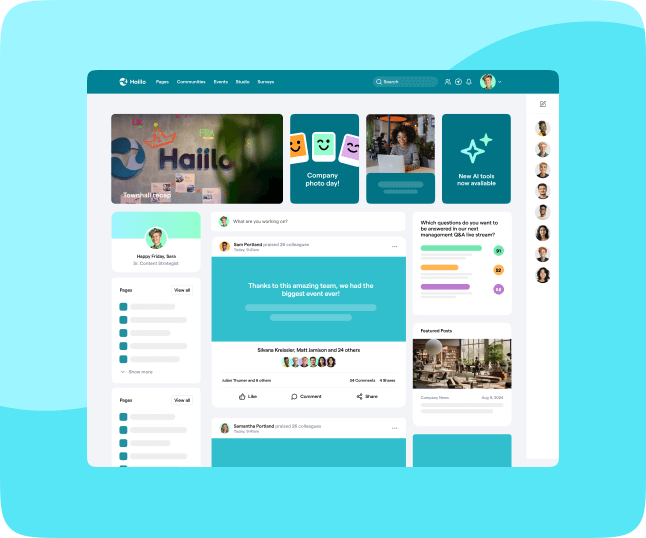

The way employees communicate and collaborate has changed substantially in recent years. Employee engagement software is becoming more and more common in organizations of all sizes and for a good reason. Recent global research from Gallup shows that only 23% of employees worldwide are engaged at work, highlighting a significant opportunity for improvement. At the same time, Gallup reports that highly engaged teams see measurable gains in productivity, profitability, and retention compared to disengaged teams — reinforcing the business case for investing in structured employee engagement strategies.
In this blog, we will discuss some of the main reasons every company should consider implementing an employee engagement app.
What is an Employee Engagement App?
We’re used to using communication apps in our everyday lives: we use social media, chat tools, news and weather apps. We are used to getting most of the information we need in our daily lives from our smartphones.
And for frontline workers, smartphones are often the only way to get the news about their companies. In fact, a recent study found that over 83% of frontline workers don’t even have a corporate email address, and 45% don’t have access to a desktop when at work.
With that in mind, many organizations nowadays realize they need to turn to mobile workplace technology in order to keep their employees engaged and informed.
In the workplace, there are many different employee apps we can use. But employee engagement apps are modern mobile communications and engagement software that improve alignment and productivity by simplifying communications at work, connecting employees and enabling them to receive targeted and timely information from their organization.
Unlike basic messaging tools, employee engagement apps centralize updates, resources, and conversations in one secure place. They allow organizations to segment audiences, personalize content by role or location, and measure reach and impact through built-in analytics. For example, a retail business can instantly share a policy update with store managers while sending tailored operational guidance to shop floor teams — all through dedicated company apps for employees. Beyond top-down communication, these apps also encourage two-way dialogue through surveys, feedback tools, recognition features, and social interactions, helping leadership understand sentiment and respond quickly. The result is a more connected workforce where information flows consistently, regardless of role, shift pattern, or device access.
Improve engagement and collaboration in the workplace with the right employee engagement app
Top Reasons to Implement An Employee Engagement App
Now that we’ve established the purpose of employee engagement software, let’s look at the reasons to implement one at your company.
💡 Before we move forward, check out our ultimate employee experience guide and learn how to choose the best employee experience platform!
Improved collaboration
People are used to relying on mobile technology for collaboration and solving day-to-day problems. In fact, an Alfresco survey of more than 753 knowledge workers revealed that nearly 83% of professionals depend on technology to collaborate. 82% of the participants also felt that they would feel impacted if this technology to collaborate was lost.
An employee engagement app provides tools like chats and document sharing to simplify collaboration between team members and departments regardless of the location. As hybrid and frontline work models continue to evolve, employees increasingly expect digital tools that simplify collaboration and reduce friction. Gallup’s workplace research consistently highlights communication, clarity, and access to information as key drivers of engagement and performance. Organizations that streamline how employees access updates and documents reduce confusion and improve alignment across teams.
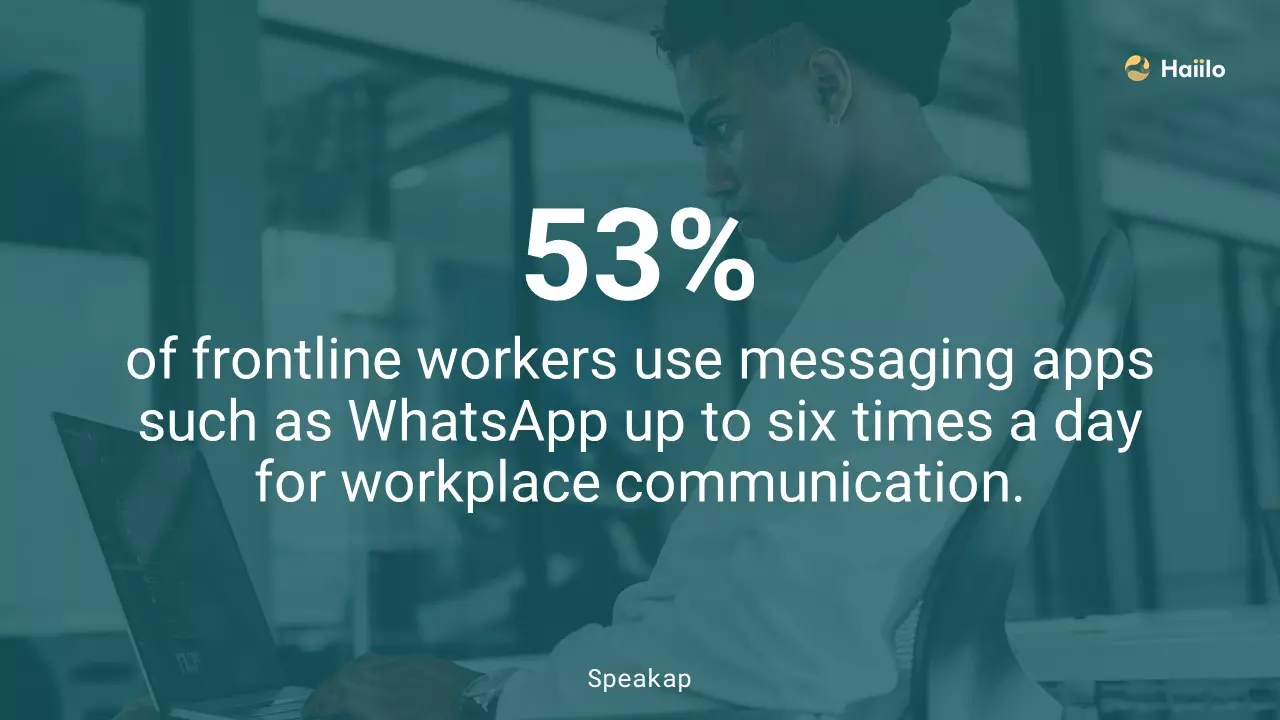
Frontline workers also use technology for collaboration. Some teams of frontline workers are known to use tools like WhatsApp for solving small day-to-day issues. According to research, more than half (53%) of frontline workers use messaging apps such as WhatsApp up to six times a day for workplace communication. At the same time, 16% of workers said their HR departments are unaware of this. And chances are HR wouldn’t approve of this, as there is no way for management to guarantee that the information shared through apps like WhatsApp stays within the company.
This is where secure company apps for employees make a measurable difference. By replacing shadow IT with a centralized platform, organizations gain visibility into communication flows while giving employees an approved, easy-to-use alternative. Store teams can flag operational issues, share photos, or access updated procedures instantly — without exposing sensitive data externally.
Implementing a dedicated employee engagement app with all the required security certifications such as ISO certification and GDPR compliance means that employers can rest assured their confidential information is protected. It also creates clear communication standards, audit trails, and structured collaboration spaces that support both compliance and productivity at scale.
Engage frontline workers
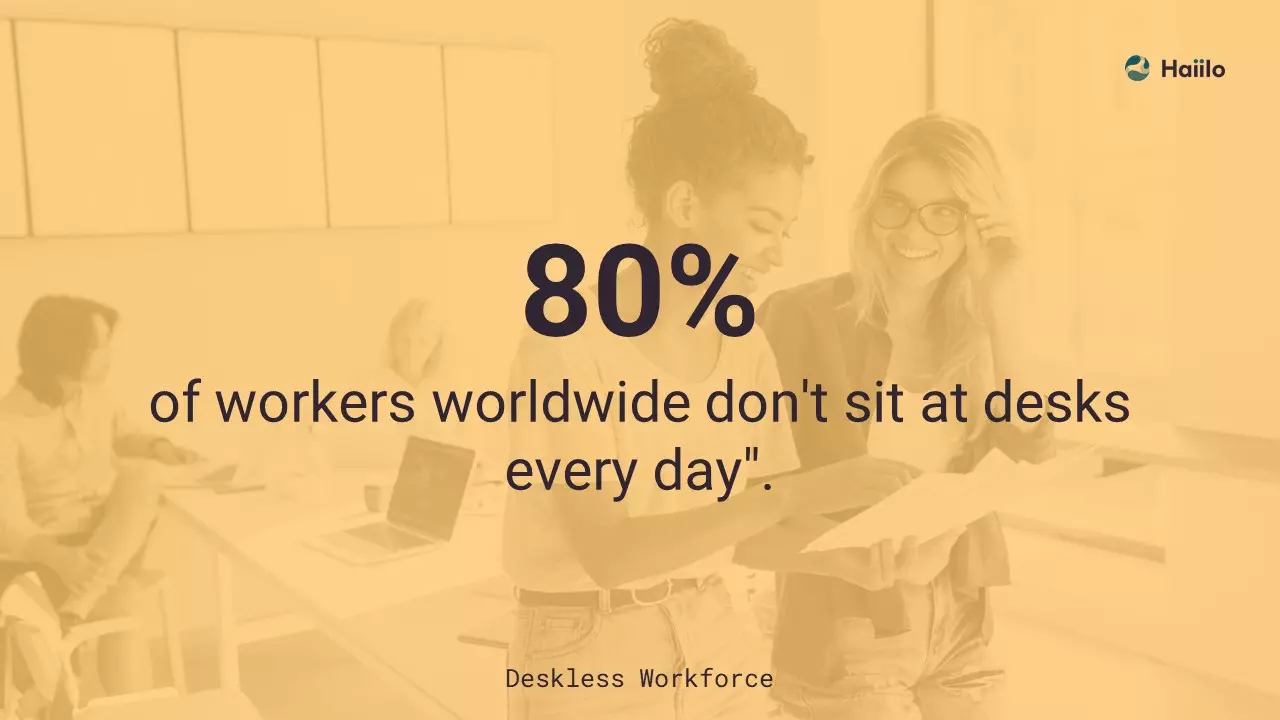
Frontline workers constitute the majority of the global workforce. Various industries all over the world such as retail, hospitality, healthcare, production, manufacturing, construction, and agriculture manage workers that don’t have designated working spaces. A significant portion of the global workforce operates in deskless or frontline roles across industries such as retail, healthcare, logistics, and manufacturing. As these sectors continue to expand, mobile-first engagement solutions are becoming essential for ensuring employees have equal access to information and communication — regardless of whether they sit at a desk.
As frontline workers are on the go all day, they often don’t have the time and tools needed to navigate complicated intranets or to even check their email. Many of them don’t even have a corporate email address to start with.
As a result, frontline workers often end up feeling isolated. In fact, according to the State of Deskless Workforce, over 40% of all deskless employees “don’t feel loved” by their employers.
An employee engagement app is a great way to connect with frontline workers. Comprehensive employee engagement software allows employees to access the app without a corporate email address. Deskless workers can just use their personal emails, phone numbers, and even identification numbers to get access to the company information they need. This removes one of the biggest access barriers and makes onboarding faster for high-turnover environments such as retail, manufacturing, or healthcare. Instead of waiting for IT setup, new hires can be connected on day one — with schedules, training materials, and key contacts at their fingertips.
This gives them an opportunity to feel closer to their colleagues and the company as a whole, enabling them to stay up-to-date with company news and chat with colleagues on work-related matters. Features like team feeds, location-based groups, and peer recognition also help frontline staff see how their work contributes to broader company goals, not just their shift or site.
In addition to that, an employee engagement app provides an opportunity to send instant push notifications to the entire staff, which is an important feature to ensure safety of all employees. Push notifications have proven to be an efficient way of communicating with deskless workers during the COVID-19 pandemic since they allowed the managers to inform employees of the changes to their work schedules and new governmental guidelines in a timely manner. The same functionality can be used for urgent recalls, weather alerts, or last-minute shift changes — ensuring critical information reaches the right people immediately.
Moreover, being able to monitor who has read a piece of communications and who hasn’t is key for employee engagement apps. Whether this is due to policy reasons or to ensure something like an important safety update was read by everyone, knowing who is engaged and who needs a reminder is crucial. Read receipts and analytics provide managers with clarity without relying on guesswork.
Lastly, the fact that an employee engagement and internal communication apps provide an opportunity to access all the important information through a smartphone is a game-changer for frontline workers that normally don’t have desks. Instead of being the last to know, they become fully informed participants in the organization.
📚Read on: Change Management: Definition, Best Practices & Examples
Unlock true employee advocacy
Employee advocacy is the process by which employees promote and share messages about the business they work for, along with its products and services, to their social media followers and friends.
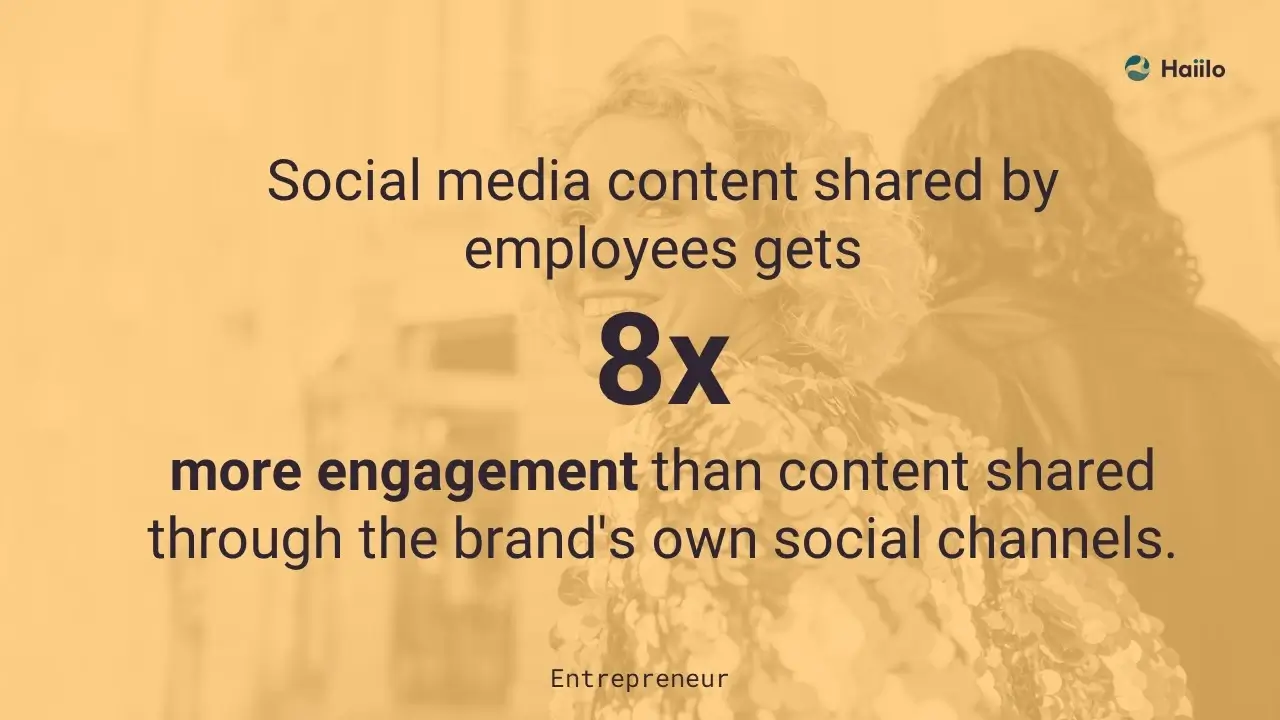
According to Entrepreneur, social media content shared by employees gets 8 times more engagement than content shared through the brand’s own social channels and is shared 25 times more frequently.
An employee engagement app makes advocacy scalable by giving employees ready-to-share content, clear guidelines, and visibility into what’s approved. Instead of sending links via email and hoping for participation, organizations can curate posts directly in the app, segmented by department or region. Employees can then share with one click, while communications teams track reach and engagement. This structured approach turns advocacy from a one-off initiative into an ongoing, measurable strategy — powered by informed and connected employees.
With that in mind, it’s no surprise many organizations are now looking into solutions providing employee advocacy features. Since social media is mostly consumed on mobile, it’s logical to expect your content to be shared more if it’s first seen on mobile devices as well. This is why it’s important to look for a mobile-first technology to turn all your employees into brand ambassadors. When advocacy tools are embedded directly into [company apps for employees], sharing becomes part of the daily workflow rather than an extra task employees need to remember.
Comprehensive employee engagement apps provide advocacy features that make sharing content as easy as clicking a single button. They are also able to integrate with all major social networks, reaching beyond just LinkedIn, Facebook, and Twitter, and enabling sharing to networks such as WeChat and Xing as well. This matters for organizations with global teams and diverse audiences. Marketing can tailor content by region or department, while employees receive pre-approved posts that align with their market, language, and role — increasing relevance and protecting brand consistency at the same time.
Employee advocacy is not just a way to boost your company content, it can also play a major role in boosting employee engagement and the feeling of unity among employees. Advocacy features within an employee engagement app help gamify the experience and create buzz around your content. They have leaderboards visible to all employees, which reflects how well employees stack up with their peers in driving traffic and engagement to the messages they share. This adds an element of competition that encourages your employees to share more content — for example, during product launches, recruitment campaigns, or event promotions where collective reach can significantly amplify results.
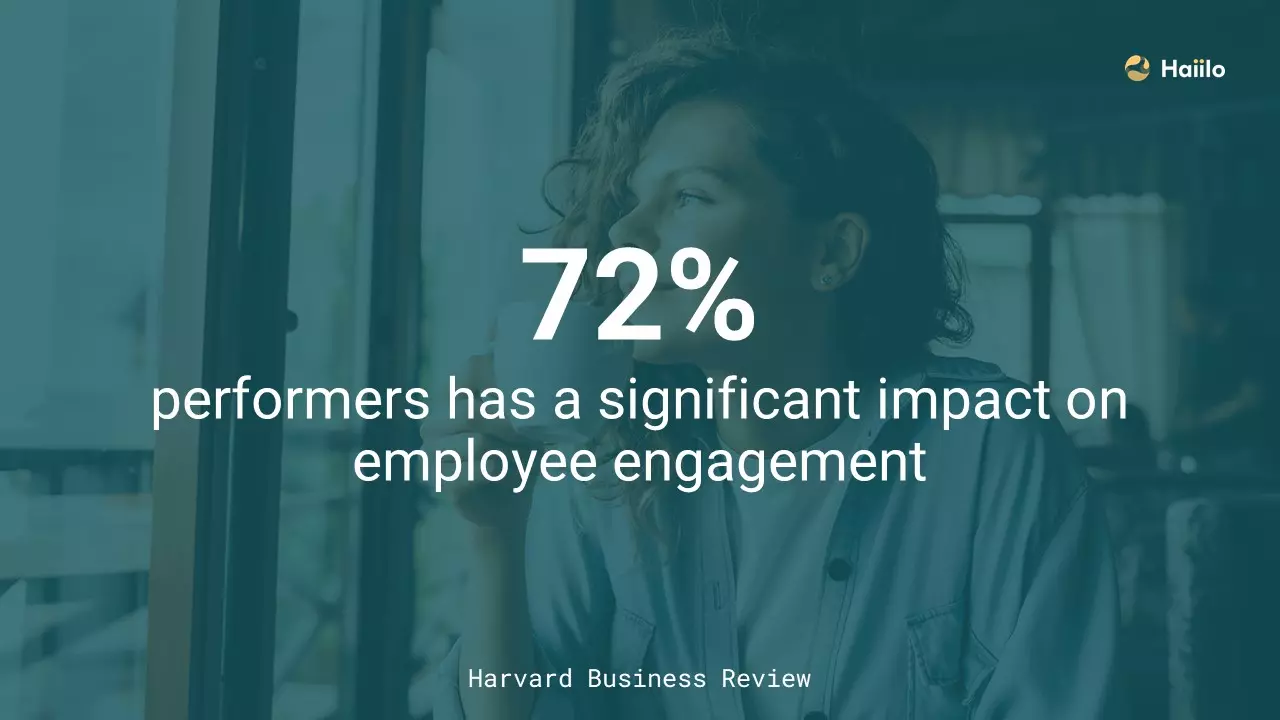
Another important benefit of this gamification feature is that it ensures employees get recognition for their brand ambassadorship. And there’s no doubt that recognition is the special sauce that keeps your employees engaged. A study conducted by Harvard Business Review found that 72% of employees say recognition given for high performers has a significant impact on employee engagement. By visibly rewarding top advocates — whether through internal shout-outs, badges, or tangible incentives — companies reinforce behaviors that drive both culture and measurable business impact.
💡 As proper workplace communication can also be a good motivator for employees, check out our blog about the top 5 communication skills in the workplace.
Reduce information overload and improve employee wellbeing
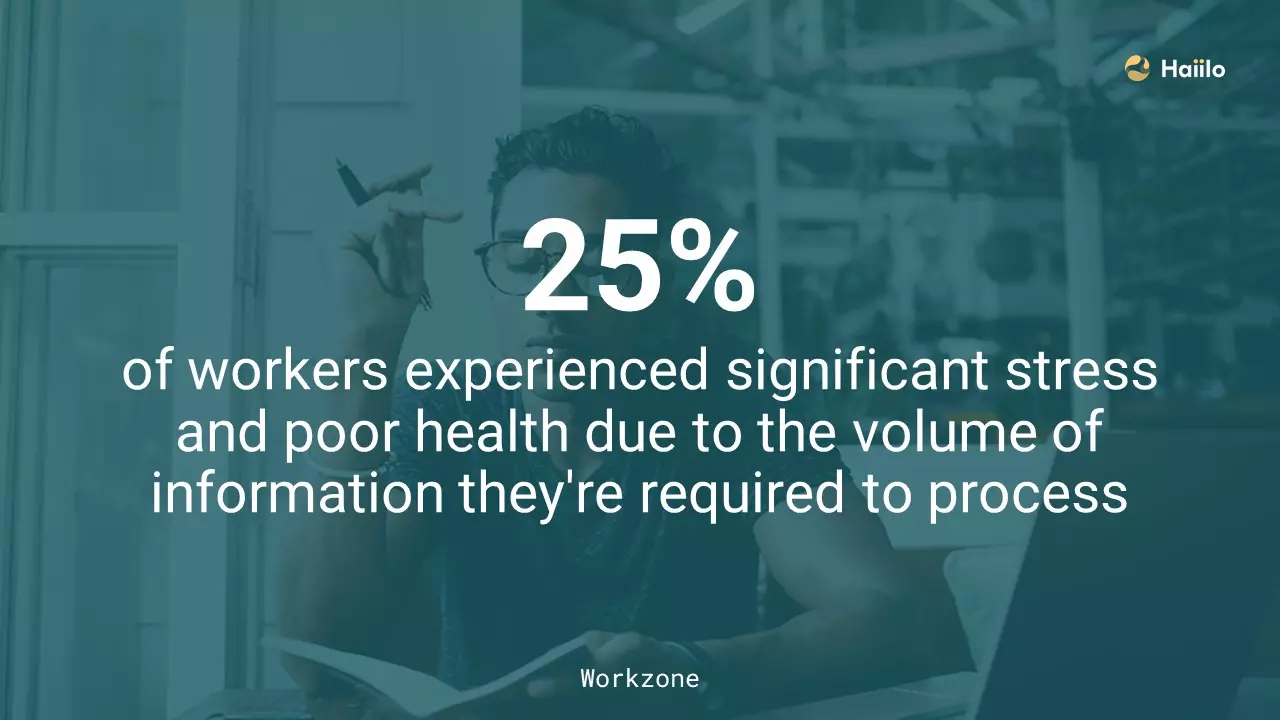
In their day-to-day work life, employees have to deal with a lot of information being communicated to them through a variety of channels. This has a negative impact on employee wellbeing and employee experience in the workplace. In fact, 25% of workers experienced significant stress and poor health due to the volume of information they’re required to process, and 68% of managers felt that information overload has had a negative impact on their personal and professional relationships.
Another study has revealed that employees deal with roughly 115 emails per day and yet, they miss out on one-third of the information exchanged through emails. Broadly speaking, employees spend on average 2.5 hours per day looking for the information they need to do their jobs. This constant context-switching doesn’t just hurt productivity — it increases frustration and makes important updates easier to overlook, especially in fast-paced environments.
In order to improve employee wellbeing and make it easy for employees to find the information they are looking for, organizations are now looking into employee engagement software that is capable of consolidating different communications channels under one roof, hence becoming one central hub of information for employees. Instead of toggling between inboxes, shared drives, chat tools, and intranets, employees can access updates, documents, and conversations in one structured space. Well-designed [company apps for employees] also provide powerful search functionality and content categorization, making it significantly easier to retrieve policies, training materials, or past announcements in seconds.
Advanced employee engagement apps provide granular segmentation allowing admins to filter the content their employees receive by role, department, location, language, and more. This way each employee only sees the information that is relevant to them, which helps them save time and stay productive. For example, a frontline retail associate doesn’t need the same updates as a regional HR manager. Targeted distribution ensures communication is precise rather than overwhelming.
Get access to valuable data and insights on employee engagement
Measuring employee engagement is a challenging task. It takes setting the right KPIs and access to the right technology for HR and internal communications departments to truly see whether their work yields the results they’re hoping to achieve. Without reliable data, decisions are often based on assumptions rather than evidence.
A proven technique of measuring employee engagement is arranging anonymous polls to measure employee engagement and satisfaction. This is why best-in-class employee engagement apps now provide such features to help managers quickly gather feedback from their employees. This enables management to get an understanding of how employees are feeling and how aligned they are with the goals and vision of the organization. Pulse surveys can also be deployed after major announcements or organizational changes to assess immediate impact.
Moreover, advanced employee engagement apps allow monitoring real-time engagement analytics. This allows you to measure the health of your organization by understanding how engaged your employees are with your communications at any given point. Beyond open and click rates, you can identify which teams are highly engaged and which may require additional support or clearer messaging.
Advanced analytics features are also able to give you suggestions on how to improve your communications. Modern A.I.-powered analytics are able to process massive amounts of data and suggest insights on how to improve current communications as well as what types of content to produce to keep your employees engaged. For instance, if video consistently outperforms long-form text in certain locations, communicators can adjust their strategy accordingly — making engagement efforts more targeted, efficient, and data-driven.
Employee Engagement App Synonyms
In the sea of workplace technology available today, it can be hard to understand all the different solutions out there. In fact, many of the solutions that have different names have similar features and functionalities. For example, software that offers just employee feedback may be listed in an employee engagement category on popular review sites such as G2.
Here are some additional examples you may find under this category:
- Employee experience platform
- Employee recognition software
- Employee feedback software
- Employee communication app
- Employee wellbeing software
- Employee productivity app
- People analytics sofwtare
The most important thing to remember when choosing a solution for your company is to look for a comprehensive solution that integrates with your existing tech stack.
Let’s take a look into which features and functionalities to look for!
What to Look for in an Employee Engagement App?
It’s an exciting time to work on improving employee engagement – there are so many employee apps out there to choose from! In fact, there are so many, it can be slightly overwhelming.
How do you pick the right one? This is an important decision, as an employee engagement app is something you roll out to the entire business. It’s vital to get it right the first time.
Here is a list of the most important features a modern employee engagement app must include:
- Content personalization and localization based on employees’ job functions, locations, spoken languages, and their interests
- Employee advocacy features with gamification capabilities to make sharing content easy and fun for employees
- Access without email address to make the app accessible for deskless workers
- Chat and document sharing to boost collaboration
- Slick mobile-first design to ensure a pleasant user experience
- Surveys and polls to help managers gather feedback on employee wellbeing
- Instant push notifications to alert employees about emergencies and content acknowledgement to ensure that these messages are being read
- Seamless integrations with other internal systems to ensure employees can access all the important information through their app
- Advanced analytics to help admins better understand employees and improve their communications efforts
The Haiilo employee engagement app ticks all the boxes above! Schedule a 15-minute intro call with our team to discuss your business goals, technology requirements and Haiilo pricing for your unique case!
Frequently Asked Questions About Company Apps for Employees
1. What are company apps for employees used for?
Company apps for employees are designed to centralize communication, resources, and engagement in one accessible place. Instead of relying on scattered emails, outdated intranets, or third-party messaging tools, organizations can use a single platform to share updates, documents, training materials, and important announcements. These apps also support features like chat, surveys, recognition, and employee advocacy — helping teams stay connected whether they’re in the office, remote, or on the frontline.
2. How do company apps for employees improve communication?
The biggest advantage is focus. Employees only receive information that’s relevant to their role, location, or department, thanks to targeted segmentation. Push notifications ensure urgent updates aren’t missed, while searchable content makes it easy to find policies or past communications in seconds. By reducing email overload and consolidating channels, company apps for employees help teams spend less time searching for information and more time actually getting work done.
3. Are company apps for employees secure?
Yes — when implemented properly. Unlike consumer messaging tools, dedicated company apps for employees are built with enterprise-grade security in mind. Features such as user authentication, role-based access, encrypted data, and compliance with standards like GDPR help protect sensitive company information. Admins also maintain full visibility and control over content distribution, which is critical for regulated industries or large, distributed workforces.
4. Can company apps for employees increase engagement?
Absolutely. Beyond communication, these apps support engagement through polls, feedback tools, recognition features, and employee advocacy programs. Employees can share company content externally, celebrate achievements internally, and participate in surveys that give leadership real insight into sentiment. When people feel informed, heard, and recognized, engagement naturally follows — and company apps for employees make that process scalable.
See the benefits of using Haiilo today