
As the modern world of work grows progressively more complex, organisations are under constant pressure to improve collaboration, boost productivity, and keep employees engaged—often across multiple locations, time zones, and tools. In response, more companies are shifting towards becoming a digital-first business, where digital tools and ways of working are not simply add-ons, but the foundation of how work gets done.
This shift is not happening in a vacuum. Adoption of digital workplace platforms is already widespread, with 82% of organizations now using some form of digital workplace technology, and the majority of employees relying on digital tools every single day to collaborate and stay informed. At the same time, engagement remains a global challenge. Gallup reports that only 21% of employees worldwide are engaged at work, highlighting a clear disconnect between how organisations operate and how employees experience work on a day-to-day basis.
At the heart of any successful digital-first business is a clear focus on reimagining how employees experience work in a digital age. This is where the digital employee experience (DEX) becomes critical. Every interaction—logging into systems, finding information, collaborating with colleagues, or accessing support—shapes how productive, motivated, and connected employees feel. According to Ivanti’s 2025 Digital Employee Experience Report, 87% of IT teams say a strong digital employee experience directly improves productivity, while 85% link it to higher employee satisfaction.
In this blog, we will explore why becoming a digital-first business is no longer optional, how it directly shapes the employee experience, and why organisations that invest in thoughtful, people‑centred digital transformation are far better positioned to thrive in the modern workplace.
What is a digital-first business?
A digital first business is one that puts digital technologies at the center of how work gets done, how people communicate, and how the organization grows. Rather than treating digital tools as optional or secondary, a digital first business designs its processes, strategies, and employee experiences with digital as the default. The result is work that flows more easily—across teams, locations, and time zones—without constant friction.
This shift is already well underway. Research from Gitnux shows that 82% of organizations now use digital workplace platforms, reflecting how widely digital tools are embedded into everyday operations. But widespread adoption doesn’t automatically translate into better work. Gallup reports that global employee engagement remains at just 21%, highlighting a clear gap between having digital tools and using them in ways that genuinely support employees.
That’s where the distinction between technology and mindset becomes critical. A digital first business goes beyond deploying platforms—it embeds digital thinking into decision‑making, communication, and leadership behavior. Digital channels become the primary way employees collaborate and share knowledge. Information is easy to find. Communication is consistent and transparent. Employees are trusted to work flexibly, supported by systems that are built for how work actually happens today.
Strong digital first businesses also recognize the link between digital experience and business outcomes. According to Ivanti’s 2025 Digital Employee Experience Report, 87% of IT leaders say a strong digital employee experience improves productivity, while 85% associate it with higher employee satisfaction. These findings reinforce that digital maturity isn’t just an IT concern—it’s a core driver of performance, retention, and resilience.
Ultimately, a digital first business aims to create seamless, intuitive experiences for both employees and customers. That means investing in the right technologies and ensuring employees have the skills, confidence, and support to use them well. When digital ways of working are truly embedded, technology fades into the background—and better work takes its place.
As nicely put by Suzie Robinson, Cleabox Consultant:

The importance of digital for modern businesses

Building and nurturing a digital-first business is essential for several reasons:
Remote and hybrid work
A recent Gartner survey reports that in 2021, 32% of the global workforce worked remotely. That number is expected to grow as people seek more flexibility and businesses try to keep up with the competition.
With more companies embracing remote and hybrid work models, digital collaboration tools are crucial for maintaining productivity, engagement, and communication among distributed teams.
Silos and transparency
When employees adopt a digital-first approach and use the right workplace technology, they can collaborate cross-functionally and asynchronously eliminating various communication barriers and organizational silos.
Furthermore, it helps prevent information overload, encourages workplace transparency, and makes information readily available.
Agility and innovation
A digital-first culture enables businesses to be more agile, allowing them to respond to changes quickly and innovate faster. Companies that rely on traditional, siloed ways of working often struggle to keep pace with digital-native competitors.
Employee expectations
Today’s multigenerational workforce, particularly Millennials and Gen Z, have grown up in a digital world. They expect seamless, efficient workplace tools that align with their personal tech experiences. They expect high levels of digital personalization and meeting these expectations is crucial for attracting and retaining top talent.
Build a digital-first business with Haiilo!
Globalization and scalability
Businesses are no longer confined to specific geographic locations. A digital-first approach enables teams from around the world to collaborate efficiently, ensuring that the company can scale effectively.
Artificial intelligence
Organizations that manage to build digital-first cultures are also more likely to adopt AI-powered technologies in their organizations, putting these organizations ahead of their competition.
Artificial intelligence is essential for streamlining repetitive work and eliminating time wasted on work that doesn’t need human intervention.
💡 Related: 5 ways to use AI in internal communications!
The role of digital employee experience in a digital-first business
While the concept of a digital-first business covers the broader organizational approach, digital employee experience (DEX) refers to employees’ specific experience with digital tools and platforms within the workplace. In essence, it’s about how well these technologies enable employees to do their jobs.
Investing in DEX is crucial because employees who have a positive digital workplace experience are more engaged, productive, and satisfied with their roles. Let’s look at some reasons why DEX is so important in a digital-first world:
Enhances employee engagement
Employee engagement is a major concern for organizations, especially as remote work becomes more common. According to a Gallup report, only 32% of employees in the U.S. are engaged at work, and one of the key factors influencing this is access to efficient tools and technologies. A positive digital employee experience helps employees stay connected to their teams, leaders, and organizational goals, leading to higher engagement.

Digital-first companies provide intuitive platforms for communication, project management, and collaboration that help foster a sense of belonging, even in a remote environment. Employees feel empowered when they have the right tools to do their jobs efficiently, leading to a stronger connection with their workplace.
Boosts productivity
An outdated tech infrastructure can be a major drain on productivity. According to a study by The Workforce Institute at Kronos, the average employee spends 22 minutes a day dealing with IT-related issues. For companies with thousands of employees, this quickly adds up to a significant loss in productivity.
By investing in a modern digital ecosystem, companies can reduce the friction caused by inefficient systems. Tools that enable automation, simplify workflows, facilitate real-time collaboration and information search significantly reduce the time employees spend on administrative tasks. Employees with a streamlined digital experience can be more effective, ultimately driving better business outcomes.
Fosters better collaboration
In a traditional office setting, collaboration happens organically through meetings, hallway conversations, or quick check-ins at someone’s desk. But in a digital-first culture, companies need to foster collaboration differently, especially when employees are working remotely or in hybrid models.
Digital tools such as Slack, Microsoft Teams, or Haiilo can bridge the gap between remote teams, enabling seamless communication, file sharing, and brainstorming, no matter where employees are located. A well-structured digital employee experience ensures that employees can collaborate effectively without facing bottlenecks or miscommunication.
A study by the Harvard Business Review found that employees who used social tools at work were 31% more likely to find the right coworkers and 88% more likely to know who could put them in contact with the right person.

This demonstrates how critical it is for companies to adopt digital‑first platforms that allow employees to work together seamlessly. For a digital first business, these platforms form the backbone of collaboration—connecting people, systems, and information in one cohesive experience rather than forcing employees to juggle disconnected tools. Research from Deloitte shows that when digital systems are fragmented, employees lose time navigating technology instead of doing meaningful work, directly impacting productivity and engagement. In contrast, organizations that invest in unified digital experiences create clarity, reduce friction, and enable faster decision‑making across teams.
Improves employee retention and satisfaction
In an increasingly competitive job market, employee retention is a major challenge for modern organizations. One of the quickest ways to lose talent is forcing employees to work with outdated technology or inefficient workflows—especially in a digital first business, where expectations for seamless tools are high. Independent research shows that access to modern technology is now a deciding factor for many workers. A widely cited Adobe study reported that 70% of Gen Z employees would leave their job for better technology, while the figure remains high across other generations as well.
A strong digital employee experience plays a direct role in reducing this frustration. Ivanti’s 2025 Digital Employee Experience Report found that 77% of IT leaders believe a well‑designed digital experience improves employee retention, alongside gains in productivity and satisfaction. By investing in the tools employees rely on every day, digital first businesses send a clear signal that employees are supported, trusted, and set up to succeed. Flexible, well-designed digital environments also contribute to well‑being by allowing employees to work more autonomously and productively, rather than around technology limitations.
Empowers data‑driven decision‑making
In a digital first business, access to real‑time data and insights enables better decisions at every level of the organization. Instead of relying on gut instinct or outdated reports, employees can use live data from digital platforms to identify patterns, spot risks early, and take action faster. According to McKinsey, organizations that use employee and operational data effectively are significantly better positioned to improve performance, engagement, and workforce planning (McKinsey HR Monitor 2025).
Employee listening tools are a powerful example. These solutions allow businesses to continuously gather feedback, sentiment, and behavioral data from across the workforce. By analyzing this data, digital first businesses gain a deeper understanding of employee needs, challenges, and expectations—enabling leaders to respond proactively rather than reactively. Over time, this creates a more responsive, transparent, and resilient organization built on evidence, not assumption.
How to build a digital-first business
Even though the digital workplace is regarded as a priority by the majority of organizations, many feel that there is room for improvement and evolution.
According to SMG, only 26% regard their digital workplace as “mature” with a further 45% regarding it as “about mid-way”.

So transitioning to a digital-first business requires more than just implementing new tools and technologies. It involves a holistic shift in mindset, leadership, and strategy. Here are some steps to help companies build a strong digital-first business:
Prioritize leadership buy-in
To successfully foster a digital-first culture, leadership must be on board. Leaders need to champion digital transformation and demonstrate how digital tools and platforms can improve both business outcomes and employee satisfaction. Leadership support is essential for driving the adoption of new technologies across the organization.
Optimize internal communications
Internal communications and HR departments play a critical role in building, managing, and nurturing a digital-first culture.
Frequent communication about the importance of workplace technology is important for the adoption and usage of newly implemented solutions.
To boost adoption, consider implementing internal podcasts, employee newsletters, open discussions, or other initiatives focused on promotinga digital-first mindset among your employees.
Invest in the right tools
Not all digital tools are created equal. It’s important to carefully select platforms that are user-friendly, scalable, and integrate seamlessly into existing workflows. Tools for communication, collaboration, project management, and analytics should be prioritized. These tools should empower employees, not overwhelm them.
Focus on continuous training
Another 2021 Gartner survey found that 60% of employees are frustrated by new software because of inadequate training and support.

So implementing new technologies is only half the battle. Ensuring employees can use these tools effectively is the other half. Companies should invest in continuous training and development programs that help employees stay up-to-date with the latest digital tools and best practices.
Encourage a culture of innovation
A digital-first culture thrives when employees feel empowered to innovate and when they feel psychologically safe to share their ideas and concerns.
Encourage experimentation and risk-taking, and create a safe environment for employees to test new ideas. This not only drives creativity but also ensures the company is continuously evolving and improving.
Measure and optimize the digital employee experience
Finally, it’s crucial to continually measure the success of your digital tools and employee experience. Regularly collect feedback from employees on the usability and effectiveness of the digital platforms in place. Use this data to optimize and enhance the employee experience.
The future of work: why a digital-first business is non-negotiable
As we look ahead, one thing is clear: the future of work will be shaped by organizations that fully commit to becoming a digital first business. Digital transformation is no longer a temporary response to disruption—it is a permanent shift in how work is designed, experienced, and delivered. Research from Deloitte shows that hybrid and distributed work models are now embedded across industries, with employees expecting digital tools that support flexibility, clarity, and autonomy as standard.
Organizations that fail to adapt risk falling behind not just in productivity, but in their ability to attract and retain talent. Gallup continues to report low global engagement levels, reinforcing that outdated processes and poor digital experiences directly undermine performance and morale. In contrast, digital first businesses design work around people—using technology to remove friction, enable collaboration, and create meaningful connections across teams.
Importantly, being a digital first business isn’t about tools alone. It’s about creating an environment where employees feel informed, empowered, and supported to do their best work. Prioritizing the digital employee experience enables stronger collaboration, more informed decision‑making, and long‑term business resilience.
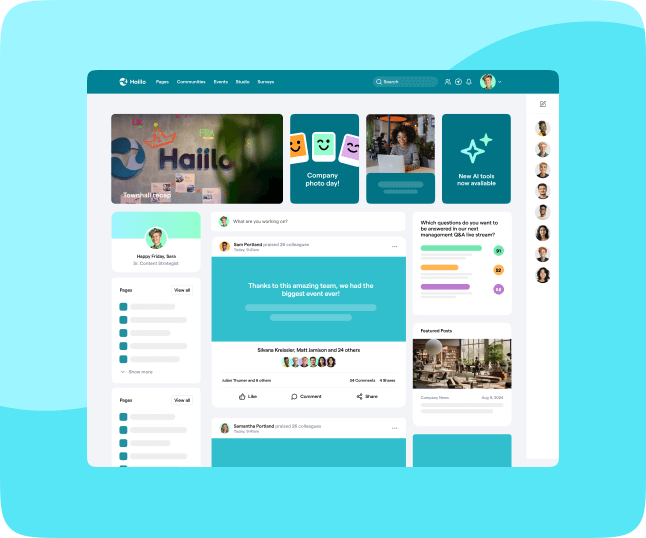
Haiilo empowers organizations worldwide to build and evolve truly digital first workplaces. Its modern intranet provides a personalized, accessible digital employee experience—ensuring employees receive the right information at the right time, wherever they work. Built‑in employee listening tools allow internal communications and HR teams to capture real‑time feedback, understand what resonates, and continuously improve how they engage their workforce.
As an AI‑powered workplace platform, Haiilo also simplifies content creation and distribution, improves search and information discovery, and helps organizations leverage data to make smarter, people‑centred decisions. For organizations navigating an increasingly complex world of work, investing in a digital first business is no longer optional—it’s essential for sustainable success.
FAQs: Digital First Business
What is a digital first business?
A digital first business is an organization that designs its operations, communication, and decision‑making with digital as the default—not an add‑on. Instead of adapting traditional ways of working to fit new tools, digital first businesses build processes around digital platforms from the start. This approach enables greater flexibility, faster collaboration, and more resilient ways of working in hybrid and remote environments.
How is a digital first business different from digital transformation?
Digital transformation is often treated as a one‑time initiative or series of projects. A digital first business, by contrast, represents an ongoing mindset shift. It embeds digital thinking into culture, leadership, and everyday workflows, ensuring technology continuously supports both employee and customer experiences.
Why is becoming a digital first business so important now?
Changing employee expectations, widespread hybrid work, and rapid advances in AI have made digital ways of working non‑negotiable. Research consistently shows that employee experience now lives largely in digital systems, meaning poor workplace technology directly impacts engagement, productivity, and retention.
Does a digital first business only apply to large or tech‑focused companies?
No. While digital first thinking is common in technology companies, small and mid‑sized organizations often benefit the most. Cloud‑based platforms and modern workplace tools allow businesses of all sizes to scale efficiently, reduce complexity, and compete more effectively without large IT footprints.
What role does employee experience play in a digital first business?
Employee experience is central. In a digital first business, the digital employee experience shapes how people access information, collaborate, and feel connected to their organization. Studies show that improving digital employee experience supports better engagement, well‑being, and long‑term performance—not just operational efficiency.
Is going digital first mostly about technology?
Technology is important, but mindset matters more. Being a digital first business means rethinking how work happens—prioritizing clarity, trust, accessibility, and data‑driven decisions. When digital tools align with human needs, they become enablers of better work rather than sources of friction.
Check out our report on the synergy of multichannel communication and employee listening, featuring Forrester!