
Digital employee experience plays a critical role in shaping the overall employee experience in the workplace. Today, when employees depend on technology to communicate, collaborate, and get their work done, it is essential that organizations put more effort into enabling their people with the right technology.
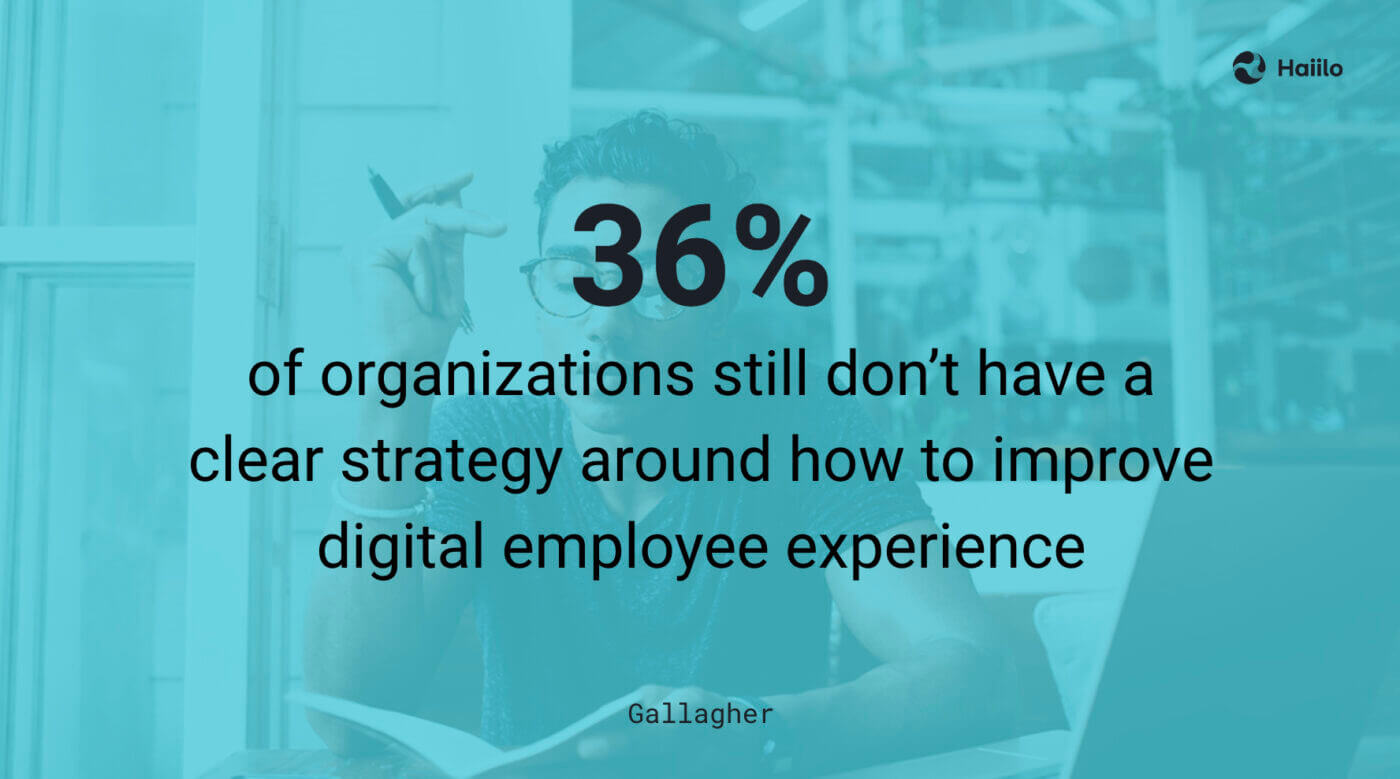
Unfortunately, according to Gallagher, dissatisfaction with internal technology and channels is one of the biggest problems for larger organizations with more than 500 employees, resulting in poor digital employee experience. Yet, 36% of organizations still don’t have a clear strategy around how to improve it.
Without a clear approach to digital employee experience management, employees often struggle with disconnected tools, information silos, and inefficient workflows. Instead of supporting productivity, workplace technology can quickly become a source of frustration. For example, employees may waste valuable time switching between multiple platforms just to find documents, communicate with colleagues, or complete everyday tasks.
Organizations that actively manage their digital workplace experience take a more strategic approach. They evaluate how employees interact with tools, identify friction points, and continuously improve the digital environment to make work easier and more intuitive.
In this comprehensive guide, we define digital employee experience (DEX), explain why it is important, how to measure it, and how to improve digital employee experience. We also include some of the best platforms to use for optimizing the ROI of your workplace tech ecosystem.
What is employee experience?
Before we define digital employee experience (DEX), let’s clarify employee experience (EX) — which is the quality of an employee’s interactions, feelings, and perceptions throughout their entire journey at a company.
It includes everything from recruitment and onboarding through ongoing activities such as collaboration with colleagues, learning and development, and day to day work experiences, all the way to offboarding. Each interaction shapes how employees perceive their workplace.
When organizations intentionally design a positive employee experience, employees feel supported, informed, and able to do their best work. As a result, companies often see stronger engagement, improved productivity, and higher employee retention.
Today, much of this experience is shaped by workplace technology. That is why many organizations now invest in digital employee experience management to ensure that the digital tools employees rely on actually help them work more effectively rather than slow them down.
What is digital employee experience?
Digital employee experience (DEX) describes how employees interact with technology, tools, and digital resources in the workplace. It reflects the overall perception of how useful, intuitive, and reliable the tools employees rely on every day really are.
When digital tools are easy to use and well integrated, employees can focus on meaningful work. When systems are disconnected or difficult to navigate, productivity suffers and frustration grows.
Digital employee experience typically includes several important components:
- Tools and systems – Software, hardware, employee platforms, and systems used to perform daily work;
- Ongoing experience – Ease of use, reliability, and how well tools support everyday workflows;
- Personalization – The ability to adapt tools to different roles, preferences, and work styles;
- Mobility – Accessing tools and resources from any device or location, including mobile apps;
- Skills and training – Opportunities for employees to learn digital skills and improve their proficiency with workplace technology.
The goal is to improve employee productivity, collaboration, and engagement at work. A strong digital employee experience can also help organizations attract top talent and strengthen job satisfaction and retention.
Many organizations now take a structured approach through digital employee experience management, which focuses on continuously improving how employees interact with workplace technology. This includes identifying friction points, simplifying tool ecosystems, and ensuring employees can easily access the information and resources they need.
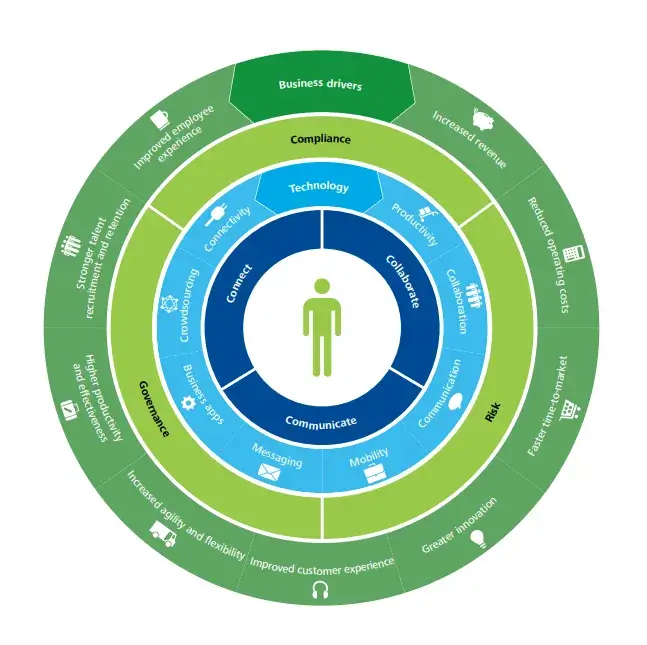
Deloitte conducted one of the most comprehensive analyses of the emergence and characteristics of the digital workplace.
In their framework, they explain that a digital workplace enables employees to collaborate, communicate, and connect with each other more easily, ultimately helping organizations build stronger engagement, loyalty, and retention.
Other experts in the space of workplace technology also agree on the importance of technology in shaping the overall employee experience.
Harvard Business Review goes as far as equalling the technology to the workplace itself:
“As this trend persists, the technology experiences that employers provide will more or less define the employee experience — technology and workplace tools are, for all intents and purposes, the new workplace. As such, they’re becoming central in attracting and retaining new talent, fostering workplace culture, creating productivity, and more.”
Why is digital employee experience important?
Digital employee experience has a direct impact on how employees do their jobs. The tools people rely on every day shape how easily they can collaborate, find information, and complete their work. When workplace technology is poorly designed or fragmented, employees often face unnecessary friction, switching between systems, searching for documents, or repeating tasks across multiple platforms.
Organizations that invest in strong digital employee experience management focus on simplifying the digital workplace. By integrating tools, improving usability, and ensuring employees have access to the information they need, companies can remove common barriers to productivity.
Modern workplace platforms also help streamline employee communication and make collaboration easier across departments, locations, and roles. When the right systems are in place, organizations can support stronger employee engagement and enable more effective teamwork between office-based, remote, and frontline employees.
Here are some of the key reasons why digital employee experience matters.
1. Employee satisfaction and engagement
The quality of workplace technology strongly influences how employees feel about their jobs. If systems are slow, confusing, or disconnected, frustration quickly builds and engagement drops.
Workplace technology plays a major role in engagement. Gallup research shows that employees who feel they have the technology they need to do their jobs effectively are 2.6 times more likely to be engaged at work.
At the same time, a study highlighted by Harvard Business Review found that only 30% of employees believe their workplace technology exceeds expectations. This gap shows how many organizations still struggle to deliver a strong digital workplace experience.
When companies actively improve their digital environments through effective digital employee experience management, employees spend less time dealing with technical frustrations and more time focusing on meaningful work.
Organizations that create better digital work environments often see measurable performance improvements. Gallup research shows that highly engaged teams achieve 17% higher productivity and 23% higher profitability.
📹 Check out our Masterclass about how to drive employee engagement in the workplace.
2. Employee productivity
Workplace technology plays a major role in how efficiently employees can complete their tasks. When tools are fragmented or difficult to access, employees often spend unnecessary time navigating systems instead of focusing on meaningful work.
Research shows that employees working for organizations with accessible digital tools and applications spend up to 17% less time on manual processes. Modern workplace solutions such as social intranets also make it easier to locate information, collaborate with colleagues, and share knowledge across departments.
By improving information access and reducing time spent searching for resources, organizations can significantly improve employee productivity. This is why many companies invest in structured digital employee experience management initiatives to streamline tools, remove friction, and create more efficient digital workflows.
3. Employee retention
Technology also plays an important role in whether employees choose to stay with their organization. When workplace systems are outdated or difficult to use, frustration can quickly affect employee satisfaction.
Access to effective workplace technology also affects retention. Gallup research shows that employees who strongly agree they have the tools they need to do their job are 47% less likely to experience burnout, which plays a key role in employee retention.
Organizations that prioritize digital employee experience management ensure employees have reliable tools, smooth workflows, and easy access to information. These improvements reduce frustration and contribute to a more positive work environment.
4. Talent attraction
The quality of workplace technology also influences how attractive an organization appears to potential candidates. Job seekers increasingly expect modern tools and flexible digital work environments.
Modern employees expect workplace tools to be intuitive and easy to use. Salesforce research shows that 73% of employees expect workplace technology to be as easy to use as consumer technology.
Organizations that invest in digital employee experience management signal that they are committed to providing a modern and supportive workplace. This not only improves the day to day experience for existing employees but also strengthens employer branding and helps attract top talent.
Try Haiilo to boost digital employee experience in your organization!
How to measure digital employee experience?
There are multiple ways to measure digital employee experience and understand how employees feel about the tools, processes, and systems they rely on every day. Effective digital employee experience management combines quantitative data with qualitative feedback to identify friction points and continuously improve the digital workplace.
Here are some practical ways organizations can measure digital employee experience:
- Use employee listening features – Intranet platforms like Haiilo often include built in listening tools that help organizations collect feedback and understand how employees feel about their digital environment.
- Pulse or sentiment employee engagement surveys – Short, regular surveys help measure satisfaction with workplace tools and track how employee sentiment evolves over time.
- Track adoption metrics – Monitor how frequently tools are used, how quickly employees complete onboarding, and how efficiently tasks are completed within systems.
- Participation levels – Look at metrics such as views, comments, and contributions on social intranet platforms to understand how actively employees engage with digital communication channels.
- Retention tracking – Compare improvements in digital tools or systems with changes in employee retention trends.
- Qualitative interviews – Speak directly with employees to gain deeper insights into how tools affect their daily work experience.
- Workforce analytics – Gather aggregated data about how employees interact with workplace systems and digital platforms.
- Benchmarking – Compare key employee experience metrics against industry standards or competitors to identify areas for improvement.
- Net Promoter Score (NPS) – Ask employees how likely they are to recommend certain tools or platforms to colleagues to measure satisfaction and usability.
The goal is to understand employee sentiment, monitor software adoption, and identify recurring issues that affect everyday work. By combining multiple data sources, organizations gain a clearer picture of how their digital workplace influences engagement, productivity, and retention over time.
Digital employee experience management
Digital employee experience management and monitoring involves strategically aligning technology tools and resources to optimize employees’ work. The key aspects of the digital employee experience management include:
- Implementing the right solutions;
- Gathering feedback;
- Analyzing metrics on tool usage and performance;
- Addressing friction points;
- Continuously enhancing the digital tools and support to employees.
Digital employee experience management can help ensure the effectiveness of the tools implemented.
How to improve digital employee experience?
Improving digital employee experience requires more than simply introducing new tools. Organizations need a clear strategy that focuses on how employees actually interact with workplace technology. Effective digital employee experience management focuses on simplifying the digital environment, removing friction between systems, and making everyday work easier.
Many organizations still struggle to transform their companies into truly functional digital workplaces. The modern workplace tech ecosystem is complex, and there is no universal solution that works for every organization.
However, there are several practical steps companies can take to improve digital employee experience.
1. Implement an employee experience platform
Implementing a unified employee experience platform allows employees to interact, collaborate, and communicate more efficiently across the organization while improving both engagement and productivity.
These platforms go beyond traditional intranets by supporting key employee journeys and helping organizations improve the overall digital workplace experience.
An employee experience platform can improve the digital workplace in several ways:
- Centralized access to information and tools;
- Personalized digital experiences tailored to employee roles, locations, and needs;
- Features such as employee feedback surveys, recognition, and goal tracking that improve engagement;
- Simplified workflows that reduce manual tasks and increase productivity;
- Accessibility from any device, supporting hybrid, remote, and frontline work;
- Analytics and insights to understand how employees interact with digital tools;
- Social features that help strengthen employee connections;
- Automated processes such as digital onboarding and internal workflows.
Overall, an employee experience platform simplifies how employees interact with workplace systems and information.
2. Consider a company mobile app
Leveraging an employee app is another effective way to improve digital experience and communication. A company app acts as a mobile first platform where employees can access tools, information, and communication channels from any location.
Different apps serve different purposes. For example, Haiilo helps organizations improve employee experience and engagement, while tools such as Slack focus on messaging and collaboration, and Flock combines communication with scheduling.
Here are some of the ways a mobile employee app can improve digital employee experience:
- Centralized access to information: A single hub where employees can find tools, resources, and updates;
- Personalized experiences: Employees receive relevant content and information;
- Simplified internal communication: Messaging, announcements, and communities improve collaboration;
- Access from anywhere: Employees can stay connected from any device or location, including frontline environments;
- Gamification: Features such as points and achievements can encourage participation and engagement.
3. Deliver personalized experiences
Improving digital employee experience also requires a deep understanding of your workforce, including their roles, preferences, and working environments.
Many workplace systems still lack the level of personalization employees expect from modern digital products. Without personalized experiences, adoption rates often remain low.
You can start by distributing a simple employee survey to understand how employees currently experience workplace tools and identify areas that require improvement.
Platforms such as workplace engagement apps and communication platforms can deliver more tailored experiences based on roles, interests, and locations.
For example, Haiilo enables organizations to create personalized news feeds based on employees’ locations, roles, languages, and interests. This helps internal communication and HR teams deliver relevant content at the right time and improve engagement across employee journeys.
4. Implement the right workplace tech stack
Information overload remains a major challenge in digital workplaces. McKinsey research shows that employees spend up to 57% of their time communicating or searching for information instead of doing focused work.
Many remote and hybrid workers also report difficulties connecting with colleagues and collaborating efficiently.
To address these challenges, organizations should consider implementing core workplace technologies such as:
- Modern employee intranets that connect employees, information, and tools;
- Instant messaging platforms for real time communication;
- Productivity and project management software for team collaboration;
- Document management systems to organize and manage company knowledge.
5. Invest more in integrations
Integrations are essential for creating a seamless digital workplace experience.
According to research from Deloitte, 70% of employees report entering the same data into multiple systems because tools are not properly connected.
As Deloitte explains:
“By integrating the technologies that employees use, the digital workplace breaks down communication barriers, positioning organizations to transform employee experience by fostering efficiency, innovation, and growth.”
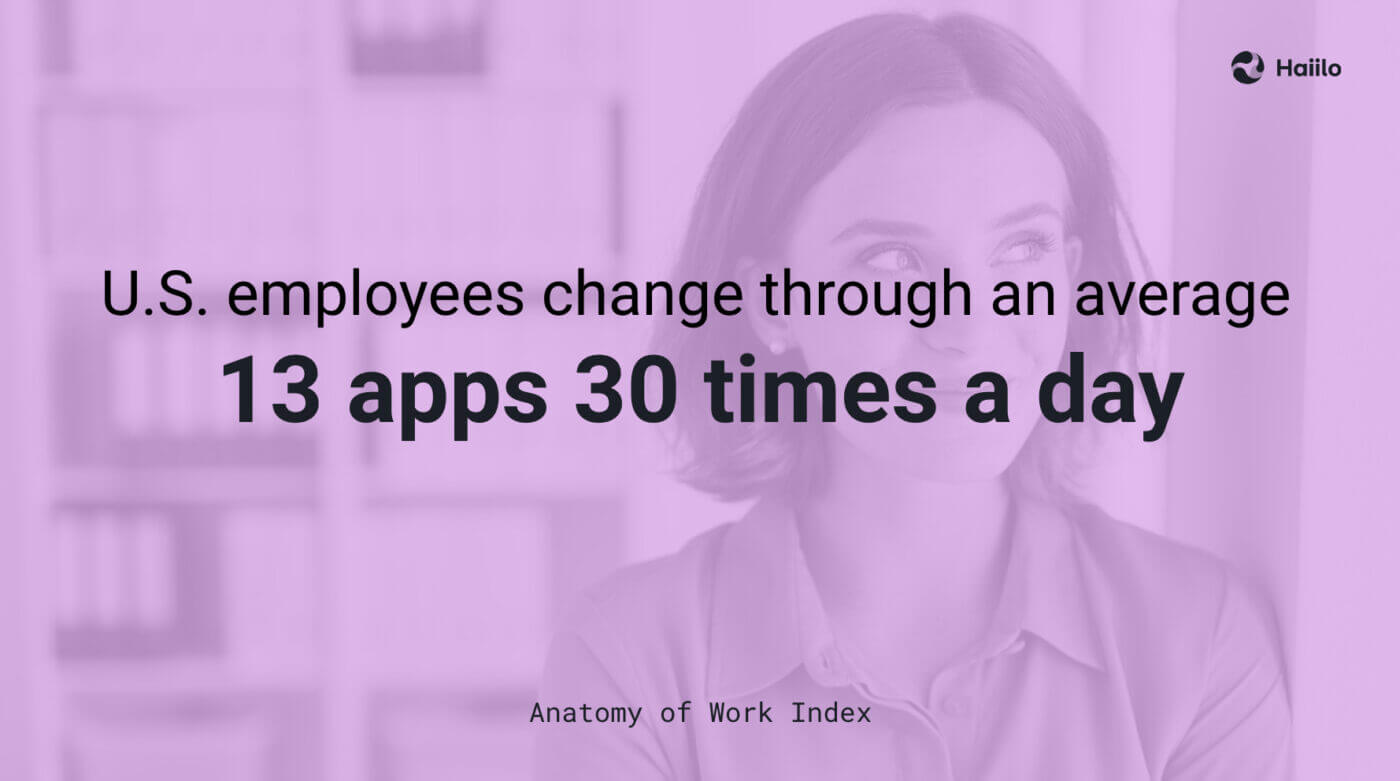
Research also shows that employees switch between workplace applications dozens of times each day. According to Asana’s Anatomy of Work Index, employees change between an average of 13 apps around 30 times per day, and 26% say app overload reduces their productivity.
By improving system integrations and simplifying the digital ecosystem, organizations can significantly strengthen their digital employee experience management strategy.
Hence, it is important that organizations understand the benefits of integrating as many tools as possible into a single platform. Creating a central place from which employees can connect with their peers, find important news, documents, and resources, and access the tools they use every day helps reduce app overload and simplify daily work.
Centralized digital environments also make it easier for employees to navigate workplace systems and stay informed without constantly switching between platforms. This approach is a key part of effective digital employee experience management because it reduces friction and helps employees focus on meaningful work instead of managing multiple tools.
6. Make technology accessible to everyone
Accessibility is another major factor in improving digital employee experience, particularly for organizations with frontline, remote, or mobile employees who do not work at a traditional desk.
Today’s workforce is increasingly distributed. Many employees work remotely, while large parts of the global workforce consist of frontline roles such as healthcare workers, retail employees, logistics staff, and field technicians.
Because of this, organizations need digital tools that employees can easily access from any device and location. Mobile optimized platforms and applications allow employees to stay connected, receive updates, and access essential information even when they are not sitting at a desk.
When building a digital employee experience management strategy, companies should prioritize solutions that offer strong mobile capabilities and intuitive interfaces for employees who work on the go.
7. Get the implementation and workflows right
User friendliness is essential for delivering a positive digital employee experience. Even the most advanced tools will fail if employees struggle to understand how to use them.
Successful implementations focus on simple onboarding, clear workflows, and proper training so employees can quickly adopt new tools and processes.
Organizations should also regularly review how systems are used in practice. Identifying bottlenecks, unnecessary steps, or confusing interfaces allows teams to continuously improve the digital environment.
Strong digital employee experience management ensures that technology supports employees instead of slowing them down, making everyday work more efficient and easier to navigate.
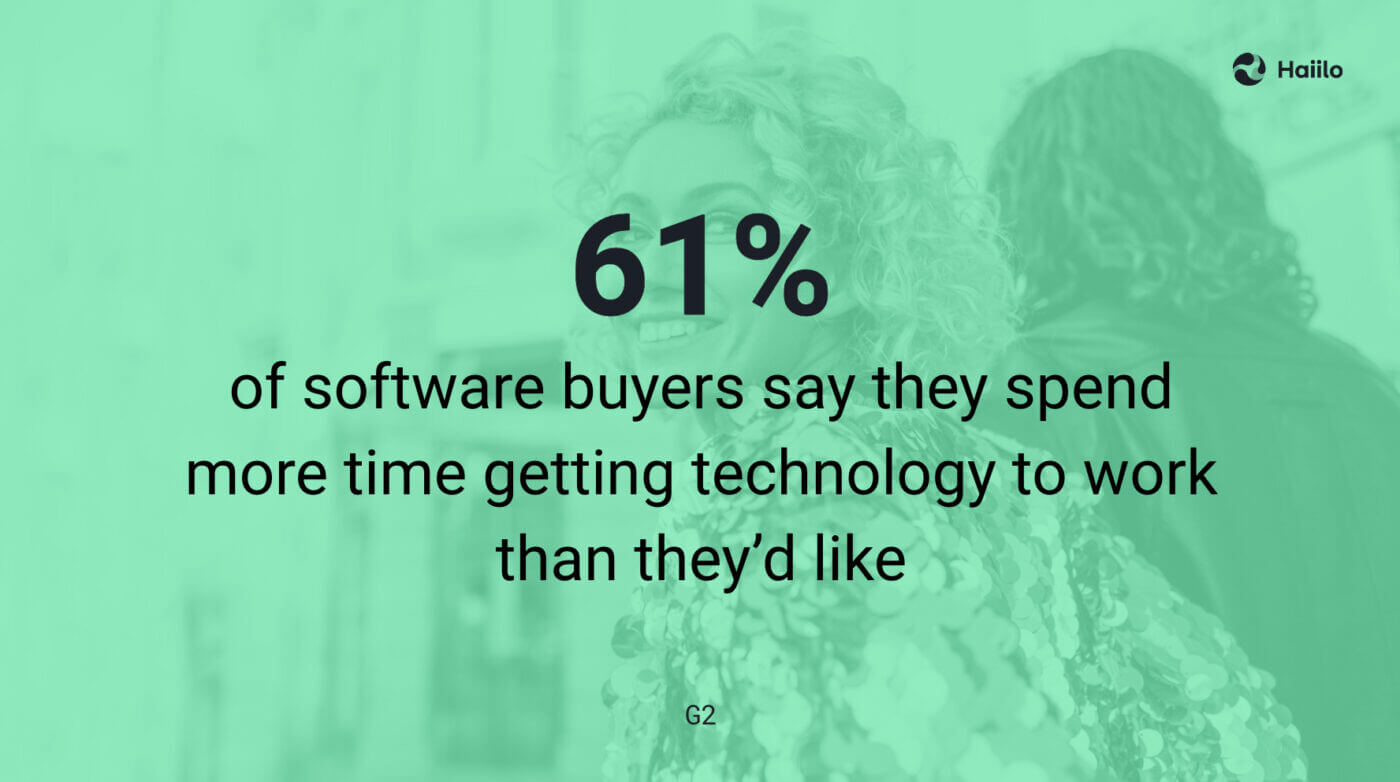
Implementation of your workplace technology shouldn’t take months. If this is the case, the software may be too complicated and complex for your organization. Look for a sophisticated solution that is easy to implement, scalable, and can grow together with your company.
8. Leverage the power of AI
Modern workplace technology providers have found ways to leverage AI to make employees better, faster, and more efficient at their jobs.
For example, Haiilo’s AI writing assistant can make internal comms and HR professionals write content 10 times faster compared to writing without the help of AI.
Consequently, 81% of respondents say that it is important or very important that the workplace software they purchase moving forward has AI functionality—and less than 5% say AI functionality is not important at all.
So if you are implementing a new solution in your workplace, or replacing an existing solution, make sure that you evaluate the vendor’s ambitions with AI. Look for both current AI functionalities as well as what’s coming next on the product roadmaps.
Digital employee experience software to consider
Digital employee experience software includes platforms designed to improve how employees interact with workplace technology. These tools help organizations manage communication, access to information, collaboration, and feedback in one digital environment.
Many organizations rely on these platforms as part of a broader digital employee experience management strategy. Instead of relying on disconnected tools, companies can create a more unified workplace where employees easily access resources, communicate with colleagues, and stay informed.
Depending on the platform, digital employee experience software may include capabilities such as centralized knowledge hubs, personalized communication feeds, internal communities, employee feedback tools, surveys, and workforce analytics.
Some commonly used digital employee experience software platforms include:
- Haiilo – Combines employee listening, internal communications, employee advocacy, and intranet capabilities in one platform;
- Culture Amp – Focuses on employee insights, engagement surveys, and data driven workplace analytics;
- Viva Engage – Microsoft’s enterprise social platform designed to support conversations and knowledge sharing across teams;
- Vantage Circle – Provides employee recognition, rewards, wellness initiatives, and engagement tools;
- Qualtrics XM – Advanced experience management platform connecting employee feedback with operational and business insights.
The goal of these platforms is to make everyday digital interactions smoother and more intuitive. When organizations invest in the right solutions, they can strengthen connections between employees, improve communication flows, and gather insights that support continuous improvement of the workplace experience.
Well implemented platforms play a key role in effective digital employee experience management because they provide the tools needed to monitor employee sentiment, identify technology gaps, and continuously optimize the digital workplace.
Wrapping up
Digital employee experience has become a critical factor for modern organizations. The tools employees use every day influence how easily they can communicate, collaborate, and perform their work.
Organizations that invest in digital employee experience management focus on simplifying their technology ecosystem, improving accessibility, and designing digital environments that support employees rather than frustrate them.
By providing the right tools, listening to employee feedback, and continuously improving workplace systems, organizations can increase productivity, strengthen engagement, attract top talent, and improve long term retention.
Check out our report on the synergy of multichannel communication and employee listening, featuring Forrester!