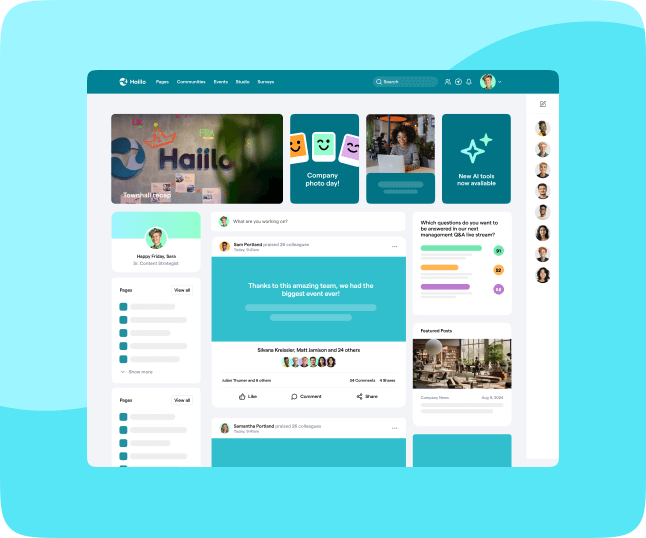

This article will explore the best communication platforms and software available today that can help increase employee engagement, optimize business operations, enhance collaboration, and improve overall productivity. In an era of hybrid work, frontline employees, and globally distributed teams, choosing the right enterprise communication platform is no longer optional — it’s a strategic decision that directly impacts culture, alignment, and performance.
We will look at features, pricing, integrations, scalability, and long-term value. Beyond simple messaging tools, modern platforms now combine internal communications, employee engagement, analytics, and integrations with HR and productivity systems. Ultimately, this article gives insights into finding the most suitable platform or software so businesses can identify the best tools for their needs — whether they’re streamlining internal updates, connecting deskless workers, or building a more connected digital workplace. For additional context on emerging trends, you may also want to explore how the latest internal communication trends are shaping enterprise collaboration strategies.
Recent research paints an even clearer picture of the cost of poor communication. According to Grammarly’s 2023 State of Business Communication report, ineffective communication costs U.S. businesses an estimated $1.2 trillion annually due to lost productivity, misunderstandings, and delayed projects. At a global level, Gallup’s State of the Global Workplace highlights that low engagement — often driven by poor communication — continues to cost the world economy trillions each year.
As such, it’s more important than ever for companies to have updated communication platforms and software that encourages collaboration, keeps projects organized and on track, streamlines feedback loops, optimizes team performance, increases employee engagement, and boosts productivity. A modern enterprise communication platform should go beyond messaging — connecting frontline and office employees, centralizing updates, and integrating seamlessly with your existing tech stack.
With so many different solutions available on the market today, it can be hard to choose the right one for your business. That’s why evaluating scalability, analytics, security, and employee experience is just as important as comparing features. Platforms like Haiilo’s enterprise communication platform combine internal communications, engagement tools, and measurable insights — helping organizations move from scattered conversations to strategic alignment.
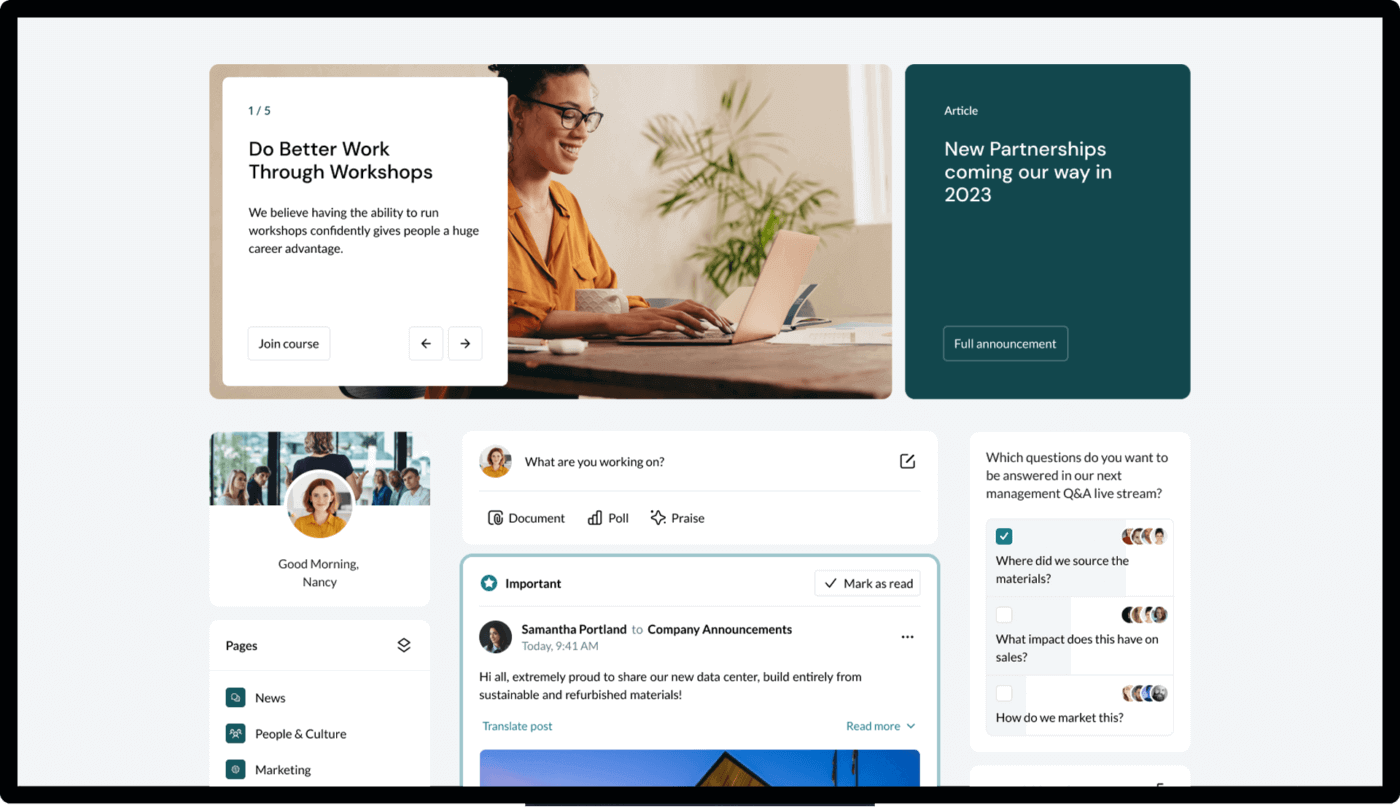
Haiilo is a 360° employee communication software revolutionizing the way businesses communicate with their people. More than just a messaging tool, it is a fully integrated enterprise communication platform designed to align strategy, culture, and execution in one secure digital workspace. It enables top-down targeted communications as well as bottom-up and non-vertical collaboration — ensuring leadership messages don’t just get sent, but actually get seen and understood. With its intuitive platform, you can reach and connect with every single employee in a secure and trusted digital environment, whether they’re desk-based, remote, or frontline.
Haiilo helps you reach all your employees with targeted news and information through their preferred devices and channels, engage them in one digital home, and understand the drivers and motivations of your workforce through built-in employee listening features. In fact, according to Gallup’s recent workplace research, organizations with highly engaged employees experience significantly higher productivity and profitability — reinforcing why strategic internal communication is a competitive advantage. You can also leverage the power of communication through everyone’s preferred communication channels, such as emails and text messaging, digital signage, and integration apps like Slack — ensuring no employee is left out of critical updates.
The platform is ideal for large organizations that aim to consolidate internal and external communications into one cohesive ecosystem. By centralizing campaigns, updates, resources, and advocacy initiatives, Haiilo eliminates fragmented tools and siloed messaging. It offers personalized experiences, a mobile app for on-the-go access, built-in surveys, extensive analytics, and employee advocacy features — all within a single scalable environment. You can explore the full capabilities of Haiilo’s enterprise communication platform here.
With Haiilo, you can identify the most engaging channels for your employees and use those for optimum communication, turning your workforce into true brand ambassadors. Integrated advocacy tools allow employees to amplify approved content externally, extending brand reach organically. At the same time, real-time analytics help you measure reach, engagement, sentiment, and impact — giving communication teams the data they need to continuously optimize performance. For deeper insights into how AI is transforming internal communications, you can also explore this guide on AI-powered features and use cases.
Last but not least, Haiilo is an AI-powered communication software for business and one of the best Workplace alternatives on the market — offering greater flexibility, personalization, and long-term scalability for modern enterprises.
Formats:
- Web, Android, iOS
Features:
- Seamless intranet design
- Multichannel communications
- Knowledge management
- Targeted communication
- Mobile app
- Internal audience analysis
- White labeling
- Employee listening and surveys
- GDPR and ISO compliance
- Employee advocacy
- Extensive analytics
- AI-powered features and use cases
Sounds interesting? Get your FREE demo now!
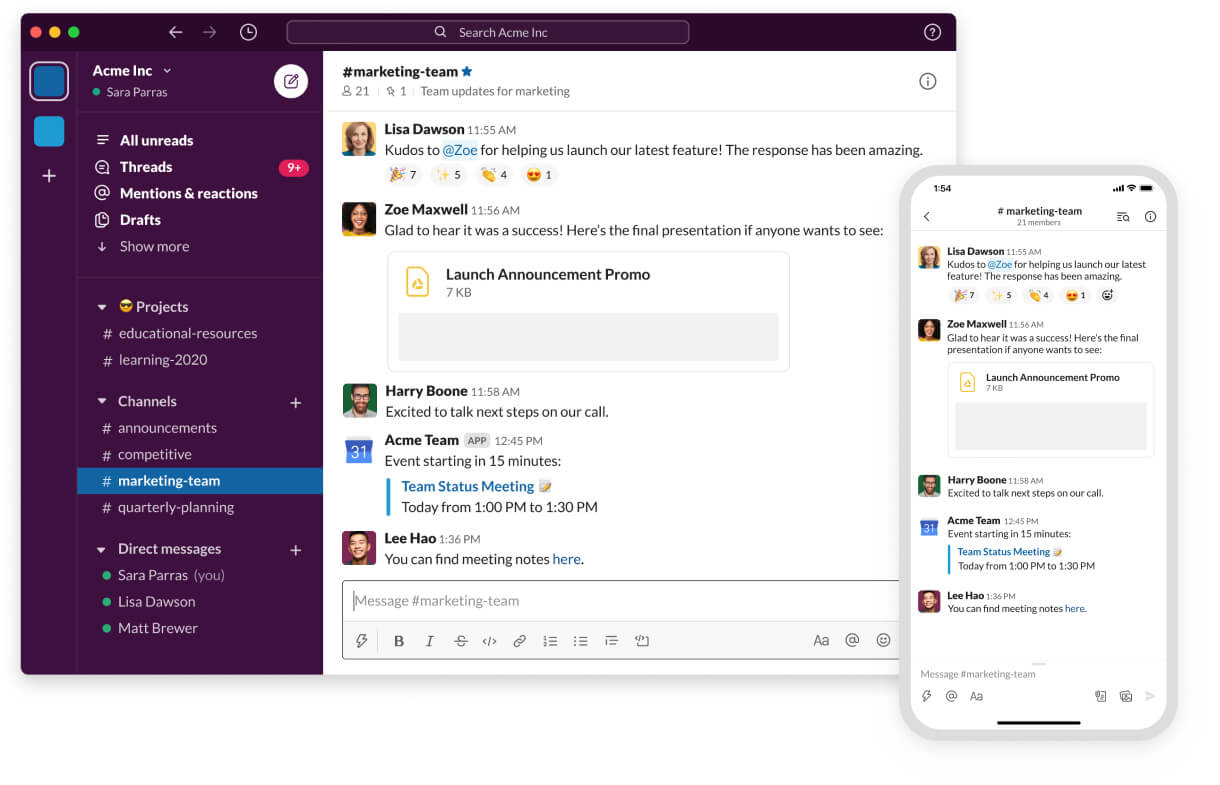
Slack has been one of the top employee communication tools for business for quite some time, streamlining team communication in a fast and user-friendly environment. Slack is a powerful communication channel for organizations that want to eliminate poor employee communication and improve synchronous collaboration. It remains one of the most widely adopted internal communication tools globally, particularly for knowledge workers. Its range of free and paid plans makes it accessible for startups and scaling businesses alike, enabling real-time coordination without heavy implementation.
With an impressive list of features designed to make team communication enjoyable, effective, and simple, Slack mainly focuses on small and mid-size companies — though many enterprise teams use it at scale. With fast and efficient real-time group chats, direct messages, and file sharing in one central location, it’s an extremely convenient way for teams to stay aligned on day-to-day tasks. Channels help organize conversations by topic or project, while threaded replies reduce noise in busy discussions.
Even better, Slack allows you to integrate popular tools like Zendesk, Asana, Gmail, Zoom, Google Drive, and many more. This ecosystem of integrations makes it simpler than ever to collaborate with team members and is particularly effective for virtual communication.
That said, Slack is primarily a messaging platform — not a full enterprise communication platform. It excels at real-time collaboration but lacks built-in capabilities for company-wide campaigns, structured internal news distribution, employee listening, and advanced analytics. For organizations looking to centralize internal communications, culture-building, and advocacy in one platform, solutions like Haiilo’s enterprise communication platform provide broader functionality while still integrating seamlessly with Slack.
Format:
- Windows, Android, iOS
Features:
- Voice and video calls
- Messaging
- Integrations
- Workflow builder
- Slack connect
- Slack huddles
- Public and private channels
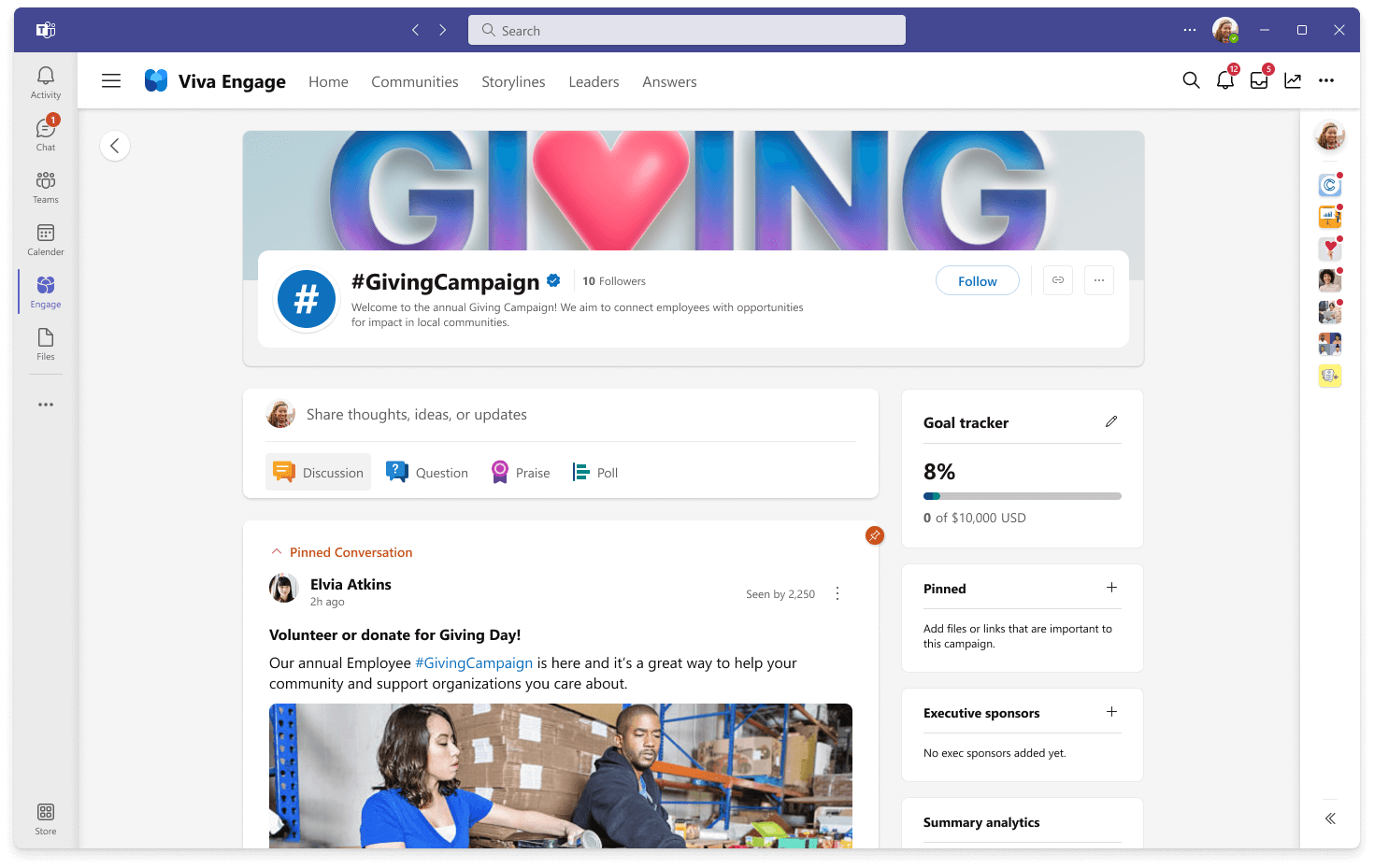
Microsoft Viva Engage is another popular internal comms software on the market, particularly for organizations already embedded in the Microsoft ecosystem. With it, employees can network with each other to build communities of interest, gather ideas and feedback on topics, and stay informed and aligned on projects. This communication platform brings conversations and communities across Microsoft 365 together in a single centralized place, allowing teams to collaborate effortlessly yet securely.
Originally evolving from Yammer, Viva Engage focuses heavily on community-building and social-style interaction inside the workplace. With features like a shared collaborative network, task coordination, and conversation threads tied to Microsoft Teams and SharePoint, it’s ideal for facilitating better internal communication within structured enterprise environments. You can achieve more effective cross-functional collaboration and knowledge sharing across departments. In line with research showing that connected teams are more productive and engaged, tools like Viva Engage aim to reduce friction in daily collaboration. It helps organizations avoid or break down company silos and strengthens collaboration within teams and departments.
However, while Viva Engage is strong in community discussions, it may not provide the full capabilities of a comprehensive enterprise communication platform. Advanced targeting, multichannel distribution (including SMS and digital signage), in-depth engagement analytics, and built-in employee advocacy often require complementary tools. For organizations looking to combine internal communications, engagement, and measurable impact in one solution, platforms like Haiilo’s enterprise communication platform offer broader functionality while still integrating seamlessly with Microsoft 365.
Format:
- Web, iOS, Android
Features:
- Document and user management
- File, link, and image sharing
- Allows public and private groups
- Microblogging
- Content and message tagging
- Engagement features within Microsoft Viva Engage communities
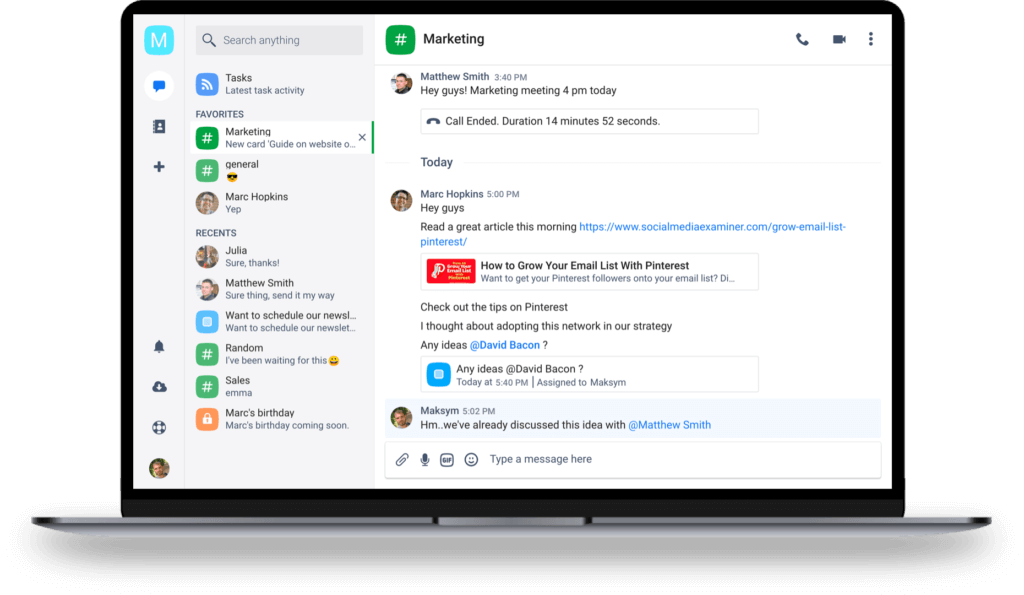
Chanty is a streamlined communication platform built primarily for SMB businesses, offering many of the essentials a small to medium-sized team needs to communicate effectively. It allows you to create and join private and public group chats, send direct messages, and organize conversations in a clean, easy-to-navigate interface. Users can pin important messages, leave voice recordings for urgent updates, and centralize discussions in one searchable space. With Chanty, companies gain better visibility into daily workflows and help employees focus on execution rather than chasing scattered conversations.
This is one of the more accessible communication software packages on the market, as it’s user-friendly, secure, and designed to support fast-moving teams. It enables quick video conferences with a single click, allowing participants to meet face-to-face and share screens to collaborate on projects in real time. For smaller teams that rely heavily on agility, these features can significantly reduce delays and miscommunication.
What’s even more practical is how Chanty allows you to easily convert conversations into tasks and assign them to the correct people or teams. This reduces the risk of action items getting buried in chat threads — a common issue in messaging-first tools.
However, while Chanty works well for smaller teams, it is not positioned as a full-scale enterprise communication platform. Larger organizations that require advanced audience segmentation, multilingual targeting, employee listening tools, analytics dashboards, and multichannel distribution (such as email, mobile push, SMS, or digital signage) may need a more comprehensive solution. Platforms like Haiilo’s enterprise communication platform are built specifically to support complex organizational structures, global workforces, and long-term engagement strategies — while still integrating with collaboration tools used at the team level.
Formats:
- Web, macOS, Windows, iOS, Android
Features:
- Project management
- Screen Sharing
- Teambook hub
- Chat
- Voice and video calls
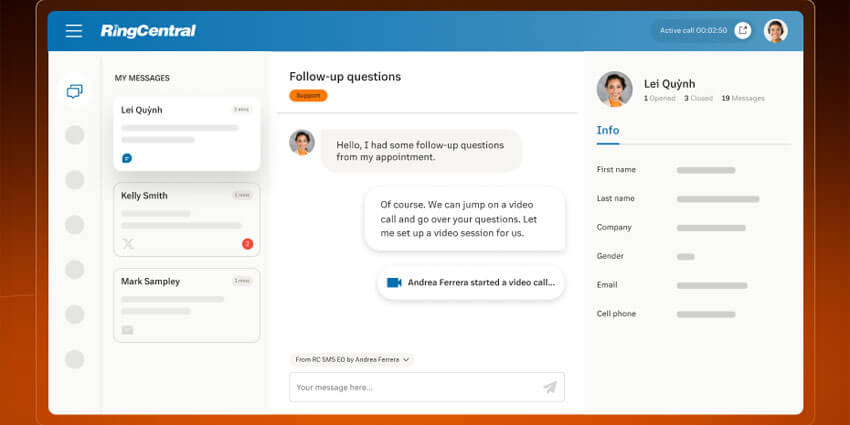
RingCentral is a well-known unified communications solution, particularly popular among small companies looking to combine messaging, video meetings, and phone calls in one application. By consolidating voice, SMS, team chat, and video conferencing, it simplifies daily communication and reduces the need for multiple disconnected tools. Businesses can send private messages, update stakeholders, and quickly share or pin important files — all without leaving the app. This all-in-one structure makes it especially attractive for organizations that prioritize voice communication alongside digital collaboration.
Using RingCentral’s built-in task management and collaboration tools, teams can assign responsibilities and coordinate projects more efficiently. You can initiate HD video and audio calls with instant screen sharing, which makes it suitable for businesses with remote workers or distributed teams. The platform also integrates with collaboration tools like Google Drive and Microsoft 365, enabling seamless file sharing and workflow continuity across systems.
Another advantage is device flexibility. Whether employees are using a mobile phone, laptop, or tablet, calls remain stable and accessible across locations. Higher-tier plans unlock features such as unlimited cloud recording, voicemail transcription, call delegation, and advanced call routing. Its open API ecosystem allows integration with over 100 apps — and even custom integrations for businesses with specific requirements.
However, while RingCentral excels in unified communications and telephony, it is not designed to function as a comprehensive enterprise communication platform. It focuses primarily on real-time communication rather than structured internal news distribution, employee engagement analytics, listening tools, or advocacy capabilities. For organizations seeking to align leadership messaging, employee engagement, and company-wide communication strategy within one scalable system, solutions like Haiilo’s enterprise communication platform provide a broader strategic framework while still integrating with tools like RingCentral for voice and messaging.
Format:
- iOS, Web, Android
Features:
- Join an audio meeting by using “Call Me” to call your phone
- Can create up to 50 breakout sessions
- Can host large conferences or training for up to 500 people
- Offers call screening, delegation, and call flips
- Toll-free and vanity numbers
- Features outbound and inbound voice
- Presence and head-up display
Market Segment
- Primarily small companies
- Growing mid-market presence
- Selective enterprise adoption
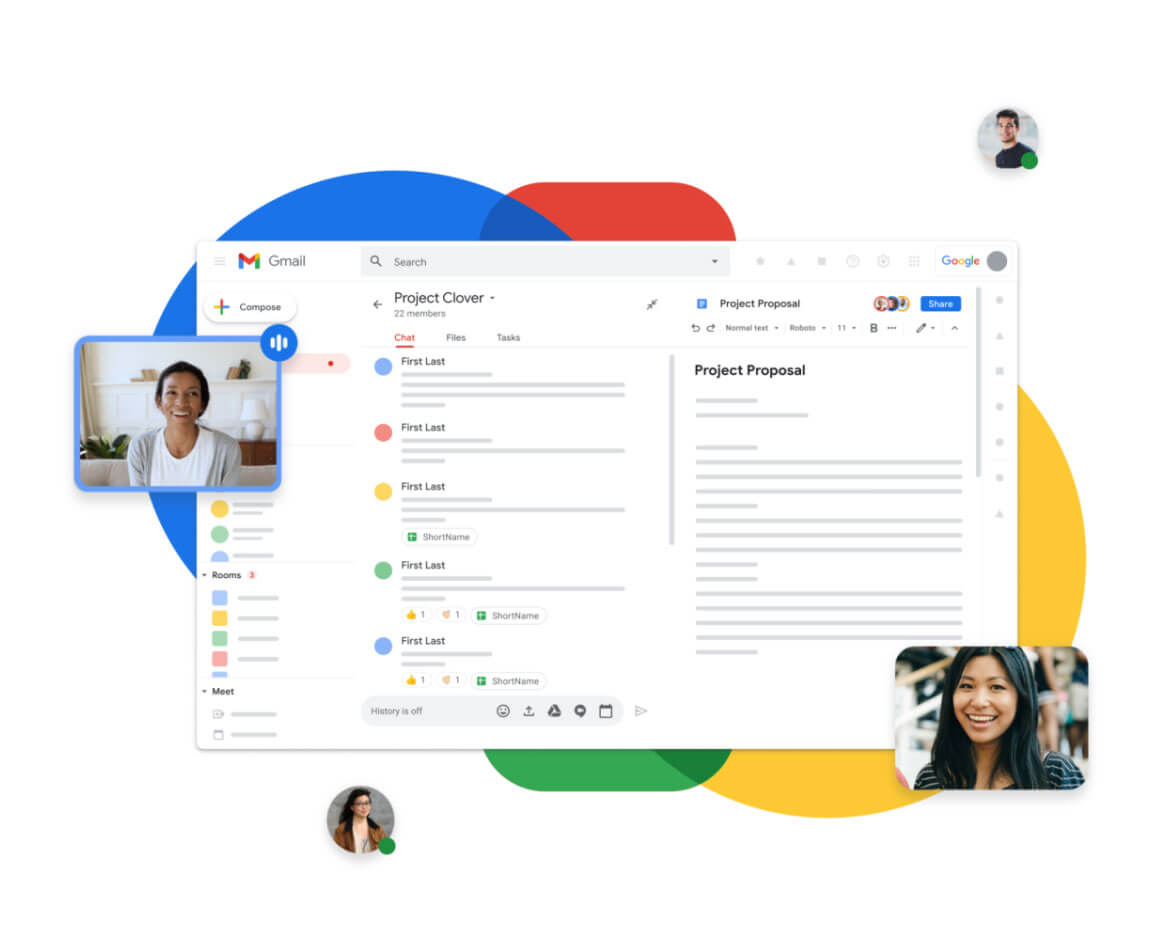
With over 3 billion users globally across Google Workspace services, Google Workspace (formerly G Suite) remains one of the most practical and comprehensive ecosystems for communication and collaboration. Its suite of cloud-based applications supports everything from document creation and spreadsheet management to video conferencing and shared calendars — all accessible from virtually any device. For many organizations, Google Workspace serves as the operational backbone of daily work.
These apps include Google Docs, Slides, Calendar, Drive, Sheets, Forms, and Meet, all designed to work seamlessly together. Real-time co-editing, version history, and built-in commenting make collaboration intuitive, especially for distributed teams. Teams can brainstorm in Docs, present in Slides, analyze data in Sheets, and instantly jump into a Meet call — without switching environments.
Not only does this internal comms software provide essential productivity tools, but it also offers several collaboration and team communication tools. Users can leave comments, tag colleagues, chat directly within documents, and share files securely through Drive permissions. This reduces email overload and improves transparency across projects.
However, while Google Workspace is powerful for collaboration, it is not a fully integrated enterprise communication platform. It lacks structured internal news distribution, advanced audience segmentation, engagement analytics, employee listening features, and advocacy tools. For organizations looking to centralize company-wide messaging, measure communication impact, and strengthen employee engagement at scale, platforms like Haiilo’s enterprise communication platform complement Google Workspace by adding strategic internal communication capabilities on top of productivity workflows.
Formats:
- Android, iOS, Web
Features:
- Google apps that work in harmony
- Secure cloud storage and file sharing
- Cloud search across all apps
- Flexible user account management
- Google Vault to manage and retain data
- Role-based permissions and admin controls
- Offline functionality for core apps
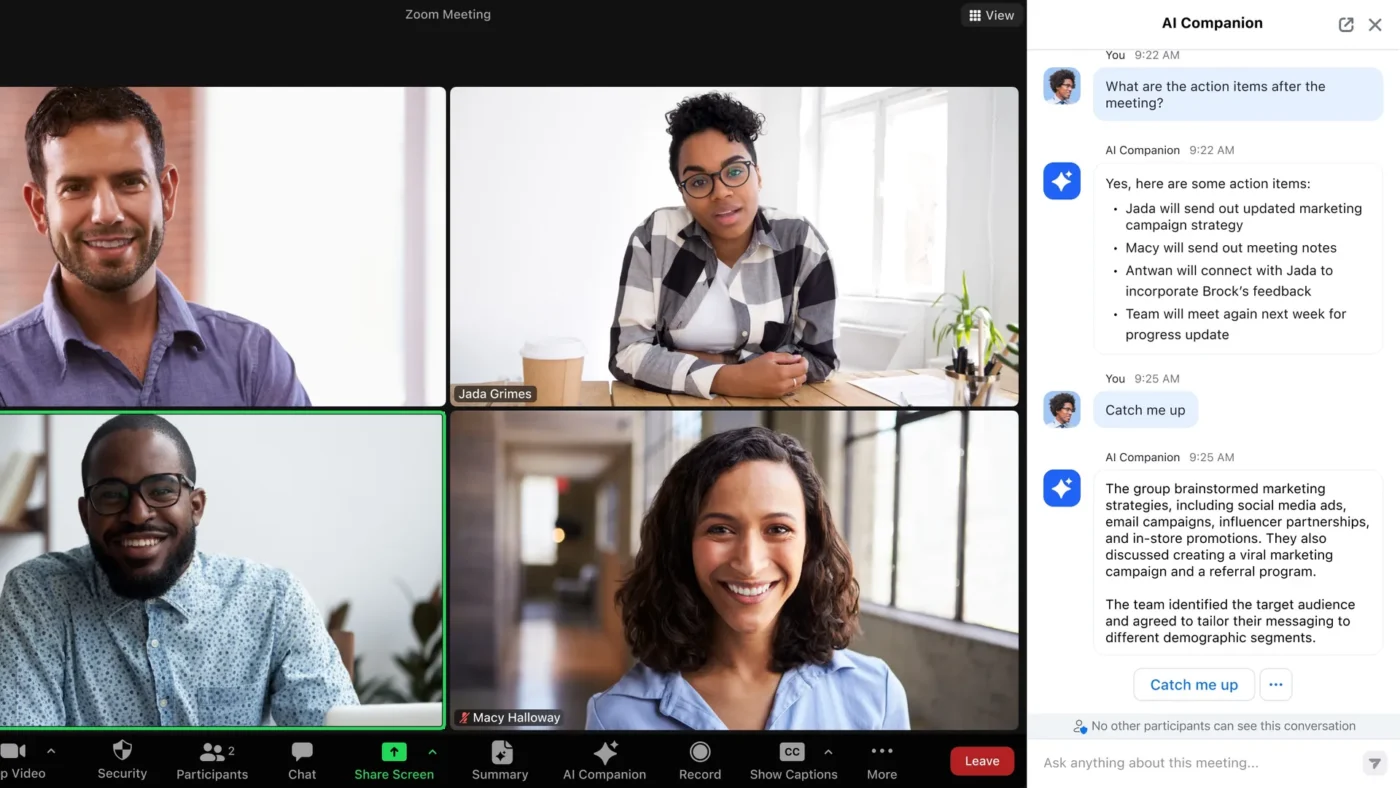
Zoom Meetings is one of the best communication software for business due to its impressive range of features. It has everything you’ll need for collaborative video events, allowing users to easily host meetings and conferences.
This platform is available across multiple platforms, so anyone can join, no matter what device they’re using, which is great when you have multigenerational workers. It even offers a few add-ons for a price if you want a bit more from the experience, including cloud storage, large meetings, and audio conferencing.
Perhaps more impressive than that is the sheer number of users Zoom has attracted; with over 300 million people using the platform, there really is something here for everyone — from individuals to groups and companies — making it one of the most versatile communication tools around.
Format:
- Web, Mac, Windows, Android, iOS
Features:
- Developer Platform
- Rooms and workplaces
- Can host workshops and webinars
- Chats
- Meetings
- Workshops and webinars
- Events
If you are looking for the best communication software for enterprise business, schedule a Haiilo demo today!
Frequently Asked Questions
1. What is an enterprise communication platform?
An enterprise communication platform is a centralized system that enables organizations to manage internal communication at scale. Unlike basic messaging apps, it combines company-wide announcements, targeted messaging, collaboration tools, employee listening features, and analytics in one place. The goal isn’t just to send messages — it’s to ensure the right employees receive relevant information through the right channels, whether they work in an office, remotely, or on the frontline.
2. How is an enterprise communication platform different from tools like Slack or Zoom?
Slack and Zoom are excellent for real-time collaboration and meetings. However, they’re primarily messaging and conferencing tools. A true enterprise communication platform goes further by supporting structured internal campaigns, audience segmentation, multichannel distribution (email, mobile push, SMS, digital signage), and engagement tracking. It helps leadership communicate strategically across the entire organization, not just within teams or projects.
3. What features should I look for in an enterprise communication platform?
Look for advanced targeting and segmentation, mobile accessibility, integrations with your existing tech stack (HR systems, Microsoft 365, Slack, etc.), analytics dashboards, employee feedback tools, and strong security standards. Scalability is also critical — especially for growing or global organizations. The best platforms make communication measurable and help you continuously improve engagement and alignment.
4. How do I know which enterprise communication platform is right for my business?
Start by defining your communication challenges. Are you struggling with disengaged employees, siloed departments, or inconsistent messaging? Then evaluate platforms based on your company size, workforce structure, and long-term goals. Request demos, involve key stakeholders, and focus on adoption and usability — because even the most advanced enterprise communication platform only works if employees actually use it.
See the benefits of using Haiilo today