
Facebook Workplace from Meta is closing in June 2026 — we understand the challenges this may present. To help you navigate this transition, we’ve compiled a comprehensive list of the best Meta Workplace alternatives for enterprises, large and medium-sized companies.
After researching 30+ employee communication and collaboration platforms, we’ve defined the eight best by checking their websites, reading 3rd-party reviews and forum threads. We’ve analyzed each platform’s target audience, key features, pros and cons, and what makes them the best alternatives to Facebook Workplace.
Beyond feature lists, we looked at real-world use cases: How well do these workplace by meta alternatives support deskless workers? Can they cut through communication overload? Do they offer analytics to prove impact to leadership? We also considered scalability, security standards, integrations with existing tools like Microsoft 365 and Google Workspace, and the level of onboarding support available during migration.
Note: For more information on choosing the best Workplace alternative, read our in-depth guide on top features to look out for.
Upgrade to Haiilo for an intranet with personalized news feeds, social features, and analytics for maximum employee engagement.
What is Meta Workplace?
Workplace from Meta, also known as Facebook Workplace or Meta Workplace, is an employee communication platform. Essentially, it is a social media platform, but for work, offering features like news feeds, live streaming, and chat. Several Workplace alternatives offer these and also cover some gaps, offering features like targeted news feeds.
As companies are struggling with low adoption of their existing intranets, all-in-one employee experience platforms are increasingly necessary, combining social features with intranet, adding analytics, knowledge management, and productivity features.
Meta Workplace shutting down
Current Workplace by Meta users will be able to use the platform as usual until August 31, 2025. From that point onward, the platform will be read-only until May 2026, when the service will be completely decommissioned.
This change is huge for many businesses with staff across different areas and countries. With employees constantly using it, on top of resources spent, finding the best Workplace alternative to migrate to as fast as possible is crucial in avoiding additional work.
8 best workplace by meta alternatives to consider in 2026
Below, we break down eight leading workplace by meta alternatives and show you how they compare to Meta Workplace. You’ll see what each platform does well, where it falls short, and which use cases it supports best — from leadership communication to frontline engagement.
If you’re managing a large frontline workforce that relies on mobile access, or coordinating communication across regions, languages, and time zones, the right tool matters. We also look at governance, analytics, integrations, and migration support — because replacing Workplace is not just about features, but long term adoption. And while Workvivo is the official migration partner, it is not the only option worth considering.
1. Haiilo
Customer reviews: 4.6 / 5 on G2
Target market: Large and medium-sized businesses
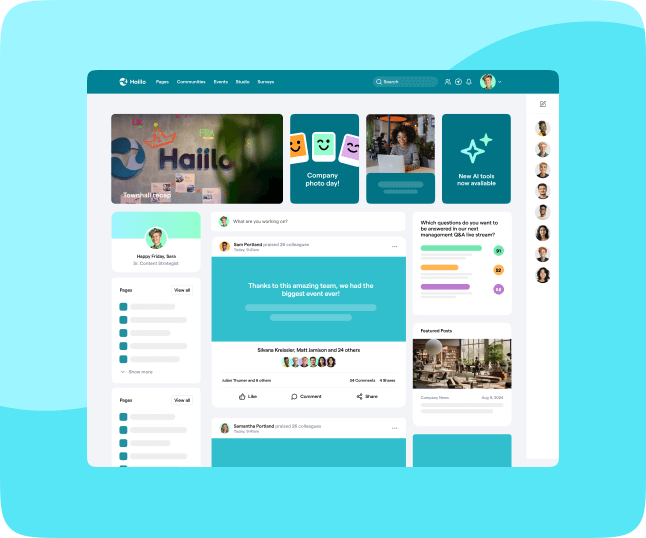
Overview: Haiilo is an employee experience platform built for internal communication, engagement, and collaboration in complex organizations. If you are searching for workplace by meta alternatives that go beyond social feeds, Haiilo combines a modern intranet, targeted communication, and built in analytics in one place. You can reach the right employees with relevant updates while measuring what actually resonates.
What makes Haiilo one of the best Workplace alternatives?
Haiilo stands out among workplace by meta alternatives because it connects communication with clarity and proof. Your employees can like, comment, react, and share content across desktop, company app, email, Slack, or MS Teams — so no one is left out, including frontline teams.
At the same time, the intranet centralizes resources in personalized news feeds, reducing noise and helping employees find what matters faster. Built in workforce analytics show you which messages drive engagement, where communication gaps exist, and how leadership updates perform.
Haiilo also syncs with Microsoft 365, Google Workspaces, and many other integrations, making migration straightforward. Employees benefit from familiar social intranet features similar to Workplace, while HR and internal comms teams gain deeper targeting, governance, and measurable impact.
Key differences: Both platforms cover core collaboration. The difference shows up when you need focus and proof. Compared to Workplace, Haiilo offers deeper customization, personalization, and multichannel distribution, plus built in analytics. That means you can tailor content by role, location, or language, reach deskless teams via mobile or digital signage, and measure what actually lands. For organizations reviewing workplace by meta alternatives, this shift from social feed to structured communication is key.
Haiilo also stands out for usability, scoring 9.5 out of 10 points on G2, alongside a strong focus on enterprise security and compliance.
Haiilo features:
- Communities: Create topic based spaces for teams and projects to exchange knowledge and collaborate.
- Personalized timeline: Deliver relevant updates using filters such as interests, department, or language. Workplace does not offer this level of targeting.
- Customization: Adapt the platform to your brand with private labeling and tailored design options.
- Content creation and distribution: Publish articles, videos, and updates, then distribute them across preferred communication channels with multichannel push.
- Employee profiles and directories: Help employees find colleagues and expertise faster.
- Chat: Enable private and group conversations, including voice messaging.
- Analytics: Track quantitative usage data and qualitative insights into content performance and engagement to demonstrate impact.
- Accessibility: Designed for mobile first access to support frontline and hybrid teams.
- Integrations: Connect with MS 365, Google Workspace, and 70+ other tools including Salesforce, Workday, and Zendesk via APIs.
Haiilo pros:
- Easy to set up, manage, and use, reflected in a 9.5 out of 10 usability rating on G2;
- Strong engagement features such as communities, reactions, and kudos;
- Personalized news timelines to reduce information overload;
- Extensive branding and customization options;
- Multichannel distribution to reach employees where they work;
- Deep analytics combining usage data and feedback insights;
- Digital signage to engage deskless workers;
- Dedicated migration and onboarding support;
- Enterprise grade security and GDPR compliance;
- Structured Workplace migration process.
Haiilo cons:
- Less widely known brand compared to Workplace;
- Fewer publicly available customer case studies.
Haiilo pricing: Core, Business, and Enterprise plans with flexible packages based on your needs. Request a demo to explore the right fit for your organization.
Begin your migration from Meta Workplace to Haiilo
2. Workvivo
Customer reviews: 4.8 / 5 on G2
Target market: Large companies and medium sized businesses
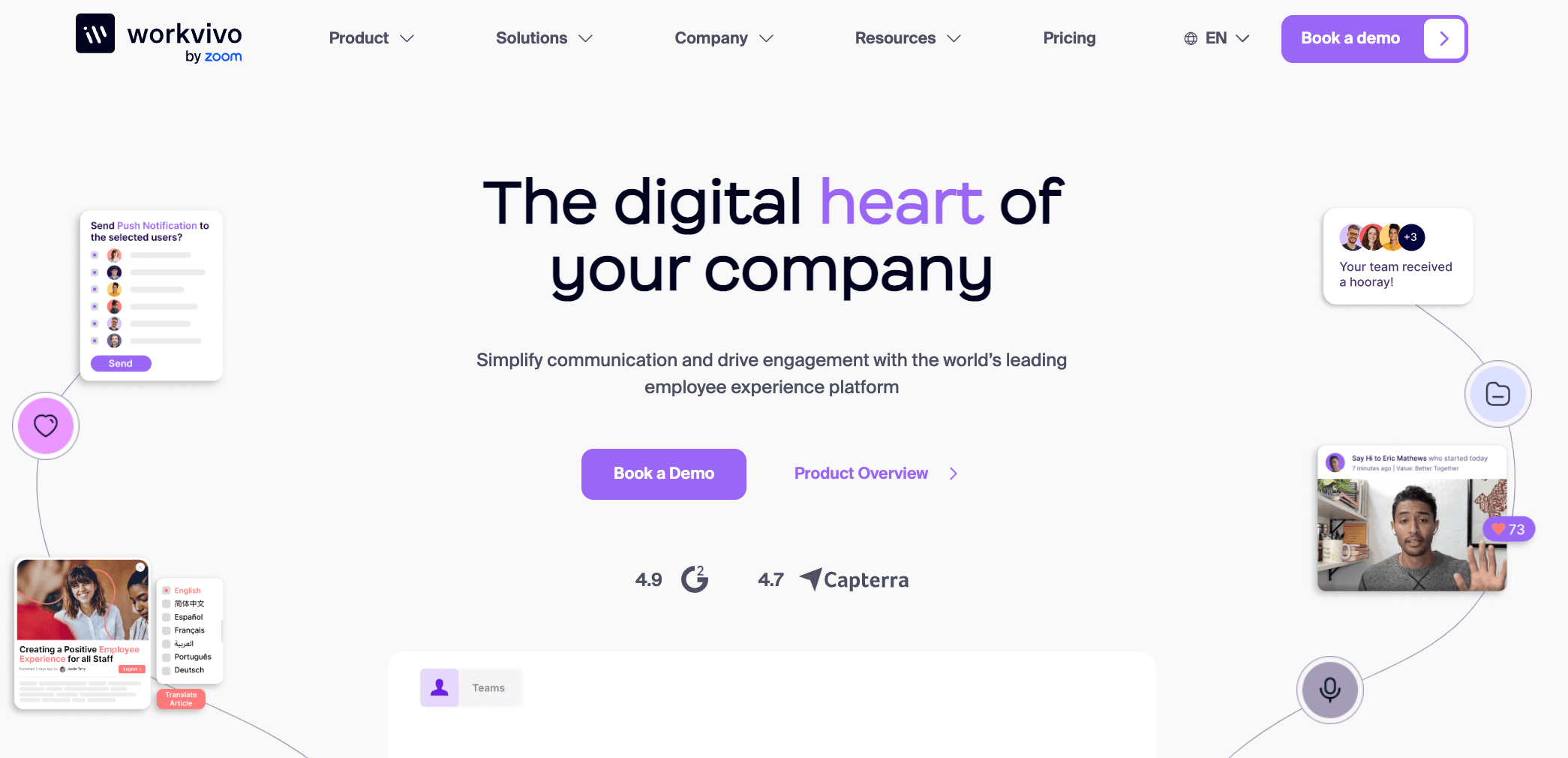
Overview: Workvivo combines social networking features with intranet functionality to strengthen internal communication and engagement. Organizations can share updates, run campaigns, recognize achievements, and bring company culture to life in a branded, social style environment. For teams exploring workplace by meta alternatives that feel familiar to employees, Workvivo offers a similar feed based experience with added engagement tools.
What makes Workvivo one of the best Workplace alternatives?
Workvivo is often considered a strong option among workplace by meta alternatives because it keeps the social layer front and center. It focuses heavily on engagement, recognition, and two way communication. As the official migration partner recommended by Meta, it is a natural starting point for many organizations. That said, being the recommended option does not automatically mean it fits every communication strategy. If your priority is advanced analytics, governance, or complex frontline communication, it is worth comparing it carefully against other platforms.
Key differences: Both Workvivo and Workplace blend social networking with internal communication, making them alternatives to traditional intranets. Workvivo is known for its modern interface and intuitive design. It provides core analytics and engagement tracking, but organizations with more advanced measurement or segmentation needs may require deeper functionality depending on their goals.
Workvivo features: Intranet, campaigns, recognition tools, surveys and polls, digital signage, multichannel communication, integrated video communication, communities, podcasts, live streaming, badges, newsletter builder, and templates.
Workvivo pros:
- Strong branding options to reflect company identity;
- User friendly interface with a modern design;
- Integrates with a range of tools and channels;
- Custom news feeds and built in recognition features;
- Engagement insights via surveys, polls, and analytics dashboards.
Workvivo cons:
- Mobile and desktop experiences are not fully aligned;
- Analytics may not provide the same depth of content performance insights some teams require;
- Smaller ecosystem compared to Workplace’s broader Meta integrations.
Workvivo pricing: Business plan for 250 to 2000 employees with pricing starting at 20000 dollars; Enterprise plan for 2000 plus employees with custom pricing via sales.
3. Simpplr
Customer reviews: 4.7 / 5 on G2
Target market: Enterprises and large companies
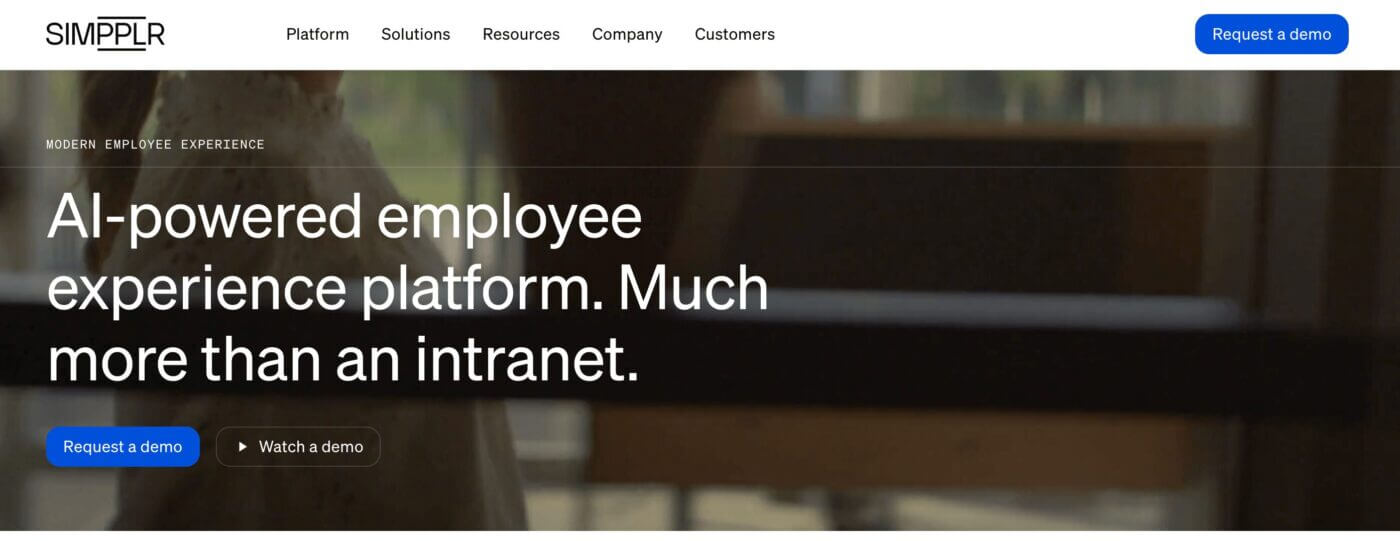
Overview: Simpplr is an AI powered intranet platform built to centralize company information, announcements, and collaboration tools. It focuses on structured communication and organized knowledge management, helping large organizations reduce content sprawl and improve findability. For teams evaluating workplace by meta alternatives with a stronger intranet backbone, Simpplr positions itself as a content first solution.
Its customizable interface and integrations aim to connect employees to the tools and updates they need, whether they work on site, remotely, or across regions.
What makes Simpplr one of the best Workplace alternatives?
Simpplr suits organizations that prioritize structured, top down communication and curated resource hubs over social style interaction. If your main challenge is scattered information, inconsistent document management, or low intranet adoption, Simpplr offers a more controlled environment than Workplace.
Key differences: While both platforms aim to improve internal communication, their core strengths differ. Simpplr centers on intranet functionality and top-down communication with document management, directories, and resource hubs. Workplace, by contrast, emphasizes real time interaction through chat, live streaming, and video calls. Organizations choosing between workplace by meta alternatives should decide whether they need stronger governance and structure or more dynamic social collaboration.
Simpplr features: Intranet, recognition tools, newsletter builder, sentiment checks, native video, advocacy, campaigns, digital signage, and surveys.
Simpplr pros:
- AI driven content targeting based on role and location;
- Well organized intranet built for information management and directories;
- Strong security and governance controls for corporate content;
- Customizable and branded user experience;
- Migration support for transitioning from Workplace.
Simpplr cons:
- Fewer real time social and collaboration features compared to Workplace;
- No built in live streaming or chat group functionality;
- More limited integrations depending on ecosystem needs.
Simpplr pricing: Custom pricing based on company size, complexity, and support requirements. Contact Simpplr for a tailored quote.
4. Staffbase
Customer reviews: 4.6 / 5 on G2
Best for: Enterprises and large companies
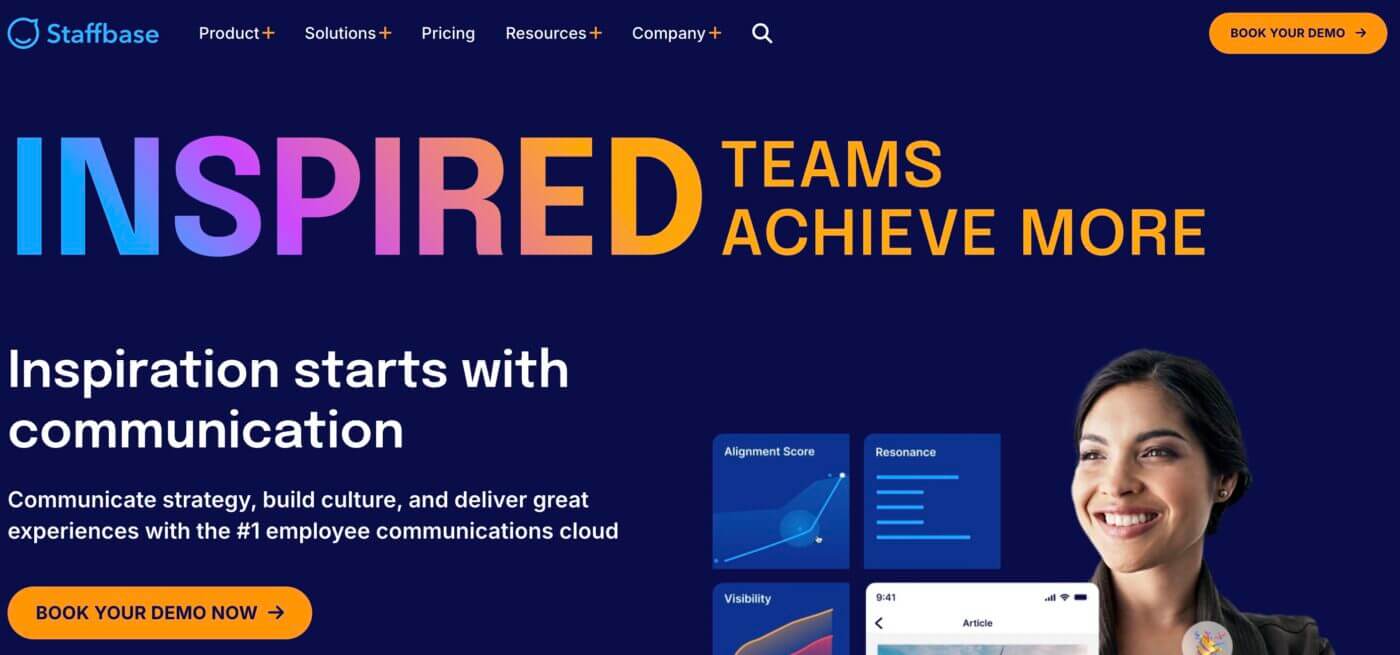
Overview: Staffbase is an intranet and employee communication platform built for large organizations that need structured, secure communication at scale. It centralizes corporate news, updates, and resources in one branded environment. For enterprises reviewing workplace by meta alternatives, Staffbase appeals to teams that want stronger governance and clearer control over messaging.
What makes Staffbase one of the best Workplace alternatives?
Staffbase is a solid option for enterprises that value structured communication and cultural alignment. While Workplace leans into social interaction, Staffbase focuses on helping internal comms teams plan campaigns, manage newsletters, and deliver consistent corporate messaging across channels.
Key differences: Both platforms aim to improve engagement, but their emphasis differs. Staffbase prioritizes structured and secure communication such as corporate news, newsletter management, and campaign planning, supported by tools designed specifically for internal communication teams.
Meta Workplace focuses more on social exchange and real time collaboration through chat, video calls, and live streaming. Staffbase, by contrast, stands out with white label mobile apps, stronger personalization options, and a clear focus on compliance and data security, which can be critical in regulated industries. When comparing workplace by meta alternatives, this distinction between social collaboration and controlled corporate communication is often decisive.
Staffbase features: Intranet, surveys, multichannel communication, campaigns, newsletter builder, and digital signage.
Staffbase pros:
- Built with internal communication teams in mind;
- Strong branding and personalization capabilities;
- Secure communication suited for regulated industries such as healthcare and finance;
- Structured content management for news, policies, and internal resources;
- Free one hour Workplace migration consultation.
Staffbase cons:
- Less emphasis on social and peer to peer features;
- Limited flexibility in adapting certain templates;
- Often positioned at a higher price point.
Pricing: SMB, Business, and Enterprise plans available. Contact sales for custom pricing based on your organization’s size and requirements.
5. Firstup
Customer reviews: 4.6 / 5 on G2
Target market: Large companies and enterprises
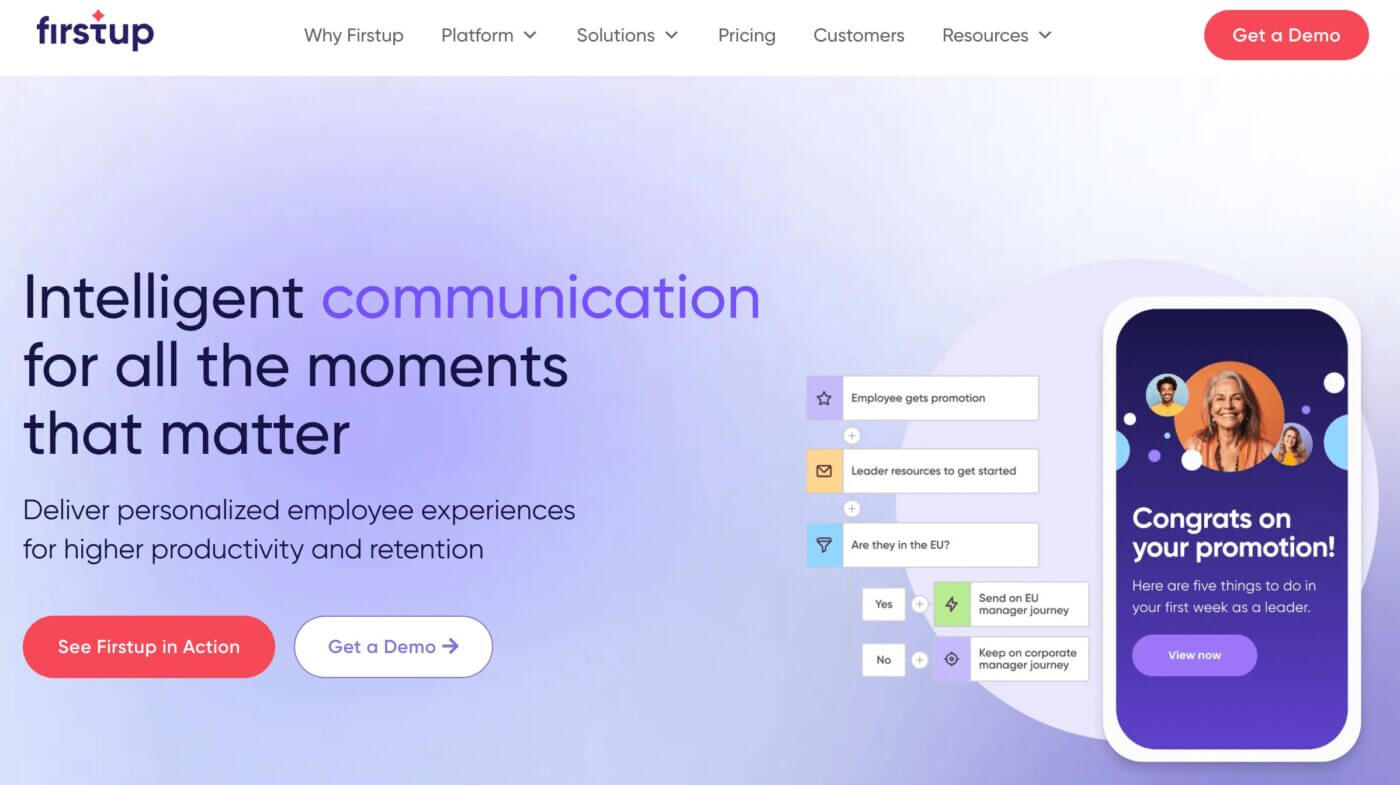
Overview: Firstup is an employee communication platform focused on delivering personalized communication at scale. Its intranet is available as an add on, while the core strength lies in behavior based targeting and multichannel distribution. For organizations exploring workplace by meta alternatives that prioritize reach and relevance over social interaction, Firstup positions itself as a communication first solution.
What makes Firstup one of the best Workplace alternatives?
Firstup is a strong fit for large, distributed workforces that struggle with information overload and low engagement. Instead of relying on social feeds, it focuses on delivering the right message to the right employee at the right time, using data and behavioral insights to drive alignment and retention.
Key differences: Firstup stands out for personalized, data driven communication, while Workplace centers on social collaboration and real time messaging. Workplace mirrors familiar social media interactions to build community. Firstup emphasizes segmentation, automation, and measurable engagement outcomes.
While both platforms offer mobile access, Firstup is particularly geared toward reaching non desk employees through multiple channels such as mobile push, email, and SMS. When comparing workplace by meta alternatives, the decision often comes down to whether you need stronger social collaboration or more advanced targeting and analytics.
Firstup features: Intranet as add on, campaigns, multichannel communication and targeting.
Firstup pros:
- Advanced personalization and targeted distribution;
- Clear and intuitive user interface;
- Detailed analytics to track engagement and behavior;
- Strong multichannel reach to include deskless employees;
- Customizable mobile app experience.
Firstup cons:
- Limited social and community style features;
- Fewer interactive tools such as live streaming or video broadcasting;
- Less focus on collaboration features like task or group management.
Firstup pricing: Essential, Professional, and Premier plans with intranet available as an add on. Pricing is per user per month and varies by tier and employee count. Contact Firstup for a custom quote.
6. Unily

Customer reviews: 4.5 / 5 on G2
Target market: Enterprises and large companies
Overview: Unily is a digital workplace and intranet platform built for complex enterprise environments. It brings together structured intranet capabilities, analytics, social features, and deep integrations with Microsoft 365 and Google Workspace. For organizations assessing workplace by meta alternatives at enterprise scale, Unily positions itself as a centralized digital workplace rather than a pure social network.
What makes Unily one of the best Workplace alternatives?
Unily suits enterprises that need more than social interaction. It connects internal communication, knowledge management, collaboration, and analytics in one structured environment. If your priority is governance, branded employee experience, and global consistency, Unily offers a broader digital workplace approach.
Key differences: Unily operates as a customizable intranet and digital workplace, while Workplace centers on social collaboration and real time interaction. Unily provides advanced analytics, content management, and enterprise level governance. Workplace focuses more on community building through chat, live video, and social feeds.
Both platforms offer mobile access, but Unily stands out for its personalization, branding flexibility, and deep integration into existing enterprise ecosystems. When comparing workplace by meta alternatives, the choice often depends on whether you want a social network feel or a structured digital workplace hub.
Unily features: Intranet, advanced analytics and reporting, content management system, social and collaboration tools, mobile app, Microsoft 365 and Google Workspace integrations, knowledge sharing and document management, branding and customization, recognition features, and task and project management.
Unily pros:
- Strong intranet and knowledge management capabilities;
- Extensive branding and customization options;
- Detailed analytics and engagement tracking;
- Deep integrations with Microsoft 365, Google Workspace, and other enterprise tools.
Unily cons:
- Designed primarily for enterprise clients;
- Complex setup that may require dedicated IT resources;
- Fewer real time social features compared to Workplace;
- Longer deployment timelines;
- Higher pricing, typically suited for large enterprises.
Unily pricing: Reach, Engage, Amplify, and Extend plans. Pricing depends on the number of licensed users and selected modules.
7. LumApps
Customer reviews: 4.2 / 5 on G2
Target market: Enterprises and large companies
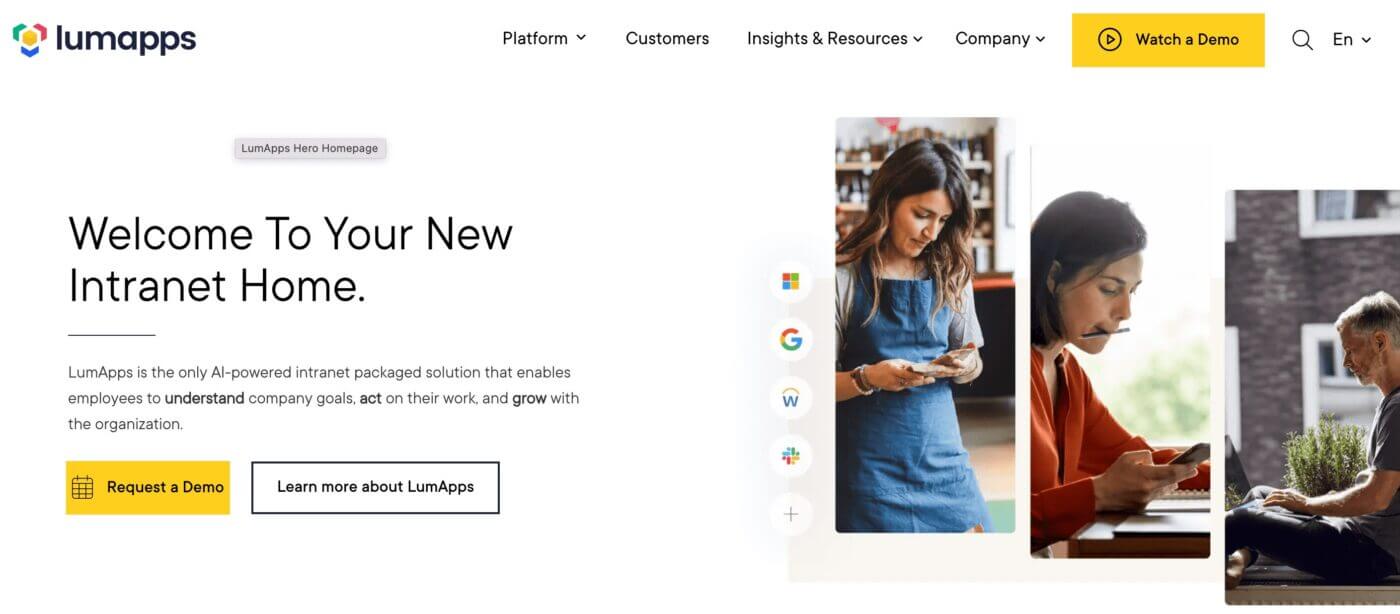
Overview:LumApps is an AI powered intranet platform designed to centralize communication, strengthen knowledge sharing, and connect employees across large organizations. It combines content management, personalization, and deep integrations with Microsoft 365 and Google Workspace. For enterprises evaluating workplace by meta alternatives, LumApps offers a structured digital workplace rather than a purely social network.
What makes LumApps one of the best Workplace alternatives?
LumApps is a strong fit for companies that want tighter integration with their productivity suite and a more curated communication experience. Its personalization and knowledge management capabilities help reduce information overload and improve findability, especially in global environments.
Key differences: LumApps focuses primarily on intranet and structured content management, while Workplace emphasizes real time social collaboration. Workplace builds engagement through chat, live video, and social feeds. LumApps prioritizes organized communication, content governance, and integration into daily workflows.
Both platforms offer mobile access, but LumApps stands out with deeper integrations into Microsoft and Google ecosystems. When comparing workplace by meta alternatives, the decision often comes down to whether you value instant social interaction or a more structured, enterprise wide content hub.
LumApps features: Customizable intranet, campaigns, integrations with Microsoft 365 and Google Workspace, native video, social feeds and communities, knowledge management, personalized dashboards, mobile app, analytics and reporting.
LumApps pros:
- Strong integration with Google Workspace and Microsoft 365;
- Customizable intranet with personalized content targeting;
- Advanced knowledge management capabilities;
- Built in social features such as feeds and communities;
- Personalized dashboards for different roles.
LumApps cons:
- Complex setup that may require dedicated IT support;
- Primarily focused on internal collaboration, with limited external collaboration options;
- Total cost may increase when factoring in productivity suite subscriptions and customization.
LumApps pricing: Business, Professional, and Enterprise plans with optional add ons such as video, AI features, learning modules, and mobile app extensions. Contact LumApps for a tailored quote.
8. Poppulo
Customer reviews: 4.6 / 5 on G2
Target market: Medium to large enterprises
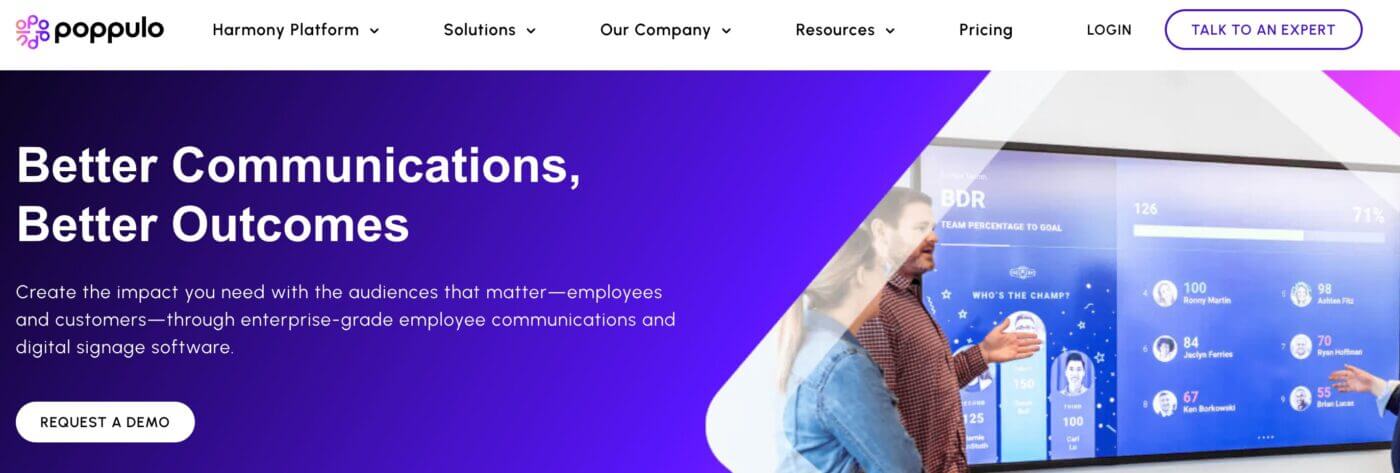
Overview: Poppulo is an internal communications platform built for organizations that need structured, large scale messaging. It focuses on delivering targeted communication across email, mobile, intranet, and digital signage to ensure critical updates reach every employee. For companies reviewing workplace by meta alternatives with a strong top down communication strategy, Poppulo offers a data driven approach.
What makes Poppulo one of the best Workplace alternatives?
Poppulo is well suited for enterprises that prioritize message control, reach, and measurable impact. If your main challenge is ensuring leadership updates, compliance information, or change communication actually reach dispersed teams, Poppulo provides the structure and analytics to support that goal. It is less focused on social interaction and more on strategic communication planning.
Key differences: Workplace by Meta is built around real time social collaboration and community style engagement. Poppulo centers on formal, targeted enterprise communication supported by advanced analytics and reporting. Organizations comparing workplace by meta alternatives should consider whether they need interactive social features or stronger campaign management and measurement capabilities.
Poppulo features: Intranet, newsletter builder, digital signage, multichannel communication across email and mobile.
Poppulo pros:
- Comprehensive internal communication toolkit;
- Advanced analytics and reporting insights;
- Multichannel distribution including email, mobile, intranet, and signage;
- Scalable for enterprises with large, distributed workforces;
- 24 7 customer support included in all plans.
Poppulo cons:
- Limited social and real time collaboration features;
- May require more onboarding and training for employees;
- Higher price point, primarily suited for larger enterprises.
Poppulo pricing: Pro and Enterprise plans available. Contact sales for detailed pricing information. All plans include 24 7 support.
How to choose the best Meta Workplace alternative?
When choosing the best Workplace alternative, you should consider the main features you’ll need. Think about what is essential and what is nice to have, and evaluate your budget and your company size.
Whether you need in-depth customization, or comms features like chat, some platforms do cover all. For more information, you can check out our webinar on navigating the post-Workplace by Meta strategies to increase user adoption and drive employee engagement.
To conclude
Replacing Workplace is not just about copying features. It is about solving the challenges you face today: low adoption, scattered communication, limited analytics, or difficulty reaching frontline teams. While no platform mirrors Meta Workplace exactly, many workplace by meta alternatives go further by combining structured communication, personalization, and measurable impact.
Among these options, Haiilo stands out for organizations that want more than a social feed. It connects targeted communication, collaboration, and analytics in one platform built for large and medium sized companies. That means less noise, clearer leadership communication, and better insight into what actually engages your employees.
If you are looking for your next internal social hub but with stronger governance and measurable results, read more about Haiilo or book a demo to see how the platform works in practice and explore whether it is the right long term Workplace alternative for your organization.
FAQs about workplace by meta alternatives
1. Why are companies looking for workplace by meta alternatives now?
With Workplace closing in June 2026, many organizations need a replacement plan. But the deadline is only part of the story. Teams are also rethinking what they actually need: better analytics, stronger governance, improved mobile access for frontline employees, or less noise in the feed. Exploring workplace by meta alternatives gives you the chance to fix long standing communication gaps instead of simply swapping one tool for another.
2. What should we prioritize when comparing workplace by meta alternatives?
Start with your biggest communication challenge. Is it low engagement? Poor reach to deskless teams? Lack of measurable impact? Look for platforms that offer targeted communication, multichannel distribution, and clear analytics. Also check integration with Microsoft 365 or Google Workspace, data security, and migration support. A smooth transition matters, but long term adoption matters more.
3. Are workplace by meta alternatives suitable for frontline and remote teams?
Yes, but not all platforms handle this equally well. If you have employees without regular desk access, prioritize strong mobile apps, push notifications, and even digital signage. For hybrid and global teams, language targeting and time zone sensitive publishing can make a real difference. The right platform should help you reach everyone, not just office based staff.
4. How long does it take to migrate from Workplace to a new platform?
It depends on your company size, integrations, and data complexity. Most vendors offer structured migration programs, including content transfer, user onboarding, and training. Plan for a phased rollout with clear communication and leadership support. Switching to one of the right workplace by meta alternatives is not just a technical project. It is a communication change process.