
Having clear company values helps you ensure that all your employees are working towards the same goals. When people understand what “my company” stands for, it becomes easier to align daily actions with long-term priorities. Your core values support the company’s vision and shape its culture in a consistent and visible way. That’s why every single business decision should be aligned with these values, from hiring to leadership behavior to how you respond to challenges.
A business without core values isn’t really a business. Without clear direction, teams often make inconsistent decisions and lose focus over time. How can you build great teams, deliver excellent customer service and foster innovation if you haven’t defined and shared your company values with your employees? If people don’t see how their work connects to “my company,” engagement quickly drops and performance follows.
💡Check out Top Leadership Skills and learn how to be the leader your employees need.
Your core company values shape your company culture and impact your business strategy. They guide how teams collaborate, make decisions, and handle change. Strong values help you create a clear purpose, improve team cohesion, and build a shared sense of commitment in the workplace. When employees believe in “my company” and understand its values, they are more likely to stay engaged, take ownership, and contribute to long-term success.
Turn your company values into a lived-in experience
Unsurprisingly, your company values also play a critical role in talent attraction. Candidates today look beyond salary and perks—they want to understand what “my company” stands for and whether it aligns with their own beliefs and ways of working. That’s why corporate culture has become such an important factor when deciding where to apply. If your values are unclear or feel inconsistent, it becomes much harder to attract the right people.
You’re probably familiar with the concept of hiring for cultural fit. But to hire the “right talent”, you first need to clearly define the company values you stand for—and communicate them consistently across your employer branding, hiring process, and internal communication. This makes it easier to assess whether a candidate not only has the right skills but also shares the mindset and behaviors that support “my company”.
In other words, building a strong business starts with building a company culture that reflects your core values. When your values are clearly defined and actively lived, they act as a filter for hiring, a guide for decision-making, and a foundation for long-term growth.“`
- Company Values: Definition and Principles
- Your Company Values Are the Heartbeat of Your Business
- 7 Ways Company Values Drive Business Success
- 15 Powerful Stats About Company Values
- Examples of Common Company Values
- 5 Companies With Inspiring Values
- How We Set Our Company Values at Haiilo
- 10 Inspiring Quotes About Company Culture and Values
Company Values: Definition and Principles
In essence, your company values are the beliefs, philosophies, and principles that drive your business. They act as a clear framework for how decisions are made and how people behave across the organization. When employees understand what “my company” stands for, they can make better choices in their daily work without needing constant direction. They impact the employee experience you deliver as well as the relationship you develop with your customers, partners, and shareholders.
Your company values are your company’s DNA and they help you differentiate your business from the competition. They influence how your brand is perceived internally and externally, shaping trust and consistency over time. That’s why you can’t make any important business decisions without having them in mind. When your values are clear and actively applied, “my company” becomes more predictable, more authentic, and easier for people to connect with—both inside and outside the organization.
However, having company values doesn’t mean having a polished communication plan around nice values and principles. Writing them down or displaying them on your website is not enough. If employees don’t see those values reflected in everyday decisions, they quickly lose credibility. For “my company”, this often creates a gap between what is promised and what is actually experienced.
You have to truly honor your company values in everything you do and set the right example for your employees. This starts with leadership, but it must extend across teams, processes, and daily interactions. It’s the only way you can build trust in the workplace. When people consistently see values being lived—not just talked about—they are more likely to follow and adopt them naturally.
Don’t ask your employees to follow the company values you’ve set for your business if you don’t follow and integrate them into your daily work in the first place. Inconsistent behavior quickly undermines credibility and damages trust. If “my company” wants employees to take values seriously, they need to be visible in how leaders act, how decisions are madeuccess is measured.
Your Company Values Are the Heartbeat of Your Business
Because your company values reflect what you and your employees stand for, they give them a clear sense of responsibility and direction. They act as a shared reference point for behavior, priorities, and expectations across the organization. When people understand what “my company” truly represents, it becomes easier to act with confidence and consistency in everyday situations. Indeed, every decision your employees make should be aligned with the company values you’ve communicated with them, whether it’s a small operational choice or a strategic move.
Each of your employees — from top leadership to entry-level — becomes accountable for those decisions by asking a simple question: does this decision reflect our values? This question helps create alignment across teams and reduces uncertainty when facing complex or ambiguous situations. Over time, it builds a culture where decisions are not only faster but also more consistent with what “my company” stands for. When values are actively used in this way, they stop being abstract ideas and become practical tools that guide daily work and long-term success.

But most importantly, your core company values drive your business and help everyone in the organization reach the goals you’ve set for the company. They provide clear direction and ensure that teams stay aligned, even as priorities shift. When people understand how their work contributes to “my company”, they are more focused, more consistent, and more effective in achieving results. As mentioned earlier, your company values are your company’s DNA and they help you differentiate your business from the competition.
The bottom line is that your core values impact all the aspects of your business, from the product your teams develop to your sales and marketing strategies or the customer service your employees deliver. They influence how decisions are made, how problems are solved, and how your brand is experienced by customers at every touchpoint. When consistently applied, they create a cohesive experience that reinforces what “my company” stands for.
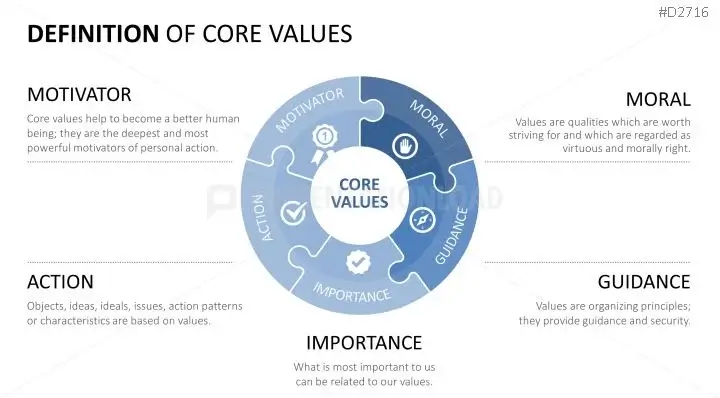
As the image below shows, company values help boost employee motivation, morale, employee advocacy, and they provide guidance and security in the workplace. They give employees a clear sense of what is expected, reduce uncertainty in decision-making, and encourage behaviors that support long-term success.
7 Ways Company Values Drive Business Success
As mentioned above, your company values play an essential role in your business. They are not just statements—they shape how people think, act, and collaborate across teams.
Without them, it’s almost impossible to align your employees with your strategic goals, enhance team collaboration, or empower your employees. When values are unclear, priorities shift constantly and teams lose direction. And here’s why 👇
1. Making the right decisions
Having a clear set of values helps your employees understand what you stand for. It gives them a shared framework to evaluate situations and decide on the best course of action. Your company values also provide guidance for their work and create a sense of security, especially in fast-moving or uncertain environments.
As a result, your employees are more likely to make the right decisions — the decisions that help them achieve the company’s vision and goals. They don’t need constant oversight because they understand the company’s mission, share the values that “my company” stands for, and believe in its direction.
What’s more, having a set of well-defined company values provides a moral direction in difficult situations. In times of rapid technological, environmental, and societal change, this consistency becomes a real advantage. Employees are better equipped to act confidently, even when facing complex or unfamiliar challenges.
But to truly support decision-making, you need to set the right company values and employee value propositions. These elements reinforce each other. When employees clearly understand why “my company” exists, what it aims to achieve, and what it stands for, they can act faster and with greater confidence in everyday work situations.
2. Improving employee communications
Employee communication plays an extremely important role in building a better company culture, improving employee satisfaction, and increasing employee engagement. It shapes how information flows and how connected employees feel to the organization.
When employers don’t have clear company values, their communications with employees are often inconsistent and unclear. Messages can feel disconnected from actual actions, which creates confusion in the workplace. Over time, this erodes trust and makes it harder for teams to stay aligned.
With clear company values, you can significantly improve employee communications at your workplace. They provide a consistent narrative and tone, helping teams better understand priorities and expectations. More importantly, they make it easier for employees to connect their daily work to a bigger purpose—so they don’t just hear what “my company” says, but also understand why it matters.“`
Read on: Top 5 Communication Skills and How to Improve Them
3. Boosting employee motivation and engagement
When your employee communication is built around your core company values, it helps boost employee motivation and engagement. It gives employees a clear sense of purpose and shows them how their work contributes to something bigger.
Indeed, if you explain your core values to your employees and the reasons why you stand for these specific values, they will better understand the company’s direction and feel more connected to it. When people see how their role supports “my company”, they are naturally more willing to invest effort and stay committed.
Engaged employees are the ones who have clear guidance for achieving their personal goals as well as the company’s goals. They understand what is expected from them, how success is measured, and how their daily tasks contribute to long-term outcomes.
But most importantly, engaged employees are the ones who share your company values and strongly believe in them. This shared mindset creates stronger alignment, better collaboration, and higher performance across teams. If you want your https://blog.haiilo.com/blog/engaged-employees/”>employees to feel more engaged, you need to define your company values and communicate them properly—and consistently reinforce them in daily work.
💡Check out top 15 tips to motivate your employees and 8 employee engagement statistics.
4. Creating a trusted brand
Besides helping your employees live by your company values, it is extremely important to make sure that your clients understand what your core values are. Clear and visible values help create a consistent brand experience across all touchpoints.
Indeed, your company values help you clarify the identity of the brand and educate your clients about what the company stands for. When customers clearly understand what “my company” believes in, it becomes easier for them to build trust and form lasting relationships.
Having a set of specific and unique core values can be a highly competitive advantage. It helps you stand out in crowded markets where products and services often look similar. Values create meaning beyond features and pricing.
Think about it: if you manage to build a relationship with your clients based on the values you share, you’re most likely going to strengthen this relationship because it is built on common beliefs and principles. This emotional connection often leads to higher loyalty, repeat business, and stronger advocacy.
5. Reducing employee turnover
Company values are extremely important for https://blog.haiilo.com/blog/employee-turnover/fighting high employee turnover rates. When employees feel aligned with what “my company” stands for, they are more likely to stay and grow within the organization.
Strong values create a sense of belonging and stability. They help employees feel confident in their work environment and reduce uncertainty about expectations and direction. This leads to higher satisfaction and lower intention to leave.
On the other hand, when there is a clear mismatch between personal values and company values, employees are more likely to disengage and eventually leave. That’s why defining, communicating, and consistently living your values is key to retaining the right talent over the long term.
Think about it: most candidates complete extensive research before applying to open roles. They explore companies’ websites, read blog content, check forums, and follow discussions on social media. They also pay close attention to company reviews and real employee feedback to understand what working there is actually like. This gives them a more complete picture of what “my company” represents beyond marketing messaging.
That’s because they don’t want to choose the “wrong” company and the same goes for you as an employer — you want to hire the “right” talent. A strong alignment between candidate expectations and your company values helps avoid mismatches early on. It also increases the chances that new hires will integrate quickly and stay longer.
For candidates, company values are a key signal of how decisions are made, how people collaborate, and what behaviors are rewarded. If those values feel unclear or inconsistent, it raises doubts. On the other hand, when “my company” clearly communicates and demonstrates its values, it becomes much easier to attract people who genuinely connect with them.
Check out this short video where Simon Sinek explains why setting strong company values is essential when it comes to attracting top talent 👇
Besides interviewing candidates about their skills and experience, you’re going to ask them questions about their values to make sure that they fit your company culture. This helps you understand how they think, how they make decisions, and whether their approach aligns with what “my company” stands for in practice—not just on paper.
If you don’t check whether the candidates are a cultural fit during the interview process, you may end up seeing your employee turnover rates drastically increase in the next few months! Misaligned hires often struggle to integrate, which can lead to poor collaboration, lower engagement, and early exits.
Related: https://blog.haiilo.com/blog/recruitment-vs-talent-acquisition-is-there-a-difference-yes/Recruitment vs. Talent Acquisition [Infographic Included]
6. Attracting customers who share the same values
In addition to your customers, potential new clients also care about what your company stands for. Values are often a deciding factor when choosing between similar providers, especially in competitive markets.
When a company finds out that your values are similar to theirs, you could have a much bigger chance of being chosen over someone else. Shared values build trust faster and create stronger, more meaningful business relationships from the start.
For example, if one of your main company values is accountability, you can attract new customers who appreciate accountability and transparency from their vendors. For that reason, it is important to understand who your leads are and what their values are. When “my company” clearly communicates its beliefs, it becomes easier to connect with the right audience and filter out poor-fit opportunities.
7. Empowering marketing and internal comms teams
To align their messages, your marketing and https://blog.haiilo.com/blog/top-7-internal-communications-apps/internal communications teams need to have a great understanding of your company values. These values act as a foundation for messaging, tone, and storytelling across all channels.
To be credible, your internal and external communications have to be consistent. Companies that haven’t set clear company values usually struggle with their communications strategies, leading to mixed messages and reduced trust among employees and customers.
📹 Check out our Masterclass: How to Create an Internal Comms Strategy
Furthermore, marketing teams that know what the company stands for are much more successful in attracting new qualified leads that convert. They can create content that feels authentic, consistent, and aligned with audience expectations.
Indeed, you need to make sure that you share the right message with the right audience. If your messages include values that resonate with your target audience’s values, you’re much more likely to catch their attention. When “my company” communicates clearly and authentically, it strengthens credibility and builds long-term trust with both prospects and customers.
15 Powerful Stats About Company Values
As mentioned earlier, your company values have a direct impact on your business’s bottom line. They influence how employees behave, how decisions are made, and how “my company” is perceived by both candidates and customers.
Let’s take a look into 15 eye-opening insights that show how your company values may impact your ability to attract top talent, the employee experience you deliver, as well as your employees’ motivation:
- More than half of executives say corporate culture has a direct impact on performance factors like productivity, creativity, and growth
- The majority of organizations now invest in employee recognition programs to reinforce company values in daily work
- Most employees believe a strong company culture is essential to long-term business success
- Company culture is one of the main reasons candidates actively look for new job opportunities
- Employees are more likely to contribute positively when business goals are clearly defined and aligned with values
- A noticeable percentage of candidates turn down job offers when company culture doesn’t meet their expectations
- Only a small portion of employees feel they can consistently apply company values in their daily work
- Employees who feel supported in their work environment are more likely to stay in their roles
- A significant number of workers would reject an otherwise attractive job if the culture is not the right fit
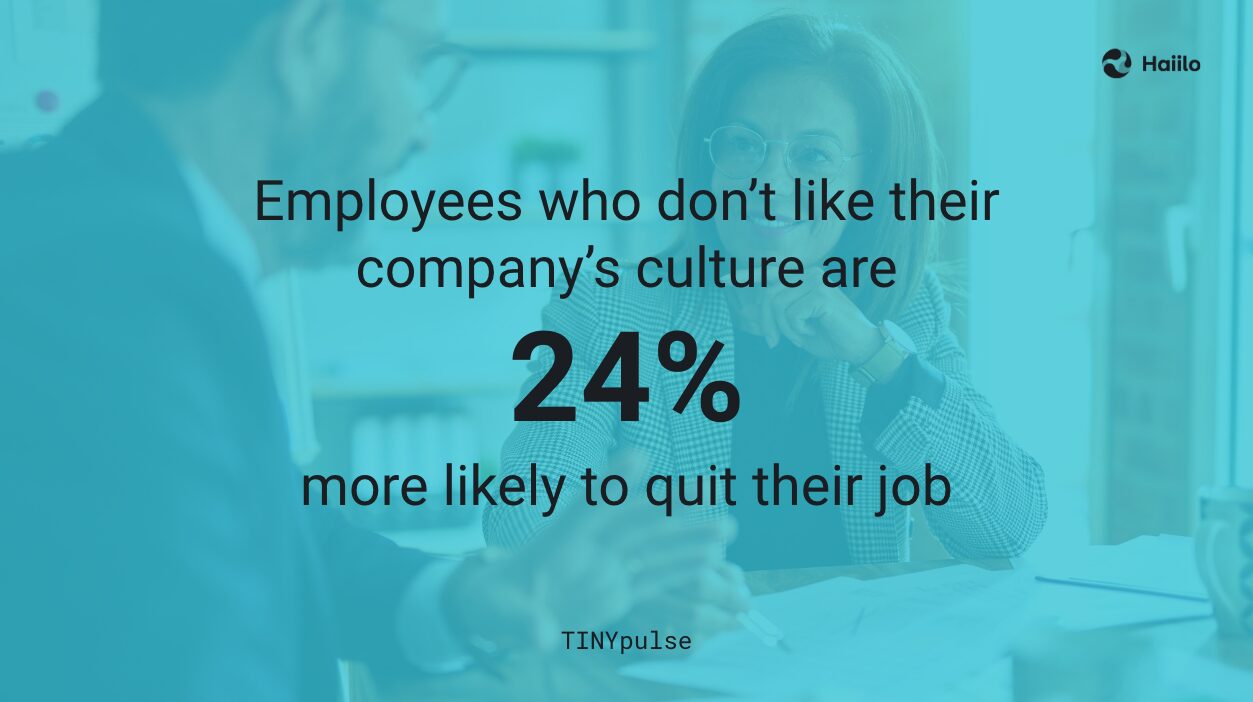
- Employees who disconnect from company culture are more likely to leave their jobs
- Many employees prioritize working for organizations that align with their personal interests and values
- Opportunities for growth and development significantly increase employee retention
- Recognition remains one of the most important factors influencing employee performance and satisfaction
- Regular feedback and communication contribute to a stronger and more consistent company culture
- Disengaged employees can have a substantial negative impact on productivity and overall business performance
Examples of Common Company Values
You won’t find several companies with the exact same set of values. Every organization defines them differently based on its mission, goals, and culture. However, there are some company values we see more often than others because they resonate across industries and teams. These values are typically employee- and customer-centric, and they help shape how “my company” operates on a daily basis. They also provide a clear foundation for behavior, decision-making, and long-term growth. They often include
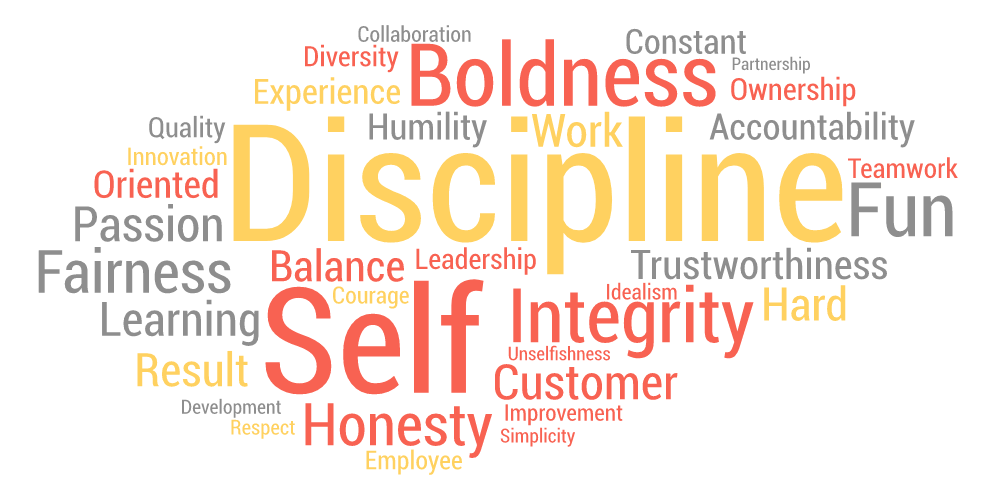
- Integrity – acting consistently and doing the right thing, even when no one is watching
- Boldness – taking initiative and making confident decisions to move “my company” forward
- Honesty – communicating openly and transparently across all levels of the business
- Fairness – treating employees, customers, and partners with respect and equality
- Trustworthiness – building reliable relationships through consistent actions and accountability
- Accountability – taking responsibility for decisions, actions, and outcomes
- Learning – encouraging continuous growth, curiosity, and knowledge sharing
- Customer Experience – prioritizing customer needs and delivering real value at every touchpoint
- Passion – bringing energy, enthusiasm, and commitment to daily work
- Balance – supporting sustainable work habits and employee well-being
- Fun – creating a positive, enjoyable work environment that people want to be part of
- Discipline – staying focused and consistent in achieving goals and maintaining standards
- Humility – being open to feedback and willing to learn from others
- Ownership – taking initiative and acting like an owner in everything you do
- Result oriented – focusing on outcomes and delivering measurable impact
- Constant Improvement – always looking for ways to grow, optimize, and innovate
- Leadership – guiding others with clarity, responsibility, and vision
- Hard work – committing the effort required to achieve meaningful results
- Diversity – valuing different perspectives, backgrounds, and experiences
- Employee Development – investing in skills, growth, and long-term career success
- Innovation – encouraging new ideas and creative problem-solving
- Quality – delivering high standards in products, services, and processes
- Teamwork – collaborating effectively to achieve shared goals
- Simplicity – keeping processes and communication clear and efficient
- Collaboration and Partnership – building strong internal and external relationships
- Idealism – striving to make a positive impact beyond immediate business goals
- Courage – speaking up and making tough decisions when needed
- Unselfishness – putting team and company success ahead of individual gain
- Self-Discipline – staying consistent and focused without external pressure
- Self-Respect – maintaining confidence and professionalism in all interactions
5 Companies With Inspiring Values
Most businesses put a lot of effort and resources into defining and effectively communicating their company values with their employees and their external stakeholders. These values are not just statements—they influence how organizations operate, how decisions are made, and how people experience working with and for the brand.
Looking at real examples can help you better understand what strong values look like in practice and how they shape a company’s culture over time. They also show how clearly defined values make it easier for employees and candidates to connect with what “my company” stands for.
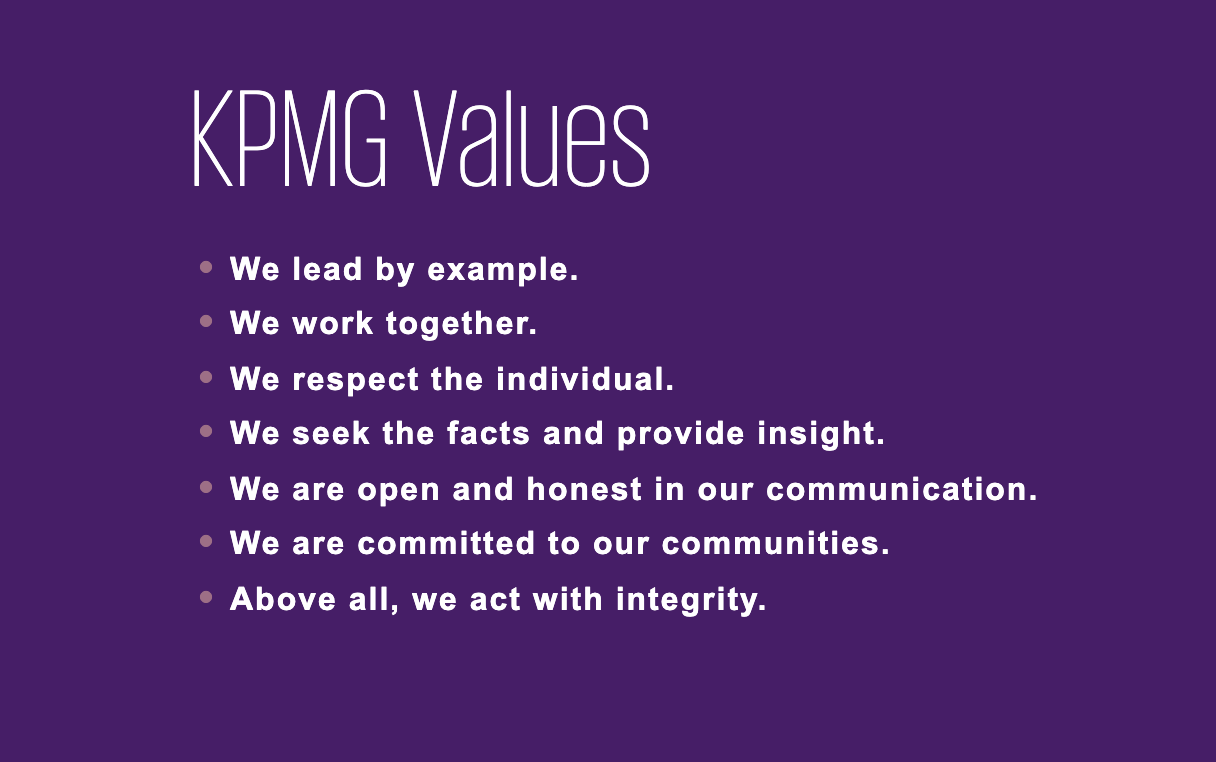
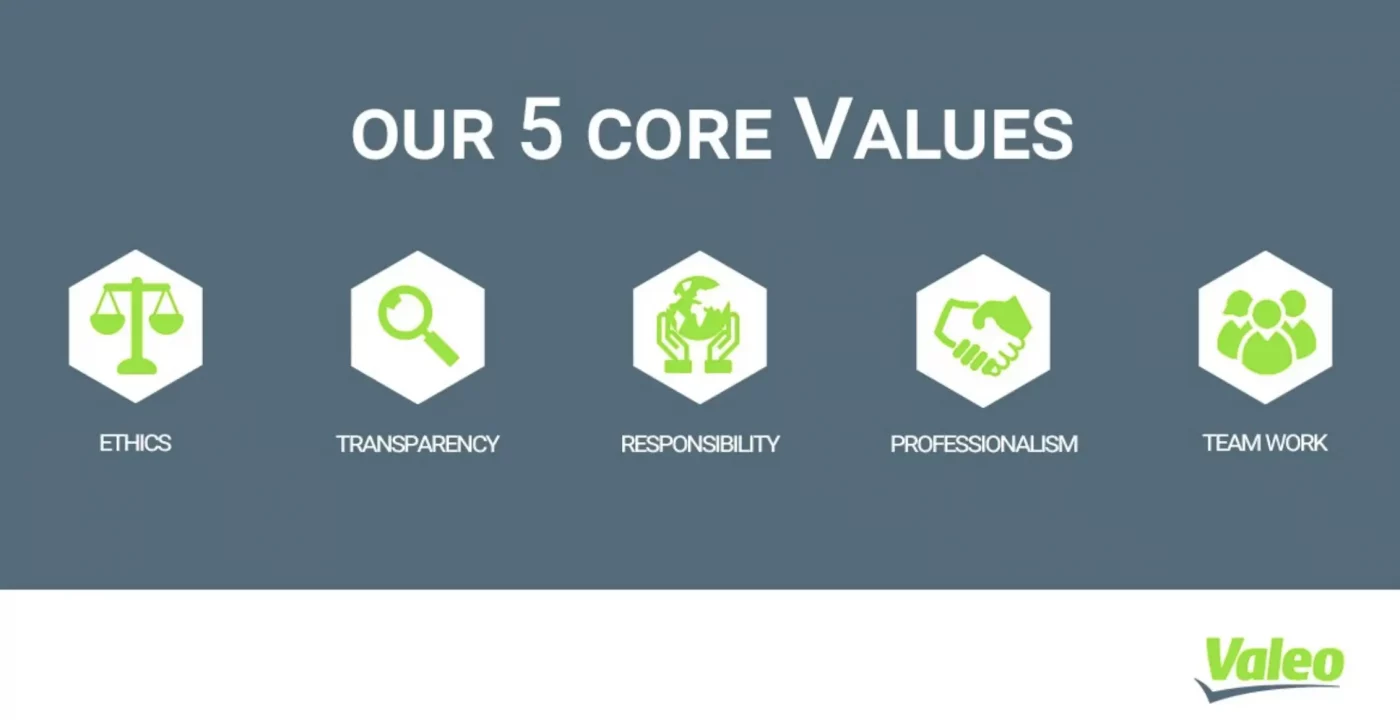
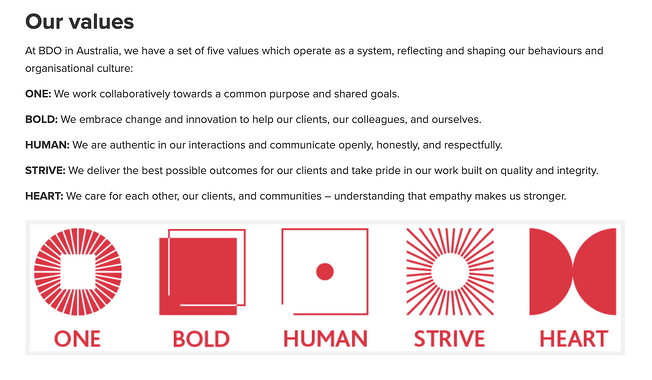
Here are some of our clients’ inspiring core values as below:
KPMG
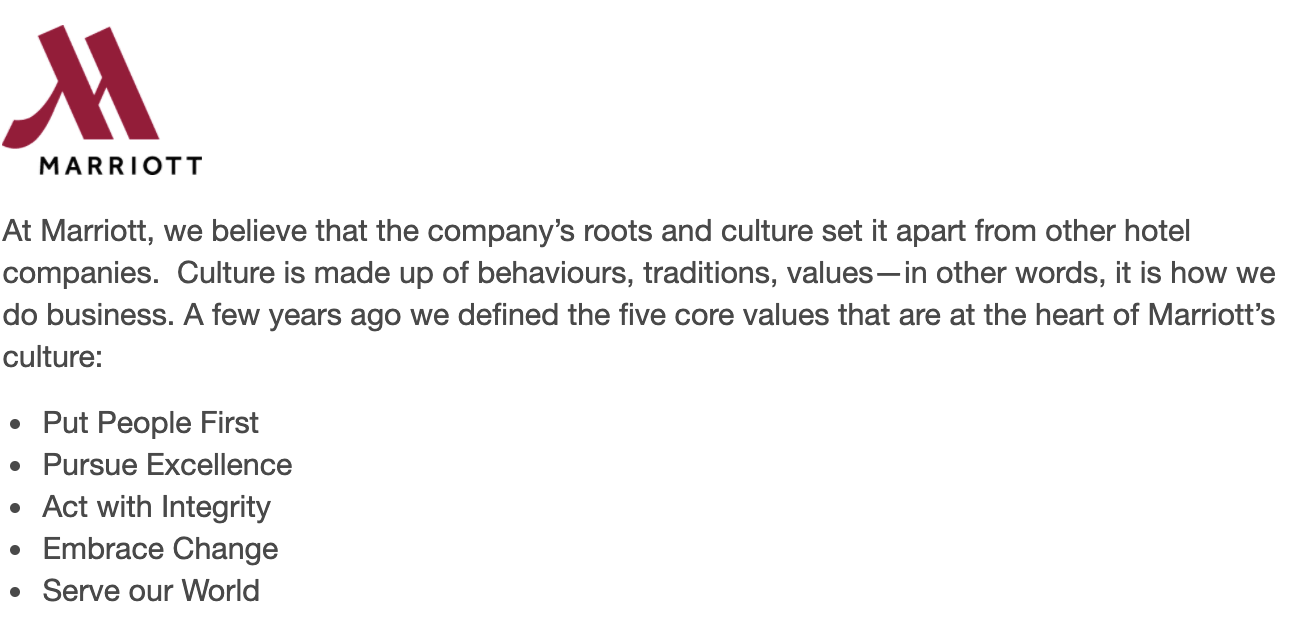
Marriott
Marriott is well known for its people-first approach and strong service culture. Its core values—such as putting people first, acting with integrity, and pursuing excellence—are deeply embedded in how the company operates globally. These values guide how employees interact with guests and with each other, ensuring a consistent experience across locations. They also make it easier for employees to understand what is expected from them in their daily work.
For “my company”, this is a great example of how clearly defined and consistently applied values can scale across teams and regions. By making values visible and actionable, Marriott reinforces a culture where employees feel empowered to deliver high-quality service while staying aligned with the company’s mission.
10 Inspiring Quotes About Company Culture and Values
The world’s greatest leaders understand the importance of company values and corporate culture for driving business success and resilience. They often highlight that strong values are not just internal guidelines but a critical foundation for sustainable growth and long-term impact.
The internet is full of interesting and inspiring quotes about this topic, and in the next section, we are delivering some of the most inspiring ones. These quotes show how powerful it can be when “my company” clearly defines and consistently lives its values across teams and leadership.
Michael Kouly, author of
The culture of a company is the sum of the behaviors of all its people.
Patrick Whitesell, Executive chairman of William Morris Endeavor
You can have all the right strategies in the world; if you don’t have the right culture, you’re dead.
Brian Chesky, Co-Founder, CEO, Airbnb
Culture is simply a shared way of doing something with a passion.
Mark Zuckerberg, CEO, Facebook
I think as a company, if you can get those two things right — having a clear direction on what you are trying to do and bringing in great people who can execute on the stuff — then you can do pretty well.
David Cummings, Co-Founder, Pardot
Corporate culture is the only sustainable competitive advantage that is completely within the control of the entrepreneur.
Brian Halligan, CEO, Hubspot
The way I think about culture is that modern humans have radically changed the way that they work and the way that they live. Companies need to change the way they manage and lead to match the way that modern humans actually work and live.
Christopher Isaac “Biz” Stone, Co-Founder, Twitter
Positive culture comes from being mindful, and respecting your co-workers, and being empathetic.
Simon Sinek, English-American author and inspirational speaker
Customers will never love a company until the employees love it first.
Peter Drucker, Austrian-American consultant and educator
Culture eats strategy for breakfast.
Download our Employee Engagement Report and learn what drives and motivates modern employees!
FAQ: company values in practice
How do I turn “my company” values into everyday behavior?
Start by translating each value into 2–3 observable behaviors. For example, “accountability” could mean “follow up in writing” and “own mistakes fast.” Then make those behaviors part of how you work: team rituals, project kickoffs, and performance conversations. Values stick when people see them reinforced across channels, not just in a slide deck. A https://www.haiilo.com/social-intranet social intranet helps keep values visible in one place, while consistent updates through https://www.haiilo.com/employee-communications employee communications make them feel real in day-to-day work.
What’s the best way to communicate values without spamming people?
Use fewer messages, but make them more useful. Share values through real examples: decisions you made, trade-offs you chose, and customer moments you’re proud of. Mix formats and meet people where they are—especially frontline teams. If your org relies on multiple channels, align them with a simple plan (see https://blog.haiilo.com/blog/what-is-multichannel-comms-and-why-it-matters/what multichannel comms is and why it matters) and lean on https://blog.haiilo.com/blog/asynchronous-communication/asynchronous communication so updates don’t get lost in meetings.
How do I know whether employees actually believe “my company” values?
Don’t guess—measure. Look for leading signals: participation in values-led initiatives, engagement with internal stories, and feedback trends by team. Pair that with hard outcomes like retention and referrals. Use https://www.haiilo.com/insights-and-analytics insights and analytics to track what content lands and where trust is rising or slipping. If trust feels shaky, https://blog.haiilo.com/blog/brand-trust/brand trust offers practical ways to strengthen credibility through consistent actions.
Can values help with hiring and employer branding?
Yes—when they’re specific. Candidates compare what you say with what current employees experience. Make values concrete in job ads, interviews, and onboarding, and show proof with examples. Tie values into your positioning (https://blog.haiilo.com/blog/employer-branding/employer branding) and your plan (https://blog.haiilo.com/blog/employer-branding-9-steps-to-build-successful-strategy/employer branding strategy steps). If you’re building demand too, align values with your visibility work (https://blog.haiilo.com/blog/brand-awareness-strategy/brand awareness strategy) and recruitment storytelling (https://blog.haiilo.com/blog/recruitment-marketing/recruitment marketing). For teams on the move, a https://www.haiilo.com/mobile-app mobile app keeps values and updates accessible anywhere.
Recommended Reading
-

 May 20 2026
DEI metrics: how to measure DEI success
DEI metrics help you track progress and impact. Learn how to measure DEI success with practical metrics and best practices.
-

 May 10 2026
Why social recruitment beats traditional hiring
Missed candidates and slow hiring? Discover how social recruitment helps you reach, engage, and convert better talent faster.
-
 May 2 2026
Breaking down the silos: why it fails and how to fix it
Breaking down the silos is harder than it looks. Discover what’s holding teams back—and practical ways to fix it fast.
Discover how Haiilo’s employee experience platform can transform your organization