
What is the main difference between leadership and management? While many assume these terms are interchangeable, they are not. In fact, confusing management: leading with managing day-to-day tasks often leads to poor decisions and disengaged teams. Leaders and managers rely on different mindsets, skills, and priorities—though the best professionals know how to balance both. We’ll break down those differences and show how each approach shapes team performance.
In this blog, you will also learn that proper communication is one of the main prerequisites for successful leadership and management. Without clear direction, feedback, and alignment, even the strongest strategy falls apart. Whether you focus on management: leading people or managing processes, communication is what connects vision to execution.
💡Check out Top Leadership Skills and become the leader your employees need.
Now, let’s take a deep dive into the main differences between leadership and management—and why understanding management: leading can transform how your team performs.

How Leadership and Management are Different
Leadership and Management are often considered to have overlapping functions. While this is partly true, the two terms have distinct meanings and shouldn’t be used interchangeably. Confusing management: leading with managing processes can create gaps in accountability, motivation, and results. Both roles involve guiding teams and achieving goals, but they rely on different approaches, priorities, and behaviours.
However, they show prominent differences in certain situations. For example, some managers focus only on tasks, deadlines, and processes without actively leading people. At the same time, others naturally influence, motivate, and guide teams without holding a formal managerial title. This is where the distinction in management: leading becomes clear—authority is assigned, but leadership is earned.
A manager is generally someone who is selected or appointed within an organization. In most cases, a manager is chosen based on specific technical skills, knowledge, and expertise, as well as their ability to plan, organise, and deliver results. On the contrary, the greatest leadership skill is the ability to influence and inspire people. Leaders create trust, set direction, and help others perform at their best—regardless of their job title.
For Great Leadership vs. Management you need the right communication tool to succeed in your role. Let us show you how.
In the workplace, it is important to have both great leaders and managers. Without the right balance, teams may either lack direction or struggle to execute. Organizations need strong leaders to shape vision, inspire people, and drive change. At the same time, they need effective managers to turn that vision into action, ensuring processes run smoothly and that teams are aligned with the company’s goals. This is where management: leading becomes critical—combining inspiration with structure to deliver real results.
Leadership vs. Management and their differences:
Let’s look at the 5 main differences between leadership and management, and how understanding management: leading can help you apply both more effectively.

Due to the impact of the recent pandemic, the role of leaders and managers in an organization has become even more important. Remote work and hybrid work have added new challenges, making it harder to influence people, maintain visibility, and build strong relationships. As a result, organizations must rethink how they approach management: leading in distributed environments—where trust, clarity, and consistency matter more than ever. These shifts can directly impact employee experience and make it more difficult to ensure higher engagement levels.
💡 Read about the 20 ways to engage with your remote employees!
Now let’s look at leadership vs. managers specifically, and how they are different.
1. Leaders Set the Vision, Managers Follow It
When it comes to setting and executing a company’s mission and vision, managers and leaders have different roles.
Leaders are visioners. Most of them have a clear view of where they want their organizations to be in the future and why it matters. They focus on direction, purpose, and long-term impact. However, they are not the only ones responsible for making that vision a reality—this is where the balance of management: leading becomes essential.
Here, managers play a crucial role. Leaders may be responsible, through efficient leadership communication, for sharing the company’s mission, vision and goals across the organization. Managers, on the other hand, translate that vision into actionable steps. They ensure teams understand priorities, stay focused, and deliver results in line with company objectives. Without this connection, even the strongest vision can fail in execution.
However, many organizations still struggle with alignment. Research from Gallup shows that only a small percentage of employees strongly agree they know what their organization stands for and what makes it different. This highlights a key gap in management: leading—communication is often not clear or consistent enough to connect strategy with day-to-day work.
Even though managers are the ones who can influence people to work towards the same objectives, many employees still feel disconnected from the bigger picture. In fact, when management: leading is unclear or inconsistent, teams may focus on tasks without understanding why they matter. Moreover, employees want and expect to be informed about how their organization is performing, what challenges it faces, and where it is heading next. Clear, ongoing communication is what turns alignment into action.
What do others say about Leaders vs. Managers
“I think of management as working with other people to make sure the goals an organization has articulated are executed,”
says HBS Dean Nitin Nohria in an interview for the online course Management Essentials.
“It’s the process of working with others to ensure the effective execution of a chosen set of goals. Leadership is about developing what the goals should be. It’s more about driving change.”
This distinction highlights a key idea behind management: leading. Management focuses on execution, structure, and consistency, while leadership defines direction and inspires progress. Organizations that succeed are those that connect both—setting clear goals and ensuring people understand, believe in, and act on them.

Moreover, by speaking openly about the company’s goals, opportunities, and challenges, leaders are the ones who can build trust in the workplace. This is especially important in the context of management: leading, where transparency helps bridge the gap between strategy and execution. When leaders communicate honestly and consistently, they create a productive work environment where employees feel informed, valued, and empowered to share their own ideas, needs, and concerns. The more transparent leaders are, the healthier—and more resilient—the work environment becomes.
💡 Learn more about the characteristics of a great leader.
2. Leaders Think Ideas vs. Managers Who Think Execution
Whilst a managerial culture emphasizes rationality, structure, and control, leaders focus more on identifying opportunities and driving improvement across the organization. They challenge the status quo, encourage innovation, and promote a forward-thinking mindset. This difference sits at the core of management: leading—balancing creative thinking with practical execution.
In simple terms, managers tend to focus on “how and when,” ensuring that processes are followed, deadlines are met, and resources are used efficiently. Leaders, on the other hand, focus on “what and why,” defining direction, purpose, and long-term goals. Both perspectives are necessary, but they serve different functions within a team.
Therefore, the managers’ main responsibility is to turn ideas into action and fulfill their tasks based on the leader’s vision. Their role is to coordinate people across different functions, ensure work is delivered efficiently, and maintain consistency in performance. At the same time, they create an environment where employees can collaborate effectively, stay productive, and feel like they can share their voice.
They should always keep an eye on the bottom line while supporting their teams—not just by controlling outcomes, but by providing the right information, processes, workflows, and tools so that employees are enabled for success. In the context of management: leading, this means creating structure without limiting autonomy, so people can perform at their best.
Managers relate to people based on the roles they play in decision-making and execution. They focus on clarity, accountability, and results. Leaders, on the other hand, engage with people on a more strategic and motivational level. They connect work to purpose and encourage growth. The key difference lies in a manager’s attention to how things get done and a leader’s focus on what should be done to achieve better outcomes.
Because leaders constantly look for new ideas and improvements, they play a critical role in driving change within organizations. They challenge existing ways of working and guide teams through uncertainty. More importantly, a leader inspires positive, incremental change by empowering employees to work toward shared goals. One of the most effective ways to do this is through clear, consistent communication.
Change communication messages coming from leaders should help people understand why change is happening and what it means for them. This builds trust and reduces resistance. Managers then play a key role in reinforcing these messages, ensuring they are understood and applied in day-to-day work. However, when management: leading is disconnected, managers may struggle to communicate change effectively—sometimes because they haven’t been given enough context themselves.
📹 Check out our Masterclass to learn about why every company should have a proper internal communications strategy.
[https://www.youtube.com/watch?v=3FFhjir9pFA&list=PLsKeWZpHL5m6mqknomiYJpq88MPrtP1uP](https://www.youtube.com/watch?v=3FFhjir9pFA&list=PLsKeWZpHL5m6mqknomiYJpq88MPrtP1uP)
3. Leaders Inspire People vs. Managers DrivingTheir Success
Whilst leaders have a great power to inspire people, managers are responsible for driving their continuous success and positive work experience throughout an employee’s entire career journey. In practice, management: leading means combining inspiration with ongoing support—ensuring employees not only feel motivated, but also have what they need to perform and grow.
As managers account for over 70% of employees’ engagement in the workplace, their role goes far beyond task supervision. They shape daily experiences through feedback, recognition, and guidance. Because of this, they are also held accountable for how successful and productive their teams are. Strong managers create clarity, remove obstacles, and help employees stay focused—turning leadership vision into consistent performance.
When people are not inspired by what leadership has to say, there is little managers can do to help their people succeed. Without a clear sense of purpose, even the best processes fall short. This is a common challenge when management: leading is disconnected—teams may be well-managed but lack motivation and direction. By developing a personal leadership style through self-reflection, authentic communication and continuous feedback, leaders can empower their workforce, capture attention, and inspire employees to take ownership of key initiatives.
Employees also respond strongly to visibility and access to leadership. When they can regularly engage with leaders, ask questions, and understand decisions, they tend to feel more confident and less stressed. Moreover, leadership has a great power to impact employee engagement, especially when communication is consistent and meaningful.
Employees work more effectively in environments that support honest, open, and transparent communication. This is a critical part of management: leading—creating space for dialogue, not just direction. Yet, many organizations still neglect the importance of two-way communication between leaders and employees. Instead, information flows in one direction, leaving employees disconnected and unable to contribute to company-wide conversations or share valuable feedback.

4. Leaders Look in the Future, Managers Work In the Present
One of the main differences between leadership vs. management is that leaders are more future-focused, while managers are more focused on the present. This distinction is central to management: leading—balancing long-term vision with day-to-day execution to keep organizations moving forward.
Therefore, the manager’s most important goal is to achieve organizational objectives by implementing processes and procedures around budgeting, structuring teams, and allocating resources effectively. They focus on stability, efficiency, and making sure current operations run as planned. On the other hand, leaders think ahead. They anticipate change, identify new opportunities, and set a direction that prepares the organization for what’s coming next.
However, a leader’s vision of the future has little impact if it isn’t transparently and clearly communicated to both managers and employees. Without this connection, teams may stay busy with current tasks but lose sight of the bigger picture. Strong management: leading ensures that future goals are not only defined, but also understood, shared, and translated into meaningful action across the organization.

As one of the biggest drivers of employee engagement and experience in the workplace is the feeling of purpose and alignment between employees’ personal and professional values, every leader should actively work to create that connection. When people understand how their work contributes to a larger goal, they are more motivated, committed, and productive. This is a key part of management: leading—linking everyday tasks to a clear and meaningful purpose.
Leaders play a critical role in shaping this sense of purpose by clearly communicating the “why” behind decisions and helping employees see the impact of their contributions. Managers then reinforce that purpose through daily interactions, feedback, and goal-setting. Together, they ensure that purpose is not just defined, but consistently experienced across the organization.
💡 Related: Lead more about the difference between various leadership styles such as servant leadership, transformational leadership, and empathetic leadership.
5. Leaders Shape the Culture vs Managers Endorsing It
When comparing leaders vs managers, it’s important to look at the organization’s corporate culture. Culture is not just a concept—it directly influences how people think, act, and collaborate on a daily basis. This is where management: leading plays a key role, connecting cultural direction with everyday behaviours.
Culture is a system of values, beliefs, and behaviors that shape how an organization operates and how work gets done. It influences decision-making, communication styles, and how employees interact with each other and with leadership. When organizational culture is aligned with the overall business strategy, employees and stakeholders naturally act in ways that support and enable the achievement of business goals. This alignment makes execution smoother and strengthens long-term performance.

When it comes to the organization’s culture, the difference between leadership and management is that leaders define and shape the culture, while managers ensure it is consistently applied in day-to-day work. This is a critical part of management: leading—turning values into actions that employees can follow and experience.
It is the leader’s duty to uphold the core company values and beliefs of the organization through their actions, authentic communication, and decisions. What leaders say matters, but what they do has an even greater impact. Passionate and inspiring leaders have a strong power to communicate the organizational culture company-wide and influence how employees behave, collaborate, and make decisions.
Their skills and leadership styles directly shape how culture is perceived and adopted across the organization. Managers, on the other hand, play a key role in reinforcing that culture within their teams. Through feedback, recognition, and everyday guidance, they make sure cultural values are not just communicated but lived.
Therefore, driving employees to embrace the company’s culture and core values is impossible without strong alignment and collaboration between leadership and management. When management: leading is aligned, culture becomes consistent, credible, and sustainable across the entire organization.
The Areas Where Management and Leadership Overlap
Even though the roles of leadership and management in the organization may vary, there are many areas where their duties and responsibilities overlap. In practice, success depends on how well these two functions work together. Strong management: leading ensures that strategy, communication, and execution are aligned, rather than operating in silos. The three main areas include:
- Communication: both leadership and management communication is crucial for an organization’s success. As mentioned earlier, employees expect to be informed and educated about where their company stands and where it is heading. While leadership communication should inspire people and provide direction, continuous and clear management communication helps translate that vision into actionable steps. Together, they empower employees to do their best, stay aligned, and build stronger relationships across teams.
- Problem-solving and decision-making: effective decision-making and problem-solving are shared responsibilities between leaders and managers. In the context of management: leading, this means aligning strategic thinking with practical execution. While leaders typically make decisions that shape the overall direction of the company, managers focus on applying those decisions within their teams. They address day-to-day challenges, remove obstacles, and ensure that solutions are implemented effectively and consistently.
- Change and crisis management: similar to decision-making, leaders and managers must work closely together during times of change or crisis. Rapid shifts in the workplace have highlighted the importance of agile workplace transformation and the ability to adapt quickly. Leaders define the vision for change and explain why it matters, while managers focus on execution—helping employees understand what needs to change and how to adjust. Strong management: leading ensures that change is not only planned, but also accepted and successfully embedded across teams.
Top 10 Leadership and Management Skills
This video shows a great overview of the most important management and leadership skills.
According to the video, leadership is all about guiding people toward a shared vision, while management focuses on structuring, organizing, and controlling processes to achieve that vision. In practice, management: leading brings these two together—aligning people and processes so goals are both inspiring and achievable.
The top 10 management skills include:
- Interpersonal skills
- Communication
- Motivation
- Organization
- Delegation
- Forward planning
- Strategic thinking
- Problem-solving
- Commercial awareness
- Mentoring
These skills help managers create structure, maintain efficiency, and ensure that teams can consistently deliver results. They focus on clarity, coordination, and enabling employees to perform effectively in their roles.
The top 10 leadership skills include:
- Communication
- Motivation
- Delegation
- Positivity
- Trustworthiness
- Creativity
- Feedback
- Responsibility
- Commitment
- Flexibility
Leadership skills, on the other hand, focus more on influencing people, building trust, and driving change. They enable leaders to inspire action, shape culture, and create a sense of purpose—completing the balance needed for effective management: leading.
7 Inspiring Quotes About Leadership vs. Management
Looking for inspiring quotes about leadership and management? Here are some of the most popular ones that clearly highlight the difference—and the balance required in management: leading:
- Effective leadership is putting first things first. Effective management is discipline, carrying it out. —Stephen Covey
- Lead and inspire people. Don’t try to manage and manipulate people. Inventories can be managed but people must be led. —Ross Perot
- Management is efficiency in climbing the ladder of success; leadership determines whether the ladder is leaning against the right wall. —Stephen Covey
- Management is about arranging and telling. Leadership is about nurturing and enhancing. —Tom Peters
- You manage things; you lead people. —Rear Admiral Grace Murray Hopper
- Management is doing things right; leadership is doing the right things. —Peter F. Drucker, author and educator
- The manager accepts the status quo; the leader challenges it. —Warren Bennis, American scholar, organizational consultant, and author
These quotes reinforce a consistent theme: successful organizations don’t choose between leadership and management—they combine both. That balance is at the heart of effective management: leading, where clear direction meets strong execution.
Empower Your Managers and Leaders with the Right Technology
With the rise of remote work, dispersed workforce, and flexible working models, both leaders and managers are facing new challenges in the workplace. Communication gaps, lack of visibility, and reduced face-to-face interaction make it harder to stay aligned and maintain engagement. This is where management: leading becomes more complex—and more important than ever.
Today, most organizations’ primary goal is to keep their dispersed employees connected, inspired and engaged, even when they are physically separated. At the same time, they need to ensure that employees receive the right information at the right time, on any device, regardless of location. Without the right tools, this level of consistency and reach is difficult to achieve.
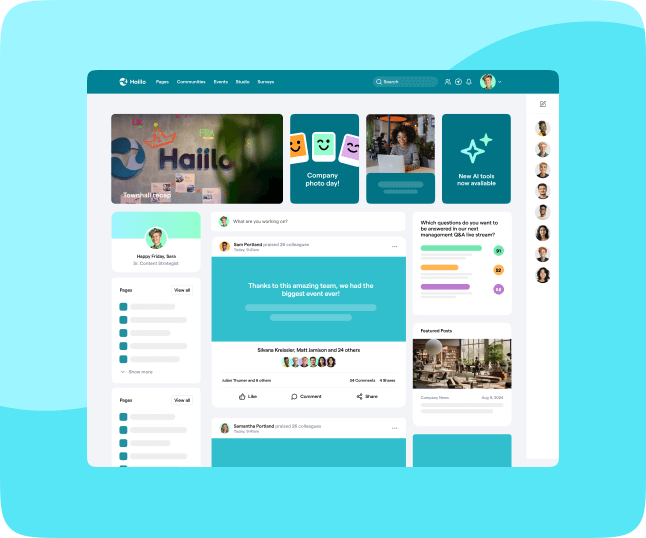
Luckily, modern employee apps and technology offer effective solutions to these challenges. Platforms like Haiilo support management: leading by helping organizations connect strategy, communication, and execution in one place. They enable managers and leaders to:
- Drive two-way workplace communications that encourage dialogue, not just top-down messaging
- Create and share all essential information in one centralized, easy-to-access platform
- Bring their teams together in one digital workspace, regardless of location
- Segment internal audiences to deliver relevant, personalized communication based on employees’ needs, roles, and locations
- Enable mobile-first communication so employees can stay informed on the go
- Reach all employees quickly, including frontline and deskless workers
- Give employees a voice and encourage feedback and participation
- Encourage employees to become brand ambassadors
- Measure and improve the impact of workplace communication on overall business performance
FAQs about management: leading
-
- What does “management: leading” actually mean?
It refers to the balance between managing processes and leading people. Management focuses on structure, planning, and execution, while leading is about direction, motivation, and influence. When combined, management: leading helps organizations turn strategy into action while keeping employees engaged and aligned. - Can someone be both a manager and a leader?
Yes—and the most effective professionals usually are. A good manager ensures work gets done efficiently, but a strong leader inspires people to do their best work. Combining both skills is key. Without leadership, teams may lack motivation. Without management, even great ideas can fail in execution. - Why is management: leading important for employee engagement?
Employees need both clarity and purpose. Managers provide structure, feedback, and support, while leaders create vision and meaning. When these work together, employees understand what to do and why it matters. This leads to higher engagement, better performance, and stronger team alignment. - How can organizations improve management: leading?
Start by improving communication at all levels. Leaders should clearly share goals and vision, while managers translate them into daily actions. Invest in leadership development, encourage feedback, and use tools that keep everyone connected. The goal is simple: align people, processes, and purpose so teams can perform at their best.
- What does “management: leading” actually mean?
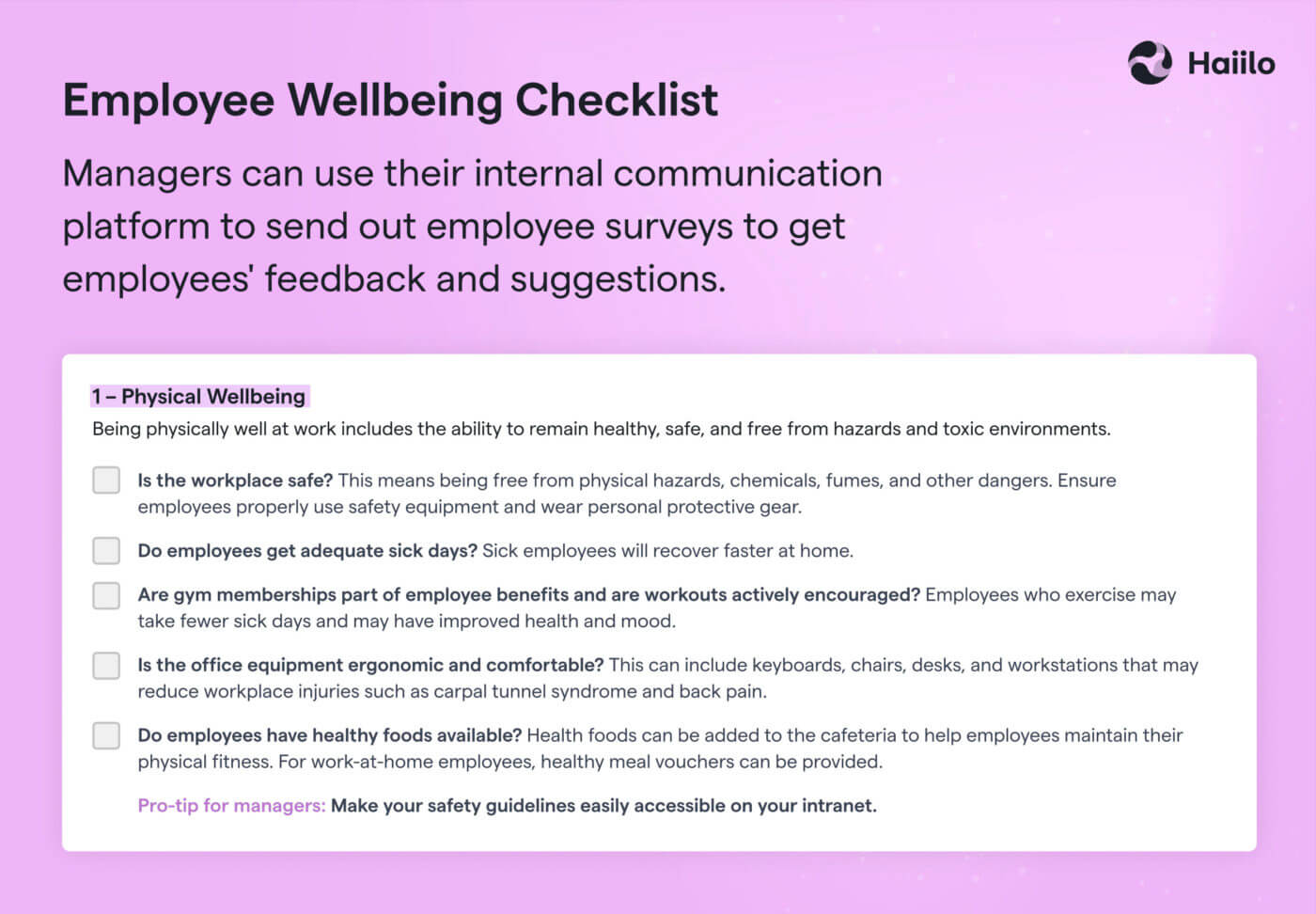
Want to improve productivity in the workplace? Get our free employee wellbeing checklist!