Choosing the right intranet might not feel like the most urgent decision in a healthcare setting. After all, when your teams are dealing with staff shortages, packed wards, and patients who need care now – not next week – it can be hard to stop and think about digital tools. Still, communication and connection directly impact patient safety, staff wellbeing, and the ability of your organization to deliver great care. An intranet done well can be the digital backbone that keeps every nurse, doctor, administrator, and support worker informed, engaged, and equipped. Done badly, it becomes another platform no one uses. So how do you cut through the noise and choose an intranet that actually works for healthcare? Let’s break it down.
Why healthcare needs a different kind of intranet
If you’ve worked in internal comms or HR in a healthcare setting, you’ll know how messy communication can get. Policies are emailed out but don’t reach night shift staff. Important updates get lost in WhatsApp groups. New hires struggle to find the right resources on day one. And let’s be honest, most people groan when they hear the word “intranet.” It’s not that people don’t want information. It’s that the tools they’ve been given often don’t fit the way they work. Desk-based employees can refresh Outlook every half hour. Nurses can’t. Paramedics can’t. Care workers can’t. Yet they need information even more urgently than anyone else. This mismatch explains why so many healthcare intranets sit unused. Most traditional options were built for desk-based employees. But in healthcare, the reality looks very different:
- The majority of staff don’t have desks. Around 80% of the global workforce are deskless workers. In healthcare, that percentage is even higher, with nurses, paramedics, care workers, and hospital staff all on the move.
- Communication gaps can have real consequences. A missed update isn’t just inconvenient; it can delay patient care or create safety risks.
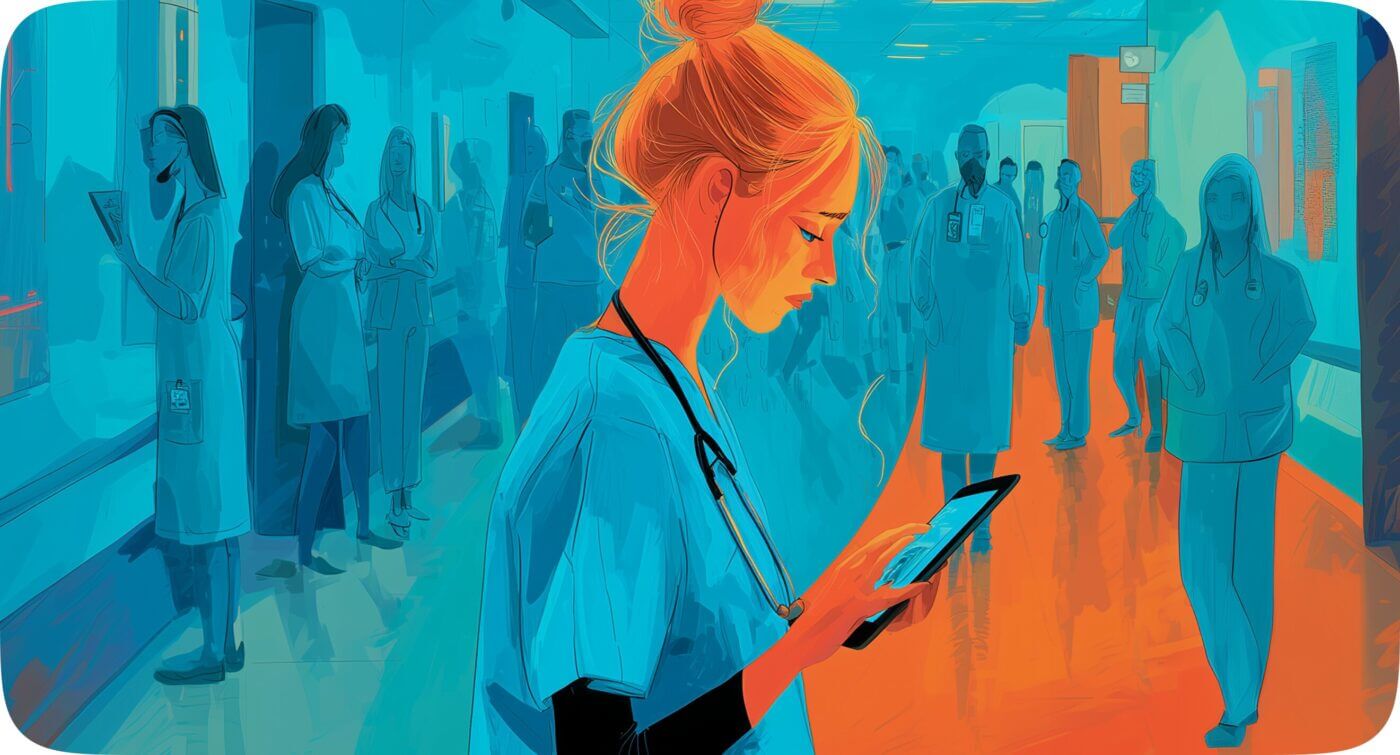
- Burnout is at crisis levels. Burnout remains a serious issue across healthcare. At least a quarter of health and care workers report symptoms like anxiety, depression, and burnout, and in some clinical settings, rates can exceed 70%.
That means your intranet can’t just be a “file dump” or a corporate bulletin board. It needs to be mobile-first, engaging, and genuinely supportive of staff in the toughest working environments.
Signs your current healthcare intranet isn’t working
If you’re wondering whether it’s time to upgrade, here are a few warning signs that healthcare HR and comms teams keep telling us about:
- Updates aren’t reaching everyone. A policy change is emailed, but half the team on night shift never sees it.
- Staff don’t bother logging in. If the intranet feels clunky or irrelevant, people stop using it.
- Frontline staff feel disconnected. Nurses and doctors rarely see recognition posts or internal news.
- Time is wasted searching for information. Staff spend precious minutes hunting down protocols, phone numbers, or shift schedules.
- It feels like “just another system.” Instead of reducing complexity, the intranet adds to the digital overload.
💡Read: What’s keeping internal communicators up at night? Sound familiar? You’re not alone.
What to look for in a healthcare intranet
So what does “the right intranet” look like in healthcare? It’s not about cramming in every possible feature. It’s about solving very human problems in a high-pressure environment. When evaluating intranets, healthcare organizations should focus on features and qualities that directly address these challenges.
1. Mobile-first communication
Your intranet should live where your staff are: on their phones. A mobile app ensures nurses, doctors, and frontline workers get updates wherever they are, not just at a laptop. 👀 Look for: Push notifications for urgent alerts, personalized feeds, and offline access.
2. Instant, targeted updates
In healthcare, not every message is for everyone. ICU doesn’t need the same updates as pediatrics. Comms teams need the ability to target by role, location, or shift. 👀 Look for: Smart targeting, scheduled posts, and a single hub for urgent alerts and everyday news.
3. Easy access to knowledge
When staff need to find a protocol, training guide, or the right specialist to call, they don’t have time to dig through shared drives. 👀 Look for: Enterprise search that works like Google, making resources, policies, and contacts instantly findable.
4. Built-in recognition tools
Recognition shouldn’t rely on a yearly awards ceremony. It should be part of everyday culture. 👀 Look for: Social features, kudos posts, and tools that make it easy for managers and peers to celebrate contributions.
5. Integration with your existing systems
Your intranet simply cannot add complexity. It should simplify. That means it needs to work seamlessly with your scheduling tools, HRIS, and EHR systems. 👀 Look for: Integrations with the tools your teams already rely on, so they can access what they need in one place.
6. Security and compliance
Healthcare handles sensitive data every day. Your intranet has to meet strict compliance standards and be trusted by IT as well as staff. 👀 Look for: Enterprise-grade security, role-based permissions, and healthcare-specific compliance.
Why the right intranet matters
It’s tempting to see an intranet as just another IT project, but the real measure of success is human. Does it help a nurse feel more connected to her team, even if she works nights? Does it mean a new doctor can quickly find the right contact without asking around? Does it make it easier for a comms manager to share critical updates without worrying who’s been left out? When the answer is yes, the impact goes far beyond technology. Staff feel valued. Teams pull together across sites and shifts. And ultimately, patients receive better care because the people looking after them have what they need. A well-chosen intranet helps:
- Frontline staff feel seen. Sharing photos from a team event, a recognition post for a nurse who went above and beyond: these small touches make a big difference.
- Reduce burnout. When employees feel connected and valued, they’re less likely to leave. Because retention isn’t just a people issue, it’s a financial one.
- Improve patient care. Faster access to protocols, fewer missed updates, stronger teamwork: these aren’t just operational wins, they directly impact outcomes for patients.
A practical checklist for your decision
When choosing the right intranet for your healthcare organization, ask yourself:
- Will this reach every staff member, even those without a desk?
- Does it make urgent updates impossible to miss?
- Can staff find what they need in seconds, not hours?
- Will it reduce digital clutter, or add to it?
- Does it help us celebrate people, not just broadcast news?
- Can it scale and integrate with the systems we already use?
If the answer isn’t a resounding “yes” to all of the above, keep looking.
Haiilo: one platform to connect every shift, site, and role
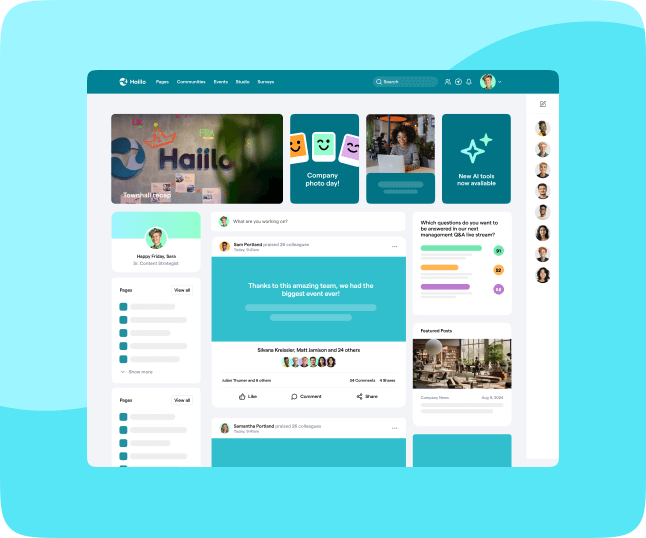
From urgent updates to everyday recognition, Haiilo is the employee engagement platform built for healthcare, so you can keep teams connected, engaged, and ready to deliver great care. See why healthcare teams choose Haiilo
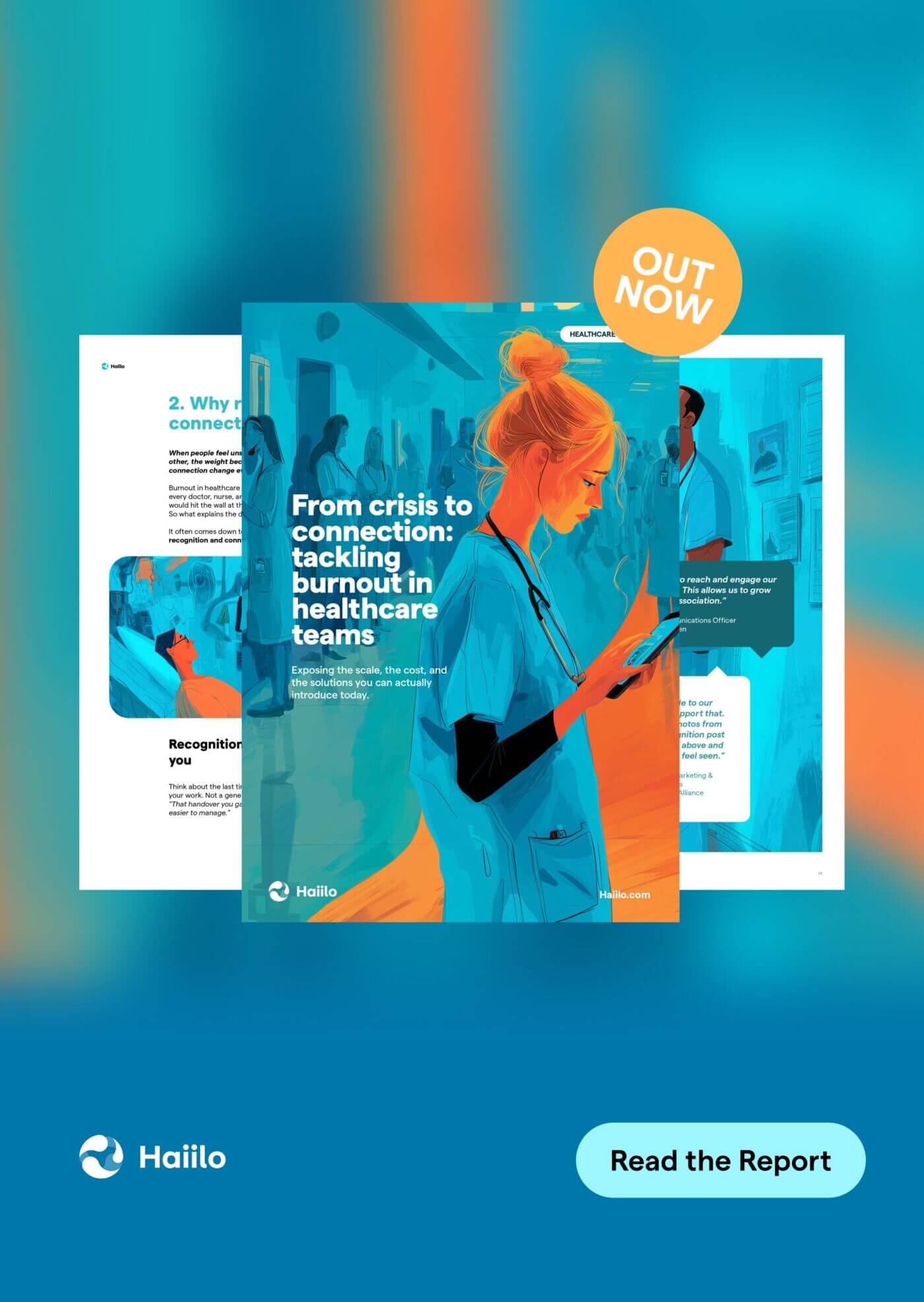
Want to tackle burnout in your healthcare teams?
Our latest report includes:
- The real cost of burnout
- Why recognition and connection matter
- Practical steps to reduce burnout
FAQs about choosing an intranet for healthcare
1. What makes an intranet for healthcare different from a standard intranet?
Most traditional intranets are built for desk based teams. In healthcare, that simply does not reflect reality. An intranet for healthcare needs to work for people who are constantly on the move, across shifts, and under time pressure. That means mobile access, targeted communication, and quick search are not “nice to have” features, they are essential for keeping staff informed and patients safe.
2. How can an intranet improve communication with frontline staff?
The biggest shift is moving away from one size fits all communication. Instead of relying on email, you can send updates directly to specific roles, departments, or locations. Frontline staff receive relevant information in real time, often via mobile notifications. This reduces missed messages and helps teams act quickly without needing to chase information.
3. Will an intranet for healthcare add to digital overload?
It can, if it is not set up properly. The goal should always be to reduce noise, not add to it. A good intranet replaces scattered channels like emails, messaging apps, and shared drives with one clear source of truth. When done right, staff spend less time searching and more time focusing on their work.
4. How do you know if your intranet is actually working?
Look beyond logins. Are staff finding information quickly? Are important updates being seen across all shifts? Do frontline teams feel more connected? Many modern platforms also provide analytics, so you can track reach and engagement. That gives you a clear view of what is working and where you need to adjust.