
Hybrid work is a trend organizations across the world are adopting since the emergence of COVID-19 and remote work. Many companies now understand the benefits of flexible work conditions for various stakeholders.
What started as a short-term response to the pandemic has evolved into a long-term shift in how organizations operate. Today, hybrid work is increasingly seen as the default model for knowledge-based roles. In fact, official UK data shows that around 28% of working adults in Great Britain now follow a hybrid work pattern, splitting their time between home and the office. Research also shows that employees offered hybrid schedules are 35% less likely to leave their jobs, highlighting the model’s positive impact on retention and long-term engagement.
However, hybrid work doesn’t succeed on flexibility alone. Distributed teams need clear communication, shared knowledge and consistent culture regardless of location. That’s why many organizations are investing in tools like an enterprise communication platform to connect employees, streamline internal updates and keep everyone aligned. Platforms such as Haiilo’s employee communications platform help companies ensure that hybrid teams stay informed, engaged and productive—whether employees are in the office, at home or on the move.
As companies continue refining their hybrid strategies, leaders are also exploring new ways to support employee experience, collaboration and digital workplace culture. You can learn more about how organizations are evolving their communication strategies in guides such as how to build a modern internal communications strategy, developing a strong employee engagement strategy and creating an effective digital workplace. For organizations scaling hybrid work globally, adopting solutions like an enterprise employee communications solution can also help unify messaging across teams, locations and departments.
In this blog, we will explain what hybrid work really is, how to ensure a smooth transition to hybrid work, and what are the benefits of this working model.
💡 Because employee communications are crucial for ensuring successful hybrid work, download our guide Building a Better Company with Internal Communications.
Get an IC platform that will allow your employees to stay connected and informed in the times of hybrid work
What is Hybrid Work?
Simply said, hybrid work is a model that organizations use to allow flexible working conditions for their employees — allowing employees to work from wherever, on their own schedule. Since last year, many organizations were forced to implement remote work, and most of them have realized that this way of working is preferred by many employees.
Hybrid work typically combines remote and in-office work in a structured way. Some organizations set fixed “office days” to encourage collaboration, while others allow employees to decide when and where they work based on their role and responsibilities. The goal is to balance flexibility with productivity, ensuring teams remain connected while still benefiting from focused remote work.
To support their employees’ preferences, many employers will keep remote work options in the workplace. However, making hybrid work effective requires more than simply allowing employees to work from home. Organizations need clear communication, visibility into company updates and consistent access to shared knowledge. This is why many companies are adopting tools like an enterprise communication platform to centralize internal communications, reduce information silos and keep distributed teams aligned. Solutions such as Haiilo’s platform help organizations connect employees across locations while maintaining a strong company culture.
Many organizations are now turning to hybrid working software to support distributed teams, streamline communication and ensure employees stay connected regardless of where they work. Modern solutions such as an enterprise communication platform allow organizations to centralize company updates, collaboration and employee engagement in one place.
Recent research confirms that hybrid work is now the preferred way of working for many professionals. According to Gallup’s 2024 workplace research, 53% of remote-capable employees in the U.S. now work in a hybrid model, while only 21% work fully on-site. This shift shows that hybrid work is no longer a temporary arrangement but a long-term transformation in how organizations structure work.
As companies refine their hybrid strategies, many are also rethinking how employees collaborate and stay informed. For example, organizations are investing in better internal communication practices and digital workplace tools. If you want to explore this topic further, read how to choose the right internal communication tools, best practices for employee communication or what makes a successful digital workplace. These resources highlight how technology and communication strategies can help organizations build more connected and resilient hybrid teams.

Because remote work is here to stay, hybrid work is as well!
However, hybrid ways of working do have some downsides, which is why organizations need to follow certain best practices to manage their hybrid workforce. Without the right structure, hybrid environments can create communication gaps, uneven access to information and inconsistent employee experiences between office-based and remote staff.
To avoid these challenges, organizations need clear communication processes, transparent leadership updates and reliable digital tools that keep everyone aligned regardless of location. Many companies are addressing this by adopting an enterprise communication platform that centralizes internal updates, connects employees across locations and ensures that remote workers don’t miss critical information. Solutions like Haiilo’s employee communications platform help organizations create a consistent employee experience while supporting collaboration in hybrid environments.
Let’s dig deeper into what employers can do to successfully manage hybrid work in their organizations.
💡 Also read: 12 Talent Management Tips for Navigating Turbulent Times.
How to Successfully Manage Hybrid Work
Employee demand for flexibility continues to shape the future of work. According to Gartner research, 82% of employees say it’s important for their organization to see them as individuals, not just workers, and flexible work arrangements play a major role in meeting those expectations. Similarly, recent workplace studies show that employees offered hybrid flexibility report higher engagement and job satisfaction compared with those required to work fully on-site.
Even though hybrid work is appreciated by many employees and can significantly improve workplace culture, it has its complexities and downsides. Because hybrid work usually means the combination of in-office and remote employees, employers need to find the best way to manage both ways of working. This includes ensuring consistent communication, supporting collaboration across time zones and maintaining a shared company culture even when teams rarely meet in person.
Organizations that succeed with hybrid work typically invest in better internal communication strategies and modern digital workplace tools. For example, using an enterprise employee communications solution helps ensure that important announcements, leadership messages and company updates reach every employee—whether they are working remotely, in the office or on the frontline. Companies exploring hybrid work strategies may also benefit from learning about how to improve employee engagement, building a strong internal communication strategy and how to improve employee experience in distributed workplaces.

Follow these steps to enable your hybrid employees to succeed. Organizations that intentionally design their hybrid strategy tend to see stronger engagement, clearer communication and better collaboration between remote and office-based teams. However, success requires more than simply offering flexible work policies. Leaders must understand employee expectations, create transparent communication structures and ensure that everyone has access to the same information regardless of location.
1. Understand your employees’ needs and preferences
To mitigate the negative sides of remote work, it is important to understand its impact on employees’ engagement and productivity. As employee collaboration is one of the most common downsides of remote work, it is crucial to understand the consequences of employees being physically separated. When employees work in different locations, informal communication and spontaneous collaboration can easily decline, which may lead to knowledge gaps or weaker team cohesion.
Recent research highlights just how strongly employee preferences influence hybrid work success. According to Microsoft’s Work Trend Index, 73% of employees want flexible remote work options to stay, while many still value in-person collaboration for certain tasks. This means organizations must find a balance between autonomy and structure to support productivity and connection.
Understanding employees’ preferences and the nature of their work is therefore crucial for setting up a successful hybrid work strategy. Many organizations collect this information through regular employee feedback, pulse surveys and engagement analytics. Using an enterprise communication platform such as Haiilo can help leaders gather insights, share updates transparently and ensure that employee voices are heard across distributed teams.
Companies that actively listen to employees are also better equipped to improve workplace experience and engagement. For example, organizations increasingly rely on communication tools and employee feedback strategies described in resources such as how to collect meaningful employee feedback and improving the employee experience to refine their hybrid work approach.
2. Set and communicate clear goals and expectations
Achieving good organizational alignment has never been easy, and today it is more important than ever before. Hybrid work makes organizational alignment even harder, which is why clear communication around an organization’s strategy, goals, mission, and vision is crucial.
In distributed environments, employees cannot rely on office conversations or ad-hoc meetings to stay informed. Instead, leaders need structured communication channels that ensure everyone receives consistent information at the same time. This is where modern internal communication strategies—and tools like an enterprise communication platform—play a critical role in helping organizations keep teams aligned.
Research shows that communication gaps remain a significant challenge. According to Gallup workplace research, only 41% of employees strongly agree that they know what their organization stands for and what makes it different from competitors. When employees lack clarity around priorities and strategy, productivity and engagement can quickly decline.
To avoid these issues, organizations should ensure that strategic messages are communicated consistently and reinforced across multiple channels. Platforms such as Haiilo’s employee communications solution allow leaders to share company updates, leadership messages and strategic priorities in one centralized place—helping hybrid employees stay informed whether they are working remotely or in the office. Companies looking to strengthen alignment in distributed teams may also benefit from exploring guides like how to choose internal communication tools and building an effective internal communications strategy.

Distributed workforces need to have a clear understanding of their common goals. When employees and groups have a good understanding of what is expected from them, their work location should never stop them from achieving their objectives. In hybrid environments, clarity replaces proximity. When goals, priorities and responsibilities are communicated consistently, teams can collaborate effectively even when they are spread across different locations and time zones. Organizations that document priorities, share progress transparently and regularly reinforce company strategy are far more likely to maintain alignment across distributed teams.
3. Make employee communications your priority
Proper employee communication is an absolute prerequisite for successful hybrid work. Many employers are still struggling to bring their communication efforts to the next level, but most of them have made workplace communication their number one priority. When employees are working across multiple locations, the risk of information gaps increases significantly, which makes structured communication channels essential.
According to Gallup’s State of the Global Workplace research, only 23% of employees worldwide are actively engaged at work, and poor communication is often cited as one of the key drivers of disengagement. Employees want transparency from leadership, regular updates about company priorities and easy access to the information they need to perform their jobs effectively.
In hybrid workplaces, achieving this level of transparency often requires dedicated hybrid working software. Platforms designed for distributed teams help organizations centralize updates, align employees with company goals and ensure that remote and in-office workers receive the same information at the same time. Many companies use an enterprise communication platform such as Haiilo to support communication, collaboration and engagement across hybrid teams.
An enterprise communication platform helps organizations centralize announcements, leadership updates and collaboration in a single digital environment. Solutions like Haiilo allow companies to ensure that every employee — whether remote, in-office or frontline — receives relevant information at the right time.
Lack of proper employee communication technology is often one of the biggest blockers to improving remote communication in the workplace. In contrast, best employee communication apps are designed to enable employers to mitigate the downsides of remote work by making information more relevant and easily accessible to every employee. Organizations looking to strengthen hybrid communication strategies may also benefit from exploring topics such as effective employee communication practices and how to build a successful digital workplace.
4. Frequently ask for feedback
Hybrid work requires better employee listening efforts. Your employees’ feedback is crucial for understanding the impact of hybrid work on employees’ wellbeing, motivation, engagement, collaboration, and productivity.
This is why organizations across the world are implementing regular employee surveys. While they used to do only annual employee engagement surveys, some of them are now collecting frequent pulse feedback from their workers. According to Qualtrics Employee Experience Trends research, organizations that regularly collect employee feedback are significantly more likely to improve engagement and retention.
However, many employers are struggling to get feedback from their employees, especially those who are hard to reach such as deskless and frontline workers. Using the right technology that enables you to reach the right employee, with the right content, at the right time is crucial for collecting valuable feedback from your employees. Many organizations are also adopting hybrid working software to simplify employee listening initiatives. These tools allow companies to distribute pulse surveys, collect feedback from remote and frontline workers and turn insights into actionable improvements that support employee engagement. For example, organizations increasingly rely on tools such as an enterprise communication platform to distribute surveys, collect feedback and ensure that leadership can act on employee insights quickly. Platforms such as Haiilo’s employee communications solution help organizations capture feedback across distributed teams and keep communication two-way.
5. Give guidance
Your employees should never be guessing if and when they should show up in the office.
Although the hybrid work model ideally sits in the middle of remote-first and office-first, it can easily get pulled in either direction without clear guidelines. Without structure, employees may feel uncertain about expectations around meetings, collaboration or office presence, which can lead to confusion and frustration.
For that reason, it’s important to establish new rules, procedures, and best hybrid work practices. For example, if collaboration and in-person meetings are important for some of your teams, you may want to define two days in a week when these teammates must get together in the office. Similarly, teams may benefit from clear guidelines about asynchronous communication, meeting etiquette and knowledge sharing.
Clear policies should also be supported by the right technology. Using modern hybrid working software helps organizations document policies, share updates, and ensure that employees always know when and how they are expected to collaborate with their teams.
Providing guidance also helps ensure fairness and transparency across teams. Leaders should clearly communicate hybrid work policies, document expectations and reinforce them through internal communication channels. This approach reduces uncertainty and helps employees understand how hybrid work fits into the broader organizational strategy.
💡 As guidance often needs to come directly from leaders, learn more about the most important leadership skills!
6. Don’t discriminate
Recently, Dropbox raised an issue that many people have neglected with the hybrid model — promotions and benefits might not be awarded equally. As Dropbox’s statement said,
“Hybrid approaches may also perpetuate two different employee experiences that could result in barriers to inclusion and inequities with respect to performance or career trajectory.”
This concern is increasingly supported by workplace research. According to Gartner research, proximity bias can influence leadership decisions, meaning employees who spend more time in the office may receive more visibility and recognition than remote colleagues. When this bias is not addressed, it can lead to unequal opportunities for promotions, raises or leadership development.
To avoid these risks, organizations must intentionally design hybrid workplaces that prioritize fairness and transparency. Leaders should evaluate performance based on results rather than physical presence and ensure that all employees have equal access to opportunities, communication, and career development resources. Organizations that use transparent communication channels and inclusive hybrid working software can reduce proximity bias by ensuring that all employees have equal access to updates, recognition, and leadership communication. Creating an inclusive hybrid culture often requires strong leadership communication and tools that ensure everyone receives the same information — regardless of where they work.

Organizations should invest in training managers to identify biases against remote workers during performance reviews. Leaders who understand how proximity bias works are better equipped to evaluate employees based on outcomes rather than visibility. This is particularly important in hybrid workplaces where employees may contribute equally but work from different locations. Training programs, leadership communication and transparent performance criteria can help managers ensure that hybrid employees are evaluated fairly and consistently.
💡 Also learn about the best ways for managers to communicate with their employees!
7. Introduce new benefits for remote employees
Because of the emergence of hybrid work, employers need to rethink the perks and benefits they offer to employees. While car allowance and travel expenses used to be a good perk, today this benefit doesn’t apply to many employees.
Instead, employers are looking for more relevant perks for their remote workers. For example, some employers offer compensation for internet and electricity expenses, some offer home office supplies such as standing desks, some pay for coworking spaces, and some even offer mental health services.
This shift reflects a broader focus on improving the overall employee experience in distributed workplaces. According to Microsoft’s Work Trend Index, employees increasingly expect organizations to provide the tools, support and flexibility needed to perform their best regardless of location. Companies that invest in modern benefits, digital tools and flexible policies often see improvements in retention, engagement and productivity.
Supporting remote and hybrid workers also requires the right technology infrastructure. Many organizations are adopting hybrid working software to ensure employees have access to communication channels, company updates and collaboration tools wherever they work. Platforms such as Haiilo help organizations strengthen employee experience by delivering information, recognition and engagement initiatives across distributed teams.
8. Assess and update your organization’s tech stack
If you are looking to implement the hybrid work model in your organization, you first need to make sure that your organization’s tech stack can support it. Since the emergence of the pandemic, many software providers have been adjusting their technologies to support remote work.
Luckily, modern employee apps, employee engagement software, and employee communication tools enable employers to adjust to the new ways of working, keep their employees informed, safe, and productive.
Another important benefit of this technology is its ability to connect various tools into a single platform. Today, the technology ecosystem in organizations is becoming extremely complex, and integrating technology is on every organization’s to-do list. Many organizations are therefore investing in centralized hybrid working software or an enterprise communication platform that integrates multiple workplace tools and ensures employees can access everything they need from one place.
For example, platforms like Haiilo’s employee communications solution allow organizations to unify communication channels, distribute company updates and integrate existing workplace tools into a single digital hub. This approach simplifies the employee experience and reduces the risk of information silos in hybrid environments.
The Benefits of Hybrid Work
Even though hybrid work has its downsides, there is a lot of research that proves the power of flexibility in motivating employees, making them more engaged and productive, and keeping employees longer in their organizations.
Hybrid work models can improve productivity, strengthen employee engagement and help organizations attract top talent. Companies that offer flexibility often report stronger employee satisfaction and better work-life balance among their teams. As organizations refine their hybrid strategies, many are also investing in digital workplace technologies and hybrid working software that enable employees to stay connected regardless of where they work.
Here are the biggest benefits of hybrid work models.
Better employee experience and wellbeing
Employee wellbeing has become one of the most important priorities for modern organizations. Flexible work arrangements allow employees to better balance their professional and personal responsibilities while reducing commuting stress and improving overall job satisfaction.
Recent research highlights the growing importance of flexibility in the workplace. According to Gallup research, hybrid workers report significantly higher engagement and wellbeing compared with employees who are required to work fully on-site. Organizations that support flexible work models often see improvements in retention, productivity and overall employee experience.
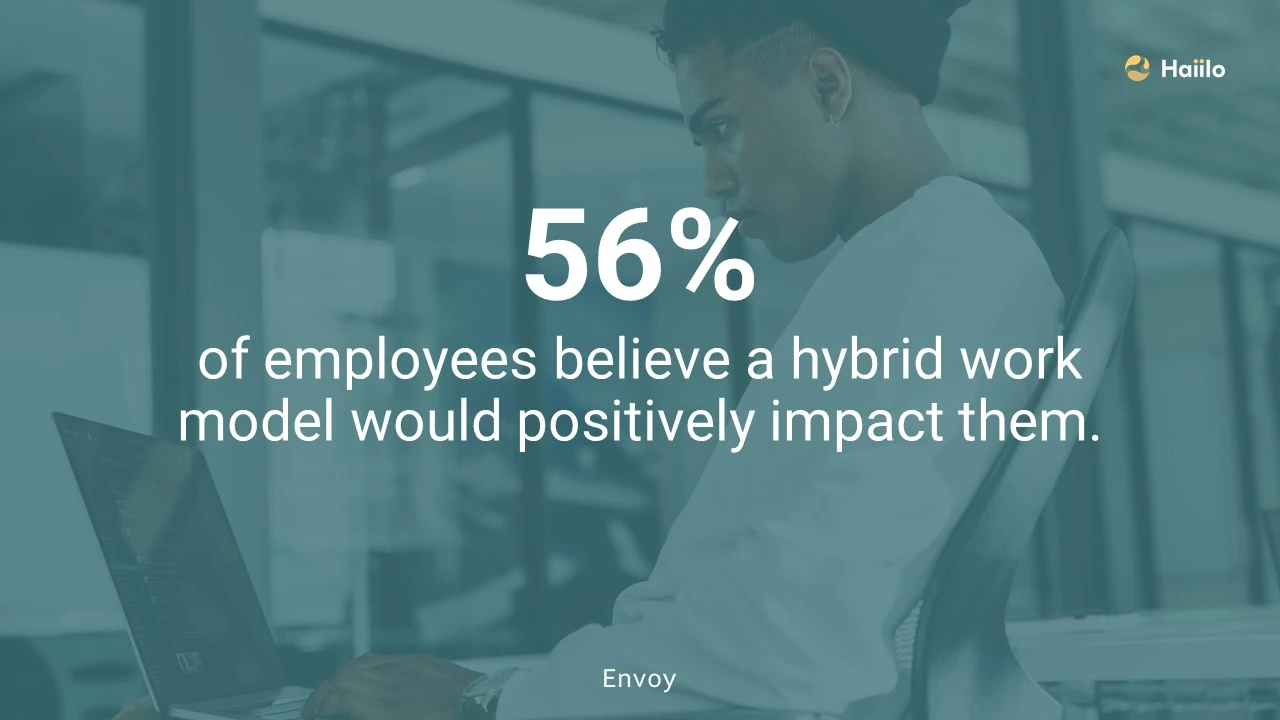
The hybrid work model inevitably offers much more flexibility which positively impacts employees’ wellbeing, safety, and work-life balance. By allowing employees to divide their time between home and the office, organizations can reduce commuting stress, give employees more control over their schedules and support healthier routines. Many professionals report that this flexibility helps them better manage family responsibilities, personal commitments and focused work time.
Organizations that successfully implement hybrid work also invest in the right technology and communication practices to support employees wherever they work. Using modern hybrid working software or an enterprise communication platform allows companies to share updates, provide resources and maintain a strong connection with employees regardless of location. When employees feel informed and supported, they are more likely to experience a positive work environment and higher levels of wellbeing.
💡 Also learn about the importance of workplace safety and how to keep employees safe!
Increased employee engagement and productivity
Happier employees with better working experience are also more engaged employees. Flexible work arrangements often allow employees to focus better, structure their day more effectively and collaborate when it matters most. As a result, many organizations report improvements in productivity and overall employee satisfaction when adopting hybrid work models.
Recent research reinforces this connection between flexibility and engagement. According to Gallup workplace research, employees who work in hybrid arrangements report higher engagement and better wellbeing compared with those who work fully on-site or fully remote. Hybrid models allow employees to benefit from both focused individual work and in-person collaboration, which can lead to stronger performance and more effective teamwork.
Many professionals and well-known leaders across the world agree on the fact that hybrid work isn’t just a temporary fix to accommodate pandemic health guidelines, but a part of lasting changes to how we work. As organizations adapt to this long-term shift, many are adopting hybrid working software and digital workplace tools to ensure employees stay connected, informed and engaged across distributed teams.

Easier talent attraction and better retention
Flexible work policies have become a powerful differentiator in today’s competitive talent market. Organizations that offer hybrid work are better positioned to attract highly skilled professionals who value autonomy, work-life balance and location flexibility.
Recent research highlights just how influential flexibility has become for job seekers. According to Microsoft’s Work Trend Index, 73% of employees want flexible remote work options to stay, and many workers say flexibility is now one of the most important factors when evaluating potential employers.
Similarly, employees who appreciate flexibility will stay longer with organizations that offer hybrid working models. Companies that provide hybrid work opportunities often experience lower turnover rates, stronger engagement and improved employee satisfaction.
Staying flexible allows employees to create a greater balance and autonomy during their week. Employees can spend time with their kids, eliminate the hassle of taking PTO for doctor appointments, and save time and money on commuting. Organizations that support this flexibility often combine clear policies with modern hybrid working software that helps employees stay connected, informed and productive regardless of where they work.
Successful Hybrid Work Starts with Proper Communication
As mentioned earlier, proper communication in the workplace is a prerequisite for successful hybrid work. When employees rarely see each other, and when managers are limited to hold in-person meetings with their teams, digital communication channels become crucial. Without reliable communication infrastructure, hybrid teams can quickly experience information silos, misalignment and disengagement.
This is why many organizations are investing in modern hybrid working software or an enterprise communication platform that allows them to centralize company updates, collaboration and employee engagement. These tools ensure that employees receive consistent information regardless of location and enable leaders to maintain transparency across distributed teams.
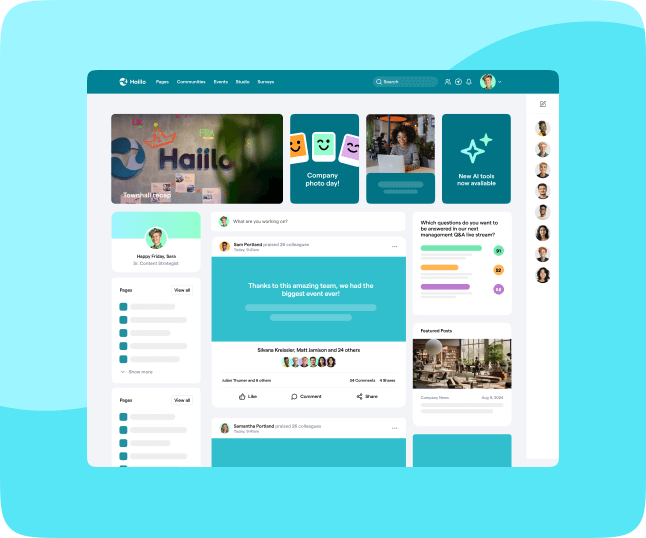
Haiilo is employee communication, engagement and advocacy software used by companies that have implemented hybrid work in their organizations. As a modern enterprise communication platform, Haiilo helps organizations keep employees aligned, informed and engaged in hybrid environments.
With Haiilo, employers can:
- Easily send employee surveys to targeted employee groups
- Open the line to two-way communication and encourage employees’ share of voice
- Instantly reach every employee no matter their job function and location
- Perform robust audience segmentation to make information more relevant and personalized
- Send push notifications to catch employees attention during emergencies
- Measure employees’ engagement with communication campaigns and track the ROI of proper communication in the workplace
FAQs About Hybrid Working Software
What is hybrid working software?
Hybrid working software refers to digital tools designed to help organizations manage teams that work both remotely and in the office. These platforms support communication, collaboration, knowledge sharing and employee engagement across distributed teams. Instead of relying on disconnected tools, companies often use hybrid working software to centralize internal updates, company news, feedback and collaboration in one place. Many organizations choose an enterprise communication platform that allows them to reach employees across departments, locations and job roles, ensuring everyone stays informed and aligned regardless of where they work.
Why do companies need hybrid working software?
Hybrid work can create communication gaps if organizations rely only on traditional tools like email or meetings. Hybrid working software helps companies keep employees connected, informed and engaged even when teams are not physically together. It allows leaders to share company updates, collect employee feedback, align teams with business goals and ensure important information reaches everyone. Without the right tools, hybrid teams can struggle with miscommunication, information silos and disengagement.
What features should hybrid working software include?
The best hybrid working software focuses on communication, transparency and employee engagement. Key features often include company-wide announcements, targeted messaging, employee surveys, analytics, mobile access and integrations with existing workplace tools. Many organizations also look for an enterprise communication platform that enables two-way communication so employees can share feedback and participate in discussions. These capabilities help organizations maintain culture and collaboration across distributed teams.
How does hybrid working software improve employee engagement?
Hybrid working software makes it easier for employees to stay connected with their colleagues, leaders and the wider organization. When employees receive relevant updates, understand company priorities and have opportunities to provide feedback, they are more likely to feel engaged and valued. The right platform also helps leaders communicate transparently and recognize employee contributions. In hybrid environments, where employees may not interact face-to-face every day, these tools play an important role in building trust, alignment and a strong workplace culture.
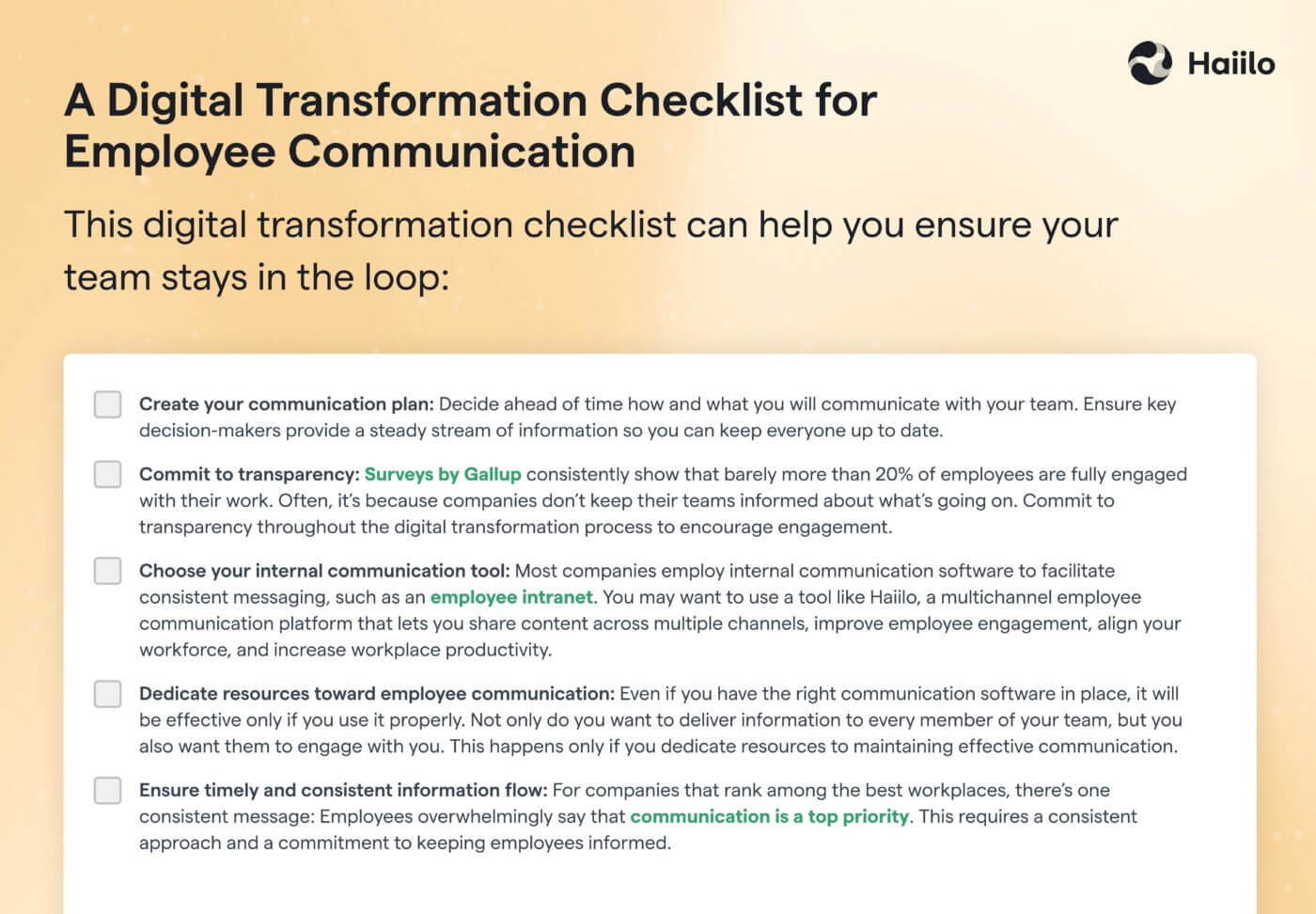
Digital transformation is easy with our simple checklist. Get it now!