
Today’s workplaces are highly digital, and employers need to embrace this trend by understanding their employee personas and providing technology that enables them to do their best work.
Today’s employees expect the same seamless digital experiences at work that they have in their personal lives. When tools are fragmented or information is difficult to access, productivity and engagement quickly decline. Building a successful digital work place means designing an environment where communication, knowledge, and collaboration flow easily across teams, locations, and devices. Organizations that understand how different employee personas work — from desk-based knowledge workers to frontline staff — can deploy the right mix of platforms and processes to help everyone stay connected and perform at their best.
Moreover, the emergence of the pandemic has led businesses to embrace digital workplaces at an even faster pace. Remote work and dispersed workforce are some of the biggest reasons why organizations need to become more digital.
That shift is not slowing down. According to Gartner, 82% of company leaders now allow employees to work remotely at least part of the time. As hybrid work becomes the norm, companies need digital environments that support collaboration regardless of location. Tools for communication, knowledge sharing, and employee engagement must be integrated so that employees can access information and connect with colleagues wherever they work. This shift is also why many organizations are investing in integrated employee platforms such as a modern employee communications platform to centralize updates, resources, and collaboration in one place.
In this blog, we will discuss the biggest drivers of digital workplaces as well as best practices for creating and managing a digital workplace strategy. We will also explore how organizations can build a digital work place that improves employee experience, strengthens internal communication, and enables teams to stay productive in distributed environments. If you’re exploring how internal platforms shape modern work, you may also want to read What Is an Employee Communications Platform? and How to Build an Internal Communication Strategy for additional insights.
📚 As employee communications play a crucial role in supporting the digital workforce, explore Haiilo’s resources to learn how to communicate effectively with modern employees. Strong communication strategies are essential for maintaining alignment and engagement in distributed teams. For additional guidance, explore resources like How to Build an Effective Employee Engagement Strategy and Top Internal Communication Tools for Modern Teams, which explain how organizations can use digital platforms to keep employees informed and connected.
Digital Workplace Defined
There is no single definition of digital workplace. As digital trends in the workplace are still emerging at a fast pace, there are many different definitions that look at this concept from a different perspective.
However, most experts agree that a digital workplace can be considered as the natural evolution of the workplace. It includes all of the technologies employees use to do their jobs on a daily basis. This ranges from collaboration platforms and internal communication tools to knowledge bases, HR systems, and workflow automation solutions. When these technologies work together effectively, they create a unified digital work place that helps employees find information faster, collaborate more easily, and stay aligned with company goals.
To embrace the power of technology, leading organizations have begun to implement an entirely new working environment. However, even more than just implementing new solutions, it is important to integrate them in a way that brings the most value to the employees. A fragmented toolset can quickly become overwhelming, forcing employees to switch between platforms and slowing down productivity. This is why many companies are consolidating tools into centralized digital hubs such as an employee experience platform, where communication, knowledge, and engagement features work together.
Recent research highlights why this integration matters. According to the Microsoft Work Trend Index, 68% of employees say they struggle with inefficient digital tools and information overload. Organizations that streamline their digital ecosystems and create intuitive digital environments are far more likely to improve productivity and employee satisfaction. Companies are increasingly addressing this challenge by building structured digital environments supported by strong internal communication practices and modern workplace platforms. If you want to explore this further, take a look at Employee Communication Trends Shaping the Modern Workplace and How to Improve Communication in Hybrid Workplaces.
As explained by Deloitte,
“By integrating the technologies that employees use, the digital workplace breaks down communication barriers, positioning you to transform the employee experience by fostering efficiency, innovation and growth. The key to success, however, lies in the effective implementation of a digital workplace strategy capable of driving true cultural change.”

Digital Workplace Framework
Deloitte did one of the most comprehensive analyses of the emergence and characteristics of a digital workplace.
In their framework, they explain that a digital workplace is all about the employees’ ability to do their job by collaborating, communicating and connecting with others. In other words, a successful digital work place is not defined only by the tools organizations deploy, but by how effectively those tools enable employees to access knowledge, share information, and work together regardless of location or department.
Modern digital workplace frameworks typically focus on several interconnected layers, including communication, collaboration, knowledge management, employee experience, and productivity tools. When these layers are integrated into a unified environment, employees spend less time searching for information and more time focusing on meaningful work. This is particularly important as organizations continue to adopt hybrid and distributed working models.
Recent research highlights the growing importance of well-structured digital environments. According to the Microsoft Work Trend Index, 60% of employees say they struggle to keep up with the pace and volume of work due to fragmented communication and information overload. This challenge underscores why organizations must rethink how their digital tools and platforms connect employees and streamline workflows.
A structured digital workplace framework helps organizations address these challenges by creating a centralized environment for communication and collaboration. Platforms such as an enterprise social intranet enable employees to easily share updates, find resources, and collaborate across teams while keeping company information accessible and organized. When implemented effectively, this type of digital infrastructure strengthens alignment, improves employee experience, and ensures that everyone has access to the information they need to succeed.
Organizations exploring digital workplace strategies can also benefit from understanding how internal communication supports collaboration and engagement. For example, this guide on enterprise social networks explains how modern platforms help employees connect and share knowledge, while knowledge management systems highlights the importance of making organizational knowledge easily accessible across the digital work place.

More specifically, by fostering a culture of digital workplace and unifying various technology components, organizations can significantly improve:
- Collaboration – Collaboration in the workplace is essential for solving problems, accelerating innovation, and improving productivity. However, collaboration often breaks down when employees rely on disconnected tools or when knowledge is siloed across departments. A well-designed digital work place removes these barriers by enabling knowledge sharing across the enterprise with online, seamless, integrated, and intuitive collaboration tools that enhance employees’ ability to work together. According to the Microsoft Work Trend Index, 70% of employees say collaboration tools help them work more effectively in hybrid environments, highlighting the growing importance of connected digital ecosystems. Platforms that centralize conversations, resources, and updates make it easier for employees to collaborate asynchronously and across locations. For example, modern solutions such as an enterprise social intranet allow teams to share knowledge, comment on updates, and collaborate around projects in a single digital hub. If you’re looking to strengthen collaboration strategies, this guide on internal communication tools explores how organizations can choose platforms that support collaboration and keep employees connected across the digital work place.
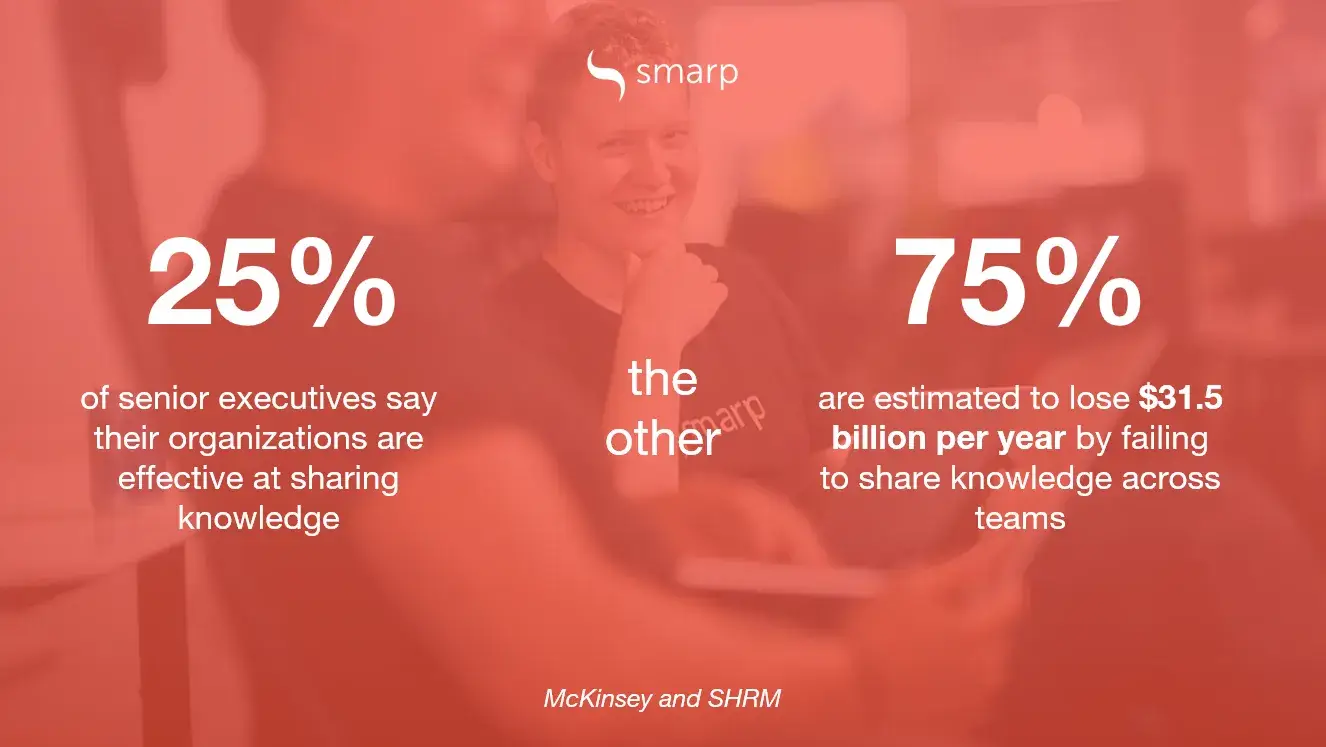
- Communications – As information continues to grow at a rapid rate, employers need to ensure that the right information reaches the right audience at the right time. Without a clear communication structure, employees quickly become overwhelmed by messages spread across multiple channels. In a modern digital work place, organizations rely on platforms that centralize communication, segment audiences, and deliver personalized updates based on roles, locations, or departments. Employers and employees need tools that support two-way communication and the personalization of content so employees can actively participate in conversations rather than passively receiving information. This is particularly important as organizations aim to improve transparency and engagement. According to the Gallup State of the Global Workplace report, only 23% of employees worldwide are engaged at work, highlighting the need for stronger internal communication strategies. Solutions such as an employee communications platform help organizations deliver targeted messages, encourage feedback, and ensure employees feel informed and connected. For deeper insights into improving communication strategies, explore how to build an internal communication strategy and employee communication trends shaping modern workplaces.
- Connections – Employees also need tools that allow them to connect with their peers across the organization, leverage intellectual property, and gain insight from one another. In distributed teams, informal knowledge sharing and spontaneous conversations often disappear unless companies intentionally create digital spaces that replicate those connections. A strong digital work place encourages employees to build networks beyond their immediate teams through communities, internal social networks, and knowledge-sharing platforms. Research from the Microsoft Work Trend Index shows that 85% of leaders say hybrid work makes it harder to maintain strong employee connections, reinforcing the need for digital environments that support collaboration and relationship building. Platforms like a modern employee advocacy platform can also strengthen connections by encouraging employees to share insights, company updates, and industry knowledge both internally and externally. If you’re exploring ways to build stronger employee networks, this guide on enterprise social networks explains how digital platforms help employees connect, share expertise, and collaborate across the digital work place.
📚 Also check Digital Transformation (DX): Best Practices for Driving Change and explore how to improve communication in hybrid workplaces for additional strategies on building a connected digital environment.
8 Drivers Shaping Digital Workplaces
Gone are the days when the workplace was merely a physical space. Organizations today operate in a dynamic environment where work happens across offices, homes, and mobile devices. Moreover, the emergence of the current pandemic has significantly accelerated the shift towards remote work. What started as a temporary response to disruption has evolved into a long-term transformation of how companies structure their work environments.
Today’s always-connected, instant-access environment has blurred the lines between the physical office and the place where work actually happens. Employees expect to access tools, knowledge, and colleagues wherever they are, whether they are working from a corporate office, a home workspace, or on the move. According to a Gartner survey, 82% of organizations plan to allow employees to work remotely at least part of the time, demonstrating how hybrid work has become a permanent feature of the modern workplace.
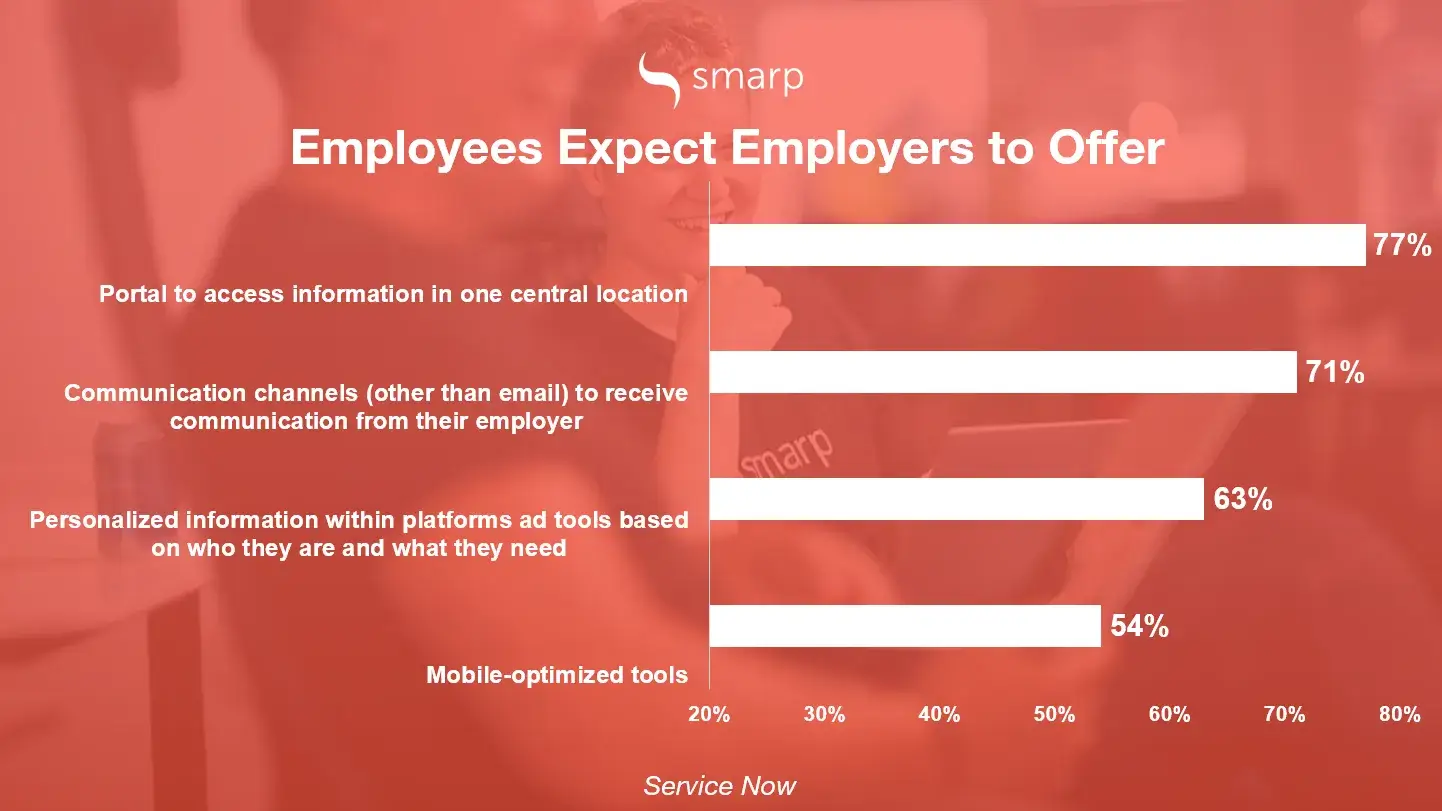
As the workplace becomes truly digital, employees are communicating and collaborating in unprecedented ways, and they have different expectations from their employers. They want faster access to information, better collaboration tools, and digital environments that support both productivity and employee experience. This is why forward-thinking organizations are investing in integrated platforms and strategies that support a connected digital work place, enabling teams to collaborate seamlessly, stay informed, and remain aligned with company goals regardless of where they work.
As a result, as Deloitte explains:
“It is increasingly clear that the traditional ‘create and push’ information approach no longer meets employees’ evolving needs.”
Let’s now take a look into some of the biggest drivers shaping the digital workplace.
1. New generations: Mobile and SaaS lovers
The future of work is mobile. Consequently, many employers are recreating their digital workplaces on mobile, mirroring the desktop experience of their existing communications, collaboration and other technology solutions.
Such approach streamlines the digital workplace, enabling a central access point to coworkers, critical applications, content, real-time company updates and notifications.

Additionally, most employees today prefer working “in cloud,” which is why SaaS digital workplace solutions are at their peak. Cloud-based platforms make it easier for organizations to scale tools, integrate applications, and give employees secure access to systems from anywhere. According to Gartner, worldwide public cloud end-user spending is expected to reach $679 billion in 2024, reflecting how quickly organizations are adopting cloud technologies to power their digital work place. By leveraging SaaS platforms, companies can continuously update capabilities, integrate collaboration tools, and ensure employees always have access to the latest resources and workflows without relying on legacy infrastructure.
2. The need for personalization
Providing customized employee experience, content and access to information is becoming the new normal. In modern organizations, employees expect workplace tools to function much like consumer apps — intuitive, relevant, and tailored to their specific needs.
Employers are expected to provide personalized employee experience based on their employees’ functions, roles, preferences, locations and cultures the same way as marketing and sales professionals are expected to provide personalized customer experience. When communication and resources are tailored to specific employee groups, information becomes more relevant and engagement increases.
Such approach is impossible to achieve without the right technology in place, which is why organizations are turning to new solutions with robust personalization features and functionalities. Advanced platforms now allow companies to segment audiences, automate content targeting, and provide individualized digital environments that adapt to each employee’s role.
One of the best examples is the personalization and localization of internal communications content. Employee communications solutions should enable communicators, employees and managers to easily segment audiences, define employee personas, and deliver the right content to the right employees at the right time. Platforms such as a modern employee communications platform make it easier to distribute targeted messages and localized updates that resonate with different teams across the organization.
On the other hand, employees should be able to create personalized news feeds with all the relevant information, instant access to people, tools and resources. This level of personalization significantly reduces information overload while ensuring employees stay informed about the topics that matter most to them.
Personalization is becoming vital to shaping each person’s workplace environment and experience. According to the Microsoft Work Trend Index, 68% of employees say they lack sufficient focus time during the workday due to constant digital noise. Personalized digital environments help address this problem by filtering information and surfacing the most relevant updates. These personalized digital environments provide common spaces that encourage spontaneous interaction within and across teams. For organizations looking to strengthen internal knowledge sharing, this guide on knowledge management systems explains how centralized information hubs support collaboration across the digital work place.
3. Dispersed workforce and remote work
The workforce has become significantly more distributed in recent years, making digital collaboration tools essential. According to Gartner, 82% of organizations plan to allow employees to work remotely at least part of the time. At the same time, frontline employees continue to represent a large portion of the workforce. Research from Zippia estimates that over 60% of the global workforce consists of frontline workers such as retail staff, healthcare workers, logistics employees and field technicians.
These shifts mean organizations must design a digital work place that supports both desk-based and frontline employees. Remote teams need reliable communication tools, while frontline employees require mobile-first platforms that deliver updates, training and collaboration capabilities directly to their devices. This is why many organizations invest in solutions such as an employee communication mobile app, ensuring that employees who are rarely at a desk can still access company information and stay connected with colleagues. For additional ideas on engaging distributed teams, explore strategies for engaging remote employees.
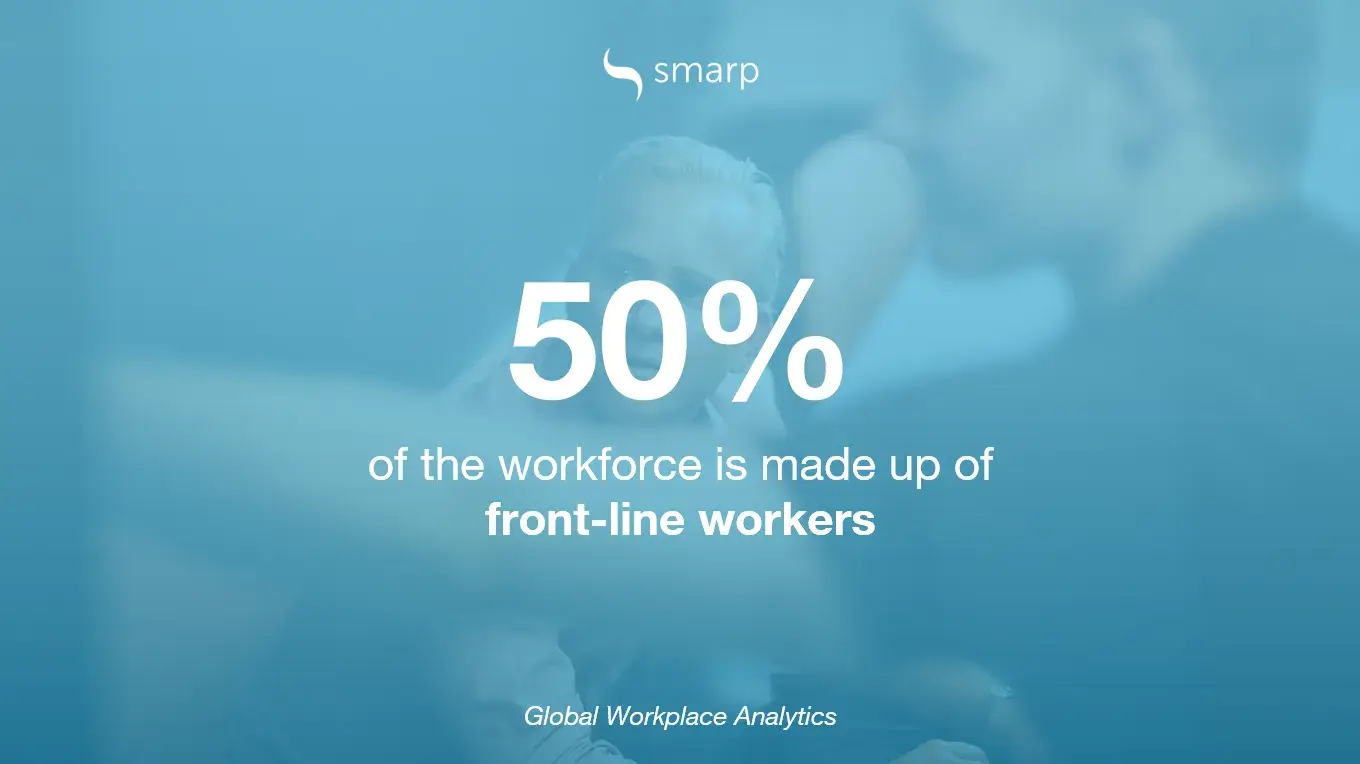
Additionally, we’re seeing a growing trend towards flexible and remote working. The result is a hugely dispersed and, often, hard-to-reach workforce. Hybrid schedules, distributed teams, and frontline roles mean employees no longer share the same physical workspace or communication channels. According to the Microsoft Work Trend Index, 73% of employees want flexible remote work options to remain, confirming that distributed work models are becoming a permanent feature of the modern digital work place.
As a consequence, the way in which these different groups connect, collaborate and communicate with one another, access important business information, updates and documents is becoming more complex. Information often lives in multiple tools, making it difficult for employees to stay aligned. To mitigate the consequences, employers are looking for new ways to engage their distributed workforces. Organizations are increasingly investing in unified platforms that centralize communication, simplify knowledge sharing, and ensure that employees — regardless of their location — receive the information they need to perform their jobs effectively.
Digital workplaces enable employers to provide easier, more streamlined and effective ways to find and consume critical information while delivering a positive digital experience. By consolidating updates, documents, and collaboration tools into a single digital hub, organizations reduce time spent searching for information and improve productivity. Platforms such as a modern social intranet allow employees to quickly access company news, team resources, and expert knowledge from one place, making it easier to navigate the growing complexity of the digital work place.
📚Read on: Change Management: Definition, Best Practices & Examples and explore how to build an internal communication strategy to support workforce transformation.
4. Agility and cross-functional collaboration
Another big driver of digital workplaces is the need for greater agility and cross-functional collaboration in the workplace. Organizations today operate in rapidly changing environments where teams must adapt quickly, share knowledge efficiently, and collaborate across functions to deliver results. Traditional hierarchical communication models slow down decision-making and create information bottlenecks.
Employees no longer operate in silos focusing on collaboration within their departments only. Instead, they are required to work closely with other teams from different departments located in different countries. Product teams collaborate with marketing, HR works closely with leadership, and frontline employees share insights directly with headquarters. According to McKinsey, organizations that successfully adopt agile ways of working can increase operational performance by up to 30%, demonstrating the importance of flexible collaboration models.
Moreover, successful organizations now operate as networks where employees are constantly connected. A well-designed digital work place supports this networked model by enabling employees to easily communicate across departments, access shared knowledge, and collaborate in real time. Tools such as an integrated employee experience platform help organizations create digital environments where teams can work together more effectively, share insights, and stay aligned with business goals. For additional strategies on improving collaboration, see how to improve cross-functional collaboration in the workplace.

In order to empower employees to collaborate and communicate more efficiently, many organizations are now implementing digital solutions designed for teams to stay connected, have access to shared documents and important company updates.
Modern collaboration platforms allow employees to access files, participate in discussions, and stay informed about organizational changes without switching between multiple tools. In a well-designed digital work place, these capabilities are integrated into a unified environment where employees can quickly locate information, collaborate with colleagues across departments, and stay aligned with company priorities. This is especially important for organizations operating across multiple locations or time zones.
Research highlights how important connected collaboration tools have become. According to the Microsoft Work Trend Index, 80% of employees say they rely on digital collaboration tools to stay productive when working with distributed teams. Platforms that centralize communication and knowledge sharing help employees stay informed and reduce time spent searching for information. For example, solutions such as a modern social intranet allow organizations to create a central hub where employees can access documents, company news, and team updates within the same digital workspace.
Organizations looking to improve collaboration and knowledge flow may also benefit from resources like knowledge management systems, which explain how structured information sharing strengthens the digital work place and supports better decision-making across teams.
5. Information overload
Employees across the world are faced with an extensive information overload which negatively impacts their productivity, agility and job satisfaction. The number of digital tools, communication channels, and data sources used in modern organizations continues to grow, often creating fragmented communication environments where employees struggle to keep up.
Information is still growing at exponential rates, and employees often can’t find what they need to do their jobs efficiently. According to the McKinsey Global Institute, employees can spend up to 20% of their workweek searching for internal information or tracking down colleagues who can help with specific tasks. This lost time highlights the need for structured digital environments that make information easier to locate and consume.
A well-implemented digital work place helps organizations tackle information overload by organizing content, improving search capabilities, and delivering personalized updates to employees. Instead of relying on scattered email threads or disconnected systems, companies are increasingly using centralized platforms that bring communication, knowledge, and collaboration together in one place. If you’re exploring ways to reduce information overload in your organization, this guide on internal communication tools explains how modern platforms help employees access the information they need without being overwhelmed by unnecessary noise.

Since the emergence of the current pandemic, this workplace challenge and its negative consequences are even more obvious. New company updates, rules and regulations, safety tips and remote work best practices are just a few examples of communication messages added to the employees’ plates.
At the same time, employees are navigating a growing number of digital channels such as email, chat apps, project management tools and internal portals. Without a clear structure, these channels can quickly overwhelm employees and make it difficult to identify which information is truly important. According to the Microsoft Work Trend Index, 68% of employees report they struggle to keep up with the pace and volume of work communications, reinforcing the growing challenge of information overload in the modern digital work place.
To eliminate information overload, employers need to reconsider their internal communications efforts and implement solutions for a more streamlined information flow in the workplace. Organizations are increasingly consolidating communication channels and introducing centralized digital platforms that prioritize relevance, searchability and accessibility.
Instead of relying on outdated and overcrowded intranets and generic emails, IC professionals and managers need to find better ways to deliver timely, relevant and personalized information to the employees. For example, modern platforms such as a digital employee communications platform enable organizations to segment audiences, automate message targeting and surface the most relevant content to employees. These systems ensure that information reaches the right people without overwhelming the entire workforce. If you’re exploring ways to modernize internal communications, this guide on employee communication trends highlights how organizations are improving information flow in the digital work place.
6. Knowledge workers and knowledge sharing
Building and managing digital workplaces is crucial for the success of your knowledge workers. Knowledge workers rely heavily on information, collaboration and expertise sharing to perform their roles effectively. In many organizations, however, valuable insights remain trapped in departmental silos or individual inboxes, making it difficult for employees to access the knowledge they need.
According to McKinsey, knowledge-based workers spend up to 19% of their average workweek searching and gathering information. More recent research also highlights the growing scale of the problem. The McKinsey Organizational Performance report notes that improving knowledge sharing and collaboration can significantly boost productivity across knowledge-intensive roles.
A well-structured digital work place helps address this challenge by centralizing knowledge, improving search capabilities and encouraging employees to share expertise openly. Platforms such as an employee experience platform enable organizations to create knowledge hubs where employees can easily access documents, discussions, and institutional knowledge. This type of digital infrastructure not only reduces time spent searching for information but also strengthens collaboration and innovation across teams.
Organizations that prioritize knowledge sharing also tend to build stronger cultures of collaboration and continuous learning. If you’re looking to improve how information flows across your company, this guide on knowledge management systems explains how centralized knowledge platforms support collaboration and productivity in the digital work place.

To eliminate such waste of valuable knowledge workers’ time, companies are now looking for solutions that serve as a single source of truth and important information. When information is scattered across multiple systems, employees waste valuable time searching for documents, verifying the latest versions of files, or asking colleagues for clarification. A well-structured digital work place solves this challenge by centralizing knowledge, communications and collaboration tools into a unified digital environment where employees can quickly find what they need.
Such solutions should have capabilities to connect various communications channels such as employee communications apps, document sharing tools, social media and other tools these workers may use. By integrating these systems, organizations reduce friction between platforms and improve information flow across teams. For example, modern platforms such as an enterprise social intranet allow organizations to centralize company news, documents, conversations and knowledge in one accessible hub. This makes it easier for employees to collaborate and access trusted information without switching between multiple tools. If you want to explore how connected digital ecosystems support knowledge sharing, read Knowledge Management Systems.
7. The focus on Digital Employee Experience (DEX)
Now, when implementing digital solutions in the workplace is not a novelty any more, the era of improving employees’ experience with these tools has come. Organizations have realized that simply deploying technology is not enough — the tools must be intuitive, engaging and designed around employee needs.
Meaning, employers are no longer implementing just any tools, but the tools that are user-friendly, intuitive, mobile-friendly, and therefore, provide exceptional digital working experience to the employees. A positive Digital Employee Experience (DEX) ensures that employees can easily access the tools they need, communicate with colleagues, and stay informed without friction.
Recent research highlights the importance of DEX. According to the Gartner Digital Employee Experience report, organizations that prioritize digital employee experience are more likely to see improvements in employee engagement, productivity and retention. In a modern digital work place, employee-facing platforms must provide seamless navigation, personalized content, and mobile accessibility so employees can stay connected wherever they work.
Solutions such as a modern employee experience platform help organizations bring communication, engagement and knowledge sharing into one unified environment. By improving how employees interact with workplace technology, companies can strengthen collaboration, increase engagement and support a more productive workforce.
📚Read on: 8 Employee Engagement Statistics You Need to Know in 2020 [INFOGRAPHIC]
8. Workplace trust and the changing role of leadership
Last but not least, the changing role of leadership is also raising the need for more digital workplaces. In the past, leaders often communicated through hierarchical channels and occasional company-wide announcements. Today, however, employees expect leaders to be more visible, accessible and transparent.
In contrast, leaders, who play a crucial role in building trust in the workplace, are expected to show empathy, be authentic and engage in company-wide conversations. Employees want to hear directly from leadership about company direction, strategy and culture. However, their work schedule and other responsibilities often make it hard to speak to every employee while staying authentic, visible and consistent.
Digital communication platforms allow leaders to share updates, participate in discussions and gather feedback from employees across the organization. According to the Gallup State of the Global Workplace report, employees who feel connected to leadership are significantly more likely to be engaged and committed to their organizations. This highlights the importance of transparent leadership communication in the modern digital work place.
📚Read on: What Are The Top Leadership Skills That Make a Great Leader?
Luckily, modern employee communications solutions make leadership communications transparent, inclusive for everyone and easy for leaders to manage and measure. By using digital communication platforms, leaders can reach employees across locations, share company updates consistently and foster open dialogue that strengthens trust across the organization.

9 Steps to Embracing Your Digital Workplace Strategy
Building and managing a digital workplace is not easy and it requires a well-thought strategy and planning. Many employees are resistant to change within their organizations, especially when new tools or workflows disrupt established habits. This is why successful digital transformation initiatives rely heavily on strong communication, clear leadership support, and ongoing training programs. A well-designed digital work place strategy must focus not only on technology but also on how employees adopt and use these tools in their daily work.
Research from McKinsey shows that organizations that prioritize change management and employee engagement are significantly more likely to achieve successful digital transformations. Hence, some of the main prerequisites for successful digital transformation include proper employee communications and change management. When employees understand why changes are happening and how new systems will help them perform their jobs better, adoption becomes much easier.
📚Read on: 5 Change Management Models to Take a Look At and explore how to build an internal communication strategy to support digital transformation initiatives.
At the end of the day, the success of your digital workplaces strategy will be as successful as your employees align with it and accept it. Leaders must actively communicate the vision behind the digital transformation and ensure employees feel supported throughout the transition. Training, feedback loops, and transparent communication channels are all essential elements of a successful rollout.
But let’s take a look into the step-by-step guide for building and implementing a digital workplace strategy.
1. Assess your current digital state
Before defining what needs to be changed, you first need to have a clear understanding of your current digital state. Organizations often deploy multiple tools over time without a unified strategy, which can lead to fragmented systems and inefficient workflows. Conducting a thorough assessment helps identify which technologies support employees effectively and where improvements are needed.
The best way to do so is by answering these questions:
- Who are our employee personas?
- What technologies already make up our digital workplace?
- How are these technologies used? Do they make employees more productive? Do they provide positive a digital employee experience?
- Where are the gaps between employees’ technology needs and the tools currently available?
- Can all employees easily connect with each other?
- Can every employee easily find and access important information, regardless of their device or location?
- Do our systems integrate or work together seamlessly and effectively?
- How does our digital workplace tie with our organization’s mission, company values and ultimate business goals?
Many organizations also gather insights through employee surveys, usage analytics, and internal interviews to better understand how existing tools support productivity. A comprehensive assessment ensures that the future digital work place strategy addresses real employee needs rather than simply introducing new technology.
2. Redefine and invest in your company culture
The way your workforce operates always ties back to your overall organizational culture and core company values. A digital transformation is rarely successful if it focuses only on technology while ignoring culture. Employees need to understand how new tools support collaboration, transparency, and shared goals across the organization.
Those organizations that are disconnected, don’t understand the purpose of their work, work in silos or lack leadership visibility are unlikely successfully building and managing their digital workplace initiatives. A strong workplace culture creates the foundation for effective digital collaboration and communication.
However, those who know how to help embed purpose, showcase the internal brand and company’s mission, facilitate two-way employee communication and encourage employees’ share of voice are much more likely to succeed. Modern digital environments often support this cultural transformation by creating spaces where employees can share ideas, celebrate achievements, and collaborate across departments.
For example, organizations increasingly use platforms such as a social intranet to promote transparency, strengthen internal culture, and enable employees to participate in company-wide conversations. These platforms help reinforce company values while ensuring employees remain connected across the digital work place.

3. Implement the right technology
Creating a digital workplace requires the implementation of the right technology that meets your ultimate business goals. However, technology decisions should always start with employee needs rather than tools themselves. Many organizations fall into the trap of deploying multiple platforms that solve isolated problems but create fragmentation across the workplace. A successful digital work place strategy focuses on building a connected ecosystem of tools that support communication, collaboration, and knowledge sharing across the entire organization.
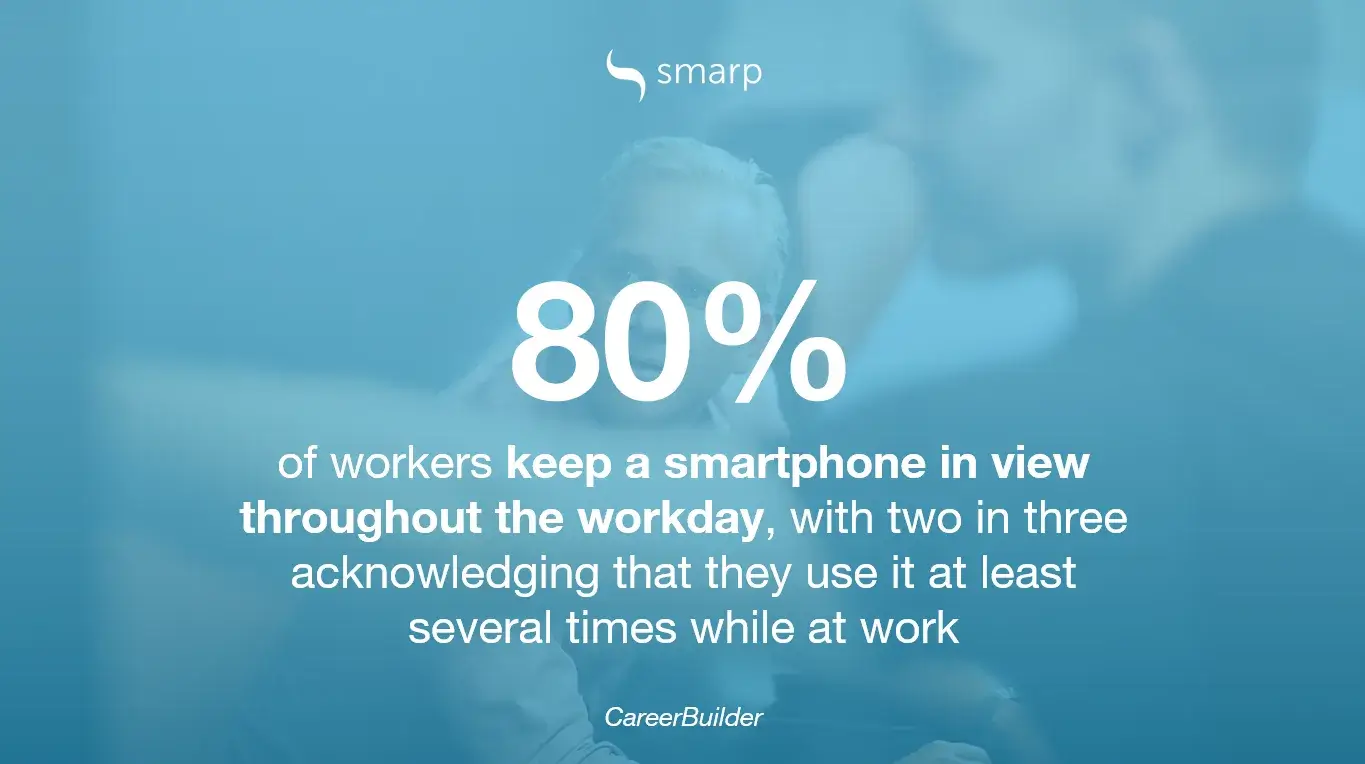
Even though there are probably hundreds of different technology categories out there, remember that before anything else, you need to make sure that your employees always have instant access to their peers’ messages and important information. This should be the base of your digital toolbox. According to the Microsoft Work Trend Index, 85% of employees say collaboration tools are essential for maintaining productivity in hybrid workplaces. This highlights why communication platforms, knowledge hubs, and collaboration tools must form the foundation of the modern digital work place.
When choosing technology, pay attention to its user interface, mobile-friendliness, flexibility and ability to connect with other core solutions your employees use. Platforms should integrate with existing systems such as HR software, productivity suites, and document management tools to create a seamless digital environment rather than adding another disconnected platform.
Organizations are increasingly prioritizing unified solutions that centralize communication, knowledge sharing, and collaboration in one place. For example, tools such as a modern employee communications platform allow organizations to deliver targeted updates, encourage two-way communication, and ensure employees can easily access critical information regardless of location. If you’re evaluating the types of tools needed for your digital work place, this guide on internal communication tools explores the technologies that support effective collaboration and information flow across modern organizations.
4. Connect your technology toolbox
According to the Global Market Insights, the enterprise application market has expanded at an unprecedented rate in recent years. It is expected to hit a revenue worth of $287.7 billion by 2024; the average enterprise already boasts over 500 applications as part of its technology stack.
This rapid expansion of workplace technologies has created both opportunities and challenges for organizations. While new tools promise better productivity and collaboration, they can also create fragmented digital environments where employees constantly switch between platforms to complete everyday tasks. In a modern digital work place, the key is not simply adding more technology, but ensuring that the existing technology ecosystem works together seamlessly. Integrated systems reduce friction for employees and allow information to flow easily between communication platforms, document repositories, and productivity tools.
Another research shows that the average number of systems workers must access as part of their day-to-day jobs has recently risen from 8 to 11, and 27% of workers estimate they lose up to an entire day every week on irrelevant emails and messages.
More recent research further highlights the productivity impact of disconnected digital environments. According to the Microsoft Work Trend Index, 68% of employees say they struggle with inefficient workplace tools and information overload. This is why organizations are increasingly investing in integrated digital ecosystems that centralize communication, knowledge sharing and collaboration.
By connecting different tools into a unified digital environment, organizations can ensure that employees spend less time navigating systems and more time focusing on meaningful work. Platforms such as a modern social intranet help organizations consolidate company news, conversations and resources into a single accessible hub. If you want to learn more about creating a connected technology ecosystem, explore internal communication tools, which explains how organizations can integrate platforms to strengthen communication and collaboration across the digital work place.

It is clear that organizations are now faced with an increasingly complex technology landscape. Hence, most organizations are now turning to solutions that integrate multiple solutions into a single platform. As the number of workplace applications continues to grow, employees often find themselves navigating between communication tools, document repositories, project management platforms and internal knowledge bases just to complete basic tasks.
When information in the workplace gets scattered, it is likely to get lost and therefore, cause poor employee experience, redundancies and loss in productivity. A well-designed digital work place reduces this complexity by creating a unified environment where employees can easily access the tools and knowledge they need. According to the Microsoft Work Trend Index, 68% of employees say they struggle with inefficient workplace tools and information overload, highlighting the need for more connected digital ecosystems.
As explained by Deloitte:
“But today, having many disparate back-end systems doesn’t have to mean a fragmented front-end user experience. Technologies are available that make it possible to create what we call a “unified engagement platform”: a user-experience layer that can span across systems to provide a seamless digital experience.”
5. Appoint the right people to drive change
Similar to any other organizational change, it is important to have a team or a person who drives the change and inspires the workplace to work towards the same goals. Technology alone does not transform organizations — people do. That is why many successful digital transformation initiatives rely on cross-functional teams that include leaders from HR, internal communications, IT and operations.
Today, internal communications departments are often the ones that drive and manage change communications and they often act as a support for leadership, management and other teams involved. By helping employees understand the purpose behind transformation initiatives, IC teams play a crucial role in building trust and encouraging adoption of new tools within the digital work place.
These IC professionals should be creative and inspiring content creators who understand their employee personas and know how to adjust communication messages based on the employees’ needs, wants and preferences. Effective communication strategies often include storytelling, employee feedback loops and targeted messaging to ensure information resonates with different groups across the organization. If you want to explore how communication teams can strengthen engagement during transformation, see internal communication strategy for additional guidance.
6. Involve the leaders
As mentioned earlier, leadership plays an important role in driving the culture, mindset and attitude that encourages and supports digital working environments. When leaders actively participate in digital channels and communicate openly with employees, it reinforces transparency and trust across the organization.
Informed senior leadership, by understanding the benefits as well as challenges of a digital workplace strategy, can drive positivity in the workplace and have the entire workplace align with the ultimate business goals. According to the Gallup State of the Global Workplace report, employees who feel connected to leadership are significantly more engaged and committed to their organizations.
Digital communication platforms make it easier for leaders to share updates, participate in discussions and gather feedback from employees across locations. Tools such as a modern employee communications platform allow leaders to deliver transparent updates, host company-wide conversations and ensure employees stay informed about key business priorities within the evolving digital work place.
Create a comprehensive workplace communication and change management strategy
Together with change management teams, IC professionals should work to create a robust change communication plan with the goal of aligning the entire workplace with the previously defined digital workplace plan and strategy. A successful digital work place transformation requires clear messaging, ongoing dialogue and consistent leadership support so employees understand both the purpose and the impact of the change.
Organizations that communicate proactively during transformation initiatives tend to see higher adoption and engagement. According to McKinsey, companies that invest in strong communication and change management practices are significantly more likely to succeed with digital transformation initiatives. Clear communication ensures employees know what is changing, why it matters, and how it will benefit their daily work.
When creating such a communication plan, try to answer these questions:
- Who are our employee personas?
- What are their preferred ways of communication?
- How can we make sure to reach the right employees with the right information at the right time?
- How can we make communication more relevant and personal to achieve better readership and engagement?
- What type of content do our employees prefer? Text, images, videos, podcasts or webinars?
- What key messages should be included in the editorial calendar?
- How are we going to measure the effectiveness of our change communications efforts?
- How will we make sure we enable everyone to join the company conversations, ask questions and raise concerns?
- How and when can we include leadership in the process?
In addition, organizations should continuously gather feedback from employees to refine communication strategies. Modern internal communication platforms enable companies to measure engagement, track content performance and identify which messages resonate most with different employee groups across the digital work place.
Communicate the benefits to achieve strategic alignment
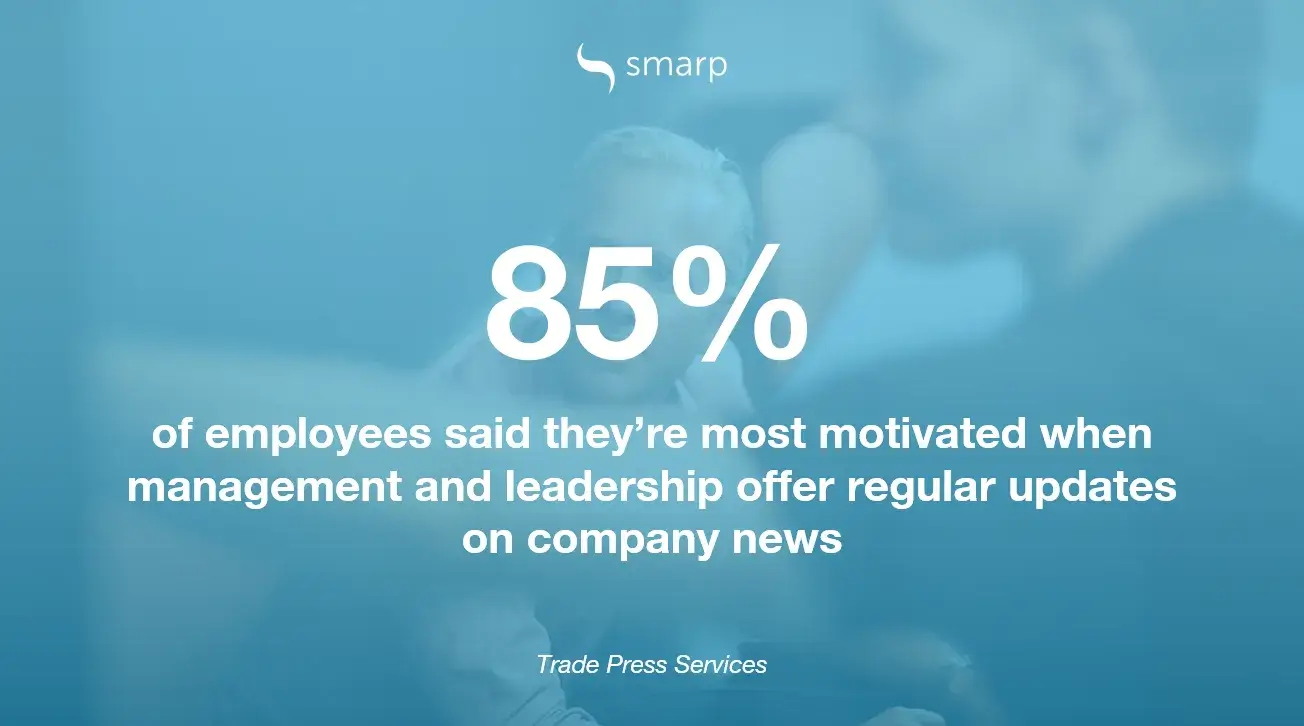
To drive a successful digital workplace strategy, you need to get employees on your side. In other words, you need to get their buy-in. In order to achieve that, organizations need to build trust, communicate in an open and transparent way and answer the key question: “What’s In It For Me” (WIIFM).
Employees are far more likely to support transformation initiatives when they understand how those changes will improve their daily work experience. Whether it means easier access to information, better collaboration with colleagues, or fewer manual processes, the benefits of a modern digital work place should be clearly communicated at every stage of the rollout.
When building your change communication strategy, communicating key messages around the benefits of a digital workplace, for both individuals and the organization as a whole, should be your priority.
When delivering those messages, prioritize their visibility and accessibility to the company-wide news and updates. Make sure that you choose the right communication channels and schedule content delivery for better readership and engagement. Platforms such as a modern employee communications platform help organizations distribute updates across multiple channels while ensuring that employees receive relevant, timely information.
Listen actively and encourage employees’ share of voice
Besides just sharing updates and important information, you should also engage your employees in daily company conversations and encourage their share of voice. Ask your employees for feedback, their concerns and suggestions for improvement regarding your digital workplace strategy.
Creating opportunities for open dialogue helps organizations identify potential challenges early and strengthens trust between leadership and employees. According to the Gallup State of the Global Workplace report, employees who feel their opinions are heard are significantly more likely to be engaged and committed to their organizations.
Create intuitive communication groups and channels where your employees can speak up. Digital collaboration spaces, internal communities and discussion channels allow employees to share ideas, ask questions and contribute to workplace improvements. Solutions such as a social intranet help organizations create these spaces while keeping conversations organized and accessible across the entire digital work place.
At the end of the day, your employees are the most important stakeholders in planning, building, implementing and managing a successful and productive digital workplace.
The Benefits of Building a Digital Workplace
According to Gartner research, organizations that invest in digital workplace initiatives often experience improvements in employee productivity, collaboration and overall employee experience. As hybrid work becomes the norm, companies increasingly rely on digital platforms to connect employees, share knowledge and maintain alignment across distributed teams.
A well-designed digital work place enables employees to access information quickly, collaborate effectively and stay engaged regardless of where they work. By integrating communication tools, knowledge hubs and collaboration platforms into a unified environment, organizations can create more efficient workflows and stronger workplace cultures.

Here are just a few benefits of building a digital workplace:
- Employee engagement and productivity – Research consistently shows that modern digital environments help employees work more efficiently. When tools and information are easy to access, employees spend less time navigating systems and more time focusing on meaningful work. A study by McKinsey found that improved communication and collaboration technologies can increase productivity of knowledge workers by up to 20–25%. In a well-designed digital work place, employees can quickly access applications, knowledge bases and collaboration tools from a single interface, reducing manual processes and enabling teams to work faster and more effectively.
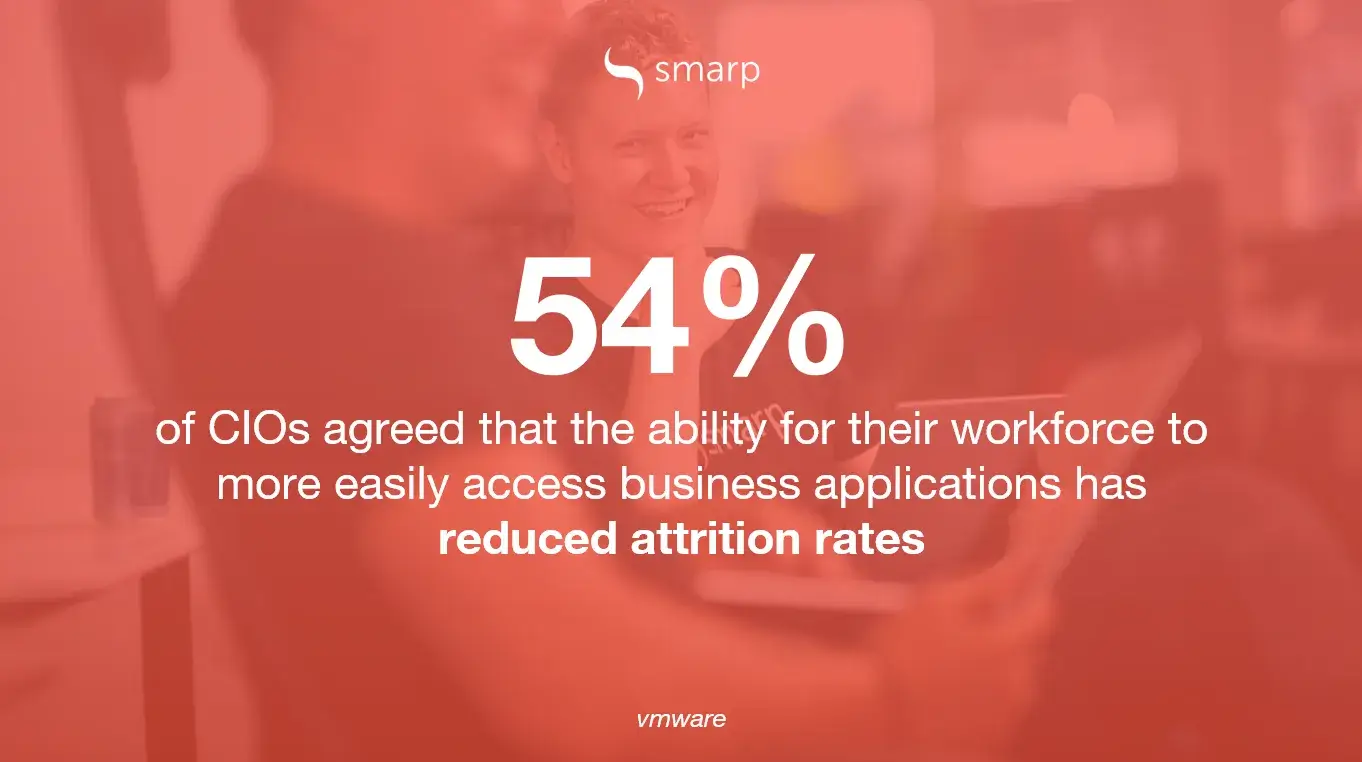
- Employee retention – Providing employees with intuitive and accessible digital tools also has a direct impact on retention and satisfaction. When employees can easily access the information and applications they need to do their jobs, frustration decreases and engagement improves. According to a VMware Digital Employee Experience report, 54% of CIOs say that giving employees easier access to business applications helps reduce attrition. Organizations that invest in a strong digital work place not only improve productivity but also create a more supportive environment where employees feel empowered and equipped to succeed. For additional insights on strengthening employee engagement, see employee engagement strategy.
- Innovation, problem solving and collaboration – Many employees agree that a lack of collaboration makes it harder to innovate, solve problems quickly and make confident decisions. In connected digital environments, collaboration becomes easier because employees can access the right people, content and context without switching between disconnected tools. Recent research from APQC found that knowledge workers lose a significant share of their time to productivity drains tied to communication and information flow, including 3.6 hours a week managing internal workplace communication and 2.8 hours a week looking for or requesting the information they need. A well-designed digital work place reduces that friction and creates better conditions for faster collaboration and stronger problem solving.
- Talent attraction – A modern workplace experience also helps organizations compete for talent. Today’s candidates increasingly expect flexible, well-connected working environments supported by intuitive tools and clear communication. According to SHRM, 54% of organizations identified offering more flexible work arrangements as one of their most effective recruiting strategies in 2024. That makes a strong digital work place a practical advantage for attracting candidates who want flexibility without losing connection, visibility or access to information.
- Closing the skill gap – Building digital confidence across the workforce is becoming a business priority. The latest figures from the European Commission show that only 55.6% of people in the EU have at least basic digital skills. That leaves a large portion of the workforce needing more support as organizations adopt new tools, workflows and technologies. Building a digital culture in the workplace can help close these gaps by making learning, communication and knowledge-sharing part of everyday work rather than a separate initiative.
- Improved knowledge sharing – When employees are digitally connected, knowledge sharing becomes much easier, more natural and far more scalable. Instead of relying on email chains, siloed folders or individual know-how, organizations can create a single environment where knowledge is easy to publish, find and reuse. That matters because the same APQC research found that knowledge workers lose substantial time each week to poor information flow. A strong digital work place helps reduce that waste by giving employees one place to discover trusted updates, documents and expertise.
Remember that an ideal digital workplace should support smooth multi-way communication between employees, managers and leaders so that they can discuss work and convey relevant information.
However, installing an instant messaging app is not enough. A collaboration tool should be deeply embedded in your digital workplace so that employees don’t have to toggle between multiple applications in order to easily find relevant information and documents, stay informed with important updates and stay connected with their peers. That is why more organizations are moving toward connected communication ecosystems built around one central hub rather than adding another standalone tool.
If your goal is to build or optimize your digital workplace strategy, keep your employees engaged and well informed, and consolidate your communication channels into a single platform, explore Haiilo’s employee communications solution and see how a more connected digital work place can support better communication, stronger engagement and a smoother employee experience. For more ideas, read The Ultimate Guide to Internal Communication in 2026 and AI in Internal Communications: Why Teams Struggle to Keep Employees Informed—and How AI Fixes It.
Digital Work Place FAQ
What is a digital work place?
A digital work place is the mix of tools, platforms and systems employees use to communicate, collaborate and access information at work. That usually includes internal communication channels, document sharing, knowledge hubs and collaboration tools. The goal is to create one connected environment where people can get work done without wasting time searching for updates or switching between disconnected apps. A well-designed digital work place helps employees stay informed, work more efficiently and feel more connected to the organization, whether they are office-based, remote or frontline.
Why is a digital work place important?
Work has changed. Teams are more distributed, employees expect faster access to information and organizations need better ways to keep everyone aligned. A strong digital work place helps solve those challenges by making communication easier, improving collaboration across teams and giving employees quick access to the tools and knowledge they need. It also supports employee experience. When workplace technology is intuitive and relevant, employees are more likely to stay engaged, productive and connected to company goals.
What tools are usually part of a digital work place?
Most digital work place environments include internal communication platforms, collaboration tools, intranets, knowledge management systems and document-sharing solutions. Many organizations also connect HR systems, learning platforms and employee apps into the same setup. The important thing is not how many tools you have, but how well they work together. If employees need to jump between too many systems, productivity drops. The best digital work place brings the right tools into one simple, connected experience.
How do you build a successful digital work place?
Start with employee needs, not technology. Look at how people currently work, where communication breaks down and which tools are creating friction. Then build a strategy around better access to information, stronger collaboration and a smoother employee experience. It is also important to involve leadership, communicate the benefits clearly and give employees space to ask questions and share feedback. A digital work place works best when it is supported by the right culture, not just the right software.
Curious to learn more? Read about 10 principles of modern employee communications