
Your teams’ ability to adapt to change has a direct impact on your business’s bottom line.
The thing is, there’s no single, universal way to embrace change. The change management program you’re about to implement depends heavily on your industry, the company’s culture, and the business goals you’re trying to achieve. A regulatory-driven transformation in financial services, for example, looks very different from a digital workplace rollout in a global enterprise. What matters most is having the right structure, leadership alignment, and communication approach in place to support people through the transition.
That’s also where change management software increasingly plays a role—helping organizations coordinate communication, centralize information, and keep employees aligned as initiatives evolve.
📚Master the art of communication with our article on Interpersonal Communication and Must-Have Skills.
In this blog post, we’ll walk through some of the most widely used change management models you can consider for your business, including when each approach works best and what to watch out for during implementation.
Are you ready? Let’s dive in!
- What is Change Management?
- What are Change Management Models?
- Why Change Management is important?
- Top 5 Change Management Models to Consider for Your Business
- The Example of Using the McKinsey 7-S Change Management Model
- Why Do 70% of Change Initiatives Fail?
- Employee Communication Is the Keystone of Every Change Management Model
- Make Change Management More Successful with Haiilo
What is Change Management?
Change management is the process of helping organizations adapt to new ways of doing things. It involves planning and guiding change in a structured way to minimize confusion, reduce resistance, and ensure people understand both what is changing and why. The goal of change management is to make transitions smoother, more predictable, and ultimately more successful for the business and its employees.
In practice, this means balancing strategy, communication, and people-focused execution. This process is typically led by assigned change managers or dedicated change management teams within an organization, who are responsible for planning, implementing, and monitoring change initiatives over time. They work closely with leadership, employees, and key stakeholders to maintain alignment, address concerns early, and reinforce new ways of working. Increasingly, organizations also rely on change management software to support this effort—providing a central place to communicate updates, track adoption, and keep everyone informed throughout the transition.
What are Change Management Models?
Change management models are frameworks that guide organizations through the change process. They provide a structured approach to help teams manage transitions more effectively, especially when change impacts roles, processes, or technology. Rather than relying on ad hoc decisions, these models give leaders a shared language and clear reference points for planning and execution.
In practice, change management models help organizations balance speed with stability—ensuring change moves forward without overwhelming employees. When paired with the right communication strategy and change management software, they also make it easier to coordinate actions, reinforce messaging, and track progress over time.
- Frameworks: Change management models offer step-by-step processes to follow during organizational changes, helping teams understand what to focus on at each stage.
- Guidance: They support leaders in choosing the right communication, training, and engagement strategies based on the type and scale of change.
- Examples: Popular models include Kotter’s 8-Step Process, Lewin’s Change Management Model, and the ADKAR Model, each suited to different organizational contexts.
- Purpose: Ultimately, these models aim to reduce resistance, improve adoption, and increase the likelihood that change delivers lasting business value.
Now, let’s dive into each change management model and explore their advantages, limitations, and real-world use cases.
Why is Change Management important?
Driving and inspiring change is a challenge that most organizations are facing today. The times when stability and predictability were the main business priorities are over. Organizations are now expected to evolve continuously—often while maintaining productivity, engagement, and trust at the same time.
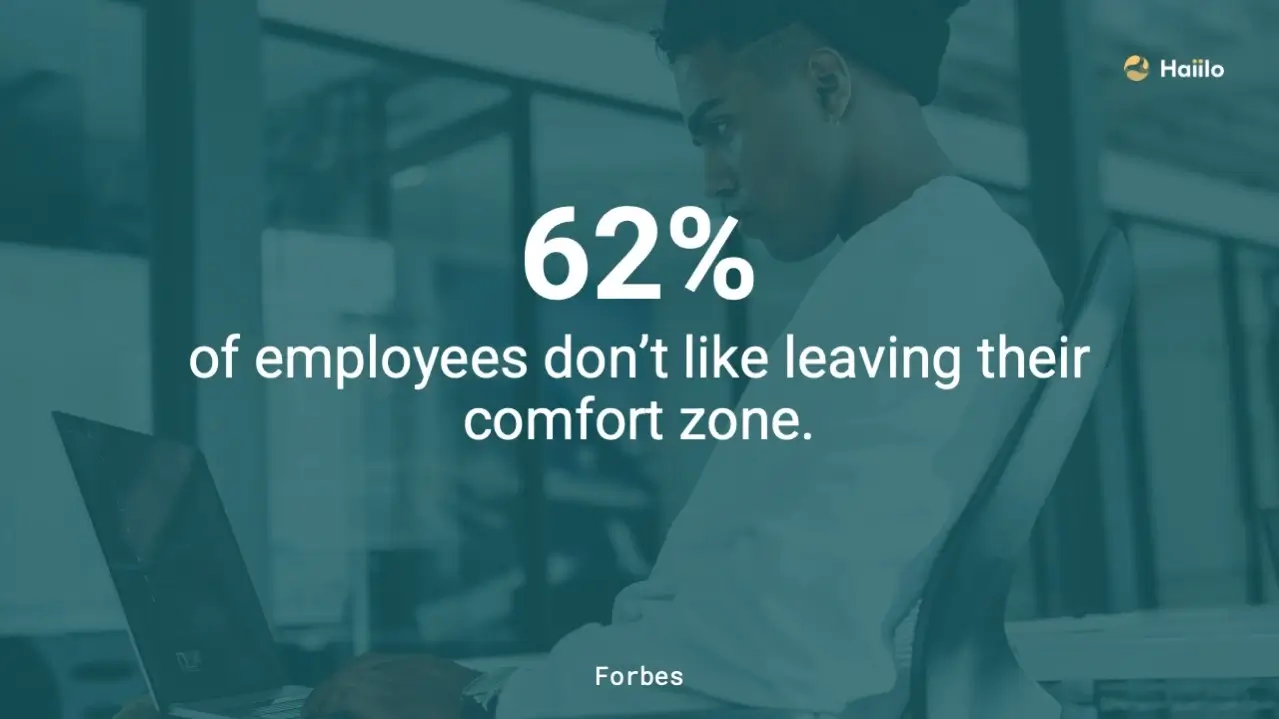
Market transparency, labor mobility, globalization, instantaneous communications, and constant access to information force us to get out of our comfort zones and make changes within our organizations more frequently than ever before. New technologies, shifting employee expectations, and competitive pressure mean that standing still is no longer an option.
Change management is the process organizations launch to improve current performance, seize new opportunities, or address key issues. A change management process typically includes a clear plan, coordinated projects, and supporting initiatives that help people understand what’s changing and how it affects their work. When supported by the right communication strategy and change management software, organizations are better equipped to reduce resistance, increase adoption, and turn change into a measurable business advantage.
Make change management effortless with great internal comms
These efforts often require changing the current business processes, job roles, and organizational structures as well as updating the technologies used in the organization.
Even though different groups within organizations may look at change management differently, it is extremely important to always address the human side of change in organizational contexts.
But remember that employee communication is the key to driving change.
Indeed, your employees may at first resist change. To make sure that they’re aligned with your strategy, you need to make sure they have a great understanding of the process, the reasons why you’re driving change as well as how it may impact their work.
With the rise of remote work, ongoing resource constraints, and broader macro‑economic factors, change management has become one of the main priorities for businesses across the world. Distributed teams, flexible working models, and faster decision cycles all increase the need for clarity and coordination during periods of change.
As companies continuously update their policies, procedures, and business processes, it’s crucial to manage and communicate these changes consistently across the entire workplace. Without a clear approach, important updates can be missed, misunderstood, or applied unevenly—slowing adoption and increasing frustration. This is where structured approaches, supported by change management software, help organizations keep information aligned and accessible.
Since every organization has different company values, culture, goals, and change objectives, not every change management model fits all situations. Some models work better for large-scale transformations, while others are more effective for incremental or people-led change. Understanding these differences helps leaders choose an approach that reflects both business priorities and employee needs.
📹 Check out our Masterclass: 5 Effective Change Management Models
In order to implement changes such as digital transformation or smoothly transition during mergers and acquisitions, it’s essential to plan ahead and structure the entire initiative from the start. These types of changes often affect multiple teams, systems, and ways of working at once, which increases both complexity and risk.
That’s why relying on established change management models is so valuable. These models give organizations a proven structure to follow—helping leaders sequence activities, anticipate resistance, and support employees through each stage of change. When combined with effective communication and change management software, they also make it easier to coordinate efforts, reinforce key messages, and keep progress visible.
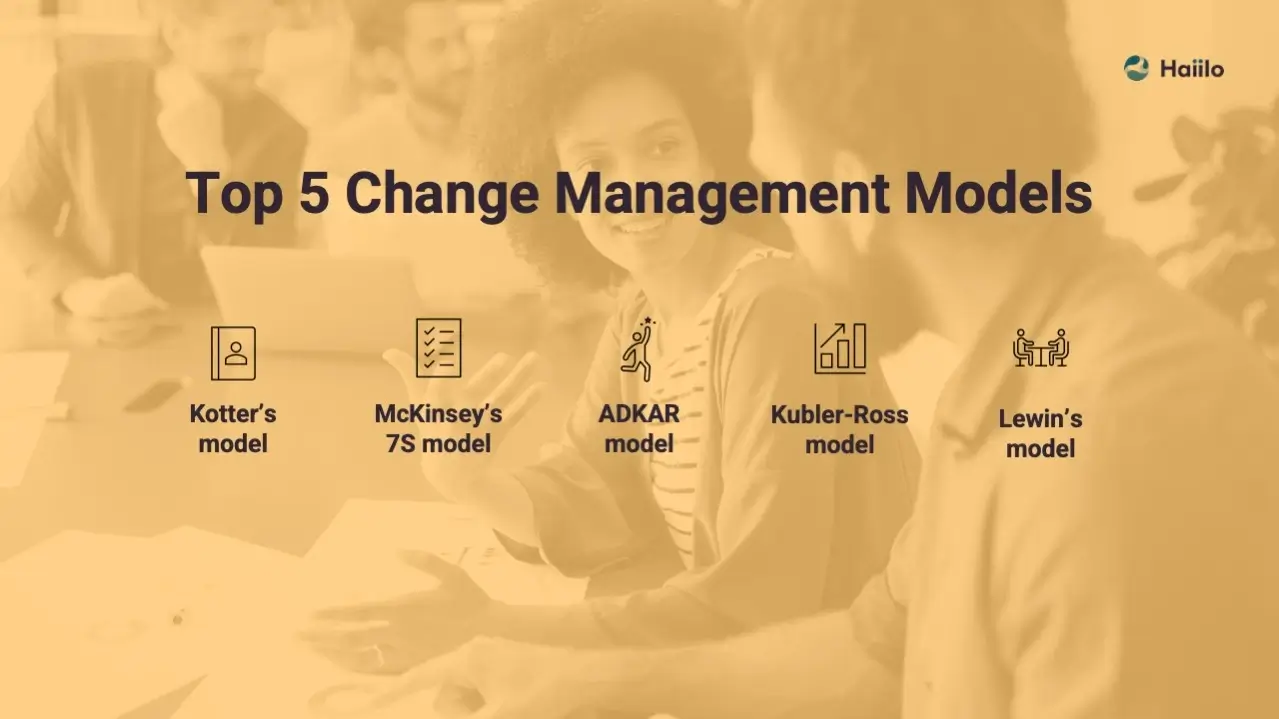
Let’s take a look at the 5 most popular change management models and explore how each one can support different types of organizational change.
1. Kotter’s Change Management Model
Kotter’s change management theory is one of the most widely adopted change frameworks in the world, particularly for large-scale organizational transformation.
This model is built around eight sequential steps, each of which focuses on employees’ response to change and the behaviors required to sustain momentum throughout the process.
- Increase urgency – Creating a genuine sense of urgency helps employees understand why change matters now, not later, and reduces complacency.
- Build the team – Assemble a cross-functional group with the right mix of influence, expertise, and credibility to lead the change.
- Get the vision correct – Define a clear, compelling vision that balances strategy with employees’ creativity, emotions, and the project’s objectives.
- Communicate – Be transparent and communicate frequently, using multiple channels to reinforce messages and address concerns.
- Get things moving – Remove obstacles, empower people to act, and actively collect feedback to maintain progress.
- Focus on short-term goals – Break the change into achievable milestones and celebrate early wins to build confidence and morale.
- Incorporate change – Embed new behaviors into everyday work, reinforce them culturally, and recognize employees who adopt them.
- Don’t give up – Change takes time. Persistence is essential, especially when progress slows or resistance emerges.
🧡 Why we like this model
Kotter’s change management model is relatively easy to understand and apply. Its biggest strength is the emphasis on preparing employees emotionally and practically for change, not just executing tasks. The focus on employee experience and proper workplace communication is a key reason it remains one of the most commonly used change management models today.
2. McKinsey 7-S Change Management Model
McKinsey’s 7-S framework or model is one of the longest-standing change management models and is often used to assess organizational alignment during periods of change.
This model consists of seven crucial categories that organizations need to consider and align when implementing change:
- Strategy – The plan that outlines how the organization will achieve its objectives during and after the change.
- Structure – How the organization is arranged, including reporting lines and decision-making authority.
- Systems – The processes and tools employees use to carry out day-to-day work.
- Shared values – The core beliefs and principles that guide behavior across the organization.
- Style – Leadership and management approaches that influence how change is introduced and reinforced.
- Staff – The people within the organization and their overall capabilities.
- Skills – The competencies and expertise required to support the change.
🧡 Why we like this model
Unlike many process-driven models, McKinsey’s framework focuses on all the critical elements that change can affect. Rather than prescribing a strict sequence, it encourages leaders to examine whether the organization is truly aligned before implementing change—reducing the risk of misalignment later.
3. ADKAR Change Management Model
ADKAR model is commonly used by change managers to identify gaps that prevent successful adoption, helping teams target communication and training more effectively.
While the ADKAR model supports business outcomes, it is especially effective at helping employees move through change at an individual level.
ADKAR stands for:
- Awareness – Understanding the need for change
- Desire – Willingness to support and engage with the change
- Knowledge – Knowing how to change
- Ability – Being able to apply new skills and behaviors consistently
- Reinforcement – Ensuring change is sustained over time
🧡 Why we like this model
This model is particularly useful for organizations that want to address both the business and people dimensions of change. By highlighting why change is—or isn’t—working, ADKAR helps teams diagnose adoption issues early and adjust their approach before problems escalate.
4. Kübler-Ross Five Stage Change Management Model
This model stands out because it is entirely employee-oriented. Originally developed to describe responses to loss, it has been widely adapted to understand emotional reactions to workplace change.
The model outlines five emotional stages employees may experience:
- Denial – Difficulty accepting that change is happening.
- Anger – Frustration or resentment once the reality of change sets in.
- Bargaining – Attempts to regain control or limit the impact of change.
- Depression – Reduced motivation, energy, or engagement.
- Acceptance – Acknowledging the change and beginning to move forward.
🧡 Why we like this model
This model is valuable because it helps organizations empathize with employees’ emotional responses. Teams that recognize and address these stages are far more likely to remove barriers to adoption. This is why consistent communication and an effective business communication strategy are essential when using this approach.
5. Lewin’s Change Management Model
Lewin’s Change Management Model is one of the most established and accessible frameworks for understanding organizational change.
It breaks change into three clear stages: unfreeze, change, and refreeze.
- Unfreeze – Preparing the organization by explaining why change is necessary and addressing resistance through open communication.
- Change – Implementing the change itself, supported by good leadership and effective employee communications.
- Refreeze – Reinforcing new behaviors so they become part of normal operations and don’t fade over time.
🧡 Why we like this model
Lewin’s model clearly illustrates the three phases every change initiative must pass through: before, during, and after change. Its simplicity makes it especially useful for organizations looking for a clear starting point when implementing structured change.
Using the McKinsey 7-S Change Management Model: Example
The McKinsey 7-S Model is a framework that identifies seven interrelated elements—strategy, structure, systems, shared values, skills, style, and staff—that organizations must align for effective change and successful management. Because all seven elements influence one another, change in one area often requires adjustments in others. Let’s apply this model to a real-world scenario: managing large-scale disruption during a pandemic.
Increase urgency
Employers are responsible for creating a clear sense of urgency around change. In this situation, urgency around following safety guidelines, new policies, updated procedures, and tips for working from home is essential to ensure business continuity. Employees need to understand not only what is changing, but why swift action is required and how it protects both people and the organization.
Build the team in charge of driving change
Depending on the situation, change teams may include different departments. However, getting internal communications departments on board is not optional—it is an absolute must. Without a coordinated communication effort, even well-planned change initiatives can quickly lose momentum.
In this case, other members of the team should include change management teams, crisis management and communications teams, leaders, managers, and HR departments. Together, they are responsible for ensuring employees stay connected, informed, and productive, even when teams are physically separated or working under unfamiliar conditions.
Align your employees with your vision
Your change communication plan should have a clear vision about the change. It should also outline specific goals so employees understand how their efforts contribute to shared outcomes. Clarity at this stage reduces uncertainty and helps teams prioritize what matters most.
Setting a clear vision is the only way to secure employees’ buy-in and align their day-to-day actions with the organization’s broader business objectives.
Communicate your change management strategy to your employees
Once you define your vision and goals, it’s crucial to communicate them frequently, transparently, and openly with your entire workforce—even when the news is difficult. Silence or vague messaging often creates more anxiety than honest updates.
Many organizations face restructuring, budget constraints, or employee lay-offs during periods of disruption. Instead of leaving employees in the dark, leaders need to ensure that important information and updates are easy to access. Consistent communication helps maintain trust, reduces misinformation, and gives employees a sense of stability during uncertain times.
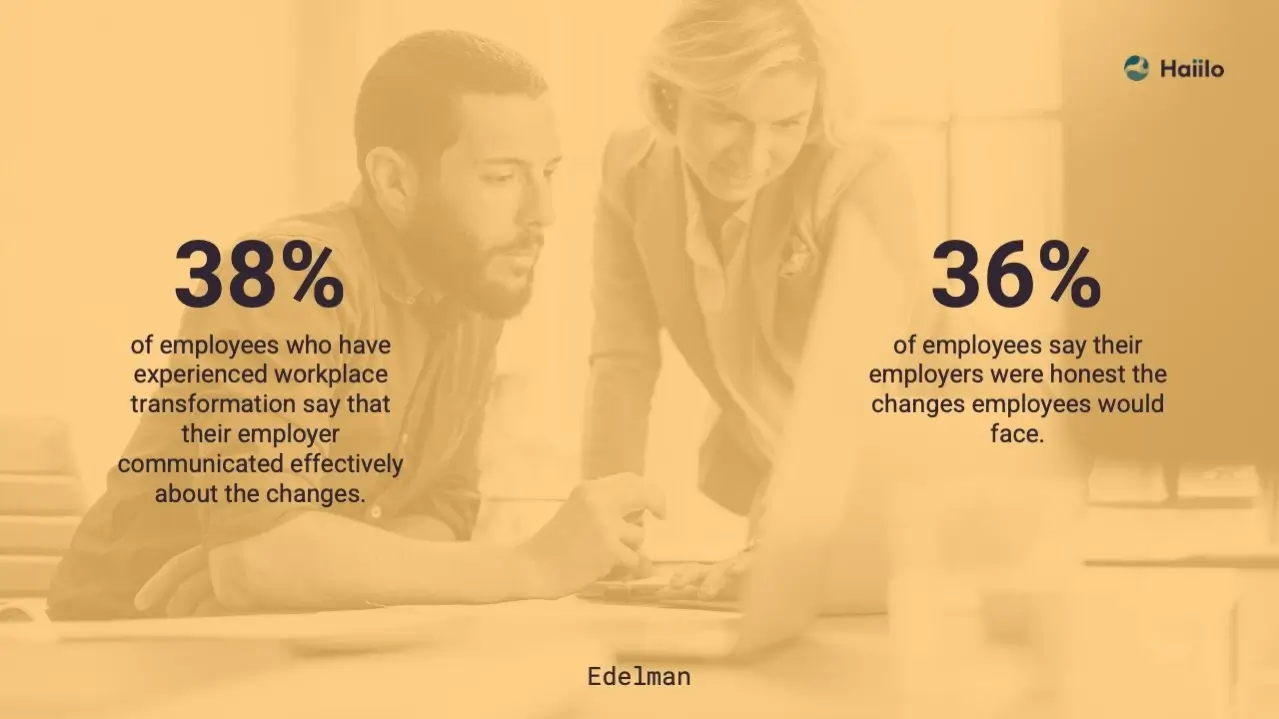
Regardless of the change management model you use, communicating the benefits and consequences of change should always be your top priority. Employees don’t just want to know what is changing—they want to understand why it matters, what happens if nothing changes, and how success will be measured.
A strong https://blog.haiilo.com/blog/change-communication-definition-and-best-practices/change communication plan helps remove ambiguity and gives people a clear reference point during periods of uncertainty. It also creates consistency, especially when multiple teams or locations are affected at the same time.
Here are a few questions your change communication plan should include:
- What does change entail?
- What are the goals?
- How employees’ roles may be impacted?
- What is the time frame?
- Where can employees find and access important company updates?
- How will change be communicated across different channels?
- How will you support employees in embracing the change?
Get things moving
When implementing change, it’s important to continuously support your employees in order to mitigate resistance and remove roadblocks as they arise. Change doesn’t end once an announcement is made—it requires ongoing reinforcement and visible leadership support.
Today, one of the most effective ways to support employees is by keeping them connected and enabling them to share their voice through two‑way communication channels. Giving employees space to ask questions, raise concerns, and contribute ideas helps build trust and surfaces issues early.
Allow your employees to ask questions, raise concerns, and join daily company conversations. Don’t just send them a mass email announcement and hope they read it. Real engagement comes from dialogue, not one‑way broadcasts—especially during periods of significant change.
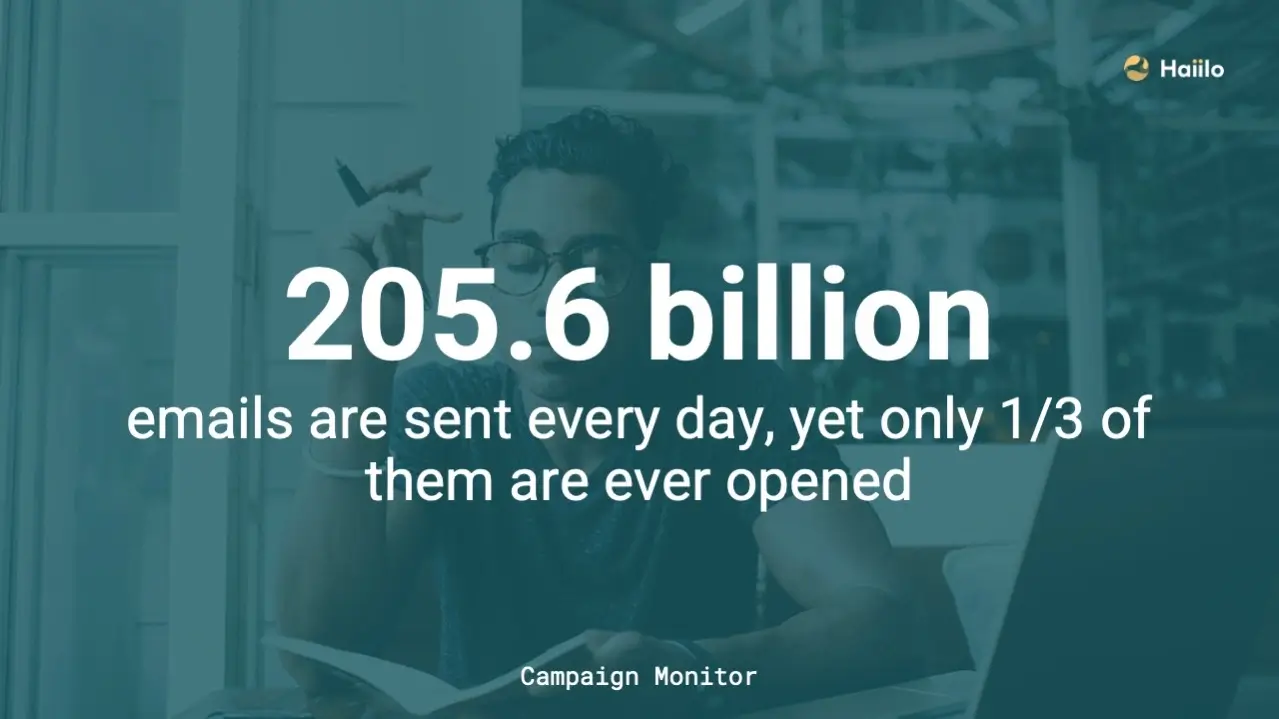
These are the times when many employees are experiencing extensive information overload. Between operational updates, leadership messages, and external news, attention is limited. That’s why it’s important to be selective—only sending information that is relevant, timely, and clearly connected to employees’ roles. Personalised, well‑timed communication is far more effective than high message volume when you’re trying to cut through the noise.
Include short-term goals in your change management plan as well
Instead of focusing solely on the final outcome of your change initiative, set smaller, short-term milestones to help employees stay motivated throughout the process. Short-term goals make progress visible and give teams a sense of achievement, even when broader transformation takes time.
For example, if you’re planning to continue or expand remote work practices, communicate remote work goals in clear, manageable phases. Give employees practical targets to work toward and a simple way to track progress and celebrate success.
Encourage employees to publicly recognize their own achievements and the successes of others. Using your internal communications solution to share inspiring success stories reinforces positive behaviors, builds momentum, and shows how change is working in practice—not just in theory.
Incorporate change
Any organizational change also needs to be supported by a broader cultural shift. New processes and tools won’t stick unless behaviors, habits, and expectations evolve alongside them. This is where consistent reinforcement matters.
Once again, effective internal communication plays a crucial role. Leaders need to continue talking about the change, recognizing progress, and linking new ways of working back to shared values and long-term goals. Incorporating change into everyday routines helps ensure it becomes part of how the organization operates—rather than a temporary initiative that fades over time.
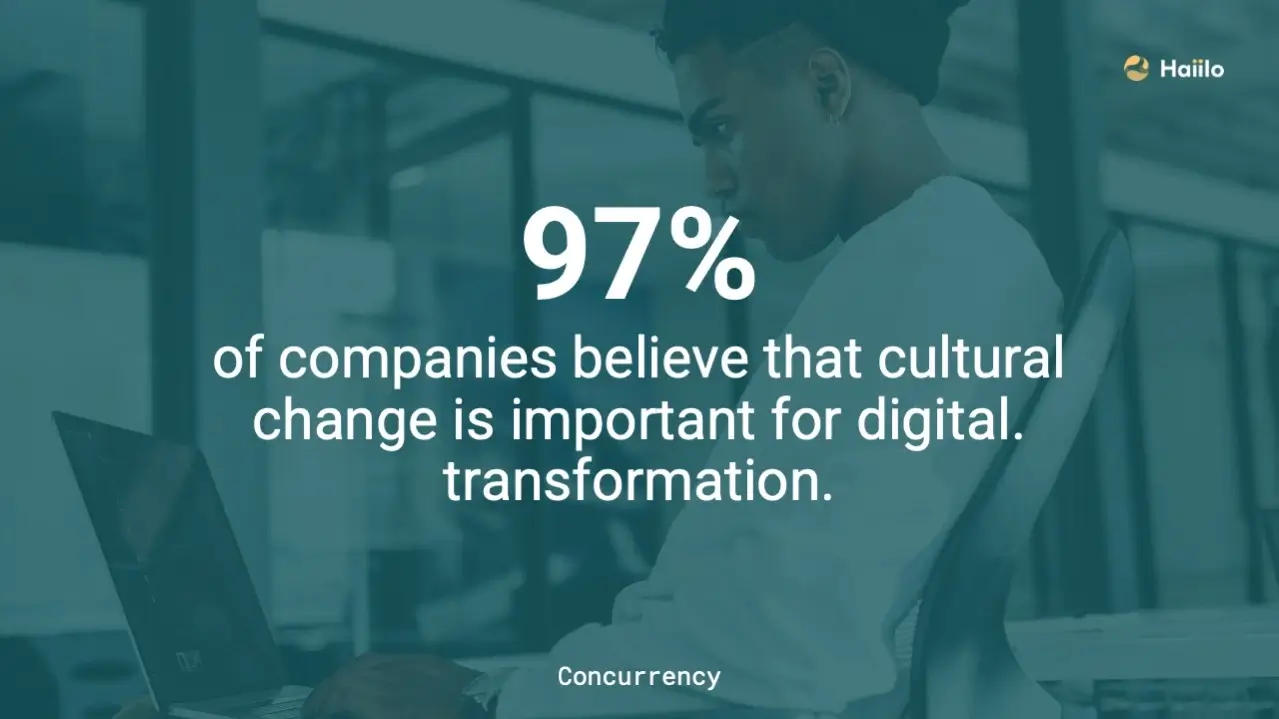
This is why internal communications (IC) departments are becoming some of the most important strategic business partners—actively driving organizations to become more adaptable and agile. As change becomes more continuous, IC teams help translate strategy into clear, consistent messaging and ensure employees remain aligned as priorities shift.
Don’t give up
Remember that change won’t happen overnight. In reality, change management is not a one‑time initiative but an ongoing process that evolves alongside the organization. Momentum can dip, priorities can shift, and new challenges often emerge after initial implementation.
So, no matter which change management model you choose to use, it’s essential to continuously encourage and empower your employees to stay aligned. Regular reinforcement, visible leadership support, and open communication help ensure that new behaviors don’t fade once the initial push is over.
Recent global disruptions have clearly illustrated this point. Prolonged uncertainty, shifting working models, and external pressures continue to shape how organizations operate. The ability to adapt over time—and to bring employees along with that journey—is what ultimately separates short‑term change from long‑term resilience.
70% of Change Initiatives Fail – Why?
The idea that 70% of change initiatives fail is often cited in business literature, frequently attributed to early Harvard Business Review discussions on transformation. However, more recent analysis suggests the real issue isn’t a single failure rate—it’s that many change initiatives fall short of their intended outcomes because critical people‑ and execution‑related factors are overlooked. Recent HBR research continues to show that organizations struggle to translate well‑intentioned change programs into sustained results, particularly when alignment and engagement break down.
So how can we explain why so many change efforts underperform?
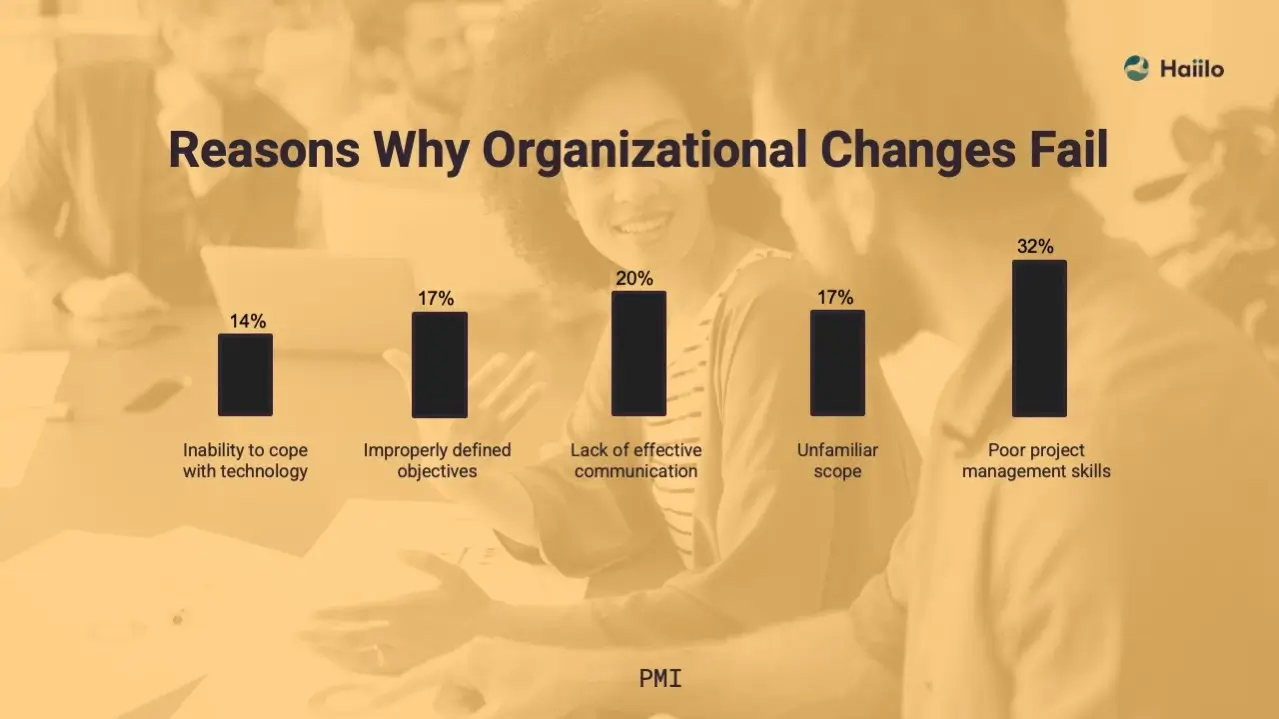
Research and practitioner insight consistently point to the same pattern: technology is rarely the main problem. Studies referenced by the Project Management Institute (PMI) and Harvard‑affiliated research highlight that change initiatives are far more likely to stall due to execution and communication gaps than technical limitations.
In fact, PMI research shows that poor communication and weak project discipline are among the most common contributors to failed initiatives. When change breaks down, it is typically linked to:
- Improperly defined or poorly communicated objectives
- Unclear or expanding scope
- Lack of effective communication between leadership, managers, and employees
- Insufficient project and change management capability
What these issues have in common is that they are largely preventable. Organizations that invest early in clarity, leadership alignment, and ongoing communication—supported by structured approaches and the right change management software—are far better positioned to move change from intention to adoption.
Cornerstone of Every Change Management Model: Employee Communication
Within organizations, change initiatives most often come from the top down. However, ultimately, it is the employees of your organization who have to change how they do their jobs on a day‑to‑day basis. Strategies, timelines, and tools only succeed if people are willing and able to adopt new ways of working.
If individuals struggle with their personal transitions—if they don’t embrace the change or understand how to work differently—the initiative will fail, regardless of how well it was planned. That’s why https://blog.haiilo.com/blog/internal-communications-how-to-align-employees-with-your-strategic-goals/aligning employees with your business goals is one of the most difficult and most critical parts of change management.
As we’ve seen across the models above, employee communication is the central part of every change management model. Clear, consistent communication helps employees understand the purpose of change, see how it connects to broader business objectives, and feel confident about what’s expected of them. It also creates space for feedback, questions, and course correction as the change unfolds.
If your employees are not on board, implementing change will be extremely challenging. This is where structured communication practices—often supported by change management software—make a tangible difference, helping organizations keep messages aligned, accessible, and relevant as change progresses.
Make Change Management More Successful with Haiilo
As improper employee communication is one of the main reasons why change management projects fail, organizations increasingly need to reconsider their internal communications efforts and move beyond fragmented, one‑way updates. Successful change requires more than announcements—it depends on clarity, consistency, and ongoing dialogue.
Haiilo is designed to help organizations be more effective in change management by giving teams a central, structured way to communicate during periods of transition. As change management software, it supports the human side of change by keeping employees informed, aligned, and engaged as initiatives evolve.
Think about it: during change management processes, organizations often struggle to deliver relevant information to the right people at the right time, while also keeping everyone connected. Important updates get lost across tools, inboxes fill up, and employees are left unsure where to look for trusted information.
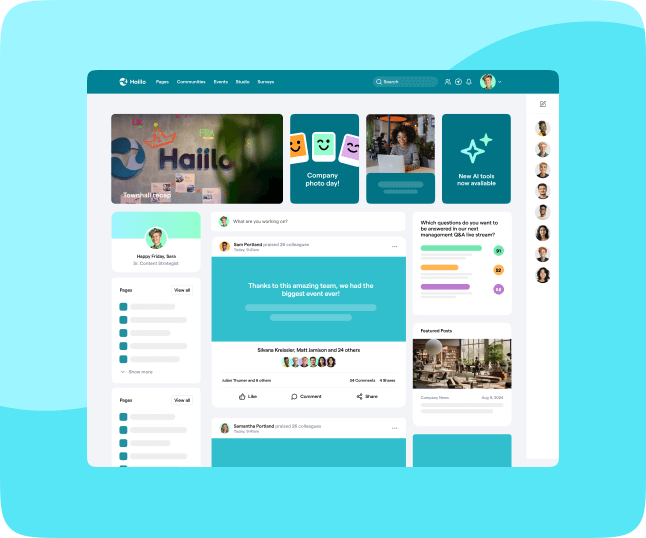
With the Haiilo platform, you can reach your workforce in a timely manner, store all crucial information in one place, and personalize employees’ news feeds based on their roles, interests, and location. You can also keep a pulse on employee well‑being and sentiment—helping leaders spot resistance, uncertainty, or disengagement early.
Haiilo’s mobile-first approach and user friendliness are key reasons why enterprise organizations use it as their primary internal communication channel during change. It ensures that critical updates reach deskless, remote, and frontline employees—not just those sitting at a desk.
In essence, Haiilo helps you to:
- Explain your change management program clearly and share the reasons behind the change
- Communicate how change will impact daily work and expectations
- Invite employees to be part of the change by collecting ideas and feedback
- Personalize messages based on role, location, interests, and language
- Share updates with the entire workforce, regardless of where employees are based
- Keep remote, deskless, and blue‑collar employees connected and informed
- Automate content imports from trusted sources to support digital transformation learning
- Create topic‑specific channels to reduce noise and avoid confusion
- Schedule content delivery across time zones for better reach
- Enable employees to collaborate more efficiently throughout the change process
- Support employees in becoming brand ambassadors by sharing key company updates externally
Frequently asked questions about change management
What is change management software, and when do you actually need it?
Change management software helps organizations plan, communicate, and reinforce change in a more structured way. You typically need it when change affects large groups of employees, spans multiple locations, or unfolds over time—such as digital transformation, restructuring, or new ways of working. Instead of relying on scattered emails and meetings, change management software gives employees a clear place to find updates, understand what’s changing, and stay aligned throughout the process.
How does change management software support employees during change?
The biggest value lies in clarity and consistency. Change management software helps employees understand the “why” behind change, what’s expected of them, and where to get reliable information. It also supports two‑way communication, so employees can ask questions, share feedback, and feel heard. When people know what’s happening and how it affects their work, resistance drops and adoption becomes much more likely.
Can change management models work without software?
Yes—but it’s harder to make them stick. Change management models provide the framework, but software helps you execute it day to day. Without the right tools, communication often becomes fragmented, progress is harder to track, and employees can feel disconnected. Using change management software alongside a model helps turn theory into practice by reinforcing messages, supporting engagement, and keeping momentum going.
How do you choose the right change management approach?
Start by looking at the type and scale of change you’re dealing with. Large, organization‑wide initiatives often benefit from structured models like Kotter or McKinsey 7‑S, while people‑focused changes may lean on ADKAR or Kübler‑Ross. Whatever model you choose, make sure it’s supported by strong communication and, where needed, change management software that fits your culture, workforce, and ways of working.
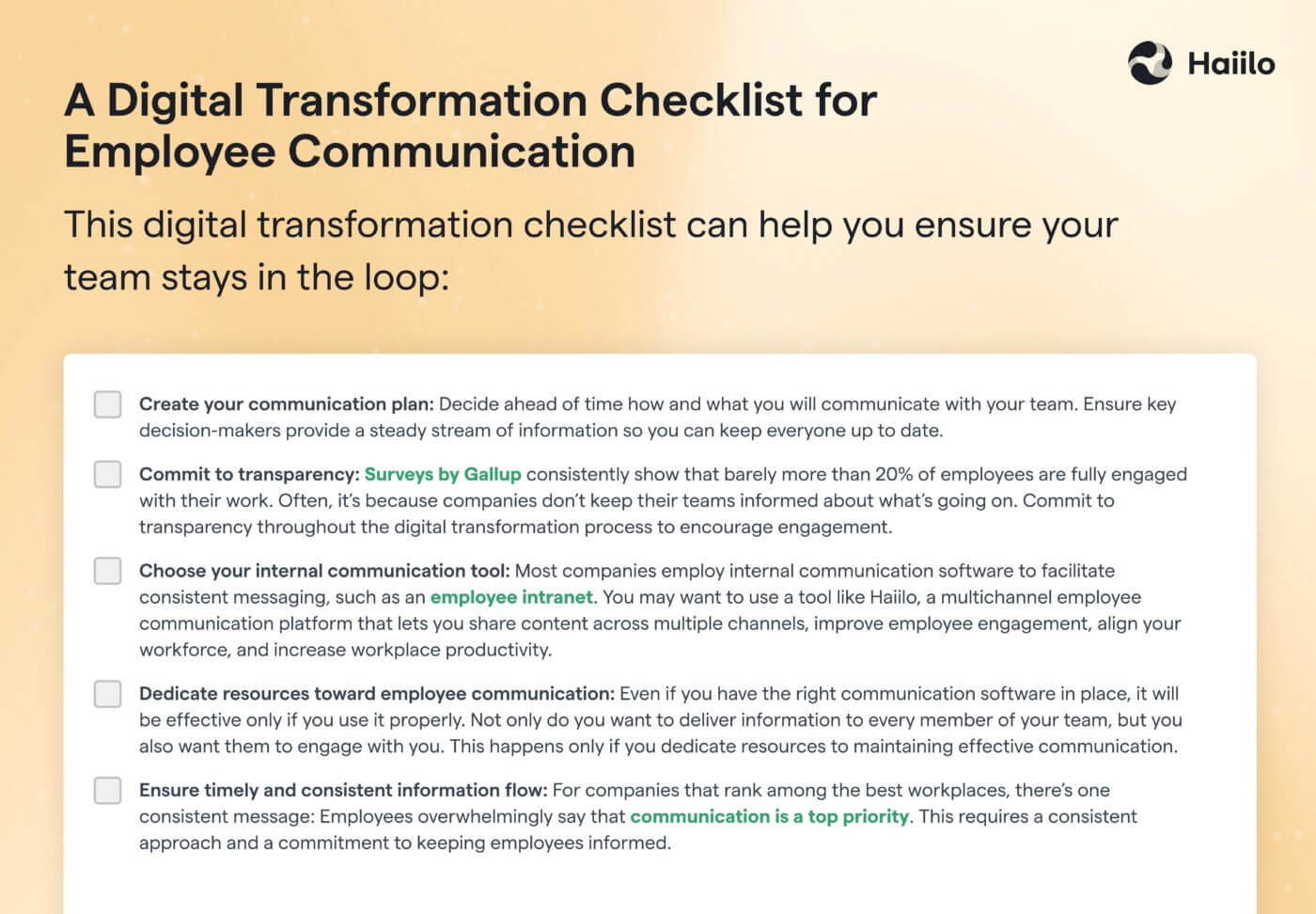
Digital transformation is easy with our simple checklist. Get it now!