
Manager communication is a topic that needs much more attention than it currently gets. The way managers communicate to employees shapes how people experience their work day to day. It influences how they feel about their role, their teammates, their leaders and the company they work for. Poor communication creates confusion, frustration and disengagement. Clear, consistent communication builds trust, alignment and motivation.
This is why we are sharing with you 14 best practices about how managers can improve communication with their employees. These practical tips will help leaders communicate to employees more clearly, listen more effectively and create stronger, more productive relationships across teams.
📚If you are looking for more advice on how to improve workplace communication, check out our article about Communication Strategies and How to Create Your Own.
Improve manager communication in your organization with the right internal comms platform
Manager Communication Defined
Manager communication is the communication between managers and their employees. It covers everything from daily check-ins and feedback to company updates and performance conversations. In practice, it is how managers communicate to employees clearly, consistently and in a way that people understand and act on.
In today’s world, employees expect open, transparent, timely and relevant information at work. They want clarity on priorities, context behind decisions and space to ask questions. That means managers need to go beyond basic information sharing. They need to communicate with intention, adapt their style to different situations and make communication a two-way process.
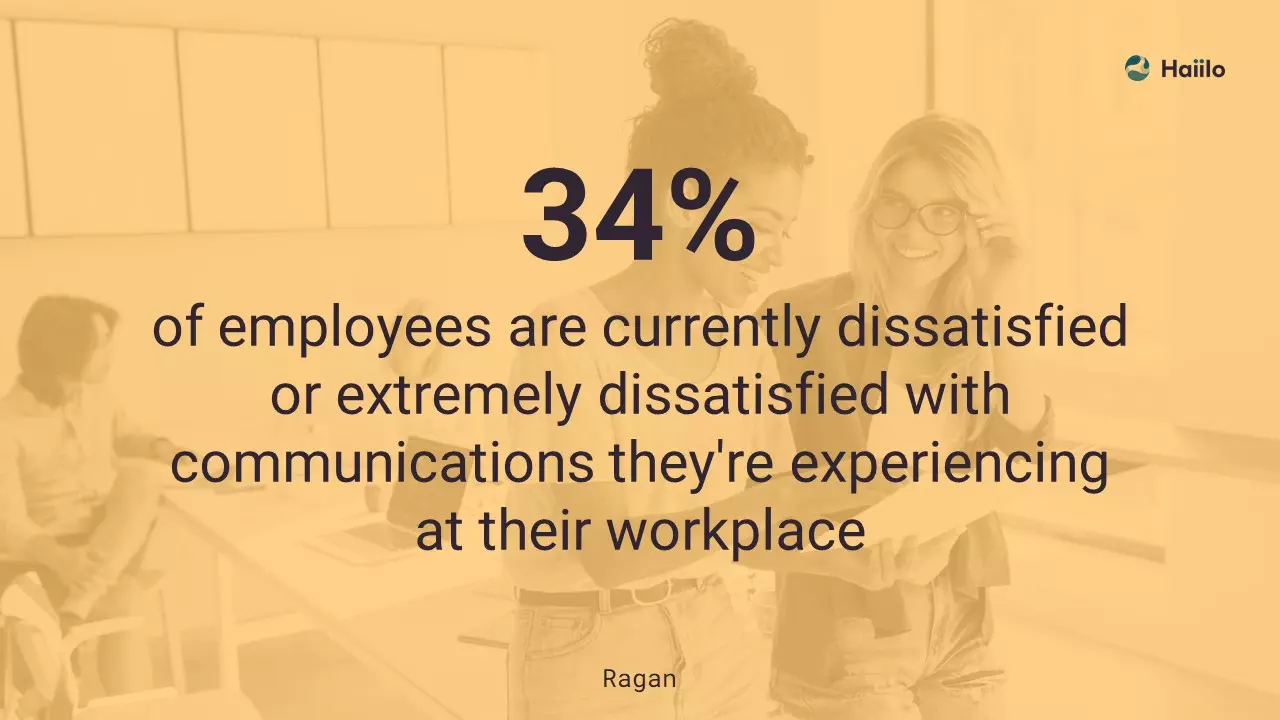
Effective communication skills are some of the most valuable skills a manager can have. Strong communicators set clear expectations, reduce confusion and build trust across their teams. On the other hand, poor communication leads to misunderstandings, missed goals and frustration, which can quickly impact engagement and productivity.
Let’s take a look into how this can be fixed.
14 Ways to Improve Manager Communication
If you are a manager, you probably already know that a large portion of today’s workforce is made up of millennials and gen Z employees.
These generations bring different expectations to the workplace. They value transparency, fast access to information and regular feedback. They also expect leaders to communicate to employees in a way that feels clear, authentic and relevant to their day-to-day work.
However, have you adapted your internal communication strategy to meet these expectations? Many organisations still rely on outdated, top-down communication styles that no longer resonate.
If managers don’t adjust how they communicate to employees, messages get lost, misunderstood or ignored. Over time, this leads to disengagement and weaker team performance.
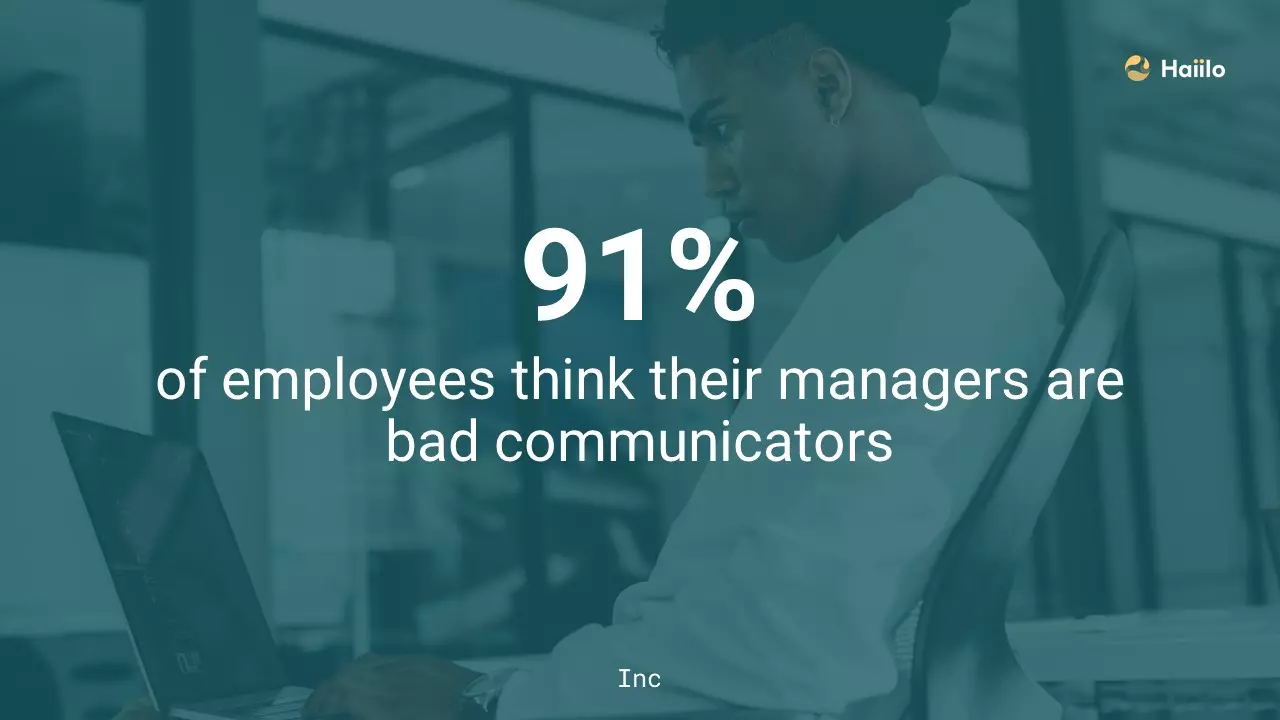
Consider this…
So, let’s take a look into how managers can eliminate this challenge.
1. Communicate frequently and be specific
Frequent, clear and specific manager communication is what sets up employees for success. Therefore, managers should avoid irregular and vague communication with their employees. Managers who are able to communicate with clarity and conciseness are much better in avoiding confusion or misinformation in the workplace creating a healthier work environment.
Moreover, 71% of employees believe that their leaders do not spend enough time communicating goals and plans.
2. Make communication as transparent as possible
Employees want transparency and they want to be involved. Managers are the ones responsible to drive employee engagement through transparent and honest communication.
Trust is the foundation for successful business. To build trust within workplaces, leaders should communicate in a way that is truthful, open, honest and transparent.
However, this is not easy as many employees don’t trust their employers.
A research with 33,000 individuals in 28 countries showed that almost 1 in 3 employees don’t trust their employers, and efficient manager communication is crucial for fixing this challenge.
3. Be approachable, personal and authentic
A good manager is easy to engage, approach and communicate with. The most effective manager communications are those that connect with and build strong relationships with the audience.
The more personal, authentic and engaging conversation with your employees is, the more your employees will trust you and they will be more likely to join the conversation.
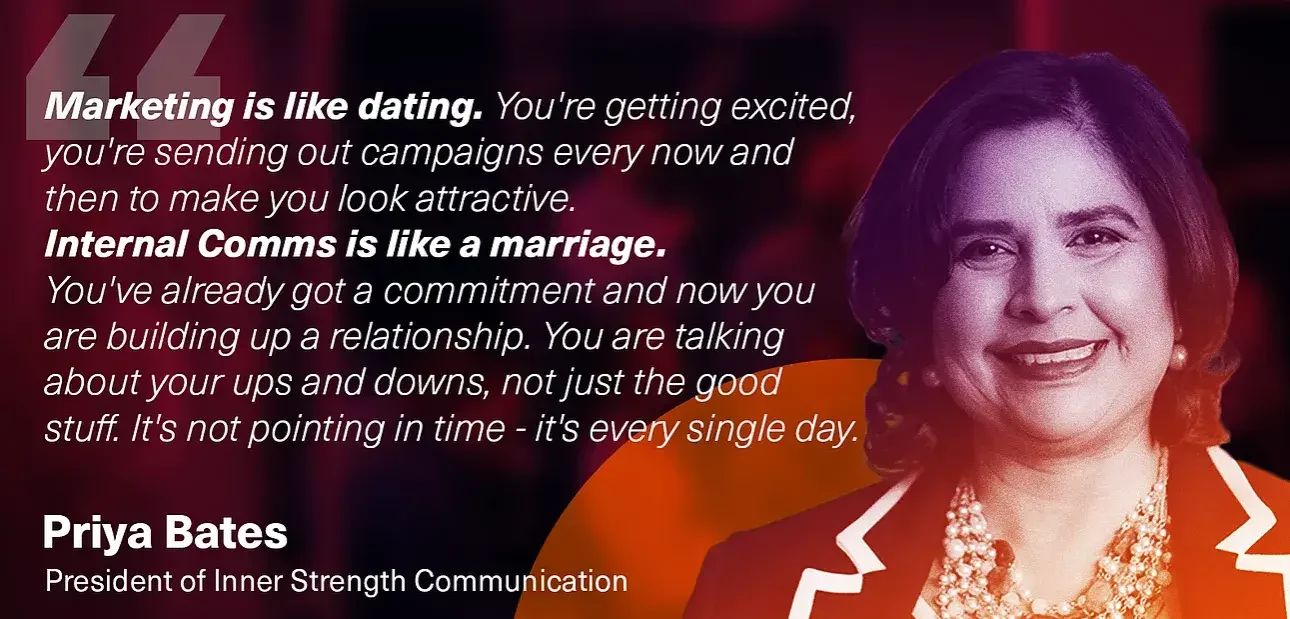
As Priya Bates, the President of Inner Strengths Communications say: “Internal Comms is like a marriage”!
4. Communicate in real-time
Younger generations are used to communicating in real-time. They expect fast answers, quick updates and easy access to information when they need it. A strong manager communication strategy recognises this shift and understands employees’ need to communicate with ease and without delays.
To communicate to employees effectively, managers need to reduce lag and remove unnecessary barriers. This doesn’t mean reacting instantly to everything, but it does mean sharing updates when they matter and being available for timely conversations. Real-time communication helps prevent confusion, speeds up decision-making and keeps teams aligned.
Luckily, with modern employee communication solutions like Haiilo, managers can reach their employees across mobile, desktop, email and other communication channels with the click of a button. Instant, targeted notifications enable managers to share relevant updates quickly and ensure employees don’t miss critical information.
5. Make sure you reach everyone
Making sure that important information reaches the right employees at the right time is a crucial part of every manager communication strategy. It’s not enough to send a message — managers need to be confident that it was actually seen and understood.
To communicate to employees more effectively, managers should tailor messages based on roles, locations or teams. Not every update is relevant to everyone, and too much noise can cause people to tune out. Clear targeting helps reduce overload and makes communication more meaningful.
It’s also important to consider how different employees access information. Some are desk-based, while others are frontline or remote. Using a mix of channels ensures better reach and visibility. When managers consistently reach the right people with the right message, communication becomes more effective and more trusted.
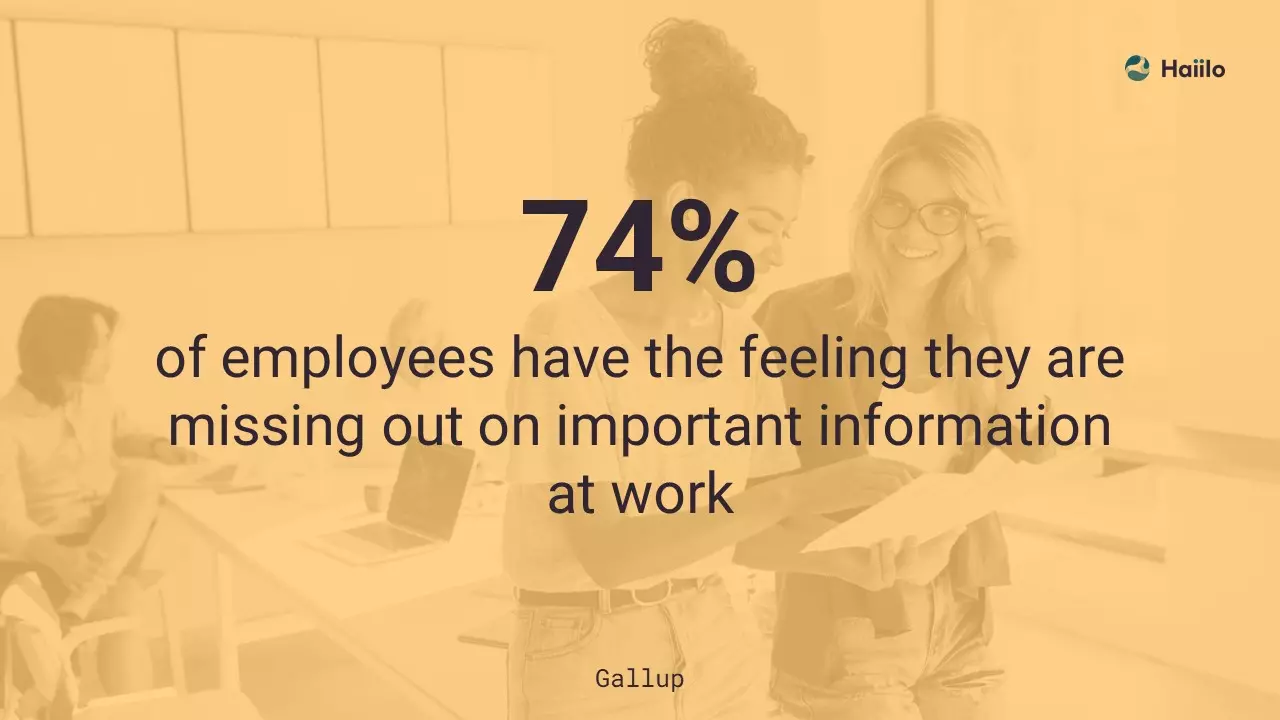
As 74% of employees have a feeling that they’re missing out on important information, this is not easy to achieve especially when managers are not aware of low usage rates of communication channels such as emails and document sharing tools.
Content distribution through Haiilo is as easy as it gets, and it makes sure that employees don’t feel uninformed or left out.
6. Build relationships with your teams
Building strong manager-employee relationships through effective workplace communication drives more employee motivation, engagement and retention.
Remember, employees mostly leave their companies because of poor relationships with their managers.
Moreover, only 12% of employees who have quit their jobs did so to negotiate higher salaries somewhere else while 75% quit their job because of the bad relationship with their direct supervisor.
7. Forget about one-way and top-down communication
Managers need to do a better job in supporting two-way conversations and making employees feel like they can speak up and engage in daily conversations.
Roughly half of employees aren’t regularly speaking their minds at work. The importance of bottom-up feedback is significant here.
Even though HR and IC professionals have a job to build the internal communications strategy to strengthen employee experience at the company level, managers also play an important role in internal communications.
At the end of the day, managers are the ones with whom employees have conversations on a daily basis, and they should continuously encourage employees to engage in two-way conversations.
Similarly, even though top-down communication is necessary, it is not the type of communication that encourages employee engagement. Sending out internal newsletter without enabling employees to join the conversation, brings little value to the company.
Did you know that the average employee receives 121 emails and 62% of these emails are not important. Therefore, it is not surprising that many of your internal newsletters may also get buried in your employees’ inboxes.
8. Make communication more relevant and engaging
One of the biggest reasons for low employee productivity is the fact that employees have to deal with information overload. A lot of information they receive is not relevant to them or don’t require their immediate attention.
Luckily, many managers, internal communication and HR professionals are now becoming aware of the information overload in the workplace, and they have started to implement communication apps that allow them to personalize and tailor content based on employees roles, needs, preferences and urgency.
Solutions like Haiilo help managers to easily filter, organize and distribute content and make manager communication much more effective.
9. Always have your non-wired employees in mind
Non-wired workers make up a big portion of the world’s workforce. Making non-wired employees feel like they are a part of a team can be a daunting task, but also comes with high rewards. Engaging non-wired employees starts with a proper manager communication strategy.
Innovative employee communication solutions should, therefore, have a functionality to reach workers whether they work at a desk, from their homes or on the shop floor. With Haiilo, managers can reach workers on their mobile phones or through channels such as Digital Signage with a click of a button.
10. Measure your communication efforts
Even though it can be tricky for managers to measure their communication efforts, there are still some things you can track and measure to get a better understanding of how efficient their communication strategy is.
For example, tracking engagement around content distributed to the employees is a good way to get started. If the engagement is low, that probably means that the content is not interesting or relevant to your team members.
📹 Learn about how to set communication goals in your organization!
Having a good understanding on what drives employee engagement in daily conversations is important to improve workplace conversations.
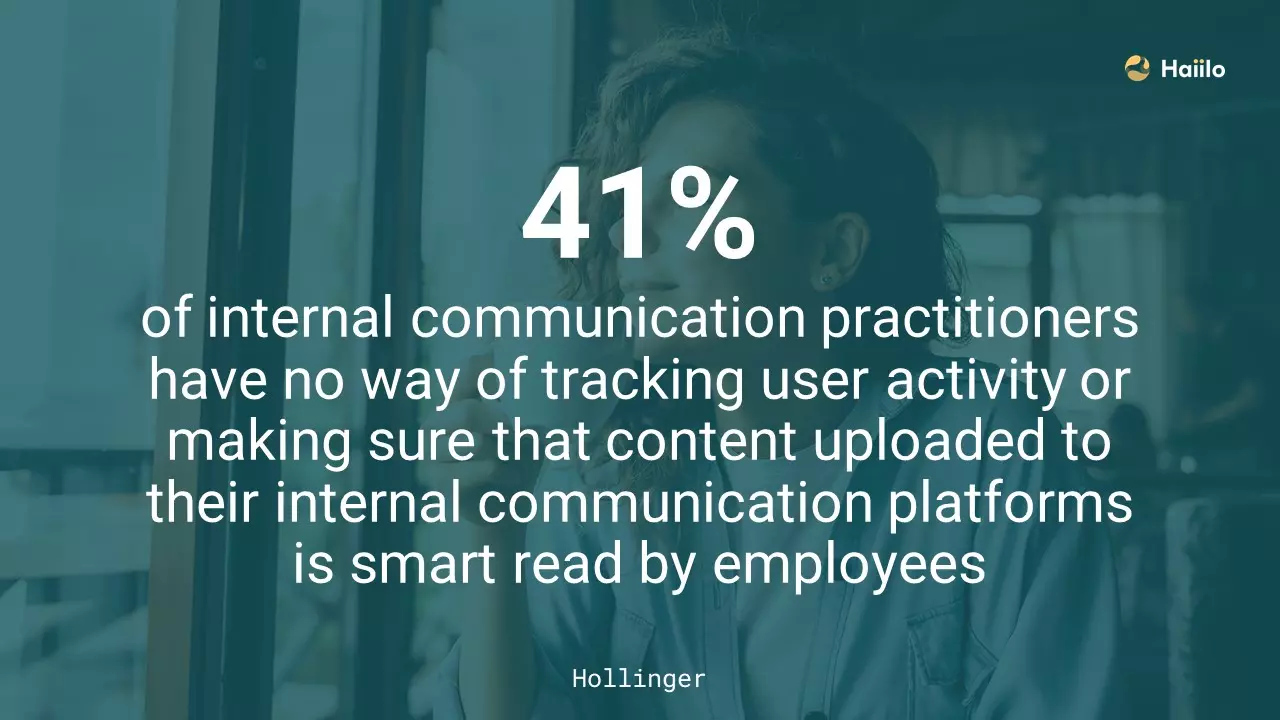
However, 41% of internal communication practitioners have no way of tracking user activity or making sure that content uploaded to their internal communication platforms is read by employees.
11. Switch to mobile-first communication
When choosing a communication tool and channel to improve manager communication, have your employees’ preferences in mind. Millennials are used to accessing everything on their phones, and they expect the same from communication at work.
Managers need to be aware of the benefits of implementing mobile-first employee communication solutions and have a better understanding on how these tools are transforming organizational culture and employee behavior.
12. Appoint a single, most important communication channel
A fragmented communications ecosystem within organizations can cause a higher level of employee disengagement as important information easily gets buried.
Today’s workforce expects information to be easily accessible and found. They expect important information to find them!
However, as many organizations today use numerous communication tools such as Slack, Microsoft Teams, Yammer, Jive, Sharepoint, Workplace by Facebook and Social Media platforms, the complexity of internal communication has increased dramatically.
Haiilo helps you consolidate your comms stack by bringing all these sources under one roof and giving employees a single source of information to stay informed.
13. Create and distribute messages with ease
In order for managers to communicate efficiently with employees in the offices, remote or non-wired employees, they need to have the ability to create, segment, target and distribute relevant information seamlessly.
Unfortunately, many managers, especially in large organizations, don’t have this ability. This results in information overload, low engagement and content consumption rates.
Imagine the world in which, with just a few clicks, you can make sure that the right message gets delivered to everyone who needs it and that employees actually consume that content.
With Haiilo, this is not a mission impossible anymore!
14. Encourage employee-generated content
Do your employees have an easy and fun way to create, distribute and share content with their colleagues?
Do they have an easy way to engage with others’ content?
These are the things that build healthy workplace cultures and form strong relationships. Managers should, therefore, enable their teams to better collaborate with each other, share knowledge and build stronger connections by allowing them to generate and share their own content.
4 Main Reasons to Improve Manager Communication
Manager communication has a very big impact on how employees feel about their jobs and about their company. Consequently, effective manager communication improves:
1. Employee trust
A study found that, compared with employees working at low-trust companies, employees working at companies that cultivate trust:
- Feel 74% less stressed
- Are 106% more energetic at work
- Are 50% more productive
- Are 13% less willing to call in sick to work
- Feel 76% more engaged
- Report a 29% higher satisfaction with their lives overall
- Are 40% less likely to cope with burnout
Lack of trust, therefore, is a big problem that has a negative impact on business success, and improved manager communication is the best way to build trust in the workplace.
2. Employee motivation
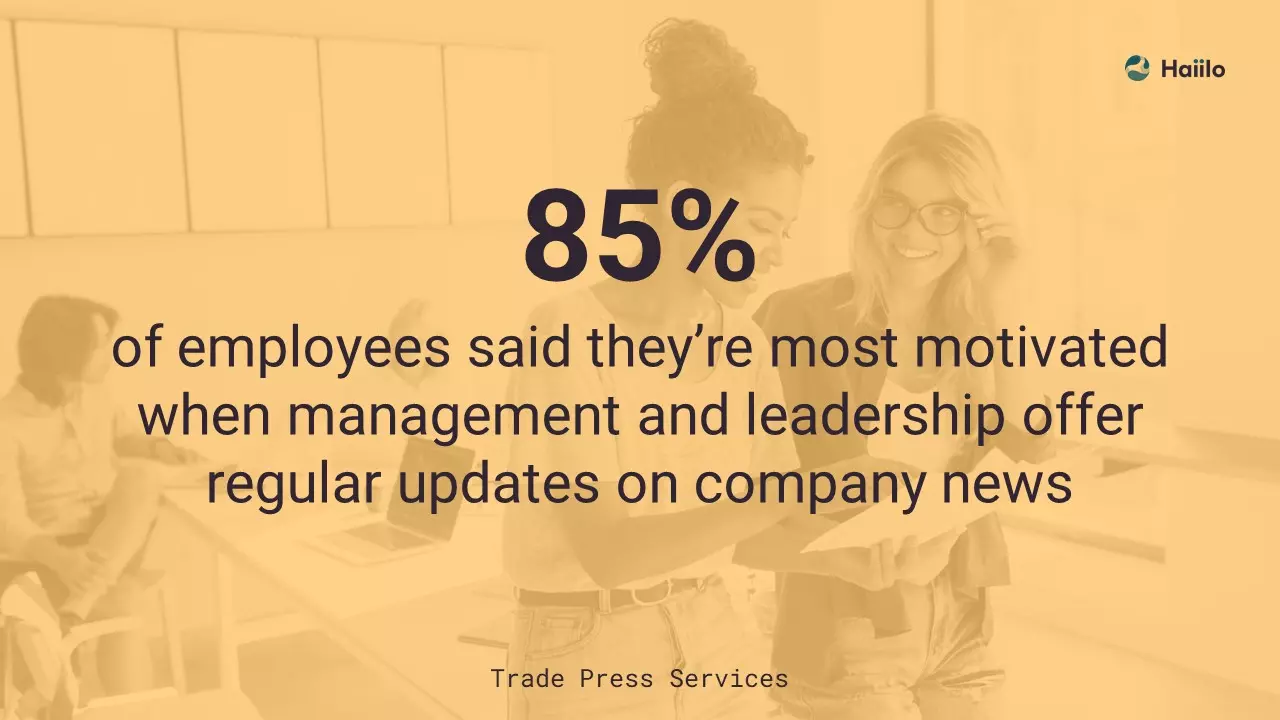
When employees feel like they are the part of daily company conversations and updates, they are more likely to be motivated to perform better at work and achieve their goals.
The feeling of being left out from important company happenings is one of the main reason for low motivation and engagement levels in the workplace.
With proper communication, managers can significantly improve their employees’ motivation which results in higher levels of engagement and productivity.
3. Employee engagement
Good manager communication is a great way to boost your employee engagement.
When employees are informed about important company updates and aligned with the company’s vision and goals, they are more likely to feel engaged and stay longer with the company. Therefore, manager communication has a direct impact on employee engagement.
4. Employee retention
Managers who focus on improving communication with and among their teams are much more likely to have lower employee turnover rates.
Informed employees who have good relationships with their managers are more satisfied with their jobs and are much less likely to seek other career opportunities.
Therefore, it is a manager’s job to keep employees in the loop and make sure that they have instant access to all important company information.

How Managers can Improve Communication with Haiilo
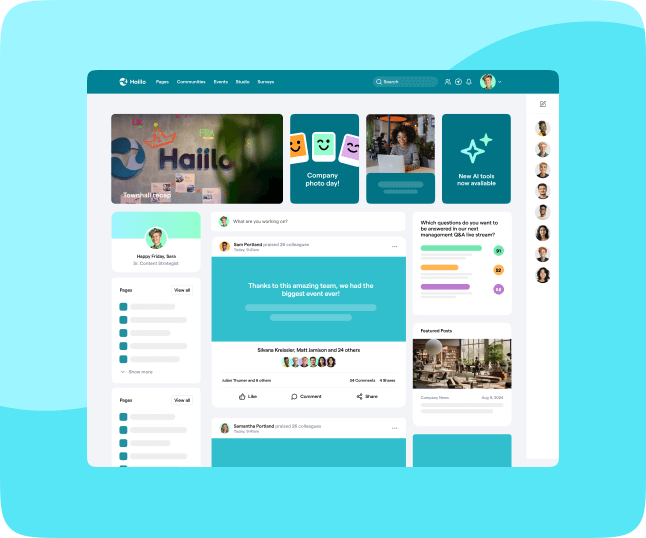
Haiilo is a mobile-first employee communications platform designed to help managers improve communication and better connect with their employees, no matter where they are located.
Today, many employees spend too much time searching for the information they need to do their jobs. This slows down work, creates frustration and leads to missed updates. To communicate to employees effectively, managers need to make this process more streamlined and effective so people can quickly find what matters.
With internal communications technology like Haiilo, managers and organisations can deliver personalised, relevant content directly to employees. This makes it easier to communicate in a more authentic way, reduce noise and ensure messages feel useful rather than overwhelming.
Haiilo also helps managers bring different communication channels into one place. Instead of switching between tools, employees can access updates, resources and conversations in a single platform. This reduces information silos, improves visibility and helps teams stay aligned and connected at all times.
When managers have the right tools, it becomes much easier to communicate to employees clearly, consistently and at scale. The result is less confusion, stronger engagement and better overall productivity.
Schedule a Haiilo demo to see how our solution is helping organizations across the world to boost their internal communications efficiency.
Curious to learn more? Check out our report on IC trends in 2023

FAQs: How to communicate to employees effectively
1. What is the best way to communicate to employees in a modern workplace?
The best way to communicate to employees today is to keep it clear, relevant and two-way. Employees don’t just want information — they want context and the ability to respond. That means combining structured updates with opportunities for feedback. It also helps to use a mix of channels so messages reach people where they already work. Platforms like employee communications tools bring everything into one place, making it easier to share updates, align teams and reduce confusion. If you’re building your approach from scratch, this guide on internal communication strategy is a good starting point.
2. Why do managers struggle to communicate to employees clearly?
Many managers think they’re communicating well, but employees often experience it differently. Research shows a clear gap between what leaders think they communicate and what employees actually understand [oai_citation:0‡axioshq.com](https://www.axioshq.com/insights/internal-communications-statistics?utm_source=chatgpt.com). The biggest issues are unclear messaging, too many channels and lack of consistency. To communicate to employees more effectively, managers need to simplify messages, repeat key points and make information easy to find. This article on internal communication challenges breaks down where things usually go wrong.
3. Which channels should managers use to reach all employees?
There’s no single best channel — it depends on your workforce. Desk-based employees may rely on email or intranet updates, while frontline teams need mobile-first solutions or digital signage. The key is to meet employees where they are and avoid forcing them to search for information. Tools like employee newsletters and digital signage help extend reach and reinforce key messages across locations. When managers use multiple, well-connected channels, it becomes much easier to communicate to employees consistently.
4. How does better communication impact employee engagement?
Strong communication has a direct impact on how employees feel and perform. When people understand goals and expectations, they’re more focused and productive. In fact, most employees say communication affects how well they do their job each day [oai_citation:1‡Sci-Tech Today](https://www.sci-tech-today.com/stats/communication-in-the-workplace-statistics-updated/?utm_source=chatgpt.com). It also plays a big role in onboarding and long-term engagement. Clear communication helps new hires settle in faster, as explained in this guide to the employee onboarding experience. When managers consistently communicate to employees in a clear and timely way, it builds trust, reduces frustration and keeps teams aligned.