
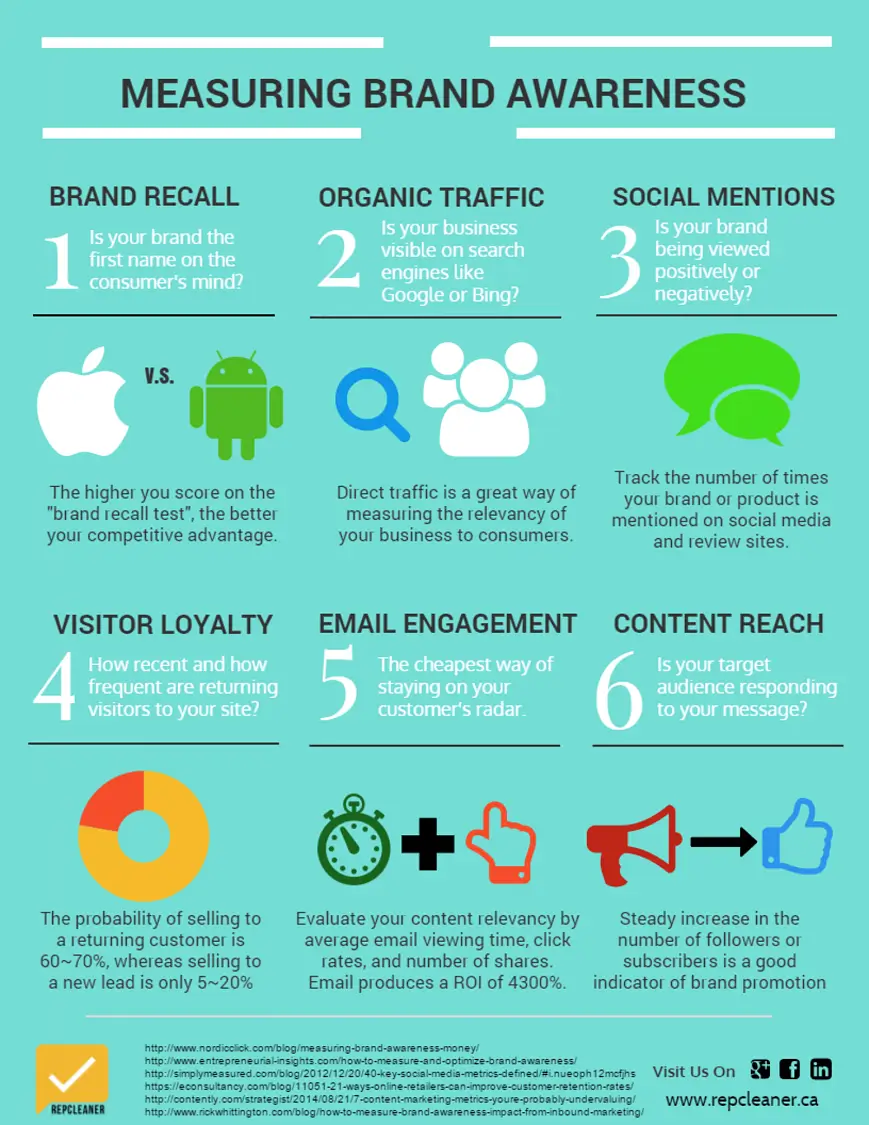
Measuring brand awareness is one of the trickiest marketing KPIs to track. However, according to recent research, 62% of CMOs now track brand awareness as a key outcome of their marketing activations — up from 42% last year — showing how important measurement has become in modern strategies. In this article, we present ten awesome ways to measure your brand awareness.
10 Ways to Measure Brand Awareness
Even though it is hard to measure brand awareness, we have made a list of the 10 best ways to measure brand awareness.
💡 Check out our article on Top Leadership Skills.
1. Study Growth in Direct Traffic
Recent studies indicate that branded search volume and other visibility metrics are central to modern brand measurement frameworks, with digital marketing strategies increasingly focused on searchable brand recall across platforms. Your web analytics program shows you the amount of direct traffic coming to your website. Reviewing the growth of direct traffic over a specific time period gives you information on your brand awareness growth.
The more people remember your brand, the more likely they are to directly type it in the search bar (or, broadly speaking, visit your website proactively).
Don’t get caught up in the rise or fall of relational traffic gain between direct traffic and other traffic. Instead, compare the amount of direct traffic to another time period.
Besides the amount, pay attention to bounce rate as well: as more people gain interest in your brand, they are likely to spend more time with you, and the number of instant bounces should be decreasing.
To make this insight more actionable, segment direct traffic by campaign periods, product launches, or PR pushes. A noticeable lift after a podcast feature or LinkedIn campaign often signals increased recall, not just clicks. Many brand awareness tools within platforms like Google Analytics or GA4 allow you to layer in new vs. returning users, branded search queries, and assisted conversions. When direct traffic rises alongside branded search volume, you have stronger evidence that awareness — not coincidence — is driving growth.


In the comparison period, traffic is 51 068, so 23 340 users higher, and the bounce rate is 75.39%, so 4.34% lower. This indicates a rise in brand awareness.
2. Measure and Study Referral Traffic
Another interesting metric to study in your Analytics is the amount and quality of referral traffic. Make sure referral traffic is constantly increasing, but make sure your traffic is valid and relevant to your website.
Referrals from penalized sources, for example, lower your quality score and while they cannot be seen by visitors, they make your own search visibility worse, which does not help with brand awareness! So don’t get lost in vanity metrics, but instead, do your research and focus on quality referrals.
Look beyond volume and examine which domains are sending traffic, what pages they link to, and how those visitors behave. Do they explore multiple pages? Do they convert? Strong referral traffic from respected industry publications, partners, or review sites often signals growing credibility. Many brand awareness tools, such as backlink analysis platforms, help you assess domain authority, anchor text, and link context so you can distinguish genuine reputation growth from random mentions.
Sometimes, your employees are your best referees. Try to engage them to become your brand advocates.
Get actionable insights and improve your brand awareness strategy with the right employee advocacy tool!
3. Track Your Earned Media Value
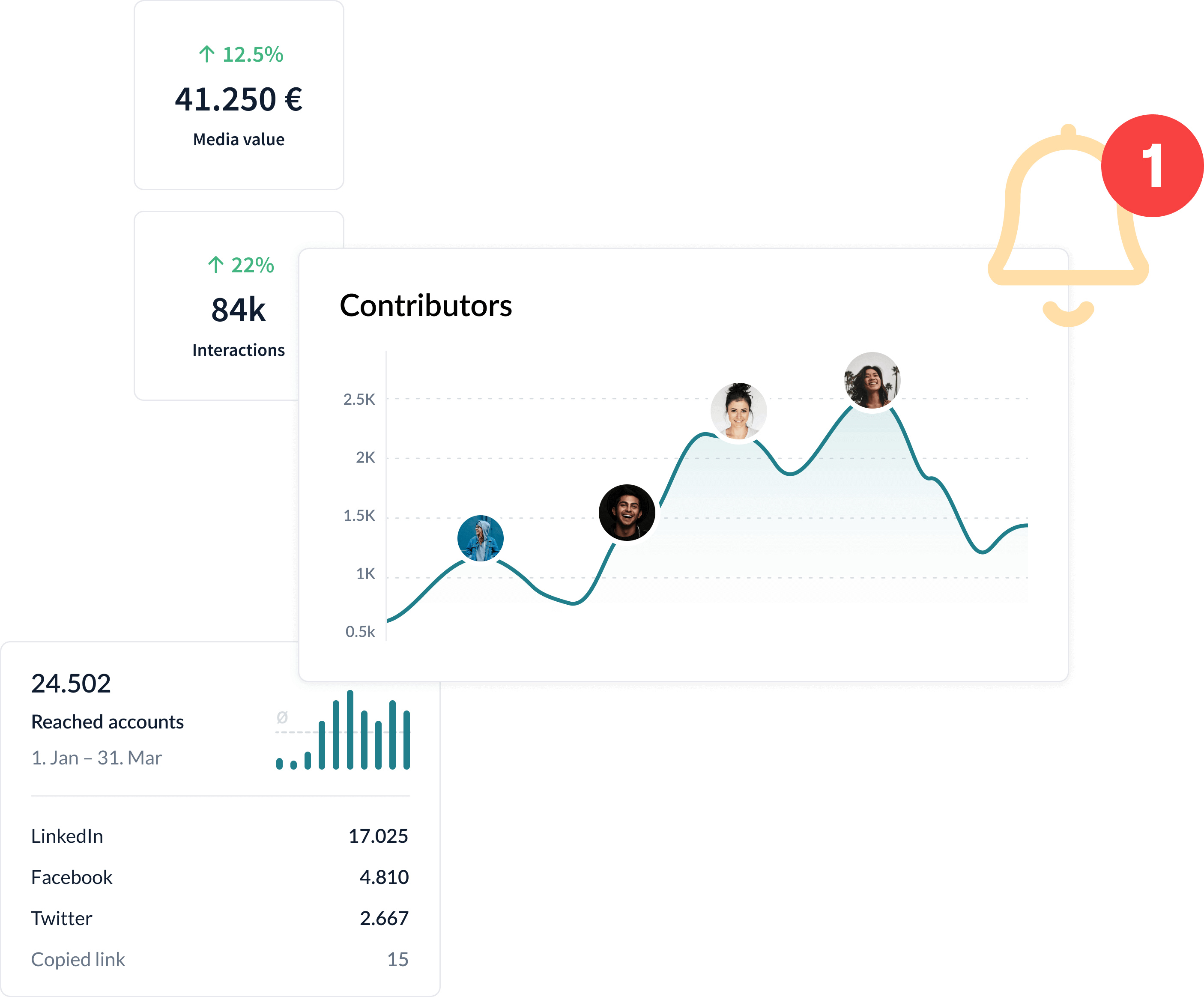
Earned media (or free media) is all the publicity your brand gets without paid forms. You can use social tracking tools to find out when, where and how often you have been mentioned. If you assign monetary values for mentions and engagement, you are able to track your branding effort ROI as well.
You can also use tools such as Haiilo Amplify, which calculate and visualize the estimated earned media value of your employee advocacy activities. The EEMV tracker estimates the value of the clicks the posts have generated by comparing the number of clicks to the price of Cost-Per-click (CPC) advertising on the matching social media networks.
4. Track Your Share of Voice
You can track your organic share of voice by analyzing your most important keywords in relation to your main competitors. For social media share of voice tracking, track the total mentions of your and your competitors’ mentions, and calculate how large a percentage of all the mentions are going your way – this is your social SOV percentage.
To get real value from this metric, break it down by topic clusters and campaign periods. Are you gaining visibility around high-intent keywords, or only broad industry terms? Modern brand awareness tools allow you to filter mentions by sentiment, location, and platform, giving you a clearer view of where your brand truly leads the conversation — and where competitors are outperforming you.
5. Compare Your Earned Media Value With Competitors
Increasing brand awareness is always a race to improve yourself, but you want to beat the competition too. Tracking for earned media value with regards to competitors allows you to focus on different things than when you track your share of voice.
Share of voice takes into account metrics such as your DA, paid and organic backlinks, and follower fan base. Earned media value gives you an idea of how valued, discussed and known your brand is without your other digital marketing efforts.
However, it does pay off to get a little nitty-gritty when comparing your earned media value against your competitors. Don’t only focus on the number of mentions, but study the context and the tone of the pieces you and your competitors are discussed in.
Check the average reader amount of different publications, and estimate the reliability and DA of the referring websites. Remember – when checking earned media value for brand awareness, quality and reach matter more than sheer quantity. Strong brand awareness tools can help you assign estimated media value, benchmark coverage quality, and identify which narratives position your brand as a leader rather than a follower.
6. Track Your Backlink Success
Track the rate of the backlinks you have organically gained, as well as the backlinks you have attempted to accrue as part of your marketing and PR strategy. You can also increase authority with link exchanges as another part of your backlink strategy.
These two different backlink types give you different information. An increase in your organically gained backlinks means your content is well-received and valuable, and your website seems like a reliable place to refer to.
However, if your backlink rate without any backlink effort is low, it might just be the correct audience has not found you yet, so you may have a problem with your SEO or social media marketing, instead of how well or poorly people receive your brand.
But how successful are you in getting the backlinks you go for? If it seems few people are interested in pursuing a link strategy with you, you might be offering the wrong type of content, or your website seems unreliable.
This might indicate problems in your market positioning and inabilities to communicate your brand in a clear way, which makes brand promotion much more difficult. Use brand awareness tools to monitor link velocity, referring domains, and anchor diversity over time — steady, natural growth often signals rising authority and recognition in your market.
7. Measure Social Media Activities
Social media is one of the best channels for increasing brand awareness.
Tracking the number of social media followers is one of the most straightforward ways how to measure brand awareness: the more followers, the better your brand awareness is.
In addition to the growth in social media follower base, keep a track on social media shares, likes, and comments. Remember to post often and useful content, with different content types, in order to attract good engagement and increase your social media reach.
All comments increase your reach, so post social messages with content that pushes people to engage, such as questions to your audience or occasional light-hearted content. Go one step further and analyze engagement rate per post, reach per follower, and saves or shares per content type. Many brand awareness tools reveal which formats — short videos, carousels, thought leadership posts — drive the strongest amplification beyond your existing audience.
8. Surveys
In 2024, 84% of marketers used surveys to measure brand awareness, and 76% of enterprises reported using social listening tools to monitor awareness and sentiment trends — highlighting how common these brand awareness tools have become in performance measurement.
You can have questionnaires in your website, asking how visitors found you, or if they had heard of you before. You can also ask your current customers when they became aware of your brand. But remember not to annoy prospects or customers, and keep the customer questionnaires short, simple and rewarding.
Another survey type could be asking a random set of people if they have heard of your brand, and what images does your brand create in their minds. You can do this by using a PR agency or by hosting a social media campaign, for example.
Do the research in regular intervals while keeping your target group and geographical location the same, and you will gain important information on your brand awareness growth. Combine this qualitative insight with data from brand awareness tools to compare perceived reputation with actual online visibility — discrepancies often reveal messaging gaps.
9. Search Popularity
Search for your brand and your competitor’s brand, as well as some other top keywords with a Keyword tool. This strategy is a great way how to measure and track your brand awareness.
Most programs only offer the option for searching over a limited time period such as three to six months, so store your findings in order to track for the increase of branded searches over a longer time period. Pay attention to homonyms and include typos in your searches for better insights. Rising branded search volume — especially when supported by insights from SEO-focused brand awareness tools — is often one of the clearest signals that more people actively remember and look for your company.
10. Employee Brand Advocacy Metrics
Messages shared by employees usually have a higher reach and engagement than corporate messages, but measuring Employee Advocacy program success can be tricky.
If you have an Employee Advocacy software or a content hub with an Employee Advocacy functionality, you’ll be able to track your employee brand ambassador program success easily. To find a step-by-step guide to do this, see this post:
Using Analytics to Measure Your Employee Advocacy Program Success
Employee brand advocates are good for both Employer Branding and increasing general brand awareness, so make sure you keep your employees happy and engaged, and they are sure to help you increase your brand awareness. Track metrics such as total employee reach, engagement per shared post, and traffic driven to key landing pages. When aligned with other brand awareness tools, these insights clearly demonstrate how internal advocacy contributes to measurable external visibility.
Learn how to choose the best employee advocacy software with our simple checklist!