In today’s workplace, getting a message out is easy. Making sure everyone actually sees it is the real challenge. That’s where multi-channel communications comes in.
Let’s say it’s Monday morning and your CEO has an urgent announcement. Maybe it’s a leadership change or a critical operational update. Either way, the message matters — a lot.
But by lunchtime, only half the company has seen it.
Some missed it because they never check the intranet. Others because the email disappeared under a pile of meeting invites, Slack notifications, and “just one quick question” replies. A few frontline employees didn’t see anything at all because they weren’t near a laptop when the message went out.
The message that was meant to inform and reassure has instead fractured and fizzled. Rumors start. People fill in the gaps themselves. Productivity drops. Trust takes a hit.
This isn’t a messaging problem. It’s a distribution problem. And it’s exactly why multi-channel communications matters — and why single-channel communication no longer works in modern workplaces.
💡Read: The 2026 guide to good internal comms
What is multi-channel communications?
Multi-channel communications is the practice of delivering the same message across multiple channels at the same time — email, intranet, chat tools, push notifications, digital signage, newsletters, and even SMS — so you reach employees wherever they already are.
Instead of forcing everyone to come to one destination for information, you bring information to them.
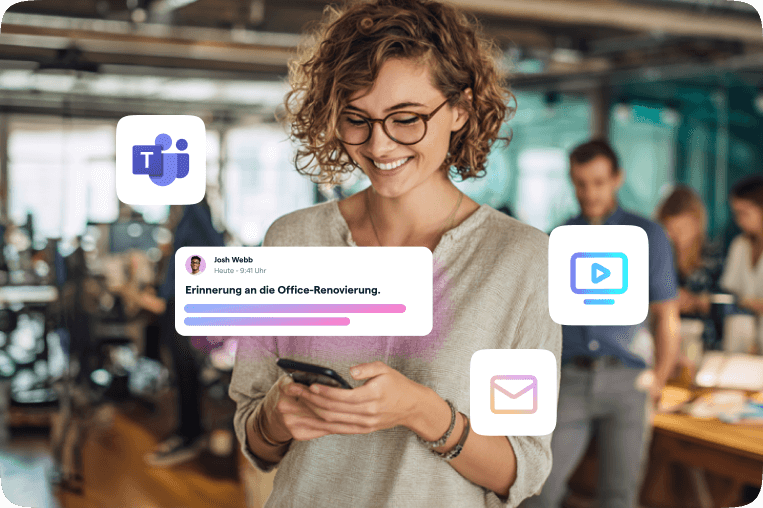
You publish once, then distribute across channels that reflect how people actually work. Office-based employees might see the message via email and Teams. Frontline employees might catch it on digital signage or a mobile push notification. Remote employees might see it via an app or chat channel.
The goal isn’t to be everywhere for the sake of it. It’s to ensure reach, consistency, and clarity, regardless of role, location, or device.
💡Read: The Haiilo guide to flow in the workplace
Why single-channel communication breaks down
Most internal communication failures aren’t caused by poor messaging. They happen because messages don’t reach the people who need them.
1. Limited reach means limited impact
According to Gallup’s State of the Global Workplace, only 41% of employees strongly agree they know what their organization stands for and where it’s going, pointing directly to gaps in communication reach and clarity.
Traditional email- or intranet-first strategies routinely miss employees who don’t sit at desks all day. Research estimates that 70–80% of the global workforce is deskless, yet most internal communications are still designed with desk-based workers in mind.
If your message can only be accessed behind a login on a laptop, you’ve already lost most of your audience.
2. Missed messages hurt engagement
Organizations can find just how successful multi-channel communications are vs single channel in marketing. Multichannel marketing consistently outperforms single-channel approaches, with studies showing that using three or more channels can lead to 287% higher purchase rates
That increase isn’t because the message is better. It’s because people notice information at different times, in different contexts, and on different devices.
3. Delays create real risk
In time-sensitive situations, delays aren’t just inconvenient — they’re risky.
Research shows that organizations using multi-channel alerting systems reduce emergency response times compared to single-channel approaches⁴.
When safety, compliance, or operations are on the line, waiting hours for someone to “eventually check their inbox” simply isn’t an option.
💡Read: The Digital Workplace Problem Report
Multi-channel communications reflects how people actually work
The modern workday is fragmented. Employees switch between tools, devices, and locations constantly. Microsoft’s Work Trend Index shows that employees now receive over 250 messages per day across email, chat, and collaboration tools, making attention a scarce resource.
Multi-channel communications doesn’t fight that reality — it works with it.
Instead of competing for attention in one overcrowded space, messages are reinforced naturally across channels employees already trust and check.
💡Read: How Digital Signage reaches all your workforce
Why multi-channel communications matter in real life
Picture this:
It’s 7:45 a.m. You manage operations across offices, warehouses, and production floors. A core system goes down. Orders could ship incorrectly. Safety checks could be skipped. The clock is ticking.
With email alone, some employees won’t see the update for hours — if they see it at all.
With a multi-channel communications approach:
- Push notifications reach mobile employees instantly
- Digital signage updates in breakrooms and corridors
- A banner appears on the intranet homepage
- A Teams message confirms next steps and allows questions
Within minutes, everyone knows what’s happening and what to do.
Same message. Completely different outcome.
Why employees connect better when communication goes multi-channel
Repetition without redundancy
People need reminders, not spam. Seeing the same message in different formats improves recall without overwhelming employees.
Contextual relevance
An email is useless on a factory floor. Digital signage does nothing for remote workers. Multi-channel communications respects these differences instead of pretending they don’t exist.
Trust through visibility
When messages consistently reach everyone, communication feels fair and transparent. According to Edelman’s Trust Barometer, frequent and open communication from leadership is one of the strongest drivers of employee trust.
💡Read: How SOS Kinderdorf strengthens connection and retention with Haiilo comms

From chaos to clarity: a multi-channel moment
A leadership update goes out:
- 9:00 AM – Email lands in inboxes
- 9:05 AM – Push notification hits mobile devices
- 9:10 AM – Digital signage displays the headline
- 9:15 AM – Teams message invites discussion
By 9:20 AM, office, remote, and frontline employees are aligned.
That’s the practical power of multi-channel communications.
How Haiilo Content Studio supports multi-channel communications
Knowing why multi-channel communications matters is one thing. Making it work without creating more work is another.
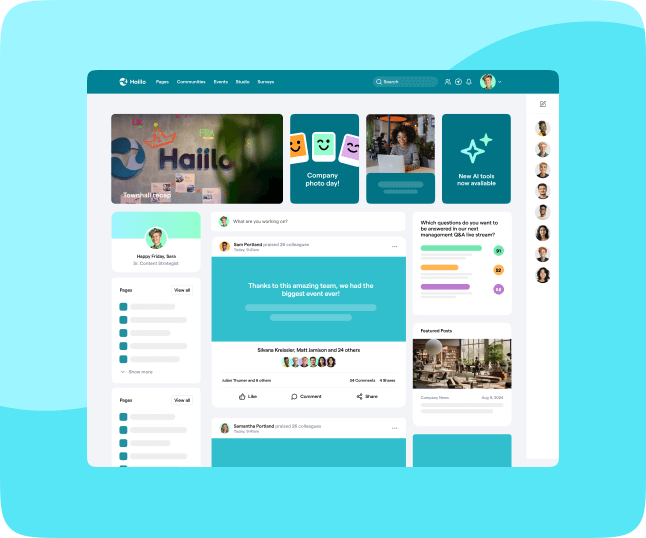
Haiilo Content Studio acts as a single hub for creating, coordinating, and publishing internal communications across all channels — without copy-and-paste chaos.
With Haiilo Content Studio, teams can:
- Create once and publish everywhere
- Reach office, remote, and deskless employees
- Collaborate, review, and approve content in one place
- Track engagement and continuously improve reach
Every message gets the attention it deserves.
Every message should matter
In a distributed, distracted workplace, multi-channel communications isn’t a nice-to-have — it’s essential.
It reduces confusion. Speeds up response times. Improves engagement. Builds trust.
And when someone asks, “What is multi-channel communications and why does it matter?”
The answer is simple: it’s how you make sure every message actually lands.
FAQs
What is the difference between multi-channel communications and omnichannel communications?
Multi-channel communications means using several channels at once to distribute the same message. Omnichannel goes a step further by deeply integrating those channels so interactions flow seamlessly between them. For internal communications, multi-channel is often the most practical and effective starting point.
How many channels should an organization use?
There’s no magic number, but most high-performing organizations use three to five core channels. The key isn’t volume — it’s relevance. Focus on channels your employees already use and trust.
Does multi-channel communications mean more work?
Not if it’s done right. The right platform allows teams to create once and distribute everywhere, often reducing manual effort compared to managing channels separately.
Can multi-channel communications reduce email overload?
Yes. When important updates are reinforced through other channels like push notifications, chat tools, or signage, email doesn’t have to carry the full burden — leading to fewer follow-ups and less inbox fatigue.
Is multi-channel communications only for large companies?
No. Smaller organizations often see impact even faster because fewer tools and clearer audiences make adoption simpler. The challenge isn’t size — it’s fragmentation.
How do you measure success?
Success is measured by reach, engagement, speed, and understanding. Built-in analytics can show which channels perform best and where communication breaks down.