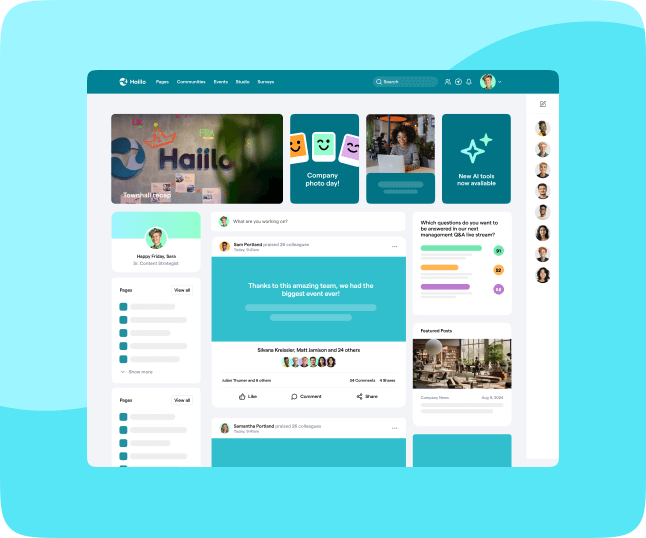

How to improve communication in the workplace? We share in this blog post 5 internal communications best practices to help employees stay informed, aligned, and up to date with company news and industry trends.
When employees are not aware of what’s happening in the company or feel like they’re missing out on important updates, it quickly affects their experience at work. Poor internal staff communication can lead to confusion, lower trust, and reduced engagement. Over time, employees may feel disconnected from the business and frustrated by the lack of clarity around decisions, priorities, and changes.
Internal Communications in the Workplace: Definition
Internal communications include all the transmissions of information between the members of an organization. In other words, internal communications are the way a company interacts with its people—from leadership updates and team collaboration to everyday messages that keep everyone aligned and moving in the same direction.
When it comes to internal communications (IC), you need to make sure they deliver your messages to employees clearly and consistently. Strong internal staff communication ensures people understand not just what is happening, but why it matters. Internal communications, or IC, include horizontal and vertical communications, both of which are essential for keeping teams aligned across all levels of the organisation.
Read more: Who is Responsible for Internal Communication?
Without a clear internal communication strategy in place, employees often struggle to find the information they need to do their jobs effectively. This leads to wasted time, duplicated work, and unnecessary frustration. When communication is scattered across too many channels or lacks structure, productivity naturally suffers.
On the flip side, effective communication plays a critical role in driving employee engagement. When people feel informed, heard, and connected to the business, they are more likely to contribute, collaborate, and perform at their best. Strong communication creates clarity, builds trust, and helps teams stay focused on shared goals.
Internal communications are key to shaping an engaged and informed workforce. But even the best strategy will fall short if employees don’t actually use the tools and channels available to them. To succeed, your approach must encourage consistent adoption of the internal communication solutions you’ve identified as most valuable for your organisation.

Also, not every organization faces the same internal communications challenges. Different team structures, company sizes, and ways of working all influence how communication flows and where gaps appear.
However, there are still a number of must-follow best practices that apply across the board. These are especially important for every internal communications professional looking to improve clarity, consistency, and engagement through better internal staff communication.
Best Practice #1: Build a Solid Internal Communication Plan
Remember that your internal communication channel is just the means to an end. Simply setting it up won’t instantly improve how informed or engaged your employees feel. And unless people actually use it, team members still won’t have easy access to the information and resources they need to do their best work.
You’ll need to approach your internal communication the same way you approach any other aspect of your business – strategically. That means thinking beyond tools and focusing on purpose, structure, and outcomes.
Related: 4 Ways to Use Internal Communication to Kickstart Innovation in Your Company
First, you’ll need to set specific goals and clearly define what messages you want to share with your employees, why those messages matter, and how often communication should happen. Consistency is key to building trust and keeping everyone aligned.
Meeting with your key stakeholders will help you understand what content they need for their teams, as well as the challenges they face when sharing information. This allows you to deliver communication that is timely, relevant, and genuinely useful. As a result, employees are more likely to engage and stay in the habit of keeping up with updates.
Building a solid and clear internal communication plan also ensures that no group is overlooked. Whether it’s frontline workers, remote employees, or specific departments, a structured approach helps you reach everyone and prevents people from feeling disconnected from your organization.
We summarize in the infographic below how an internal communication solution such as an internal content hub can help you:
- Improve employee communication across teams and locations
- Increase employee engagement
- Strengthen your social recruiting strategy
- Increase your brand awareness & build a strong employer brand

Still don’t have an internal content hub, yet?
Check out Haiilo to create your easy-to-use content hub today
Best Practice #2: Segment Your Content
Many internal communication tools segment content based on broad categories—such as whether it’s meant to be shared internally or externally.
However, this approach is too generic to be effective. To improve internal staff communication, you need to go further. Instead, you should categorize your content based on employees’ roles, departments, locations, and the topics they actually care about. This ensures people receive information that is relevant to their day-to-day work.
Related: Why Your Employees Are Missing Out on Important Information
If you don’t take into account your employees’ roles, interests, or even the language(s) they prefer, they will continue to receive notifications that don’t apply to them. Over time, this creates noise instead of value.
When employees are constantly interrupted by pings and alerts that don’t matter, it breaks their focus and slows them down. Eventually, they begin to ignore notifications altogether or stop engaging with the content you share.
This not only reduces employee engagement but can also negatively impact employee productivity. Targeted, well-segmented communication helps cut through the noise, keeps employees informed, and makes your messaging far more effective.

The optimal approach is to segment content across multiple channels, each dedicated to a specific topic your employees need to stay informed about. This makes your internal staff communication more structured, easier to navigate, and far more relevant to each individual.
Each employee can then choose which channels they want to subscribe to, giving them control over the flow of information they receive in their news feed. This level of personalisation helps reduce noise and ensures that communication feels useful rather than overwhelming.
Related: Tom Haak on How to Improve Internal Communications in the Workplace
When employees know they will only receive relevant and interesting updates, they are more likely to pay attention. Over time, this builds confidence that time spent engaging with the content you share with them will be time well spent, rather than a distraction from their core tasks.
When you segment your content by topic, you can also introduce a mandatory channel for critical company-wide updates. This ensures that essential information—such as major announcements, policy changes, or leadership messages—reaches everyone without getting lost in the noise.
As long as this channel is used sparingly and only for truly important updates, employees will come to trust it as a reliable source of must-read information rather than something to ignore.
Best Practice #3: Encourage Employee Input
Your employees should be able to use your internal communication channel not just to consume information, but to actively participate. Encourage them to share updates, provide feedback, ask questions, collaborate with teammates, and build stronger connections across the organization.
This two-way approach strengthens internal staff communication by making it more inclusive and transparent. Employees feel heard, valued, and more connected to what’s happening around them.
This is especially important for remote workers, who can otherwise feel disconnected from the company culture. It’s equally valuable for larger organizations with offices spread across different locations, where open communication helps bridge gaps and create a more unified workforce.

To help your employees adopt your internal communication channel, make sure it feels like a safe and supportive space. Employees should feel comfortable sharing ideas, asking questions, or raising concerns without fear of negative consequences. Psychological safety is essential for strong internal staff communication and open dialogue.
Encourage employees to create posts where they can share key learnings, insights, and best practices with their teammates. This not only spreads knowledge but also gives employees a sense of ownership and recognition.
Related: How Employee-Generated Content Can Enhance Your Content Marketing Strategy
You can also position your communication channel as a resource center where employees can easily access useful and educational content. This might include guides, onboarding materials, or updates on industry trends that help them stay informed and grow in their roles.
Segmenting content by topic also makes it easier for employees to connect with others who share similar interests or responsibilities. This encourages more meaningful conversations and helps build stronger relationships within smaller, more relevant groups.
Best Practice #4: Acknowledge Your Employees’ Efforts and Make Internal Communications Fun!
Feeling appreciated is important to everybody, and your employees are no exception.
Your internal communication channel is the perfect place to publicly recognize your employees’ hard work and reinforce a positive company culture. Regular recognition shows that contributions matter and motivates others to get involved.
Related: Building a Company Culture that Drives Employee Engagement
It also creates a positive association with the channel itself. When employees see it as a place where achievements are celebrated, they are more likely to engage and feel personally invested in your business success.
What’s more, adding an element of fun can significantly increase participation. Use contests, polls, or quick surveys to spark interaction and give employees a reason to return regularly and join new conversations.
Don’t forget to vary your content formats. Using videos, interactive newsletters, and infographics helps keep communication fresh, engaging, and easier to consume—so your updates don’t become repetitive or easy to ignore.

Varied formats help keep your employees engaged, especially when the subject matter is complex or difficult to digest. Mixing formats makes content easier to understand and more appealing to different learning styles, which is key for effective internal staff communication.
Some studies have shown that younger employees, in particular, are more likely to engage with content that tells a clear and compelling story. Instead of simply sharing information, focus on creating a narrative that explains the context, highlights the impact, and makes the message more memorable.
Related: Sara McGuire on Why Visual Storytelling Drives Higher Engagement
Best Practice #5: Measure the Effectiveness of Your Internal Communication
Without tracking the effectiveness of your internal communication strategy, you won’t know what’s working and what needs to improve. Measurement is essential if you want to strengthen internal staff communication and increase adoption across the organization.
First, you’ll need to set KPIs. Choose metrics that help you understand what topics your employees care about, which formats perform best, and how actively people engage with your content.
For example, you can track:
- Behavioral metrics: How many employees view each post? Which ones get the most views? What is the average time per visit?
- Attitudinal metrics: Do employees interact with the content you share? Do they leave comments, react, or provide feedback?
- Technical metrics: Does your content load quickly? Is it accessible across devices and kept up to date?
Once you have set your KPIs, review them regularly—monthly or quarterly—to spot trends and adjust your approach. Continuous improvement ensures your communication stays relevant, effective, and aligned with employee needs.
📹Watch our online session about what Internal Communications should be measuring.
Related: Top 5 Communication Skills and How to Improve Them
10 Interesting Facts About Internal Communications Best Practices
Internal communications play a very important role in driving employee engagement and company success. Hence, following the best practices is crucial.
Take a look at some statistics to learn about the power of internal communications and how to improve it.
- 60% of companies don’t have a long-term strategy for their internal communications. (Workforce)
- 74% of employees feel they are missing out on company information and news. (Trade Press Services)
- 72% of employees don’t have a full understanding of the company’s strategy. (IBM)
- 86% of employees and executives cite lack of collaboration or ineffective communication for workplace failures. (Salesforce)
- 33% of employees said a lack of open, honest communication has the most negative impact on employee morale. (Recruiter)
- More than 80% of Americans say employee communication is key to developing trust with their employers. (Lexicon)
- Businesses with effective communication are 50% more likely to have lower employee turnover. (Clear Company)
- 60% of companies have no long term strategy in place for their internal communications. (PR News)
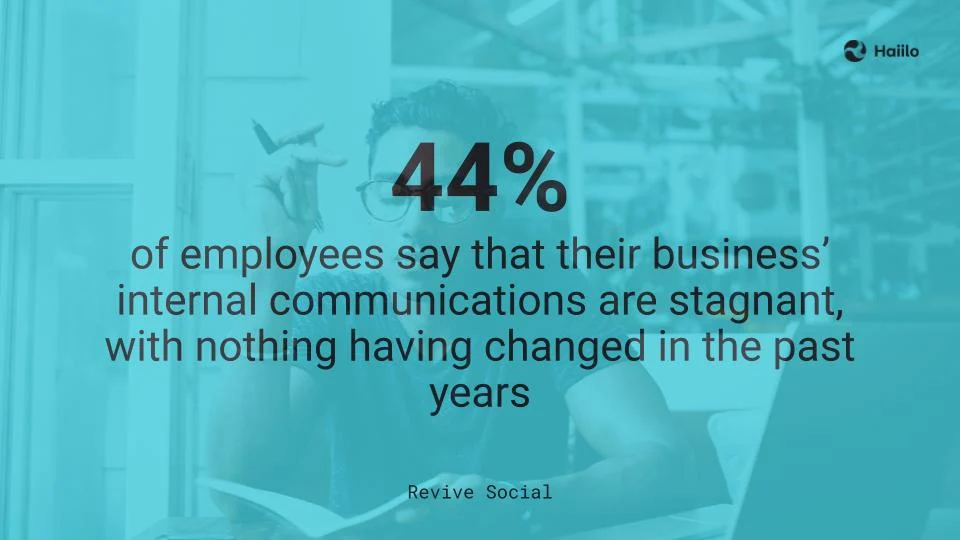
- 44% of employees want a wider adoption of internal communication tools.
- When it comes to the pandemic more than 90% of employees said they wanted weekly communication from their company. (HBR)
Your Guide For Internal Communications
To make sure that your employees engage with the content you share with them, you’ll need to define a clear internal communication plan, build a great content strategy, and have the right tools in place.
When it comes to internal communications, there’s always room for improvement so don’t forget to set clear and measurable KPIs! That way you can review them on a regular basis and figure out how you can improve your internal communication.
FAQ
What is internal staff communication and why does it matter?
Internal staff communication refers to how information, updates, and feedback flow within an organisation—from leadership to employees and between teams. It includes everything from company announcements to day-to-day collaboration. When done well, it keeps employees informed, aligned, and connected to business goals. Strong communication also builds trust, reduces confusion, and helps teams work more efficiently. (HubEngage)
What are the biggest challenges in internal staff communication?
Common challenges include information overload, unclear messaging, and using too many disconnected tools. When employees receive irrelevant updates or struggle to find what they need, engagement drops quickly. Poor internal staff communication can also lead to silos between teams and misunderstandings that slow down decision-making. A clear strategy and better content targeting can solve most of these issues. (HubEngage)
How can you improve internal staff communication quickly?
Start by simplifying your approach. Focus on clear messaging, fewer channels, and more relevant content. Segment communication by role or topic so employees only see what matters to them. Encourage two-way communication so employees can give feedback and share ideas. Even small improvements—like clearer updates or better timing—can make communication more effective almost immediately.
How do you measure the success of internal staff communication?
To measure success, track both engagement and behaviour. Look at metrics like content views, time spent, and interaction rates to see what employees are paying attention to. Combine this with feedback—such as surveys or comments—to understand how communication is perceived. Regularly reviewing these insights helps you refine your approach and ensure your internal staff communication stays relevant and effective.