
How to build a brand awareness strategy that works? How do you identify the right tactics to make your brand more recognizable and reach a wider audience? And how do you ensure your brand feels credible and trustworthy from the first interaction?
These are some of the core questions we’ll explore in this blog. Keep reading to discover 8 best ways to boost your brand’s recognition, strengthen your visibility, and support long‑term growth through effective brand awareness marketing.
What Should Every Brand Awareness Strategy Entail?
Even though there’s no single definition of brand awareness, the idea is simple and widely understood:
Brand awareness is the extent to which people are aware of (or recognize) your brand.
A strong brand awareness strategy is a key part of any marketing plan. It helps you understand how people discover your brand, what they remember, and how they talk about you. To build a strategy that works, you need to answer questions such as:
- What are our goals and KPIs, and how do they support long‑term visibility?
- Who is our target audience (buyer persona), and what motivates them?
- How can we reach our target audience most effectively and consistently?
- Which channels, marketing tactics, and specific campaigns align with their behaviour?
- What type of content resonates most with them and supports brand awareness marketing?
- How will we measure the success of our brand awareness strategy and refine it over time?

When building a brand awareness strategy, many marketers struggle with setting the right measurements and KPIs. Most teams are evaluated on conversions, yet it’s not always possible to put a number behind a brand awareness campaign.
For example, it’s difficult to define a clear ROI for activities such as buying billboard space or running broad awareness display campaigns. These tactics often influence perception and visibility over time rather than driving immediate conversions.
Still, brand awareness activities should not be overlooked. They play a long‑term role in shaping how people discover, remember, and trust your brand. Strong visibility supports every other part of your marketing strategy and helps your audience feel more familiar with your business before they ever convert. Many marketers agree that branding is essential for long‑term growth, especially when competing in crowded markets where differentiation matters.
Why Is It Important to Have a Brand Awareness Strategy
Building a strong brand remains a top priority for marketers around the world. A recognizable brand helps people understand who you are, what you offer, and why they should trust you. There is plenty of evidence showing that consistent visibility and clear messaging influence how people make decisions and which companies they choose to engage with.
This is why having a structured brand awareness strategy is essential. When you understand your audience and deliver personalized content through the right channels, you can strengthen recognition, support your sales efforts, and create more predictable revenue over time. A thoughtful approach to brand awareness marketing also helps you stay top‑of‑mind during longer buying cycles.
Additionally, many companies invest in brand building to attract investors. A strong, recognizable name often signals stability, credibility, and long‑term potential. While specific numbers vary across studies, investor sentiment consistently shows that familiarity and trust play a meaningful role in decision‑making. Clear positioning and consistent communication can therefore support both customer growth and investor confidence.

Building the right brand awareness strategy can also boost customer loyalty and increase loyal customers’ overall spending. Research consistently shows that when people feel connected to a brand, they are more likely to choose it repeatedly and explore more of its products or services over time.
Last but not least, strong brands are much more successful in attracting and retaining their employees because they have strong employer brands as well.
Many job seekers actively look at a company’s reputation, culture, and values before deciding whether to stay where they are or move on. A strong, well‑known brand can make it easier to attract qualified candidates, shorten hiring cycles, and reduce the long‑term costs related to recruitment and training, as people are more likely to stay with an employer they trust and feel proud to represent.
8 Ways to Boost Your Company’s Brand Awareness
There are many different ways to boost your company’s brand awareness. However, there are certain tactics that should make it to the list of every brand awareness strategy and every brand awareness marketing plan.
Let’s take a look at them.
1. Build a recognizable and consistent brand
First and foremost, it is crucial that your brand is recognizable, unique, and consistent across various marketing channels.
According to numerous psychological studies, color and visual identity can have a strong impact on how people notice and remember brands. When defining your brand, be careful about choosing colors, typography, and imagery, as they can significantly improve brand recognition and help you stand out in a crowded market.
Furthermore, make sure that your brand’s style and appearance are consistent. Presenting your brand in a unified way across all platforms supports revenue growth, builds trust, and makes it easier for people to recognize you at a glance. Yet many employees still feel that leadership, corporate communications, HR, and marketing don’t always speak about their brand with a unique voice, which is why clear guidelines and internal alignment are so important.
2. Experiment with paid advertising
Paid advertising on channels such as Google or social media is probably the fastest way to boost your brand’s recognition and reach a wide audience. This is particularly true for display campaigns and social media marketing, where you can quickly test different messages and creative formats.
To get the most out of your paid ads strategy, make sure that you understand your audience, choose the right channels, and set up proper targeting on these platforms.
When done well, paid campaigns can significantly increase brand awareness, support your organic efforts, and keep your company visible throughout the entire customer journey. This makes them a powerful part of any modern brand awareness marketing strategy.

💡 Learn about the best ways to boost engagement on your social media profiles!
3. Invest in SEO and content marketing
Many businesses today rely on SEO and content marketing as core parts of their branding efforts. These channels help you build long‑term visibility, attract qualified traffic, and strengthen your overall brand awareness marketing strategy.
Compared to paid ads, SEO and content marketing take longer to show results, but the impact compounds over time. High‑quality content continues to work for you long after it’s published, helping you reach people at different stages of their decision‑making process.
Most people use Google to research products, compare solutions, and evaluate brands. Ranking well in search results is therefore a crucial part of any brand awareness strategy, as it increases your chances of being discovered by the right audience at the right moment.
Brands that publish helpful, relevant content also tend to build stronger trust with their audiences. This often leads to more organic traffic, more inbound leads, and better engagement across other marketing channels.
💡 Also check our guide for generating more high quality leads!
4. Investigate joint co-marketing activities
There are likely many brands with the same target audience as yours, even if they don’t compete with you directly. Partnering with them can help you leverage each other’s existing networks and reach new audiences faster.
For example, if your company produces baby strollers, you could run co‑marketing campaigns with brands that sell complementary baby products such as toys or accessories.
If you’re in a B2B tech business targeting developers, you could collaborate with another tech company that also serves developer communities. Joint webinars, shared content, or bundled offers can help both brands expand their reach.
Whatever your use case is, co-marketing is a great way to boost your brand awareness strategy and reach audiences you may not access on your own.
5. Leverage influencer and customer marketing
Influencer marketing has continued to grow in popularity over the past decade, and it remains a powerful way to increase visibility and credibility. Many marketers report that influencer partnerships help them reach new audiences, build trust faster, and create more authentic content that resonates with potential customers.
Customer marketing is equally important. Real stories, testimonials, and user‑generated content often perform better than branded messages because they feel more genuine. When people see others sharing positive experiences, it reinforces trust and strengthens your brand awareness marketing efforts.

In B2C business, micro and nano influencers are now particularly popular in social media marketing. These influencers know how to build trust with their audiences, and their recommendations often feel more authentic than traditional ads. As a result, they can meaningfully influence buying decisions and help brands reach niche communities that are otherwise difficult to access.
6. Build an employee advocacy program
One of the most efficient yet least expensive ways to boost your brand’s reach and recognition is employee advocacy. This is particularly true for large organizations with thousands of employees who engage in social selling activities. Having employees act as brand ambassadors is like a goldmine; they can use their own networks to talk about your products and services, share company updates, and attract new customers in a natural, credible way.
Research consistently shows that people trust employees more than corporate messaging, especially when evaluating a brand’s values, culture, and expertise. Strong advocacy programs also help companies expand their reach far beyond what corporate channels can achieve alone, making them a powerful part of any brand awareness marketing strategy.
Many organizations also see long‑term benefits such as improved employer branding, stronger internal engagement, and more consistent brand storytelling across teams. When employees feel informed and empowered, they become some of the most effective communicators a brand can have.
Impressive isn’t it?
7. Pay special attention to customer service
Exceptional customer service is one of the strongest drivers of brand loyalty and positive word‑of‑mouth. People remember how a brand makes them feel, and helpful support teams often play a major role in shaping that experience.
Moreover, some brands are best known for their outstanding customer service. Providing a smooth, friendly, and reliable customer experience can become one of the most effective brand awareness and brand recognition strategies, especially in competitive markets where products and prices are similar.
Even though every company should care about their customers, not all organizations treat customer service as a core marketing tactic. On the other hand, brands like Zappos have built their entire reputation around delivering an exceptional experience at every touchpoint, showing how powerful service can be in shaping long‑term loyalty.
8. Don’t forget about offline marketing
For some industries, offline marketing such as print, radio, events, and TV remains highly effective. These channels can help you reach audiences who may not be active online or who respond better to traditional media.
When combined with digital efforts, offline campaigns can reinforce your message and create a more memorable brand experience. For example, TV or radio ads can spark curiosity, while online channels capture interest and drive further engagement. This integrated approach often leads to stronger brand recall and more consistent visibility across touchpoints.
If you are in the retail industry or targeting an older demographic, offline channels may still be the most reliable way to reach and influence your audience. The key is to understand where your customers spend their time and tailor your brand awareness strategy accordingly.
The Power of Brand Ambassadorship In Building Brand Awareness
As mentioned earlier, brand ambassadorship can be the best way to improve your brand’s awareness and reach your target audience. Brand ambassadors can be influencers, your customers, or your own employees — all of whom bring authenticity and trust that traditional advertising often lacks.

When it comes to influencers, they can be quite expensive, while customers may be hard to engage with. On the other hand, many employees are already acting as your ambassadors without you even realising it — and without your organisation fully understanding the impact of their advocacy.
In order to make employee brand advocacy work, it’s important to build a structured program rather than relying on ad‑hoc enthusiasm. A strong program typically includes clear guidelines, practical resources to help employees share content confidently, and recognition systems that celebrate your most active ambassadors. It should also include a way to track the impact of advocacy on brand awareness, reach, and engagement so you can understand what’s working and where to improve.
However, without the right technology, managing all of this becomes nearly impossible. A dedicated platform helps you centralise content, simplify sharing, ensure compliance, and measure results — turning employee advocacy from a manual effort into a scalable, strategic part of your brand awareness marketing.
Frequently Asked Questions About Brand Awareness Marketing
1. What is brand awareness marketing and why is it important?
Brand awareness marketing focuses on making your brand easier to recognise, remember, and trust. It’s not just about visibility — it’s about shaping how people perceive you across every touchpoint. Strong awareness helps you stand out in competitive markets and improves long‑term growth. If you want to understand how your brand compares to others, this guide on share of voice is a great starting point.
2. How can I measure whether my brand awareness marketing is working?
Measuring brand awareness can feel challenging because it’s not only about clicks or conversions. You’ll want to look at indicators like search demand, social engagement, share of voice, and sentiment. This article on 10 ways to measure brand awareness breaks down practical methods you can use right away. And if you’re running an employee advocacy program, the advocacy analytics guide shows how to track its impact in more detail.
3. Can employees really help increase brand awareness?
Definitely. People trust people more than corporate messaging, which is why employees can be some of your strongest advocates. When they share authentic stories, it boosts reach and credibility. This is explored in the article on why trust in marketing is declining. If you want to scale this, the Haiilo Employee Advocacy
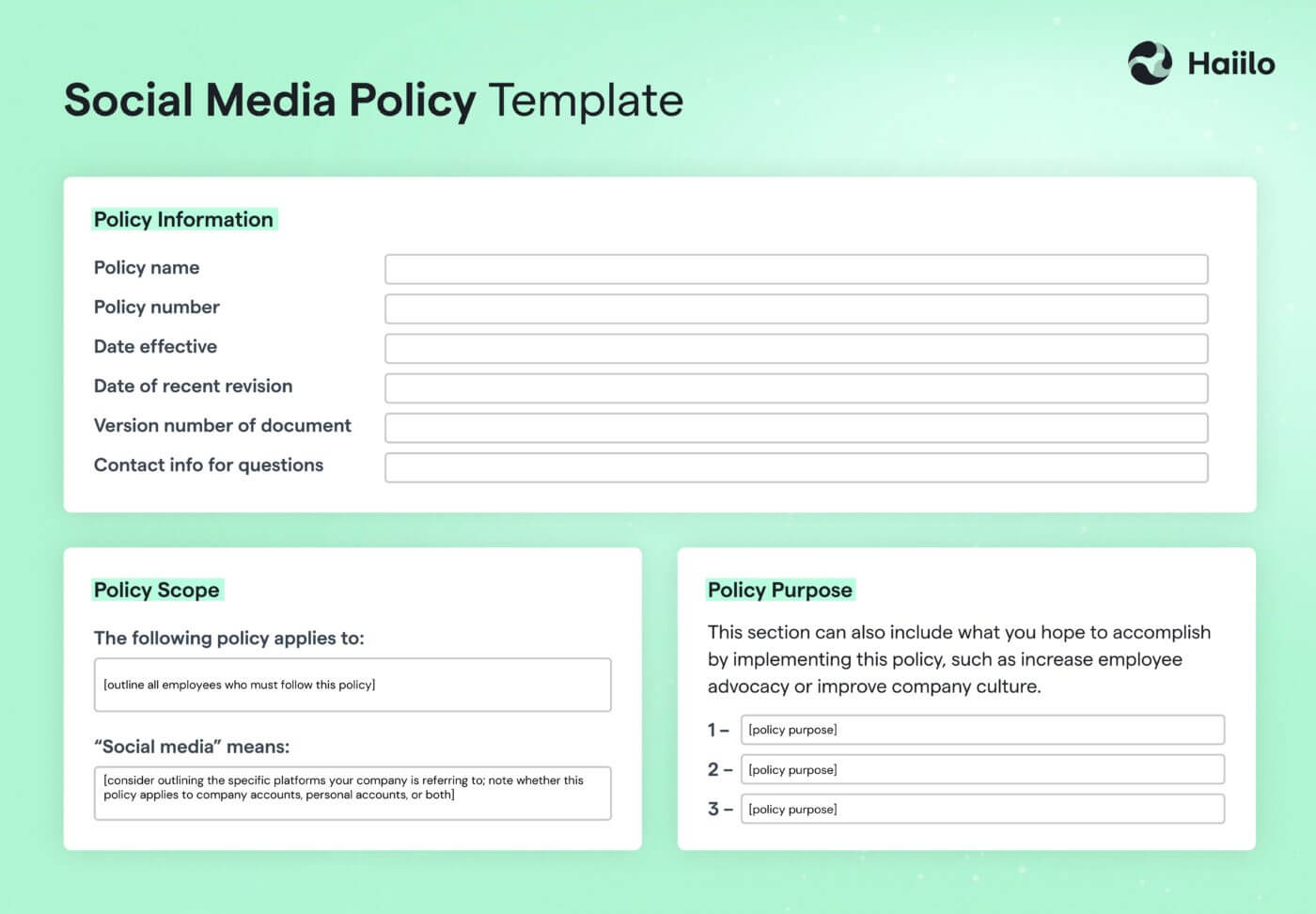
Want to learn more? Check out our social media policy template!