
Internal communication has never been more important — or more difficult.
Teams are distributed. Channels are fragmented. Important updates compete with everyday noise. And too often, the tools meant to help communication actually make it harder.
💡Read: The Digital Workplace Problem Report
That’s why many organizations are investing in an internal communications platform: a dedicated way to plan, deliver, and measure communication that actually reaches employees.
This guide is designed to help you choose the best internal communications platform for your organization. We’ll explain what an internal communications platform is, why it matters today, how to evaluate your options, and how the leading platforms compare — ending with how Haiilo approaches internal communication differently.
If you’re actively researching internal communications platforms, this page is built to give you clarity.
What is an internal communications platform?
An internal communications platform is software designed to help organizations communicate clearly and consistently with employees.
Unlike email or chat tools, an internal communications platform is built specifically for planned, intentional communication — not constant conversation.
Most internal communications platforms support:
- Company-wide announcements and leadership messages
- Targeted communication by role, location, or team
- Campaigns and recurring updates
- Multimedia content like video and visuals
- Measurement and insights into reach and engagement
The goal is not to send more messages. It’s to make sure the right messages reach the right people, at the right time.
Why internal communications platforms matter more than ever
Many organizations still rely on email, chat apps, or intranets that weren’t designed for communication at scale.
The result is predictable:
- Important updates get buried
- Frontline employees are hard to reach
- Leaders don’t know what’s landing
- Employees feel out of the loop
An internal communications platform helps solve this by creating structure and focus.
The right platform can help organizations:
- Cut through noise with clear, intentional communication
- Reach every employee, including deskless and frontline teams
- Build trust through consistent leadership communication
- Improve alignment during change and uncertainty
- Understand impact through measurable engagement
In short, internal communication becomes a capability — not a scramble.
See how internal comms can secure more budget 👉

What makes an internal communications platform “the best”?
There’s no universal best internal communications platform. But strong platforms tend to share a few traits.
The best internal communications platforms:
- Are easy for employees to understand and use
- Support both company-wide and targeted communication
- Work across devices, including mobile
- Integrate with existing tools and workflows
- Provide insight into what’s working and what’s not
Most importantly, they respect employees’ attention.
If a platform adds noise, it’s missed the point.
How to choose the right internal communications platform
Before comparing vendors, it helps to step back and define what you actually need.
1. Clarify your communication goals
Ask yourself:
- What types of messages matter most?
- Who do we struggle to reach today?
- How often do we need to communicate at scale?
- What does “successful communication” look like for us?
A good internal communications platform supports strategy — not just delivery.
2. Think about your audience first
Internal communication is not one-size-fits-all.
Consider:
- Desk-based vs. frontline employees
- Mobile vs. desktop access
- Different locations, languages, and time zones
- How often employees realistically want updates
The best platforms adapt to employees, not the other way around.
3. Look beyond channels and features
Most platforms can “send messages.”
The real differences show up in:
- How content is prioritized and structured
- How easy it is to target the right audiences
- Whether employees know where to go for updates
- How clearly results are measured
If communication feels scattered in the tool, it will feel scattered to employees.
💡Read: The 2026 guide to good internal comms
Internal communications platforms compared
Below is a comparison of leading internal communications platforms. Each section follows the same structure so it’s easy to scan and compare:
- What it is
- Who it’s best for
- What makes it different
This isn’t about naming a single winner. It’s about helping you find the best fit.
Staffbase

What it is:
Staffbase is a dedicated internal communications platform with a strong focus on reaching frontline and deskless employees.
Who it’s best for:
Large organizations with significant frontline or non-desk workforces, especially in manufacturing, retail, or logistics.
What makes it different:
Staffbase emphasizes mobile-first communication and campaign-based messaging. It’s often used to ensure important updates reach employees who don’t sit at a desk or check email regularly.
Firstup (formerly Dynamic Signal)

What it is:
Firstup is an employee communications platform focused on orchestrating messages across multiple channels.
Who it’s best for:
Organizations with complex communication needs and multiple channels to manage.
What makes it different:
Firstup positions itself as a communications orchestration layer, helping teams coordinate messages across email, mobile, intranet, and other tools. It’s typically chosen by mature internal comms teams managing high message volume.
Poppulo

What it is:
Poppulo is an internal communications and employee experience platform with roots in email communication.
Who it’s best for:
Organizations that rely heavily on structured, email-based internal communication and reporting.
What makes it different:
Poppulo offers strong analytics and governance around messaging, making it popular with teams focused on compliance, reporting, and leadership communication.
Workvivo

What it is:
Workvivo is a social-style employee communications and engagement platform.
Who it’s best for:
Organizations looking to increase participation, visibility, and a sense of connection across teams.
What makes it different:
Workvivo uses activity feeds, reactions, and comments to encourage two-way communication. This approach works well for culture-building, but can feel busy if not carefully managed.
Microsoft Teams (as a communications channel)

What it is:
Microsoft Teams is primarily a collaboration and chat tool, but it’s often used as a de facto internal communications channel.
Who it’s best for:
Teams already embedded in Microsoft 365 who want quick, conversational updates.
What makes it different:
Teams excels at real-time conversation. However, it’s not designed for planned, structured communication, which can make important messages hard to find or manage over time.
Haiilo

What it is:
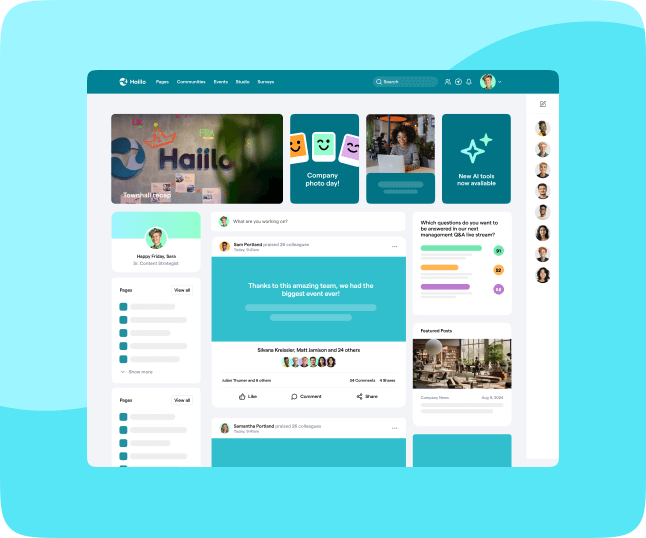
Haiilo is an internal communications platform designed to bring clarity to workplace communication.
It gives organizations one calm place to plan, publish, and understand internal communication — without adding more noise.
Who it’s best for:
Organizations that want internal communication to feel intentional, structured, and human.
Haiilo works for both desk-based and frontline employees, helping teams communicate clearly across locations, roles, and devices.
What makes it different:
Haiilo is built around focus.
Instead of encouraging constant posting, it helps communication teams be deliberate. Messages are clear. Audiences are defined. Results are visible.
Key differences include:
- A clear home for important communication
- Targeted messaging that respects relevance
- Strong support for leadership and change communication
- Insights that show what’s landing and what’s not
- A calm experience that doesn’t compete with chat tools
Haiilo doesn’t try to replace everything employees already use. It brings communication into focus, so people know where to look and what matters.
Where internal communications platforms often fall short
Across platforms, organizations commonly run into the same challenges:
- Communication spread across too many channels
- Important messages competing with everyday chatter
- Low visibility into what employees actually read
- Frontline teams feeling disconnected
- Communication teams spending more time managing tools than messages
This is usually not a content problem. It’s a clarity problem.
How to choose the right internal communications platform
At the final stage, most decisions come down to intent.
Ask yourself:
- Do we want more messages — or better ones?
- Do we want constant conversation — or clear communication?
- Do we want employees to hunt for updates — or know where to go?
The best internal communications platform is the one employees trust as the place for important information.
Final thoughts: internal communication that earns attention
Internal communication only works when people pay attention.
The strongest internal communications platforms don’t shout louder. They communicate more clearly. They respect employees’ time, reduce confusion, and create alignment.
If your organization needs campaign orchestration, social engagement, or frontline reach, different platforms may fit different needs. If clarity, focus, and adoption matter most, a calm, communication-led platform can change how work feels.
The best internal communications platform doesn’t add to the noise. It removes it.