
In a digitally connected world, corporate communications is one of the key factors that determines whether companies thrive or fall behind. It influences how clearly strategies are understood, how engaged employees feel, and how consistently your brand shows up across every touchpoint. When done well, it strengthens alignment, builds trust, and supports better decision-making—directly impacting productivity, innovation, and long-term business performance.
“The communications model continues to evolve in response to changing expectations, new technologies, and shifting channels. How organisations communicate—and how people prefer to receive information—is constantly being reshaped,” says Tim Andree, executive chairman of Dentsu Aegis Network.
Before going into the reasons why it’s so vital to your business success, let’s take a closer look at what we mean by corporate communications—and why it has become a strategic priority rather than just a support function.
📹 Also, check out our internal comms Masterclass: Why You Need an Internal Comms Strategy
What is Corporate Communication?
Corporate communications refers to the full spectrum of how an organisation shares information—internally with employees and externally with customers, partners, and the broader market. It ensures messaging is consistent, intentional, and aligned with business goals, rather than fragmented across teams or channels.
External communication includes the company’s messaging to its audience and the world at large. In an era of empowered employees, it also includes employee advocacy – employees sharing useful thought leadership content on social media through their personal accounts. This not only amplifies reach but also adds authenticity that traditional brand channels often lack.
💡Check out our article about What is a Communication Strategy and How to Create Your Own.
Internal communication is about exchanges within the company. This includes communication from the top management, bottom-up communication as well as communication between similar levels. It plays a critical role in keeping employees informed, aligned, and connected—especially in distributed and hybrid work environments where informal communication is limited.
Your internal and external communications shouldn’t be discrete elements.
In order to build a strong brand identity and improve organisational effectiveness, your internal and external communications should be aligned. When these are connected, organisations create a more cohesive experience for both employees and external audiences, reinforcing trust and consistency at every interaction point. In this article, we will see how the two work in sync.
Align your internal and external communication and take your corporate comms to the next level with the right IC tools
Why Corporate Communication Is Vital for Your Business Success
Here are five key reasons why you need to build strong corporate communications and treat it as a strategic function rather than a reactive one:
1. Brand Awareness
Earlier, companies relied heavily on advertising to drive brand awareness and shape perception in the market.
However, the advertising industry has been shrinking over the past few years, with audiences becoming more selective about where they place their attention and trust.
Millennials largely ignore ads since they don’t want to be sold to. Instead, they prefer to research independently, consume authentic content, and make informed buying decisions based on credibility and relevance.
This shift makes corporate communications more important than ever. Brands now need to communicate consistently across multiple channels—through leadership messaging, employee voices, social content, and thought leadership—to stay visible and credible. Rather than pushing messages out, organisations must build trust through ongoing, transparent communication that audiences choose to engage with.
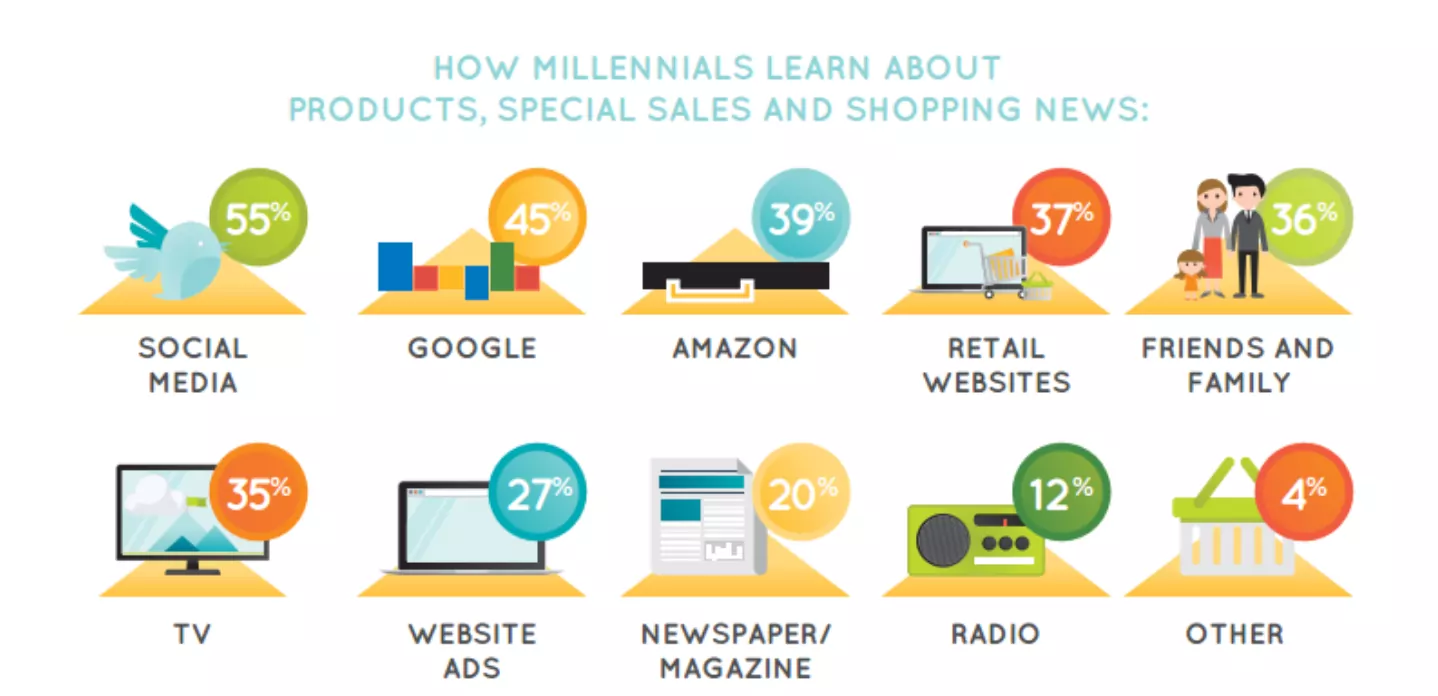
Source: V12
You have little chance of growing your brand awareness solely with advertising, especially as audiences become more selective about what they engage with and who they trust.
A far more effective way to attract your audience’s attention is with useful content that educates them. That’s where employee advocacy comes in—turning your workforce into active participants in your brand storytelling rather than passive recipients of messaging.
External communication in the form of employee advocacy is one of the most effective ways to improve brand awareness. It allows organisations to scale authentic communication through real people, which is far more compelling than polished corporate messaging alone.
Employee advocacy magnifies your company’s social media reach. If 500 of your employees share an article on LinkedIn, and each of them has a thousand connections, that’s an additional reach of half a million people for your brand. More importantly, this reach is built on trusted networks, making it far more likely to drive meaningful engagement rather than passive impressions.
Moreover, many people, especially millennials, trust individuals rather than companies. They are far more likely to pay attention to a message from someone they know or relate to than from an official company channel. This shift in trust dynamics makes corporate communications a key driver of brand credibility, not just visibility.
Higher brand awareness translates into more leads and higher revenues. When your messaging consistently reaches the right audiences in a credible way, it shortens the path from awareness to consideration and, ultimately, conversion. Therefore, corporate communications has a clear and direct impact on your company’s financial growth.
2. Employee Engagement
90% of executive leaders recognise that employee engagement is a vital element in business success, even if many organisations still struggle to achieve it consistently.
The rationale is really quite simple: someone who enjoys their job is far more likely to work harder, perform better and stay longer. Additionally, they often act as advocates within the business—encouraging collaboration, boosting morale, and positively influencing their colleagues.
However, as Gallup studies have consistently shown for years, only around 13% of employees are engaged. While engagement levels may vary across regions and industries, the underlying challenge remains the same: keeping employees informed, connected, and motivated is still a major gap for many organisations.
Companies that achieve high levels of engagement typically excel in one critical area— internal communication. They don’t just share information; they create ongoing dialogue, provide clarity on priorities, and make employees feel heard. Strong corporate communications ensures that messaging is timely, transparent, and relevant, helping employees understand not just what is happening, but why it matters and how it connects to their role.
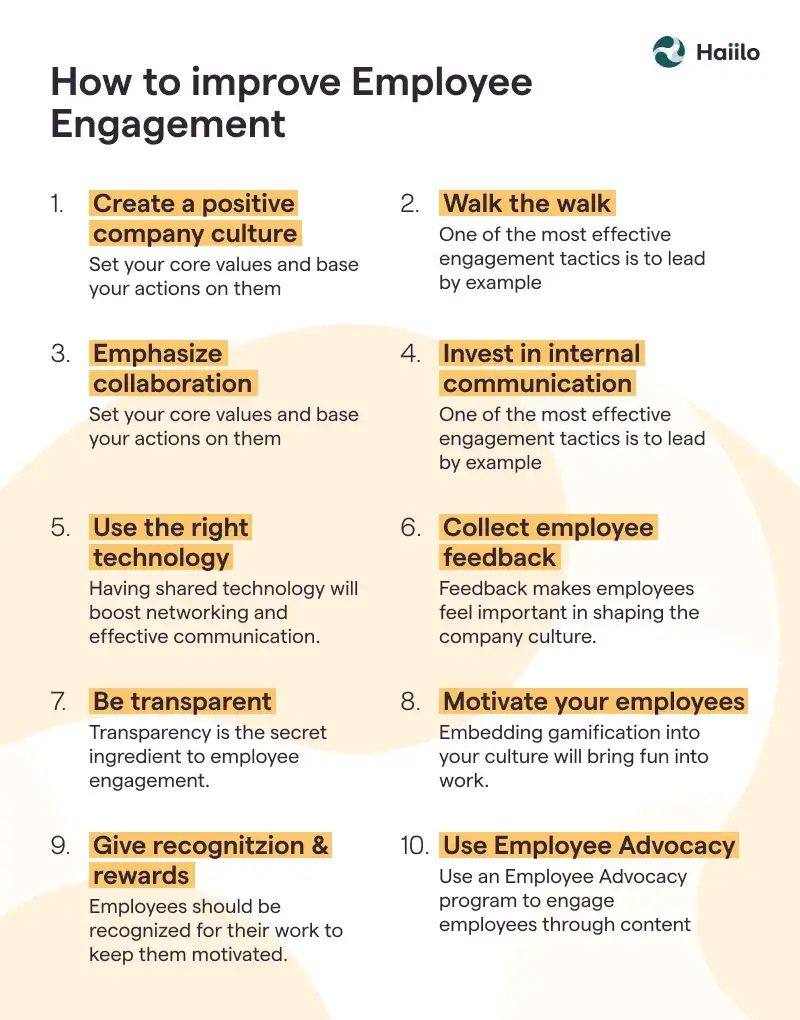
There are plenty of ways to use corporate communications to boost employee engagement—but the most effective approaches are consistent, intentional, and built around dialogue rather than one-way messaging.
Here are a few key ones:
-
Communicate Vision and Goals
Communicating your company’s top-level goals with the entire organisation helps employees connect their day-to-day work to a broader purpose. When people understand how their role contributes to business outcomes, they are more likely to stay engaged, prioritise effectively, and take ownership of their work.
-
Encourage Opinions and Dialogues
Encourage your employees to share their ideas, feedback, and concerns on an employee communication platform like Haiilo. This creates space for meaningful conversations that go beyond announcements, helping to surface insights from across the organisation. It also strengthens collaboration, improves decision-making, and reinforces a culture where employees feel genuinely heard and valued.
-
Boost Employee Advocacy
Encourage people to build their personal brands on social media by sharing the company’s thought leadership content, appearing on podcasts, and speaking at events.
Related: Your Employees Are Your Most Valuable Marketing Asset
When you give employees these opportunities, they become more connected to the company’s mission and more confident in representing it externally. This not only strengthens engagement but also extends the reach and credibility of your corporate communications in a way traditional channels cannot achieve on their own.
3. Innovation
Innovation isn’t just a buzzword anymore—it’s a requirement for staying competitive in fast-moving markets. Companies that fail to innovate often struggle to adapt, losing relevance over time.
But how can you create a culture of innovation in your company?
Internal communication plays a critical role in enabling innovation by connecting people, ideas, and information across the organisation. It creates the conditions needed for new thinking to emerge and scale.
-
Knowledge sharing
Before employees can innovate, they need to be informed about both internal updates and external developments shaping your industry.
Using an employee communications platform such as Haiilo allows organisations to encourage employees to share articles and insights about competitors, trends, and customer challenges, alongside internal updates such as wins, feedback, and lessons learned.
This continuous flow of knowledge gives employees the context they need to identify opportunities and develop ideas that are grounded in real business needs.
Also, learn about the importance of interpersonal communication in the workplace.
-
Inter-Departmental Collaboration
Corporate communications is essential for improving cross-functional collaboration and breaking down silos that often limit innovation.
Innovation rarely happens in isolation. The most impactful ideas are shaped by input from across departments—such as product, support, marketing, and sales—where different perspectives come together to solve real problems. Effective communication ensures that these connections happen naturally, enabling faster idea-sharing, better alignment, and more successful execution.
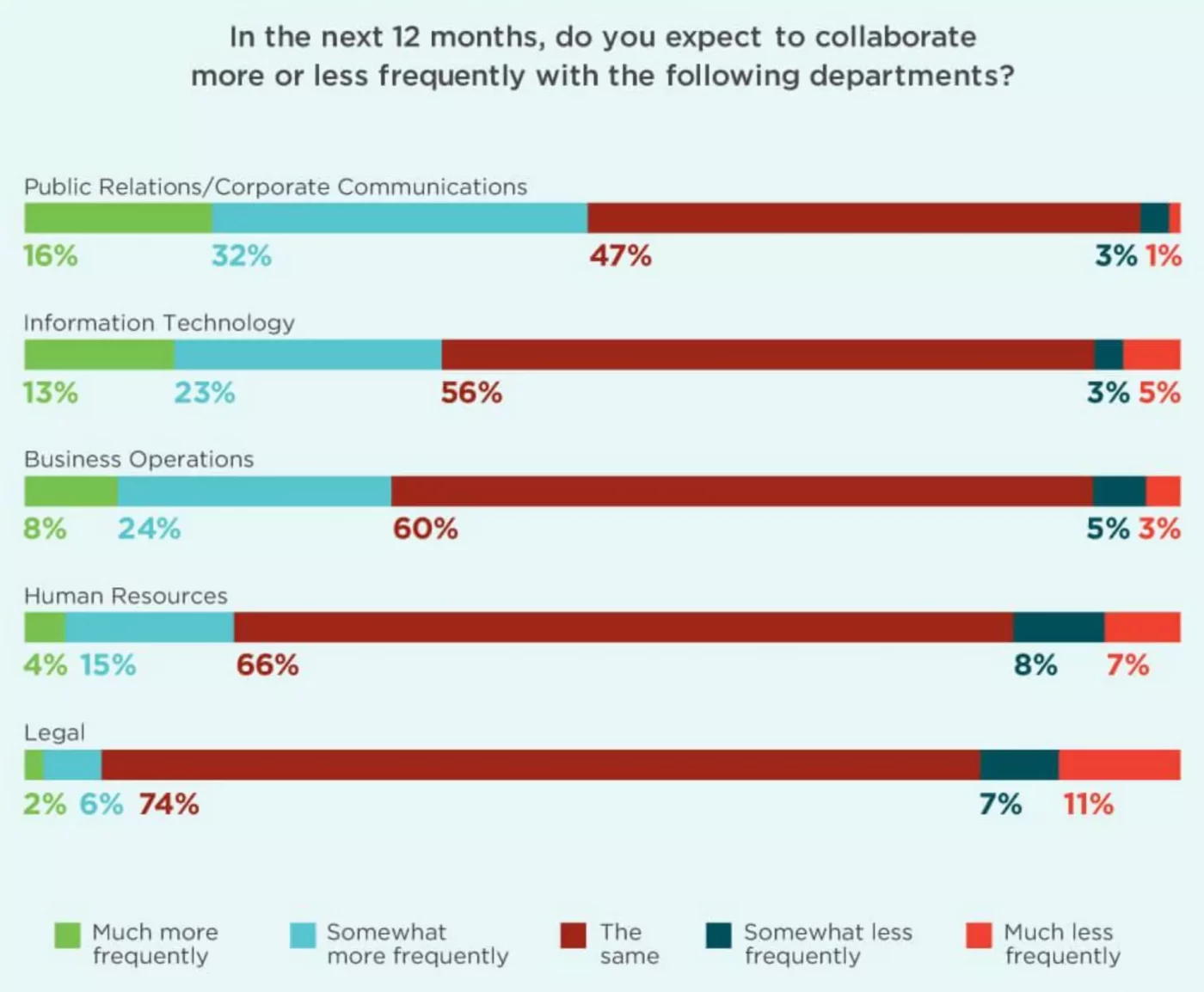
Source: https://www.roberthalf.com/blog/the-future-of-work/collaboration-in-the-workplace
When employees have the means to communicate with people across departments effortlessly, collaboration becomes far more natural and effective. Instead of working in silos, teams can quickly exchange ideas, challenge assumptions, and refine concepts together. This makes it easier to turn early-stage ideas into innovation initiatives that are not only creative but also commercially viable and aligned with real business needs.
4. Employee Productivity
Productivity is all about getting more done in less time—but it’s also about reducing friction, improving clarity, and enabling people to focus on the work that matters most.
The more productive your people are, the higher your revenue generated per employee and the lower your operational costs. Strong corporate communications plays a direct role here by ensuring employees have the information, context, and priorities they need to work efficiently—without unnecessary delays, duplication, or confusion.
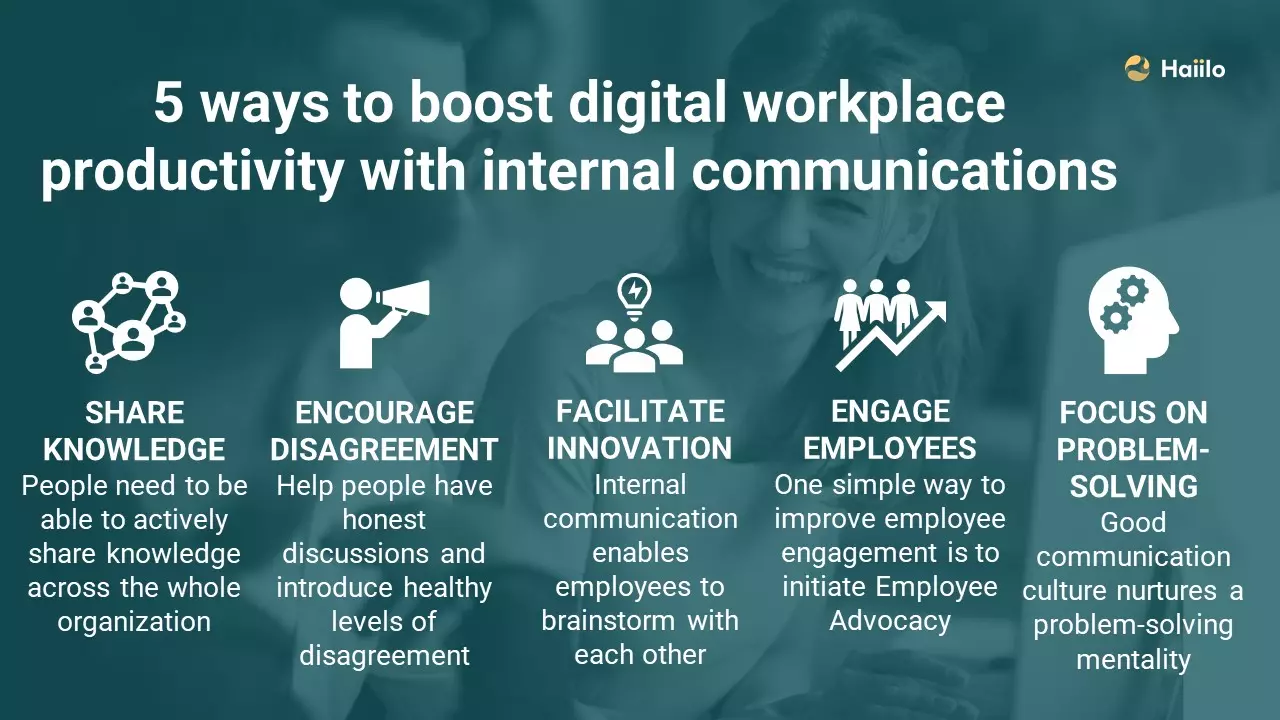
Better corporate communication improves employee productivity in the following ways:
-
Problem Solving
Many employees waste tons of time searching for the required information to execute specific tasks. This isn’t just the case for new employees—anyone working on an unfamiliar process or project can experience unnecessary delays caused by fragmented or hard-to-access information.
Related: 5 Ways Effective Internal Communication Can Boost Employee Productivity
However, an employee communications platform largely eliminates this problem by centralising knowledge and making it easily accessible.
People can quickly ask their colleagues for help within relevant departmental or topic-based channels, reducing time spent searching for answers. Conversations remain visible and searchable, meaning solutions can be reused instead of rediscovered. Over time, this significantly improves speed, consistency, and overall productivity across teams.
-
Knowledge Culture
Corporate communications encourages the practice of sharing knowledge and experiences across the organisation.
For example, a support or sales team member can share their unique experience with a customer. This kind of real-world insight is often more valuable than formal documentation, helping others respond to similar situations more effectively. Over time, these shared learnings build a strong, collective knowledge base that benefits the entire organisation.
Communication leads to better collaboration. And when people collaborate more efficiently, they reduce duplication of work, minimise errors, and get more done in less time with less friction.
Related: Company Values: Definition, Importance and Examples
5. Attracting Top Talent
Companies are only as successful as the people who work there. However, attracting top talent is often expensive and time-consuming, especially in competitive markets where candidates have more choice than ever.
Corporate communications can help you attract better talent and do it faster and more efficiently by strengthening how your organisation is perceived externally. Here’s how:
-
Referrals from Engaged Employees
One of the most effective ways to hire high-quality candidates is through employee referrals.
Engaged employees are far more likely to recommend your company to people they trust. When employees believe in your mission and feel connected to your culture, they naturally act as advocates—bringing in talent that is often a better fit and more likely to stay long term.
And as mentioned earlier, strong internal corporate communications plays a key role in building that engagement.
-
Brand Ambassadors
If you have an employee advocacy program in place, your employees can actively promote your organisation—including open roles —across their social networks.
This approach expands your reach beyond traditional job boards and paid advertising, helping you tap into passive candidates who may not be actively searching but are influenced by people they trust. It also adds a layer of authenticity that employer branding campaigns alone often struggle to achieve.
-
Showcasing your company culture
Your employees can also use social media to showcase your company culture in a genuine and relatable way.
For example, they might share moments from team events, highlight internal initiatives, or talk about their day-to-day experiences. These real, unfiltered insights help potential candidates understand what it’s truly like to work at your company.
Moreover, when these posts come from employees across different teams rather than from HR alone, they carry far more credibility—positioning your organisation as a great place to work.
10 Interesting Facts About Corporate Communications
- Many organisations still lack a long-term approach to internal communication, making consistency and alignment difficult to achieve.
- A significant number of employees feel they miss out on important company information and updates, which can lead to confusion and disengagement.
- A large proportion of employees do not fully understand their company’s strategy, highlighting a gap in clarity and communication.
- Only a minority of executives believe their organisations are highly effective at aligning employees’ work with broader business goals.
- Better-informed employees consistently outperform their peers, demonstrating the direct impact of effective communication on performance.
- Companies with strong communication during change are far more likely to outperform competitors.
- Many communications leaders report low confidence in their ability to shape organisational culture effectively.
- Communicating strategy, values, and purpose remains a top priority for communications teams.
- Information overload is a growing challenge for employees, making clarity and prioritisation essential.
- Video and visual content are increasingly important for engaging employees and improving message retention.
Conclusion
Corporate communication is no longer restricted to your media relations team. Today, it spans every level of the organisation—from leadership to frontline employees—shaping how information flows, how decisions are understood, and how your brand is experienced both internally and externally.
Modern corporate communications enables your entire workforce to contribute to a unified narrative, strengthening alignment and driving measurable impact on business success. When communication is clear, consistent, and inclusive, organisations become more agile, more engaged, and better equipped to grow.
Schedule a Haiilo demo to get more actionable tips to boost employee engagement at your workplace!
Frequently asked questions about corporate communications
What are corporate communications and why do they matter?
Corporate communications refers to how an organisation shares information internally with employees and externally with customers, partners, and the public. It matters because it shapes how people understand your business, trust your brand, and align with your goals. When done well, corporate communications improves clarity, builds engagement, and ensures everyone—from leadership to frontline teams—is working towards the same objectives.
What is the difference between internal and external corporate communications?
Internal corporate communications focuses on how information flows within the organisation—such as leadership updates, team collaboration, and company-wide messaging. External corporate communications, on the other hand, is about how your organisation communicates with audiences outside the business, including customers, media, and potential candidates. Both need to work together to create a consistent and credible brand experience.
How can corporate communications improve employee engagement?
Strong corporate communications keeps employees informed, involved, and connected to the bigger picture. When people understand company priorities, feel heard, and can easily access information, they are more likely to stay engaged and motivated. It’s not just about sending updates—it’s about creating ongoing dialogue and making communication accessible, relevant, and two-way.
What tools help improve corporate communications?
Modern organisations rely on dedicated platforms to manage corporate communications more effectively. These tools centralise information, enable real-time collaboration, and support both internal communication and employee advocacy. The right platform helps reduce communication gaps, improve transparency, and ensure messages reach the right people at the right time—without adding friction or complexity.
Curious to learn more? Read about 10 principles of modern employee communications