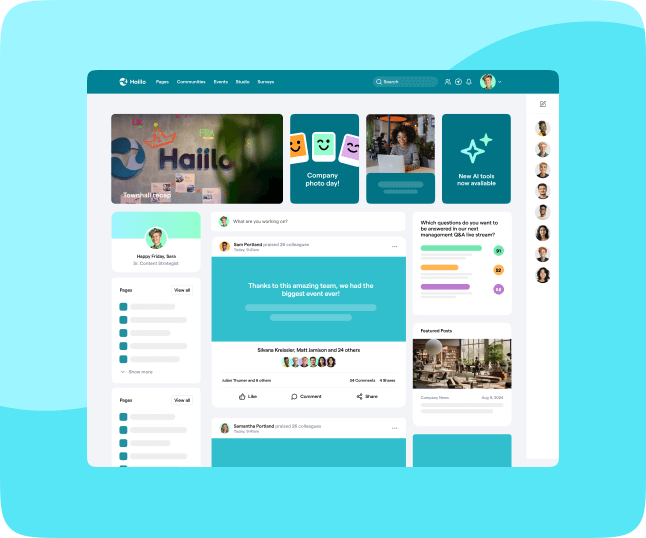

Internal communication is a tough job. On average, you’ll find 1 communicator for every 1,000 employees. Add to that the complexity of enterprise organizations operating in different countries and timezones, with multiple offices, business units, functions, languages, in-office, and remote.
Communication professionals are cornered by the complexity of channels available today (mobile, desktop, email, intranet, enterprise social networks, workstream collaboration tools, digital signage, print, and even good old fashioned mail) and the ever-growing expectations from employees to be reached in their preferred channels and devices — often several at once. Keeping messages consistent, timely, and relevant across all these touchpoints is no small task.
On top of that, attention is limited. Employees are flooded with information daily, both inside and outside of work. Important updates can easily get lost. This is where well-planned internal communications campaigns make a real difference, helping teams cut through the noise and deliver messages that actually land.
The thing about challenges is… they create opportunities. In the midst of it all, many internal comms pros are setting themselves apart from the pack by delivering focused, creative, and measurable work that drives engagement and action.
We wanted to inspire everyone with some success stories, so we reached out to 5 top internal communication leaders and gathered some standout examples of internal communications campaigns — shared in their own words.
Looking to improve internal comms in your own organization? Let us show you how!
👇Here we go:
The power of humanizing your leaders
João Lopes, Head Of Internal Communication, Banco Santander Portugal
Santander Portugal is in the midst of its Cultural Transformation. And of course we can upgrade our systems, modernize our branches, and simplify our processes, but changing how people work and how they interact with one another is the most challenging shift of all. As Internal Communication, we play a key role in that transformation. It is our mission to give visibility to initiatives that prove the cultural shift is more than a strategy — it is happening every day.
One thing we did that caught everyone by surprise was a Carpool Karaoke. Suddenly, in a very formal and structured institution like a bank, we introduced personal interviews in a relaxed setting. We talked not only about the bank, its goals, or specific business areas, but also about the people behind the job titles. We introduced Peter instead of the Head of Human Resources. We discovered what he enjoys, from food to films, and what drives him as a person.
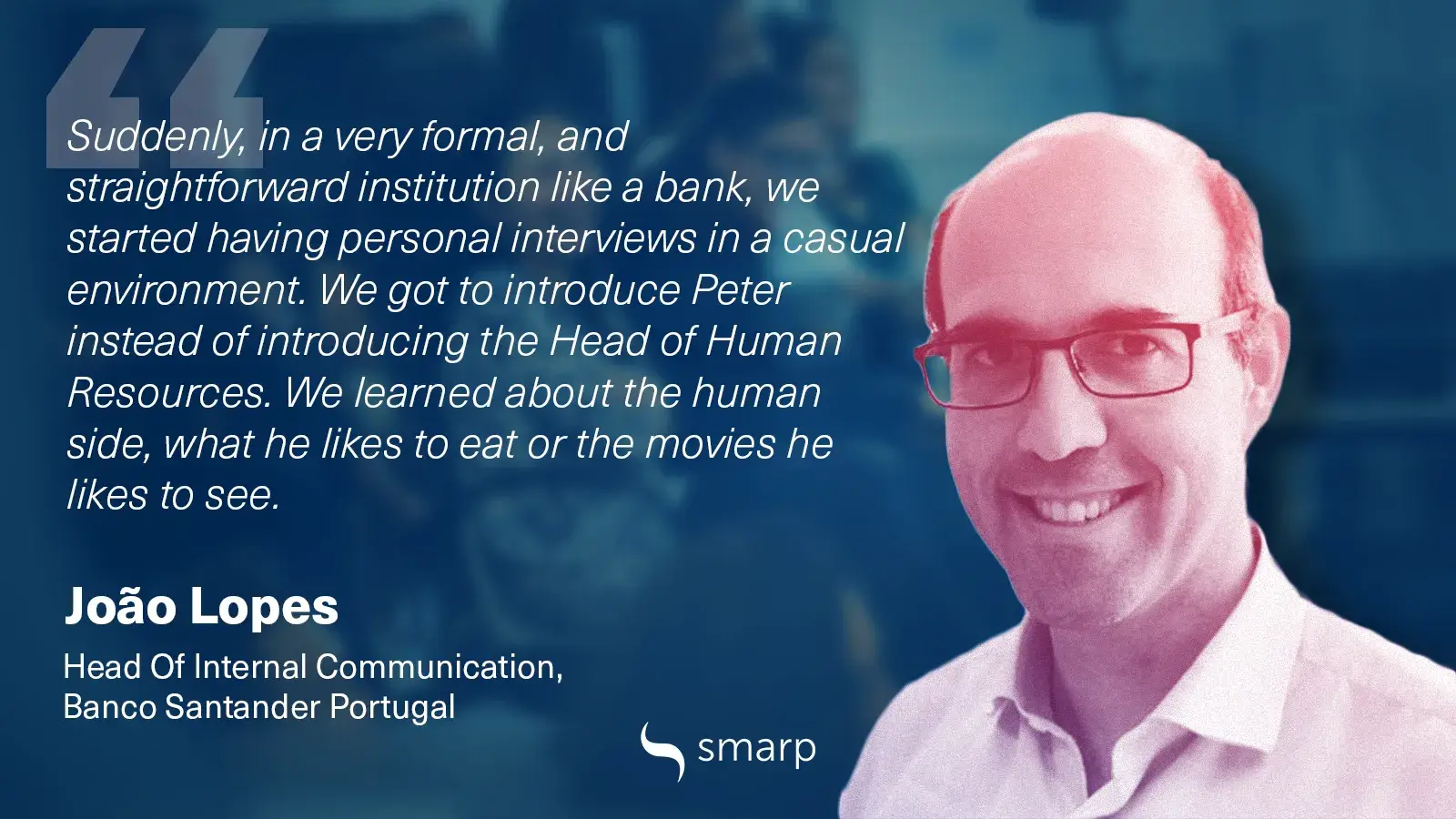
a quote from Joao Lopes, Banco Santander Portugal
It worked very well. By doing something unexpected, we showed internally that the bank is evolving to become more open, personal, and modern. It also helped build trust and relatability between leadership and employees. But even successful ideas like this only work when they are part of something bigger. Many internal communications campaigns fail because they sit in isolation. Culture must be the strategy and individual initiatives without being part of a global strategy won’t have the same effect.
Help your listeners relate to your message by using stories
Suvi Koivusalo, CEO, Game Captains
Sometimes we struggle to make our communication relatable to our audience. Often it’s a classic case of the Curse of Knowledge. When you know your subject extremely well, it’s easy to forget how it feels to be new to it. For example, local tax law sounds very different when explained to a legal team versus an overseas design team creating an infographic.
If you want your audience to truly listen, translate your expertise into something they understand. Connect your message to something familiar. If you don’t know your audience personally, draw from shared references like pop culture. For example: “We want our company values to reflect Mufasa, not Scar.” Or make it local: “If client numbers rise 30%, it’ll feel like Oxford Circus at 6 pm.” Instantly, people get it.
Start with a simple exercise. What story helps people remember you? When I work with Americans, I ask them to think of a big SUV when they meet me. That’s how they remember my name (Suvi). When your audience relates to your message, it becomes easier to understand, remember, and act on — which is exactly what strong internal communications campaigns aim to achieve.
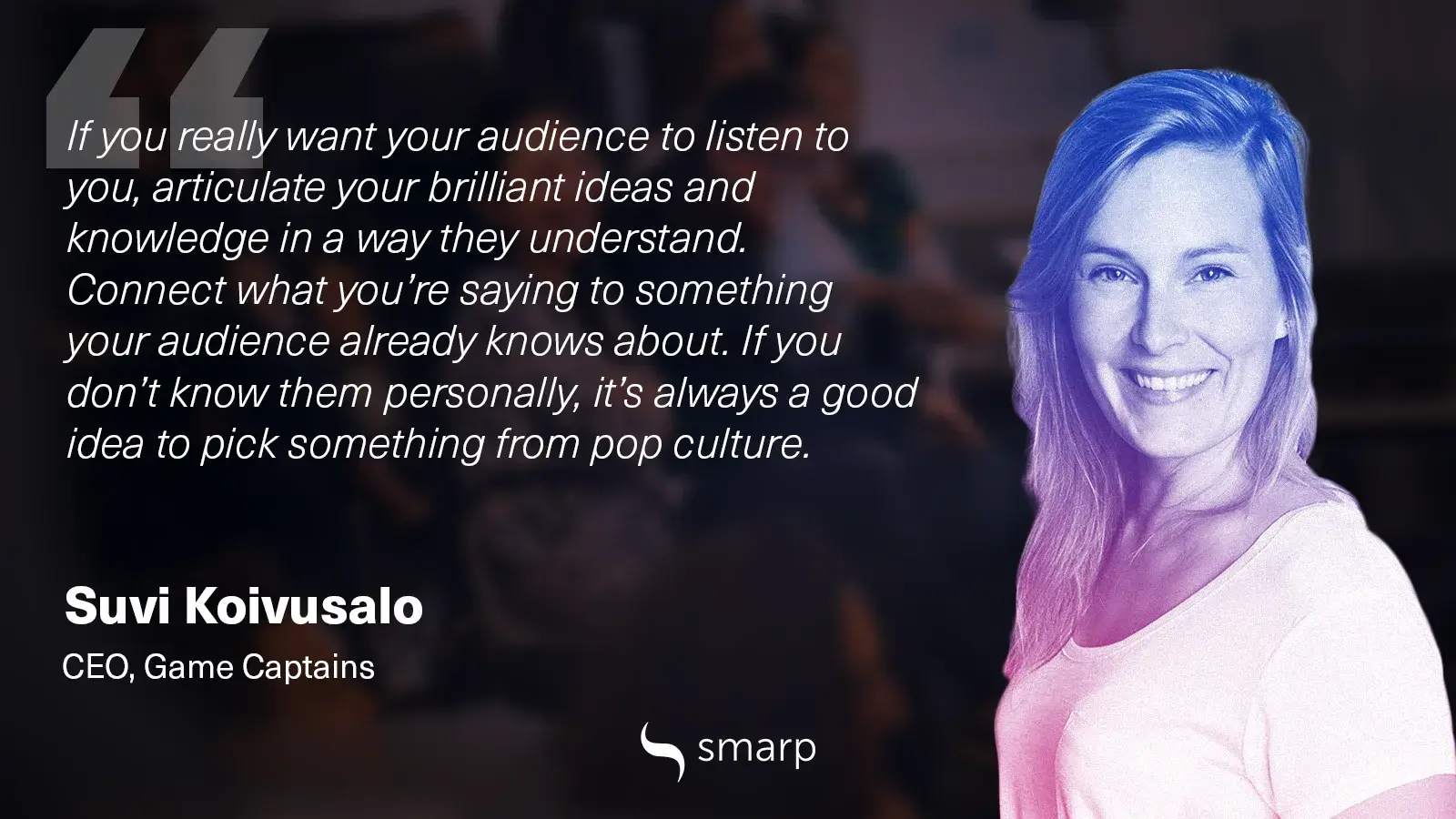
a quote from Suvi Koivusalo, Game Captains
Employee app deployment is not easy. But it’s worth it
Mayyada Ansari, Senior Manager Global Internal Communications, DPDHL
We have all relied on in-house tools, emails, and print materials to communicate with employees. But should we keep repeating the same cycle for decades? Fortunately, the answer is no. Technology has opened up new opportunities for internal communications to build a strong digital culture and drive engagement — especially through apps.
A large part of today’s workforce is offline, remote, or constantly on the move. Reaching these employees has always been a challenge. Apps help solve this by giving everyone access to information, no matter where they are.
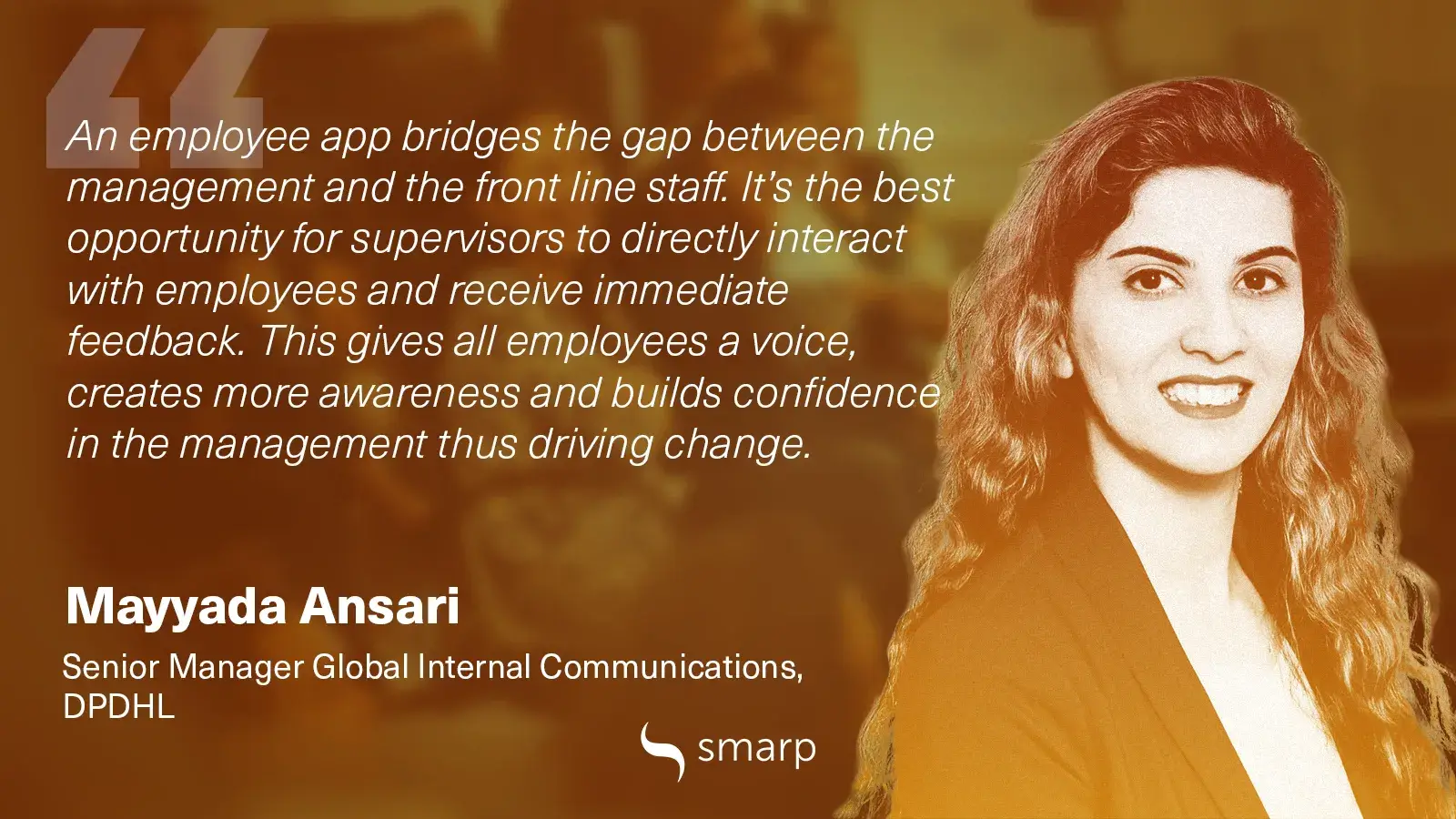
a quote from Mayyada Ansari, DPDHL
A communications or employee app allows organizations to share timely, relevant updates such as news, announcements, stories, policies, job opportunities, and campaigns — all in one place. Employees can engage by liking, commenting, sharing, posting content, or joining activities like competitions and challenges. This creates a two-way flow of communication rather than a one-way broadcast.
Another major advantage is measurement. Unlike traditional channels, apps provide real-time data on what works and what doesn’t. Communicators can quickly adjust content and improve performance, making internal communications campaigns more targeted and effective over time.
Most importantly, an app bridges the gap between management and frontline staff. Leaders can communicate directly, and employees can respond instantly. This gives everyone a voice, builds awareness, and strengthens trust in leadership — all of which are essential for driving change.
So is deploying an app easy? Not quite. But it is worth the effort. Success depends on asking the right questions early: Do you have the technical and legal infrastructure? Are data protection and compliance covered? Do you have resources to manage the platform? Can it support multiple languages? Is leadership ready to lead by example? Do you have a clear launch and adoption plan? Answering these questions upfront can turn an app into a game-changing communication channel.
Enjoy the new era of communicating!
Always begin with some form of data to get the all-important context
Pauline Foster, Director, pfk Communications Agency
In 2012, Marshall Aerospace and Defence Group (MADG) faced major challenges due to contract changes and increased competition. They needed to engage employees in a significant transformation to meet ambitious business goals. However, employee feedback revealed low engagement and resistance to change.
The data provided valuable insight. It helped shape a clear narrative, close understanding gaps, and give employees a voice by acting on their feedback.
This led to the creation of ‘Engaging for Success’, a phased program that included leadership events, workshops, and collaborative sessions. Over 10 months, employees worked together to identify ways to remove barriers and improve the workplace. The result was a measurable improvement in engagement and a noticeable shift in employee sentiment.
a quote from Pauline Foster, pfk Communications Agency
The magic spell of gamification
Xeniya Shilina, Senior Communication Program Manager, Medtronic
The 21st century has brought rapid change across industries. Communication has evolved too, with digital tools making it faster and more accessible. Yet many internal communication professionals still struggle with one key challenge: how to explain company strategy in a way employees actually understand.
I fully understood the company strategy from that one email full of numbers you sent me the other day… Said no employee ever.
Like many others, I was searching for better ways to make strategy clear, engaging, and relevant. My answer was gamification.
When you gamify communication, you signal that something is worth attention. It invites participation instead of forcing consumption. I’ve used many formats — quizzes, challenges, competitions, and hackathons — to bring strategy to life.
In my previous role at VEON, I led the Global Digithon, a company-wide hackathon focused on solving real business challenges. It started locally but grew into a global initiative involving employees from all functions — not just technical teams.
Participants worked on practical challenges, often linked directly to business priorities. Winners from local events advanced to a global final, where they tackled strategic topics and presented solutions to leadership.
a quote from Xeniya Shilina, Medtronic
The impact was clear. Employees were more engaged, more informed, and more connected to the strategy. When internal communications campaigns are interactive and meaningful, people don’t just receive the message — they experience it.
As simple as gamification may seem, it can deliver powerful results. So, are you ready to try it?
Great Internal Communications = Alignment with Business Outcomes
Great internal communication looks different in every organization. Each business has its own challenges, culture, and priorities.
But one thing remains constant ⏤ the need to align communications with business outcomes.
Next time you receive a brief from leadership, start by asking why. What business goal does this support? What behavior needs to change? Strong internal communications campaigns are not about pushing more content — they are about delivering the right message, at the right time, with a clear purpose.
I want to personally thank our 5 contributors for sharing their valuable input. It’s a pleasure to learn from you and support knowledge sharing within comms professionals.
Frequently asked questions about internal communications campaigns
What makes internal communications campaigns actually effective?
Effective internal communications campaigns are clear, targeted, and built around a specific goal. Instead of pushing more messages, they focus on relevance — delivering the right content to the right people at the right time. They also create two-way communication, not just top-down updates. If you’re building your approach, start with a solid plan like this internal communication strategy guide. Tools like a social intranet can also help centralise content and make communication more accessible.
How do you measure the success of internal communications campaigns?
Measurement goes beyond email opens. Strong internal communications campaigns track engagement, feedback, and behavior change. Are employees acting on the message? Are they participating, sharing, or responding? Modern platforms like analytics tools make this easier by showing what content resonates and where gaps exist. This helps you continuously improve rather than guess what works.
What channels should you use for internal communications campaigns?
There’s no single “best” channel — it depends on your workforce. Desk-based employees may rely on email or intranet, while frontline teams need mobile-first solutions. Many organisations now combine channels to reach everyone effectively. For example, employee apps are becoming essential for distributed teams (see best employee apps). The key is consistency across channels, supported by platforms like employee communications software.
How can you improve engagement in internal communications campaigns?
Start by making communication more human and relevant. Use storytelling, involve leaders, and connect messages to everyday work. Personalisation also plays a big role — employees engage more when content feels tailored to them :contentReference[oaicite:0]{index=0}. AI-powered features, like those in AI communication tools, can help deliver more personalised experiences at scale. You can also strengthen engagement during key moments like onboarding (see employee onboarding experience) or by refining your overall approach (internal communications guide).