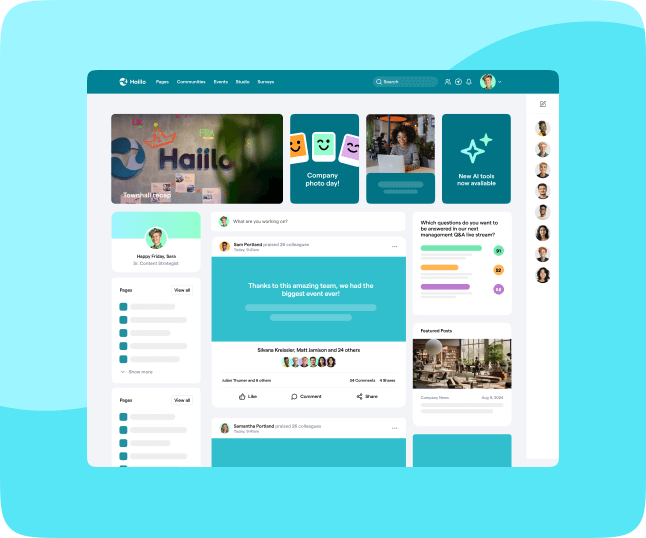

The tools meant to empower your teams are slowly wearing them down.
We’ve all felt it – the creeping frustration when switching between three different platforms just to send a message. The cognitive load of juggling apps, windows, and workflows. The endless login prompts and scattered updates. Technology was supposed to help, not hinder.
What makes this especially damaging is how normalized it has become. Employees adapt, work around broken processes, and silently absorb the friction. Over time, that friction compounds into slower decisions, more mistakes, and rising frustration that shows up as disengagement and burnout.
Yet today, digital fragmentation is quietly draining productivity, morale, and budgets across organizations. IT departments are firefighting instead of innovating. HR teams are buried in manual workarounds. Internal comms struggle to reach employees through a maze of disconnected channels—often resorting to “post everywhere and hope for the best.”
If your tech stack is more like a game of Tetris than a well-oiled machine, it’s time to face the music: your tools might be breaking your team.
Why digital overload is becoming an urgent crisis
Imagine this:
📉 According to https://www.mckinsey.com/capabilities/people-and-organizational-performance/our-insights/the-organization-blog/how-much-time-and-energy-do-we-waste-toggling-between-applicationsMcKinsey, employees spend an average of 1.8 hours every day just searching for information across systems
🔁 https://www.microsoft.com/en-us/worklab/work-trend-indexMicrosoft’s 2024 Work Trend Index shows that constant app switching and notifications are a top contributor to focus loss at work
😓 And https://www.gallup.com/workplace/349484/state-of-the-global-workplace.aspxGallup reports that disengaged employees—often overwhelmed by poor digital environments—cost the global economy trillions in lost productivity each year
This isn’t just a nuisance. It’s an operational liability that directly impacts performance, retention, and cost control.
Internal communicators can’t get a message out without jumping through digital hoops. HR teams need four platforms to onboard one new hire. IT has to support a tangled mess of overlapping systems – each with its own security risks, training requirements, and hidden costs that make comparing total spend—or evaluating haiilo pricing against fragmented alternatives—far more complex than it should be.
And the costs? Hidden in plain sight.
How fragmentation kills productivity from the inside out
Digital fragmentation isn’t just inconvenient, it erodes performance and wellbeing across every level of your organization—especially in distributed and frontline-heavy workforces.
1. Lost focus, lost time
When employees toggle between tools repeatedly throughout the day, they lose the ability to enter a focused, productive state. Context switching increases mental load, raises error rates, and drains energy. As McKinsey notes, even small interruptions can add up to hours of lost output per week when multiplied across teams.
2. Communication breakdowns
Updates in one tool, files in another, approvals somewhere else. This digital disarray leads to confusion, duplicated work, and missed deadlines. It’s also why many organizations struggle with message reach—an issue explored in more depth in Haiilo’s guide to digital fatigue and its impact on engagement.
3. Redundant spending and bloated IT
Each team’s favorite app adds another subscription, another onboarding session, another layer of governance. Without consolidation, organizations overspend on overlapping tools—while strategic initiatives stall under complexity. Centralizing communication through a single employee hub, such as a modern employee communications platform, helps reduce this sprawl and makes digital investment decisions far more transparent.
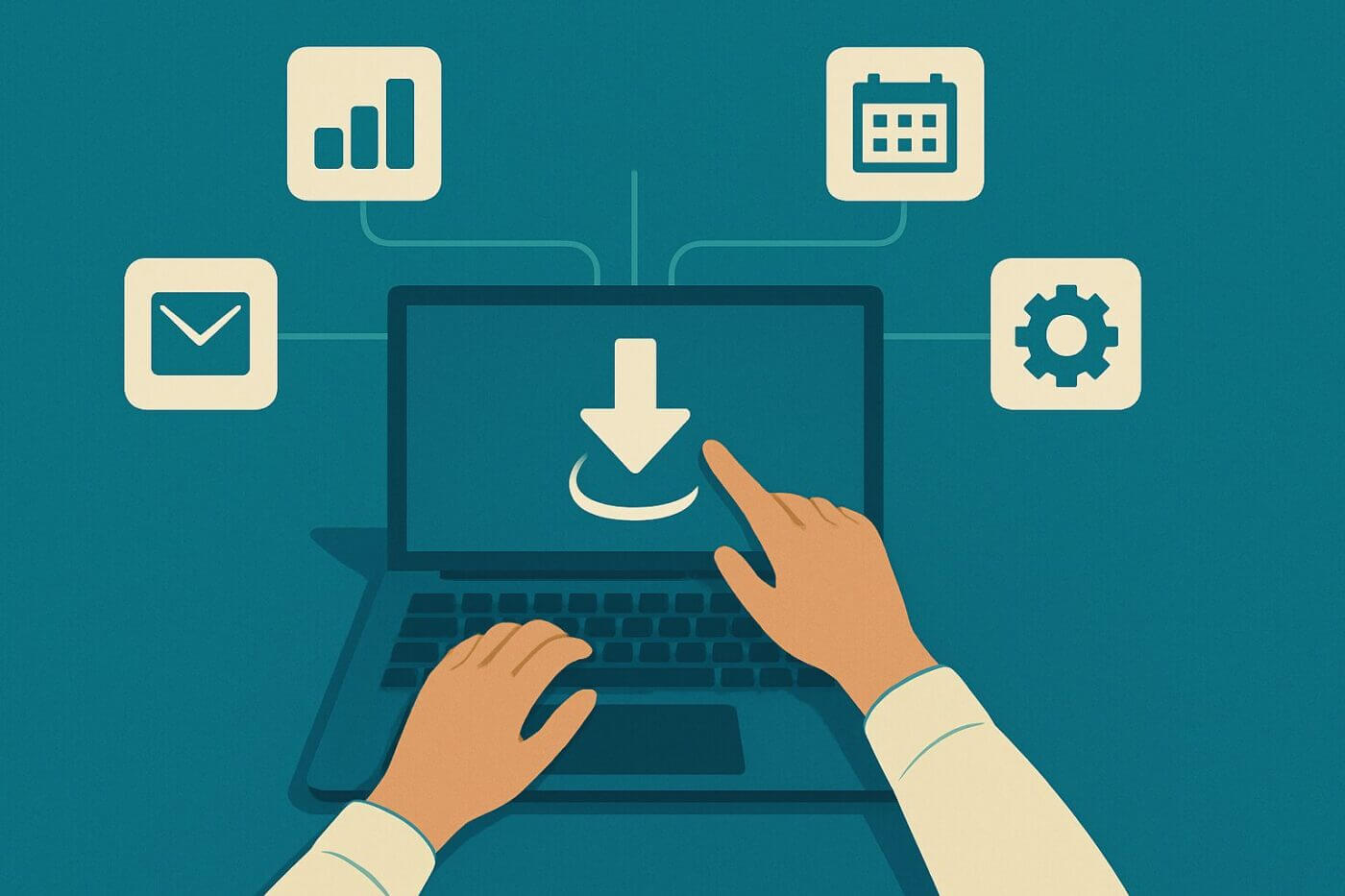
The potential impact of digital consolidation
Consolidation isn’t just about cutting licenses. It’s about removing friction, restoring focus, and finally letting your tools enable great work. When systems are designed to work together, employees spend less time navigating technology and more time doing meaningful, high‑value work that moves the business forward.
✅ One platform, many possibilities
When employees can access everything – from news to knowledge to recognition – in one place, they stop clicking around and start contributing. A centralized employee hub reduces search time, improves adoption, and creates a more consistent experience, especially for frontline and hybrid teams who don’t sit behind a desk all day.
✅ Lower costs, higher returns
Consolidation can cut software costs by up to https://biztechmagazine.com/article/2024/09/businesses-are-consolidating-their-tech-what-does-mean-your-infrastructure30%. Beyond license savings, organizations also reduce hidden costs tied to training, support, and underused tools—making it easier to evaluate total value, including how platforms compare on long‑term ROI versus surface‑level costs like haiilo pricing.
✅ Simpler security and compliance
Fewer platforms = fewer vulnerabilities. Managing access rights, data governance, and compliance requirements becomes significantly easier when information lives in a single, integrated environment instead of being scattered across disconnected systems.
✅ Speed and agility for the modern workplace
The pace of business isn’t slowing down. Consolidation lets teams move faster, make decisions quicker, and stay aligned—without waiting on manual workarounds or chasing updates across multiple tools.
Where digital consolidation unlocks massive value
For IT, HR, and internal communications teams, consolidation is a game-changer. It directly improves:
📬 Employee communications & newsletters
🚨 Instant alerts and notifications
📺 Digital signage & content distribution
🌟 Employee engagement & recognition
📚 Knowledge management & content sharing
This is where a unified employee experience platform shows its value—bringing together communication, engagement, and knowledge in one flow, as explored in Haiilo’s recent analysis of measurable intranet ROI and AI-driven internal communications.
The result? A workplace where information flows, teams feel connected, and goals are met faster – with less stress and more clarity.
The time to simplify is now
The longer you wait, the more costly it becomes. Every additional tool is another barrier to productivity, another point of frustration, another dollar down the drain.
The cost of doing nothing?
- Burned-out employees
- Fragmented culture
- Sluggish decision-making
- Ballooning software spend
But there’s a better way.
Haiilo: your all-in-one employee experience platform
Forget juggling a dozen disconnected tools – https://www.haiilo.com/Haiilo brings everything you need for a thriving digital workplace into one intuitive platform.
Whether you’re leading HR, managing internal comms, or overseeing IT operations, consolidation with Haiilo means fewer logins, less confusion, and way more impact—without sacrificing flexibility or governance.
Instead of managing multiple apps for communication, engagement, and knowledge sharing, you can use Haiilo to centralize everything from internal newsletters and instant alerts to employee recognition, surveys, digital signage, and a modern https://www.haiilo.com/social-intranetsocial intranet, all supported by a robust employee communications platform.
One login. One platform. One powerful way to work.
With Haiilo, you eliminate redundancy, cut costs, and finally give your people a frictionless digital experience built for how work actually happens today.
Frequently asked questions about digital fragmentation and pricing
1. How does digital fragmentation affect software pricing over time?
Digital fragmentation rarely looks expensive at first. Individual tools seem affordable in isolation, but costs add up quickly once you factor in overlapping licenses, unused features, training time, IT support, and security overhead. Over time, fragmented stacks make it difficult to understand true pricing because spend is spread across departments and vendors. Consolidation brings those costs into focus by reducing duplication and making it easier to compare total value instead of line‑item fees.
2. Is consolidation really cheaper than keeping best‑of‑breed tools?
In many cases, yes—but not just because of license savings. While pricing often improves when tools are consolidated, the bigger gains come from reduced complexity. Fewer platforms mean faster onboarding, higher adoption, lower support costs, and less time wasted switching between systems. Organizations that consolidate often discover they were paying for “best‑of‑breed” tools that employees rarely used effectively.
3. What should teams look for when comparing pricing between platforms?
Don’t focus solely on the headline price. Look at what’s included: onboarding, analytics, integrations, security, mobile access, and ongoing support. Consider how many tools a platform replaces and whether it reduces manual work for IT, HR, and internal communications. Transparent pricing paired with clear consolidation value usually delivers better long‑term ROI than cheaper tools that add friction.
4. When does it make sense to review your digital workplace pricing?
If employees complain about too many tools, messages are being missed, or software costs keep creeping up year after year, it’s time to review pricing. Growth, mergers, remote work, or new compliance requirements are also strong triggers. Regularly reassessing your digital workplace helps ensure you’re paying for tools that actually support how people work today—not yesterday.