
When it comes to retaining great team members, employee recognition programs can play a crucial role.
When recognition is done well, it becomes part of how people work every day, not just an occasional initiative. Employees who feel seen are more likely to stay, contribute, and go the extra mile. This is where tools like bonusly achieve stronger results, by making recognition visible, frequent, and easy to give across teams.
Recent research continues to show a strong link between recognition, engagement, and retention. Employees who feel appreciated are more likely to stay with their company and remain motivated in their roles. Without consistent recognition, even high performers can disengage over time.
A recognition-rich culture makes people feel valued, which leads to deeper commitment, better teamwork, happier employees and more satisfied customers. It also helps reinforce the behaviours you want to see more of, whether that’s collaboration, innovation, or strong performance.
What Is Employee Recognition?
In a nutshell, employee recognition is the process of showing appreciation for an employee’s achievements, attitude, implication in the business, and engagement. It can be formal, such as awards or bonuses, or informal, like a quick thank-you message or public praise in a team channel.
Related: How to Create a Culture of Employee Engagement
When you recognize your employees, you show them that you value their work and you help them understand that their work has a great impact on your business success. This clarity matters. Employees are more likely to stay engaged when they see how their efforts connect to company goals. Tools like bonusly achieve this by making recognition visible and tied to real contributions.
Employee recognition is a great way to boost employee motivation, improve the employee experience you deliver, and increase employee engagement at your workplace. It also encourages positive behaviours across teams, helping build a culture where people support each other and celebrate progress consistently.
Want to reward your employees for being your brand’s ambassadors?
Try our leading employee advocacy platform today
Employee recognition can take monetary and non-monetary forms but keep in mind that it’s important that the way you recognize your employees reflects your company culture. What works in one organization may not work in another. For example, some teams value public praise, while others prefer private recognition or tangible rewards. The key is consistency and relevance. When recognition feels aligned with your values, it becomes more meaningful and easier to sustain. Platforms like bonusly achieve this by allowing teams to recognise each other in ways that match how they already communicate and collaborate.
How to Recognize Employees in the Workplace?
Here are five ideas to consider for your employee recognition program. Each one can be adapted to fit your team size, structure, and culture, whether you’re a small business or a large enterprise:
Tip #1: Set Up Peer Recognition Programs
Peer recognition programs make it easy for staff members to recognize fellow employees in a public way. They also remove the pressure from managers being the only source of praise, making recognition more frequent and authentic.
Not only does this promote teamwork, but it also bubbles up stories from the frontline that management may not have been aware of otherwise. This helps leaders spot high performers, reinforce positive behaviours, and understand what good work looks like across the business. Tools like bonusly achieve this at scale by making peer recognition visible and easy to track.
A basic framework for a peer recognition program is to create a way for employees to acknowledge publicly another employee for work well done. Keep it simple so people actually use it, and make sure recognition happens regularly, not just during special occasions.
- You can have a traveling trophy that gets passed on by an employee whenever the current recipient sees another person doing something great. For example, OfficeVibe use a red cape in their employee recognition program.
- You can create a page on your corporate intranet or a “wall of fame” in the company break room or conference room where people post weekly “shout outs.” Use simple templates, emojis, or short messages to keep participation high.
- Upper management can take it a step further during a company-wide meeting or through the company newsletter by publicly thanking or mentioning those individuals identified by their peers. This reinforces that recognition matters at every level.
- Use peer recognition apps like Bonusly, which allows everyone in an organization to publicly recognize their peers through small bonuses that add up to meaningful rewards.
Related: Top 3 Interdepartmental Communication Tips
Tip #2: Include Gift Cards Incentives into Your Employee Recognition Program
Gift cards also motivate employees and make them feel appreciated. They are flexible, easy to distribute, and work well across different roles and locations.
You can tie these to specific metrics (most customer tickets resolved in a month, etc.), gamify your whole tasklist, or use them to reward above-and-beyond performance (an employee driving across town to hand-deliver a report). To keep the impact high, link rewards to clear behaviours or outcomes so employees understand what is being recognised and why.

Regardless of what type of employee recognition program you choose, make sure the recognition efforts are public, frequent, and tied to the company goals and values. This ensures recognition feels meaningful, not random. When employees see a clear link between recognition and what the company stands for, they are more likely to repeat those behaviours. Platforms like bonusly achieve this by connecting recognition directly to core values.
Tip #3: Encourage Social Media Recognition
In the digital era, taking employee recognition to social media can be a powerful way to recognize employees. It extends recognition beyond internal channels and shows appreciation in a visible, lasting way.
You can highlight an employee of the week on your LinkedIn or Facebook company page. Create a tweet to highlight how a team member went above and beyond for a customer. Have an executive write a LinkedIn recommendation for a job well done. Keep it simple and authentic. A short post with a clear message often works better than something overly polished.
Not only do these types of rewards make team members feel great, but they also help them establish their personal brands. This can be especially valuable for younger employees or those in customer-facing roles.
These shout outs can also strengthen the confidence of customers who follow you on social media. They will see what a dedicated and talented team you have, which can improve trust and employer brand at the same time.
Related: 3 Reasons to Support Your Employees’ Personal Branding
Tip #4: Reward Your Employees with Team-Building Activities
If a department or team has pushed themselves above and beyond to complete a project or serve a customer, a team-building activity or team outing may be the perfect way to recognize the contributions of the group.
Group rewards help reinforce collaboration rather than individual competition. They also give teams time to recharge and connect outside of daily tasks, which can improve communication and morale in the long run.
For example, we at Haiilo organize fun activities such as yoga classes, sports tournaments, or cheese tasting workshops to reward our hard-working employees. These shared experiences often leave a stronger impression than one-off rewards and help build lasting team relationships.

Corporate team-building activities (bowling, mini golf, laser tag, etc.) or even a pizza party demonstrates that the company realizes the extra effort the team put in to accomplish a goal for the organization. These moments do not need to be expensive to be effective. What matters is that they feel genuine and timely. When recognition happens soon after the achievement, it has a stronger impact and feels more connected to the work.
Tip #5: Give Your Employees the Opportunity to Be Heard
Another way to make employees feel valued and appreciated is to give them an opportunity to develop ideas and present them to upper management. This shows that recognition is not just about rewards, but also about trust and inclusion.
You may need to develop guidelines and a vetting process, but it can be well worth the effort. Not only does this type of program make employees feel valued as individual contributors, you could uncover ideas that save money, generate more sales, or improve customer satisfaction. In many cases, the best ideas come from employees closest to the day-to-day work.
Another way to recognize your employees is to give them the opportunity to take ownership of their work. This can include leading small projects, testing new ideas, or improving existing processes. Tools like bonusly achieve added impact here by linking recognition to initiative and contribution, not just outcomes.
Let your employees suggest ideas, implement solutions they’ve suggested and most importantly, let them make decisions. That way you show them that you trust them and that you appreciate their work. This kind of ownership often leads to higher engagement and stronger accountability.
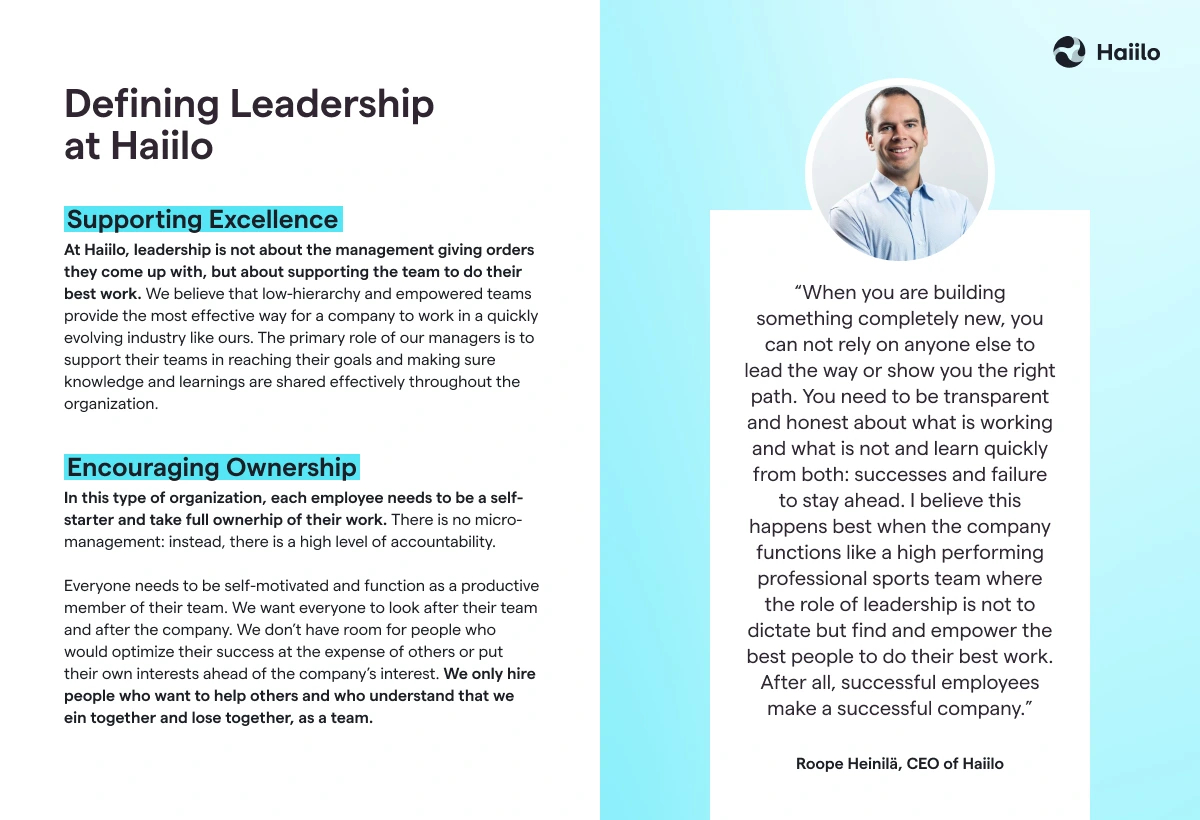
Letting employees take ownership of their work is one of the key elements of the company culture at Haiilo:
Bonus: The Do’s and Don’ts of Employee Recognition in the Workplace
The Do’s of Employee Recognition
- Make each employee feel special by recognizing their unique contributions, not just outcomes
- Offer personalized perks that match individual preferences and interests
- Show honest appreciation for a completed task, and be specific about what was done well
- Launch an employee recognition program that reflects the company culture and values
- Be fair and consistent when it comes to employee recognition across teams
- Be proactive in recognizing your employees, not just during reviews or milestones
- Explain why you chose to recognize specific employees to reinforce desired behaviours
- Recognize also teams, especially when success is driven by collaboration
- Do make employee recognition public to increase visibility and encourage others
The Don’ts of Employee Recognition
- Don’t forget that your employees are your best asset, so make recognition a regular habit, not an afterthought
- Don’t launch competitive games that discourage collaboration or exclude quieter contributors
- Don’t forget to reward any kind of contribution to the business, including small wins
- Don’t set the bar too high, or recognition will feel out of reach for most employees
- Don’t forget to reward team efforts alongside individual achievements
- Don’t forget to use surveys for better employee recognition and gather feedback on what works
- Don’t ignore your employees’ hobbies so you can reward their hard work with personalized perks
- Don’t forget to make employee recognition fun and engaging to maintain interest
- Don’t forget to encourage your employees, even though they haven’t delivered exceptional results yet
In a nutshell
Employee recognition is the key when it comes to employee motivation and employee engagement in the workplace. If you want your employees to feel engaged and stay at the company, you need to show them that you value their work and their contribution to the business. Consistency matters here. Tools like bonusly achieve better results by making recognition part of everyday work, not just occasional moments. Remember that your employees are your best asset, so take care of them!
FAQs about employee recognition
What makes an employee recognition program effective?
An effective program is consistent, visible, and tied to real contributions. Recognition should happen regularly, not just during reviews or big wins. It also needs to feel fair and relevant to your company culture. The best programs make it easy for everyone to participate. Tools like bonusly achieve this by allowing peer-to-peer recognition that is simple, public, and aligned with company values.
How often should employees be recognized?
Recognition should happen often enough to feel natural. Weekly or even daily recognition works well in most teams. Small, frequent moments are more effective than rare, formal rewards. A quick thank you or public shout-out can go a long way. The key is to build recognition into everyday workflows so it becomes part of how your team operates.
What are the most common mistakes in employee recognition?
One common mistake is only recognizing top performers and ignoring everyday contributions. Another is making recognition too generic, which can feel insincere. Inconsistent recognition is also a problem. If only some teams or managers participate, it creates frustration. A good approach is to keep recognition fair, specific, and inclusive so everyone feels valued.
Do employee recognition tools really make a difference?
Yes, they can make a big difference when used properly. Recognition tools help scale and structure what might otherwise be inconsistent. They also make recognition more visible across the organization. For example, bonusly achieve better engagement by encouraging peer recognition and linking it to company values. This helps reinforce positive behaviours and keeps employees motivated over time.